Reviewed · OSAKA
Osaka: Explore the Spiritual and Modern Sides of Osaka
Osaka teaches manners through temples and towers. This four hour tour stitches together Shitennoji Temple and its peaceful garden with the city energy at Abeno Harukas, so you feel both sides of Osaka without rushing. I especially like the quiet reset you get at the Gokuraku-jodo Garden, where the atmosphere changes from street noise to temple calm fast.
Next, I really enjoy the stop at Isshinji Temple, famous for Buddha statues made from cremated remains. One thing to consider: you do a moderate amount of walking, and the tour is not suitable for people with mobility impairments or wheelchair users.
In This Review
- Key Highlights You Will Actually Feel
- Osaka Spiritual Meets Modern Skyline
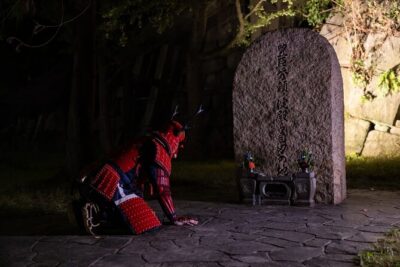
- Finding the Stone Torii Start Point at 四天王寺 石鳥居
- Shitennoji Temple and the Gokuraku-jodo Garden Calm
- Isshinji Temple and the Cremated-Remains Buddha Statues
- Traveling to Abeno Harukas for Skyline Views
- Abeno Harukas Observation Deck, Osaka From Above
- Price and Value for Four Hours With Admissions
- Group Size, Guide Language, and What You Can Ask
- What to Bring, What to Wear, and Walking Realities
- Who Should Book This Osaka Spiritual and Modern Mix
- Should You Book This Tour?
- FAQ
- How long is the Osaka temple and city views tour?
- Where do I meet the guide?
- What temples and sites are included?
- Is the observation deck ticket included?
- What is included in the Shitennoji visit?
- What is not included in the tour price?
- What should I bring?
- Is smoking allowed during the tour?
- What languages does the live guide speak?
- Is this tour refundable if I cancel?
Key Highlights You Will Actually Feel
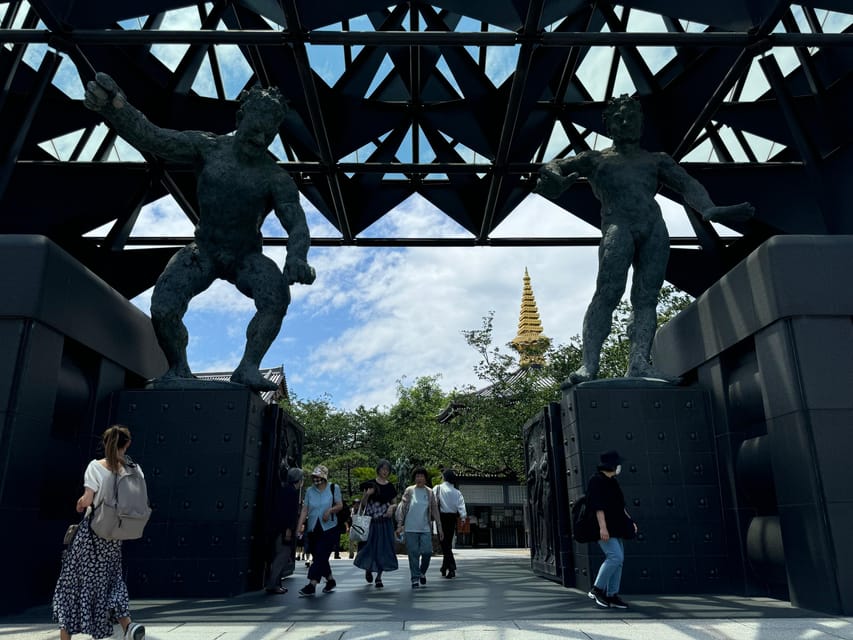
- Start at Shitennoji’s stone torii gate, an iconic way to begin a temple visit in Osaka
- Gokuraku-jodo Garden at Shitennoji, built for quiet, slow looking
- Isshinji’s cremation-based Buddha statues, a spiritual concept you will not forget
- Abeno Harukas observation deck with big city views from Japan’s second tallest building
- Small group or private options, with a live guide for your pace and questions
- End near Tennoji Station, easy to continue exploring afterward
Osaka Spiritual Meets Modern Skyline
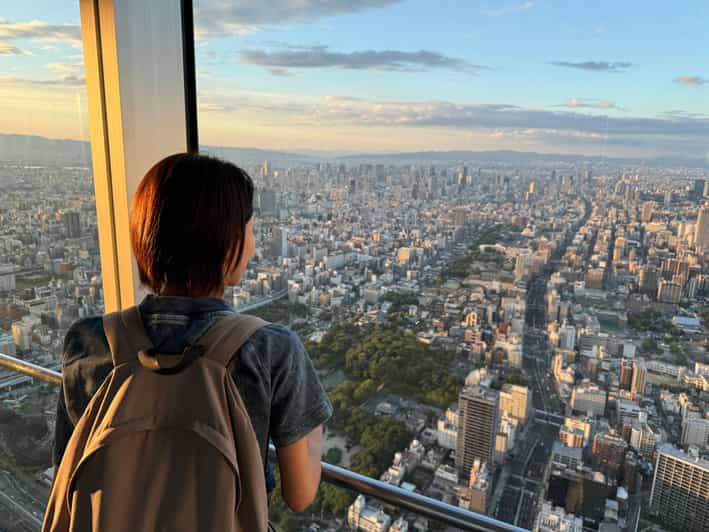
This is the kind of Osaka experience that makes sense, even if your instinct is to chase food streets and big signs. You start in a sacred, older Osaka, then you shift toward a modern skyline where you can see how all those neighborhoods fit together.
I like that the tour keeps the rhythm humane. It is not a sprint through temples, and it is not just a photo stop either. The guide points you toward what to look at, when to slow down, and how each place connects to Osaka’s identity.
The best part is the contrast. At Shitennoji you get the feeling of order and respect. At Abeno Harukas you get the feeling of scale, movement, and the city continuing after the history fades.
Osaka is Japan's kitchen, and Kyoto, Nara, and Himeji are all close enough for a day trip.
- Osaka Go Karting Tour with Funny Costume★ 5.0 · 2,658 reviews
- Osaka Castle: Museum and Tower Entry Ticket★ 4.5 · 2,380 reviews
- Osaka: Shinsekai Food Tour with 13-15 Dishes at 5 Eateries★ 4.8 · 2,204 reviews
- Osaka Food Tour: 13 Dishes at 5 Local Eateries★ 5.0 · 2,149 reviews
- Hungry Osaka Street Food Tour:15 Tastings & 3 Drinks with a Local★ 5.0 · 1,727 reviews
Finding the Stone Torii Start Point at 四天王寺 石鳥居
Meet your guide in front of the stone torii gate at 四天王寺 石鳥居. Your guide holds a yellow sign with the DeepExperience logo, so you will not have to play guessing games for long.
This matters more than people think. When you start at the right landmark, the rest of the visit clicks into place. You begin at Shitennoji the way it is meant to be entered, and you avoid the awkward moment of trying to orient yourself while everyone else is already moving.
If you are using transit, plan to arrive a little early. Not because you will miss anything dramatic, but because it gives you time to settle your shoes, grab water, and take a quick look at the gate you will be referencing later in the tour.
Shitennoji Temple and the Gokuraku-jodo Garden Calm
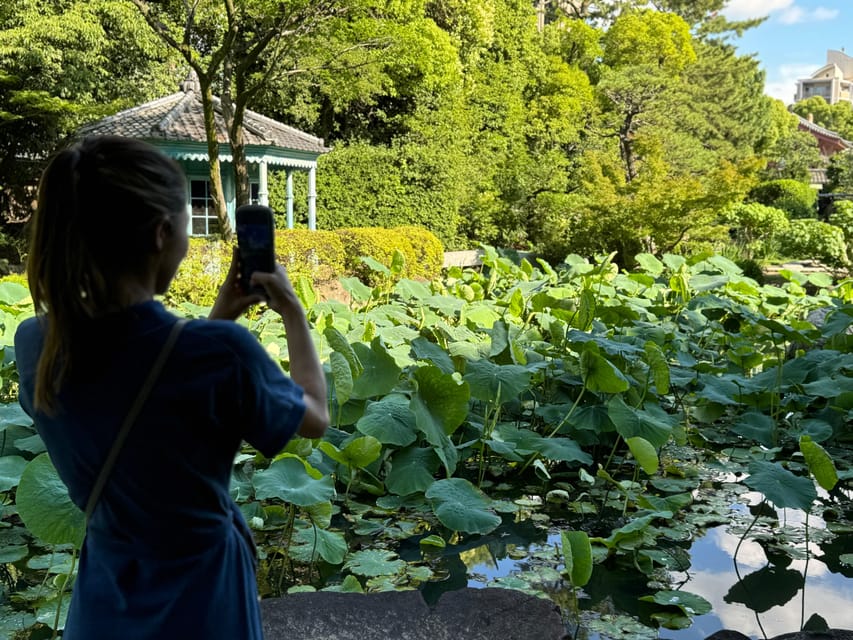
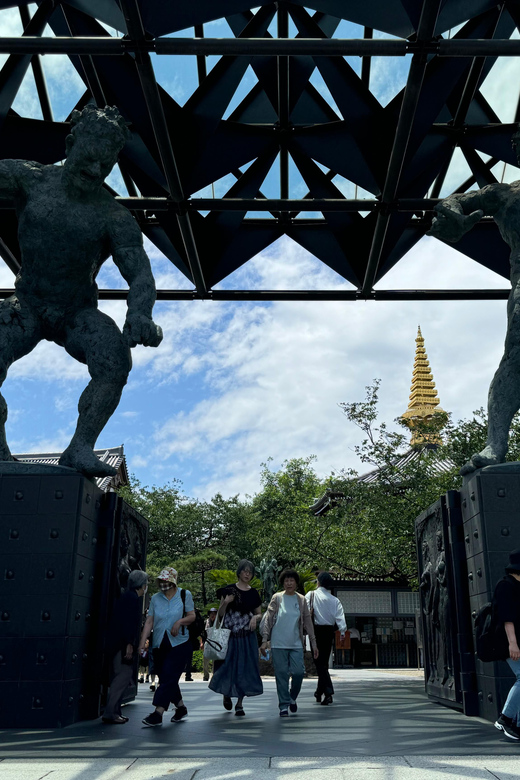
Shitennoji is Japan’s oldest officially administered temple, and the tour treats it like more than a checkbox. You get a guided visit that focuses on the main complex, the feeling of the grounds, and the specific calm of the Gokuraku-jodo Garden.
I love how the garden works as a reset. Even if you only spend a short time there, it changes your pace and your breathing. You stop looking for the next photo and start looking for details, the way you might in a museum or a quiet neighborhood walk.
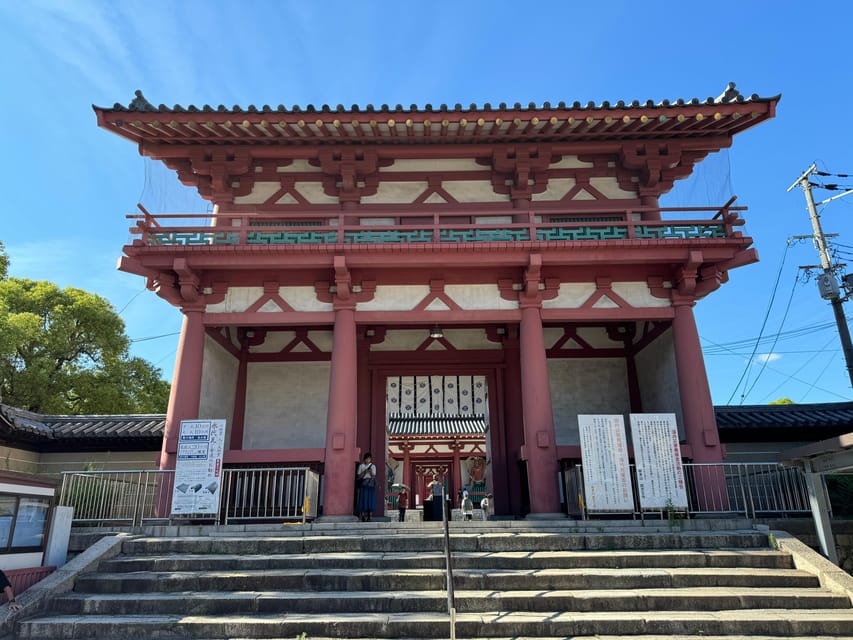
You also move through major temple architecture, including the Nandaimon gate. That kind of structure gives you a sense of how grand the site is, without needing the guide to over-explain everything. You can see why people treat Shitennoji as a place to return to, not just to visit once.
Practical note: this is where comfortable shoes earn their keep. The walking is described as moderate, and temple grounds can be uneven or layered. Wear shoes you can trust, then relax and let the guide steer.
Isshinji Temple and the Cremated-Remains Buddha Statues
Then you head to Isshinji Temple, and this is the stop with the strongest emotional punch. Isshinji is known for Buddha statues made from cremated remains, which turns the idea of remembrance into something you can literally see.
What I like about this part is that it feels spiritual, not just strange for the sake of being strange. The guide helps you understand the concept in a way that makes the art and the memorial purpose click together. You leave thinking about what it means to honor people through ritual and craft, rather than just staring at objects.
You will have time to explore the grounds with a guided approach. That structure matters here, because the meaning is not always obvious at first glance. With a guide, you are less likely to miss what the site is trying to communicate.
One consideration: this is a more solemn theme. If you are expecting a light, funny sightseeing vibe, you might find your mood a bit quieter at Isshinji. For many people, that is exactly the point.
Traveling to Abeno Harukas for Skyline Views
After the temples, the tour shifts to modern Osaka with time on the way to Abeno Harukas and then the main viewing time at the observation deck. Abeno Harukas is Japan’s second tallest building, and even if you have seen tall towers elsewhere, it hits differently because of how dense the city feels around it.
This section includes scenic viewing time while you are getting there. That helps the transition. You do not go from temple stone to skyscraper glass in a hard jump. Instead, you ease into the city scale, so the observation deck feels like a continuation rather than a shock.
If you care about photos, this is where you plan your moment. Bring your camera ready, and keep your lens or phone charged enough for the deck time. You will want shots that show the spread of Osaka, not just one straight skyline frame.
Not ready to leave Osaka yet? A few more ways to fill the day.
- Osaka: Tea Ceremony Experience
★ 4.9 · 1,426 reviews - Osaka Kickstart: Hotspots & Hidden Gems Tour
★ 5.0 · 1,306 reviews - Deep Backstreet Osaka Tours (Option to add Dinner)
★ 5.0 · 1,290 reviews
Abeno Harukas Observation Deck, Osaka From Above
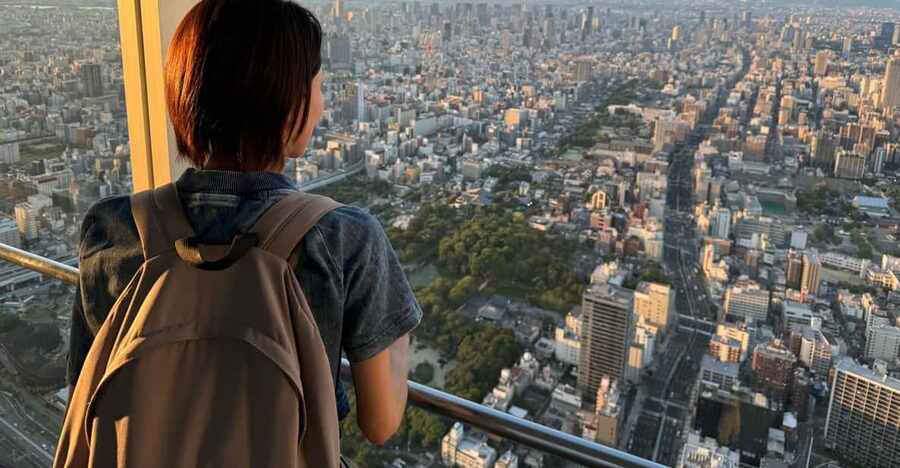
The observation deck admission is included, so you are paying attention to the right thing at the right time. The guide helps you make the most of your deck visit, but you still have room to wander and choose your viewpoints.
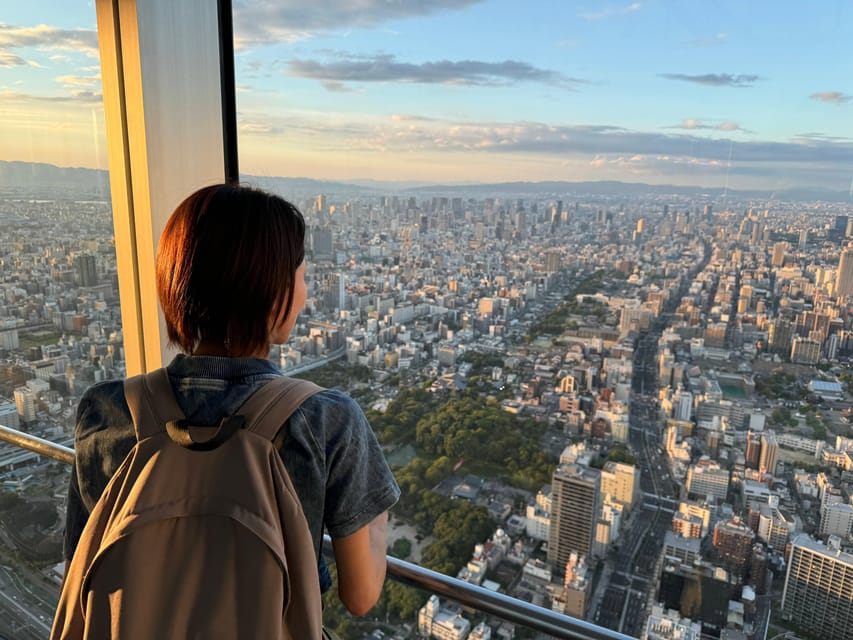
From up there, Osaka becomes easier to understand. Streets, districts, and building clusters make more sense when you can see the geometry. It is one of those moments where you stop thinking in terms of single neighborhoods and start thinking in terms of the whole city.
I also like that the deck time rounds out the tour. After the spiritual stops, you get a payoff that is visual and immediate. It is a change of pace, and it keeps the whole experience from feeling too heavy.
This tour ends near Tennoji Station, which is handy. You can keep exploring without needing a complicated return plan.
Price and Value for Four Hours With Admissions
The price is listed at $200 per person for about four hours. That may sound high at first, until you compare what is included: Shitennoji entrance, Abeno Harukas observation deck admission, and a live guide.
In practice, you are not just buying tickets. You are buying translation and direction, especially for Isshinji, where the key idea behind the cremated-remains Buddha statues is not the kind of thing you decode on your own in minutes. A guide turns that stop from a look-only experience into an understanding experience.
You also get a smart time structure. Shitennoji gets more time than the other stops, which makes sense because it is the main anchor. Isshinji then provides the unique spiritual contrast. Finally, Abeno Harukas delivers the modern wrap-up with big views.
If you are the type who likes guided context, this feels like strong value. If you prefer to roam freely without structure, you might find the price harder to justify.
Group Size, Guide Language, and What You Can Ask
This tour offers private or small groups, and it runs with a live guide in Japanese and English. Having a guide who can tailor explanations in real time is useful, especially at temples where you may be unsure where to look or what a specific feature represents.
One review highlighted the tour guide Kanako for being professional, kind, and spiritual. That lines up with the overall vibe you should expect here: a calm, respectful approach that still keeps things moving.
Because it is a guided experience, you can ask practical questions as you go. For example, you can ask what to focus on at each location, or what to watch for as you walk through temple grounds.
What to Bring, What to Wear, and Walking Realities
Bring comfortable shoes, a camera, and water. That is the practical trio that will make this experience smoother.
You should also expect moderate walking. Temple sites and urban viewing decks both benefit from good footwear, and the timing includes multiple stops. If you tend to get sore easily, start planning stretching breaks before you need them.
Not allowed: smoking. Simple rule, but worth noting because you will be near sacred spaces.
Also, this tour is not suitable for people with mobility impairments or wheelchair users. If you fall into that category, look for another format that offers easier pacing and accessibility.
Who Should Book This Osaka Spiritual and Modern Mix
Book this tour if you want Osaka with meaning, not only motion. It is a strong match for you if you like temples, respectful cultural sites, and city views that help you understand where you are.
It is also ideal if you like contrast. You will see the ancient and the modern in one smooth half-day block, and the guide will help you connect them instead of treating them as separate worlds.
If you are short on time in Osaka and want a focused plan, this is a tidy solution. You get several major sites without needing to stitch together separate ticket purchases and route planning.
Should You Book This Tour?
Yes, if you want a guided, well-paced blend of Shitennoji, Isshinji, and Abeno Harukas with the right admissions handled. The price feels more reasonable when you factor in a live guide and entry into the observation deck plus Shitennoji access.
I would pass or look for an alternative if walking is a problem for you, or if you prefer fully independent exploring. This tour is built around guided stops, so you will get the best experience when you are happy to follow the flow and slow down at each site.
If you book, wear your best temple-friendly shoes and bring water. Start with a calm mindset. Osaka will meet you halfway, old spirit and modern skyline together.
FAQ
How long is the Osaka temple and city views tour?
It runs for 4 hours.
Where do I meet the guide?
Meet in front of the stone torii gate at 四天王寺 石鳥居. Your guide will be holding a yellow sign with the DeepExperience logo.
What temples and sites are included?
The tour includes Shitennoji Temple, Isshinji Temple, and the Abeno Harukas observation deck.
Is the observation deck ticket included?
Yes. Admission to the Abeno Harukas observation deck is included.
What is included in the Shitennoji visit?
Entrance to Shitennoji Temple is included.
What is not included in the tour price?
Meals and drinks are not included, and there is no hotel pickup or drop-off.
What should I bring?
Bring comfortable shoes, a camera, and water.
Is smoking allowed during the tour?
No, smoking is not allowed.
What languages does the live guide speak?
The live guide speaks Japanese and English.
Is this tour refundable if I cancel?
Free cancellation is offered up to 24 hours in advance for a full refund.