Reviewed · OSAKA
【Family Friendly】Traditional Mochi Pounding Experience
Pounding mochi turns Osaka into a hands-on memory. This family-friendly traditional mochi pounding experience in Dotonbori gives you a structured, guided way to shape chewy rice dough, then eat what you made while learning the cultural significance behind the ritual. Two things I really like are the patient instruction (so kids and adults can keep up) and the end tasting with classic toppings like kinako, sweet bean paste, nori, and sweet soy sauce. The experience is capped at a small group size, so the pace stays friendly, even when you are sharing the mortar and pestle.
One consideration to plan around is the note about safety for older participants, since rice cakes can be hard to swallow. The guidance is to have elderly guests eat small portions to reduce choking risk.
In This Review
- Key takeaways
- Why This Mochi Pounding Class Feels Like Real Osaka
- Meet at Oh Mochi in Dotonbori, Then Jump Into the Action
- The 10-Minute History Brief That Keeps It From Feeling Like a Show
- From Steamed Rice to Chewy Dough: What Happens in the Middle
- Mortar and Pestle Moment, Including the Yo Shio Chant
- The Tasting Setup: Fresh Mochi, Five Seasonings, and Tea
- Family-Friendly for Under 13, With Adult Options Too
- Language Support: English and Chinese Without the Stress
- Vegans and Vegetarians Can Join
- Price and Value: Is $32.29 Worth It?
- Logistics That Make It Easy in a Busy Osaka Day
- Should You Book This Mochi Pounding Session?
- FAQ
- Where is the meeting point for the mochi pounding experience?
- How long does the experience take?
- How much is the tour per person?
- Is this experience suitable for children?
- What languages are offered during the class?
- Does the experience accommodate vegans and vegetarians?
- What is the cancellation policy, especially for bad weather?
Key takeaways
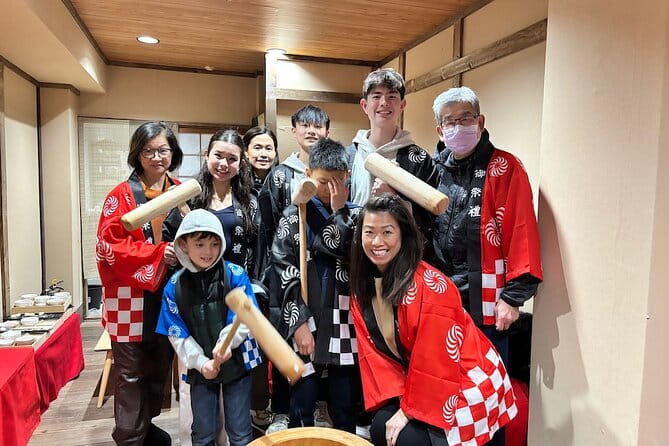
- Small group limit of 10 travelers helps keep attention on you during the pounding.
- A 10-minute history talk sets context before you start steaming and pounding.
- Traditional mortar and pestle work is the main event, with clear, patient guidance.
- Tasting moment with multiple seasonings plus a cup of tea turns the class into a meal.
- English and Chinese support is available via slides and/or interpretation.
- Kid-friendly for ages under 13, while adults can join too, makes it easy to book as a family.
Why This Mochi Pounding Class Feels Like Real Osaka
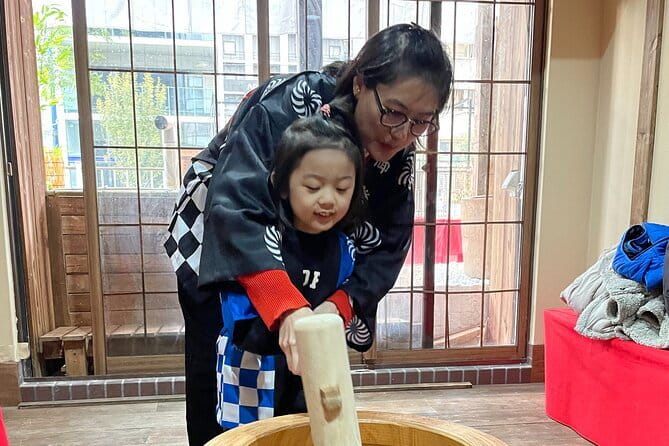
If you want one hour in Osaka that you can’t just watch from the sidewalk, this kind of mochi pounding experience is perfect. Instead of reading about Japanese sweets, you get your hands on the process: steaming glutinous rice, pounding it with traditional tools, and shaping it into mochi you can actually taste.
I also like that the session is built around both learning and payoff. You get a short history and cultural significance talk, then you do the work, then you eat. That rhythm keeps it interesting for kids, and it still feels meaningful if you are coming from overseas where you might already know what mochi is.
Osaka is Japan's kitchen, and Kyoto, Nara, and Himeji are all close enough for a day trip.
- Osaka Go Karting Tour with Funny Costume★ 5.0 · 2,658 reviews
- Osaka Castle: Museum and Tower Entry Ticket★ 4.5 · 2,380 reviews
- Osaka: Shinsekai Food Tour with 13-15 Dishes at 5 Eateries★ 4.8 · 2,204 reviews
- Osaka Food Tour: 13 Dishes at 5 Local Eateries★ 5.0 · 2,149 reviews
- Hungry Osaka Street Food Tour:15 Tastings & 3 Drinks with a Local★ 5.0 · 1,727 reviews
Meet at Oh Mochi in Dotonbori, Then Jump Into the Action
The activity starts and ends back at Mochi Pounding Experience Osaka, Oh Mochi at 2-chōme-4-11 Dōtonbori, Chuo Ward. The location is in the Dotonbori area, and it is also near public transportation, which matters when you are planning a tight Osaka day.
The format is simple: you show up for your scheduled slot, and the tour ends where it began. There’s also a mobile ticket involved, so you do not need to hunt for paper paperwork while you are walking around busy streets.
Timing is about 1 hour (approx.), and in practice you should think closer to 45 to 60 minutes depending on the group. With a maximum of 10 travelers, it is not rushed like some big group activities can be.
The 10-Minute History Brief That Keeps It From Feeling Like a Show
Before anyone gets the mortar and pestle moving, you get a 10-minute talk about the history and cultural significance of mochi pounding. This is a small window, but it helps you understand what you are doing and why it matters, especially if you have never seen mochitsuki-style pounding up close.
I like that the session does not try to turn into a lecture. It gives just enough context so that when you start pounding, it feels connected to a living tradition, not just a fun craft.
From Steamed Rice to Chewy Dough: What Happens in the Middle

The hands-on process is the heart of the experience. After the talk, you join in the steps involved with steaming glutinous rice and then working it into mochi using traditional tools.
This is one of those activities where the structure matters. You do not have to guess what comes next, and the instructors teach patiently so that even first-timers can participate. It also helps that the pacing is designed for families, which means kids are not left standing around waiting for the adults to finish.
In plain terms, you should expect to spend the bulk of your hour doing something physical and hands-on, then shifting into a tasting phase right afterward.
Mortar and Pestle Moment, Including the Yo Shio Chant

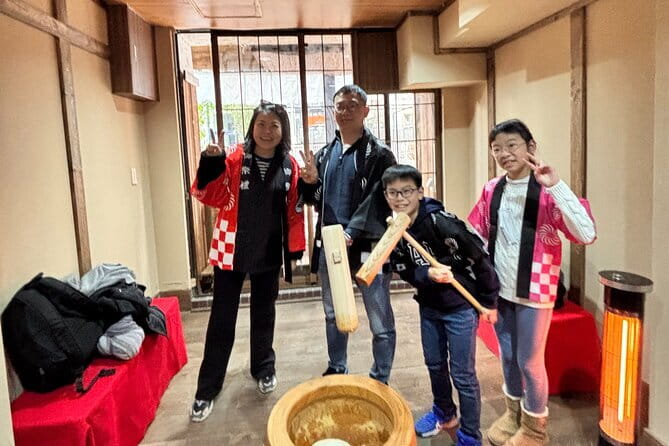
When you move into pounding, you are using a mortar and pestle, the classic setup that makes mochi pounding feel different from other “make-it-yourself” desserts. It is rhythmic, it is physical, and it is designed for shared participation.
One fun detail from the experience vibe is that you may be encouraged with a chant like yo shoi while you pound. That kind of call and response can sound small, but it is what turns the tool use into a real group moment, especially with kids.
You also get guidance during the process, so you are not just dropped into the middle of sticky dough and left to figure it out. That patient teaching shows up again in the way the tasting is organized, with multiple topping options so you can enjoy the finished results in different flavors.
Not ready to leave Osaka yet? A few more ways to fill the day.
- Osaka: Tea Ceremony Experience
★ 4.9 · 1,426 reviews - Osaka Kickstart: Hotspots & Hidden Gems Tour
★ 5.0 · 1,306 reviews - Deep Backstreet Osaka Tours (Option to add Dinner)
★ 5.0 · 1,290 reviews
The Tasting Setup: Fresh Mochi, Five Seasonings, and Tea
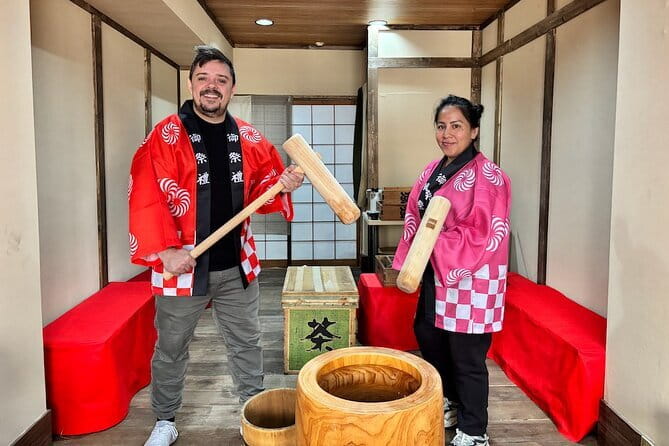
After pounding, you get to eat the mochi you helped make. The mochi is served plain and also topped with classic Japanese accompaniments. The options listed include kinako (roasted soybean powder), sweet red bean paste, nori (seaweed), and sweet soy sauce, and the experience includes tea as well.
What I like about this part is that it makes the whole class feel like a meal, not just a snack. You get multiple bites, so you can find your favorite flavor profile without committing to just one.
The experience also includes a note that you will have plenty of mochi to eat. If you tend to snack lightly while traveling, you might still want to eat carefully here, because the portion can be more generous than you expect.
Family-Friendly for Under 13, With Adult Options Too
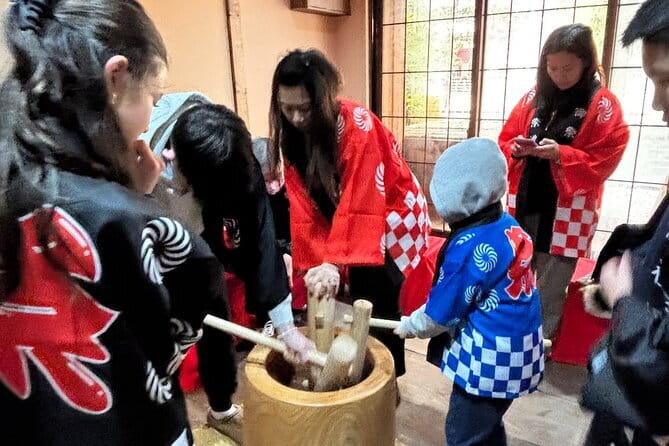
This is explicitly family-friendly, and children under 13 are welcome. The format is designed so that families can join together, and it is not limited to kids only. Adults-only participation is also available, so you can book even if you are not traveling with children.
From an on-the-ground perspective, this kind of activity works especially well when your group includes mixed ages. Kids get a hands-on task that feels like play. Teens often enjoy the novelty of working with traditional tools. Adults appreciate the structure, plus the chance to learn while doing.
If you are traveling with older relatives, keep the safety note in mind: elderly participants should eat rice cakes in small portions, because mochi can pose choking risk. That does not mean you should skip the experience, but it does mean you should plan for slower eating and careful bite size.
Language Support: English and Chinese Without the Stress
Language can make or break hands-on classes, and this one offers English and Chinese support. The Chinese assistance is handled through slides or interpretation through ChatGPT, depending on how the session is run.
Practically, that means you should be able to follow along even if your Japanese is limited. The steps are physical, and the structure makes it easier to participate, even if you need a bit of language help for the history talk or timing cues.
Vegans and Vegetarians Can Join
The experience specifically says it accommodates dietary preferences, including for vegan and vegetarian participants. That is an important detail because mochi toppings can include ingredients that vary by menu, so knowing you can participate without worrying is a big value point.
What you should do is communicate your preference when booking, then show up ready to enjoy the experience as much as you can. Even with dietary adjustments, the core is still the same: steaming, pounding, and tasting.
Price and Value: Is $32.29 Worth It?
At $32.29 per person, this is priced like a focused class, not a casual street snack. The value comes from a few things you get in one package: instruction, the use of traditional tools, a short history talk, and then a tasting that includes tea plus multiple toppings.
Also, the small group limit matters. When the class is capped at 10 travelers, you tend to get a smoother flow and less waiting around. That translates into more actual participation time, which is usually where the money feels worth it in a hands-on workshop.
If you are trying to pick just one food experience in Osaka beyond eating, this is a strong choice because you leave with both knowledge and edible results.
Logistics That Make It Easy in a Busy Osaka Day
This session is designed to be easy to fit into a day in Dotonbori. It is near public transportation, and it starts and ends at the same meeting point. You also receive confirmation at booking time, and you use a mobile ticket, so you are not juggling extra steps.
There is one practical weather note: the experience requires good weather. If it is canceled due to poor weather, you will be offered a different date or a full refund.
If your Osaka schedule is flexible, that helps. If your schedule is tight, build in some patience, because weather can still affect plans even for short activities.
Should You Book This Mochi Pounding Session?
I think you should book if you want a hands-on Osaka food experience that is truly family-friendly, not just a tasting. The format is simple, the group is small, and the payoff is real: you make mochi and then you eat it with multiple classic toppings and tea.
You might skip it only if you strongly prefer fully hands-off sightseeing, because this is centered on participation. You also should think twice if your group includes elderly guests who may not handle rice cakes comfortably, even with small portions guidance.
If you are planning time in Dotonbori anyway, this is a practical way to add something memorable to your day while you are already in the right neighborhood.
FAQ
Where is the meeting point for the mochi pounding experience?
The meeting point is Mochi Pounding Experience Osaka, Oh Mochi, at 2-chōme-4-11 Dōtonbori, Chuo Ward, Osaka, 542-0071, Japan. The activity ends back at the same meeting point.
How long does the experience take?
The experience lasts about 1 hour (approx.).
How much is the tour per person?
The price is $32.29 per person.
Is this experience suitable for children?
Yes. It is available for children under 13 and is described as family friendly. Adults can also join.
What languages are offered during the class?
The experience is offered in English and Chinese. Chinese is provided through slides or interpreted by ChatGPT.
Does the experience accommodate vegans and vegetarians?
Yes. The experience states that it accommodates dietary preferences, including vegans and vegetarians.
What is the cancellation policy, especially for bad weather?
You can cancel for a full refund up to 24 hours in advance. The experience requires good weather, and if it is canceled due to poor weather, you will be offered a different date or a full refund.