Reviewed · OSAKA
90 min Shared Handmade Udon Experience
Udon by foot power in Osaka. This 90-minute handmade udon class has you knead dough using a Sanuki-style method, then eat what you make right away in a Michelin-listed restaurant atmosphere (featured in the guide from 2018 to 2023). You also get step-by-step coaching that makes the whole thing feel doable, even if you have never cooked noodles before.
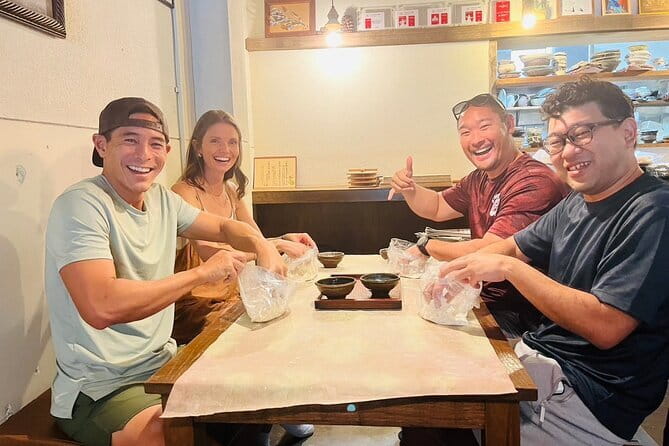
I love that the experience mixes hands-on learning with a real meal. Keiko, one of the hosts I heard about, is warm and welcoming, and you get free photos taken during the class, so you’re not stuck with shaky phone pictures while your hands are covered in flour.
One consideration before you book, this activity is not recommended for people with a wheat allergy.
In This Review
- Key Highlights You Should Know
- Osaka Udon Class in a Michelin-Listed Restaurant Setting
- Sanuki Udon Made With Your Feet, Not Your Hands
- From Kneading to Chef-Cooked Bowls, What You Eat
- Instructors Like Keiko and Nozomi, plus Photos Included
- Timing, Location, and What to Do Before You Arrive
- Price and Value at About $52.85
- Who This Udon Experience Suits Best
- Should You Book This Hand-Made Udon Class?
- FAQ
- How long is the udon-making experience?
- What’s included in the $52.85 per person price?
- Are drinks included?
- Is there a vegetarian option?
- Is this class suitable for a wheat allergy?
- Is cancellation free, and how far in advance do I need to cancel?
Key Highlights You Should Know
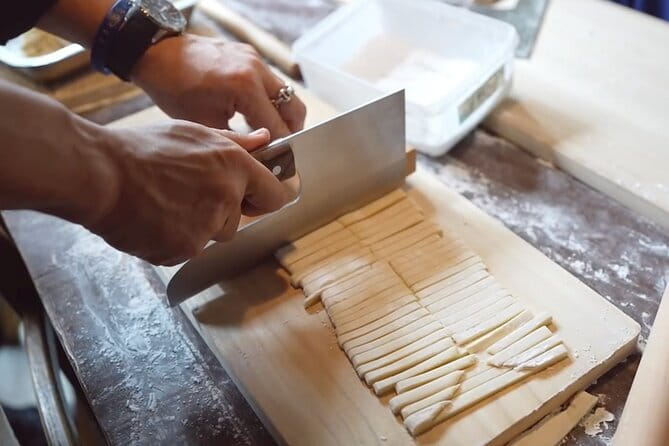
- Sanuki udon kneading with your feet, for a firm yet soft texture that you won’t get from dry packets
- Chef-cooked bowls and broth made with kombu, shiitake mushrooms, and katsuobushi, using additive-free ingredients
- Eat hot or cold udon soon after making it, plus a home recipe included
- Free instructor photos during your class, shared after
- Small, cozy restaurant setting, with classes that can be grouped with others
Osaka Udon Class in a Michelin-Listed Restaurant Setting
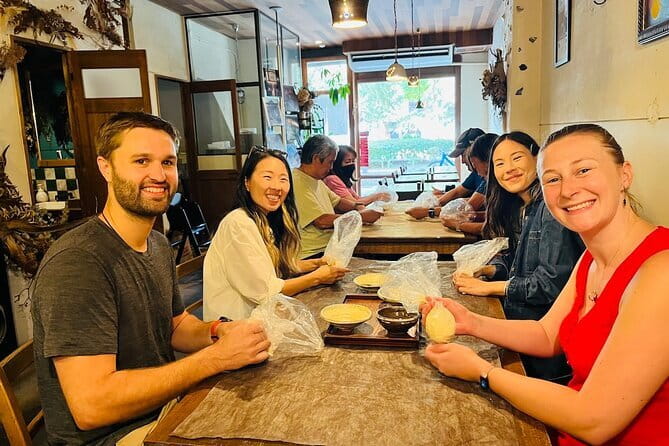
This is an Osaka food activity with a real sit-down vibe, not a rushed demo. The class takes place at UDONZIN美糸1-chōme-16-17 Shinmachi, Nishi Ward, a location that is near public transportation, which matters in Osaka where you can easily burn time switching lines.
The restaurant itself is described as small and cozy, with clean facilities and a coherent, comfortable feel. That’s not just aesthetics. A compact space keeps the class moving, and it helps you hear instructions without competing with a loud soundtrack.
You’ll get a mobile ticket, and the class runs about 1 hour 30 minutes. That timing is long enough to learn the technique, but short enough to fit into a normal Osaka day. Also, you’ll want to arrive on time because the restaurant resumes regular service after your session, meaning they are not trying to stretch the schedule.
Value-wise, the price you pay is for the lesson, the udon you eat, the home recipe, and local taxes. Alcohol is optional and extra (more on that later), and side dishes like tempura or extra udon are also not included. That structure keeps the core experience focused.
Osaka is Japan's kitchen, and Kyoto, Nara, and Himeji are all close enough for a day trip.
- Osaka Go Karting Tour with Funny Costume★ 5.0 · 2,658 reviews
- Osaka Castle: Museum and Tower Entry Ticket★ 4.5 · 2,380 reviews
- Osaka: Shinsekai Food Tour with 13-15 Dishes at 5 Eateries★ 4.8 · 2,204 reviews
- Osaka Food Tour: 13 Dishes at 5 Local Eateries★ 5.0 · 2,149 reviews
- Hungry Osaka Street Food Tour:15 Tastings & 3 Drinks with a Local★ 5.0 · 1,727 reviews
Sanuki Udon Made With Your Feet, Not Your Hands
The main event here is Sanuki udon technique. Instead of just kneading with hands, the dough is kneaded using your feet. It sounds goofy until you do it, then it makes sense. The pressure and motion help develop the dough in a way that creates a texture you can really notice.
You’ll get detailed guidance throughout the process, so you’re not left staring at a bowl wondering what comes next. The class is designed for people with no cooking experience too. And it’s family-friendly, with the practical bonus that everyone can take part in the fun part, the feet-on-dough moment, even if their cooking skills are still forming.
A key detail is what this method aims to change. The dough process creates a noodle that is firm and soft, and smoother than store-bought udon. That’s a big reason this class is worth doing in Osaka. You’re not just eating a specialty, you’re learning why the noodle ends up that way.
Dress matters. You’ll want clothes you don’t mind getting messy. Flour and water have a talent for finding the seams in your sleeves and cuffs. If you show up in your best outfit, you’ll spend the whole time watching your shirt instead of your dough.
From Kneading to Chef-Cooked Bowls, What You Eat
After you work the dough, the class doesn’t end with raw ingredients and hope. The chef cooks your noodles and serves them in broth.
The broth is built from kombu, shiitake mushrooms, and katsuobushi, and it’s made with all-natural, additive-free ingredients. That combination is a classic Japanese approach to building umami. In plain terms, it tastes deep and savory without needing anything flashy.
You can eat your udon either hot or cold, and that choice lets you match the dish to your day. If you’re out sightseeing in warmer weather, cold udon can feel like a reset button. If you’re in a cooler mood, hot noodles and broth are comforting fast.
You also have an option to sip Japanese sake or beer while you’re making udon, but alcohol is not included in the fee. If you plan to drink, it’s smart to budget a bit extra. The class stays centered on the cooking and meal, not on a bar tab.
Dietary note: vegetarian is welcome. Just let the team know in advance about any restrictions so they can guide you appropriately. If you have a wheat allergy, skip this one, since it is not recommended.
Side dishes like tempura or extra udon are available, but they are not included. I like that setup because it keeps the base meal focused on what you’re there to learn, and you can add extras only if you truly want them.
Instructors Like Keiko and Nozomi, plus Photos Included
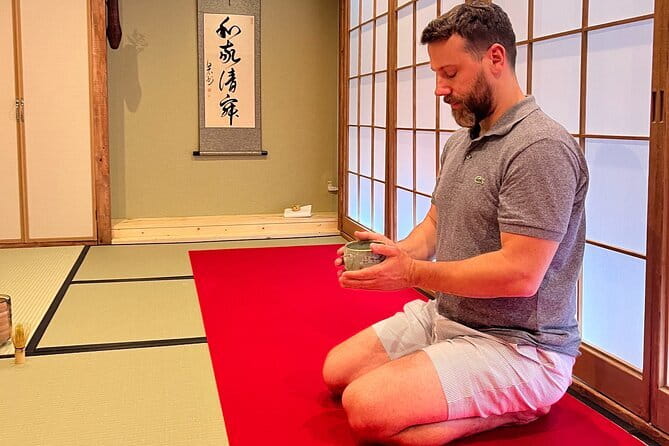
The people behind the class seem to be a major reason it stays memorable. Keiko is described as warm and inviting, and Nozomi is called a great teacher who makes the class fun and informative.
That matters, because udon-making has a rhythm. If instructions are clear and friendly, you relax and follow along. If not, you end up feeling clumsy while everyone else moves on. Here, the tone is part of the product.
You’ll also learn more than muscle memory. The class includes guidance on the history and culture behind udon, which helps you connect the technique to why it matters in Japanese food traditions. You end up with a story you can use later, like when you’re eating udon in another Osaka shop and you notice the texture differences.
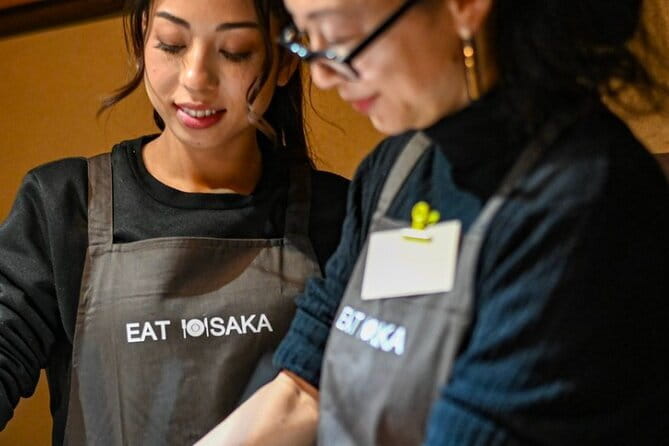
Then there are the photos. The instructor takes and shares photos of your experience for free. It’s a small detail, but it solves a real problem. When you’re kneading dough and standing in front of a small cooking space, it’s hard to manage selfies. Having someone else document it means you can actually enjoy the activity.
One more practical point: the class has a maximum of 20 participants, and you might be grouped with other participants. That’s normal for a shared experience. If you like meeting people, it can be a plus. If you prefer total quiet, know this is a social setting.
Timing, Location, and What to Do Before You Arrive
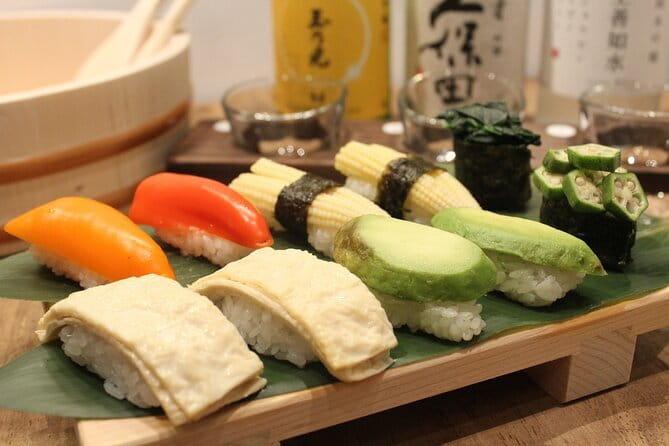
The whole experience runs about 1 hour 30 minutes. That’s a clean block of time. It also means you should plan your Osaka day so you’re not rushing in at the last second, especially because the restaurant resumes serving regular customers after your class.
A few practical tips help everything go smoothly:
- Wear clothes you don’t mind getting messy, since flour is part of the deal
- Arrive on time, not just close
- Use nearby public transport, since the meeting point is near transit
- If you’re coming solo, contact in advance, because classes require a minimum of two participants
This last point is worth highlighting. The class requires at least two participants. If you’re a solo adult, you’ll need to check for a suitable session. If you’re traveling as a small family or a group of friends, you’re in a great position to join without changing plans.
Children age 2 and above can participate, with a child fee listed as ¥5000. That pricing detail matters when you’re deciding between a family activity and an adult-focused meal.
Finally, keep your expectations realistic. This is not a long restaurant tour. It’s a focused cooking class with a tasting, then you’re done. The upside is you get a proper technique lesson in a short window without eating up your entire day.
Not ready to leave Osaka yet? A few more ways to fill the day.
- Osaka: Tea Ceremony Experience
★ 4.9 · 1,426 reviews - Osaka Kickstart: Hotspots & Hidden Gems Tour
★ 5.0 · 1,306 reviews - Deep Backstreet Osaka Tours (Option to add Dinner)
★ 5.0 · 1,290 reviews
Price and Value at About $52.85

At $52.85 per person, the value depends on how you think about food classes. If you’ve ever done a cooking class where you mostly watch and then leave hungry, you’ll probably feel disappointed. This one is built more like a hands-on cooking experience with a meal attached.
Here’s what’s included:
- Handmade udon lesson
- Udon tasting (hot or cold)
- A recipe for making udon at home
- Free photos taken by the instructor
- Local taxes
What’s not included:
- Alcoholic beverages
- Side dishes like tempura or extra udon
To me, the biggest value driver is the combination of technique and immediate payoff. You’re not just eating udon, you’re learning a method you can repeat at home, and you leave with a recipe. That home recipe is also practical. Without it, you’d only remember the fun part, the feet kneading, and not the steps that make the texture work.
If you plan to drink alcohol or add tempura, you’ll spend more, but that’s optional. For a lot of people, the base price already feels like a fair deal because the restaurant setting is part of what you’re paying for, including the chef cooking your noodles and serving them in broth made from specified ingredients.
Who This Udon Experience Suits Best
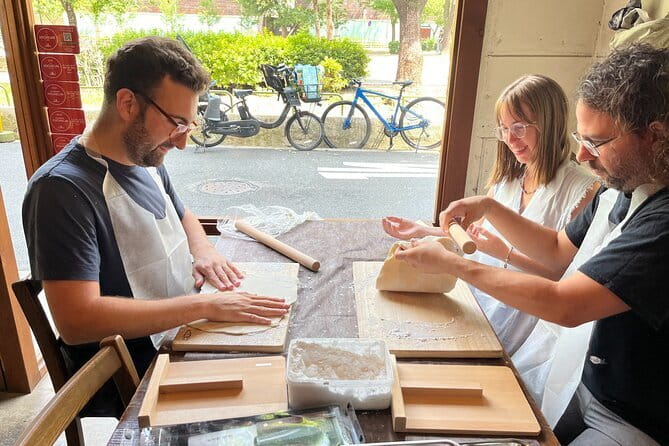
This is a strong match if you want something interactive while in Osaka. I’d point you toward it if:
- You want a hands-on food class instead of a simple tasting
- Your group includes kids who need an activity with motion and participation
- You like learning food culture, not just eating
- You want a guided way to make udon at home later, not guesswork
It’s also great for small groups. The max is 20, and some sessions can run with friends and family together. If you like a cozy, local-feeling setting, the Michelin-listed restaurant backdrop plus the small-class format should click.
The main “don’t book” category is straightforward: wheat allergy. The data explicitly says it’s not recommended for travelers with a wheat allergy. If that applies to you, skip it.
If you’re looking for a totally private experience, note two things: classes require a minimum of two participants, and you might be grouped with others. It’s shared by design.
Should You Book This Hand-Made Udon Class?
Yes, if you want to go beyond eating and actually learn how udon texture is built. The feet-kneading Sanuki method is memorable, the chef-cooked bowls mean you’re guaranteed a good result, and the recipe plus free photos help you carry the experience home.
Book it especially if your Osaka days include food shopping and walking, but you also want one structured, practical activity that ends with you eating a satisfying meal you made yourself. It’s the kind of class that feels like an Osaka story you’ll remember, not just a ticket you used.
Skip it if you need a wheat-free cooking environment, or if you prefer a fully private, quiet session. Otherwise, this is a smart use of time, and the cost makes sense for what you get.
FAQ
How long is the udon-making experience?
It runs about 1 hour 30 minutes.
What’s included in the $52.85 per person price?
The price includes the handmade udon lesson, an udon tasting (hot or cold), a recipe for making udon at home, free photos taken by the instructor, and local taxes.
Are drinks included?
Alcoholic beverages are not included. You can make udon while sipping Japanese sake or beer if you wish, but you would pay for those separately.
Is there a vegetarian option?
Yes. Vegetarian is welcome, and you should let the team know in advance about any dietary restrictions.
Is this class suitable for a wheat allergy?
No. It is not recommended for people with a wheat allergy.
Is cancellation free, and how far in advance do I need to cancel?
Free cancellation is available. You can cancel up to 24 hours in advance for a full refund. If you cancel less than 24 hours before the start time, the amount paid is not refunded.