
Reviewed · SHRINE & TEMPLE TOURS
Golden Pavilion Kiyomizu Temple and Fushimi Inari Shrine Tour
Golden color, temple steps, and fox trails. This tour strings together Kyoto’s top sights with guided context, so you can focus on what matters. I especially like the Golden Pavilion at Kinkakuji and the quiet thoughtfulness of temple gardens that feel made for slowing down.
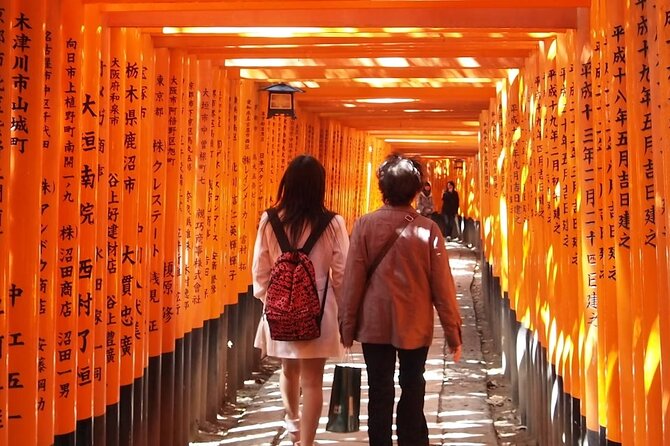
I also love how the day covers two very different “spiritual modes,” Kiyomizu-dera’s dramatic viewpoints and then Fushimi Inari’s long red Senbon Torii walk lined with fox statues. One thing to consider is the schedule is long (about 8 to 9 hours) and it depends on traffic and good walking stamina, so you need to plan for crowds and hills.
In This Review
- Key Points to Know Before You Go
- Why This Kyoto Trio Works in One Long Day
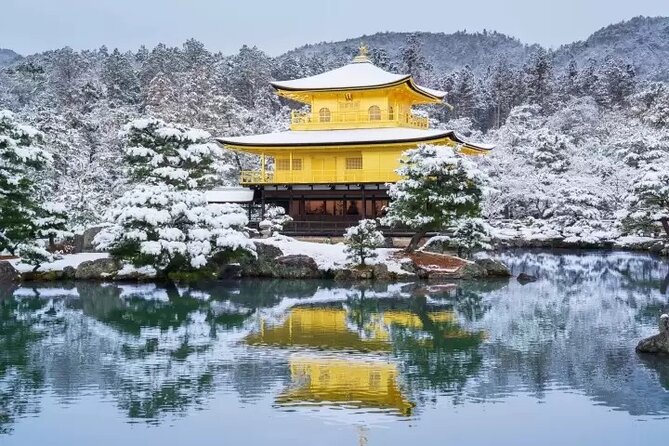
- Golden Pavilion at Kinkakuji, Gold Leaf and Pond Reflections
- Kiyomizu-dera, Otowa Waterfall, and the Wooden Stage Views
- Fushimi Inari Shrine, Senbon Torii Walks and Fox Statues
- Price and Tickets, What You Pay for and Why It Adds Up
- Transfers, Timing, and Staying on Schedule Without Stress
- Practical Tips: Luggage Limits, Comfortable Shoes, and Weather Reality
- Who This Tour Suits Best, and Who Might Want a Different Day
- Should You Book This Golden Pavilion, Kiyomizu, and Fushimi Inari Tour?
- FAQ
- How long is the tour?
- Where does this tour operate?
- What languages does the guide speak?
- Is transportation included?
- Do I need to pay for temple tickets?
- What is the maximum group size?
- Is there a luggage limit?
- Are there child discounts?
- What happens if the weather is bad?
- What if I am late to the meeting point or attraction?
Key Points to Know Before You Go
- Three Kyoto icons in one day: Kinkakuji, Kiyomizu-dera, and Fushimi Inari without wrestling connections.
- Otowa Waterfall themes: health, longevity, and academic success, plus the famous wooden stage and big hillside views.
- Senbon Torii experience: walk among the red torii, pass smaller shrines, and spot stone fox statues tied to the rice god.
- Panoramic pause at Yotsutsuji Intersection: a built-in moment for wide views.
- Small-group feel: capped at 50 travelers, with an English, Chinese, and Japanese-speaking guide.
- Extra temple tickets: Kiyomizu-dera and Kinkakuji entries are self-paid (¥500 each per person).
Why This Kyoto Trio Works in One Long Day
Kyoto can be tricky when you only have one day. This tour is designed for that reality: you get a tight hit of three landmarks that are famous for a reason. From Osaka, you ride round-trip, and the guide helps you make sense of what you are seeing, instead of treating each stop like a photo stop.
What I like is the balance between stillness and motion. Kinkakuji gives you calm garden beauty. Kiyomizu-dera adds height, drama, and viewpoint energy. Then Fushimi Inari flips the mood into a longer walk under the torii gates. That rhythm makes the day feel like a story, not a checklist.
The main drawback is simple: it is a long, walking-focused day. Expect hills at Kiyomizu-dera and a long route through Fushimi Inari’s torii corridor. If you get tired easily or you hate crowds, you will want to prepare your body (and your expectations).
Quiet spaces between the neon
- Osaka: Minoh, Katsuoji Temple, & Minoh Falls Full-day Tour★ 4.9 · 172 reviews
- Sagano Romantic Train & Arashiyama, Kiyomizudera, Fushimi Inari Taisha Day Tour★ 4.5 · 171 reviews
- Full Day Kyoto Tour : Bamboo Forest, Golden Temple, Fushimi Inari★ 5.0 · 84 reviews
- Osaka Temple Cool Foot Bath & Matcha Experience〈45min〉★ 4.9 · 82 reviews
- Osaka: Mind & Spirit Balance Temple Reiki Healing★ 5.0 · 41 reviews
Golden Pavilion at Kinkakuji, Gold Leaf and Pond Reflections
Kinkakuji, the Golden Pavilion, is one of those places where the details do the talking. The facade is covered in gold leaf, and it reflects across a tranquil pond. That combination is why the pavilion can feel almost meditative even when the area is busy.
I like the way this stop sets the tone for the rest of the day. You see a Zen-like ideal, gardens laid out for calm attention, not rushing. If you can, give yourself a few extra minutes to find a viewing angle where the pavilion and water line up. The scene is the point.
Two practical notes for your visit:
- You will be on a schedule. The tour keeps moving, so aim to arrive ready to look, not to “wait until it feels right.”
- The pavilion has an entry ticket you pay yourself, ¥500 per person. Plan that extra cost, and don’t assume it is bundled into the tour price.
This is also a good stop for photos, but don’t let the camera run your day. A quick scan from different angles teaches you more than one perfect shot.
Kiyomizu-dera, Otowa Waterfall, and the Wooden Stage Views
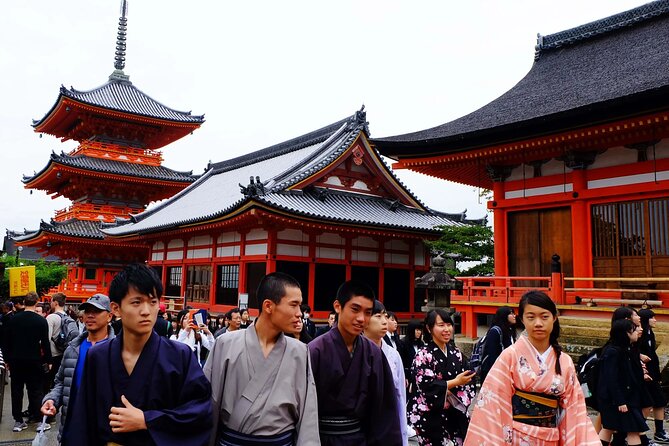
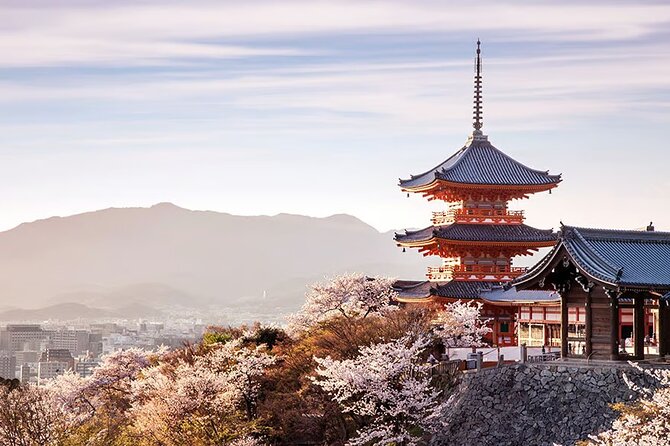
Next comes Kiyomizu-dera, perched on a hillside with sweeping views over Kyoto. Even if you have seen pictures, the setting still hits. The main wooden stage area is a signature feature, and it is one of the reasons people come: it feels like the temple is built for looking outward.
Then there is the Otowa Waterfall, which is one of the most memorable parts of this day. You can drink from it, and the themes tied to the water are specific: health, longevity, and academic success. That focus matters because it turns a scenic spot into a ritual moment. Even if you do not follow the belief system, it gives the stop a clear “why,” and that helps you connect with the site beyond architecture.
What to watch out for:
- Kiyomizu-dera is a ticketed stop you pay yourself, ¥500 per person.
- The site sits on slopes, so expect stairs and uneven walking. You do not need to be an athlete, but comfortable shoes are non-negotiable.
If you like viewpoint locations, this stop will probably feel like the emotional high point of the tour. The combination of the stage, the water ritual, and the wide city views is a strong trio.
Also, this is one of the best places on the tour for that thought-provoking, meditative energy you may be chasing. The setting naturally slows your pace.
Fushimi Inari Shrine, Senbon Torii Walks and Fox Statues
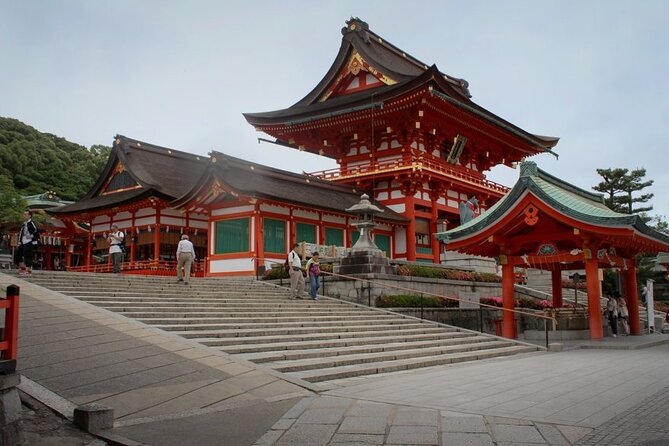
Fushimi Inari is famous for the torii gates. What makes this tour stop feel real is that you do not just do the entrance and leave. You walk through the Senbon Torii, passing smaller shrines and stone fox statues.
Those fox statues matter here. They connect to the rice god as messengers, which turns the forest of gates into a shrine system with meaning. You start seeing patterns in what is where, and that helps the walk feel guided, even when you are free to wander.
One extra bonus built into this stop is the time at Yotsutsuji Intersection. It is a panoramic viewpoint. It also helps break up the gate-walk so you are not just marching from one photo spot to the next.
A realistic caution: Fushimi Inari can be crowded. The torii corridor is long, and you will likely encounter slowdowns. For this reason, I suggest you treat it as a slow walk with breaks, not a sprint. If you focus on the experience, you will still get the payoff.
Price and Tickets, What You Pay for and Why It Adds Up
This tour is priced at $103.77 per person. For a full day covering three major Kyoto landmarks from Osaka, that base price often feels fair because it includes two big value items:
- An English/Chinese/Japanese-speaking guide
- Round-trip transfers to and from the meet-up location
Where the price changes is at the temples themselves. Kiyomizu-dera and Kinkakuji both require self-paid entry tickets at ¥500 per person each. So you should budget for those additional fees on top of the tour rate.
Does that make the deal worse? Not necessarily. These are major, high-demand sites with entry fees, and your tour time is spent efficiently between them. Paying separate tickets is common on this type of day tour, and it usually means you are not paying inflated pricing inside the package just to cover fees.
My practical advice: before you book, add the self-paid tickets into your own total. It keeps things stress-free when you arrive, especially on a long day.
Not ready to leave Osaka yet? A few more ways to fill the day.
- Osaka Go Karting Tour with Funny Costume
★ 5.0 · 2,658 reviews - Osaka Castle: Museum and Tower Entry Ticket
★ 4.5 · 2,380 reviews - Osaka: Shinsekai Food Tour with 13-15 Dishes at 5 Eateries
★ 4.8 · 2,204 reviews
Transfers, Timing, and Staying on Schedule Without Stress
The day runs about 8 to 9 hours, including travel time. That matters because you will likely move between Kyoto stops with a mix of road and pedestrian time. The tour includes round-trip transfers, which is a real help if you do not want to figure out train routes while also planning temple visits.
A few logistics points you should take seriously:
- The departure time may shift in peak season or special circumstances. You get the specific time by email one day before the trip.
- This is a carpooling trip. That means punctuality affects everyone. If you are late, you will not be waited for and you will not be refunded.
- The order of attractions can adjust for weather, traffic, or other realities, with the guide working with guests and without reducing the number of stops.
I like that the tour admits you cannot control Japan traffic, but it also makes one request clear: be early. If you are the kind of person who always shows up 5 minutes before a flight, you will feel comfortable here.
Group size is also a factor. With a maximum of 50 travelers, you should get a guided experience without it turning into a free-for-all.
Practical Tips: Luggage Limits, Comfortable Shoes, and Weather Reality
This tour is doable for most people, but it is still a physical day. You will be walking through temple grounds, stair areas, and the long Senbon Torii path. I recommend treating it like an active day, not a sit-down sightseeing loop.
Luggage policy is straightforward: each person can bring up to one piece of luggage for free. You should note it in the Special Request when placing the order. If you do not, and you bring luggage at the last minute, it can cause congestion and affect driving safety. The guide has the right to refuse boarding if it creates a safety problem. That is not a scare tactic, it is just how carpooling works.
Weather also matters. This experience requires good weather. If it is canceled due to poor weather, you are offered a different date or a full refund. That is a big deal because the viewpoints and walking segments depend on conditions.
Quick smart-prep list:
- Wear shoes you can stand and climb in.
- Bring water. Temple drinking rules can vary by area, but staying hydrated on a hillside day is always a good idea.
- Keep an eye on your email the day before for any departure time change.
Who This Tour Suits Best, and Who Might Want a Different Day
This is a strong fit if you want Kyoto icons in one day and you prefer guided structure over self-planning. It is also a good pick if you like the contrast between different types of sacred spaces, calm garden geometry at Kinkakuji, ritual and viewpoints at Kiyomizu-dera, and a long symbolic walk at Fushimi Inari.
If you are traveling with family, note the kid rules. Children aged 0 to 2 are free as long as they do not occupy separate seats. Children aged 3 and up are charged the same rate as adults. So if you are bringing small kids, plan for a day that includes walking and crowds.
Who might struggle:
- Anyone who cannot do hills or long walks.
- Anyone who dislikes crowds at major Kyoto hotspots.
- Anyone who thinks arriving late is acceptable. It is not on a carpooling tour like this.
On the other hand, if you want an efficient, classic Kyoto day from Osaka, this route is a very sensible choice.
Should You Book This Golden Pavilion, Kiyomizu, and Fushimi Inari Tour?
I would book this if your goal is to see three top Kyoto sites with guided context and smooth transfers, without spending your day figuring out logistics. The mix is also thoughtful: you get the calm, meditative feeling tied to temple gardens, then a dramatic hillside experience at Kiyomizu-dera, and finally the long, iconic Senbon Torii walk at Fushimi Inari.
Skip it or consider alternatives if you want a slow, uncrowded day. This tour is built for maximum highlights, and that usually means busy paths and lots of movement. Also, check your tolerance for extra entry tickets. The tour price is reasonable, but Kiyomizu-dera and Kinkakuji tickets add ¥500 per person each.
If you can walk comfortably and you are willing to follow the timing, this is one of the more practical ways to hit Kyoto’s big three in a single shot from Osaka.
FAQ
How long is the tour?
The tour runs about 8 to 9 hours, including travel time.
Where does this tour operate?
It is based in Osaka, Japan, with visits to the Kyoto landmarks Kinkakuji (Golden Pavilion), Kiyomizu-dera, and Fushimi Inari Shrine.
What languages does the guide speak?
The guide speaks English, Chinese, and Japanese.
Is transportation included?
Yes. Round-trip transfers to and from the meet-up location are included.
Do I need to pay for temple tickets?
Yes. Kiyomizu-dera and Kinkakuji tickets are not included. Each costs ¥500 per person and is paid self.
What is the maximum group size?
The tour has a maximum of 50 travelers.
Is there a luggage limit?
Yes. Each person can bring up to one piece of luggage for free. You should note it in the Special Request when booking.
Are there child discounts?
Children aged 0 to 2 are free as long as they do not occupy separate seats. Children aged 3+ are charged the same rate as adults.
What happens if the weather is bad?
This experience requires good weather. If it is canceled due to poor weather, you will be offered a different date or a full refund.
What if I am late to the meeting point or attraction?
If you are late, you will not be waited for or refunded. You will also be responsible for any accidents that may occur after being late.
Just added around Osaka

Shrine & Temple Tours, compared.
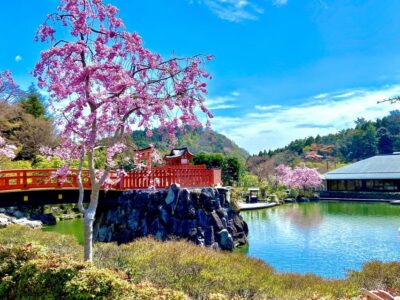
Minoh, Katsuoji Temple, & Minoh Falls Full-day Tour
Read our review →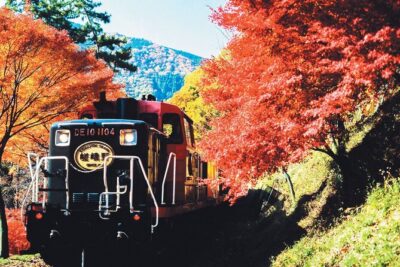
Sagano Romantic Train & Arashiyama, Kiyomizudera, Fushimi Inari Taisha Day Tour
Read our review →Full Day Kyoto Tour : Bamboo Forest, Golden Temple, Fushimi Inari
Read our review →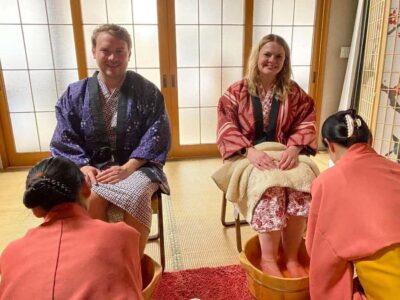
Osaka Temple Cool Foot Bath & Matcha Experience〈45min〉
Read our review →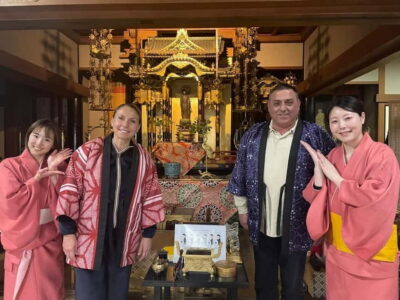
Katsuo-ji Temple, Arashiyama Forest, & Nara Park
Read our review →
Immersive Arashiyama & Fushimi Inari by Private Car
Read our review →
Kyoto Highlights: Arashiyama & Fushimi Inari by Private Car
Read our review →This tour also fits