
Reviewed · SHRINE & TEMPLE TOURS
Making Soba noodles at Temple
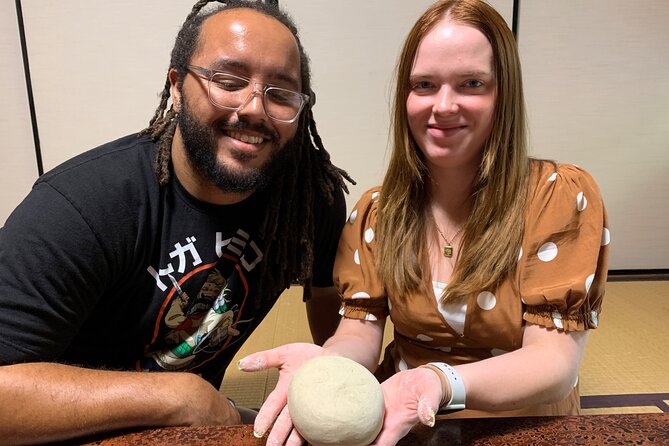
Soba making at a temple feels calm. In Osaka, you get a hands-on soba noodle lesson in a historic setting, plus time to see the temple’s main hall and Buddha statue. It is the kind of activity where the pace slows down, and the food tastes better because you helped make it.
I also love that it is private. You and your group get the teacher’s attention in a small team setting, and you are not squeezed into a big crowd. One thing to consider: this class is built around buckwheat, so if you have a buckwheat allergy, you may not be able to participate.
In This Review
- Key things to know before you go
- A calm Osaka temple where you make soba noodles
- Your hands-on session with Hiro, small-team teaching, and a private pace
- From dough to noodles, and why the tasting is the best part
- Temple main hall and Buddha statue time, and how it changes the vibe
- Price and value in Osaka: what $68.29 really buys you
- Getting there, what to bring, and how to plan your timing
- Weather and flexibility: when plans change in Osaka
- Who this soba class is best for
- Should you book this Temple soba making class in Osaka?
- FAQ
- How long is the soba making experience?
- What is included in the price?
- Is this tour private?
- Where does the experience start and end?
- Is the tour suitable for people with buckwheat allergies?
- What happens if the weather is bad?
- What is the cancellation policy?
Key things to know before you go
- A temple setting in Osaka gives you a quieter, more respectful mood than a typical cooking studio
- Private group format means you get more direct help and a more personal pace
- Soba you make, then eat right after, so the payoff is instant
- Main hall and Buddha statue time adds cultural context beyond the cooking
- Hiro is the hands-on guide, and the experience can feel like a one-to-one lesson
- Weather matters, so build in a little flexibility if conditions are poor
A calm Osaka temple where you make soba noodles
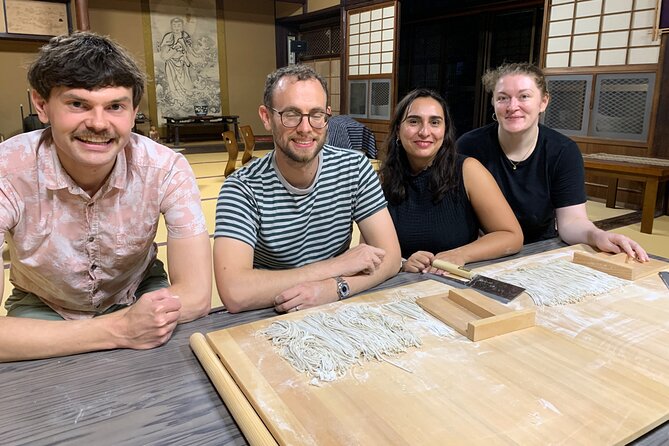
If your Japan trip includes food stops but you still want something slower and more meaningful, this soba experience hits a sweet spot. The setting is a historic temple, which changes the whole feel of a cooking class. Instead of fluorescent lights and background music, you are surrounded by that steady, quiet temple atmosphere.
What you are really signing up for is learning Japanese soba culture, not just getting a plate of noodles. You will make the soba yourself and then sample what you produced. That loop matters. It turns a meal from something you buy into something you understand.
You also get more than the kitchen component. The experience includes a visit to the temple’s main hall and the Buddha statue. Even if you have seen temples before, it is nice to have that time paired with a food tradition. You leave with a connection between place, practice, and taste.
One practical note up front: buckwheat is central here. The class is made from buckwheat flour, so if anyone in your group has buckwheat allergy, this can be a dealbreaker. It is not a minor ingredient, and you should not gamble.
Quiet spaces between the neon
- Osaka: Minoh, Katsuoji Temple, & Minoh Falls Full-day Tour★ 4.9 · 172 reviews
- Sagano Romantic Train & Arashiyama, Kiyomizudera, Fushimi Inari Taisha Day Tour★ 4.5 · 171 reviews
- Full Day Kyoto Tour : Bamboo Forest, Golden Temple, Fushimi Inari★ 5.0 · 84 reviews
- Osaka Temple Cool Foot Bath & Matcha Experience〈45min〉★ 4.9 · 82 reviews
- Osaka: Mind & Spirit Balance Temple Reiki Healing★ 5.0 · 41 reviews
Your hands-on session with Hiro, small-team teaching, and a private pace
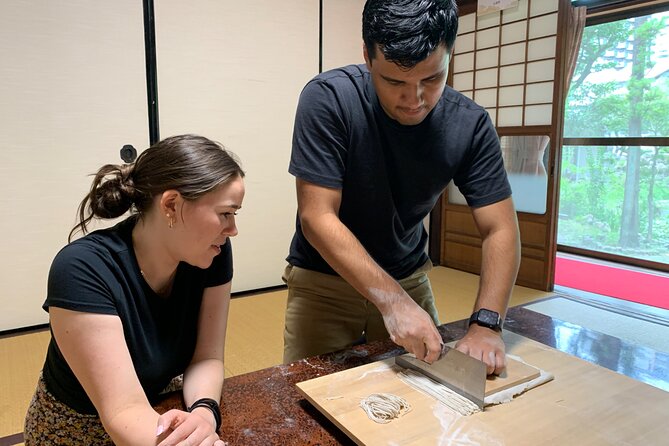
The biggest “feel” difference is the teaching style. This runs with a small team, and it is set up as a private activity, meaning only your group participates. That matters in real life. You get time to ask questions without rushing, and the guidance can adjust to your pace.
In particular, the experience is guided by Hiro. Based on how the class is described, Hiro teaches in a friendly, focused way that makes the process feel approachable, even if you have never made soba before. One detail I like, and you will probably appreciate too, is that you are not just left with dough and silence. You are guided step by step, and you come away with something you can actually eat.
This also helps with photography and memory. Hiro takes photos during the lesson and then sends them to you after. That is a nice touch because soba making is the kind of thing where it is easy to forget to document your work while you are concentrating.
If you are traveling as a couple or as a family, this format tends to work well. Kids often do better with calmer, shorter instructions than a high-energy workshop. Adults often love the slower pace and the chance to learn properly instead of doing a fast “assembly line” style class.
From dough to noodles, and why the tasting is the best part
The core experience is straightforward: you learn how to make soba noodles at a historic temple, then you eat the soba you make. You might think you already know what soba tastes like from restaurants, but there is something different about noodles you helped create.
The class includes snacks based on the soba noodles. In other words, the food is not an afterthought. You are not just touring a kitchen. You are producing something edible that becomes part of the experience.
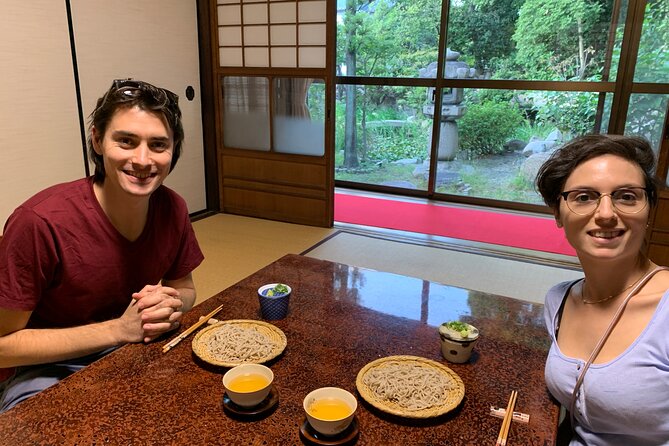
A nice moment is the eating setup. After the noodle work, you sit down at a Japanese-style table to enjoy your homemade soba. That is where the experience clicks. You get a quiet, seated break right after you work with your hands. It feels respectful, and it also gives you time to notice the texture and flavor.
Now, a small consideration: soba can be a different texture from what you might expect if you only eat restaurant versions. Buckwheat flour has its own character, and homemade noodles can vary. That is not a downside, it is part of the lesson. You are learning the craft, so the end result is more about understanding and effort than chasing a “perfect photo” outcome.
If you want a souvenir you can taste, this is one of the better options in Osaka. It is not a generic snack. It is your work, your flavor, your batch.
Temple main hall and Buddha statue time, and how it changes the vibe
Many food classes stay purely in the cooking world. Here, you also visit the temple’s main hall and the Buddha statue. That inclusion gives you context, and it changes your mindset while you cook.
Even if you do not consider yourself a temple person, that cultural stop adds depth. You are reminded that this kind of craft sits inside daily Japanese culture, not only inside restaurants or textbooks. The calm setting supports that. You are working with something traditional in a place that is also traditional.
The temple visit also helps you pace your time. During a typical cooking class, you do steps back-to-back. Here, you get a natural rhythm: cooking, then looking, then eating. It makes the whole experience easier to enjoy, especially if you have been moving around Osaka all day.
One more practical point: this is not a “big tour bus” style program. The activity ends back at the meeting point, so your time stays contained. You can plan the rest of your day with less worry.
Price and value in Osaka: what $68.29 really buys you
At $68.29 per person for about 2 hours, this is not a bargain-basement activity. You are paying for three things that matter.
First, you are paying for the private nature. Private group experiences tend to cost more because the teacher and space are being allocated to you rather than shared across a large crowd.
Second, you are paying for the historic temple setting. You are not learning soba in an industrial kitchen. The location and atmosphere are part of the value, and the cultural visit is included in the experience.
Third, you are paying for hands-on instruction that leads to a meal. The class includes snacks, and you eat the soba you made. That turns it into an activity plus food, not just a demo.
So the value is strongest if you want something more “Japan” than “just another meal.” If your trip goal is to do one or two standout cultural activities where you leave with both a story and something to eat, this fits.
If you are purely cost-driven, Osaka has many budget-friendly food options. But if you want a calm, guided craft experience, the price starts to look reasonable.
Also note that this activity is, on average, booked about 47 days in advance. If you have fixed travel dates, I would plan early rather than waiting for a last-minute option.
Not ready to leave Osaka yet? A few more ways to fill the day.
- Osaka Go Karting Tour with Funny Costume
★ 5.0 · 2,658 reviews - Osaka Castle: Museum and Tower Entry Ticket
★ 4.5 · 2,380 reviews - Osaka: Shinsekai Food Tour with 13-15 Dishes at 5 Eateries
★ 4.8 · 2,204 reviews
Getting there, what to bring, and how to plan your timing
The meeting point is listed at 1-chōme-3-68 Shitaderamachi, Tennoji Ward, Osaka, 543-0076, Japan. The good news is it is near public transportation. The listing also says no private transportation is included, so you will rely on trains and walking.
Because the experience is about 2 hours and returns you to the meeting point, you can pair it with a nearby meal or a temple stroll without building your day around transfers.
What you should bring is mostly common-sense comfort. Wear clothes and shoes that can handle a bit of hands-on work and walking around a temple area. You might also want to bring a small towel or extra wipes, just in case you get flour on your hands or sleeves. The experience does not mention supplies, so I suggest you come prepared.
If you are traveling with family, plan snacks and water around the experience. You will have soba-based snacks included, but you still want to keep energy levels steady before and after.
And the biggest non-fashion detail: buckwheat allergy risk. This is not about tasting a tiny ingredient. It is made from buckwheat flour. If anyone in your group has had reactions to buckwheat, you should not treat this as a maybe.
Weather and flexibility: when plans change in Osaka
This experience requires good weather. If it gets canceled due to poor weather, you will be offered a different date or a full refund. That means it is smart to book it when you have at least one or two backup options in your schedule.
Also, since confirmation is received at the time of booking, you should have your details ready quickly. The experience uses a mobile ticket, which is convenient if you do not want to juggle paper on the go.
Finally, think about timing within your day. If you schedule it right after a rushed sightseeing block, you may feel more flustered than the temple setting deserves. This is the type of activity that works best when you arrive with time to slow down and focus.
Who this soba class is best for
This fits best if you want an authentic, calm, hands-on cultural experience that is not too long. In real terms, that means:
- You want to learn a traditional food craft in Osaka, not just watch it
- You prefer smaller, calmer settings over crowded group tours
- You travel as a couple, small group, or family and value personalized attention
- You care about eating what you make, immediately, in a proper seated moment
It is also a strong choice if you have already done a lot of big-ticket sights and you want something grounded in daily Japanese life, with a temple atmosphere that changes the tone.
Should you book this Temple soba making class in Osaka?
Yes, if you want a genuinely hands-on Osaka experience that combines food, quiet culture, and a small-team private feel. For many people, soba making is one of those activities they remember because they not only tasted it, they also practiced it.
Book it sooner rather than later, since demand is typically high enough that it gets booked about 47 days in advance on average. And be honest about allergies. Buckwheat is central here, and allergy safety is the main limiting factor.
If your ideal day in Osaka includes a calm temple moment, plus the satisfaction of eating noodles you made yourself, this is an easy choice. If you hate anything related to buckwheat or you want a purely low-effort, fast-and-fluent experience, you might look elsewhere.
FAQ
How long is the soba making experience?
It is approximately 2 hours.
What is included in the price?
Snacks are included, and the experience centers on making soba noodles to sample during the activity.
Is this tour private?
Yes. It is a private tour or activity, and only your group will participate.
Where does the experience start and end?
The experience starts at 1-chōme-3-68 Shitaderamachi, Tennoji Ward, Osaka, 543-0076, Japan, and it ends back at the meeting point.
Is the tour suitable for people with buckwheat allergies?
The experience notes that people with buckwheat allergies may not be able to eat it, since buckwheat is made from buckwheat flour.
What happens if the weather is bad?
If it is canceled due to poor weather, you will be offered a different date or a full refund.
What is the cancellation policy?
Free cancellation is available up to 24 hours in advance for a full refund. If you cancel less than 24 hours before the start time, the amount paid is not refunded.
Just added around Osaka
Shrine & Temple Tours, compared.
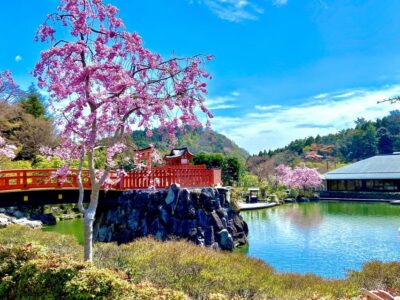
Minoh, Katsuoji Temple, & Minoh Falls Full-day Tour
Read our review →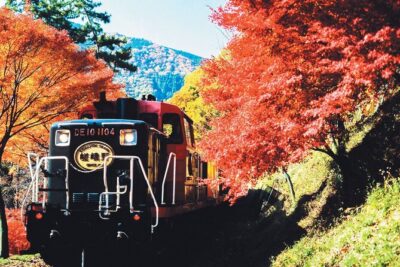
Sagano Romantic Train & Arashiyama, Kiyomizudera, Fushimi Inari Taisha Day Tour
Read our review →Full Day Kyoto Tour : Bamboo Forest, Golden Temple, Fushimi Inari
Read our review →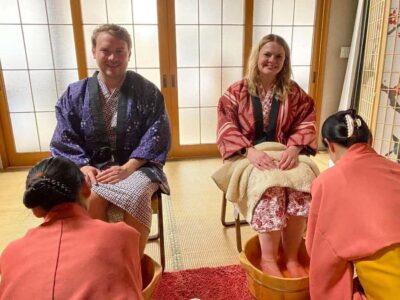
Osaka Temple Cool Foot Bath & Matcha Experience〈45min〉
Read our review →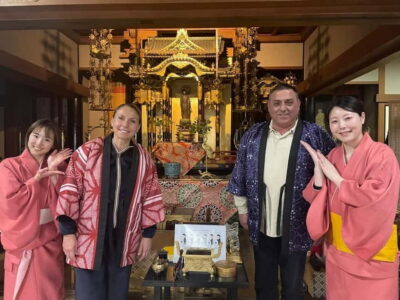
Katsuo-ji Temple, Arashiyama Forest, & Nara Park
Read our review →
Immersive Arashiyama & Fushimi Inari by Private Car
Read our review →
Kyoto Highlights: Arashiyama & Fushimi Inari by Private Car
Read our review →This tour also fits