
Reviewed · CYCLING TOURS
One-Day Osaka Bike Adventure: 5–6 Hours
Osaka looks different from a bicycle saddle. You get a 5 to 6 hour ride that strings together Osaka Castle, Shitennoji Temple, and Shinsekai, with your guide steering you toward places you might miss on foot. I like how this setup lets you cover more ground than walking without feeling like you are sprinting city to city.
My second favorite part is the lunch break and the way it is handled for real life, not just sightseeing. Your guide talks through local flavors, vegetarian options are available if you book ahead, and the meal gives you a breather right in the middle of the loop.
One tradeoff to know up front: most stops are brief. You learn and take photos, but you are usually not going inside major sights, like at Mint Museum where you stay in the grounds.
In This Review
- Key things to love about this Osaka bike loop
- Why Osaka by bike beats the walking shuffle
- The Tenma meeting point and what the first ride feels like
- Nakanoshima Park: riverside calm and old business district vibes
- Mint Museum grounds: learning Osaka’s modernization without waiting in lines
- Osaka Castle Park: postcard photos, historical framing, and the one real climb
- Shitennoji Temple: serene stop number two, with context that changes the feeling
- Shinsekai and Tsutenkaku: blue-collar Osaka, bright street-life, and street food moments
- Tower Knives Osaka: when shopping turns into a craft story
- Namba Yasaka Shrine: a quick, photogenic good-luck finish
- Lunch stop and vegetarian planning that actually helps
- Bikes, pace, and safety on Osaka streets
- Price and value: is $106.12 worth it?
- Best time to book and who this tour suits
- Should you book this Osaka bike adventure?
- FAQ
- How long is the Osaka bike adventure?
- Where does the tour start, and what time does it begin?
- What is included in the tour price?
- Is lunch included, and can I choose a vegetarian option?
- What level of fitness do I need?
- Is it suitable for children?
- What happens if the weather is bad or I need to cancel?
Key things to love about this Osaka bike loop
- One guided route, major Osaka highlights: Nakanoshima Park, Osaka Castle Park, Shitennoji, Shinsekai, and more
- Photo stops with real context so you know what you are looking at, even when you do not enter
- Bike, helmet, and bottled water included for an easy start and steady comfort
- Lunch built into the day with vegetarian availability if you planned ahead
- Small group size (max 8) helps the guide keep the ride smooth
- Pace that fits most visitors with only minor hills around the castle area
Why Osaka by bike beats the walking shuffle
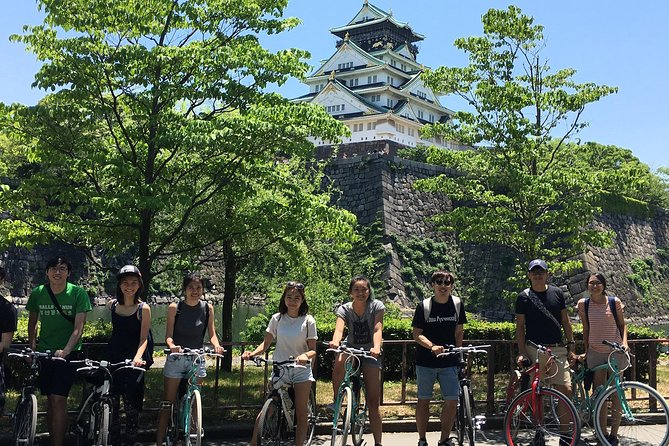
Osaka is not just food and photos, it is also neighborhoods stitched together by rivers, parks, temples, and loud street scenes. A bicycle tour helps you connect the dots fast. In this route, you are not stuck choosing between Osaka Castle and Shinsekai, you get both, plus the middle pieces that make the city make sense.
You also travel like a local in the best way. When you move at bike speed, you notice street rhythms you would miss while walking, like where people pause for snacks, which streets feel calmer, and how the city changes block by block. That matters in Osaka, because the contrast between official landmarks and everyday life is part of the charm.
The best part for me is balance: you cover big attractions, but your guide also gives you enough context to understand why they matter, not just where to stand for a picture.
Other ways to spend a day in Osaka
- 5-Hour Osaka Bike Tour to the Neighborhood of Osaka Castle★ 5.0 · 319 reviews
- Eat, Drink & Cycle: Osaka Foodie Bike Tour★ 5.0 · 224 reviews
- Osaka E-Bike Tour with a Local Guide★ 5.0 · 219 reviews
- 5-Hour Osaka Highlights Bike Tour with Lunch★ 4.8 · 146 reviews
- Osaka in a Nutshell: Three hour bike tour★ 5.0 · 121 reviews
The Tenma meeting point and what the first ride feels like
The tour starts at 1-chōme-10-7 Tenma, Kita Ward, with a 9:30 am start time, and it ends back at the same spot. That return matters more than it sounds, because you can spend the rest of your day without re-planning transportation.
Most first-time bike-tour jitters come down to one question: will you feel safe in traffic? This tour is designed for mixed visitors, and the group size is kept small at up to 8 people. That usually means less rushing, more pacing, and more attention from the guide when the streets get busy.
If you are new to cycling in a big city, I suggest you treat the first few minutes as a warm-up. Get used to braking, turning, and how the group moves together before you start scanning every landmark.
Nakanoshima Park: riverside calm and old business district vibes
Stop one is Nakanoshima Park, where you cycle through landscaped gardens and older buildings in Osaka’s older business area. The vibe here is a nice reset from the speed of the city. Expect a pleasant stretch of riding along the route’s river and green spaces, plus a chance to get your bearings.
This is a smart start because it tells you what kind of day you are having: scenery first, then landmarks, then the more casual street-life corners. You also get a free ticket stop, so you do not lose time dealing with entry.
A small tip: take a moment here to adjust your helmet, check your water bottle, and make sure you feel comfortable with your bike setup. You are going to want that confidence for the later photo-heavy stops.
Mint Museum grounds: learning Osaka’s modernization without waiting in lines
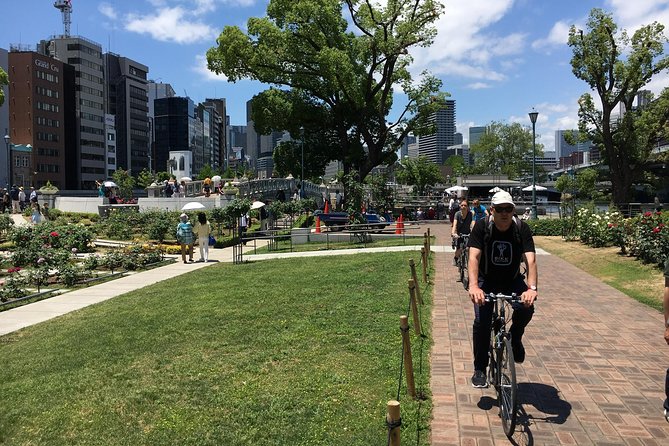
The stop at Mint Museum is short, and that is on purpose. You do not enter the museum. Instead, you spend time in the grounds learning about the area’s history and its role in Japan’s modernisation.
This is a classic tradeoff: if you love walking through museums for a full hour, this route is not built for that. But if you want a quick, guided understanding of how Osaka developed, it is a good use of time. You get perspective, and you can always come back later on your own if a specific story pulls you in.
I like stops like this because they stop the day from turning into a string of photo stops. The guide is essentially handing you a theme, and suddenly the rest of the city clicks.
Osaka Castle Park: postcard photos, historical framing, and the one real climb
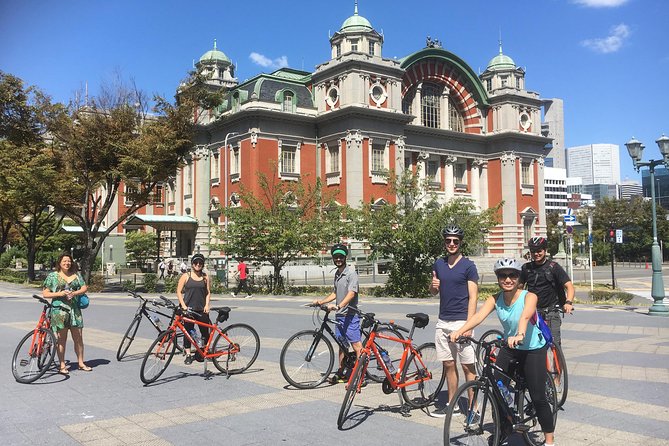
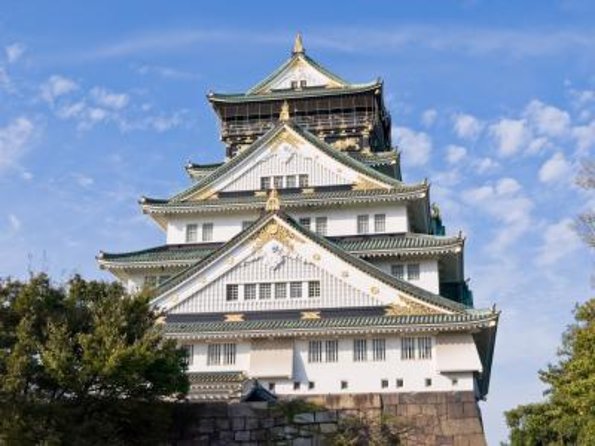
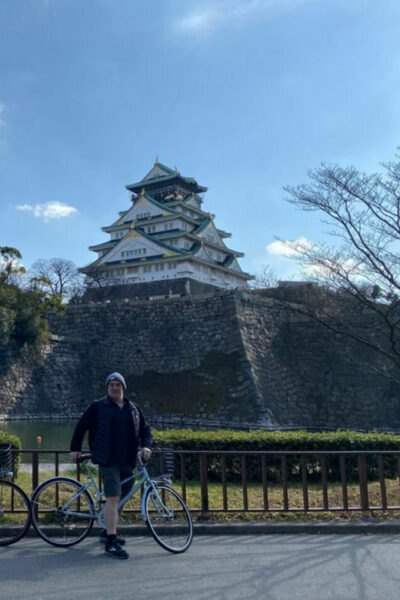
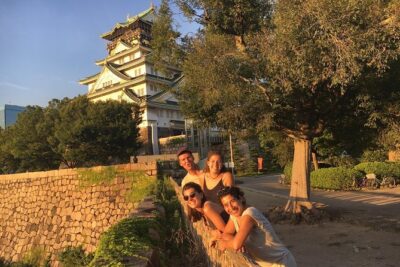
Next up is Osaka Castle Park. You ride through the greenery, stop for pictures, and get explanations about the castle’s role in Japan’s history and culture. This is also where you can grab a treat, like ice cream, if the moment calls for it.
Also, be ready for a bit of effort. Many people find the ride easy overall, but there can be slight hills around the castle area. Nothing extreme is required, but you should not show up in flip-flops and expect a zero-effort ride.
The value here is not only the views. It is the guided context, so you are not staring at a famous landmark like it is just a backdrop. You understand what it represented, and you notice details you would otherwise skip.
Not ready to leave Osaka yet? A few more ways to fill the day.
- Osaka Go Karting Tour with Funny Costume
★ 5.0 · 2,658 reviews - Osaka Castle: Museum and Tower Entry Ticket
★ 4.5 · 2,380 reviews - Osaka: Shinsekai Food Tour with 13-15 Dishes at 5 Eateries
★ 4.8 · 2,204 reviews
Shitennoji Temple: serene stop number two, with context that changes the feeling
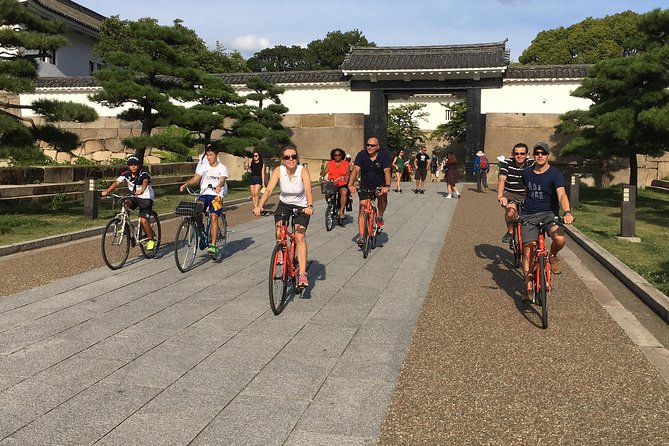
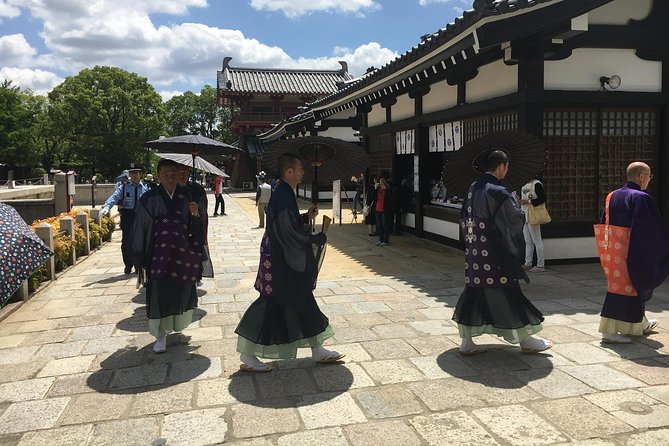
At Shitennoji, you get a brief stop at Japan’s oldest Buddhist temple. The tour keeps it respectful and calm, with time to enjoy the serenity and learn about the temple’s place in Japan’s development.
This is one of the few stops where the pacing feels like a break, not another checkpoint. Even a short visit benefits from a guide because temples can be visually complex. A good explanation helps you look at the right things, instead of only taking a quick photo and moving on.
If your plan is to return to Osaka later for more culture, this kind of short, guided moment is a smart way to decide what to prioritize.
Shinsekai and Tsutenkaku: blue-collar Osaka, bright street-life, and street food moments
Then the tour leans into a different Osaka: Shinsekai. This is the famous blue-collar district vibe, where you can look up at Tsutenkaku tower and see the colorful mix of locals and the everyday energy that makes Osaka feel lived in.
You also get time for quick street photography, and it is a good moment to spot colorful street details and maybe pick up a small snack along the route. The best part of Shinsekai on a bike is how naturally you pass through it, rather than arriving like you are visiting a theme zone.
A practical thought: Shinsekai can be busy, so keep your eyes up for cyclists, pedestrians, and crossing traffic. Your guide will manage the group, but your job is to stay relaxed and predictable.
Tower Knives Osaka: when shopping turns into a craft story

Stop six is Tower Knives Osaka. You get a personal introduction to a consultant at one of Japan’s best-known knife exporters, and you learn about knife-making history in the area. There is also a chance to use tools yourself.
This is one of the most interesting stops because it is not a typical tourist stop. It gives you a sense of how craftsmanship, local industry, and everyday Japanese life connect.
Even if you are not buying anything, you may still find it memorable. Handling tools, learning how and why knives are made, and hearing how a region becomes known for a craft turns a quick stop into something you can carry home.
Namba Yasaka Shrine: a quick, photogenic good-luck finish
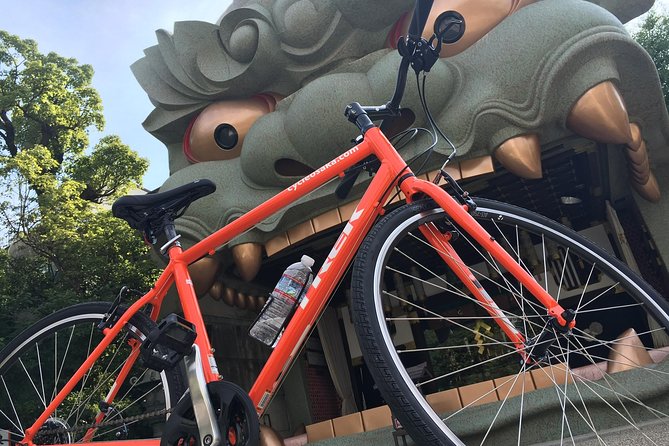
The final highlight stop is Namba Yasaka Shrine, a quirky and photogenic stop on the way back. You will see prayers written on woodblocks, and you can pick up a good luck charm.
This works well as a closing moment. After the larger sights and the more energetic streets, the shrine is smaller and calmer. It is also a nice symbolic wrap-up to your Osaka loop.
If you enjoy photographing details, this is a good place to slow down for a minute. Look at the little elements people interact with, not only the main structure.
Lunch stop and vegetarian planning that actually helps
Lunch is part of the day, but it is handled like real travel. The tour does include a lunch break, and your guide will discuss options on the day. Vegetarian options are available if you advise ahead of time.
Because this is not described like a pre-set menu with no decisions, you should treat lunch as a chance to reset, hydrate, and refuel locally. If you have dietary needs, I strongly recommend you confirm them at booking so your guide can steer you to something that fits.
This matters for value. Many tours put lunch on autopilot and then rush you back into the next stop. Here, the meal is built into the flow of sightseeing, so it feels less like an interruption and more like a part of the experience.
Bikes, pace, and safety on Osaka streets
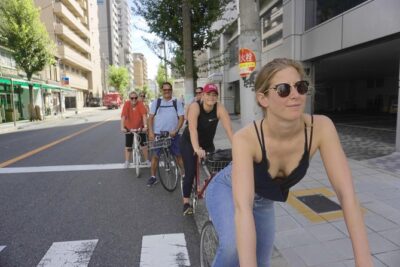
You get a bike and helmet, plus bottled water. Those small inclusions matter because they reduce the number of things you need to pack or figure out before you ride.
The itinerary is laid out in short, manageable segments. You are moving most of the time, but you also get breaks built into each stop. That makes it easier to handle different comfort levels in the group.
Osaka is often described as cycle-friendly, and the ride tends to be easygoing for most visitors, with occasional busier stretches. Guides are also known for adapting the pace, including accommodating different riding comfort levels, which is a big deal when you have a mixed group.
What to bring mentally: you are in a city, not a closed course. The right mindset is calm and cooperative. If you stay predictable, listen when your guide signals, and ride like you expect people to cross or change lanes, it usually feels far more comfortable than you might fear.
Price and value: is $106.12 worth it?
At $106.12 per person, you are paying for a structured day with a guide, included gear, and a full circuit of major Osaka sights. You are also paying for time savings.
A walking day can be slow in Osaka because distances add up quickly, and you end up choosing fewer neighborhoods. This tour stitches together multiple top areas in one go, including places that feel like they would take multiple days to link well.
What you get for the cost is also practical: an English-speaking guide, bike and helmet, bottled water, and a guided lunch break. The itinerary includes admission-free stops, so you are not nickel-and-diming tickets in the middle of the ride. You do have to plan for lunch cost, since it is described as own expense, but the guide still handles the selection process.
If your goal is to get your bearings in Osaka on day one, this pricing starts to look fair. If you are already confident mapping the city yourself and you only care about one or two sights, you might find better value by picking a smaller, targeted tour or doing parts independently.
Best time to book and who this tour suits
I think this is a great fit early in your trip, because it sets your mental map. After the ride, you can choose what to return to with longer stops, and you will already understand how neighborhoods connect.
You should also consider booking if you want a mix of Osaka Castle, Shitennoji Temple, and Shinsekai street-life but do not want to spend your whole day on buses or in taxis.
It is not designed for everyone, though. The tour requires moderate physical fitness, and it is not recommended for child aged 12 and under. It also says it is not possible for riders under 140 cm. If any of those factors apply to you, you should look for an alternate pacing or a different activity.
Finally, the experience needs good weather. If rain hits, your plan changes, so have flexibility.
Should you book this Osaka bike adventure?
Book it if you want a guided, efficient loop that hits the big hitters and still gives you a sense of local culture. I also think it is a strong choice if you like learning short bits at many stops, rather than spending the entire day inside one museum.
Skip it or reconsider if you are the type who expects long entry time and deep exploration at each landmark. This tour is set up for guided viewing and quick stops, not full museum hours.
If you go in with the right expectations, you will come away with a clear Osaka map, a stronger sense of local food culture thanks to the lunch break, and stories that help the city feel less random when you explore on your own afterward.
FAQ
How long is the Osaka bike adventure?
It lasts about 5 to 6 hours.
Where does the tour start, and what time does it begin?
It starts at 1-chōme-10-7 Tenma, Kita Ward, Osaka, and the start time is 9:30 am.
What is included in the tour price?
You get an English-speaking guide, a bike and helmet, bottled water, and a lunch break (lunch options are discussed on the day).
Is lunch included, and can I choose a vegetarian option?
Lunch is part of the day, and vegetarian options are available if you tell the operator when booking. Lunch is described as own expense, with lunch options discussed during the tour.
What level of fitness do I need?
The tour is listed for travelers with moderate physical fitness.
Is it suitable for children?
It is not recommended for children aged 12 and under, and it is not possible for riders under 140 cm.
What happens if the weather is bad or I need to cancel?
The tour requires good weather. If it is canceled due to poor weather, you will be offered a different date or a full refund. You can cancel for a full refund up to 24 hours before the experience starts.
Just added around Osaka
Cycling Tours, compared.
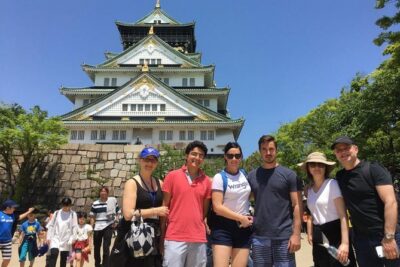
5-Hour Osaka Bike Tour to the Neighborhood of Osaka Castle
Read our review →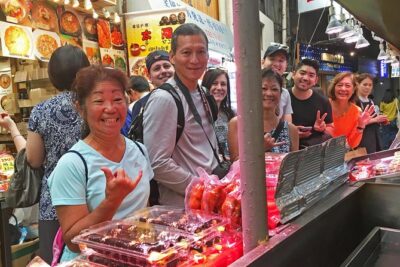
Osaka Half-day E-bike Adventure: Minoh Falls & Katsuoji Temple
Read our review →This tour also fits