
Reviewed · MUSEUMS
Osaka: Koji Kinutani Tenku Art Museum Entry Ticket
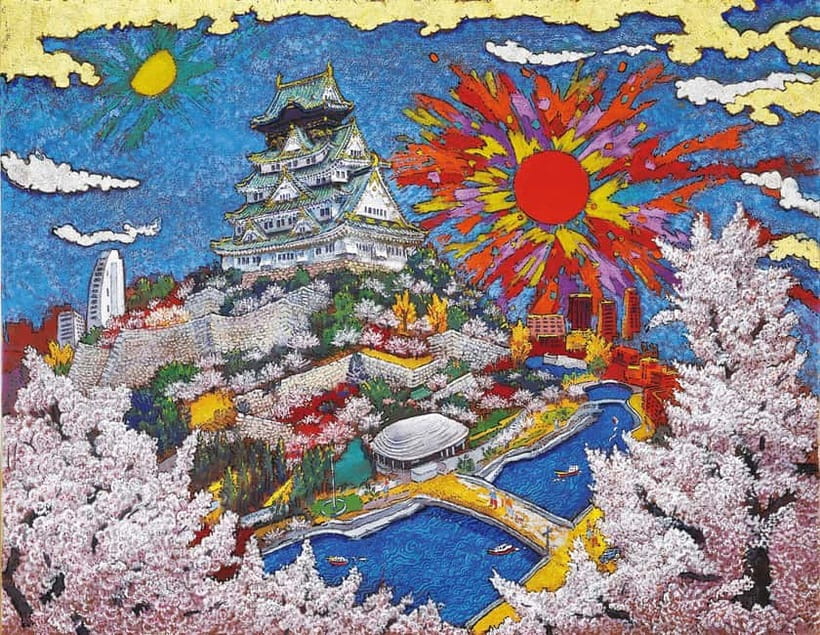
A round screen turns painting into music. At Osaka’s Koji Kinutani Tenku Art Museum, the 3m x 14m circle projection pulls you into moving visuals, and the VR sessions bring you close to Koji Kinutani’s world.
I especially like how the museum is split into two art moods, Blue and Red, so you feel influences from Italy and traditional Japan in one visit. One thing to weigh, though: food and drinks are not allowed inside, so you will want to plan cafe time or an outside meal.
In This Review
- Key points at a glance
- Entering the Tenku Art Museum: a theme-park feel for art and music
- The Blue and Red exhibition zones: why the museum is split in two
- Blue zone, skies from Italy
- Red zone, tradition on purpose
- Special exhibitions and frescos
- Tenku Gallery and Osaka views: a place to slow down and take photos
- VR with Koji Kinutani: the closeness most museums cannot offer
- Programs, hands-on art, and classes: fun if you can plan ahead
- Tenku Cafe and museum shop: the nice pacing breaks
- Tenku Cafe
- Museum shop
- Umeda Sky Building combo ticket: 360-degree Osaka from 170 meters
- Getting there from Osaka Station without overthinking it
- Price and value: what you really get for about $8
- When to go and what to plan around
- Who this museum fits best
- Should you book this Tenku Art Museum ticket?
- FAQ
- Where is the Koji Kinutani Tenku Art Museum located?
- How do I get there from Osaka Station?
- What is the price for the entry ticket?
- How long should I plan for?
- Are food and drinks allowed inside the museum?
- Is the museum wheelchair accessible?
- Do I need reservations for workshops and hands-on programs?
Key points at a glance
- The 3m x 14m round screen makes paintings feel like they are animated by sound
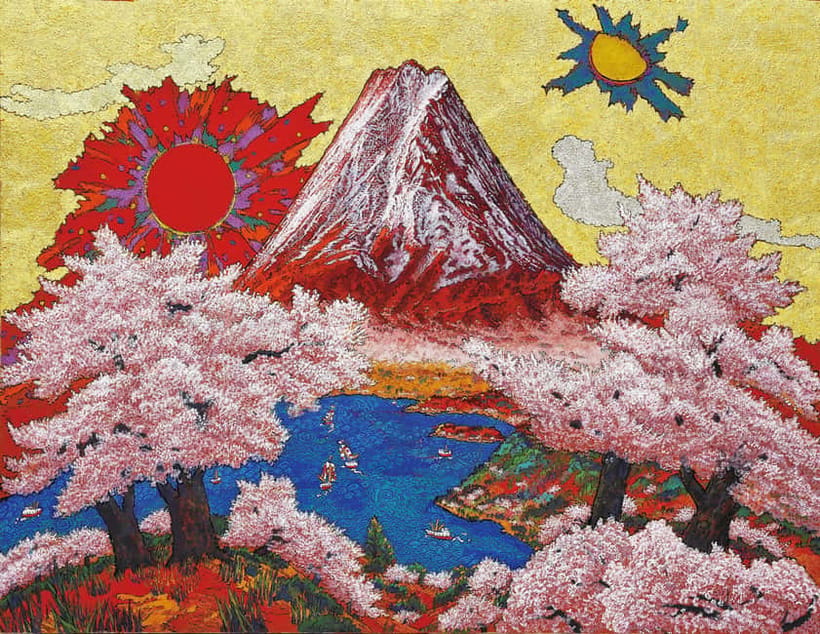
- Blue and Red exhibition zones connect Italy sky tones with traditional Japanese spirit
- VR includes a guided museum tour by Koji Kinutani plus a rare studio talk
- Tenku Gallery photo spots and views down toward the Yodogawa River
- Combo ticket option pairs the museum with a 360-degree Osaka panorama from Umeda Sky Building
Entering the Tenku Art Museum: a theme-park feel for art and music
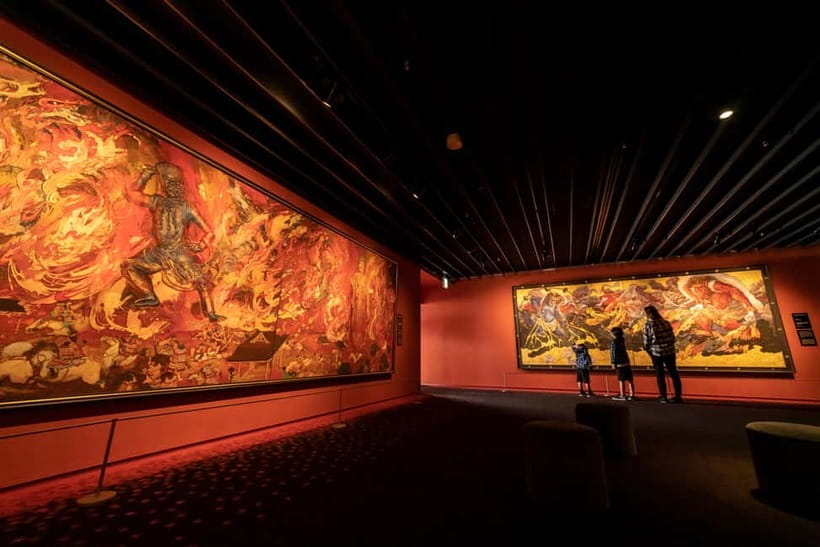
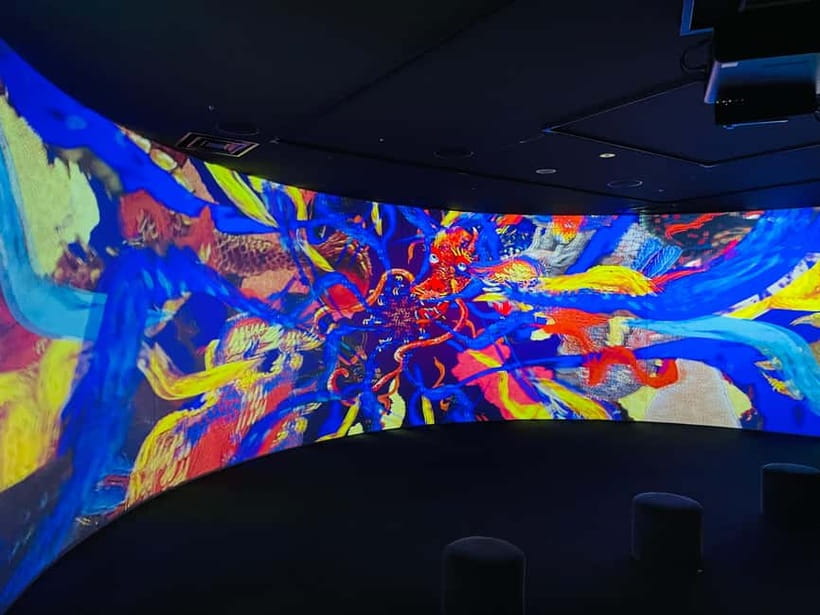
The Koji Kinutani Tenku Art Museum is not your quiet, sit-and-stare kind of gallery. It has more of a show energy. That matters, because the star attraction is big, theatrical display technology: a 3m x 14m round screen that connects paintings and music into one shared experience.
As you move through the space, you are not just reading about art. You are watching it unfold. Think of it like stepping into a curated performance where visuals react to sound. If you like art that uses light, motion, and sound design, you will probably find this format refreshingly easy to enjoy, even if you are not an art expert.
A small practical note: the museum exchange point is at the reception desk, so have your voucher ready when you arrive. Also, admissions are valid for the day you book, so treat it like a focused outing rather than something to stretch across multiple days.
Other ways to spend a day in Osaka
- Osaka Castle: Museum and Tower Entry Ticket★ 4.5 · 2,380 reviews
- Osaka: Osaka Castle & Historical Museum Guided Tour★ 4.8 · 28 reviews
- (Ticket Included) Explore Osaka Castle & Museum of History★ 4.8 · 21 reviews
- Private 3-Hour Guided Tour of Osaka Castle and Historical Museum★ 5.0 · 2 reviews
- Awa Dance Festival & Otsuka Museum of Art Bus Day Tour from Osaka★ 5.0 · 1 review
The Blue and Red exhibition zones: why the museum is split in two
The museum exhibition hall is organized into two distinct areas, and that structure is the key to making sense of what you are seeing.
Blue zone, skies from Italy
The Blue exhibition zone is designed to evoke the blueness of the skies of Italy, where Kinutani studied abroad. This is more than a color choice. It frames the art like a memory of atmosphere, not just a set of subjects. When you walk through, pay attention to how the visuals and themes feel lighter, more sky-oriented, and more about sensation than craft.
If you enjoy art history that you can feel in your body, this zone is built for that. You get a mood first, then the works make more sense inside that mood.
Red zone, tradition on purpose
Then you move into the Red exhibition zone, where traditional Japan is showcased through red walls and lattices. This is the museum’s way of shifting gears from outside influence to home-grown spirit. Even if you do not know the details of every work, the setting nudges you to look for patterns, structure, and traditional references.
I like that the museum does not ask you to already know everything. It gives you two environments, so the art meets you halfway.
Special exhibitions and frescos
Twice a year, special exhibitions rotate with different themes. In addition to other works, you can also see colorful frescos, which the museum describes as roots of Kinutani’s art. Frescos are old-school, wall-based painting, so their presence adds weight to the more modern screen and VR experiences.
If you are wondering why a museum would mix tech-driven art with mural-style painting, this is your clue. It is showing that the method and the imagination connect, even when the medium changes.
Not ready to leave Osaka yet? A few more ways to fill the day.
- Osaka Go Karting Tour with Funny Costume
★ 5.0 · 2,658 reviews - Osaka: Shinsekai Food Tour with 13-15 Dishes at 5 Eateries
★ 4.8 · 2,204 reviews - Osaka Food Tour: 13 Dishes at 5 Local Eateries
★ 5.0 · 2,149 reviews
Tenku Gallery and Osaka views: a place to slow down and take photos
After the main exhibition areas, you get another payoff: photo-friendly areas in the Tenku Gallery. This is where the museum becomes a bit more social. The layout is designed for memorable shots, so if you like documenting your day, you will have spots that are actually worth the camera time.
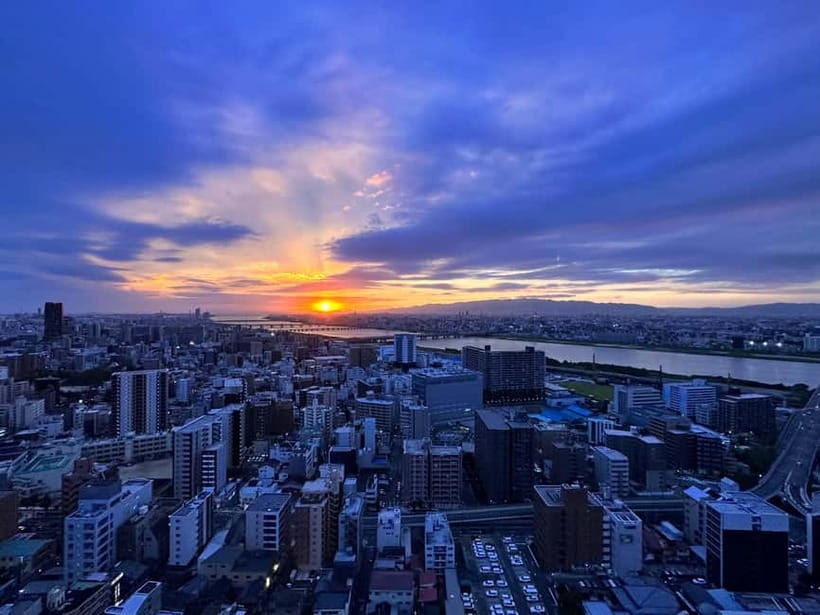
There is also a quieter angle to this area. It is described as a slightly out-of-the-way spot with picturesque views where you can look down on the Yodogawa River as it flows through Osaka’s cityscape.
Why this is worth your time: when an experience is very visual and tech-heavy, a view like this gives your eyes a rest. It also makes the whole visit feel anchored in the real city around it, not only inside the walls.
VR with Koji Kinutani: the closeness most museums cannot offer
The VR experience is one of the most practical reasons to buy a ticket here, because it gives you context and access.
Here is what you can expect from the VR package:
- A tour of the museum by Koji Kinutani himself
- A rare talk in his Tokyo studio, which is normally closed to visitors
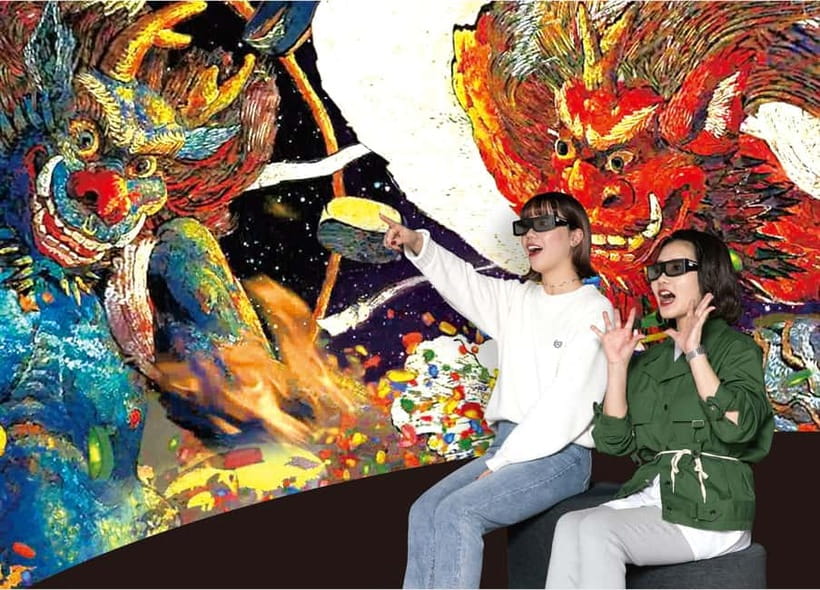
- A VR experience intended to bring you closer to the artist
I like VR when it does not just add spectacle. This one is aimed at interpretation and connection. The museum is teaching you how to look, while also letting you hear the artist directly through the experience.
If you are the type of traveler who likes meeting the human behind the art, this is where you will feel the most return for your time. Even if you normally skip VR, this one is tied to the museum itself, not a random add-on.
Programs, hands-on art, and classes: fun if you can plan ahead
The museum offers programs for different ages, including hands-on fresco painting and painting classes with lectures by Koji Kinutani. One important detail: reservations are required if you want to join workshops.
Because workshops need advance planning, you should decide early. If you are traveling on a tight schedule, focus on the main exhibitions and VR, and treat workshops as optional. If you are traveling with kids or you want something active, check availability and reserve before your day.
Also note that workshop materials are not included with admission, so expect a little extra cost if you participate. Still, for families and hands-on learners, this is a chance to do more than watch art happen.
Tenku Cafe and museum shop: the nice pacing breaks
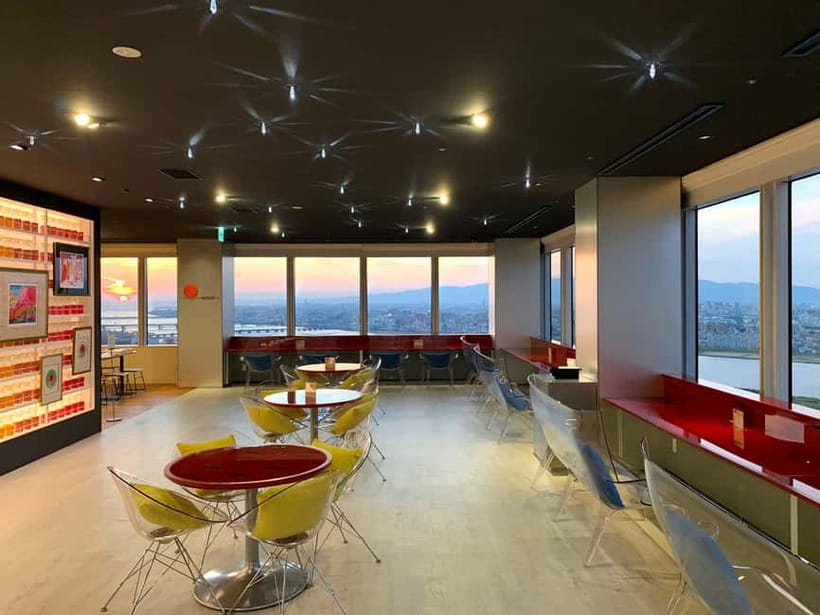
Tenku Cafe
You can take a breather at the Tenku cafe. It is described as having a rich, colorful artistic atmosphere. The rows of colorful pigment bottles used for fresco style painting are part of the visual set, which makes the cafe feel like an extension of the art world rather than a generic place to refuel.
Practical tip: because food and drinks are not allowed inside the museum exhibitions, the cafe becomes part of your plan. It is not just a nice extra.
Museum shop
The museum shop is well stocked with goods featuring motifs from the works, plus original postcards and more. If you want a souvenir that feels tied to what you actually saw, shop items tend to be the easiest way to do that without guessing what to buy. It also makes a good option if you want gifts that are small and easy to pack.
Umeda Sky Building combo ticket: 360-degree Osaka from 170 meters
If you choose the Combo ticket option, your visit can continue beyond the museum with admission to the Floating Garden Observatory at the Umeda Sky Building.
What you get:
- A dynamic 360-degree view of Osaka
- An open-air skywalk area
- Height: 170 meters above ground
- Great day and night perspectives
The museum is mostly about art movement and close-up storytelling. The observatory is the opposite. It gives you the city scale. That contrast is what makes the combo feel worth it, rather than two unrelated activities.
Timing thought: because both experiences are visual, you will want enough daylight to enjoy the skyline properly. If you are going at night, plan extra time to get your bearings and pick a few angles, especially if you want photos.
One more practical detail: the sky observatory combo is only included if you selected the Floating Garden Observatory admission combo ticket. The ticket exchange happens at the museum reception desk.
Getting there from Osaka Station without overthinking it
The museum location is inside the Umeda Sky Building Tower West, on the 27F floor. It is at 1-1-30 Oyodonaka, Kita-ku, Osaka 531-0076, Japan.
Transport is convenient:
- About a 9-minute walk from JR Osaka Station, Osaka Metro Umeda Station, and Hankyu Osaka Umeda Station
- About a 13-minute walk from Hanshin Osaka Station
If you drive, parking is available at the Umeda Sky Building. The lot has about 160 pay-by-the-hour spaces.
This location matters because the experience is easiest when you can keep your schedule simple. You do not have to fight transfers or add major transit time.
Price and value: what you really get for about $8
The listed price is $8 per person, and that is where the value logic gets interesting.
For that price, you are not only buying access to static paintings. You are getting:
- The big 3m x 14m round screen art-and-music experience
- Exhibition hall time across Blue and Red zones
- Tenku Gallery photo areas and river views
- A VR experience tied directly to Koji Kinutani and including a rare studio talk
That combination is unusual. A lot of art venues charge similar money for galleries only. Here, the museum includes tech storytelling plus interactive educational content options.
If you add the combo with the Umeda Sky Building observatory, you are also paying for a major skyline experience, including the open-air skywalk and 360-degree panoramas. Even if you are not a view person, the observatory is a strong way to make your day feel complete.
When to go and what to plan around
The museum hours vary by day:
- Mondays, Wednesdays, Thursdays, Sundays: 10:00 to 18:00
- Fridays, Saturdays, and the day before national holidays: 10:00 to 20:00
- Admission is until 30 minutes before closing
Closed days:
- Tuesdays (with a note that if Tuesday is a national holiday, it is open on Tuesday and closed on the following weekday)
- December 30 to January 3
- During exhibition change periods
For planning, also keep in mind:
- Food and drinks are not allowed
- Pets are not allowed (assistance dogs are allowed)
- The ticket exchange happens at the museum reception desk
- Both tickets are not valid on special business days such as Yodogawa Fireworks Festival days
If you are visiting around a major event, it is worth double-checking availability and validity so you do not get stuck planning for a view that cannot be used that day.
Who this museum fits best
I think this experience is a great match if you:
- Like art that uses sound, motion, and VR, not only wall labels
- Want a structured museum visit with two clear themes, Blue and Red
- Appreciate hands-on art activities and might reserve workshops
- Want a day plan that also includes a skyline option via the combo ticket
It is less ideal if you strongly prefer silent museums with long, uninterrupted pacing. This place is more of a show environment, and you will feel that energy as you move through the screens and interactive spaces.
Should you book this Tenku Art Museum ticket?
Yes, if you want a short trip to a place that blends art, music, and technology in a way that is easy to enjoy. At around $8, the value is strongest when you actually use the VR and the screen experience, then finish with the Tenku Gallery photos and, if you choose it, the Umeda Sky Building panoramas.
Skip or reconsider if:
- You are traveling on a day when the museum or the combo ticket may not be valid due to special business days
- You dislike VR or you hate interactive, theme-style museum layouts
- You need to bring outside food, since food and drinks are not allowed inside
If you want one Osaka stop that feels different from the usual temples and shopping lanes, this is a solid pick.
FAQ
Where is the Koji Kinutani Tenku Art Museum located?
It is in the Umeda Sky Building Tower West, 27F, at 1-1-30 Oyodonaka, Kita-ku, Osaka 531-0076, Japan.
How do I get there from Osaka Station?
It is about a 9-minute walk from JR Osaka Station, Osaka Metro Umeda Station, and Hankyu Osaka Umeda Station, and about a 13-minute walk from Hanshin Osaka Station.
What is the price for the entry ticket?
The price is listed as $8 per person.
How long should I plan for?
The experience is listed as valid for 1 day.
Are food and drinks allowed inside the museum?
No. Food and drinks are not allowed inside the museum.
Is the museum wheelchair accessible?
Yes, it is wheelchair accessible.
Do I need reservations for workshops and hands-on programs?
Yes. Reservations are required to participate in workshop activities. Workshop materials are not included.
Just added around Osaka

Museums, compared.
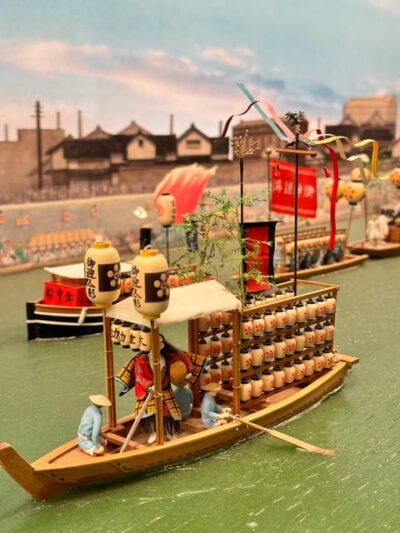
(Ticket Included) Explore Osaka Castle & Museum of History
Read our review →
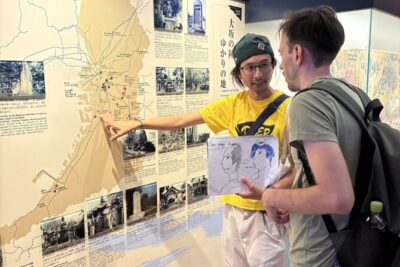
Private 3-Hour Guided Tour of Osaka Castle and Historical Museum
Read our review →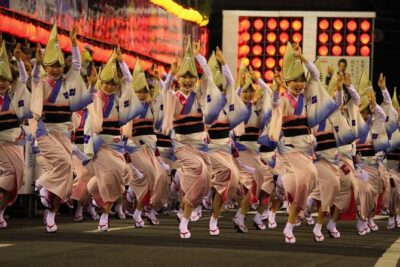
Awa Dance Festival & Otsuka Museum of Art Bus Day Tour from Osaka
Read our review →Explore Tottori Sand Dunes, Sand Museum & Uradome Coast Cruise!
Read our review →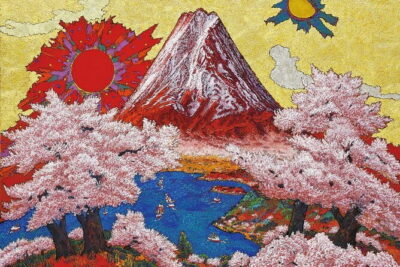
This tour also fits