Reviewed · OSAKA
Osaka: Traditional Japanese Ikebana Flower Art Experience
Ikebana turns flowers into something you can think with, not just look at. In a modern Osaka gallery, you get a guided, hands-on lesson that blends Japanese aesthetics with a calm, creative class. It is one of the easiest ways to understand how the art works, without needing any prior training.
I especially like two things here. First, you learn from Fooraku, a senior master of the Sogetsu School with 30+ years of experience. Second, the workshop is small (up to 6 people) and you leave with practical technique you can keep using at home.
One possible consideration: the session is in English, so if you want zero-instruction and mostly independent practice, this may feel more guided than you expected. Also, let the organizers know about any plant allergies ahead of time.
In This Review
- Key highlights to know before you go
- A Modern Gallery Meets Traditional Ikebana in Kyomachibori
- Meet Fooraku, a Sogetsu Master With 30+ Years
- What You Learn in the Ikebana Workshop: Balance, Line, Form, and Space
- Your Hands-On Arrangement, Tools, and the Photo Moment
- The Cultural Exchange After Class Makes It Memorable
- Price and Value: Why $103 Works for a Small-Group Master Class
- Logistics That Matter: Duration, Location, and Group Size
- Practical Tips for a Smooth Ikebana Session
- Who This Osaka Ikebana Class Is Best For
- Should You Book This Ikebana Workshop?
Key highlights to know before you go
- Learn from Fooraku (Sogetsu, 30+ years): real mastery, explained for real humans.
- Modern calm at VADE MECVM Showroom #2: a quiet gallery space that suits minimalist Ikebana.
- You follow core principles: balance, line, form, and space, then apply them yourself.
- Everything is provided: flowers, container, and scissors, so you can focus on creating.
- A commemorative photo is included: you get a clear keepsake of your own arrangement.
- Small group cultural exchange: time to talk freely after class.
A Modern Gallery Meets Traditional Ikebana in Kyomachibori
This experience happens at VADE MECVM Showroom #2 in Kyomachibori, Osaka. The vibe is modern and simple, which matters because Ikebana loves clean visual space. You are not crammed into a loud studio, so your attention naturally shifts to the materials in front of you.
The gallery setting also helps you feel the design logic of the art. Ikebana is often about what you leave out, not only what you add. In this kind of quiet room, that concept actually lands.
If you are timing your day around Osaka sightseeing, plan it as a calm, creative pause. This is the kind of activity that makes the rest of your trip feel more intentional.
Osaka is Japan's kitchen, and Kyoto, Nara, and Himeji are all close enough for a day trip.
- Osaka Go Karting Tour with Funny Costume★ 5.0 · 2,658 reviews
- Osaka Castle: Museum and Tower Entry Ticket★ 4.5 · 2,380 reviews
- Osaka: Shinsekai Food Tour with 13-15 Dishes at 5 Eateries★ 4.8 · 2,204 reviews
- Osaka Food Tour: 13 Dishes at 5 Local Eateries★ 5.0 · 2,149 reviews
- Hungry Osaka Street Food Tour:15 Tastings & 3 Drinks with a Local★ 5.0 · 1,727 reviews
Meet Fooraku, a Sogetsu Master With 30+ Years
The teacher for this class is Fooraku, a senior master of the Sogetsu School with over 30 years of experience. That is not just a resume line. It shapes how the lesson is paced, how corrections are handled, and how much context you get for each technique.
Sogetsu Ikebana is known for blending tradition with modern sensibility. You see that in how the workshop supports beginners while still treating Ikebana as serious art. You get guidance that helps you understand why a choice works, not just how to copy a shape.
The class is conducted in English, which keeps the learning practical. You should expect explanations of concepts and steps, not just a demonstration with silent nods.
What You Learn in the Ikebana Workshop: Balance, Line, Form, and Space
Ikebana is often described as more than arranging flowers, and here that idea is central. The instruction focuses on how flowers, nature, design, and expression connect into one composition.
You work around four core principles: balance, line, form, and space. Even if you have never touched a flower arrangement before, those words help you organize your thinking. They also make the art feel less mysterious and more doable.
Here is what those principles mean in practical terms, as you apply them during your own creation:
- Balance: not only symmetry, but a feeling of stability in how the arrangement holds together.
- Line: the direction and movement of stems, which controls the mood of the whole piece.
- Form: the shape you build, including how thick or airy it feels.
- Space: what stays empty, and how emptiness gives the arrangement breathing room.
This is the kind of lesson that changes how you look at flowers after class. You start noticing structure, negative space, and the logic of proportion.
Your Hands-On Arrangement, Tools, and the Photo Moment
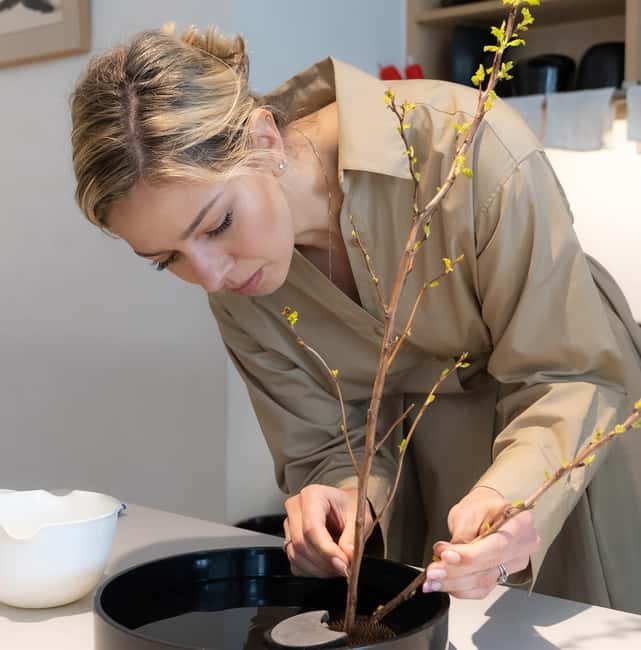
One of the easiest parts of this workshop is that you do not need to bring anything. The class provides the necessary tools and materials, including flowers, containers, and scissors. That is a big value factor because you avoid both shopping and stress.
You also do not need special skills. The workshop is designed for complete beginners and art lovers alike. The structure is built so you can start from scratch and still finish with something that feels intentional.
You will create your own arrangement, and it will be unique to what you choose and how you apply the principles. That is important. Ikebana is not a cookie-cutter craft, so your final result should reflect your taste as well as the instructor’s guidance.
There is a commemorative photo included as well. I like this detail because it solves a common problem with hands-on art classes. You are thinking with your hands, and later it is hard to remember the exact look of your work. The photo makes your keepsake complete.
The Cultural Exchange After Class Makes It Memorable
After the workshop, you get time for a cultural exchange session. This is not a formal speech. It is a relaxed chance to talk freely, including about Japanese traditions, food, or daily life.
This part is where the experience often feels most personal. In a small group of up to 6 participants, conversation can actually happen without you feeling like you are part of a crowd.
Even if you are shy, the setting helps. The class is already about creating something together, so it is natural to ask questions afterward. And if you share from your own culture, it can turn the exchange into a two-way moment, not a one-sided lesson.
Not ready to leave Osaka yet? A few more ways to fill the day.
- Osaka: Tea Ceremony Experience
★ 4.9 · 1,426 reviews - Osaka Kickstart: Hotspots & Hidden Gems Tour
★ 5.0 · 1,306 reviews - Deep Backstreet Osaka Tours (Option to add Dinner)
★ 5.0 · 1,290 reviews
Price and Value: Why $103 Works for a Small-Group Master Class
At $103 per person, this is not the cheapest activity in Osaka. But it can be fair value when you look at what you get for that price.
You are paying for several things at once:
- Instruction from a Sogetsu senior master with 30+ years of experience
- A hands-on workshop format, where you actually make your own arrangement
- All materials provided, including flowers, container, and scissors
- A photo of your finished work
- A small group size capped at 6 participants, which usually means more attention than big classes
If you compare this to buying flowers and supplies on your own, the comparison is not just about cost. Buying materials means you also need know-how. Here, you get technique, correction, and a framework you can repeat later.
So the best way to judge value is this: can you use the lesson at home afterward? The workshop is designed to give you practical skills you can continue using, not just a one-time souvenir.
If you want an art activity that feels thoughtful and low-fuss, $103 can feel reasonable. If you are only interested in taking photos and not learning anything, you might feel the price more than the value.
Logistics That Matter: Duration, Location, and Group Size
The workshop time is about 1 hour 45 minutes, and the full experience is listed as up to 2 hours depending on starting times. That is a good length for a creative activity. Long enough to learn, short enough that you can still enjoy the rest of your day in Osaka.
The location is Kyomachibori, in Osaka. The venue is described as quiet and modern, and that matters for comfort. Ikebana is a visual and spatial art, so a calm room makes it easier to concentrate.
Group size is limited to 6 participants. That is a key detail. In small classes, your questions get answered faster and the teacher can adjust your composition as you work.
Language support is in English. If you want a guided explanation without needing Japanese, this is a strong fit.
Practical Tips for a Smooth Ikebana Session
This is a no-fuss class, but a few prep steps make it easier.
First, check any plant allergies before you go. The organizers ask you to inform them in advance if you have plant allergies, which is the sensible way to keep things safe.
Second, expect that you will be using scissors and fresh materials. Wear clothes you are comfortable getting a little flower messy, even if the experience is tidy.
Third, go in with a beginner mindset. The principles, especially balance and space, can feel abstract at first. If you try to get it perfect immediately, you may stress yourself out. You do not need perfection. You need a process.
Finally, keep a little time after class for the cultural exchange. It is part of what makes the experience feel complete, not just a craft project.
Who This Osaka Ikebana Class Is Best For
This is a great fit if you want cultural depth without a heavy time commitment. You get Japanese art taught through practice, plus context about harmony between nature, design, and expression.
You will likely enjoy it most if you:
- are curious about traditional Japanese arts but do not want complicated logistics
- like making things with your hands, not just watching demonstrations
- want a souvenir that is also a skill you can repeat later
- enjoy small-group settings where conversation is possible
It is also a good option if you travel with someone who likes art and design, but you still want a shared activity that does not require prior knowledge.
If you strongly prefer quiet solo activities with minimal talking, the post-class exchange may be more social than you like.
Should You Book This Ikebana Workshop?
I would book this if you want a genuine cultural activity that is structured, welcoming, and hands-on. The big reasons are the Sogetsu instruction from Fooraku, the small group size, and the fact that everything is provided so you can focus on learning the principles.
It is also a smart choice for value if you care about taking something home that is not only a photo. Your arrangement and the technique behind it can become a repeatable creative outlet.
I would skip it if you are only looking for a quick photo stop, or if plant materials are an issue you cannot manage. Also, if English instruction would be a problem for you, choose another format.
If you are in Osaka and you want a calm break that teaches you a new way of seeing, this is a strong call.