Reviewed · TOURS
2-Day Bus Tour to Shirakawago & Hida No Sato Winter Illumination
Winter lights guide your two days in Gifu. This tour stitches together Shirakawa-go’s winter thatched roofs and the Hida no Sato light-up village, with a relaxing night in a hot spring hotel near JR Takayama Station. The bus route starts in Osaka, then works its way into the Hida region when everything looks extra silver and calm.
I really like the hands-on stop at Sekigahara-cho for an Omi beef sushi making experience, not just another quick photo break. I also like the human factor, with guides such as Sir Julien and Tamy described as approachable and attentive, keeping the day organized and helping if small problems pop up.
One consideration: meals are not fully covered. You get lunch on Day 1 and breakfast on Day 2, but Day 2 lunch is on your own and dinner on Day 1 is not included either, so plan on extra spend after the included kaiseki night.
In This Review
- Key highlights you will actually feel
- Why winter in Hida works so well on a tight 2-day plan
- Osaka pickup and the bus ride into Gifu: comfort matters more than you think
- Sekigahara-cho: the Omi beef sushi making stop you will remember
- Shirakawa-go in winter: what you should expect from the Gassho Zukuri Village
- Hida no Sato light-up: night walking, fairy-tale mood, and a short time window
- Takayama onsen night: rooftop open-air hot spring near JR Takayama Station
- Day 2 at Miyagawa Morning Market: souvenirs, snack stops, and a slower pace
- Takayama Jinya: Edo-era governance in a still-standing building
- Sanmachi Suji old town: walking the lanes after the historical stop
- Hida Bussankan: a useful final shopping stop for gifts
- Price and value: what $318.68 really covers
- The guide and driver effect: why this kind of tour feels better in practice
- Who should book this winter bus tour, and who might not love it
- Should you book? My practical decision guide
- FAQ
- What time and where does the tour start?
- How long is the tour?
- Is the Shirakawa-go admission included?
- What does the tour include for meals?
- What is the hotel like, and where is it located?
- What are the Day 2 activities?
- Is there a time set aside for shopping?
- Can the tour accommodate dietary restrictions?
- What happens if weather is bad?
Key highlights you will actually feel
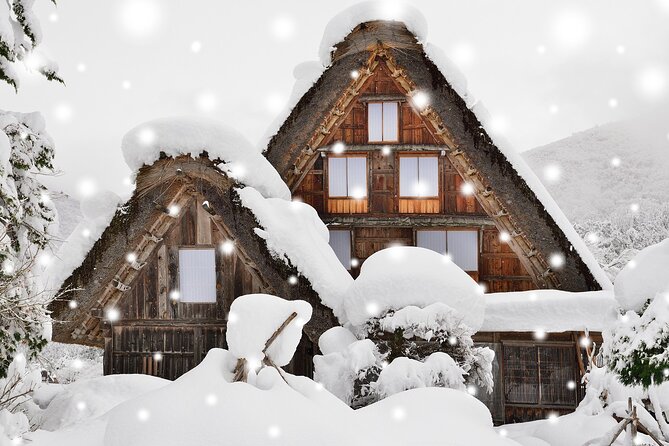
- UNESCO winter scenes at Shirakawa-go with time to walk the Gassho Zukuri Village before evening
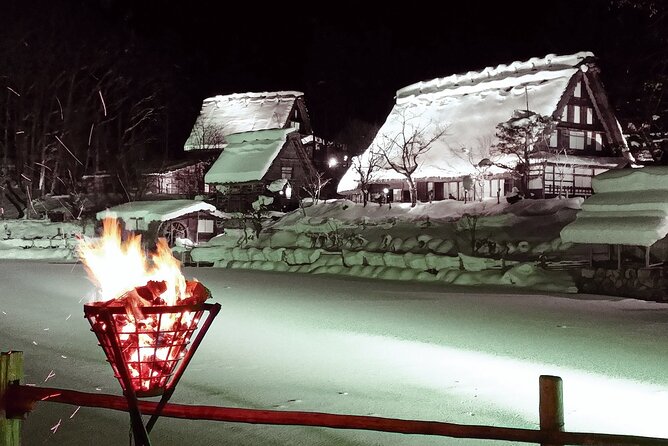
- Hida no Sato illumination at night, when the village switches from quiet to glowing
- Rooftop open-air hot spring with Alps views to warm up between sightseeing days
- Sekigahara-cho Omi beef sushi making so lunch is part craft, part food
- Takayama old-town time at Sanmachi Suji, plus Edo-era Takayama Jinya
- Comfort-first logistics with an air-conditioned vehicle and a maximum group size of 40 people
Why winter in Hida works so well on a tight 2-day plan
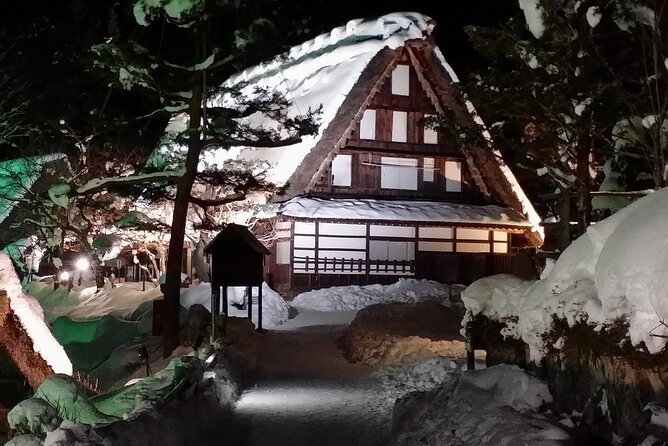
Hida in winter has a specific rhythm. Days are made for walking, then nights are made for light. This tour fits that rhythm by pairing two big winter anchors, Shirakawa-go and Hida no Sato, with a heat-and-rest stop in between at a Takayama hot spring hotel.
What I like is that the itinerary understands winter travel needs. You get enough time at the sight stops to slow down, but you are not stuck on the bus all day either. Then you get a serious reset in the evening at the rooftop onsen, which matters because Japanese winter walking can be cold in a hurry.
The pacing also avoids the most common winter mistake, which is spending all your daylight commuting. Here, you move early, see the main sights, and then compress the rest into easy blocks on Day 2 around Takayama.
Other ways to spend a day in Osaka
- Play with Snow Crab Buffet Lunch and Strawberry Picking Bus Tour★ 5.0 · 88 reviews
Osaka pickup and the bus ride into Gifu: comfort matters more than you think
The meet-up point is the Mainichi Newspaper Building in Osaka at 8:30 am, with a recommendation to arrive about 15 minutes early. From there, you ride to Gifu Prefecture by tour bus, roughly 2 hours 30 minutes.
This is not just a transfer. It is your “warm up” for the trip. A bus day like this only works if the ride feels easy, and the tour includes an air-conditioned vehicle plus bottled water each day. In winter, that kind of small comfort saves energy for the walking portions.
Also, the tour uses a mobile ticket, so you are not juggling paper confirmations while you are trying to find your seat and keep warm.
Sekigahara-cho: the Omi beef sushi making stop you will remember
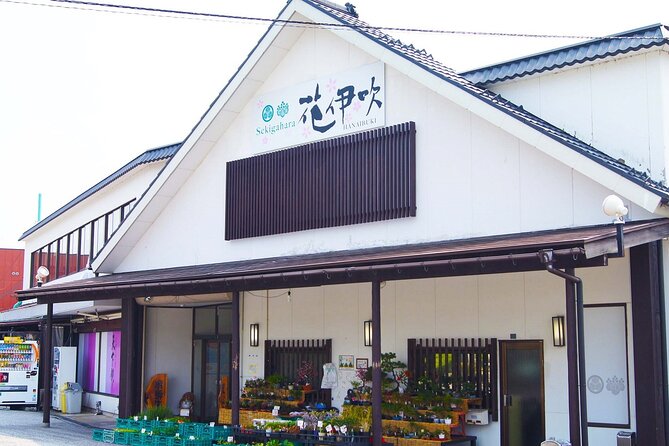
Day 1 includes a meal built around a real activity at Sekigahara-cho. Lunch is at Sekigahara Hanaibuki, and the highlight is an Omi beef sushi making experience.
This matters for two reasons. First, it breaks up the travel and sight schedule. Second, you get something you can talk about later, because you are not just watching. You learn the process, then you eat what you made.
Time-wise, this stop is about 2 hours. That is long enough to slow down and actually do the experience, but short enough that you still reach the more “wow” sights of the day. It is also a good buffer if winter weather is slow to cooperate, since you have a structured indoor or semi-indoor activity before outdoor walking.
If you have dietary requirements, the tour says it can accommodate things like vegetarian, as long as you indicate it when booking. That is worth noting because sushi-making usually sounds flexible, but you do want clear info ahead of time.
Shirakawa-go in winter: what you should expect from the Gassho Zukuri Village
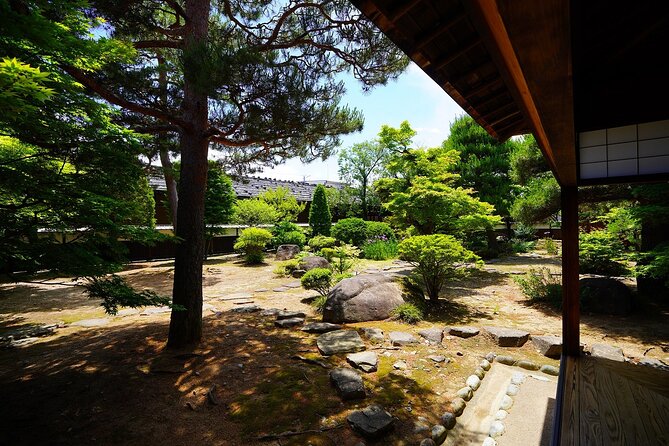
After Sekigahara-cho, the tour heads to Shirakawa-go. The main focus is the Gassho Zukuri Village, a UNESCO World Heritage Site known for those iconic thatched-roof houses shaped like hands in prayer.
You get about 1 hour 30 minutes here. In winter, that window is a sweet spot. It is enough time to walk the lanes, take in the roofs and rooflines coated in winter light, and still not feel rushed the second you step outside.
One practical thing: winter changes how these villages feel. It is quieter, the air is sharper, and distances feel longer, even if the streets are not huge. So I suggest you treat the time like a “walk and pause” moment. Do not spend all your time chasing the perfect photo angle. Stop, look up at the roofs, then move on when the light shifts.
If you are the kind of person who likes “real place” details, this stop rewards you. You are not just seeing a theme park version of a heritage village. You are seeing a place with actual winter atmosphere.
Hida no Sato light-up: night walking, fairy-tale mood, and a short time window
Next comes Hida no Sato, the evening light-up event. The time slot listed is about 45 minutes.
That short window is both a blessing and a tradeoff. It is a blessing because the light-up experience is designed to be watched in a specific mood, and you are not stuck there until late. It is a tradeoff because winter temperatures make lingering longer outside harder.
So here is how I would approach it: arrive with a quick game plan. Decide what you want most, the main illuminated streets or specific photo viewpoints. Walk with purpose for the first part, then slow down for the last part when you notice the shadows and reflections.
This stop is where the tour leans hardest into winter magic. If your priority is night lights and atmosphere, you will feel it here.
Not ready to leave Osaka yet? A few more ways to fill the day.
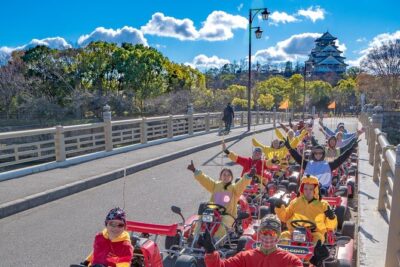
- Osaka Go Karting Tour with Funny Costume
★ 5.0 · 2,658 reviews - Osaka Castle: Museum and Tower Entry Ticket
★ 4.5 · 2,380 reviews - Osaka: Shinsekai Food Tour with 13-15 Dishes at 5 Eateries
★ 4.8 · 2,204 reviews
Takayama onsen night: rooftop open-air hot spring near JR Takayama Station
Day 1 ends at the hotel, with arrival around 7:15 pm. You then enjoy kaiseki cuisine plus time at the hotel’s hot spring.
The hotel location is a big plus: it is about a 5-minute walk from JR Takayama Station. That matters even if you are doing the full tour, because you are not trapped in a far-off area. After a long day, having an easy station walk is one of those underrated travel comforts.
The other major highlight is the rooftop open-air hot spring with a view of the Alps. Even if you do not see every detail clearly in winter haze, the point is the feeling. You warm up, you look out, and the day stops moving for a while.
Also, the included dinner setup is helpful for winter. Getting the kaiseki included at night saves you from immediately searching for a restaurant in colder conditions.
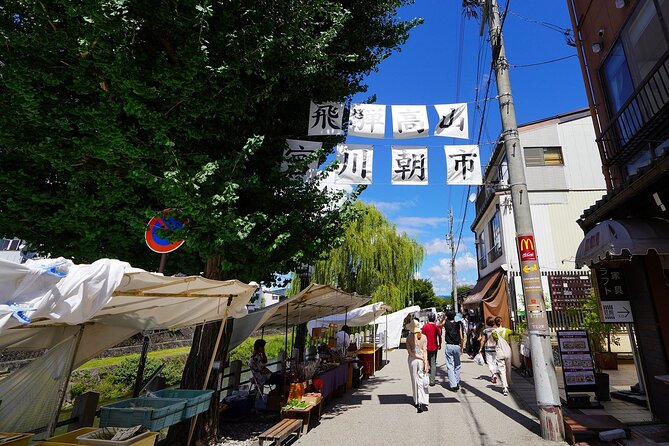
Day 2 at Miyagawa Morning Market: souvenirs, snack stops, and a slower pace
Day 2 starts with departure from the hotel at 9:00 am. First stop is Miyagawa Morning Market on foot, about 1 hour 15 minutes.
This is where you shift from “sightseeing” to “living.” You can browse souvenirs and shop at your own pace. Time is short enough that you will stay focused, but long enough to make a couple of purchases and grab something small to eat.
It is a smart follow-up to winter sights, because the market offers practical gifts that are easier to bring home than framed art. Think of it as the tour’s “take home something real” moment.
I also like markets because they give you a sense of local daily rhythm. Even if you only window-shop, the vibe helps you understand where Takayama fits in the bigger Hida story.
Takayama Jinya: Edo-era governance in a still-standing building
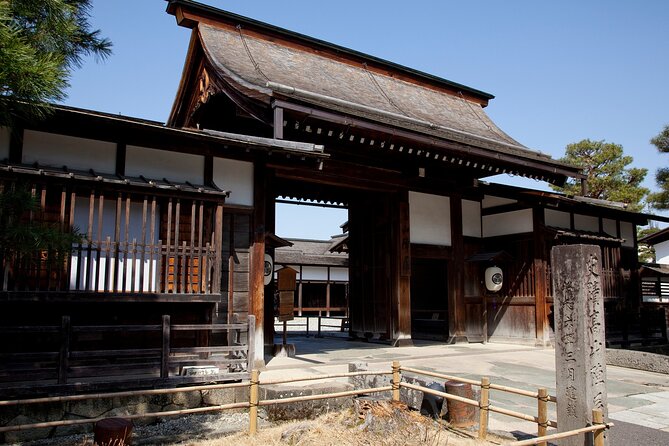
Next up is Takayama Jinya. You get about 30 minutes, and admission is included.
This building is described as the only site in Japan where the provincial governor and magistrate’s office main building still exists. You can stand in a place that reflects Edo-period administration, not just a decorative historic site.
In practical terms, this stop is brief. So do not treat it like a museum marathon. Look at the structure, notice how the room layout likely worked for officials, and then move on to Sanmachi Suji while the morning is still fresh.
Sanmachi Suji old town: walking the lanes after the historical stop
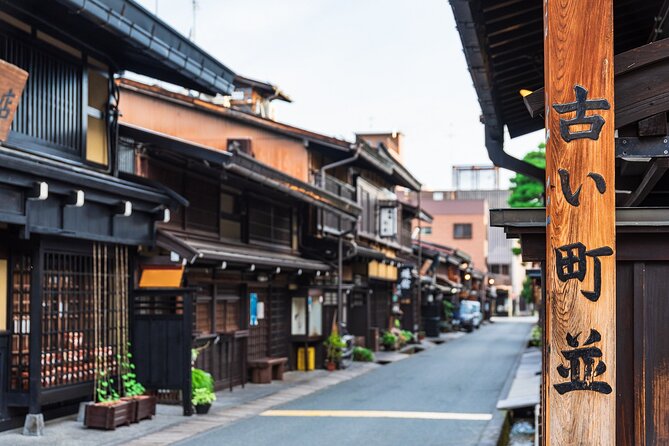
After Takayama Jinya, the tour moves to Sanmachi Suji, the old-town street area. You get about 2 hours to stroll.
Lunch on Day 2 is on your own during this stretch. That gives you flexibility to choose what fits you, and it also means you can budget and snack without feeling locked into a set meal.
Sanmachi Suji is the kind of place where time feels slower. The streets and preserved lanes are meant to be walked, not zoomed through. If you like photography, winter light makes this area more interesting because shadows sharpen and surfaces look brighter.
One small tip: winter makes walking slower. If the weather is harsh, focus on a smaller loop and enjoy the details you can reach, rather than trying to cover every possible side street.
Hida Bussankan: a useful final shopping stop for gifts
The last stop on Day 2 is Hida Bussankan, about 50 minutes. It is a museum or shop stop geared toward gifts and keepsakes, with a range of high-quality products.
This is a good way to end the tour because you have already done the walking blocks. Now you can slow down indoors and pick something practical for home.
If you are trying to avoid last-minute shopping, this timing helps. You get a clear, planned window to browse, instead of searching for a store on your way to the station.
Price and value: what $318.68 really covers
At $318.68 per person, the key value is what is bundled. You are not only paying for a couple of bus transfers. You get:
- Accommodation for one night
- Breakfast included
- Lunch on Day 1 included
- Admission fees for Hida no Sato light-up and Takayama Jinya
- A licensed tour guide
- Air-conditioned vehicle plus bottled water each day
Also, the Day 1 evening includes kaiseki cuisine at the hotel, which is a big deal in winter travel budgeting. Not every tour includes a proper sit-down dinner.
What is not included matters too: dinner on Day 1 and Day 2 is not included, and lunch on Day 2 is on your own. That is the main gap. If you like eating out and ordering extra, your total cost will rise. If you plan ahead and eat simply, the value stays strong.
The tour is also set up for a group size that can feel comfortably managed, with a maximum of 40 people. In the best-case scenario, some departures can feel even smaller, which makes questions easier and timing smoother.
The guide and driver effect: why this kind of tour feels better in practice
This is one of those tours where the guide makes the difference between stressful and smooth.
The information provided highlights guides like Sir Julien for being approachable and attentive, and Tamy for being fantastic at making the plan work. The common thread is clear: they help the day move, they explain what to focus on, and they handle small problems on the spot, even if something gets left behind and needs sorting out.
That matters because winter travel comes with tiny issues, cold hands, slow footing, and occasional route surprises. A good guide keeps everyone on track without making it feel rigid.
Even if you are the type who likes to wander, having that structure around two major night and snow stops is a real advantage.
Who should book this winter bus tour, and who might not love it
This tour fits best if you want a winter Japan experience that mixes iconic sights, a hands-on food moment, and a real hot spring night.
It is a great match for:
- First-time visitors to the Hida region who want a structured plan
- Couples and friends who like shared logistics, then free time for walking
- Solo travelers who want a guide but still enjoy browsing markets and old streets
- Anyone who values warm-up breaks, especially with a rooftop open-air onsen
You might want to choose a different style of trip if:
- You dislike set schedules and short time slots, especially the 45-minute light-up walk
- You want all meals included, every day
- You prefer slower travel with longer stays in each town
Should you book? My practical decision guide
Book this tour if your priority is winter atmosphere, and you want the big names covered in one clean plan: Shirakawa-go, Hida no Sato, Takayama old town, plus the comfort of a rooftop onsen evening.
Skip it or rethink it if you are the type who hates meal planning gaps, since lunch on Day 2 and dinner both nights are not included. Also, if cold weather makes outdoor walking miserable for you, remember that the evening illumination stop is outside for a limited but meaningful stretch.
If you are happy to dress warm, bring gloves you can actually use, and treat each stop like a focused “walk with purpose,” this is a strong value winter route.
FAQ
What time and where does the tour start?
The tour starts at 8:30 am at the Mainichi Newspaper Building, 3-chōme-4-5 Umeda, Kita Ward, Osaka (530-0001). It’s recommended you arrive about 15 minutes before departure.
How long is the tour?
It runs for 2 days (approx.).
Is the Shirakawa-go admission included?
Yes. Admission for the Hida no Sato Light up festival is included, and the Takayama Jinya admission is included. The Shirakawa-go and Hida no Sato stops list admissions as free in the schedule you have, so you should be set for those parts as planned.
What does the tour include for meals?
Lunch is included on Day 1, and breakfast is included. Dinner on Day 1 and Day 2 is not included, and lunch on Day 2 is on your own.
What is the hotel like, and where is it located?
The hotel offers kaiseki cuisine and a hot spring, and it is about a 5-minute walk from JR Takayama Station. It also has a rooftop open-air hot spring with a view of the Alps.
What are the Day 2 activities?
Day 2 includes Miyagawa Morning Market (on foot), Takayama Jinya, Sanmachi Suji old town, and Hida Bussankan.
Is there a time set aside for shopping?
Yes. You have time at Miyagawa Morning Market for souvenirs and at Hida Bussankan for keepsakes and gifts.
Can the tour accommodate dietary restrictions?
Yes. Dietary restrictions such as vegetarian can be accommodated if you indicate them when booking.
What happens if weather is bad?
The experience requires good weather. If it is canceled due to poor weather, you will be offered a different date or a full refund.
Just added around Osaka
Tours, compared.
Shinsekai Food Tour with 13-15 Dishes at 5 Eateries
Read our review →
Osaka Food Tour: 13 Dishes at 5 Local Eateries
Read our review →
Hungry Osaka Street Food Tour:15 Tastings & 3 Drinks with a Local
Read our review →
Deep Backstreet Osaka Tours (Option to add Dinner)
Read our review →
Osaka Local Foodie Walking Tour in Dotonbori and Shinsekai
Read our review →