
Reviewed · DOTONBORI EXPERIENCES
Osaka Local Foodie Walking Tour in Dotonbori and Shinsekai
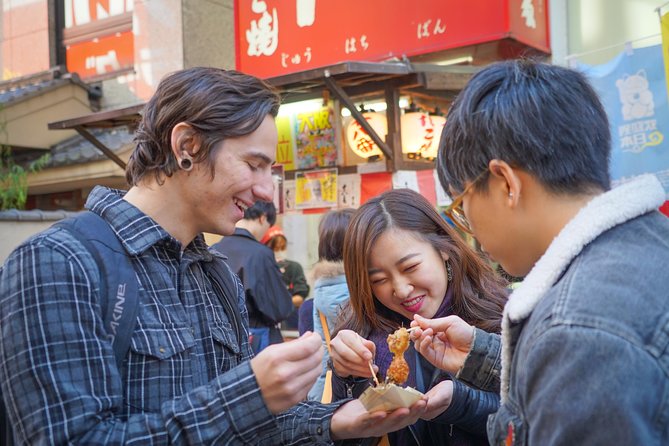
Osaka snack time, but with stories. This 3-hour local foodie walking tour threads together Shinsekai and Dotonbori street scenes with set tastings like kushikatsu, okonomiyaki, and takoyaki, plus temple stops and major photo spots. I like that it is structured like an easy food route, not a scavenger hunt, and you get small-group attention that helps you actually understand what you are eating.
The big positive is the lineup: 6 pieces of kushikatsu, 1 okonomiyaki, a box of takoyaki, and 3 drinks (alcohol or non-alcohol). One drawback to factor in is that the tour is still walking city-to-city, and a few people have flagged that the pace can feel fast, plus some felt the variety could be improved.
If you want Osaka’s eating neighborhoods in one smooth loop, this tour fits well. Just go in knowing it is not a slow, sit-down food crawl, and dietary limits are strict, especially for gluten-free and vegan diets.
In This Review
- Key things to know before you go
- Why Shinsekai and Dotonbori make the best food tour combo
- Price and value: what $111.42 buys you in Osaka reality
- The route in plain English, from FamilyMart to the Glico sign
- Stop 1: Tsutenkaku and Jan-Jan Yokocho kushikatsu
- Stop 2: the shopping street feel, plus old-school Osaka nostalgia
- Stop 3: Dotonbori alley shopping and the Doguya-suji knife lane
- Stop 4: Hozen-ji Temple, Ukiyo-koji, and a snack intermission
- Stop 5: the Glico sign photo moment
- Stop 6: Sennichimae Doguyasuji and the okonomiyaki finish
- Food reality check: what you are actually eating
- Dietary restrictions and allergies: read this part carefully
- Pace, comfort, and what to wear
- Guide impact: why names like Aika and Yuma keep coming up
- Should you book this Osaka local foodie walking tour?
- FAQ
- What food is included on the Osaka Local Foodie Walking Tour?
- Where do you meet and where does the tour end?
- How long is the tour?
- Can I join if I’m gluten-free or vegan?
- Is vegetarian food available?
- Are transportation costs included in the price?
Key things to know before you go
- Small-group size (max 7) means more chance for questions and a more personal flow.
- Tsutenkaku to Hozen-ji to the Glico sign gives you classic landmarks, not random stops.
- Set tastings and 3 drinks help you budget, but you may still want extra snacks on the temple-side streets.
- Vegetarian is possible, but vegetarian kushikatsu can include dashi (pork broth), so tell them if you avoid it.
- Gluten-free and vegan cannot be accommodated, and allergy-free eating is not guaranteed.
- Heat and cold hit hard in Osaka, so pack for extremes.
Why Shinsekai and Dotonbori make the best food tour combo
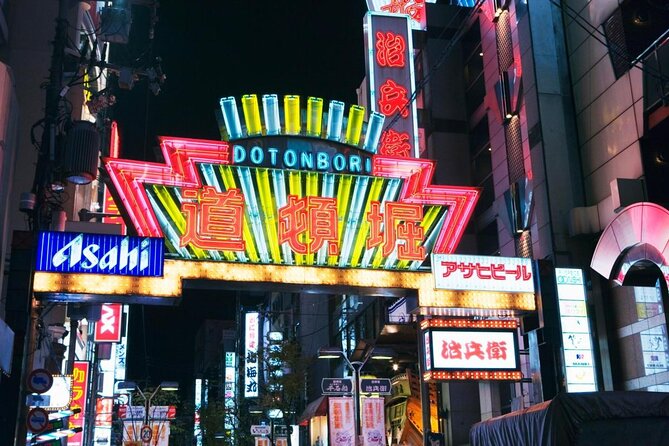
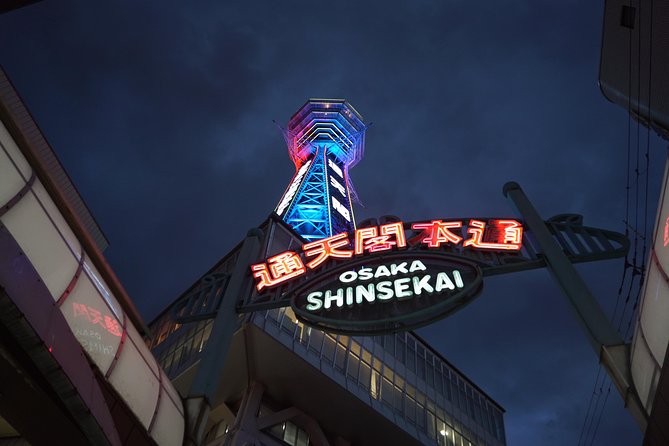
Osaka’s food identity is very street-level. You do not just eat, you watch. In Shinsekai, the vibe is retro and loud, anchored by Tsutenkaku Tower and the hanging lantern energy of alley life. In Dotonbori, you get the neon postcard feeling, with the famous Glico sign acting like a north star for night walkers.
This tour’s smart move is linking those two areas in one outing. You start where people go for grilled and fried comfort foods, then slide toward the Namba energy where shopping alleys and landmark photos keep pulling you forward. If you are new to Osaka, it is an efficient way to learn the lay of the land.
Retro Osaka, neon and all
- Osaka: Shinsekai Food Tour with 13-15 Dishes at 5 Eateries★ 4.8 · 2,204 reviews
- Osaka: Tsutenkaku Tower Entry Ticket★ 3.8 · 125 reviews
- Osaka: Local Foodie Tour in Dotonbori and Shinsekai★ 4.7 · 95 reviews
- Retro Osaka Street Food Tour: Shinsekai★ 4.5 · 77 reviews
- Osaka: Shinsekai Food Tour – 13 Dishes at 5 Local Eateries★ 4.5 · 29 reviews
Price and value: what $111.42 buys you in Osaka reality
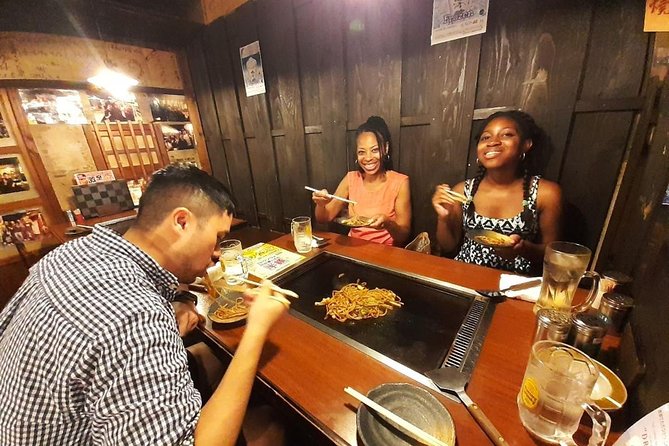
At $111.42 per person for about 3 hours, the value comes from two things: the fixed food portion list and the included drinks. You are not paying just for walking. The tour includes:
- 6 pieces of kushikatsu
- 1 piece of okonomiyaki
- 1 box of takoyaki
- 3 drinks (alcohol and non-alcohol available)
That matters because Osaka street food can add up quickly when you are buying one item here, two items there, and a drink everywhere. Here, you get a baseline meal-style set.
Is it perfect value for every appetite? Not always. Some people care most about variety and number of places, and a few have felt the experience was more like a light food route plus city sights rather than a heavy restaurant-hop tasting marathon. If you love tasting lots of different bites in tiny portions, consider that before you book.
The route in plain English, from FamilyMart to the Glico sign
You begin at FamilyMart in Nishinari Ward, near Sannō 1-chōme (The West Side). That is useful because FamilyMart is easy to spot, and you are near public transportation. The tour ends at the Glico Sign in Dotonbori, so you finish right where the night action is already happening.
This “start outside the neon core, end in the neon core” rhythm is practical. You get a classic Osaka arc, plus an easy landing zone for dinner after the tour. One thing to plan for: the tour starts on time, and if you arrive late and miss the group, you cannot join. Osaka is great, but crowds and subway navigation can still mess with your timing.
Stop 1: Tsutenkaku and Jan-Jan Yokocho kushikatsu
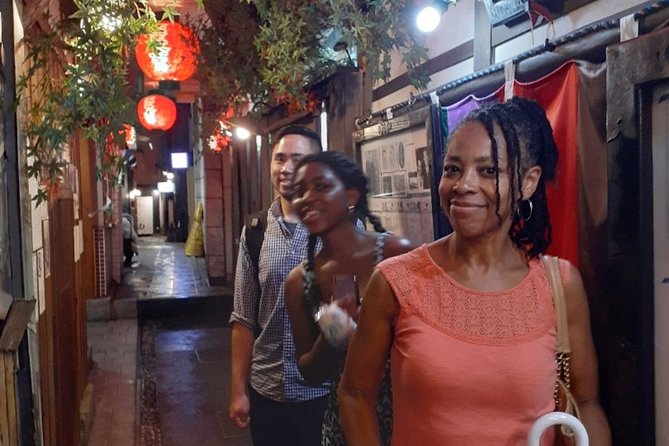
Your first stretch is Tsutenkaku watching over everything, with time to walk Jan-Jan Yokocho alleyways. The meal focus here is kushikatsu, deep-fried skewers that are basically Osaka comfort food on a stick.
Why this stop works:
- You get the iconic neighborhood context first. You are not eating in a vacuum.
- The skewers are an easy first tasting because they are straightforward to order, and you can pace yourself early in the tour.
What to watch for: kushikatsu often goes with pork broth flavoring (dashi) in many systems, and the vegetarian notes later in the tour are important. If you have dietary restrictions, make sure you share them ahead of time so you are not stuck adapting on the spot.
Stop 2: the shopping street feel, plus old-school Osaka nostalgia
Next you spend time at Shinsaibashi-suji Shopping Street and the surrounding Shinsekai-area landmarks, including references to Shinsekai Market, Tsutenkaku Tower, and the Billiken statue. The description here leans into that old-street atmosphere, like a “museum-like” alley experience of Osaka’s center from long ago.
You are probably asking, why include a shopping street on a food tour? In Osaka, shopping streets are part of how people actually live and eat. They are where local snack culture happens between errands. Even if you buy nothing, you learn the rhythm of the neighborhoods.
Also, this segment is shorter than the others, which keeps the tour moving before you hit the heavier food moments later.
The glowing strip everyone photographs
- Osaka: Dotonbori District River Cruise with Drink Discount
★ 4.2 · 876 reviews - Ultimate Osaka Walking Tour: Castle, Dotonbori & Hidden Gems
★ 5.0 · 862 reviews - Tea Ceremony Experience in Osaka Doutonbori
★ 5.0 · 754 reviews
Stop 3: Dotonbori alley shopping and the Doguya-suji knife lane
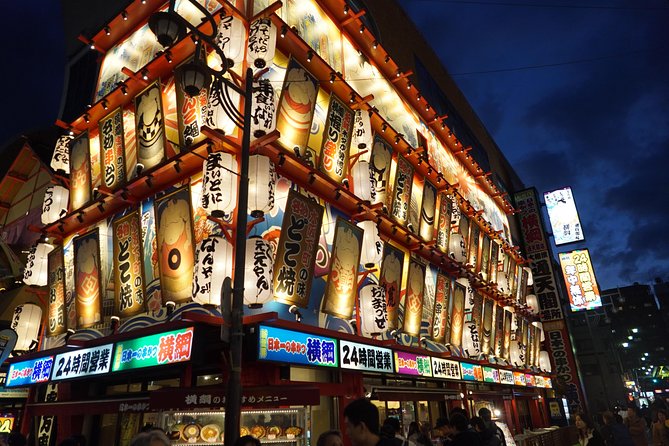
When you move into Dotonbori, you get time for souvenir shopping on Dōgu-ya-suji, including a knife shop (Hocho-ya). There is also mention of the area near Namba Grand Kagetsu and explanations around Dōgu-ya-suji in the evening part of the loop.
I like this stop because it gives you something practical to do with your hunger and time. You are not just standing under neon taking photos. You are also learning what this alley is known for, and you might grab a small, gift-friendly item that fits Osaka’s craft identity.
Practical note: this portion is quick, so if you are the type who loves browsing, keep your priorities in order. If you want food focus, do not let the shopping slow you down too much.
Stop 4: Hozen-ji Temple, Ukiyo-koji, and a snack intermission
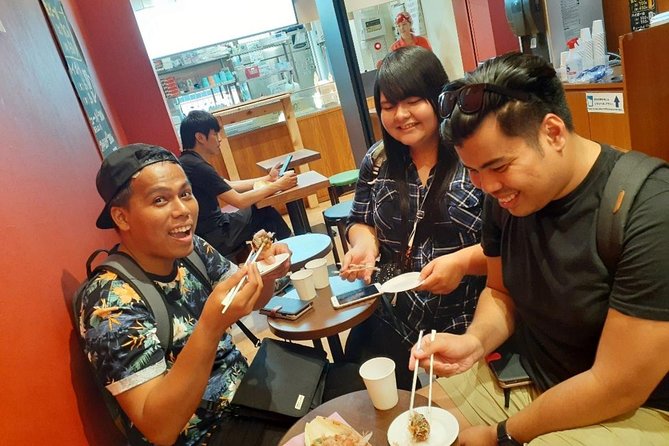
At Hozen-ji Temple, the tour blends walking with food time. You stroll through Ukiyo-koji, and you are given time to snack on takoyaki, sweets, and more with an approximate budget note around ¥500 for extra items.
This stop is a good breather. You get a change of pace from shopping alleys and you see a temple area that feels distinct from the main neon corridors.
Possible drawback: one review-style complaint you should consider is lighting and comfort. If you are doing this at night and it is dark around the temple area, it can make the stroll less fun for photo and sightseeing. Bring a small flashlight on your phone, and keep an eye on your footing in narrow passages.
Stop 5: the Glico sign photo moment
Then it is straight to the Dotombori Glico sign for photos. This is short by design, but it does something important: it marks the emotional halftime of the tour. You get the big icon shot, then you roll on toward the final food moment.
If you care about photos, this is your moment. Wear shoes that handle crowded sidewalks because Dotonbori gets packed.
Stop 6: Sennichimae Doguyasuji and the okonomiyaki finish
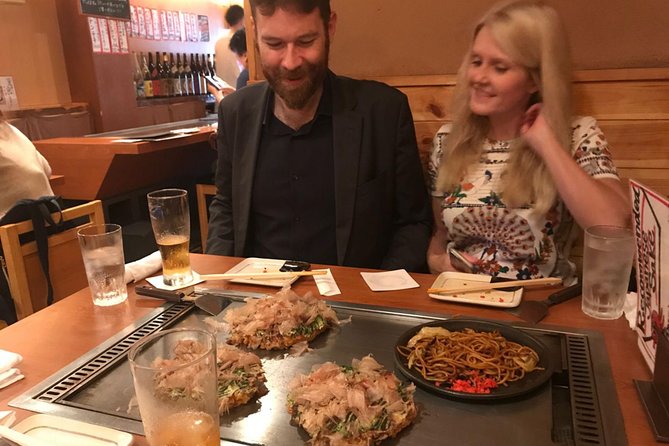
You end in Sennichimae Doguyasuji Shopping Street, where the food focus shifts to Osaka-style okonomiyaki. The tour notes also include snapping photos around the Glico sign area and then finishing back in Dotonbori.
Okonomiyaki is not just food, it is a style. It is savory, built with toppings and batter, and Osaka takes it personally. Some groups also report a fun cooking component, like grilling or prepping as part of the experience, but that can depend on the exact setup on the day.
Why this ending works well:
- You finish with a heavier, satisfying item.
- You are already in the right neighborhood to keep eating after the tour if you want.
Food reality check: what you are actually eating
The included lineup is consistent, so you can plan your expectations:
- Kushikatsu: fried skewers, typically meat and veggie varieties. Expect the crispy, savory rhythm.
- Okonomiyaki: savory pancake-style dish with toppings.
- Takoyaki: round fried balls with octopus, plus you may encounter them again at the temple-side snack time.
If you do not love fried foods, this tour will still likely work for you if you eat slowly and save your appetite. But if you feel fried food fatigue quickly, you might find the route a bit too “crunch-forward.”
Also note a key consistency point for vegetarian diets: the vegetarian kushikatsu can still include dashi (pork broth). That is not a minor detail, so do not gloss over it.
Dietary restrictions and allergies: read this part carefully
This tour has clear limits:
- Gluten-free and vegan cannot be accommodated.
- Vegetarian is possible, but you must choose the vegetarian option when booking or request in advance by the day before at latest.
- If you avoid dashi, tell the organizer at least a day ahead. Vegetarian kushikatsu can still use dashi even when it is labeled vegetarian.
Allergy handling comes with a caution. The food is prepared in kitchens not operated by the tour, so you cannot assume allergy-free meals. The best move is to report allergies or dietary needs early, at least one day before, and understand that substitution and guaranteed avoidance are not promised.
If you are sensitive to pork broth or have strong dietary rules, you will need to communicate clearly, and you may want a different tour that can better control ingredients.
Pace, comfort, and what to wear
This is a walking tour. Even though each stop has a set time window, you will still move through crowds and side streets.
How to make it easier:
- Wear shoes you trust on uneven, crowded sidewalks.
- Bring water. Osaka’s climate swings hard, with summers that can reach up to 40°C and winter lows down to -5°C.
- If you get tired easily, set the expectation that you may need to keep up. Some people have said the walking pace can be fast.
Heat is the big enemy. Plan your sunscreen and hydration, and try to keep your snack eating pace steady instead of front-loading everything.
Guide impact: why names like Aika and Yuma keep coming up
One of the best signs for this tour is how often guides are praised by name. Guides such as Aika, Yuma, Kent, Michiko (Mich), Emi, and Justin are referenced for sharing local context, helping with questions, and keeping the group engaged.
Here is the practical takeaway: a good guide changes this from a checklist into a story. You get cultural context tied to the food, and you are more likely to notice small street details you would miss on your own.
A balanced note: not every guide experience lands perfectly. Some people have felt the narration was lighter, or that certain food expectations were not met exactly as listed. The small-group size helps, but you should still go in with a flexible attitude.
Should you book this Osaka local foodie walking tour?
Book it if:
- You want Shinsekai plus Dotonbori in one outing with a clear food plan.
- You like famous landmarks like Tsutenkaku and the Glico sign, but you also want real snack stops.
- You are okay with fried and savory comfort food and you want included tastings plus drinks.
Skip it or consider alternatives if:
- You need gluten-free or vegan options. This tour cannot accommodate them.
- You want lots of different mini bites across many restaurants. This tour has a set tasting structure, and a few people felt it could offer more variety.
- You dislike fast city walking or tight alley pacing, especially at night.
My final advice: treat it like a smart Osaka intro loop. Eat the included classics, enjoy the street scenes, and then use the last part of the tour location, Dotonbori, as your springboard for whatever looks best right after.
FAQ
What food is included on the Osaka Local Foodie Walking Tour?
You get 6 pieces of kushikatsu, 1 piece of okonomiyaki, 1 box of takoyaki, and 3 drinks (alcohol and non-alcohol are available).
Where do you meet and where does the tour end?
The tour starts at FamilyMartJapan near Sannō 1-chōme in Nishinari Ward, Osaka, and ends at the Glico Sign Dotonbori area in Chuo Ward.
How long is the tour?
The tour lasts about 3 hours.
Can I join if I’m gluten-free or vegan?
No. The tour states that gluten-free and vegan cannot be accommodated.
Is vegetarian food available?
There is a vegetarian option if you select it when booking or request it at least by the day before. Note that vegetarian kushikatsu can still use dashi (pork broth), so you should mention if you avoid dashi.
Are transportation costs included in the price?
No. Transportation fees of 190 JPY are listed as not included.
More Walking Tours in Osaka
- Osaka: Deep Backstreets Walking Tour with Dinner Option★ 4.9 · 902 reviews
- Osaka: Main Sights and Hidden Spots Guided Walking Tour★ 4.9 · 702 reviews
- Private Osaka Walking Tour: Highlights & Hidden Gems★ 5.0 · 569 reviews
- Osaka Castle Walking Tour and Castle Tower Admission★ 5.0 · 561 reviews
More Food in Osaka
- Osaka Food Tour: 13 Dishes at 5 Local Eateries★ 5.0 · 2,149 reviews
- Hungry Osaka Street Food Tour:15 Tastings & 3 Drinks with a Local★ 5.0 · 1,727 reviews
- Hungry Osaka Street Food Tour: 15 Dishes & 3 Drinks★ 4.9 · 694 reviews
- Kuromon Market Food Walking Tour in Osaka (6 stops, 6 tastes)★ 5.0 · 550 reviews
Just added around Osaka

Dotonbori Experiences, compared.
Dotonbori District River Cruise with Drink Discount
Read our review →
Ultimate Osaka Walking Tour: Castle, Dotonbori & Hidden Gems
Read our review →
Dotonbori River Cruise with Glico Sign & Neon Views
Read our review →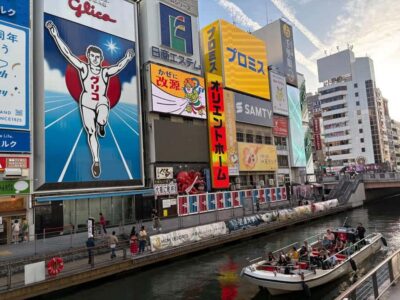
Roll and Authentic Sushi Making Class in Dotonbori
Read our review →
This tour also fits