
Reviewed · WALKING TOURS
From Osaka: Sakai Knife Maker or Blacksmith Walking Tour
Knives come alive in Sakai. I loved starting near Nankai Sakai Station with a local sweets shop stop, then moving straight into the kind of knife-making access most visitors never get. The whole flow is practical, it feels local, and you spend your time where the craft is actually happening.
My other big favorite was the hands-on style, especially on blacksmith days where you get a chance to work with hot steel and hear the process explained by makers like Eric Chevallier. One thing to plan around: the Sakai crafts museum can sometimes close without notice on the 3rd Tuesday because of an inventory, so your guide may reroute that portion.
In This Review
- Key things that make this tour worth your time
- From Nankai Sakai Station to a real craft neighborhood
- Sakai craft museum and the quick history you actually need
- The mochi stop: the sweet that people keep talking about
- Tuesdays and Thursdays: stepping into Yamawaki Hamono’s knife-making world
- Wednesdays at the forge: Eric Chevallier and the blacksmith experience
- The sharpening lesson: what you learn and how to use it later
- Shopping time and the optional custom knife order
- Timing, walking, and getting the most out of 3.5 hours
- Language mix: English is guaranteed, French depends
- Who should book this Sakai knife-maker or blacksmith tour?
- Should you book? My straight recommendation
- FAQ
- Where does the tour start?
- How long is the tour?
- What days are for the knife maker and what days are for the blacksmith?
- Are English and French available?
- What is included in the price?
- What happens if the museum is closed?
- Is there a custom knife order?
- What should I bring with me?
- Is the tour wheelchair accessible?
- What if I book as a single traveler?
Key things that make this tour worth your time
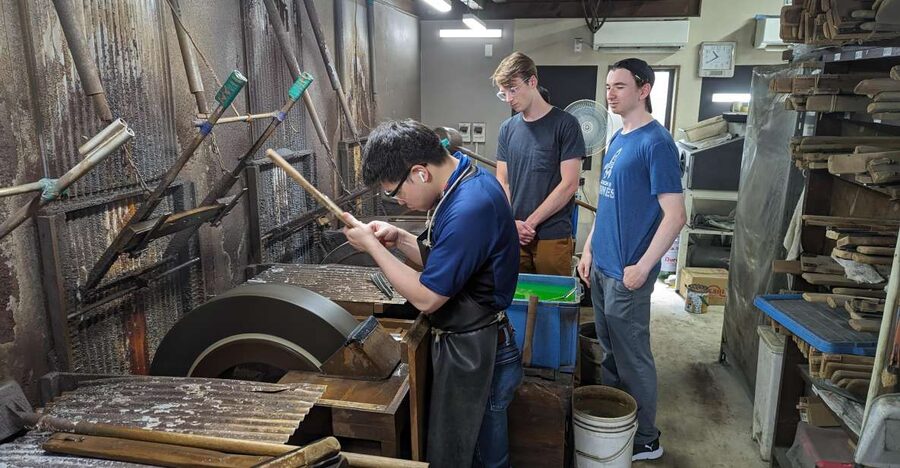
- Two workshop styles by day: Tuesdays and Thursdays focus on the knife maker (Yamawaki), while Wednesdays focus on the blacksmith forge experience.
- Sweets that fit the story: you start with a traditional mochi shop stop (yes, it really is a highlight), with a snack included.
- Context before the craft: you visit the Sakai craft area museum, then step into working spaces where the tools and techniques make sense.
- A sharpening lesson you can use later: you learn traditional Japanese sharpening technique, not just watch it.
- Optional custom knife order: if you want a personal souvenir that is more than a postcard, you can place an order during the maker portion.
- Small-group vibe with bilingual guidance: guides speak English, and some can add French if available, based on your booking date.
From Nankai Sakai Station to a real craft neighborhood
This tour starts south of Osaka, at Nankai Sakai Station. It is not one of those “meet in a mall parking lot” setups. You begin with a slower pace and a purpose, walking into the Sakai district with your guide and settling in with an included sweet snack from an old-style shop.
That first stop matters more than it sounds. In Sakai, knives are a local identity, and food is part of daily life. A guide like Remy (I found his storytelling style especially engaging in the experiences described) helps connect the dots so the day does not feel like random errands.
You should also bring a passport or ID card. That is a small requirement, but it helps you avoid last-minute stress when you arrive at the craft spaces.
Other ways to spend a day in Osaka
- Osaka Local Foodie Walking Tour in Dotonbori and Shinsekai★ 5.0 · 985 reviews
- Osaka: Deep Backstreets Walking Tour with Dinner Option★ 4.9 · 902 reviews
- Ultimate Osaka Walking Tour: Castle, Dotonbori & Hidden Gems★ 5.0 · 862 reviews
- Osaka: Main Sights and Hidden Spots Guided Walking Tour★ 4.9 · 702 reviews
- Private Osaka Walking Tour: Highlights & Hidden Gems★ 5.0 · 569 reviews
Sakai craft museum and the quick history you actually need
Before you go hands-on, you get a visit to the Sakai Traditional Crafts Museum and Knife Shop. It is a smart setup. You learn enough context to understand what you are about to see, rather than treating the factory like a magic show.
There is also a timing wrinkle you should know about. Every 3rd Tuesday, the museum has an inventory and may close without notice. If that happens, your guide will explain the cutlery history while walking and at the knife company office instead, so you still get the meaning behind what you see.
In terms of pace, this part is shorter than the workshop stops, but it gives you the “why” behind the “how.” That is the difference between enjoying a tour and remembering it.
The mochi stop: the sweet that people keep talking about
One of the most praised moments is the early visit to 八百源来弘堂本店, a traditional sweets shop. I love that the tour does not treat the food stop as filler. You get a real chance to taste local favorites like poppyseed mochi and cinnamon mochi, and you can shop a bit if you want.
This stop works for two reasons. First, mochi is something you can understand quickly even if your Japanese is limited. Second, your guide ties it to Sakai’s everyday culture, so the food feels like it belongs in the neighborhood, not like it was dropped in for schedule convenience.
If you are picky about sweets, you will still enjoy the context and the break from walking. And if you are a yes-to-trying-new-things person, this will feel like a warm-up for the bigger craft moments ahead.
Tuesdays and Thursdays: stepping into Yamawaki Hamono’s knife-making world
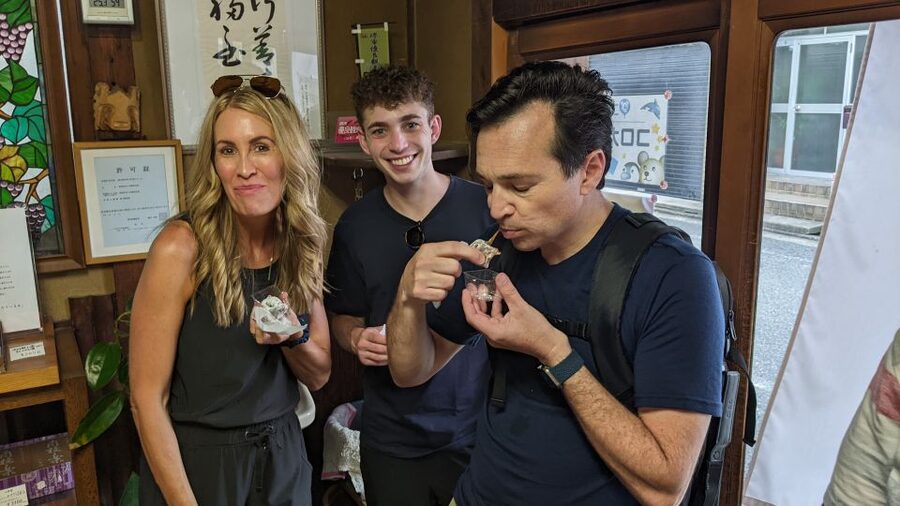
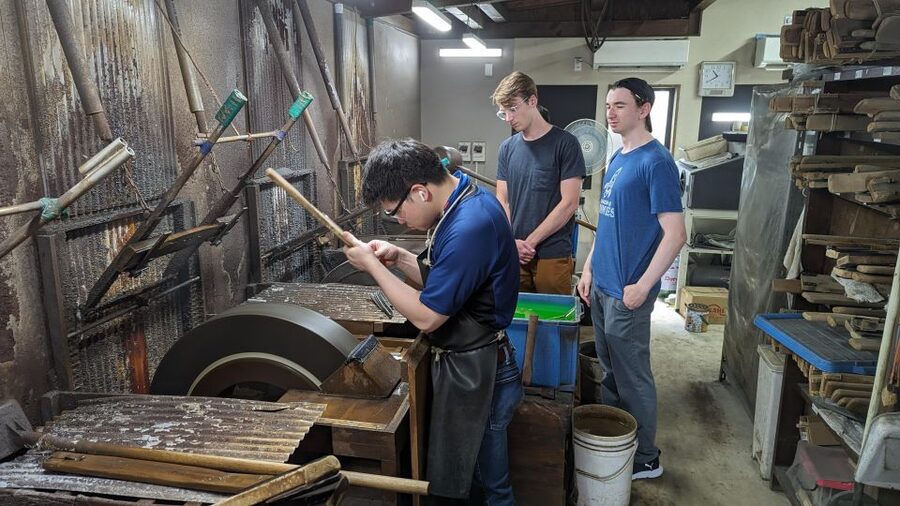
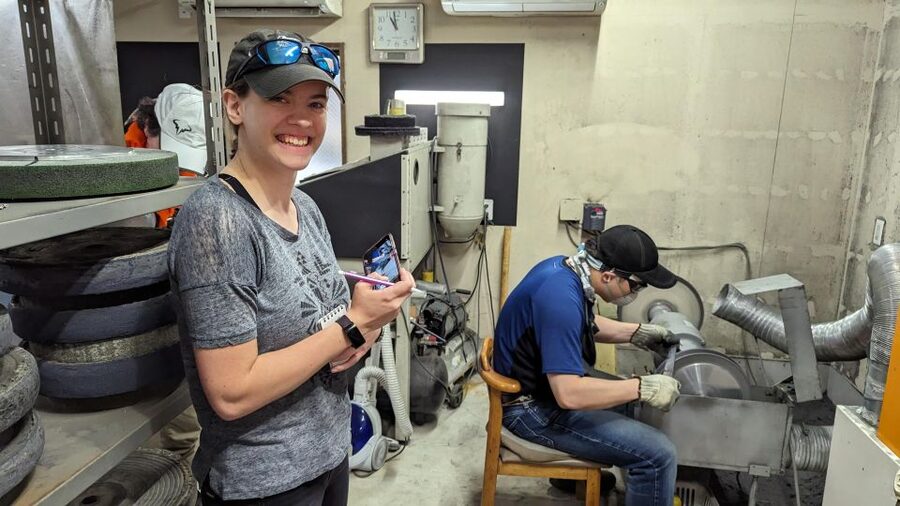
On Tuesdays and Thursdays, the tour focuses on the knife maker company Yamawaki Hamono. Expect the vibe of a working workshop, with history behind it. The day is designed so you can see how pieces move from raw materials toward finished cooking knives.
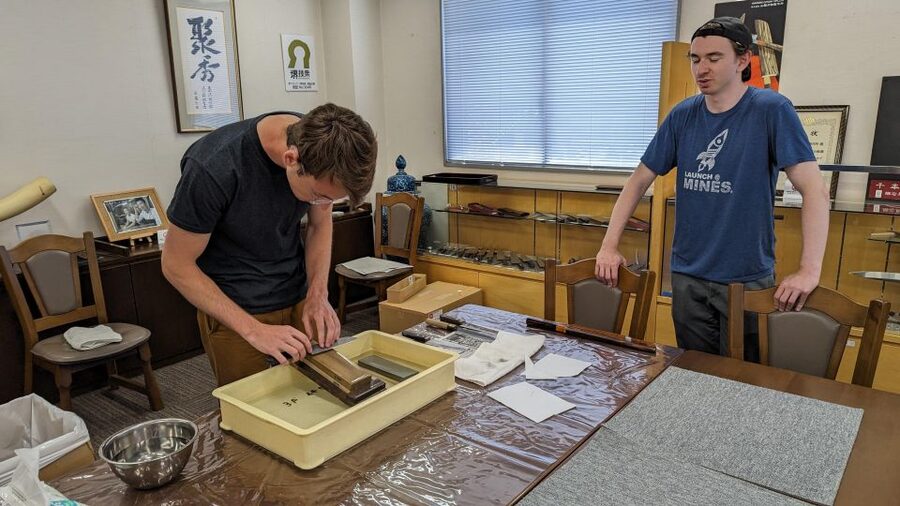
You start with a walkthrough feel: you can observe the setup, the workflow, and the main office areas. Then you spend time at the sharpening station and watch how blades are turned into proper handmade kitchen tools. The tour also includes a lesson on traditional Japanese sharpening techniques, led by a trained guide.
A standout piece for many people is the option to order a customizable knife, with the process you are learning connected to what you see while you visit. The practical value here is simple: you leave with a better sense of what makes a good kitchen knife, not just a nice story.
If you care about hands-on learning more than shopping, prioritize the sharpening and technique parts over browsing. The knife-making experience is more meaningful when you understand what the makers are trying to achieve with each step.
Wednesdays at the forge: Eric Chevallier and the blacksmith experience
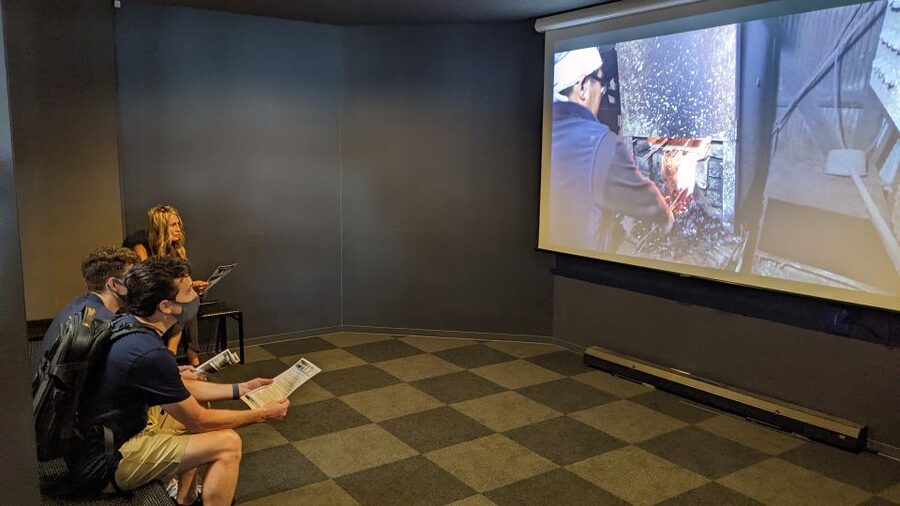
If you want the true metalwork energy, pick Wednesdays. This is when the focus shifts to the blacksmith workshop, where you get exclusive access to the forging process and techniques directly from the artisan himself, Eric Chevallier.
In the strongest examples from past guests, the highlight is getting involved in the process. People describe the thrill of practicing at the start of forging, including the moment of working with glowing steel under close supervision. Even if you are not a gear person, the workshop helps you understand why craftsmanship matters, because you see the decisions happening in real time.
One timing note that affects planning: from March 6 to April 6, 2026, the tour operates as blacksmith only. That means if you were hoping for the Yamawaki maker day, those dates shift the focus. The upside is you still get a real workshop day, just with the blacksmith emphasis.
This is also a great choice if your group wants the more physical side of the craft. A knife maker day can feel more like process and stations; a blacksmith day feels more like heat, force, and shaping.
Not ready to leave Osaka yet? A few more ways to fill the day.
- Osaka Go Karting Tour with Funny Costume
★ 5.0 · 2,658 reviews - Osaka Castle: Museum and Tower Entry Ticket
★ 4.5 · 2,380 reviews - Osaka: Shinsekai Food Tour with 13-15 Dishes at 5 Eateries
★ 4.8 · 2,204 reviews
The sharpening lesson: what you learn and how to use it later
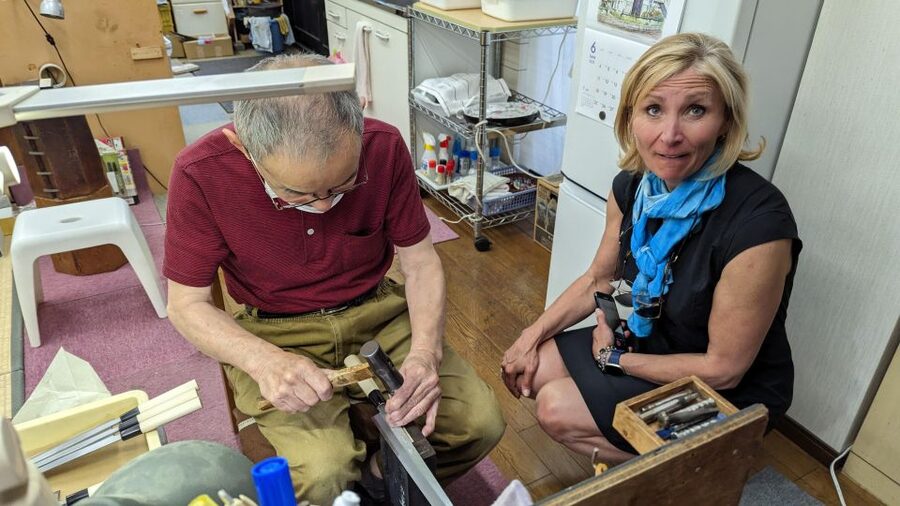
Across both options, you get a knife sharpening technic lesson. This is one of the best value pieces of the tour because it is something you can bring home without needing special tools right away.
Here is why I think this matters: sharpening is where many people mess up. They either wait too long, or they use the wrong approach, and they end up with a knife that does not cut cleanly. By learning the traditional technique during a structured lesson, you get a framework for how the edge should be treated and maintained.
Guests often mention that they felt confident handling sharpening at home after the tour. That is exactly the kind of “use it right away” skill that makes a half-day worth paying for.
Bring your questions. If you have a specific knife at home, ask your guide what you should focus on for maintenance. Even if you do not buy anything, that advice can save you money later.
Shopping time and the optional custom knife order
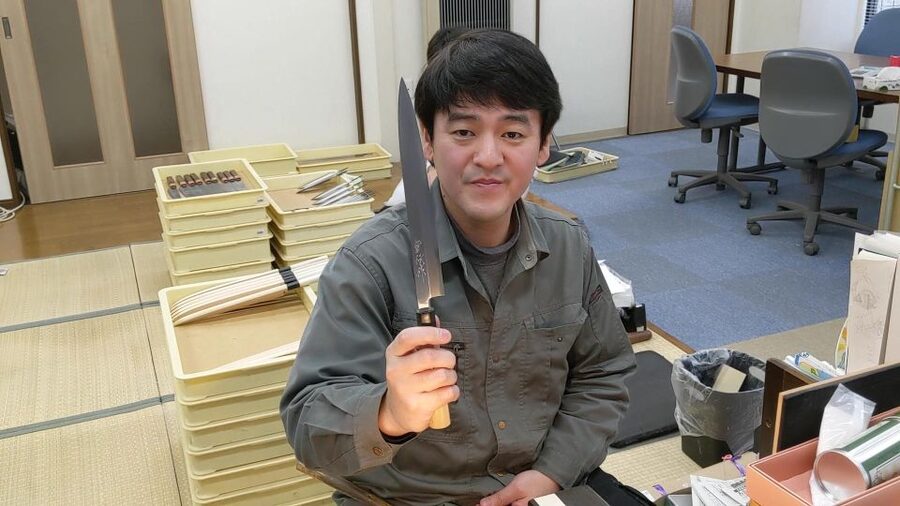
You will have time for shopping at both the museum area and the workshop stops. Just remember: shopping time is included, but the tour is not built as an open-ended buying spree. The best approach is to treat it like part of the learning.
If you choose to order a customizable knife, the tour is set up so you can watch the making process while you are there on the maker day. That is powerful because you are not guessing what you are buying. You are seeing the craft while it is still fresh in your head.
If you are not sure you want a knife right now, you can still benefit from the comparisons. Watching how different tools, steps, and finishing styles get explained helps you understand what to look for later when you browse elsewhere in Japan.
Also, this tour is very much centered on kitchen knife craftsmanship, not hunting-knife culture. If that matches what you want, great. If your heart is set on tactical steel, you might need to manage expectations.
Timing, walking, and getting the most out of 3.5 hours
The tour runs about 210 minutes, so plan for a comfortable half-day. There is some walking, but the group moves between nearby craft stops in a way that does not feel like a marathon. Expect short travel segments between major points, with photo stops and guided explanations along the way.
For most people, the rhythm feels good: meet, snack, museum context, then workshop access, then skill learning, with shopping time built in. If you like structured days, this layout helps you “absorb” more because you always know what you are looking at and why.
If you are traveling with kids or teens, the hands-on elements are a good hook. In the examples I saw, families said the workshop focus held attention, especially once the craft got practical.
A small practical note: wear comfortable shoes. Even if the distances are manageable, you will be on your feet for the whole block, including market-like streets around the sweets shop and craft areas.
Language mix: English is guaranteed, French depends
All guides can speak English. French may be available with some guides, but it cannot be guaranteed for shared tours. If French is a must for your group, contact ahead before you book.
In past experiences, guides like Remy and Jean-Yves were praised for enthusiasm and clarity. That matters because a craft tour is only as good as the way the steps get explained, especially when you are learning technique.
If you are comfortable with basic English, you can relax. The tour structure plus real visual demonstrations do a lot of the communicating for you.
Who should book this Sakai knife-maker or blacksmith tour?
Book this tour if you love one (or more) of these:
- Handcraft processes and want to see what goes into a real kitchen tool
- Food plus culture, especially if you enjoy trying local sweets like mochi
- A chance to learn a traditional sharpening technique you can use later
- A workshop experience that feels more “work in progress” than museum-only
You might want to rethink if you only want a high-level overview. The craft spaces are the main event. This is also best suited to people who are open to shopping time and the possibility of ordering a knife, even if you decide not to.
For solo travelers: there is a rule of a 2 guests minimum for the tour to run. If you are booking alone, the session might be canceled, with a refund or rescheduling offered. Plan to book with flexibility if it is a must-do day.
Should you book? My straight recommendation
If you are doing Osaka and you want one experience that feels genuinely local, I would book this Sakai knife-making or blacksmith tour. The value is in the combination: sweets plus craft context plus real workshop access plus a hands-on sharpening lesson.
Choose Wednesdays if you want the forge energy and the best chance at very active blacksmithing moments with Eric Chevallier. Choose Tuesdays or Thursdays if you want the knife maker workflow at Yamawaki Hamono and the optional custom knife ordering moment.
If you are on a tight schedule or your date falls on the 3rd Tuesday, accept that the museum portion might shift. That is still manageable, because your guide adjusts the plan and keeps the cutlery history moving.
Overall, this is the kind of tour that turns a shiny souvenir into something you understand.
FAQ
Where does the tour start?
It starts at Nankai Sakai Station south of Osaka, and there are starting location options listed as Sakai Station as well. Meeting point may vary depending on the option booked.
How long is the tour?
The tour is 210 minutes.
What days are for the knife maker and what days are for the blacksmith?
Tuesdays and Thursdays are for the knife maker option (Yamawaki). Wednesdays are for the blacksmith workshop option.
Are English and French available?
All guides can speak English. Some guides can speak French, but French is not guaranteed on a shared tour. You should contact the provider before booking to confirm French language availability for your date.
What is included in the price?
Included items are a bilingual local guide, 1 sweet at the sweet shop, shopping time, access to the knife factory, a knife sharpening technic lesson, and the option to order a customizable knife.
What happens if the museum is closed?
Every 3rd Tuesday the museum has an inventory and might close without notice. If that happens, your guide will take you directly to the knife company and include the history of cutlery while walking and at the office.
Is there a custom knife order?
Yes. Ordering your own customizable knife is optional, and you can watch the process in front of you during the maker portion.
What should I bring with me?
Bring a passport or ID card.
Is the tour wheelchair accessible?
Yes, the tour is listed as wheelchair accessible.
What if I book as a single traveler?
There is a 2 guests minimum rule, so if you are booking alone the session might be canceled. If that happens, you will be notified and offered a reschedule or a full refund.
Just added around Osaka


Walking Tours, compared.

Osaka Local Foodie Walking Tour in Dotonbori and Shinsekai
Read our review →
Deep Backstreets Walking Tour with Dinner Option
Read our review →
Ultimate Osaka Walking Tour: Castle, Dotonbori & Hidden Gems
Read our review →
Main Sights and Hidden Spots Guided Walking Tour
Read our review →
Private Osaka Walking Tour: Highlights & Hidden Gems
Read our review →
Osaka Castle Walking Tour and Castle Tower Admission
Read our review →
Kuromon Market Food Walking Tour in Osaka (6 stops, 6 tastes)
Read our review →
Five Must-See Highlights Walking Tour & Ramen Lunch
Read our review →This tour also fits