
Reviewed · DAY TRIPS TO KYOTO FROM OSAKA
Kyoto and Nara Day Trip from Osaka
Kyoto and Nara in one long day. This trip is interesting because it stitches together the two former capitals with a guided route that includes major World Heritage sights and time-saving rail. The main win for me is the professional English-speaking guide who explains what you’re looking at instead of leaving you to guess.
I also like the structure of the day, especially the way it groups Kyoto’s must-sees (Nijo Castle, Kinkaku-ji, and Kyoto Imperial Palace) before switching gears to Nara’s big religious landmarks. The one drawback to plan for is that the pacing is tight, so you will not have the slow, wander-and-photograph style of day you might want.
In This Review
- Key highlights in plain terms
- Why this Kyoto and Nara day trip feels efficient from Osaka
- Start at Hotel Granvia and manage the morning train-to-bus flow
- Nijo Castle in 50 minutes: Tokugawa design meets your schedule
- Golden Pavilion and Kyoto Imperial Palace: what you see in one tight Kyoto block
- Kasuga Grand Shrine and Todai-ji: Nara’s big moments, timed
- Lunch choices and the reality of group timing
- Crowds, pace, and hearing the guide: how to get the most
- Value at $198.15: admissions, guide, and the tradeoff versus DIY
- Should you book this Kyoto and Nara day trip from Osaka?
- FAQ
- What time does the Kyoto and Nara day trip start and end?
- Where do I meet the guide?
- How long is the tour?
- Is transportation seating reserved?
- Which Kyoto Imperial Palace day will be replaced, and by what?
- What happens if Nijo Castle is closed?
- What are the main stops and their approximate time?
- Is lunch included, and what type is it?
- What is the group size?
Key highlights in plain terms
- Fast routing from Osaka using public transport plus Shinkansen time savings
- Licensed guide coverage with admissions and transport costs included
- Nijo Castle circuit timed at about 50 minutes, with ticket included
- Golden Pavilion visit set for about 45 minutes, plus the surrounding garden views
- Nara’s heavy hitters with Kasuga Grand Shrine and Todai-ji, each with set time blocks
- Group size cap of 40 which helps, but you should still expect crowds
Why this Kyoto and Nara day trip feels efficient from Osaka
This is the kind of tour you choose when you have limited time and you want the big names without spending your whole day figuring trains, ticket lines, and which order makes sense. The day is built around moving from Osaka early, reaching Kyoto quickly, then finishing Nara before heading back to Osaka by early evening.
You get a guided look at the former capitals through three classic “styles” of sightseeing. Kyoto is castles and palace power, then a gold-temple aesthetic, then an imperial residence with simple form. Nara shifts to giant-scale Buddhism and sacred shrine atmosphere. If you like having someone connect the dots, this format is a strong match.
Just know the tradeoff: you’re on a schedule. Each stop has a set visit length, and the group moves when the clock says move. If you want to linger for long photos, sit and sketch, or ask lots of follow-up questions, you’ll feel the time pressure.
Deer that bow back, minutes from Osaka
- Ancient Capital Tour: Kyoto and Nara Highlights from Kyoto/Osaka★ 4.5 · 332 reviews
- Discover Himeji, Kobe and Nara from Osaka★ 5.0 · 101 reviews
- Kyoto & Nara Private customized tour with English speaking Guide★ 4.5 · 99 reviews
- Kyoto and Nara UNESCO Highlights Full-day Tour From Osaka★ 4.5 · 50 reviews
- From Osaka: Nara Private Tour with Meet-Up at Your Hotel★ 5.0 · 49 reviews
Start at Hotel Granvia and manage the morning train-to-bus flow
The day starts at 7:15 am at Hotel Granvia Osaka. From there, you take a rapid service or local train to Shin-Osaka, then travel between Shin-Osaka and Kyoto by Shinkansen (with non-reserved seats). Non-reserved seating means you should be mentally ready that seating is not guaranteed.
When you arrive in Kyoto, you walk to the Sunrise Tours Desk at Kyoto Avanti (B1F). From that point, the tour continues by bus to the first destination. One practical upside of this structure is that you are not responsible for transfers in the middle of the chaos. Multiple reviews also mention the collection arrangements being smooth and the day feeling organized.
However, that early start can be a wake-up call. A couple of reports describe the morning as a lot of standing, and one notes that the group size felt larger than you’d hope for once you’re inside train stations and waiting areas. Your best move is to travel light, wear comfortable shoes, and accept that the morning is logistics heavy even if the sights are great.
Nijo Castle in 50 minutes: Tokugawa design meets your schedule
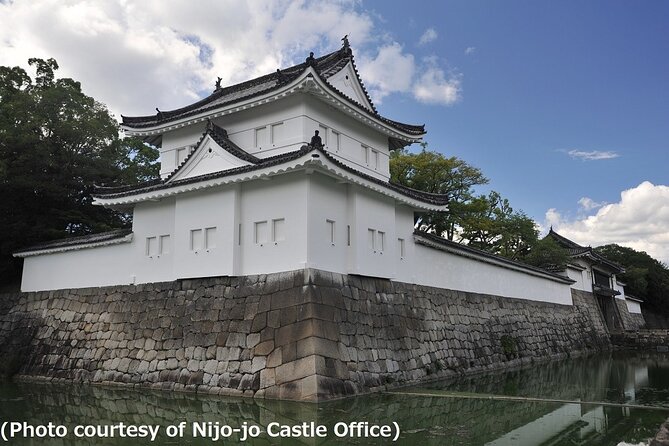
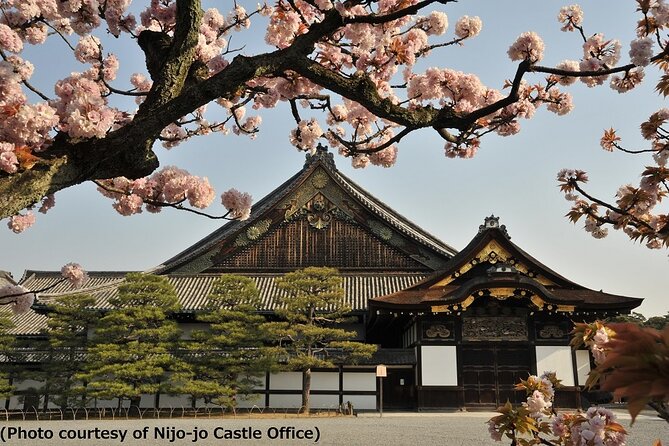
Nijo Castle is the first major “wow” in Kyoto, and it’s built for a guided walk-through. You’ll tour this World Heritage site, completed in 1626, originally planned as lodging for the Tokugawa Shogun and tied closely to the Kyoto Imperial Palace. The castle is known for its serious exterior and then a more ornate interior story.
Your allotted time is about 50 minutes, with admission included. In that window, you’ll get the orientation points that make the place click. You’re not just looking at walls and doors, you’re learning what the Tokugawa presence meant in Kyoto politics and why the design feels so controlled.
Here’s the thing to watch: a short guided circuit can feel like you’re moving room to room with limited stopping. Some feedback highlights that the castle tour can be very fast and focused on a quick explanation rather than deep exploration. If you like architecture details or want time to read every sign, consider arriving early next time on your own. On a day trip, though, this stop works as a strong “primer.”
Golden Pavilion and Kyoto Imperial Palace: what you see in one tight Kyoto block
After Nijo Castle, the tour heads to Kinkaku-ji, the Golden Pavilion. Expect wooden architecture covered in thin layers of gold and framed by pond scenery. Your visit is about 45 minutes, and admission is included. This time slot is long enough to appreciate the iconic façade and get a few good photos, but not long enough for a slow, unhurried garden session.
Next comes Kyoto Imperial Palace, with about 40 minutes and admission described as free. The palace was used as the emperor’s residence until about 150 years ago. The guided path here matters because the palace style is often described as “pure and simple,” and the guide helps translate what you’re seeing into something meaningful instead of just another set of gates.
If Kyoto Imperial Palace is closed, the tour switches to a famous fallback: Kitano Tenmangu Shrine. And there’s a specific extra condition mentioned in the tour notes, where if the closure lines up with the 25th, you visit Nishi Hongan-ji Temple instead. This is one of those details that actually improves your experience because you’re less likely to waste time hitting a closed door and waiting out the situation.
If you are very picky about palace interiors versus exterior views, this is the part where you might feel the variability. Your best move is to treat this tour as a guided highlights plan, not a guarantee of one specific room or one specific courtyard view.
Kasuga Grand Shrine and Todai-ji: Nara’s big moments, timed
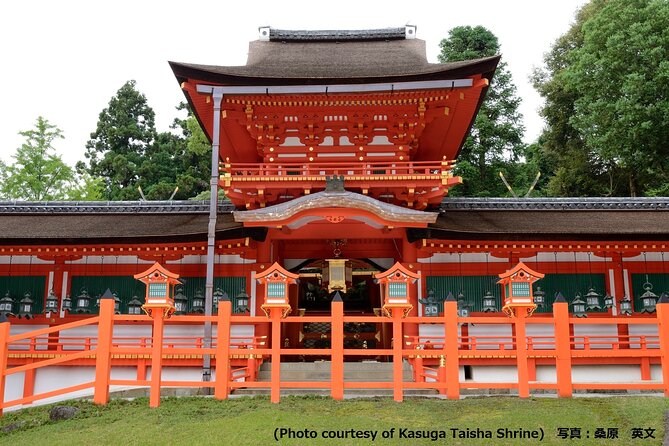
Nara is where the day starts feeling different. It’s not just temples, it’s a whole environment that mixes religion, history, and a lot of people. The first major stop is Kasuga Grand Shrine, a Nara Period World Heritage site tied to deer lore, where deer are considered the shrine messengers. You get about 1 hour, and admission is included. The tour also enters the Main Sanctuary special visit area when it’s available, with an alternate plan if it cannot be accessed.
Then the day leans into scale at Todai-ji Temple. This World Heritage site symbolizes the Nara Period and is home to one of the world’s largest wooden structures and the bronze Great Buddha. Your time here is about 1 hour 10 minutes, and admission is included.
This stop pair is well chosen for first-timers because it gives you two kinds of sacred atmosphere in one afternoon. Kasuga feels intimate and ritual-focused, while Todai-ji hits you with size and craftsmanship you can’t fully understand from pictures. You also get enough time to stand back, look up, and then walk back in to see the finer details.
Do expect crowds. One review notes Nara Park being packed during Japanese school trip season, and that fits the reality of this area at popular times. The guide helps keep the group moving, which is helpful when there are lots of people orbiting the same deer and temple gates.
More temples, thirty minutes up the line
- Osaka/Kyoto: Hiroshima Miyajima Bus Tour & Shinkansen Ticket
★ 4.7 · 919 reviews - From Kyoto/Osaka: Kyoto Top Highlights 1-Day Guided Bus Tour
★ 4.5 · 714 reviews - Osaka/Kyoto: Amanohashidate & Miyama Tour with Boat & Lunch
★ 4.6 · 207 reviews
Lunch choices and the reality of group timing
Lunch is included only if you choose a lunch option when booking. If you select the With Lunch option, the meal is described as a Western-style set menu. If you select the Indian option, it’s an Indian thali set menu focused on vegetarian choices, with curry options, yogurt, naan or roti, rice, salad, and a non-alcoholic drink.
If you choose No Lunch, you get free time to eat around the Kyoto Station area. That can be a real win if you want to hunt for something more local than a set menu, or if you’re traveling with a picky eater.
In terms of expectations, lunch is a convenience. Some feedback calls the included buffet less exciting, with one comment saying it felt based on fried chicken. That’s not your fault, it’s just the nature of group lunches. If food is a top priority for you, I’d treat lunch as “fuel, not a highlight,” and plan to seek better meals either before the tour starts or after you get back to Osaka.
Also, because the day is tightly scheduled, you should assume there’s no long sit-down. Eat what’s offered, save your energy, and keep your camera ready for the afternoon temple block.
Crowds, pace, and hearing the guide: how to get the most
This is where you decide whether a group tour fits your style. The overall schedule runs about 11 hours 15 minutes, starting at 7:15 am and returning to Osaka-Namba around 6:30 pm. That’s a full day with very little breathing room.
Most positive feedback focuses on the guides and the organization, including mentions of friendly, professional staff like Momo, Hatchi, and a KC tour guide. The best days are the ones where the guide keeps the group moving without making it feel chaotic. Several reports praise keeping things organized and informative.
But there are two practical issues to watch:
- Time at each site is limited. Some reviews explicitly say it feels rushed and recommend more time for deeper exploration.
- Audio can be tricky in crowded spots. One report complains about difficulty hearing due to accent and suggests better equipment like individual headsets.
So here’s your playbook. Wear a pair of earbuds even if you only use them on quieter moments, so you’re not totally dependent on one guide voice. If the group is turning away while the guide talks, step slightly to face the guide when you can, and don’t be shy about raising a hand when there’s a pause.
And for photos, do not rely on “later.” In multiple comments, people note that photo time can be rushed at Kyoto stops. That means you should know what you’re aiming to shoot before you arrive, especially at Kinkaku-ji and the castle interiors.
Value at $198.15: admissions, guide, and the tradeoff versus DIY
At about $198.15 per person, this isn’t a budget day trip. The value comes from the package: a National Government licensed English guide interpreter is included, plus admissions and transportation costs are included. Optional lunch is also included when selected. The tour also uses a mobile ticket, which is one less thing to manage.
If you were doing this on your own, you would likely spend time buying tickets, coordinating transit, and waiting out lines. You might save money if you are excellent at DIY and prefer slow exploration. But you’ll pay in planning effort and time, and you still might get stuck dealing with crowds at Nara Park and temple queues.
So who is it worth it for? It’s worth it if you want:
- a structured overview of Kyoto and Nara highlights
- guided context so the sights feel connected
- transportation handling so you don’t lose half a day on rail and station navigation
Who should be cautious? If you’re the type who wants to linger for 2 to 3 hours at a single temple, or you hate being moved along by a large group, this price might feel steep for how short each stop can be. In that case, you might prefer a DIY day with fewer sites and more time per stop.
Should you book this Kyoto and Nara day trip from Osaka?
I’d book it if your goal is to see the big Kyoto and Nara landmarks with an English-speaking guide and you prefer convenience over total freedom. The lineup makes sense for first-timers: Nijo Castle sets the political tone, Kinkaku-ji gives you the iconic Kyoto image, and Kyoto Imperial Palace (or Kitano Tenmangu) adds a palace and shrine contrast. Then Nara delivers Kasuga’s sacred atmosphere and Todai-ji’s Great Buddha scale.
I would hesitate if you’re sensitive to crowds, you need lots of quiet time, or hearing the guide is essential to you. This tour can be fast, and a few people have said the audio and pacing felt like a challenge.
Final practical tip: since the tour ends at Osaka-Namba Station with no hotel drop-off, make sure your evening plans start there. Give yourself buffer time to get back to your hotel, because Osaka-Namba is busy and underground pathways can be confusing.
FAQ
What time does the Kyoto and Nara day trip start and end?
It starts at 7:15 am at Hotel Granvia Osaka. It returns to Osaka-Namba Station around 6:30 pm, and there is no hotel drop-off service.
Where do I meet the guide?
You meet at Hotel Granvia Osaka (3-chōme-1-1 Umeda, Kita Ward). The tour ends at Osaka-Namba Station in Namba.
How long is the tour?
The duration is about 11 hours 15 minutes.
Is transportation seating reserved?
No. Public transportation uses non-reserved seats for the trip from Osaka to Kyoto and for the return from Nara to Osaka if you take public transportation. Seating is not guaranteed.
Which Kyoto Imperial Palace day will be replaced, and by what?
Kyoto Imperial Palace is closed to visitors on Mondays (or the following day if Monday is a holiday) and on days when the Imperial Household Agency has an event. If closed, the tour visits Kitano Tenmangu Shrine instead, and if the closed day falls on the 25th, it visits Nishi Hongan-ji Temple.
What happens if Nijo Castle is closed?
Nijo Castle is closed on Tuesdays in January, July, August, and December. If it’s closed, the tour visits Ryoan-ji Temple instead.
What are the main stops and their approximate time?
Stops include Nijo Castle (~50 min), Kinkaku-ji (~45 min), Kyoto Imperial Palace (~40 min), Kasuga Grand Shrine (~1 hour), and Todai-ji (~1 hour 10 min).
Is lunch included, and what type is it?
Lunch is included only if you select the With Lunch option. It’s a Western-style set menu for the Western lunch option, or an Indian vegetarian thali menu for the Indian thali option. If you select No Lunch, you get free time to eat near Kyoto Station.
What is the group size?
The tour has a maximum of 40 travelers.
More 1-Day Tours in Osaka
- Hiroshima & Miyajima 1 Day Bus Tour with Bullet Train Tickets★ 4.5 · 105 reviews
- From Osaka: Hiroshima and Miyajima Day Trip by Bullet Train★ 4.6 · 83 reviews
- Amanohashidate & Ine Funaya Sightseeing Full Day Trip from Kyoto★ 4.5 · 62 reviews
- Kyoto 1 Day Tour from Osaka★ 4.0 · 54 reviews
Just added around Osaka

Day Trips to Kyoto from Osaka, compared.
Osaka/Kyoto: Hiroshima Miyajima Bus Tour & Shinkansen Ticket
Read our review →
From Kyoto/Osaka: Kyoto Top Highlights 1-Day Guided Bus Tour
Read our review →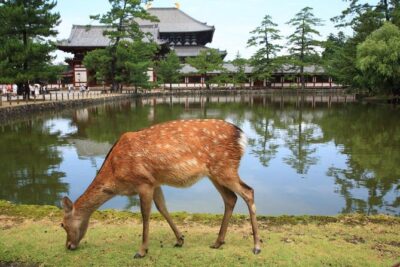
Ancient Capital Tour: Kyoto and Nara Highlights from Kyoto/Osaka
Read our review →
Osaka/Kyoto: Amanohashidate & Miyama Tour with Boat & Lunch
Read our review →
Full Day Tour of Kyoto with Private Transportation
Read our review →
Kyoto & Nara Private customized tour with English speaking Guide
Read our review →Full Day Kyoto Tour : Bamboo Forest, Golden Temple, Fushimi Inari
Read our review →This tour also fits