
Reviewed · WALKING TOURS
Osaka: Dark Side of Osaka Night Walking Tour
Osaka at night shows two faces. This 2-hour walk uses Shinsekai and Tobita Shinchi to explain the parts of Japanese city life that most day tours skip, with guides like Jay making the history feel human, not textbook.
I like the way the tour links streets, signage, and local customs to what is going on behind the scenes. You also get a clear ending at Tsūtenkaku, so the night has shape.
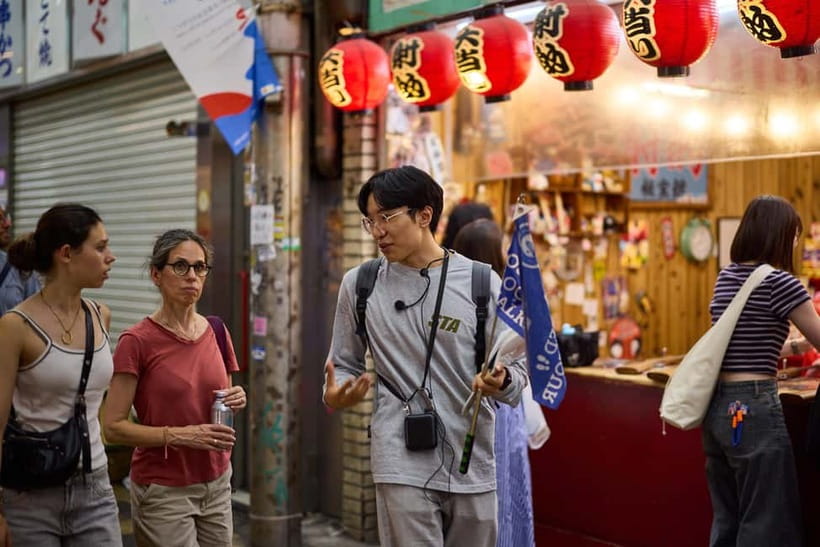
The second thing I like: the guiding style. On this kind of tour, the best moments are the quiet, specific details, like how your guide may point out small street cues and rules in plain sight. Past guides such as Rico and Matt have been praised for clear explanations and for keeping even sensitive topics respectful and understandable.
One consideration: this is not a soft-focus tour. Tobita Shinchi is Osaka’s largest red-light district, and some parts are confronting, so you should go in with a respectful mindset and a thicker skin.
In This Review
- Key Points You’ll Remember After This Night Walk
- Why Osaka’s Shinsekai and Tobita Shinchi at Night Matter
- Meeting at MEGA Don Quijote Shinsekai: Get Oriented Fast
- Shinsekai’s “New World” Streets: A 1912 Plan That Still Shapes the Night
- Nishinari: From Working-Class Roots to Today’s Urban Reality
- Jyanjyan Yokocho: The Retro Alley That Turns Photos Into Stories
- Tobita Shinchi Red-Light District: History, Rules, and Discretion
- Tsūtenkaku: Ending at the Tower Gives the Night a Meaningful Frame
- Price and Logistics: $25 for Two Hours, and What You Really Get
- How to Prepare for Sensitive Topics (Without Killing the Fun)
- Who This Tour Suits Best, and Who Should Skip It
- Should You Book the Osaka Dark Side Night Walking Tour?
Key Points You’ll Remember After This Night Walk
- MEGA Don Quijote Shinsekai is your anchor meeting spot, with an easy-to-find guide holding a GetYourGuide sign.
- Shinsekai shows Osaka’s “New World” vibe, built in 1912 with Western-style inspiration.
- Nishinari adds grit and real social context, tied to a working-class past and what’s changing now.
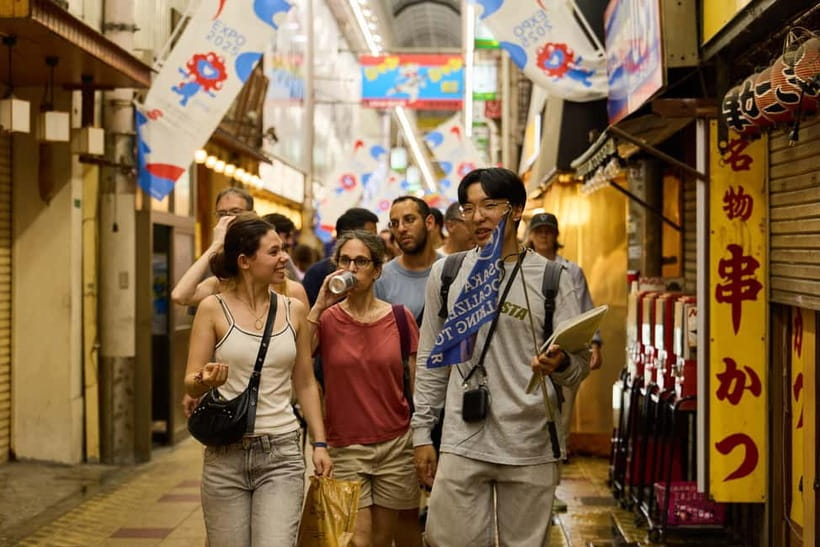
- Jyanjyan Yokocho gives you a retro alley feel near Tsūtenkaku, with old-school shops and eateries.
- Tobita Shinchi lets you see how a red-light district has operated for more than a century, within strict norms and discretion.
- You finish at Tsūtenkaku, which helps you turn your night walk into a story you can explain later.
Why Osaka’s Shinsekai and Tobita Shinchi at Night Matter
Most first-time Osaka experiences focus on food streets, big temples, and views. This tour does something different: it uses a nighttime route to show how neighborhoods work when the lights come on and the city’s social rules become more visible.
I like that the tour frames the so-called getto area and related districts as part of everyday urban history, not as shock value. You come away with a better sense of how Japan can be both orderly and complicated at the street level, sometimes all on the same block.
Other ways to spend a day in Osaka
- Osaka After Dark: Small-Group Night Food Tour (Max 6)★ 4.5 · 245 reviews
- OSAKA NIGHT FUSION Japanese Taiko Kabuki Samurai Dance Show★ 4.8 · 155 reviews
- Osaka: Bar-Hopping Night Tour in Namba★ 4.7 · 117 reviews
- Osaka Night Walk : Discover Umeda Food and Pub★ 5.0 · 34 reviews
- Hidden Gems and Bustling Districts of Osaka Night Tour★ 5.0 · 33 reviews
Meeting at MEGA Don Quijote Shinsekai: Get Oriented Fast
You start at MEGA Don Quijote Shinsekai, at the Under the Giant Penguin. Your guide waits there holding a sign that says GetYourGuide, so you are not left playing hide-and-seek in the dark.
Because this is a walking tour (2 hours), your biggest practical win is simple: wear comfortable walking shoes. Osaka weather can shift quickly, so bring a light layer and be ready to keep moving even if conditions change.
Also note the tour is English and not designed for wheelchair users or children under 18. If your English is on the weaker side, it helps to know that some guides speak quickly, so you may want to stay alert and ask questions early.
Shinsekai’s “New World” Streets: A 1912 Plan That Still Shapes the Night
The first major theme is Shinsekai, literally the New World. This district was laid out as an entertainment zone in 1912, with design inspiration that split the southern part into a Paris-style model and the northern part into New York’s Coney Island vibe.
That original sparkle has faded in places. Still, Shinsekai keeps a quirky charm, with a retro feel that works especially well at night when streetlights soften the edges of old buildings and signage.
Here is what I think you will enjoy most: the way the tour connects past ambition to present reality. You are not just looking at an old amusement district, you are learning how that kind of planning changes with time, money, and population.
One practical tip your guide may share: watch for small street markings and subtle signals. A past guide (featured in a review) pointed out an example where a painted torii on a wall functioned as a discreet instruction, basically telling people not to do something inappropriate. Those details are often the whole point of a night walking tour like this.
Nishinari: From Working-Class Roots to Today’s Urban Reality
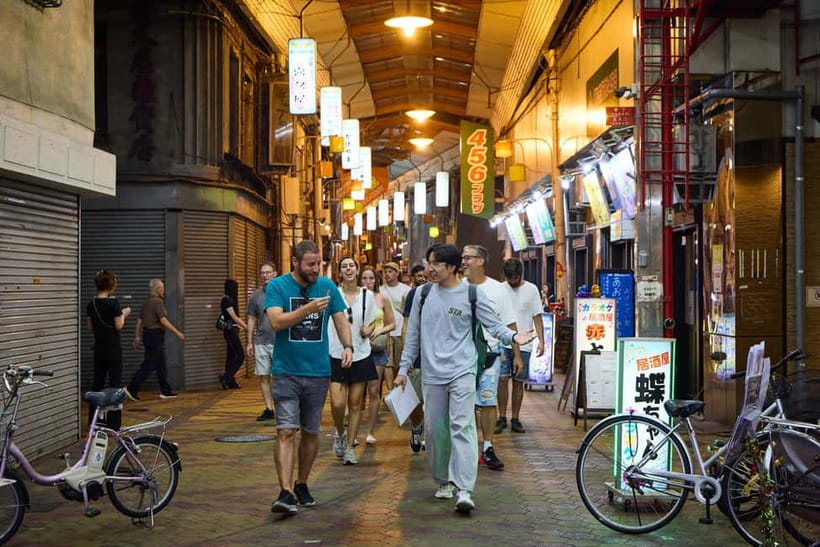
After Shinsekai, you head toward Nishinari, in southern Osaka. This is where the story takes on a more grounded tone, since it was once a hub for day laborers and a working-class community.
The tour aims to explain how districts like this can carry layers of social history. In recent years, Nishinari has also drawn budget travelers and urban explorers, which has added a new rhythm to the neighborhood. That blend of old patterns and new visitors is part of why Nishinari feels raw and real.
What to watch for as you walk: the contrast between lived-in streets and the way outsiders sometimes romanticize them. The value here is balance. You get context about how the area formed, and you do not treat it like a theme park.
Jyanjyan Yokocho: The Retro Alley That Turns Photos Into Stories
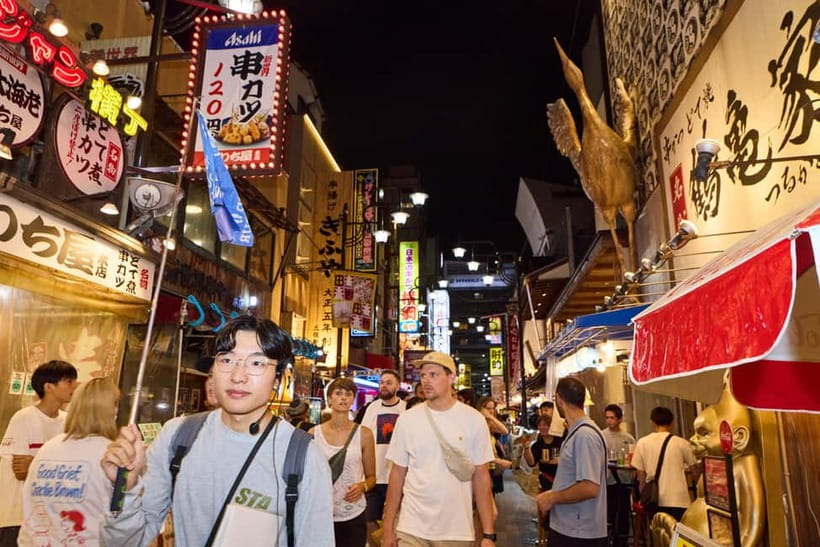
Next comes Jyanjyan Yokocho, a narrow shopping and dining street in the Shinsekai area, right near Tsūtenkaku Tower. This lane is known for its nostalgic mid-20th century vibe, with old-school eateries, bars, and small shops packed into a small space.
What makes this stop work is the texture. You can see how daily life plays out in tight quarters, and you get a feel for the kind of places locals might choose when they want a casual night without fuss.
Even if you do not plan to eat on the tour, this is a great time to slow down and look. The alley format makes it easier to notice the little things, from shopfront style to how people move through the space.
And yes, because food and drinks are not included, you are in charge of your budget. If you do want a snack, bring a plan: pick one simple stop and keep the rest of the night open for walking and observing.
Not ready to leave Osaka yet? A few more ways to fill the day.
- Osaka Go Karting Tour with Funny Costume
★ 5.0 · 2,658 reviews - Osaka Castle: Museum and Tower Entry Ticket
★ 4.5 · 2,380 reviews - Osaka: Shinsekai Food Tour with 13-15 Dishes at 5 Eateries
★ 4.8 · 2,204 reviews
Tobita Shinchi Red-Light District: History, Rules, and Discretion
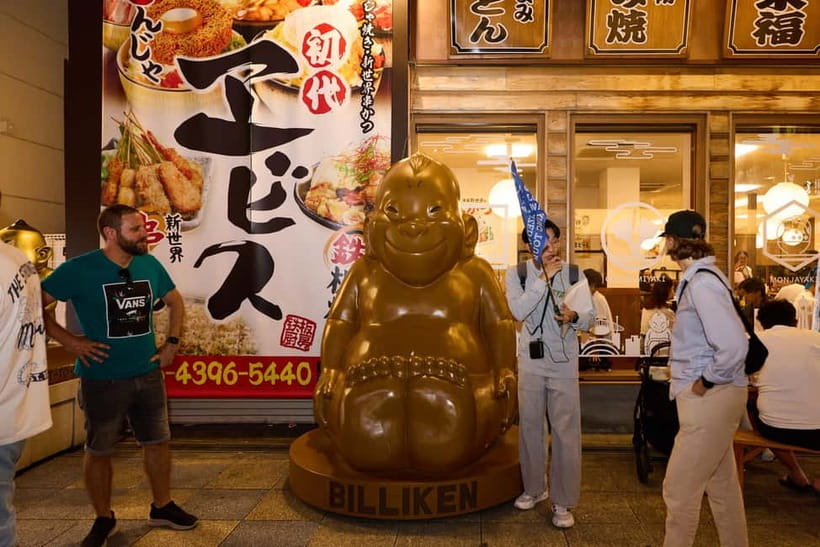
The final key area is Tobita Shinchi, Osaka’s largest and most famous red-light district, with a history stretching back over a century. It is known for a specific architectural feel and for being tightly regulated, which means there are norms you are expected to respect.
This is the stop where the tour earns the name dark side. The intent is not voyeurism. The intent is understanding: how a city handles taboo areas, how long-running districts operate, and how discretion becomes part of the social contract.
A big plus, based on how guides are described, is that the explanations stay diplomatic. Guides such as Jay, Rico, and Matt have been praised for handling sensitive topics carefully and for encouraging questions. That matters because it reduces the chance you will feel lost or uncomfortable without context.
Important mindset for you here: keep your tone respectful, follow any local instructions, and do not treat people as scenery. If you are the type who gets rattled easily by social realities, go with extra preparation for this part of the night.
Tsūtenkaku: Ending at the Tower Gives the Night a Meaningful Frame
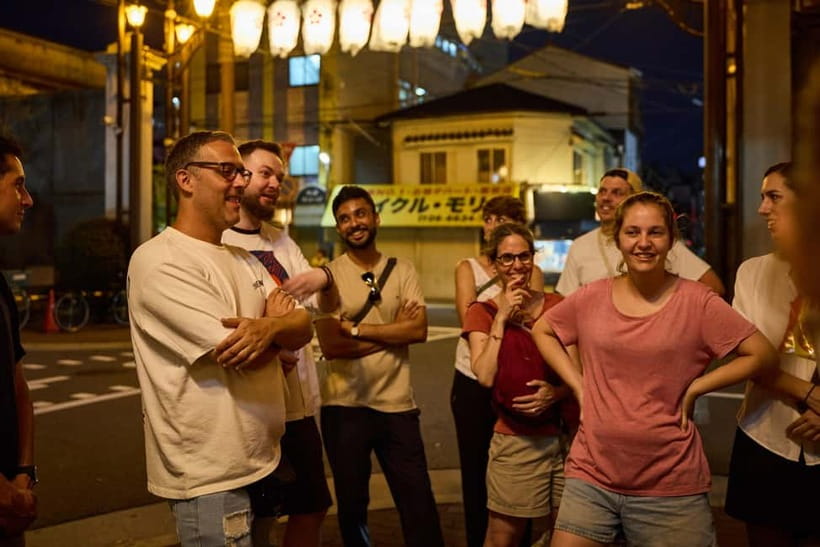
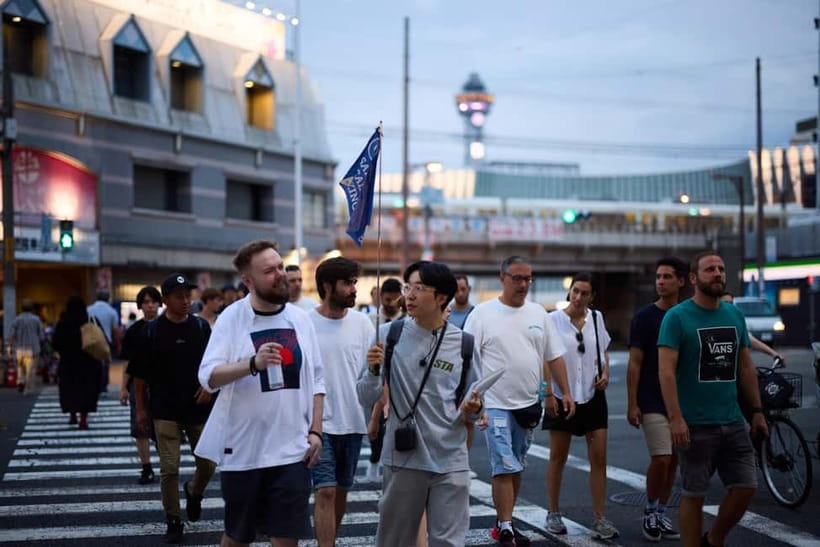
You wrap at Tsūtenkaku, which is a smart choice for a night tour. It is not just a photo stop, it becomes a reference point that helps you stitch the whole walk together.
Tsūtenkaku sits at the heart of the Shinsekai vibe, so it lands you back in the district that started the “New World” story. That means the tour does not just end, it closes the loop.
I also like that this finish helps you transition. Once you are done walking, you can decide how to continue your night based on what you just learned, not just based on what sounds fun on paper.
Price and Logistics: $25 for Two Hours, and What You Really Get

At $25 per person for 2 hours, this is priced as an orientation-focused experience. You are paying primarily for a live English guide and for the route that connects multiple districts that are hard to interpret alone.
What is not included is also part of the value picture. Food and drinks are not included, so if you want a snack during Jyanjyan Yokocho, treat it as your own choice. Likewise, there is no hotel pickup and drop-off, so you should plan to meet the group at MEGA Don Quijote Shinsekai.
In practical terms, the money you spend goes toward:
- guided walking through Shinsekai, Nishinari, Jyanjyan Yokocho, and Tobita Shinchi
- historical and social context that changes how you see the streets
- a chance to ask questions while you are on the ground, not after you have missed the moment
If you like self-guided walking, you can do Osaka at night on your own. But if you want the city’s social meaning translated into something you can actually understand, this is the kind of guided tour that justifies the cost quickly.
How to Prepare for Sensitive Topics (Without Killing the Fun)
This tour includes areas connected to sexual commerce and social marginality, so discomfort is possible. The good news is that the guides are described as respectful and careful, and they often explain with context instead of judgment.
Still, I suggest you set expectations up front:
- Be ready for discussions that are not cheerful.
- Treat the experience like cultural learning, not entertainment.
- Ask questions if something feels confusing, because the pace leaves room for that.
One helpful detail from a review: some guides adapt smoothly if it rains. That means you should expect to walk and keep going, just with route adjustments.
Finally, remember the simple rules listed for you. Smoking is not allowed, and alcoholic drinks are not allowed in the vehicle. Even if you are mostly on foot, follow those guidelines so you do not create problems for the group.
Who This Tour Suits Best, and Who Should Skip It
This is a great fit if you want Osaka beyond the usual highlights. You will probably love it if you enjoy:
- social history that connects to real streets
- nighttime atmosphere and retro districts
- guided explanations that help you interpret what you see
It is not ideal if you are looking for a kid-friendly night out, or if you prefer only light, comfortable subject matter. It is also not suitable for wheelchair users, and it does not include food, so plan your own meal if you need one.
If you are traveling with friends who want two different styles of Osaka, this can be a strong compromise. One person gets a normal food-and-neon night, and the other gets deeper context and a route you likely would not choose on your own.
Should You Book the Osaka Dark Side Night Walking Tour?
If you want Osaka as a living city, not just a postcard, I think this tour is worth booking. The big value is the pairing of Shinsekai nostalgia with Nishinari social reality, then ending in Tobita Shinchi with context that helps you understand how the district functions.
Book it if you are curious, respectful, and okay with a bit of discomfort in exchange for real insight. Skip it if you want a purely fun night with zero sensitive topics, or if walking 2 hours sounds like a stretch.
If you do book, do one small thing that boosts your whole experience: bring your questions. The guides behind this route are repeatedly praised for responding thoughtfully, and that turns a good night walk into a night where you actually learn something you can carry home.
Just added around Osaka

Walking Tours, compared.
Osaka Local Foodie Walking Tour in Dotonbori and Shinsekai
Read our review →
Deep Backstreets Walking Tour with Dinner Option
Read our review →
Ultimate Osaka Walking Tour: Castle, Dotonbori & Hidden Gems
Read our review →
Main Sights and Hidden Spots Guided Walking Tour
Read our review →
Private Osaka Walking Tour: Highlights & Hidden Gems
Read our review →
Osaka Castle Walking Tour and Castle Tower Admission
Read our review →
Kuromon Market Food Walking Tour in Osaka (6 stops, 6 tastes)
Read our review →
Five Must-See Highlights Walking Tour & Ramen Lunch
Read our review →This tour also fits