
Reviewed · HISTORICAL TOURS
Osaka Food Quest: Self-Guided Culinary & History Adventure
Osaka tastes better with a scavenger hunt. This self-guided walk through Dotonbori is a fun way to learn city stories while you follow food-focused clues. I especially like how it turns famous spots into a route you can actually navigate, and how the stops point you toward Osaka’s signature flavors like takoyaki and beef offal.
The second reason I like it is the pace control. You can stop, wander, and come back later without feeling behind. That makes it work well if you are eating your way through the area, not just sprinting from point to point.
One drawback to plan for: it runs on your phone. If your connection is slow or the app lags, you may feel stuck. One guest reported major delay and ended up giving up, and the operator replied that the quest data size is tiny (around 2.5 MB), so slow performance usually comes from your phone and network, not the quest itself.
In This Review
- Key highlights to know before you go
- Osaka Food Quest: what you actually do on the route
- Price and value: is $7.85 actually worth it?
- Smartphone logistics: data use, app speed, and how to avoid getting stuck
- Stop 1: Ebisu Bridge, the curse story, and the real walking advantage
- Konamon Museum and takoyaki culture: why Osaka’s street food has a story
- Showa Taishu Horumon Dotonbori: beef offal, boldly Osaka
- Hozenji Temple lantern vibes and Fudo Myoo protection
- National Bunraku Theater: the performer’s Osaka
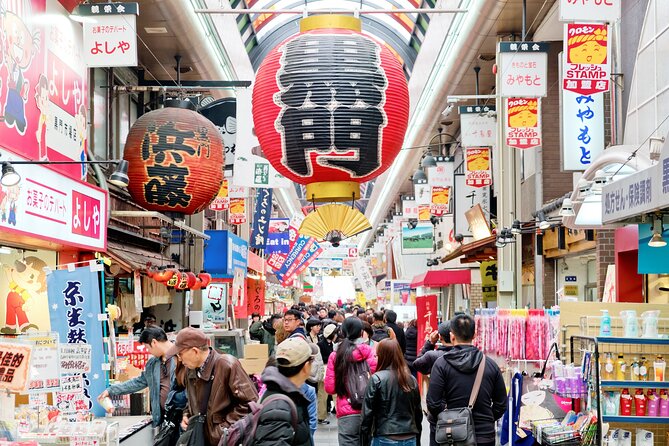
- Kuromon Market: the black gate, fish roots, and snack-friendly timing
- Namba Yasaka Shrine: moving a shrine and keeping the story
- How long it takes in real life: plan 2 to 3 hours if you care about food
- Where this route shines for couples, families, and solo food hunters
- Value tips: how to get the most from the stops without overspending
- Final verdict: should you book the Osaka Food Quest?
- FAQ
- How long is the Osaka Food Quest?
- What do I need to participate?
- Is there a physical tour guide?
- Where does the tour start and end?
- Are there any free admission stops?
- Can I pause and resume the quest?
- Is the activity private and can I cancel if plans change?
Key highlights to know before you go
- 10 puzzle challenges that guide you through Osaka food and history stops you already want to see
- Built-in flexibility, pause and resume anytime, so you are not forced into a rigid schedule
- Dotonbori-focused route that links major sights with practical walking flow
- Food culture stops on purpose, including takoyaki and a dedicated horumon (beef offal) restaurant stop
- Temple and theater detours that connect Osaka street food to older religious and performing arts traditions
- Some spots list free admission, including the bridge area and Kuromon Market
Osaka Food Quest: what you actually do on the route
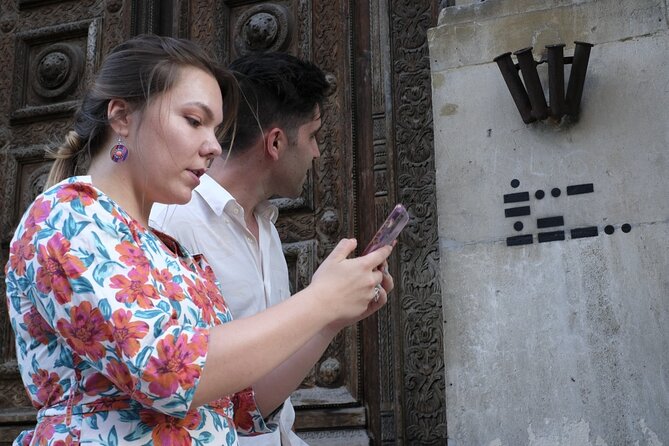
This is a self-guided smartphone quest, not a bus tour. You start in Dotonbori, then follow a sequence of locations where you solve puzzles to move forward. Each step is tied to Osaka food and culture, so you are not just looking at signs. You are learning why those places matter, and how food customs connect to the city’s identity.
You will complete 10 puzzle-based challenges while walking. The duration is listed as about 1 hour, but the real experience depends on how long you pause for reading, people-watching, and snack breaks. One practical tip from the way it is used: you can do it quickly, but if you want breathing room, plan extra time.
You also get a mobile access code and a mobile ticket. There is no physical tour guide included, so the quest itself is your guide. That is a plus for independent travelers, and it is also why phone performance matters.
The route is designed around Osaka landmarks you are likely to visit anyway. The starting point is at 1 Chome-6 Dotonbori, Chuo Ward, and the walk continues onward and ends at 2-chōme-9-19 Motomachi, Naniwa Ward.
Other ways to spend a day in Osaka
- Osaka: Castle History Walking Tour / Castle Tower Admission★ 4.9 · 230 reviews
- Osaka: Osaka Castle & Historical Museum Guided Tour★ 4.8 · 28 reviews
- Osaka Castle & Samurai History Walking Tour★ 5.0 · 22 reviews
- (Ticket Included) Explore Osaka Castle & Museum of History★ 4.8 · 21 reviews
- Osaka: Kyoto & Nara & Uji Historical and Scenic One-Day Tour★ 4.7 · 21 reviews
Price and value: is $7.85 actually worth it?
At $7.85 per person, this sits in the low-cost category for structured activities in Osaka. You are not paying for a guide’s time. You are paying for a designed walking route, puzzle structure, and storyline content.
The value comes from three things. First, it gives you a “reason to look closer” at Dotonbori and Kuromon, instead of simply drifting. Second, it links food culture to specific places, including temples and the Bunraku theater area. Third, you get pause and resume, which is rare in cheap activities. If your day goes off schedule because of meals, shopping, or lines, you can adjust.
One caution: this is not a food tasting tour where you are served multiple courses. Food is referenced and encouraged, but any eating you do is on you. Still, for the price, that is not a deal-breaker, because the quest acts like a guided itinerary for where to focus your appetite.
Smartphone logistics: data use, app speed, and how to avoid getting stuck
This tour is smartphone-dependent. You get access through a code, and you solve puzzles on your device. That sounds simple, but one guest had trouble because the app felt slow and they said they could not figure out what direction to go. Their solution was basically to stop the quest and switch to normal walking plus Google.
Here is the balanced takeaway I would give you. Have a backup plan, even if the quest works perfectly. Save the start area in your maps app, and keep a little extra time in case you need to re-find your place.
Also, if you worry about data: the operator response to the app complaints states the quest package is about 2.5 MB, which makes runaway data usage unlikely from the quest itself. If you see huge consumption, it is more likely due to other apps using data at the same time, and that slows everything down too.
Practical move: start the quest when your signal is decent, and consider turning off background-heavy apps. If the quest fails mid-walk, you can still keep walking through the same areas and treat it like a self-guided food and history route, since the landmarks are the payoff.
Stop 1: Ebisu Bridge, the curse story, and the real walking advantage
Your first step is Ebisu Bridge, a connector between Shinsaibashi-suji and Ebisubashi-suji shopping districts. It also ties to a local legend about Osaka’s Hanshin Tigers. The curse angle is the hook, but the practical part is why this makes a good first stop: it orients you early and helps you understand the street layout you will keep using.
To progress, you have to look around and find an answer to a challenge. That small task does two useful things. It gets you paying attention right away, and it prevents the “start wandering with no plan” problem.
If you are already familiar with Dotonbori, you may still appreciate this start. It turns an obvious photo spot into a quick entry point for the rest of the puzzle route.
Konamon Museum and takoyaki culture: why Osaka’s street food has a story
Next, you reach Konamon Museum, presented as a place where you can eat, learn, and make takoyaki. Even if you do not stay to make anything, this stop matters because it grounds the quest in Osaka’s street-food identity. Takoyaki is not just a snack, it is a symbol of how Kansai people do casual, communal food.
Just like at the bridge, you need to look around to find the answer to your challenge to move forward. That nudges you to read signs and notice details you might otherwise skip while you are busy deciding what to eat next.
One practical way to use this stop: if you love takoyaki, treat this as your decision point. It is an appropriate place to plan your next bite, since the rest of the route continues through major Dotonbori attractions where food options are everywhere.
Not ready to leave Osaka yet? A few more ways to fill the day.
- Osaka Go Karting Tour with Funny Costume
★ 5.0 · 2,658 reviews - Osaka Castle: Museum and Tower Entry Ticket
★ 4.5 · 2,380 reviews - Osaka: Shinsekai Food Tour with 13-15 Dishes at 5 Eateries
★ 4.8 · 2,204 reviews
Showa Taishu Horumon Dotonbori: beef offal, boldly Osaka
A few steps later is Showa Taishu Horumon Dotonbori, described as a horumon restaurant specialized in beef offal. This is the quest being honest about Osaka’s appetite. Not every city leans into offal as a mainstream street and restaurant choice, but Osaka absolutely does.
Again, you progress by locating the answer to the puzzle. The stop functions like a cultural prompt. It is there to get you thinking about what counts as comfort food in Kansai, and how local eating habits form around what is available, traditional, and repeat-ordered.
If you are squeamish about offal, you can still enjoy the historical and cultural angle of the stop. You do not have to order everything mentioned in the route. But if you are curious, this is one of the more direct “here is the local specialty” moments in the walk.
Hozenji Temple lantern vibes and Fudo Myoo protection
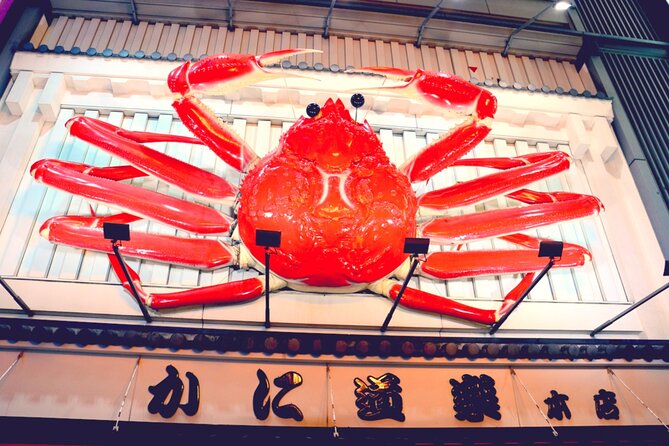
Now the route shifts from food-first to spiritual and historic. You visit Hozenji Temple, built in 1637, and tied to Fudo Myoo, one of Buddhism’s guardian figures. This stop also connects to the entertainment district that formed around Namba and Dotonbori in the 1600s, when performances like kabuki and bunraku were common in the area.
Why this matters for you as a food traveler: entertainment districts often shape food demand. When people gather for shows and late nights, vendors adapt. So this temple stop helps explain how Osaka’s eating culture grew alongside its public theater life.
You also get another look-around challenge, so you slow down instead of simply snapping photos. Hozenji Temple is a good place to step out of the loudest street energy for a moment, and reset before you continue toward the theater world.
National Bunraku Theater: the performer’s Osaka
After Hozenji, you arrive at the National Bunraku Theater, established in 1984 as the home of Bunraku in the Kansai region. The theater is described with a main hall holding 753 seats and a small hall with 159 seats.
The quest uses this stop for the same reason it uses the temple. Osaka is not just street food and neon signs. It has long-running traditions of performance arts. Bunraku is central to that, and the theater stop makes the connection feel concrete.
Your puzzle task at this point is again about noticing details around you. Since this is a theater setting, it is a good moment to pause and observe the architecture and surroundings, not just chase the next clue.
If you have time, you might also consider planning around what is on while you are in town, but the quest description itself focuses on puzzle progression and storytelling rather than ticketed performances.
Kuromon Market: the black gate, fish roots, and snack-friendly timing
The route then moves to Kuromon Market, a place you should like even if you skip the quest puzzles. Kuromon literally means “black gate.” Historically, it opened around 1822 as a fish market, then became an official market around 1902.
The name is also linked to a black gate of Enmyo Temple, which stood in the area until 1912. That kind of detail gives the market more texture than the usual “come here to eat” pitch.
The quest includes a look-around challenge here as well. This is a smart stop to use for food timing, because markets are where you want to decide what to try on your own terms. Also, the listing notes free admission ticket here, which helps keep the budget predictable.
Namba Yasaka Shrine: moving a shrine and keeping the story
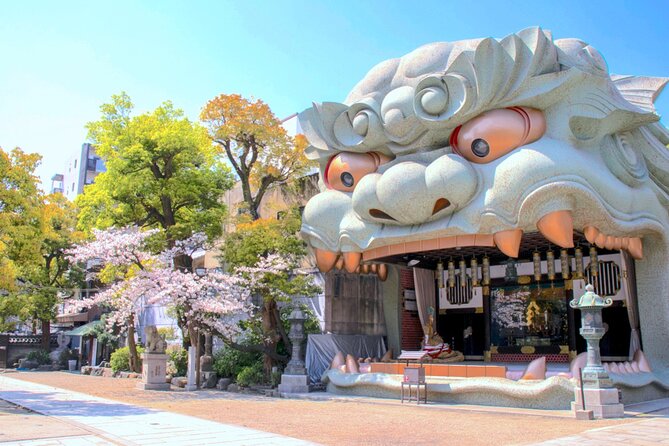
Your next culture stop is Namba Yasaka Shrine. It is described as commissioned by Emperor Hanzei in honor of his father, Emperor Nintoku. The shrine’s original site is traced to the area of present-day Kawachi Matsubara City. Later, after Hideyoshi Toyotomi began construction of Osaka Castle, the shrine was moved to its current location.
I like this kind of stop for two reasons. One, it shows how Osaka changed over time and how buildings and sacred places were relocated rather than simply abandoned. Two, it grounds the route outside of pure entertainment and food.
You again complete a look-around puzzle to progress. If you like history that affects the physical city, this is a good one. If you just want street life, you might still appreciate how the shrine marks a calmer pocket amid the motion.
How long it takes in real life: plan 2 to 3 hours if you care about food
The duration is listed as about 1 hour. In practice, your time will hinge on how quickly you solve puzzles and how often you stop for snacks and photos.
One guest did the quest in about two hours when pressed for time, and another recommendation was to allow at least 3 hours for a more comfortable pace. That matches the way the stops are spaced and the fact that you are meant to look around at each location.
My practical suggestion: if you are hungry and plan to eat at Kuromon or stop for takoyaki, treat it as a half-day activity in the middle of your Dotonbori plans, not a quick afterthought. If you are in a rush, you can do it faster, but give yourself a buffer.
Also, you can pause and resume anytime, which means you can leave the route to eat, browse, or rest, then come back to finish the puzzles.
Where this route shines for couples, families, and solo food hunters
This experience is a good fit if you like walking with structure but without tight group control. It is private, so only your group participates, and there is no physical guide, which can be a plus if you prefer reading and solving at your own pace.
It works well for:
- Solo travelers who want a plan in a city that can feel overwhelming
- Couples who want something interactive but still flexible
- Families who can handle short walking segments and enjoy puzzle-style tasks
It may feel less ideal if:
- You dislike phone-based activities
- Your device battery is unreliable
- You want a full guided food tasting with someone explaining everything in real time
If you fall into the first group, you are likely to have a great match because the route is designed around Dotonbori’s key sights and Kuromon’s market energy.
Value tips: how to get the most from the stops without overspending
Since the quest does not include meals, you control the food budget. That is good news, but you still need a plan so you do not end up wandering hungry.
Here is how I would approach it:
- Decide your “must try” item before you start, for example takoyaki, then use the quest to guide timing
- Use Kuromon Market as your main snack stop, because it is built for browsing and sampling
- If you want to try horumon, make that your spicy curiosity stop rather than something you decide at the last second
- Keep your phone charged so the puzzles do not steal your energy from eating and walking
Because admission is noted free for Ebisu Bridge and Kuromon Market, you can also keep costs controlled while you focus on food and local atmosphere.
Final verdict: should you book the Osaka Food Quest?
If you want a low-cost, self-guided way to stitch together Dotonbori, Kuromon, temples, and theater into one walk, I think this is a smart booking. The price is friendly, the route is practical, and the puzzle format gives you a reason to pay attention while you are surrounded by distractions.
I would only hesitate if you know your phone often struggles with apps, or if you hate any plan that depends on data and interface speed. In that case, bring a backup map mindset and expect you might need a little extra patience.
Overall, for Osaka, this hits a sweet spot: it is part navigation help, part cultural mini-lesson, and part invitation to eat what the route keeps pointing you toward.
FAQ
How long is the Osaka Food Quest?
The experience is listed as about 1 hour (approx.), but you may spend more time depending on how long you take with the puzzles and stops.
What do I need to participate?
You need a smartphone and a mobile access code to access the quest, since it is puzzle-based.
Is there a physical tour guide?
No. The experience is self-guided and uses your mobile device, and it does not include a physical tour guide.
Where does the tour start and end?
It starts at 1 Chome-6 Dotonbori, Chuo Ward, Osaka, 542-0071, Japan. It ends at 2-chōme-9-19 Motomachi, Naniwa Ward, Osaka, 556-0016, Japan.
Are there any free admission stops?
The listing notes Admission Ticket Free for Ebisu Bridge and Kuromon Market.
Can I pause and resume the quest?
Yes. You can pause and resume anytime.
Is the activity private and can I cancel if plans change?
It is private, meaning only your group participates. Free cancellation is available, and you can cancel up to 24 hours in advance for a full refund.
More Food & Drink in Osaka
- Osaka Food Tour: 13 Dishes at 5 Local Eateries★ 5.0 · 2,149 reviews
- Hungry Osaka Street Food Tour:15 Tastings & 3 Drinks with a Local★ 5.0 · 1,727 reviews
- Hungry Osaka Street Food Tour: 15 Dishes & 3 Drinks★ 4.9 · 694 reviews
- Kuromon Market Food Walking Tour in Osaka (6 stops, 6 tastes)★ 5.0 · 550 reviews
Just added around Osaka

Historical Tours, compared.
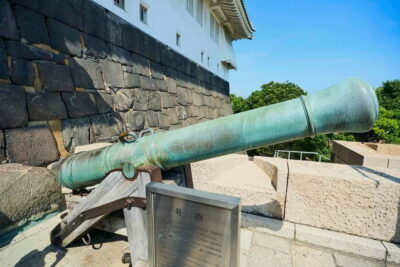
Castle History Walking Tour / Castle Tower Admission
Read our review →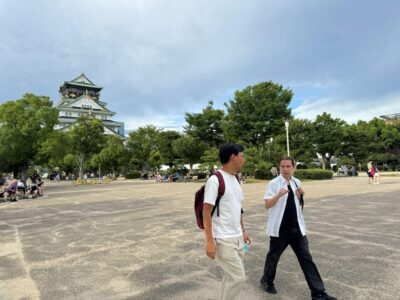
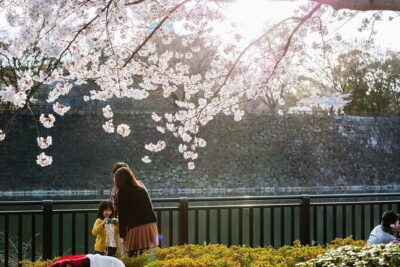
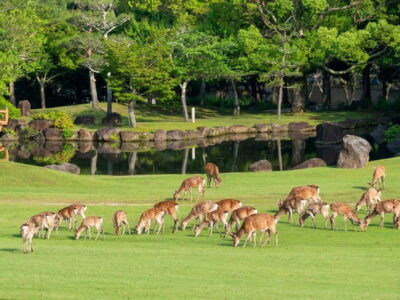
Kyoto & Nara & Uji Historical and Scenic One-Day Tour
Read our review →
(Ticket Included) Explore Osaka Castle & Museum of History
Read our review →
Kyoto & Uji Historical Sites and Scenic Delights Tour
Read our review →
Osaka Private Pop Culture Tour: Historic Tenma to Dotonbori
Read our review →This tour also fits