
Reviewed · WALKING TOURS
Osaka: Half-day Ultimate Highlights Guided Walking Tour
Neon Osaka starts with a castle, and this guided walk strings together the city’s big sights with local laughs and smart stops. I especially like the Osaka Castle grounds walk and the Kuromon Ichiba Market food-focused time slot.
One thing to plan for: this is a mostly on-foot route, and the castle stop is about the grounds, not an indoor visit.
In This Review
- Key things I’d circle before you book
- Starting at JR Osakajokoen: the easiest way to begin the day
- Osaka Castle grounds: why you start with the samurai-era reference point
- Shinsaibashi-suji and Namba: the shopping Osaka locals actually use
- Ebisu Bridge and Dotonbori: neon, canal views, and street-level energy
- Hozenji Yokocho: where Osaka gets quiet for a minute
- Kuromon Ichiba Market: Osaka Kitchen and seafood you can watch
- Doguyasuji and Osaka’s pop-culture shopping side streets
- Shinsekai: Tsutenkaku-area retro Osaka before it disappears
- Pace, lunch, and what you really get for $61
- Who this tour is perfect for, and who should rethink it
- Booking checklist: simple things to get right before you go
- Should you book this Osaka walking tour?
Key things I’d circle before you book
- Bilingual expat guides with decades in Osaka, including guide names like Scott, Tim, Andy, and Anna showing up in real-life experiences
- Osaka Castle grounds first, so you set context before the neon starts
- Dotonbori on canal level, with classic photo spots like the Glico Man area and Ebisu Bridge
- Hozenji Yokocho for contrast, a quiet alley with a 17th-century temple break from the crowds
- Kuromon Ichiba Market as an Osaka Kitchen moment, including seafood you can see prepared and watch people eat
- Shinsekai and Tsutenkaku-area retro energy, with a pre-WW2 neighborhood vibe
Starting at JR Osakajokoen: the easiest way to begin the day
The tour meets at JR Osakajokoen Station, on the JR Osaka Loop Line, in front of a 7-Eleven kiosk inside the station building. Arrive about 15 minutes early so you can check in without rushing.
From there, you’ll do a mix of walking and two short train rides. That matters because it keeps the day from turning into a sweaty, all-day slog of only sidewalks, while still letting you see how neighborhoods actually feel at street level.
Practical tip: bring comfortable shoes. The experience is not designed for big luggage or bulky bags, and filming is not allowed during the tour.
Other ways to spend a day in Osaka
- Osaka Local Foodie Walking Tour in Dotonbori and Shinsekai★ 5.0 · 985 reviews
- Osaka: Deep Backstreets Walking Tour with Dinner Option★ 4.9 · 902 reviews
- Ultimate Osaka Walking Tour: Castle, Dotonbori & Hidden Gems★ 5.0 · 862 reviews
- Osaka: Main Sights and Hidden Spots Guided Walking Tour★ 4.9 · 702 reviews
- Private Osaka Walking Tour: Highlights & Hidden Gems★ 5.0 · 569 reviews
Osaka Castle grounds: why you start with the samurai-era reference point
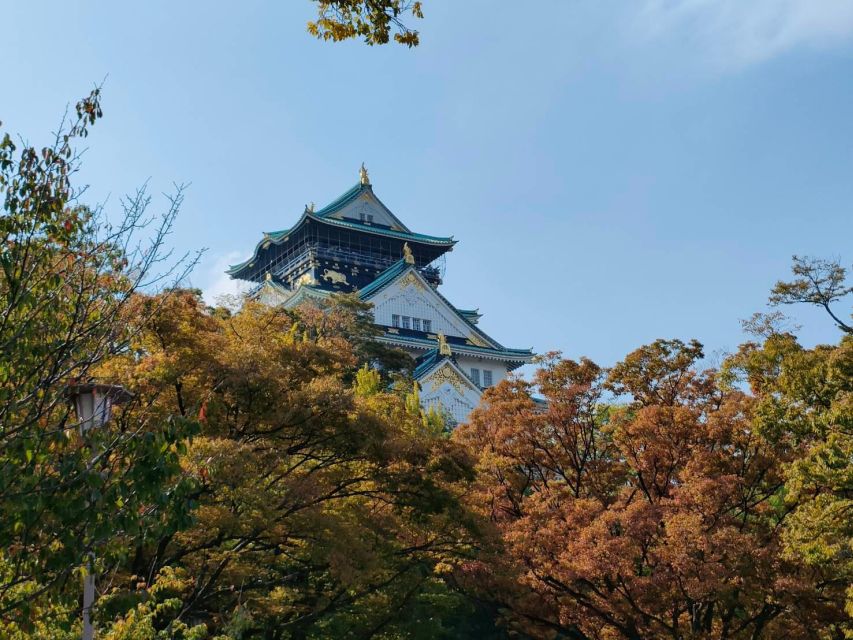
You begin at Osaka Castle, and you walk the grounds with your guide for about 75 minutes. This is a smart ordering of your day. You get a sense of the castle’s role in unifying Japan during the sixteenth-century samurai era, before the tour flips to modern Osaka’s street scenes.
A key detail: the tour focuses on walking through the grounds, not entering the castle on group tours. If your dream is to go inside exhibits, you’ll want separate tickets. But even without that, the grounds walk works well because your guide can point out historical meaning while you’re still surrounded by the real space people associate with Osaka.
What I like about this stop is that it’s not only postcard time. You get guided context, and you can take your own photos without feeling like you’re stuck in a long entry line.
Shinsaibashi-suji and Namba: the shopping Osaka locals actually use
After the castle, you head by subway toward Shinsaibashi-suji, the covered shopping street. The street is about 600 meters long and has served as an important shopping area for roughly 400 years. The covered layout is useful in winter, because you’re not stuck timing your outfit to the weather.
Then comes Namba, including about an hour of guided time plus a lunch break. Namba is where Osaka’s “everyday fun” shows up, not just the staged tourist corners. Expect your guide to steer you through how people shop, snack, and move through the neighborhood.
One reason this section feels worth it: your guide is there to help you read the city. You’ll get quirky facts and practical wayfinding tips, and you’ll also learn what to look for so you don’t just walk past everything without noticing.
Lunch is included, with Osaka-style street food and a drink at a local restaurant. In practice, you might see Osaka classics like takoyaki and okonomiyaki during the meal, depending on the day’s menu and how the group is handled.
Ebisu Bridge and Dotonbori: neon, canal views, and street-level energy
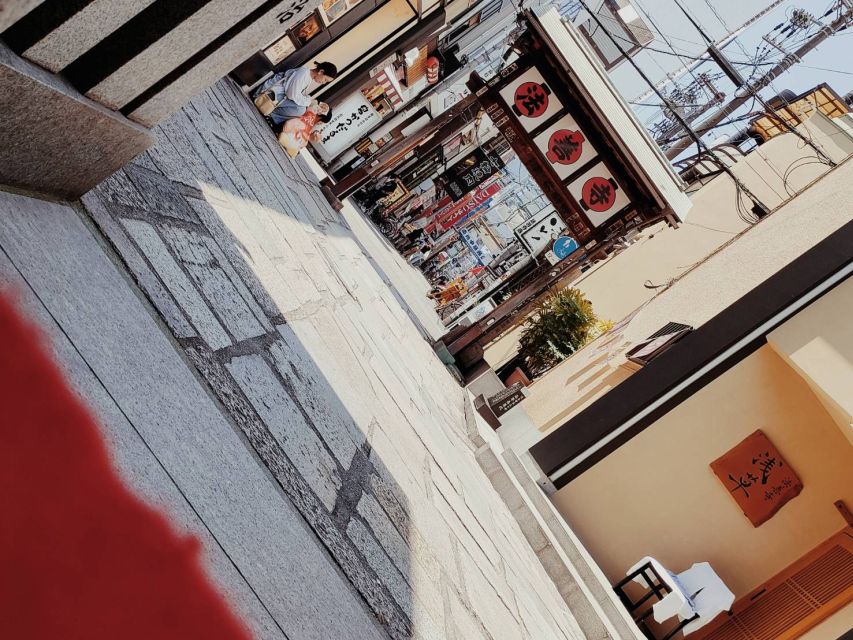
Next you hit Ebisu Bridge, a quick stop around 15 minutes. It’s known as a local meeting spot and connects to one of Osaka’s most famous landmarks: the Glico Man area nearby. The bridge is also described as being made out of wood in the 1600s, which adds a real historical twist to a place most people think of as pure photo-op.
Then you move into Dotonbori, about 30 minutes of guided time along the canal. This is the part most first-time visitors recognize instantly, with neon signs, bright storefronts, and the kind of atmosphere where you can smell street food before you even see it.
Here’s the practical value: your guide helps you navigate the crowd rhythm. You’ll spend time in the busiest areas without getting swallowed by them, and you’ll still have chances to grab photos near iconic spots like the Glico Man sign.
Hozenji Yokocho: where Osaka gets quiet for a minute
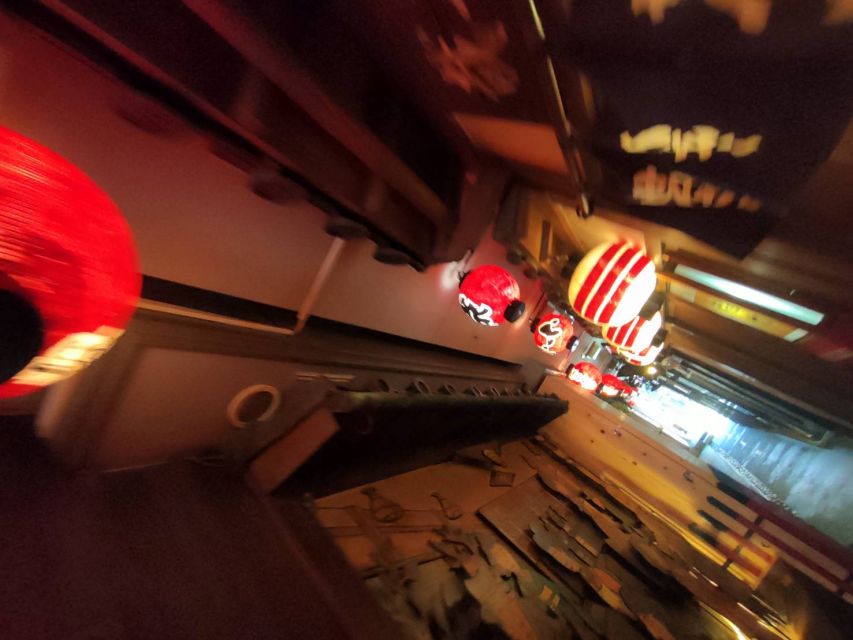
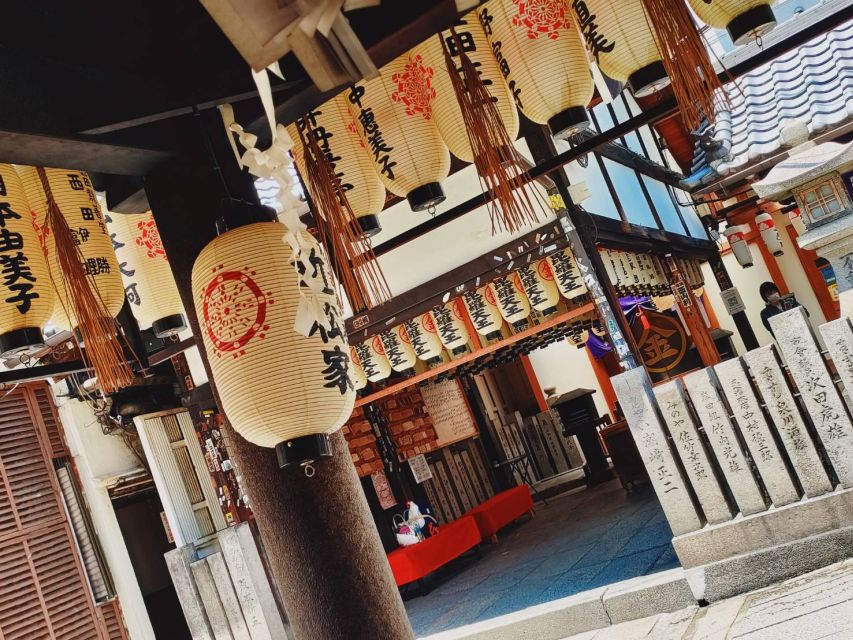
After the neon, you step into Hozenji Yokocho, a narrow alley off Dotonbori with traditional lanterns and cobblestone paths. This stop lasts about 20 minutes and gives you an important change of pace.
The point of Hozenji is contrast. You’re still near the tourist action, but the alley feels like a throwback. At the end is Hozenji, a Buddhist temple built in the seventeenth century, tucked just off Dotonbori. Your guide can explain why this corner is calmer than the surrounding streets and how Osaka keeps these old pockets in the middle of modern movement.
I like that you don’t have to choose between seeing Osaka’s big famous sights and catching a small, quieter moment. This alley stop makes the day feel more dimensional.
Not ready to leave Osaka yet? A few more ways to fill the day.
- Osaka Go Karting Tour with Funny Costume
★ 5.0 · 2,658 reviews - Osaka Castle: Museum and Tower Entry Ticket
★ 4.5 · 2,380 reviews - Osaka: Shinsekai Food Tour with 13-15 Dishes at 5 Eateries
★ 4.8 · 2,204 reviews
Kuromon Ichiba Market: Osaka Kitchen and seafood you can watch

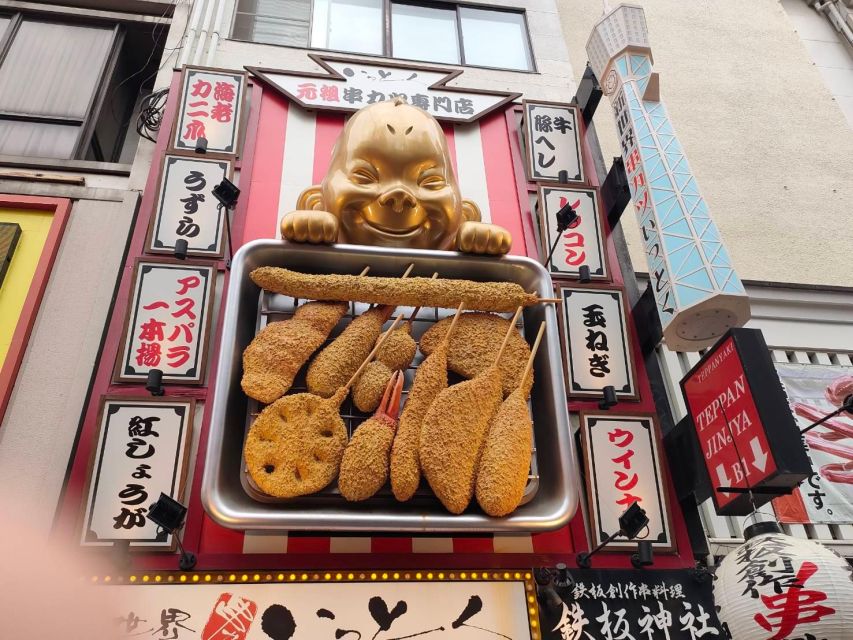
Then it’s time for Kuromon Ichiba Market, about 30 minutes of guided walking. Kuromon is often called the heart of Osaka’s Kitchen, and it’s been around for more than 200 years.
This is a strong stop for two reasons. First, you get to see the food culture close up, including seafood and produce. Second, you can often watch how items are prepared and how people actually buy and eat there, which is hard to recreate if you just wander on your own.
Whether you’re a seafood fan or not, Kuromon is where Osaka’s “use it, cook it, sell it, snack on it” mindset becomes real. You’ll also get guide suggestions for what to look for, and if your group wants to sample, your guide’s instincts matter.
If you’re trying to do this tour as a day trip from Kyoto or you’re short on time in Osaka, Kuromon is one of the best places to spend your guided time. It’s concentrated food energy.
Doguyasuji and Osaka’s pop-culture shopping side streets
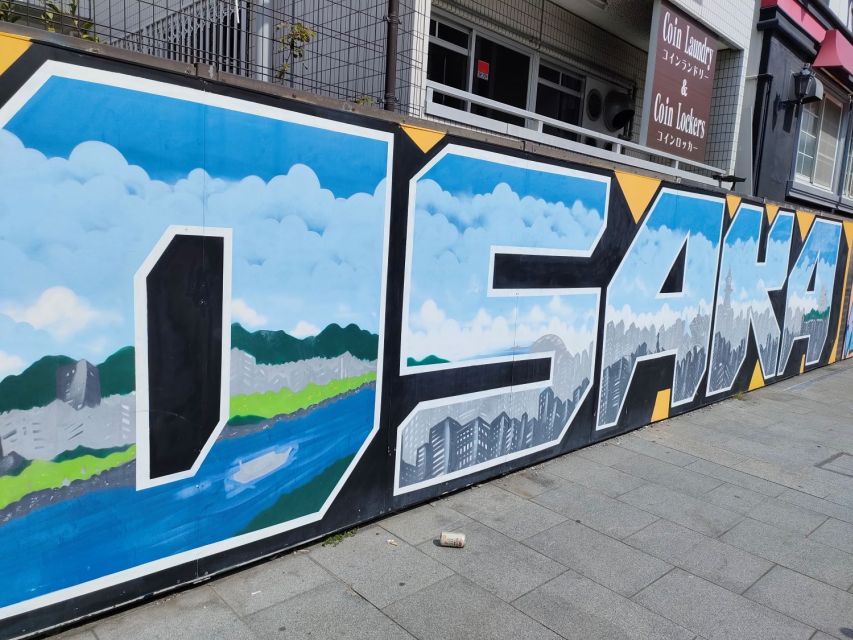
As you move through the central neighborhoods, you also get access to smaller shopping lanes that feel more local than the main neon corridors. One of the areas highlighted is Doguyasuji, packed with wholesalers and shops focused on practical goods like cutlery and crockery.
Another part of the shopping atmosphere you may notice is Osaka’s answer to Akihabara. Think electronics, cameras, and pop-culture and games-style shopping blocks. It’s a different flavor of Osaka than Dotonbori, and it helps you see the city’s commercial personality beyond food.
This section works especially well if you like browsing but don’t want to spend an hour guessing which streets are worth it. Your guide can point out what these places are known for and how locals shop differently than first-time tourists.
Shinsekai: Tsutenkaku-area retro Osaka before it disappears
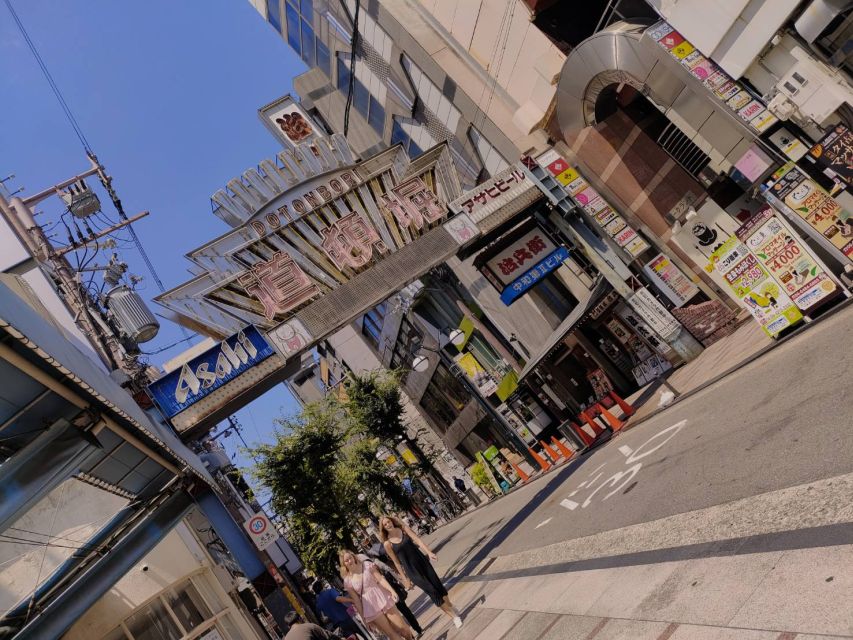
You wrap up with Shinsekai, about 20 minutes of guided walking, finishing around Dobutsuen-Mae Station. Shinsekai was developed before World War II, and the neighborhood’s Tsutenkaku Tower is the nostalgia-shaped symbol people remember.
What you’ll feel here is a more retro kind of energy. The neon is more “nostalgia” than “flash,” and the neighborhood has a specific personality that’s hard to find anywhere else in Osaka. It’s also a good reminder that Osaka’s identity isn’t only canal lights and shopping crowds.
If your Osaka trip feels like it’s going too fast, Shinsekai is a nice landing spot. You’re not ending on another market or another big tourist strip. You’re ending on a district that reads like a time capsule.
Pace, lunch, and what you really get for $61

At $61 per person, the big value isn’t just the walking. It’s the combination of guided context, included lunch, and the structure of hitting several famous areas without wasting your day on guesswork.
Here’s what’s included:
- A local guide throughout (English)
- Complimentary lunch with Osaka-style street food and a drink
- Quirky facts, history, and humor
- Mostly on foot, plus two short train rides
Here’s what’s not included:
- Train fares, listed as ¥240 and ¥190
- Osaka Castle entry tickets (on group tours, you do the grounds, not the interior)
- Any attraction tickets you might add yourself
In the real world, this matters. If you’re the kind of traveler who can walk a lot and likes learning while you go, $61 can feel like a bargain because you’re buying guidance for the time you’d otherwise spend mapping out routes and researching stops.
One more thing I appreciate from the guide style described in real bookings: the pacing is controlled. People often mention guides making sure everyone stays together, handling crowded sidewalks, and timing breaks. Some guides, like Tim, Scott, Andy, and Anna, are called out for keeping the group laughing while also making sure you know how to get home afterward.
Potential drawback to keep in mind: with so much ground covered, this can feel long if you want to linger. One booking even suggested ending earlier, around the market, because that’s where the highlight food moment peaks. If you’re the type who wants slow strolling and repeat snacks, you may find yourself wishing for more free time.
Who this tour is perfect for, and who should rethink it
This is a good fit if:
- You’re in Osaka for a short time and want the main highlights plus a few context stops
- You like food walks, especially where you can see markets up close
- You want the history explained in plain terms, with humor instead of lectures
- You prefer a small, personal feel, since small group or private options are available
You may want to skip or choose something else if:
- You have mobility limitations, since it is mainly walking and is not suitable for people with mobility impairments
- You’re pregnant, since the tour is not suitable for pregnant women
- You need wheelchair-friendly routing or lots of sitting time
- You expect to enter Osaka Castle buildings, since this tour is focused on the grounds on group tours
Booking checklist: simple things to get right before you go
A few details that help your day run smoothly:
- Wear comfortable shoes
- Don’t bring luggage or large bags
- Expect it to run in rain or shine
- Know that filming is not permitted
- Plan on paying the listed train fares yourself
- Install WhatsApp, since it’s mandatory for receiving tour updates
If you’re doing a private tour, hotel pickup can be arranged, with your guide meeting you in your hotel lobby about 15 minutes before the start. For group tours, you meet at JR Osakajokoen Station instead.
Should you book this Osaka walking tour?
I think you should book it if you want a fast, efficient introduction to Osaka that still feels human. The best part is the mix: Osaka Castle grounds for context, neon Dotonbori for atmosphere, a quieter Hozenji Yokocho break for texture, a real food-focused Kuromon market moment, and then Shinsekai to finish with personality.
Skip it if your priority is a full indoor Osaka Castle visit, you can’t handle long walks, or you want plenty of unstructured free time to wander without a set pace.
If you’re making Osaka part of a longer trip and you want one guided day that covers the essentials without turning into a checklist, this one is a strong choice.
Just added around Osaka

Walking Tours, compared.
Osaka Local Foodie Walking Tour in Dotonbori and Shinsekai
Read our review →
Deep Backstreets Walking Tour with Dinner Option
Read our review →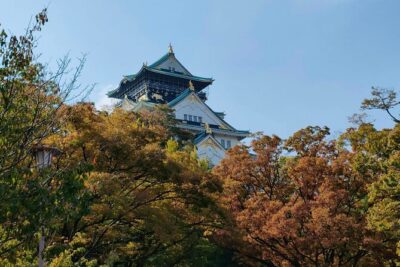
Ultimate Osaka Walking Tour: Castle, Dotonbori & Hidden Gems
Read our review →
Main Sights and Hidden Spots Guided Walking Tour
Read our review →
Private Osaka Walking Tour: Highlights & Hidden Gems
Read our review →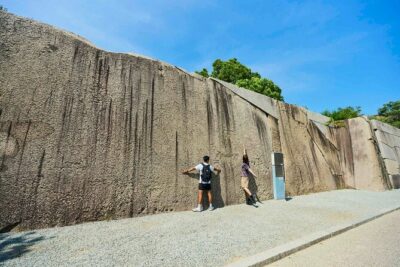
Osaka Castle Walking Tour and Castle Tower Admission
Read our review →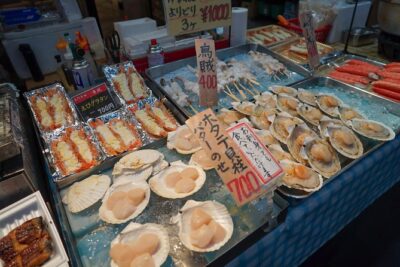
Kuromon Market Food Walking Tour in Osaka (6 stops, 6 tastes)
Read our review →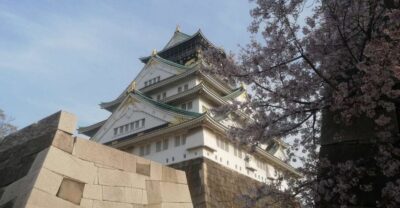
Five Must-See Highlights Walking Tour & Ramen Lunch
Read our review →This tour also fits