
Reviewed · HISTORICAL TOURS
Osaka Traditional Performing Arts Heritage Night
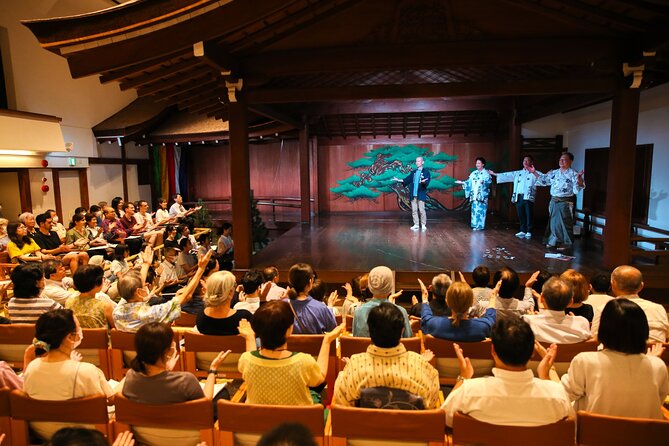
A night at a traditional theater can feel like a puzzle. This one works because you get Osaka performing arts across several styles, plus clear guidance so you know what you are watching. I especially love the mix of forms in one sitting and the chance to see how an audience can join in during the Noh segment, but do note that no video or photos are allowed inside.
I also like how beginner-friendly the show becomes without watering it down. You get multilingual explanations, subtitles, and materials, and there is even an on-stage experience for a couple of audience members in white socks. The only real drawback is that this is a performance-heavy format with no filming, so if you want to record everything for later, you will have to rely on memory instead.
In This Review
- Key highlights you will feel fast
- Osaka performing arts in one night at Yamamoto Noh Theater
- The show format: Noh, Kyogen, Bunraku, Rakugo, and more in sequence
- The hands-on Noh stage moment with white socks
- Multilingual explanations and subtitles that actually help you follow
- Price and time: $32 for a dense 2-hour cultural education
- Rules that shape the experience: no photos or video inside
- Who this Osaka performing arts night suits best
- Should you book Osaka Traditional Performing Arts Heritage Night?
- FAQ
- How long is the Osaka Traditional Performing Arts Heritage Night?
- How much does it cost?
- Where does it take place?
- What traditional performing arts are included?
- Is there English support?
- Are video recordings or photos allowed inside?
- Is the activity wheelchair accessible?
- Can kids attend?
- Is there audience participation?
- What is the cancellation policy and payment method?
Key highlights you will feel fast
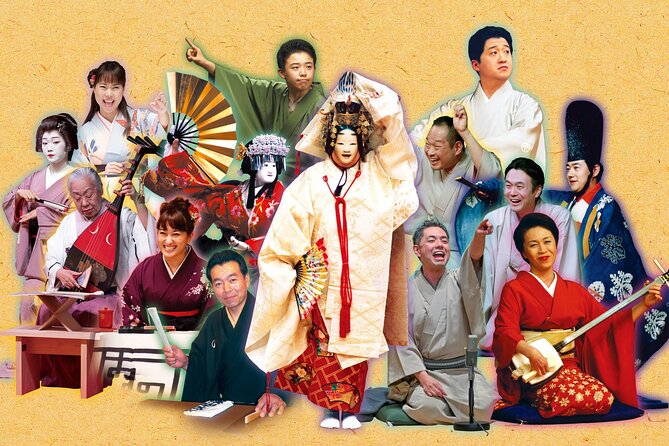
- Omnibus show covering Noh, Kyogen, Bunraku, Rakugo, Rokyoku, Kodan, Kamigata Mai, Gagaku, Onna Doraku, and Chikuzen Biwa
- Hands-on participation during the Noh part, with a couple of audience members in white socks going up to the stage
- English support with multilingual explanations, subtitles, and printed materials for foreigners
- Wheelchair accessible experience at the Yamamoto Noh Theater
- 2 hours of compact culture, not an all-day commitment
Osaka performing arts in one night at Yamamoto Noh Theater
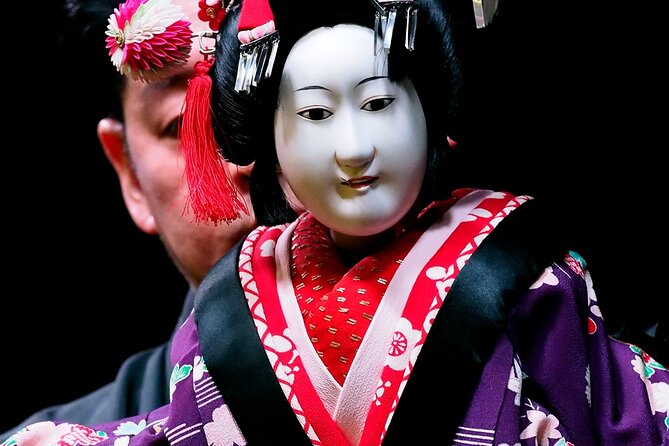
If you are trying to understand Japanese traditional arts without turning your trip into a crash course, this is a smart format. In just 2 hours, you see an Osaka-focused program that includes multiple disciplines, not just one. The venue is the Yamamoto Noh Theater, run through their traditional performance setting, with staff who can meet you in English or Japanese.
What makes this night practical is that the show is built for comprehension. Before each smaller performance, you get explanations in multiple languages, and you also have subtitles and materials to follow along. That matters, because many traditional performances rely on timing, rhythm, and context. If you only catch the surface, you can miss why a piece is moving or funny. Here, the structure tries to close that gap.
You also get a rare feeling of access. This is not just a sit-and-stare museum moment. A couple of audience participants wear white socks and go up to the Noh stage to try something firsthand. You will see how tradition can be practiced, not just observed.
Other ways to spend a day in Osaka
- Osaka: Castle History Walking Tour / Castle Tower Admission★ 4.9 · 230 reviews
- Osaka: Osaka Castle & Historical Museum Guided Tour★ 4.8 · 28 reviews
- Osaka Castle & Samurai History Walking Tour★ 5.0 · 22 reviews
- Osaka: Kyoto & Nara & Uji Historical and Scenic One-Day Tour★ 4.7 · 21 reviews
- (Ticket Included) Explore Osaka Castle & Museum of History★ 4.8 · 21 reviews
The show format: Noh, Kyogen, Bunraku, Rakugo, and more in sequence
The program is an omnibus experience, meaning it strings together highlights from many Osaka traditional performing arts in one evening. You should expect a rhythm of mini-performances rather than one long single piece. That is a good thing for first-timers, because it keeps attention moving while still letting you sample very different styles.
Here is what the night includes by name, so you know what you are signing up for:
Noh, Kyogen, Bunraku, Rakugo, Rokyoku, Kodan, Kamigata Mai, Gagaku, Onna Doraku, and Chikuzen Biwa.
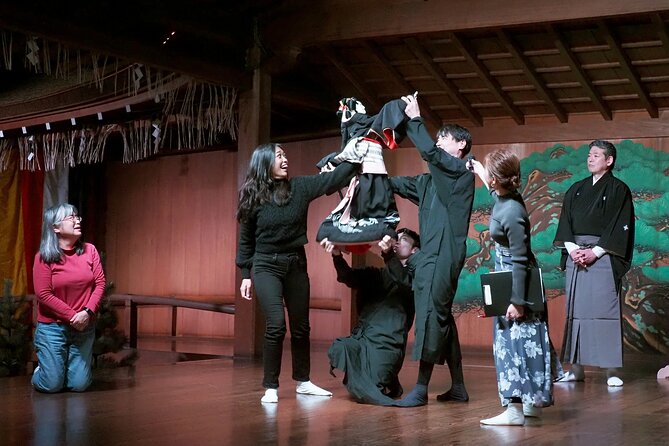
Even if you have never seen any of these before, the point of the program is that each segment gives you its own flavor. You are not only collecting titles, you are also learning how each art communicates. Some are theatrical and formal. Some are more voice-forward and story-based. Some lean into music and performance technique. The show guides you through these differences with multilingual explanations and subtitles, so you are not left guessing.
A tip that will help you get more from the sequence: stay mentally ready for quick context changes. When the program moves to the next discipline, treat it like the start of a new episode. The best moments tend to come when you follow the explanations and then watch for what that art is trying to do. It is easier than trying to compare everything at once.
One small consideration: because it is a multi-art program, you may find yourself liking certain segments more than others. That is normal. What the night does well is giving each style a chance to land, and the subtitles and materials help you catch the thread across the whole evening.
The hands-on Noh stage moment with white socks
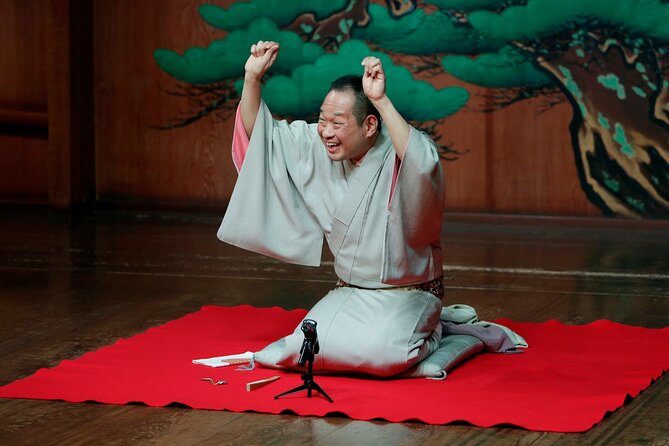
The most memorable part for many people is the audience participation during the Noh section. A couple of audience members wear white socks and go up to the Noh stage for an experience designed for non-experts. This is one of those rare travel activities where you do not just watch a performance. You get a taste of how it feels to be part of the space.
How to think about it:
- It is not a lesson where you become a Noh performer.
- It is a brief, guided participation meant to make the form more understandable.
- It also turns the theater itself into part of the lesson, since Noh staging and presence are a huge part of the art.
If you are the kind of traveler who learns best by doing a small thing, this segment is a big plus. And if you are traveling with family or a group of mixed experience levels, it helps everyone feel included. Even if you are not the one selected, watching someone try it in the Noh environment makes the show feel less distant.
Practical note: wear socks you are comfortable with. The participants wear white socks, so you will want to follow any staff instructions you are given on the spot. Since photography and video recording are not allowed inside, you will not be capturing the moment on your phone. The best plan is to be present for it, then rely on the guide’s explanations and your own memory.
Multilingual explanations and subtitles that actually help you follow
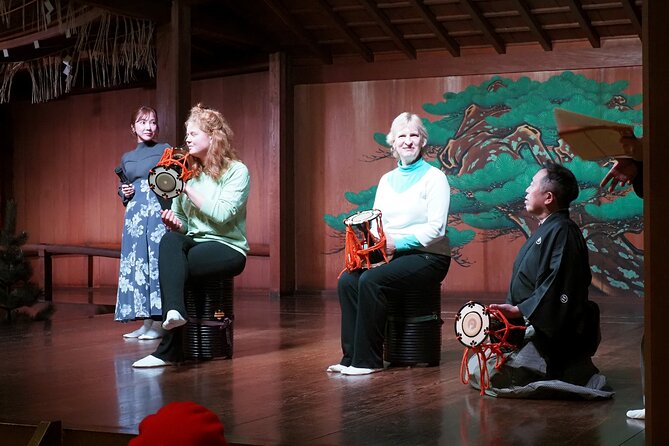
A lot of cultural shows advertise English support. Here, the support is integrated into the experience: multilingual explanations, subtitles, and materials for foreigners are part of how the night is designed. That makes a real difference when the performance language is not one you speak.
You can go in with confidence that the show will give you context as it moves. Explanations happen before each of the smaller performances, so you get a framework first, then you watch. Subtitles run during the program, and you also have materials to take in at your pace.
One detail that stands out: you might see segments where some performances are fully in English, at least in the version with English subtitles. That can make the night feel more approachable, even if other parts are in Japanese or traditional vocal styles. Either way, you are not stuck doing mental translation the entire time.
What I would do if I were planning this as a first-time visitor: arrive ready to read the room. Look at the stage area, then track what the explanation sets up. After that, watch for the moment the story or technique lands. When you connect the explanation to what you see, even a short segment can feel satisfying, not confusing.
Price and time: $32 for a dense 2-hour cultural education
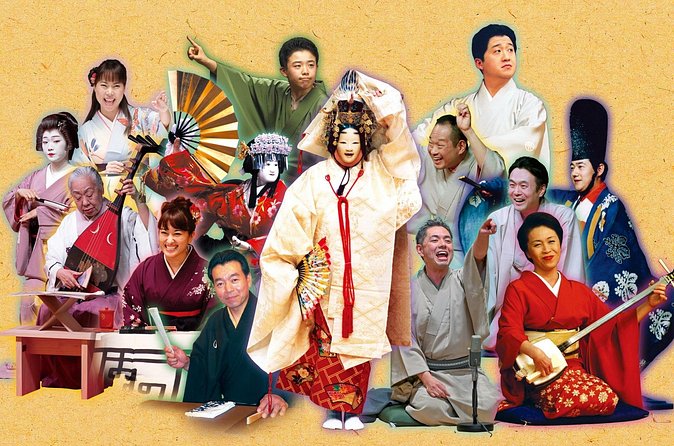
At around $32 per person for a 2-hour experience, this sits in the “good value” category for Osaka. You are paying for a lot of content in a short window: multiple traditional performing arts names, live staging, and the extra cost of multilingual explanations plus subtitles and materials. You are also getting a hands-on audience moment, which usually makes an experience feel more than just informational.
The best way to judge the value is to think about what you would otherwise pay for if you tried to sample traditional arts one by one. You would likely need separate bookings, separate learning moments, and more time moving around. Here, you compress the sampling into one night at a single theater.
Is it cheap? No. But you are buying structure. For $32, you get a guided tasting menu of very different performance styles, all designed so you are not lost. For a visitor who wants authentic culture with minimal friction, that is the key value.
Not ready to leave Osaka yet? A few more ways to fill the day.
- Osaka Go Karting Tour with Funny Costume
★ 5.0 · 2,658 reviews - Osaka Castle: Museum and Tower Entry Ticket
★ 4.5 · 2,380 reviews - Osaka: Shinsekai Food Tour with 13-15 Dishes at 5 Eateries
★ 4.8 · 2,204 reviews
Rules that shape the experience: no photos or video inside
One thing you need to be comfortable with: no video recording and no photography inside. This is not unusual for live theater, but it matters here because the hands-on Noh stage moment is likely the highlight you will want to capture.
So plan differently:
- Let your phone stay away during key segments.
- Watch first, then take notes in your head.
- After the show, lean on the materials you received and the explanations you heard.
If you are the type who likes to document everything for later reference, this could be the dealbreaker. If you are more interested in being fully present, the no-photo rule can actually improve the vibe, because everyone watches with less screen glow and fewer distractions.
Also remember the show is for adults and kids 7 and up. Children under 7 are not suitable for this activity, likely because the format is performance-heavy and depends on attention and quiet viewing.
Who this Osaka performing arts night suits best
This experience is a strong match for first-timers who want a guided introduction. It is also a good bet if you are traveling with a mix of people, like teens and adults, because the program includes variety and a friendly learning format. The night is educational, but it is not dry. The show balances humor and insight with the performance itself, and the explanations keep things moving.
It is also a good option for families with children who can handle a 2-hour indoor performance. Children as young as 8 and 6 have enjoyed it when they had decent attention spans. For younger kids, the under-7 rule is there for a reason, so I would not gamble.
If you have a wheelchair and need accessibility, this is listed as wheelchair accessible. That is worth checking in advance if you want to plan your seating needs, but it is a positive starting point.
Finally, it is ideal if you want English support and you do not want to rely on guessing. The multilingual explanations, subtitles, and materials are built into the show, so your understanding is part of the design.
Should you book Osaka Traditional Performing Arts Heritage Night?
Yes, I would book it if your goal is a compact, guided introduction to Osaka traditional performing arts. The $32 price makes sense for what you get: multiple major styles in one 2-hour evening, plus English support and a hands-on Noh stage moment. The fact that the theater experience is designed for beginners and foreigners is the big reason this works.
Skip it only if you strongly need to record with your phone during the show or if you are bringing very young children who may struggle with a performance format. If you are choosing between this and a more single-art, self-guided activity, the omnibus structure is the advantage. It helps you sample several arts, learn the basics through explanations, and leave with a clearer sense of what you want to see again on a future trip.
FAQ
How long is the Osaka Traditional Performing Arts Heritage Night?
The experience lasts 2 hours.
How much does it cost?
The price is $32 per person.
Where does it take place?
It is in Honshu, Japan, at Yamamoto Noh Theater.
What traditional performing arts are included?
The show includes Noh, Kyogen, Bunraku, Rakugo, Rokyoku, Kodan, Kamigata Mai, Gagaku, Onna Doraku, and Chikuzen Biwa.
Is there English support?
Yes. Languages offered include English and Japanese, with multilingual explanations, subtitles, and materials for foreigners.
Are video recordings or photos allowed inside?
No. Video recording and photography inside are not allowed.
Is the activity wheelchair accessible?
Yes, it is listed as wheelchair accessible.
Can kids attend?
It is not suitable for children under 7 years old.
Is there audience participation?
Yes. A couple of people from the audience wear white socks and go up to the Noh stage to experience the traditional performing arts.
What is the cancellation policy and payment method?
You can cancel up to 24 hours in advance for a full refund. You can reserve now and pay later.
Just added around Osaka

Historical Tours, compared.

Castle History Walking Tour / Castle Tower Admission
Read our review →
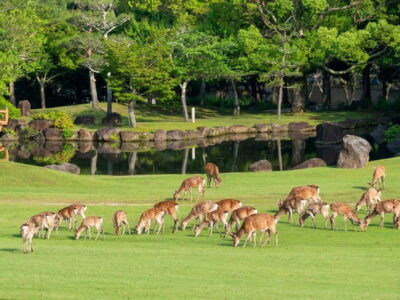
Kyoto & Nara & Uji Historical and Scenic One-Day Tour
Read our review →
(Ticket Included) Explore Osaka Castle & Museum of History
Read our review →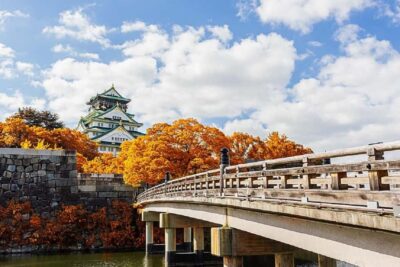
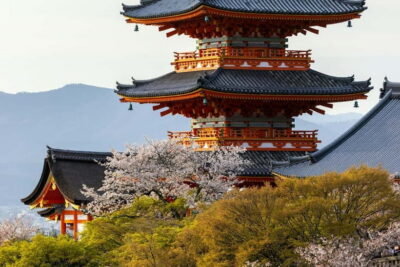
Kyoto & Uji Historical Sites and Scenic Delights Tour
Read our review →
Osaka Private Pop Culture Tour: Historic Tenma to Dotonbori
Read our review →This tour also fits