
Reviewed · SHINSEKAI EXPERIENCES
Osaka: Tsutenkaku – Namba – Dotombori (Spanish Guide)
Tsutenkaku lights plus shopping in one route. I like the Showa-era atmosphere of Shinsekai and the panoramic views from Tsutenkaku Tower, and I also like the time in Nipponbashi Denden Town for electronics, manga, and figure-hunting. The one drawback to plan for is that it is a walking tour, so expect light physical effort and bring comfortable shoes.
This tour is led by a live Spanish guide, meeting at Sakaisuji Line Ebisucho Station, Exit 3, and it ends in Amerikamura so you can keep roaming after the group wraps up. Tsutenkaku includes an entrance ticket, but food and drinks are not included, so budget for your lunch and street-food stops.
In This Review
- Key points that make this Osaka tour worth it
- How the Shinsekai to Amerikamura route fits together
- Meeting at Ebisucho, then easing into Shinsekai
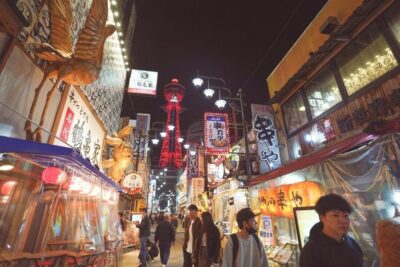
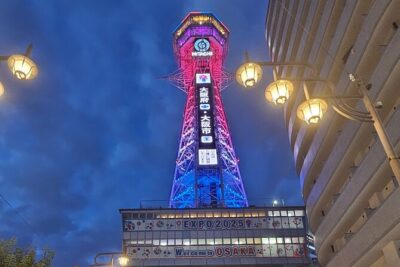
- Shinsekai and Tsutenkaku: that Showa-era postcard feeling
- Nipponbashi Denden Town: where tech lovers go to shop
- Yasaka Shrine Namba: a quiet pause in the middle of the city
- Namba shopping streets and the lunch break you can plan around
- Dotonbori: neon photos and canal-side food energy
- Shinsaibashi: a shopping sweep with time to browse
- Amerikamura: alternative style to wrap up the day
- Price, pacing, and what you actually get for $83
- Who should book this tour, and who might want a different plan
- Should you book this Osaka Spanish guide tour?
- FAQ
- How long is the Osaka Tsutenkaku to Amerikamura tour?
- How much does the tour cost?
- What language is the guide?
- Where does the tour start?
- Where does the tour end?
- Is food included in the price?
- Is the Tsutenkaku entrance ticket included?
- What should I bring?
- Is the tour mostly walking?
- What is the cancellation policy?
- Is it reserve now, pay later?
- FAQ
- How many major stops are included?
- What do you do at Dotombori?
- Is there shopping time?
- Are there any viewpoints or scenic moments?
Key points that make this Osaka tour worth it
- Tsutenkaku Tower views with the local Showa vibe in Shinsekai
- Nipponbashi Denden Town for tech, manga, and pop-culture shopping
- A short reset at Yasaka Shrine Namba before the busy shopping streets
- A structured Namba and Dotonbori walk focused on food energy and neon photos
- A satisfying finish in Shinsaibashi and Amerikamura, with time to shop and wander
How the Shinsekai to Amerikamura route fits together
Osaka can feel like multiple cities at once, and I like the way this route stitches them into a single day. You start in Shinsekai and Tsutenkaku, then shift into Nipponbashi Denden Town for fandom-level browsing, and later land in the big-brand shopping and photo zones of Namba, Dotonbori, and Shinsaibashi. The final neighborhood, Amerikamura, adds an alternative fashion and street-art mood so you leave with a sense of what locals do when they want something less traditional.
At $83 per person for a 7-hour guided walk, the value comes from two things: you are not just seeing landmarks, you are getting guided context in several different districts. And since many of the stops are shopping streets and photo corridors, having a guide helps you move efficiently and avoid getting stuck wandering with no plan.
If you like structure but still want time to browse, this tour hits that sweet spot. If you hate walking or you want fully planned meals included, you might feel the pinch because food is not included and the schedule is on foot.
Retro Osaka, neon and all
- Osaka: Shinsekai Food Tour with 13-15 Dishes at 5 Eateries★ 4.8 · 2,204 reviews
- Osaka Local Foodie Walking Tour in Dotonbori and Shinsekai★ 5.0 · 985 reviews
- Osaka: Tsutenkaku Tower Entry Ticket★ 3.8 · 125 reviews
- Osaka: Local Foodie Tour in Dotonbori and Shinsekai★ 4.7 · 95 reviews
- Retro Osaka Street Food Tour: Shinsekai★ 4.5 · 77 reviews
Meeting at Ebisucho, then easing into Shinsekai
You begin at Ebisucho Station (Sakaisuji Line, Exit 3). From there, the tour moves into Shinsekai, a neighborhood famous for its old-school Osaka feel. Even before Tsutenkaku itself, you get that sense of place quickly: more retro storefront mood, more people out and about, and a streetscape that looks like it belongs in a different decade.
The route gives you a short walk to settle in (about 30 minutes here), and that matters. It is long enough for you to start spotting the details that make Shinsekai fun, but not so long that you feel rushed right at the start.
What I like about this opening is that it sets a theme fast: this is not a museum day. It is a day for atmosphere, photos, and trying local foods as you go.
Shinsekai and Tsutenkaku: that Showa-era postcard feeling
Tsutenkaku is the centerpiece, and it is easy to see why. The tour builds a real focus around the Tsutenkaku Tower area, with guided time plus sightseeing that totals about 1.5 hours.
This is the moment you get panoramic views of Osaka from above, which changes how you understand the city. From street level, Osaka can look like one long chain of neighborhoods. From the tower, you see the layout and get a better sense of where your later stops fit in.
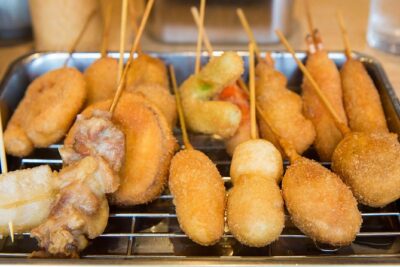
It is also here that you get that classic Shinsekai flavor. The experience is built around the Showa-era charm of the area, with colorful streets and traditional shop energy. There is specific local food called out as a must-try: kushikatsu. If you have never had it, think of it as Osaka comfort food in stick form, and it fits this neighborhood theme perfectly.
One practical note: Tsutenkaku entrance is included, which saves you time. You will still want to keep your schedule relaxed once you get there, because the Tower plus the surrounding streets are exactly the kind of place where you will want extra minutes for photos.
Nipponbashi Denden Town: where tech lovers go to shop
Next up is Nipponbashi Denden Town, about 1 hour of guided time. If you have any interest in gadgets, retro electronics, or Japanese pop culture, this stop is usually the one people remember.
This is not a single store, it is a shopping zone. You are looking for the fun stuff: electronics and tech items, manga shops, and places that sell action figures and related collectibles. The atmosphere here is very specific. Even if you do not buy anything, browsing helps you understand how big pop culture and hobby collecting are in daily life.
What I like about having the guide for this stop is simple: you do not waste time “guessing” your way around the maze of shops. You can focus on what you actually want, whether that is finding a certain type of item or just enjoying the visual overload.
Tip for your budget: food is not included later in the itinerary, so consider making your shopping plans with the assumption that you will spend money here and then pay for lunch separately.
Yasaka Shrine Namba: a quiet pause in the middle of the city
After the shopping intensity, you get a reset at Namba Yasaka Shrine (about 30 minutes). This is one of the most useful parts of the day, because it gives you a break from the crowds and the neon energy.
A shrine stop might sound like a detour if you only came for the food and shopping, but this one is intentionally placed in the middle. You get a chance to slow down, look around, and let your brain reset before you head into the busiest districts later.
I also like that it is short. You get the calm without losing the momentum of the overall route. If you are the type who takes photos and notices small details, you will probably appreciate this stop more than you expect.
Other ways to spend a day in Osaka
- From Kyoto/Osaka: Kyoto Top Highlights 1-Day Guided Bus Tour
★ 4.5 · 714 reviews - Osaka: Main Sights and Hidden Spots Guided Walking Tour
★ 4.9 · 702 reviews - Osaka: Guided Food Tour with 12 Dishes at 4 Local Eateries
★ 5.0 · 533 reviews
Namba shopping streets and the lunch break you can plan around
Then the tour moves into Namba, with about 45 minutes of guided time plus a 1-hour lunch break. Namba is described as where shopping, nightlife, and local cuisine come together, and you can feel that in how many things are happening around you.
The food part is where the tour becomes practical. The plan calls for a meal at a local restaurant, with famous Osaka dishes like okonomiyaki highlighted along with other Japanese delights. Since food and drinks are not included in the price, you will want to come ready to pay for your meal.
Here is why I think this lunch structure is a good deal: you are not left to figure out where to eat after a long stretch of walking. The guide keeps you in the right area and helps you get to a local spot that fits the day.
If you are picky about timing, note the overall rhythm. Lunch is a dedicated hour block, so you should not plan on needing a late snack right after. Use the lunch window to eat properly, then save room for street-food-style treats later if you want them.
Dotonbori: neon photos and canal-side food energy
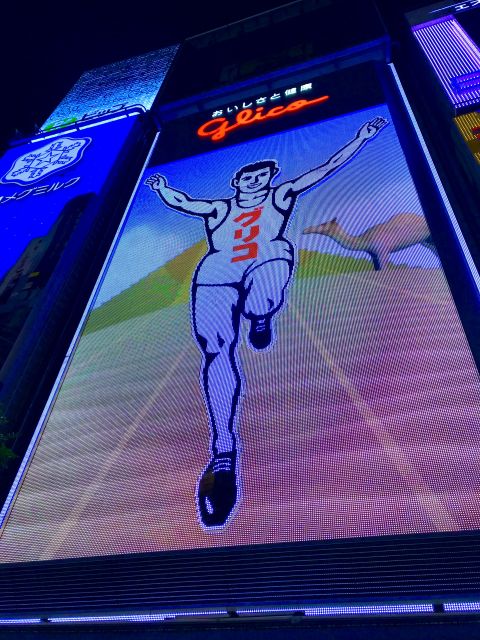
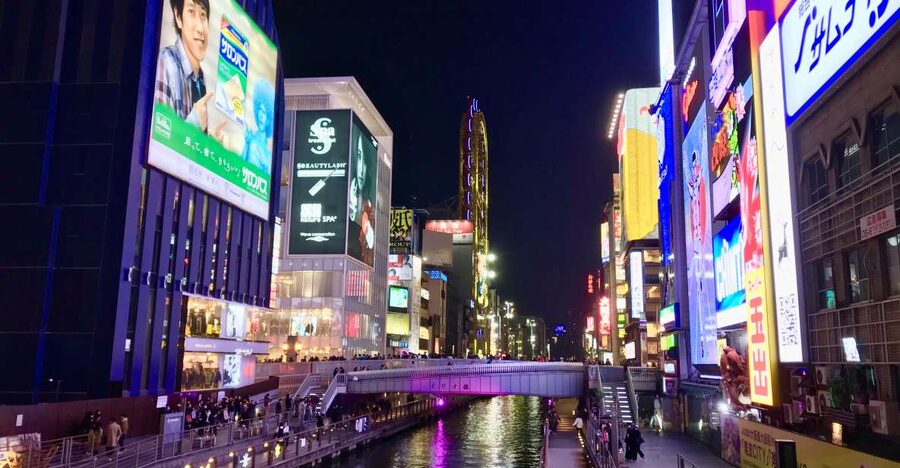
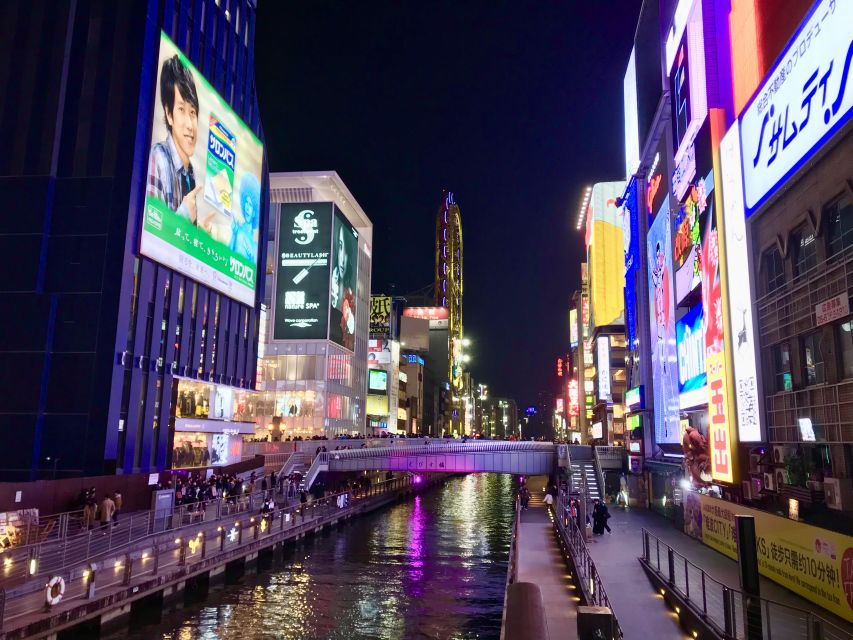
After lunch, you head to Dotonbori for about 30 minutes, including a photo stop plus guided sightseeing and walking. This is the district people picture when they think of Osaka, with neon signage and a canal that makes everything feel animated.
The tour focuses on the main street energy and the surrounding food vibe. Street food and souvenir shopping are part of the experience here, and this is usually where you want to be camera-ready. The tour keeps it relatively short, which is smart, because Dotonbori can turn into a time sink if you let it.
For me, the value of having a guide in Dotonbori is not that you learn secret history. It is that you get oriented fast. You know where to stand for the iconic views, and you do not waste your limited daylight energy getting turned around.
Also, since food and drinks are not included, Dotonbori is a good place to decide on a specific bite rather than trying to do everything at once. One or two street snacks plus a souvenir browse is a very realistic way to enjoy it.
Shinsaibashi: a shopping sweep with time to browse
Next comes Shinsaibashi, with about 45 minutes total, including guided touring, free time, and shopping. This is one of the most classic shopping corridors in the area, and it is a great transition point because it blends big stores with smaller boutiques.
The description specifically mentions a covered shopping street, which is useful if you want shelter from rain or just shade from the sun. You get guided time first, so you can get your bearings, then you get free time to shop at your pace.
What I like here is that Shinsaibashi gives you choices. If you want clothing, souvenirs, or everyday items, this is usually where you can make it happen without needing to know every store name ahead of time.
Keep your expectations realistic: this is not an endless mall day. It is enough time to enjoy the street and do a solid browse.
Amerikamura: alternative style to wrap up the day
The tour finishes in Amerikamura (also called America Village in the itinerary). You get about 30 minutes that includes guided tour, free time, and shopping.
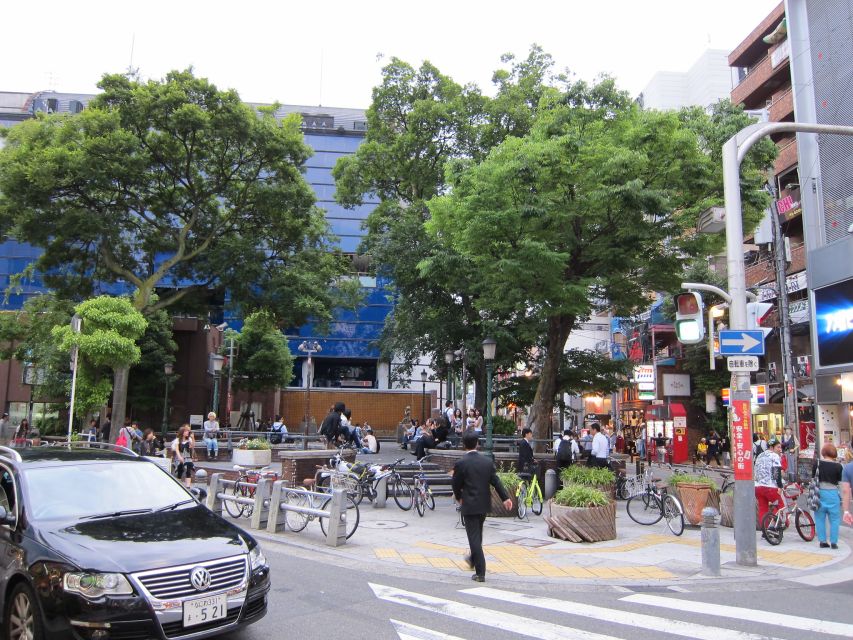
This is where Osaka feels more self-expressed. The neighborhood is described as urban and alternative, with vintage clothing stores, record shops, and street art. It is a fitting ending after all the mainstream shopping zones, because you end with visual variety and a more local, scene-driven vibe.
If you like street photography, this is a strong last stop. If you want a final purchase, it is also a good place to look for something you will not see everywhere else.
Then the tour ends here, so you are not stuck on a bus ride afterward. You can keep wandering, grab a dessert, or simply take your time because you are done with the guided portion.
Price, pacing, and what you actually get for $83
Let’s talk value, because $83 for a 7-hour guided walk is either a steal or an average deal depending on your travel style.
You are paying for:
- Guided tours across multiple districts (Shinsekai, Tsutenkaku, Nipponbashi, Yasaka Shrine Namba, Namba, Dotonbori, Shinsaibashi, Amerikamura)
- Tsutenkaku entrance ticket included
- A Spanish live guide for navigation and local context
What you are not paying for:
- Food and drinks, including your lunch and any snack choices
For many people, that makes sense. It is easier to customize what you eat rather than being locked into one fixed menu. And the meal break means you are not hungry and stressed while trying to find food in the middle of busy areas.
There is also the human factor. The available feedback shows a strong satisfaction signal: a verified booking from Jaqueline Grajales, Mexico, rated it 5 out of 5 and said the tour was great, they saw many things, and the lunch stop was really good. Even with only one review on file, that aligns with what the itinerary is designed to do: cover key sights fast, then feed you in a way that fits the day.
Finally, pacing matters. This is light physical activity and a walking tour, so if you want to see Osaka but you still need rest, it is better to treat this as your main daytime plan and keep your evenings flexible.
Who should book this tour, and who might want a different plan
This tour is a strong match if you:
- Enjoy walking through neighborhoods instead of sitting on a bus
- Want a guided path that covers Showa nostalgia, pop-culture shopping, and neon food energy
- Like a day that mixes iconic sights with time to shop in real districts
- Travel in Spanish and want a live Spanish guide
You might think twice if you:
- Want a fully food-included experience, because food and drinks are not included
- Do not handle walking well, since it is structured as a walking tour
- Want long, slow museum-style visits. This day is about movement and atmosphere.
Should you book this Osaka Spanish guide tour?
If you want one well-planned day that gives you a big slice of Osaka without you having to figure out routes and priorities alone, I think this tour is worth booking. The biggest reason is the sequence, it goes from Shinsekai Showa charm to Nipponbashi pop-culture shopping, then to Yasaka Shrine calm, and finishes with shopping and street-art energy in Amerikamura.
Book it if your goal is to leave Osaka feeling like you saw the city’s different moods in one go. Skip it if you need food included, or if walking all day sounds like a bad time. If that is you, pick a slower, food-centered option instead.
FAQ
How long is the Osaka Tsutenkaku to Amerikamura tour?
The tour lasts 7 hours.
How much does the tour cost?
It costs $83 per person.
What language is the guide?
The live tour guide speaks Spanish.
Where does the tour start?
The meeting point is Sakaisuji Line, Ebisucho Station, Exit 3.
Where does the tour end?
The tour finishes at Amerika-Mura (Amerikamura).
Is food included in the price?
No. Food and drinks are not included, though there is a lunch break during the tour.
Is the Tsutenkaku entrance ticket included?
Yes, the Tsutenkaku entrance ticket is included.
What should I bring?
Bring comfortable shoes and comfortable clothes.
Is the tour mostly walking?
Yes. It is a walking tour with light physical activity, so you should be ready to walk between stops.
What is the cancellation policy?
You can cancel up to 24 hours in advance for a full refund.
Is it reserve now, pay later?
Yes, you can reserve now and pay later.
FAQ
How many major stops are included?
You visit Shinsekai, Tsutenkaku, Nipponbashi Denden Town, Namba Yasaka Shrine, Namba, Dotombori, Shinsaibashi, and Amerikamura.
What do you do at Dotombori?
You do a photo stop, guided tour, and walk through Dotombori.
Is there shopping time?
Yes. There is free time for shopping in Shinsaibashi and Amerikamura, and the overall route includes shopping-focused areas like Nipponbashi Denden Town.
Are there any viewpoints or scenic moments?
Yes. Tsutenkaku Tower offers panoramic views of Osaka from above.
Just added around Osaka

Shinsekai Experiences, compared.
Shinsekai Food Tour with 13-15 Dishes at 5 Eateries
Read our review →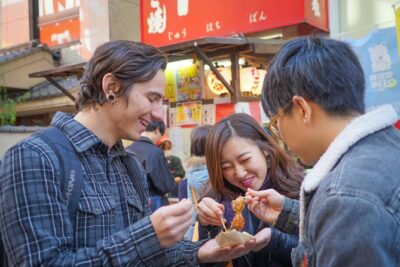
Osaka Local Foodie Walking Tour in Dotonbori and Shinsekai
Read our review →
Shinsekai Food Tour – 13 Dishes at 5 Local Eateries
Read our review →
Night Soul Food Tour in Shinsekai with a local guide
Read our review →
Osaka Morning Tour: Shitennoji Temple, Shinsekai &Doutonbori
Read our review →This tour also fits