
Reviewed · WALKING TOURS
Sakai – Knife Factory and Craft Walking Tour
Sakai is a knife town with real hands-on work. This 3 to 4 hour walk gives you access to a working knife factory and a hands-on sharpening lesson, not just a museum-style look. I like that you also start with a classic cinnamon mochi stop, so the morning feels like local culture, not only metalwork.
One thing to consider: the factory and knife-making focus can vary by day and guide, and the city storytelling may feel framed for Western ears for some people.
In This Review
- Key highlights before you go
- A morning in Sakai built around knives (and why that matters)
- Price and what you get for $66.05 in Sakai
- Where you start, how the walk flows, and what timing feels like
- Stop 1: 八百源来弘堂本店 cinnamon mochi with a 400-year origin story
- Stop 2: entering a working Sakai knife factory and sharpening station
- The guide factor: how experiences can differ
- Stop 3: Sakai Traditional Crafts Museum and the Knife Shop context
- Price, shopping, and the no-stress buying feeling
- Group size, comfort, and who will enjoy this most
- When schedules change: blacksmith-only dates and the 3rd Tuesday issue
- Language help: bilingual guide, plus a French request caveat
- Tips to get the most from your sharpening lesson and knife order
- Should you book this Sakai Knife Factory and Craft Walking Tour?
- FAQ
- How long is the Sakai knife factory and craft walking tour?
- What is included in the $66.05 price?
- Where does the tour start and when?
- Is there a mobile ticket?
- How big is the group?
- Can I request a French-speaking guide?
- What if I book as a single traveler?
- Is there free cancellation?
Key highlights before you go
- A real knife factory visit where raw blades come in, then get turned into handmade cooking knives
- Sharpening station access plus time to practice traditional sharpening with a professional
- Custom knife opportunity if you want to order something made in front of you
- Cinnamon mochi first stop with a story that stretches back centuries, plus one sweet included
- Small group feel with a max of 10 people, which helps questions and photos
- Sakai crafts context at the crafts museum, including local connections like Shimano’s origin in Sakai
A morning in Sakai built around knives (and why that matters)
This tour is a half-day that aims for one goal: to show you how Sakai knives are made, from process to finishing touches. The key here is access. You do not just look at products behind glass. You get inside where sharpening happens and where blades become kitchen tools.
You also get a practical pacing. With a start time of 9:00 am and about 3 to 4 hours total, it is long enough to learn something real, but short enough to keep the rest of your day free. The small group size, up to 10 travelers, makes the experience feel like guided craft time rather than a rushed shuffle.
Still, this is not a pure lecture tour. If you want lots of deep metallurgy talk and long theory sessions, you may find the format more hands-on than academic. The upside is that you leave with a better sense of why these knives matter, and what good sharpening actually involves.
Other ways to spend a day in Osaka
- Best Private Osaka Walking Tour With A Guide 100% Personalised★ 4.5 · 12 reviews
- Osaka Commemorative Park Walking Tour★ 5.0 · 1 review
- Osaka Wine Walking Tour: Japan’s Oldest Winery Historic town★ 5.0 · 1 review
- Osaka Local Foodie Walking Tour in Dotonbori and Shinsekai★ 5.0 · 985 reviews
- Osaka: Deep Backstreets Walking Tour with Dinner Option★ 4.9 · 902 reviews
Price and what you get for $66.05 in Sakai
At $66.05 per person, you are paying for more than entry tickets. What stands out is that the price includes all fees and taxes, a bilingual guide, a factory visit, and the knife sharpening lesson, plus one sweet for each guest.
Here is how I’d frame the value for you:
- If you have ever stood in a knife shop and wondered what makes one blade different, this tour gives context you can feel.
- If you are curious about ordering a custom knife, you get the chance to talk through it while you can still see the craft process.
- If you just want a fun morning walk with culture, the mochi stop and crafts museum prevent this from becoming a one-note visit.
What you do not get is extra meals or shopping help built into the price. The plan includes one sweet snack, and everything else is on you, including any additional food you might want.
Where you start, how the walk flows, and what timing feels like
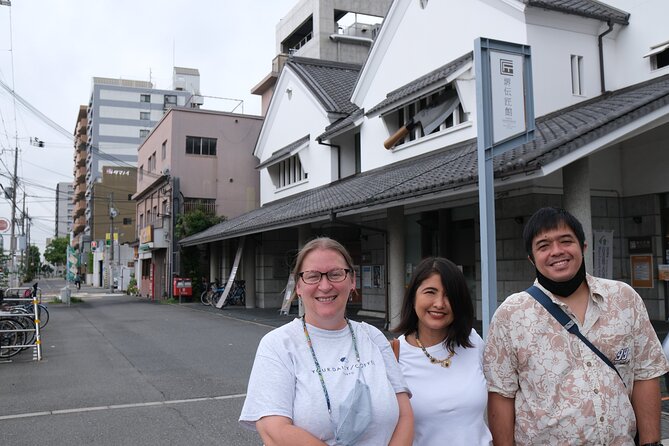
You meet at 3-chōme-22 Ebisujimachō, Sakai Ward, Osaka 590-0985. The tour starts at 9:00 am and ends back at the meeting point, so you are not stuck planning a separate return.
The stops are compact and purposeful:
- 八百源来弘堂本店 for a mochi taste and background
- The knife factory area, including the sharpening station and lesson
- Sakai Traditional Crafts Museum and Knife Shop for crafts context
With about 15 minutes at the first stop, about an hour at the knife factory area, and about 30 minutes at the museum, the total schedule adds up to a smooth half-day. You will likely spend your longest stretch at the sharpening and factory portion, where questions and hands-on practice naturally take time.
Stop 1: 八百源来弘堂本店 cinnamon mochi with a 400-year origin story
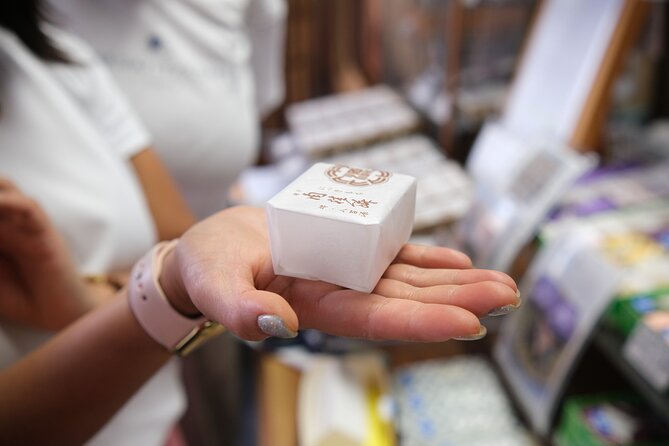
This is a great warm-up stop because it sets the tone: Sakai craft culture is not only about metal. You go to 八百源来弘堂本店 and learn about the origin story of traditional Japanese cinnamon mochi, described as having a history of 400 years.
You also receive one mochi as a present. If you love it, you can buy more. That sounds simple, but it matters for your overall experience because it gives you something to do early. You get grounded in local taste and tradition before moving to the factory.
Practical tip: if cinnamon sweets are not your thing, you can still appreciate the origin story as cultural context. But you should know that the included snack is built into your start, so it helps to have an open mind on dessert.
Stop 2: entering a working Sakai knife factory and sharpening station
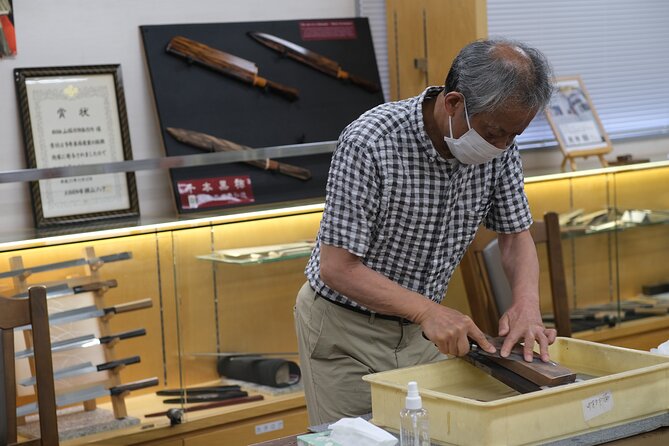
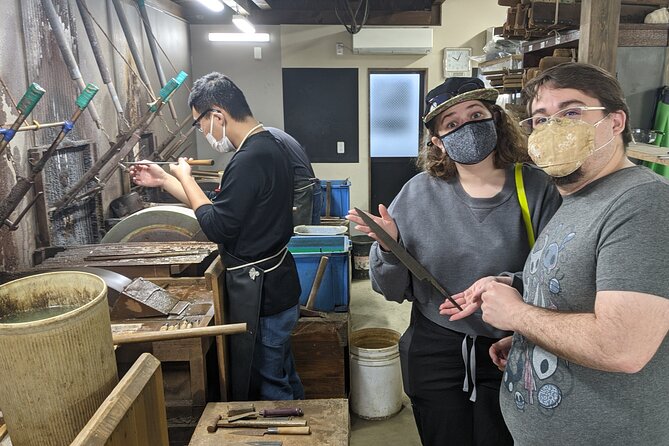
This is the main event. You visit a traditional Japanese knife factory with over 100 years of family history. The tour focuses on a sequence that makes sense: blades arrive, then professionals turn them into proper handmade cooking knives.
The highlight is getting to see the sharpening station area and watching professional work. This is not just a showroom display. You learn what the sharpening process is supposed to do, and then you practice the traditional technique yourself with a professional.
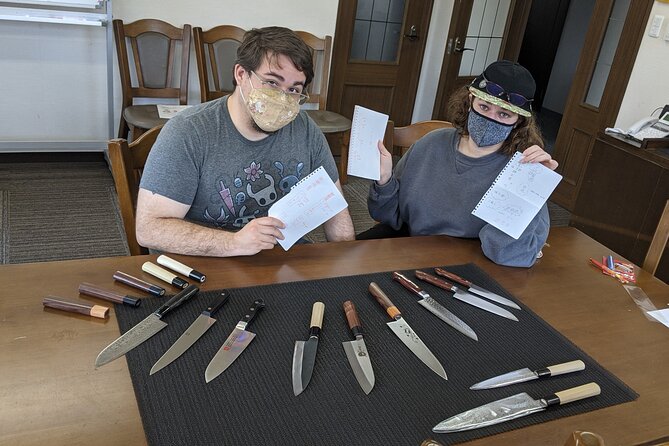
That hands-on part is the best reason to book. It turns knife buying from guesswork into something you can understand. You start noticing details like edge geometry and why sharpening is not one-size-fits-all. Even if you already own kitchen knives, you can walk away with a better way to judge what “sharp” really means.
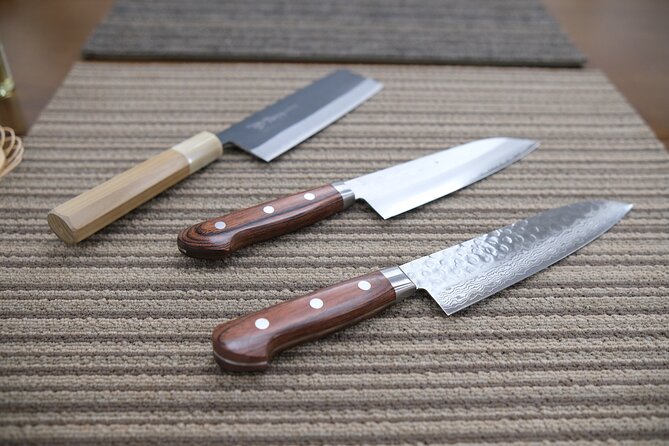
You may also get a chance to order a customizable knife, with the process set up so you can watch it being made in front of you. That is a big deal if you want a specific type of knife for your cooking, not just an off-the-shelf souvenir.
One more practical reality: if you are hoping to become an instant knife expert, this will not replace months of practice. But the sharpening lesson gives you a foundation you can build on later.
Not ready to leave Osaka yet? A few more ways to fill the day.
- Full Day Tour of Kyoto with Private Transportation
★ 5.0 · 130 reviews - Kyoto private tour (Shore excursion available from Osaka or Kobe port)
★ 5.0 · 39 reviews - Private arrival Transfer from Kansai airport to Osaka city
★ 4.5 · 36 reviews
The guide factor: how experiences can differ
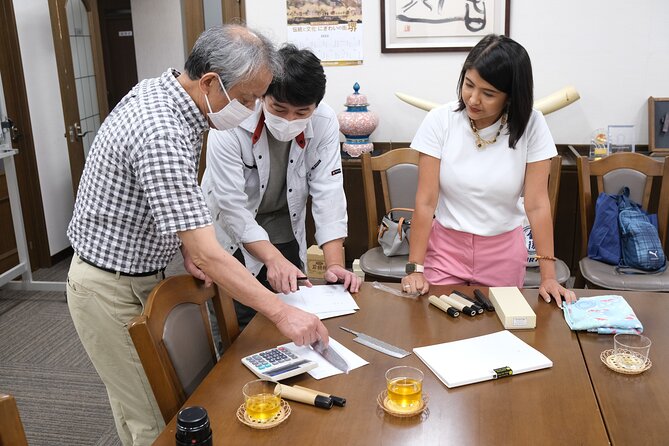
Most parts of this tour rely on the guide’s ability to connect craft, history, and technique into something you can follow. The good news is that many guides on this tour are praised for being friendly and for explaining what you are seeing in a way that makes it easier to care.
At the same time, one concern comes up in feedback. Some people felt the history framing could be off, with a more Euro-centric tone. Another person also mentioned that, for them, the guide did not seem as knowledgeable about knives as expected.
What does this mean for you? If you care deeply about knife details, come ready with questions. Ask about sharpening technique, maintenance, steel, or what to expect from a custom order. A good guide will handle follow-ups, and a less confident one will still be pushed by your curiosity.
Stop 3: Sakai Traditional Crafts Museum and the Knife Shop context
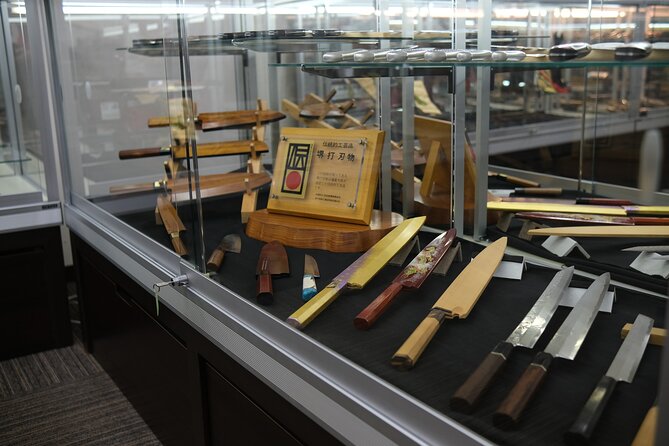
After the factory, you pivot into broader Sakai craft culture at the Sakai Traditional Crafts Museum and Knife Shop. This local museum is designed to show what makes Sakai special: handmade crafts, bicycle culture, and local products connected to the city.
One specific connection mentioned is Shimano. The brand is said to have been first created in Sakai, which is a neat reminder that Sakai creativity is not limited to blades. You leave the factory knowing how precision work happens in metal, and you then see how that precision mindset shows up in other local industries.
The museum stop is about 30 minutes, which is enough time to get a sense of themes without turning the day into a long museum marathon. You can treat it as context, then head back for whatever you want to do in the rest of Osaka.
Price, shopping, and the no-stress buying feeling
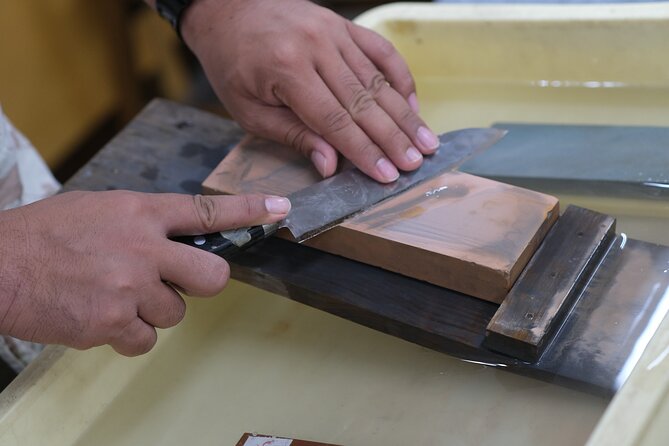
This tour includes opportunities that can turn into purchases, but it is not only a sales pitch. The “best advantage” reported by some people is access to purchase knives directly from the craftsman, plus the advantage of watching the craft happen.
Here is how to use that without overcommitting:
- If you are curious about buying, ask questions first, then decide.
- If you just want to learn, you can enjoy the craftsmanship and skip the purchase.
- If you want a custom knife, plan to treat it like a serious decision, not an impulse buy.
A big plus mentioned in feedback is the absence of a hard-sell feeling. You want craft confidence, not pressure. If you feel even slightly unsure, that is your cue to slow down, ask more, and wait until you understand what you are getting.
Also, the tour includes one mochi snack but does not include extra food. If you think you will want lunch right after, it helps to plan ahead with a restaurant near where you’ll be after the tour.
Group size, comfort, and who will enjoy this most
With a maximum of 10 travelers, you should expect a more personal rhythm. This matters because sharpening practice and factory questions benefit from space and attention.
Most travelers can participate, and it is structured as a short walk between focused stops. Still, treat it like a half-day of active standing and close-up viewing. Comfortable shoes are the smart choice.
Who it fits best:
- You want a real craft experience with hands-on sharpening
- You love practical souvenirs, like a knife you can use for years
- You enjoy history and local culture, but you prefer it tied to what you can actually see
- You cook, even casually, and want better tools
If you only want general sightseeing, you might find it too specialized. But if you want skill plus context, this tour has a clear purpose.
When schedules change: blacksmith-only dates and the 3rd Tuesday issue
One important planning detail: during a date window from March 6 to April 6, 2026, the format shifts. During that period, it says blacksmith only is available, and specifically on Tuesdays, Wednesdays, and Thursdays.
There is also a tricky operational note: every 3rd Tuesday of the month, the museum may have inventory and might close without notice. If that happens, your guide takes you directly to the craftsman location.
So if your travel dates fall into these patterns, do not assume every stop will look identical day-to-day. The upside is that the tour plan is designed with a backup so you still get access to the craft.
Language help: bilingual guide, plus a French request caveat
The tour includes a bilingual guide. If you request a French-speaking guide, the information provided says they cannot guarantee French for a shared tour.
If French is important to you, I suggest you book early and confirm preferences at purchase time. In any case, the guide quality seems to matter a lot, so clear communication will help you get the most out of the sharpening lesson.
Tips to get the most from your sharpening lesson and knife order
This is where you can make the tour pay off after you go home.
First, ask the kind of questions that let you translate craft into daily use. For example:
- What kind of sharpening routine is best for the knife type you are considering?
- What should you do at home to keep the edge performing?
- If you are ordering custom, what details matter most for your cooking style?
Second, treat the knife shop moment as a decision checkpoint. If you are buying, bring your intent. If you do not cook much, you might still want a small gift knife, but you should match the purchase to how you will actually use it.
Finally, remember that the museum portion is context. It helps you understand the city behind the craft, including local connections like Shimano. It is not just a stop between factory and return.
Should you book this Sakai Knife Factory and Craft Walking Tour?
I’d book it if you want a real Sakai knife factory experience with a sharpening station lesson and a morning that mixes craft, taste, and city context. The price feels fair for what is included, especially the hands-on component and the small-group setup.
I would think twice if you only want broad sightseeing, or if you are very sensitive to how history is framed and you want a specific cultural tone. Also, because the guide experience can influence how smoothly the knife details land, come with questions and be ready to steer the conversation.
If you want a half-day that turns curiosity into a usable skill, and maybe even a knife you will take seriously, this is an excellent bet.
FAQ
How long is the Sakai knife factory and craft walking tour?
It runs about 3 to 4 hours.
What is included in the $66.05 price?
The tour includes one sweet snack per guest, all fees and taxes, a bilingual guide, a visit to the knife factory, and a knife sharpening lesson.
Where does the tour start and when?
The meeting point is 3-chōme-22 Ebisujimachō, Sakai Ward, Sakai, Osaka 590-0985, Japan. The start time is 9:00 am, and it ends back at the meeting point.
Is there a mobile ticket?
Yes, the tour uses a mobile ticket.
How big is the group?
The tour has a maximum of 10 travelers.
Can I request a French-speaking guide?
French guide requests are available, but the information says they cannot guarantee French for a shared tour.
What if I book as a single traveler?
There is a 2 guests minimum rule. If the minimum is not met, the session might be cancelled and you will be notified, with options offered for rescheduling or a full refund.
Is there free cancellation?
Yes, you can cancel up to 24 hours in advance of the experience start time for a full refund.
Just added around Osaka





Walking Tours, compared.

Osaka Local Foodie Walking Tour in Dotonbori and Shinsekai
Read our review →
Deep Backstreets Walking Tour with Dinner Option
Read our review →
Ultimate Osaka Walking Tour: Castle, Dotonbori & Hidden Gems
Read our review →
Main Sights and Hidden Spots Guided Walking Tour
Read our review →
Private Osaka Walking Tour: Highlights & Hidden Gems
Read our review →
Osaka Castle Walking Tour and Castle Tower Admission
Read our review →
Kuromon Market Food Walking Tour in Osaka (6 stops, 6 tastes)
Read our review →
Five Must-See Highlights Walking Tour & Ramen Lunch
Read our review →This tour also fits