
Reviewed · WALKING TOURS
The Dark Side of Osaka Walking Tour
Osaka at night tells truer stories. This 5:30 pm walk through Shinsekai and the Tobita Shinchi area focuses on the city’s darker, more human side, with context you will not get from a quick photo stop. I like how the route is paced for wandering, not rushing, and I like that the tour turns streets into real social history and everyday details. One drawback to consider: the sights and themes are gritty, and this is not a polished, postcard-only kind of evening.
I also appreciate the practical setup. You pay $25 per person, it runs about 2 hours, admission at the stops is ticket-free, and you get a mobile ticket. Since snacks are not included, I suggest planning for water and a small bite if you get hungry.
The best part for me is the way guides steer the experience. Names like Jay, Matt, and RICO come up often for explaining what you are looking at, answering questions, and keeping the pace right. Still, the tour depends on good weather, so check the forecast and dress for an evening walk.
In This Review
- Key points before you book
- Entering Shinsekai from MEGA Don Quijote, the retro night vibe
- Nishinari Dobutsuen-mae Street, working-class Osaka in plain view
- Jyanjyan Yokocho and Tsutenkaku Hondori, eating and shopping alleys near the tower
- Tobita Shinchi red-light district, history, architecture, and rules
- The guide role: Jay, Matt, and RICO set the tone
- Price and value: $25 for context, pacing, and a small group
- What the 2-hour route feels like in real life
- Practical tips for an Osaka night walk that stays enjoyable
- Who should book this Dark Side Osaka tour
- Should you book The Dark Side of Osaka Walking Tour?
- FAQ
- Where does the tour start?
- What time does the Dark Side of Osaka Walking Tour begin?
- How long is the tour?
- How much does it cost?
- Is the tour ticket mobile?
- Are there admission fees for the stops?
- What is not included?
- Where does the tour end?
- Is the tour weather dependent and can I participate if I have a service animal?
Key points before you book
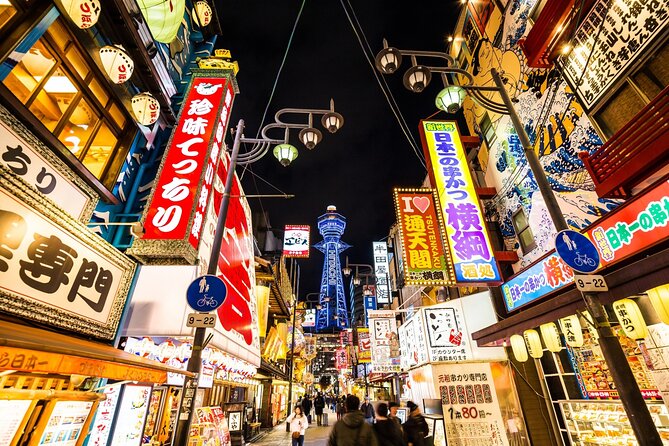
- Small group size (max 15) keeps the conversation going and helps the guide manage the darker streets responsibly.
- Five short neighborhood stops add up to about 2 hours, with time at each area to actually look and process.
- Social history focus goes beyond sightseeing, especially around Nishinari and the red-light district.
- Mobile ticket means less fuss once you arrive, and you can keep everything on your phone.
- No snacks provided, so bring water and plan a light snack if you need it.
Entering Shinsekai from MEGA Don Quijote, the retro night vibe
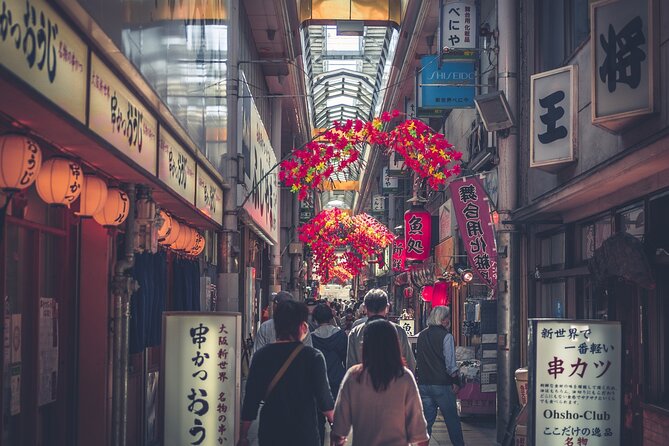
The tour starts at MEGA Don Quijote Shinsekai, in the Naniwa Ward area, and it kicks off at 5:30 pm. That timing matters. By evening, Shinsekai’s retro feel is in full swing, and the streets feel more like they do for locals than for day-tour crowds.
This first stretch sets your expectations. Shinsekai, meaning New World, was originally built in 1912, and the area carries that older Osaka design language plus a modern layer of day-to-day life. You get to see how nostalgia can sit right next to everyday realities, with Tsutenkaku Tower acting like a visual anchor for the district.
If you want a tour that stays safely in the shopping and tower-view zone, this opening might still surprise you, because the guide’s framing quickly widens into the social side of Osaka. Still, it is a smart way to start, since you ease in with an area that looks fun on the surface.
Other ways to spend a day in Osaka
- Osaka Local Foodie Walking Tour in Dotonbori and Shinsekai★ 5.0 · 985 reviews
- Osaka: Deep Backstreets Walking Tour with Dinner Option★ 4.9 · 902 reviews
- Ultimate Osaka Walking Tour: Castle, Dotonbori & Hidden Gems★ 5.0 · 862 reviews
- Osaka: Main Sights and Hidden Spots Guided Walking Tour★ 4.9 · 702 reviews
- Private Osaka Walking Tour: Highlights & Hidden Gems★ 5.0 · 569 reviews
Nishinari Dobutsuen-mae Street, working-class Osaka in plain view
Next comes Nishinari, specifically the Nishinari Dobutsuen-mae Deep Osaka Street stop. Nishinari is known for a raw, real-world feel, and the tour context explains why. This was once a hub for day laborers and the working-class community, so the district’s story is tied to labor, hardship, and how cities handle people who do not fit the comfortable postcard version.
What I like about including this neighborhood is that it changes the conversation from “What is this street?” to “Why does this place look like it does?” You can read the city in layers here: aging storefronts, narrow approaches, and the sense that life continues around you.
A consideration: if your ideal Osaka evening is all neon and cute photos, this part might feel less exciting. It can also feel more intense because the tour is trying to put you close to the real texture of the area, not filter it into something pretty.
Jyanjyan Yokocho and Tsutenkaku Hondori, eating and shopping alleys near the tower
After Nishinari, you move into Jan Jan Yokocho, also called the Nanyodori shopping district. This is in the Shinsekai zone near Tsutenkaku Tower, and it is the kind of narrow lane that makes you slow down. It is known for a nostalgic, retro atmosphere, with a street-and-alley layout that feels like an Osaka nighttime snack route.
Then the tour ends at Tsutenkaku Hondori Shopping Street, another lively arcade at the foot of the tower. This is the moment where the evening regains a more playful rhythm. You get an eclectic mix of shops, and the arcade layout is handy because it gives you shelter if the weather turns.
Why I think these stops are valuable: they connect the “darker context” parts to everyday behavior. Even in districts with tough histories, people still shop, eat, meet friends, and browse. The tour makes that connection without skipping the harder elements.
If you are hoping for a food-focused tasting, note that snacks are not included. You might still find places to buy something nearby, but you will need to handle it yourself.
Tobita Shinchi red-light district, history, architecture, and rules
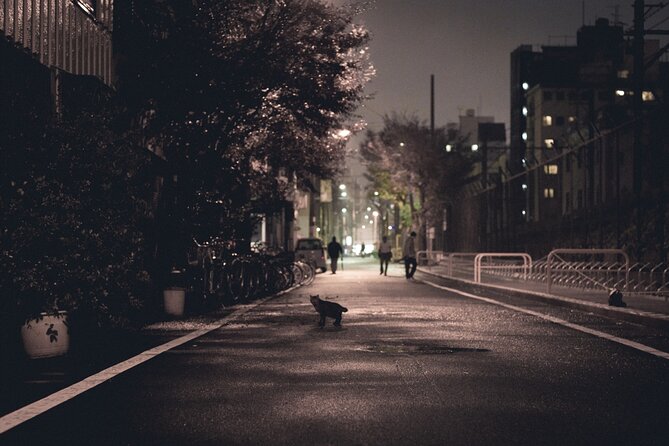
Tobita Shinchi is the centerpiece if you came for the dark side. This is described as Osaka’s most famous and largest red-light district, with history dating back over a century. The tour framing also points to long-running activity in this area, with references to centuries of red-light history in the wider context.
This stop is not just a walk past buildings. You are there for the story behind the streets, including the unique architectural style and the sense of a tightly regulated environment. The goal is to help you understand how society, law, and economics shape what you see after dark.
This is also the part of the tour where you should check your personal comfort. You do not need to be shocked easily, but you should be prepared for adult-themed area context. If you prefer light sightseeing, skip this tour. If you are curious about how cities function beneath the surface, this is one of the few structured ways to see it responsibly.
One practical plus: the way the tour breaks time into short segments helps you avoid getting overwhelmed. Around 20 minutes here can be a lot, but it is manageable, especially with a guide ready to explain what you are noticing.
The guide role: Jay, Matt, and RICO set the tone
A walking tour like this lives or dies on the guide. The strongest praise centers on how guides handle social history, answer questions clearly, and keep the pacing comfortable.
Guides named Jay and Matt are repeatedly praised for thoughtful, local-context explanations, especially around how these districts developed and how people live day to day. Another name that comes up is RICO, with praise for being accommodating and showing standout areas plus solid recommendations.
Here is why that matters for you: when you are walking through neighborhoods that outsiders often misread, you need interpretation fast. A good guide helps you look instead of stare, and understand instead of guess. You will also get tips along the way for how to move through and what to pay attention to after the tour ends.
Not ready to leave Osaka yet? A few more ways to fill the day.
- Osaka Go Karting Tour with Funny Costume
★ 5.0 · 2,658 reviews - Osaka Castle: Museum and Tower Entry Ticket
★ 4.5 · 2,380 reviews - Osaka: Shinsekai Food Tour with 13-15 Dishes at 5 Eateries
★ 4.8 · 2,204 reviews
Price and value: $25 for context, pacing, and a small group
At $25 per person for about 2 hours, this tour is not trying to be a bargain bus route. It is charging for something harder to replicate alone: guided street-level context, a focused itinerary, and a small group size capped at 15.
It is also budget-friendly in smart ways. All fees and taxes are included, and the stops list admission as free. So your money mainly supports the guide time and the structure. You do not have to add tickets into your mental math.
Where the price can feel less worth it is simple. If you expected major sights like big temples, museums, or set-piece attractions, you will not get that. This is a city-walk tour, and you trade monument viewing for learning how Osaka works at ground level.
Also keep in mind the “Not worth it” concern that shows up: the tour can feel like wandering in gritty urban space, especially in the earlier portion. If your idea of entertainment is constant big moments, you might find yourself waiting for the next highlight.
What the 2-hour route feels like in real life
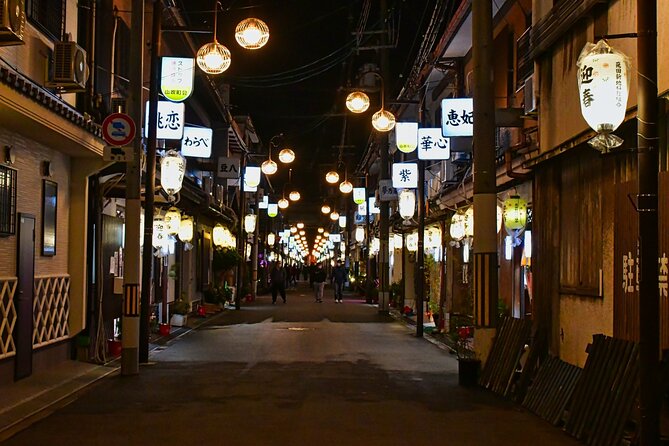
The tour totals about 2 hours and uses short segments to keep you moving.
- Stop 1 (Shinsekai, about 30 minutes): intro neighborhood, retro vibe, and historical framing.
- Stop 2 (Nishinari Dobutsuen-mae, about 30 minutes): working-class context, raw street feel, and why the area looks the way it does.
- Stop 3 (Jan Jan Yokocho, about 20 minutes): retro alley shopping and dining street energy.
- Stop 4 (Tobita Shinchi, about 20 minutes): red-light district context, architecture, and regulated environment.
- Stop 5 (Tsutenkaku Hondori, about 20 minutes): end with a lively arcade near Tsutenkaku Tower.
That sequence is intentional. You start with recognizable night energy, shift into a more challenging district, add a nostalgic alley break, then bring you to the adult-themed area, and finally land you back in a shopping arc. It can feel like the tour is teaching you a full circuit of Osaka life rather than dropping you into one point of interest.
Practical tips for an Osaka night walk that stays enjoyable
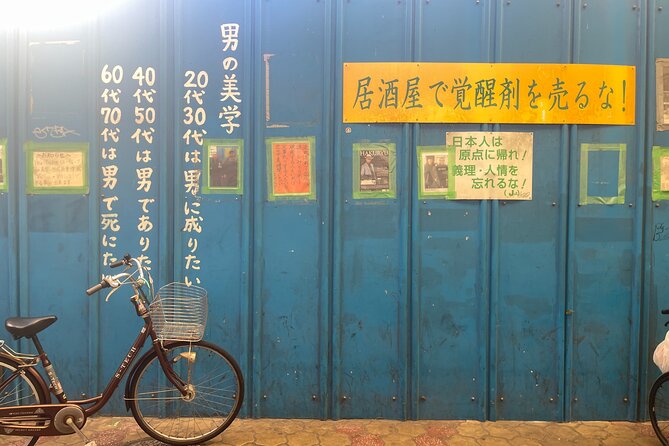
This is a night walk that covers a lot of street. So the basics matter more than usual.
Wear shoes you trust. Expect real walking time, and the tour duration is listed as about 2 hours.
Bring water. Snacks are not included, and you might want something small during or after, especially since the tour ends around the Tsutenkaku area.
Use the mobile ticket. The tour includes a mobile ticket, which should simplify entry and reduce fumbling at a crowded meeting spot.
Plan for weather. The experience requires good weather, and start times are evening, so wind or rain can change how comfortable the walk feels.
Keep group size in mind. With a maximum of 15, the pace can be flexible, but you still want to stay close and follow the guide when moving through tight streets.
Who should book this Dark Side Osaka tour
This tour is a strong match if you want to understand Osaka as a real city, not just a list of landmarks. I especially think it suits you if you enjoy social history, street-level stories, and you like guided walks because you learn faster with someone steering your attention.
It also works well for couples and solo travelers who want structure. The small group size makes it easier to ask questions without feeling like you are interrupting.
Skip it if you want a light, family-friendly evening focused only on cute sights and snacks. Tobita Shinchi brings adult-themed context, and Nishinari can feel intense if you are not prepared for gritty urban reality.
It may also be a mood mismatch if you dislike “wandering.” This is not a gallery tour where every stop has a single photo-worthy object. It is about the experience of walking, reading the streets, and processing the neighborhood context.
Should you book The Dark Side of Osaka Walking Tour?
Book it if you want a guided night walk that explains why Osaka’s darker districts look and feel the way they do, and if you are comfortable with red-light district context.
Skip it if your travel style is mostly polished attractions, minimal walking, and zero adult themes. In that case, you will likely leave wishing you had chosen a different kind of Osaka evening.
If you do book, arrive on time, wear comfy shoes, and treat it like a conversation with the city. The best moments here happen when you stop trying to “collect sights” and start paying attention to the human stories behind the streets.
FAQ
Where does the tour start?
The tour starts at MEGA Don Quijote Shinsekai, 3-chōme-4-36 Ebisuhigashi, Naniwa Ward, Osaka.
What time does the Dark Side of Osaka Walking Tour begin?
The start time is 5:30 pm.
How long is the tour?
The tour lasts about 2 hours.
How much does it cost?
The price is $25.00 per person.
Is the tour ticket mobile?
Yes, it uses a mobile ticket.
Are there admission fees for the stops?
Admission is listed as free for the stops included on the itinerary.
What is not included?
Snacks are not included.
Where does the tour end?
The tour ends at Tsutenkaku, 1-chōme-18-6 Ebisuhigashi, Naniwa Ward, Osaka.
Is the tour weather dependent and can I participate if I have a service animal?
It requires good weather. Service animals are allowed, and most travelers can participate. The tour is also near public transportation.
Just added around Osaka

Walking Tours, compared.
Osaka Local Foodie Walking Tour in Dotonbori and Shinsekai
Read our review →
Deep Backstreets Walking Tour with Dinner Option
Read our review →
Ultimate Osaka Walking Tour: Castle, Dotonbori & Hidden Gems
Read our review →
Main Sights and Hidden Spots Guided Walking Tour
Read our review →
Private Osaka Walking Tour: Highlights & Hidden Gems
Read our review →
Osaka Castle Walking Tour and Castle Tower Admission
Read our review →
Kuromon Market Food Walking Tour in Osaka (6 stops, 6 tastes)
Read our review →
Five Must-See Highlights Walking Tour & Ramen Lunch
Read our review →This tour also fits