Reviewed · FOOD
Deep Dive: Osaka Food Markets from Local to Luxurious!
Osaka markets teach you what to eat, quickly. This 4-hour loop moves from upscale department store food space to street-level shopping and tasting at places like Kuromon, and it throws in Korean-influenced Tsuruhashi so you get a wider Osaka than most first-timers.
I also like the way the guide keeps the pace smart and the explanations useful, especially if your guide is someone like Ferdinand, who answers questions and adds his own perspective living in Japan as a French speaker. The only real catch is cost creep: samples and snacks are not included, so you will want to plan extra money for whatever you decide to taste.
In This Review
- Key highlights
- Why Osaka markets feel different from Tokyo and Kyoto
- Meeting at Tenma Station, then walking like you mean it
- TUMI Takashimaya Osaka Store: a polished start with real-world context
- Pulala Tenma and Tenma Ichiba: market life you can actually observe
- Tenjinbashisuji Shopping Street: how to use a long shotengai day
- Tsuruhashi: Korean-influenced Osaka that many first-timers skip
- Kuromon Ichiba Market: your best concentrated hit of meats, fish, and produce
- Sennichimae Doguyasuji Shotengai: from food ingredients to kitchen essentials
- Namba: tying your food day to Osaka’s living city vibe
- Price and value: $59 for a guided Osaka food route, not an all-you-can-eat deal
- How to budget smart when snacks are on you
- Languages, group size, and why the guide style matters
- Who this Osaka markets tour fits best
- Should you book this tour?
- FAQ
- How long is the Osaka food markets tour?
- Where do I meet the guide?
- What group size is this tour?
- What languages are available for the live guide?
- Is transportation included in the price?
- Are food samples or snacks included?
- What is the cancellation policy?
Key highlights
- A tight 4-hour route that hits multiple food zones without you feeling lost
- A small group (max 8) that makes it easier to ask questions while you walk
- Ferdinand-style guiding, with customs and everyday market know-how, plus room for your curiosities
- Kuromon Ichiba Market for meat, fish, and produce in a concentrated shopping-meets-eating setting
- Tsuruhashi for a Korean-influenced side of Osaka that many visitors skip
- Namba and the surrounding streets to connect what you ate with the city’s food energy
Why Osaka markets feel different from Tokyo and Kyoto
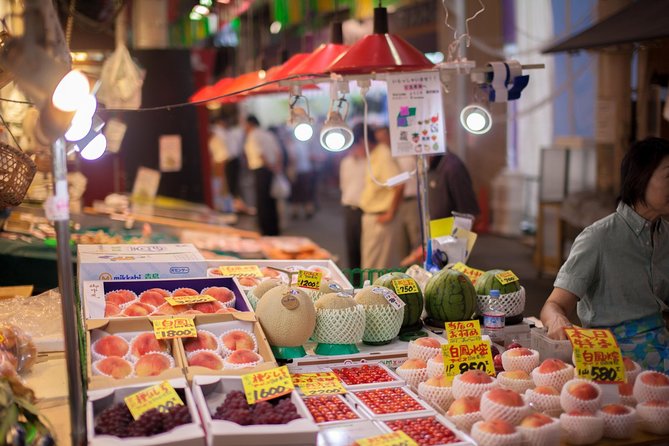
Osaka is the city where food talk matters more than photo talk. If Tokyo feels like big systems and Kyoto feels like refined rituals, Osaka is about getting things done, eating well, and moving on to the next stall. This tour leans into that practical attitude.
You get a mix of food-world styles too. One moment you are in a more upscale department-store environment, the next you are in market buildings and shopping streets where locals do real errands. That contrast is a big part of the value, because you learn the logic behind what you see, not just the names of places.
Other ways to spend a day in Osaka
- Osaka: Shinsekai Food Tour with 13-15 Dishes at 5 Eateries★ 4.8 · 2,204 reviews
- Osaka Food Tour: 13 Dishes at 5 Local Eateries★ 5.0 · 2,149 reviews
- Hungry Osaka Street Food Tour:15 Tastings & 3 Drinks with a Local★ 5.0 · 1,727 reviews
- Osaka Local Foodie Walking Tour in Dotonbori and Shinsekai★ 5.0 · 985 reviews
- Hungry Osaka Street Food Tour: 15 Dishes & 3 Drinks★ 4.9 · 694 reviews
Meeting at Tenma Station, then walking like you mean it
You start at McDonald’s directly in front of Tenma Station. That’s handy because it is easy to find, and it means you are not spending your first minutes hunting for a meeting point in a maze of exits.
From there, the tour is built around short guided stops and walking blocks, with time at each location around 25 minutes. That rhythm matters. You do not have to endure one long lecture or one endless marketplace, so the experience stays focused on food you can actually notice.
Also, plan your footwear. You will be walking, and comfortable shoes are not optional for this one.
TUMI Takashimaya Osaka Store: a polished start with real-world context
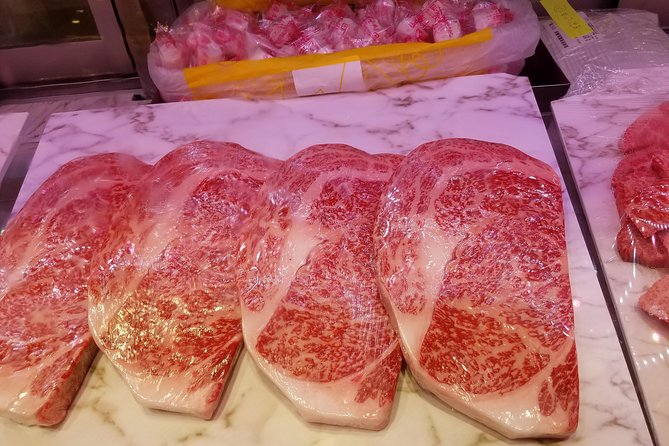
The first timed stop is the TUMI Takashimaya Osaka Store, a more upscale department store setting. Even if you are not shopping for luggage, this kind of starting point helps you understand how Japanese food spaces can exist in layers. High-end retail and everyday eating can sit in the same city blocks, and the tour uses that to teach you how to read the area.
What I like about this start is the psychological reset. You go in with the mindset of food curiosity, not just looking for bargains, and then you are ready for the more market-centric stops without feeling like you switched tours mid-day.
Drawback to consider here: department store environments can feel quieter and more controlled than street markets. If you are expecting immediate “smell it, buy it” energy right away, the first stop may feel more like orientation than a tasting moment. Still, it sets you up to shop and eat smarter later.
Pulala Tenma and Tenma Ichiba: market life you can actually observe
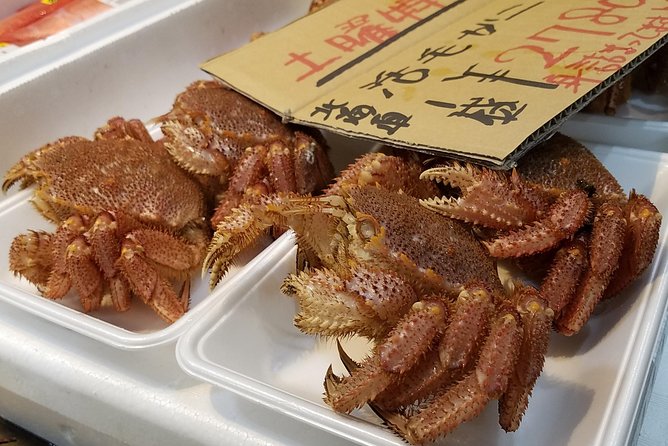
Next you head to Pulala Tenma, also known as the Tenma Ichiba Market Building. This is where you start seeing the day-to-day rhythm of a working market area, not just a tourist version of one. You get guided sightseeing and a walk, and that guide time is useful because markets can be confusing if you do not know what to look for.
Look for how the building shapes what you find. Covered market spaces often make it easier to compare stalls and spot ingredients you might not notice outside. You also tend to get a wider “shopping mix,” including meats and fish along with produce and other staples that locals actually plan around.
The practical win here: you learn what is normal to buy on a short trip, so when you hit bigger-name markets, you recognize value patterns faster.
Tenjinbashisuji Shopping Street: how to use a long shotengai day
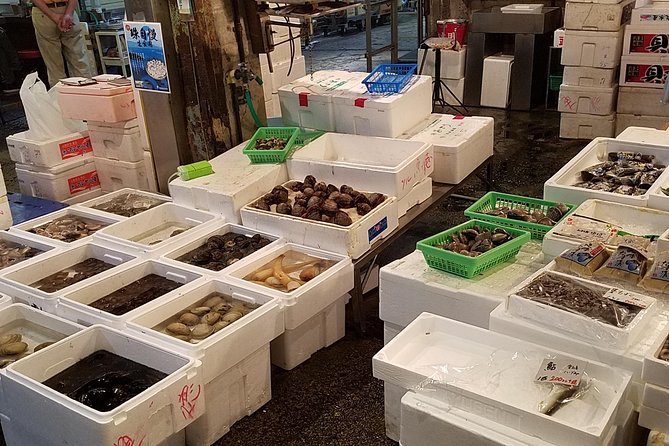
Tenjinbashisuji Shopping Street is a classic street-shopping experience, and the tour uses it as a bridge between market buildings and food-focused destinations like Kuromon. This is a good segment for pacing. You can look around, take in the food clues, and think about what you want to prioritize when you get to the markets where choices multiply.
Here is the strategy I recommend: do not try to “win” this street by sampling everything. Instead, watch what stalls are emphasizing, notice where lineups form, and use your guide’s answers to sort the helpful options from the confusing ones. Then, when Kuromon arrives, you are not starting from zero.
Also, remember that any snacks you want along the way are on you. The street portion is great for browsing, but your snack budget matters more than you might think.
Not ready to leave Osaka yet? A few more ways to fill the day.
- Osaka Go Karting Tour with Funny Costume
★ 5.0 · 2,658 reviews - Osaka Castle: Museum and Tower Entry Ticket
★ 4.5 · 2,380 reviews - Osaka: Tea Ceremony Experience
★ 4.9 · 1,426 reviews
Tsuruhashi: Korean-influenced Osaka that many first-timers skip
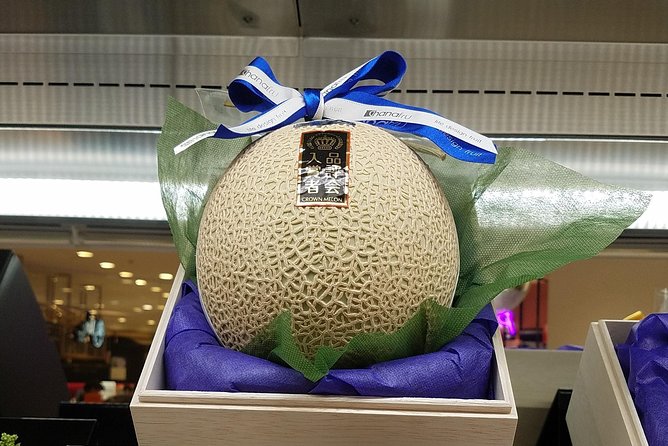
Tsuruhashi is the neighborhood stop that adds a different flavor to Osaka’s food map. The tour frames it as Japanese-infused Korea Town, and that matters because it changes the kinds of stalls and dishes you will see. Even if you already like Korean food, you still get to experience it through the Osaka market lens, where ingredients and street food culture mix.
I like this stop because it expands your idea of what a “food tour” can mean. It is not only about local Japanese specialties. It is also about how Osaka absorbs influences and still keeps the market style practical and ingredient-driven.
A consideration: if you are mainly chasing seafood and traditional Japanese meat-and-produce market culture, Tsuruhashi may feel slightly different in focus. That is not a flaw, just a heads-up. It is one of the tour’s strengths because it widens the picture.
Kuromon Ichiba Market: your best concentrated hit of meats, fish, and produce
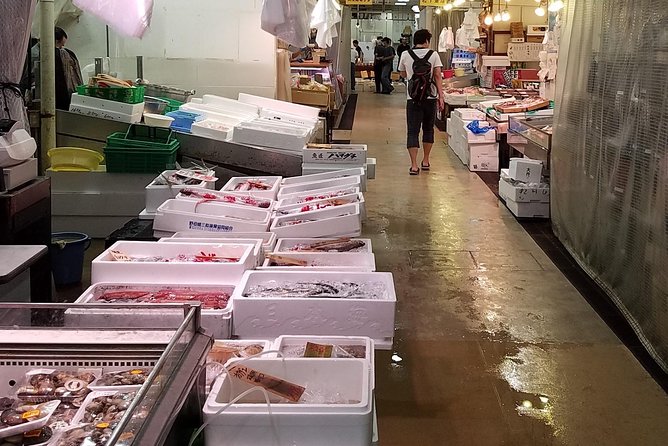
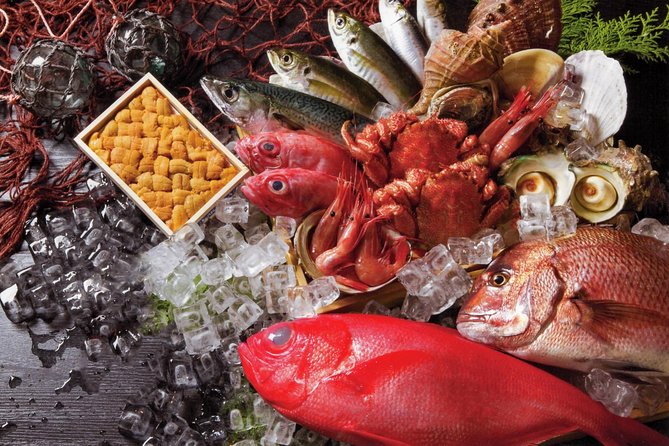
Kuromon Ichiba Market is the big name for a reason, and this tour puts it at the heart of the route. You are guided through the market area, and the tour’s theme lands hard here: meats, fish, and produce with plenty of raw and cooked food options.
Why this stop is so valuable is concentration. A major market like this gives you so many visual cues that your guide can help you interpret them quickly. You get to understand what looks fresh, what looks ready to eat, and how vendors present items differently depending on whether they are for cooking later or eating right now.
What to do in your head while you walk: use the guide’s explanations to build a short list of “I might want this” categories. Since samples and refreshments are not included, you will get the best results by deciding early what you want to purchase rather than waiting until the end when you feel overwhelmed.
Also, this is not a place where you can wander randomly for an hour and “discover” everything. Better to aim for a few confident choices.
Sennichimae Doguyasuji Shotengai: from food ingredients to kitchen essentials
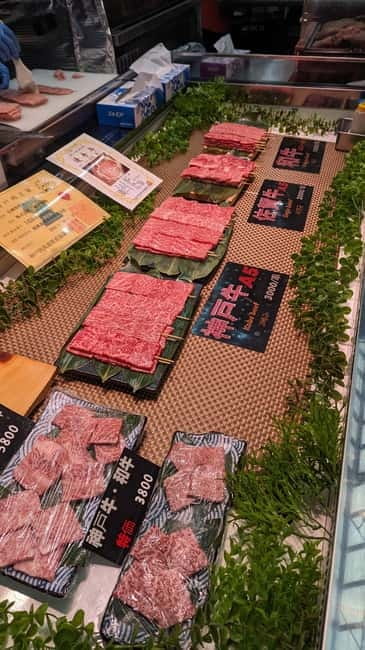
After Kuromon, the tour moves to Sennichimae Doguyasuji Shotengai, a historic shopping street associated with goods for day-to-day cooking and food preparation. The tour frames it as part of that locals’ market world, where you can find staples and practical items tied to cooking.
This stop is a smart addition because it helps you connect what you eat with the tools and household needs that support cooking at home. Even if you are not buying anything, you start noticing how Japanese cooking culture is built around efficiency and preparation.
Potential drawback: if you are only interested in eating right then and there, this segment can feel more “shopping street” than “food sampling.” I still think it is worth it because it deepens your understanding, but keep your expectations aligned with what the street represents.
Namba: tying your food day to Osaka’s living city vibe
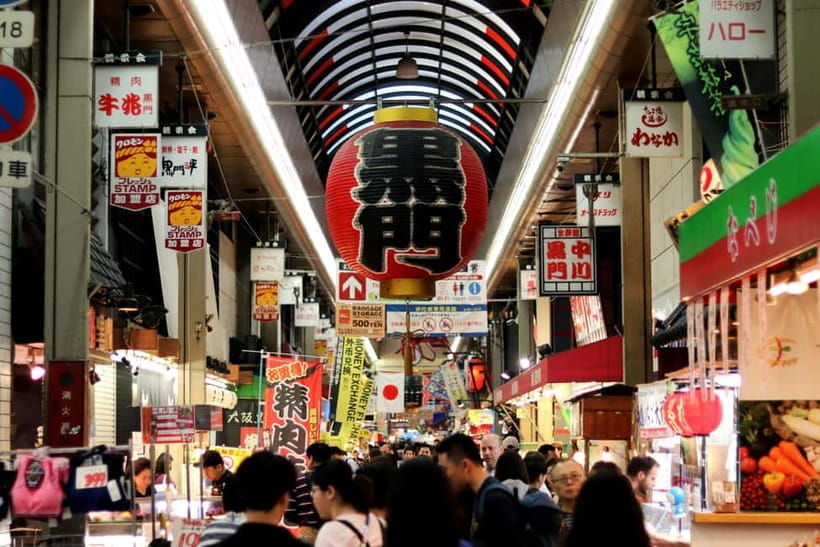
The route ends with Namba. This part of the experience is about context. After spending hours in market buildings and shopping streets, you get to connect your food finds with the wider city atmosphere around one of Osaka’s well-known entertainment and dining areas.
Even without a formal food tastings focus at the end, it helps you reset your bearings for what comes next. You leave with a stronger sense of how to navigate the city by food districts, not just by landmarks.
If you plan your evening, this is the moment to do it. You have tasted enough to start craving specific categories, and you can use Namba as your launchpad for your own follow-up meal.
Price and value: $59 for a guided Osaka food route, not an all-you-can-eat deal
At $59 per person for a 4-hour small-group tour, you are paying for guided navigation, focused storytelling, and access to multiple food areas in one block of time. You are not paying for unlimited tasting.
That is key for value. The price makes sense if you want a structured introduction to Osaka’s food world, and if you enjoy learning why stalls and neighborhoods look the way they do. You also get the benefit of a small group capped at 8, which helps when you have questions about what you are seeing.
But you should budget separately for food. Samples, food items, refreshments, and souvenirs are not included, and all snacks during the tour are your responsibility to purchase. In plain terms: this is a guided food tour where you choose what to buy, not a fixed menu experience.
On top of that, transportation while on tour is an extra cost, listed as 330 yen per adult. So the true out-the-door total will depend on how much you eat and what you decide to purchase.
How to budget smart when snacks are on you
Since snack purchases are your call, I suggest a simple plan before you meet. Decide your top categories in advance, like seafood, grilled items, meat-focused plates, or produce-heavy choices. That keeps Kuromon from becoming a decision fatigue test.
Also, think about how hungry you will be by the time you reach the market highlight. If you snack too early on the shopping streets, you may end up rushing your Kuromon purchases. This is especially relevant because the tour uses short stops throughout the day, so you may have fewer opportunities to correct your choices later.
One more practical tip: go in with comfort and curiosity. Markets are loud with options. If you treat it like a shopping street and slow down for your guided moments, you will usually make better picks.
Languages, group size, and why the guide style matters
You can choose English, Spanish, or French for a live guide. The tour also emphasizes that you will have a native (or close to) speaker of your chosen language, which is a big deal in food markets where small naming differences can matter.
The small group limit of 8 participants also changes the feel. You get more time for questions, and you are less likely to feel like you are getting rushed. That matters because the tour is not only pointing out where to go, it is explaining what you are seeing, including customs and a bit of personal perspective from the guide.
In particular, Ferdinand’s approach stands out in the feedback: he shares facets of both Japanese and Korean market life, and he connects it with everyday customs and what life in Japan looks like from a French perspective. If you want more than a checklist, that kind of guiding style is the reason this tour earns top marks.
Who this Osaka markets tour fits best
This tour is a great fit if you want a guided orientation to Osaka food markets without spending the whole day figuring things out alone. It works especially well for people who enjoy markets but want help making sense of what to buy and where to focus.
It is also a good pick if you are the type who asks questions while you walk. The small group and friendly guide approach make it easier to get clear answers instead of just snapping photos and moving on.
If you only want food in the strict sense, with minimal browsing, you might find the shopping-street components more “look and learn” than “eat right now.” Still, the market highlight stops keep the experience anchored to eating.
Should you book this tour?
Book it if you want an efficient 4-hour walk across multiple Osaka food zones, with a guide who explains customs and helps you pick what to try. At $59, you are paying for smart structure and a small group, and you can turn it into great value by keeping a focused snack plan.
Skip or adjust your expectations if you want an all-inclusive tasting menu. Snacks and samples are on you, and transportation adds a small extra cost. If you do not want to think about budgeting for food purchases, look for options that bundle tastings.
If you like markets, enjoy variety, and want to see both mainstream and Korean-influenced sides of Osaka, this one is an easy yes.
FAQ
How long is the Osaka food markets tour?
It lasts 4 hours.
Where do I meet the guide?
You meet at McDonald’s directly in front of Tenma Station.
What group size is this tour?
It is a small group limited to 8 participants.
What languages are available for the live guide?
English, Spanish, and French are offered.
Is transportation included in the price?
No. Transportation while on tour is 330 yen per adult.
Are food samples or snacks included?
No. Samples, food items, refreshments, and souvenirs are not included, and snacks during the tour are the guest’s responsibility to purchase.
What is the cancellation policy?
Free cancellation is available up to 24 hours in advance for a full refund.
Just added around Osaka


Food, compared.
Shinsekai Food Tour with 13-15 Dishes at 5 Eateries
Read our review →
Osaka Food Tour: 13 Dishes at 5 Local Eateries
Read our review →
Hungry Osaka Street Food Tour:15 Tastings & 3 Drinks with a Local
Read our review →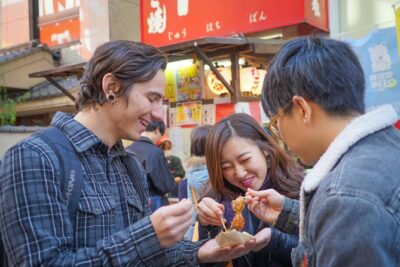
Osaka Local Foodie Walking Tour in Dotonbori and Shinsekai
Read our review →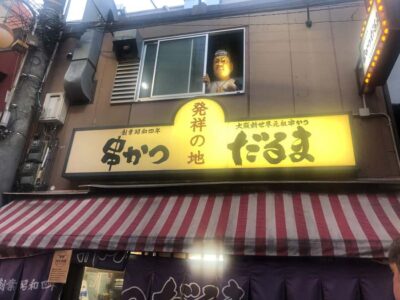
Hungry Osaka Street Food Tour: 15 Dishes & 3 Drinks
Read our review →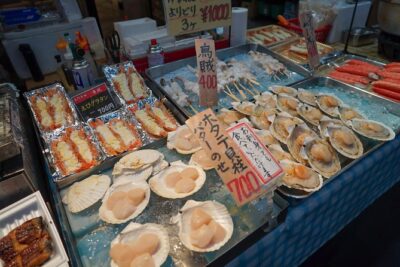
Kuromon Market Food Walking Tour in Osaka (6 stops, 6 tastes)
Read our review →
Guided Food Tour with 12 Dishes at 4 Local Eateries
Read our review →