
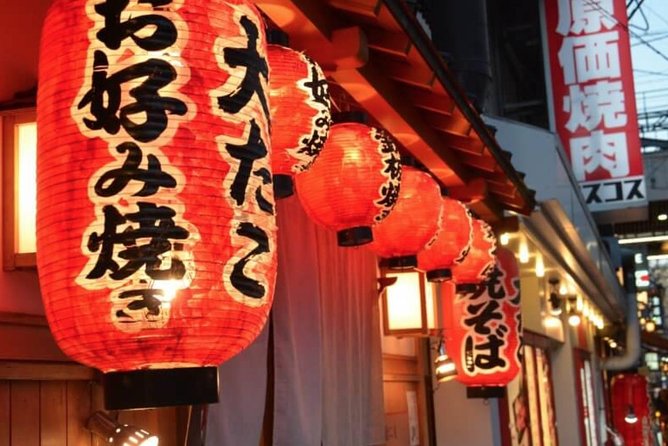
Reviewed · LOCAL FOOD TOURS
Absolute Osaka Food Tour
Neon snacks, minus the tourist lines. This Absolute Osaka Food Tour is built for street-food lovers, with four food stops plus dessert and one included drink, and it gives you more than food through alley detours and local stories. One heads-up: it is not recommended for gluten-free eaters, and what you taste can change with season and availability.
I like how the route starts in the big, flashy Dotonbori area, then teaches you where to look when the crowds and queue pressure start pulling you the wrong way. You also get that extra culture moment, a shrine tucked away from the main streets, which helps the whole thing feel like more than just a food parade. If you only want to snack and never walk, this may feel like a lot, but it is still manageable with moderate physical fitness.
In This Review
- Key points before you go
- Dotonbori at 5:00 pm, when Osaka starts feeling like Osaka
- Price and value at $231 per person
- Your guide experience, and why names like Asli and Melissa matter
- Stop 1, Dotonbori Glico Sign, and the Fortunato Catalon story
- Stop 2, Dotonbori District, how to avoid the neon trap
- Minami (Namba) and street-food choices that make sense at snack speed
- Hozenji Yokocho, the alley where the noise softens
- Sennichimae Doguyasuji Shotengai, and why the guide helps you order
- Kuromon Market, tasting in the food hub style
- Misono Building stop, and the fun of one more Osaka setting
- What you actually eat: takoyaki, kushikatsu, dessert, and one drink
- Vegetarian and pescetarian planning, without turning your tour into a scavenger hunt
- Pace, walking, and who this tour suits best
- Weather, changes, and the reality of street-food plans
- Where it ends, and how to keep the night going
- Should you book this Osaka street-food tour?
Key points before you go
- Glico Sign backstory: you’ll hear how Glico man was tied to runner Fortunato Catalon and inspiration for a company and a nation
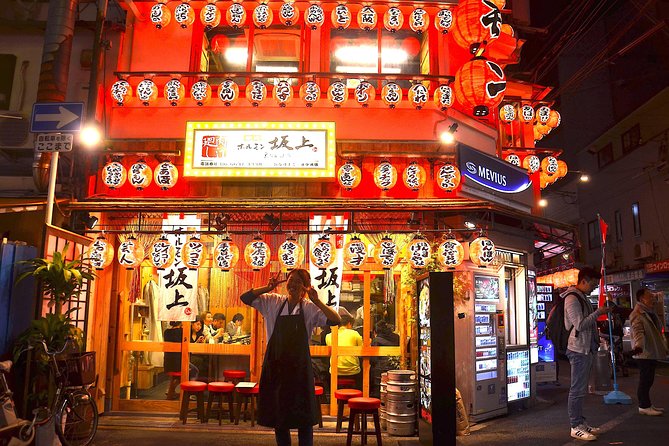
- Smart route planning: Dotonbori’s lights are a trap for some choices, and the tour steers you toward better bets
- Alley time: Hozenji Yokocho is where the vibe cools down into narrow lanes instead of the main drag
- Market stop energy: Kuromon Market gives you that Osaka food “hub” feel, with guidance so you don’t guess wrong
- Small group size: maximum 10 travelers means quicker decisions, easier questions, and less waiting around
- Flexible menu: food changes with season, but substitutions are planned rather than leaving you empty-handed
Dotonbori at 5:00 pm, when Osaka starts feeling like Osaka
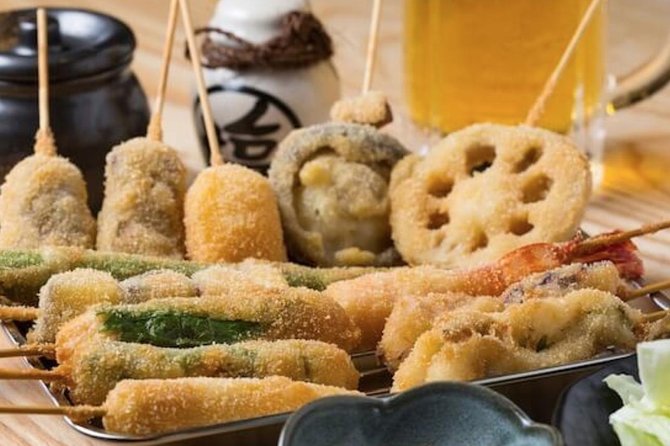
This tour runs about 3 hours and kicks off at 5:00 pm, a sweet spot. Late afternoon light makes Dotonbori’s neon signage pop, and the streets are active without being quite as exhausting as later night peak. You’ll be standing where Osaka’s food energy is loud, then you’ll gradually move into calmer lanes.
The meeting point is Dotonbori, Chuo Ward, at the address near the Naniwa Dotonbori building, and the tour ends in the Sennichimae area. That end location matters, because you can roll right into more snacking on your own after the last tasting, without backtracking across town.
You’ll use a mobile ticket, which is convenient if you hate printing papers. And because it is near public transportation, you can fit it into a typical Osaka day without turning it into a logistics puzzle.
More plates than one stomach can hold
- Osaka: Shinsekai Food Tour with 13-15 Dishes at 5 Eateries★ 4.8 · 2,204 reviews
- Osaka Food Tour: 13 Dishes at 5 Local Eateries★ 5.0 · 2,149 reviews
- Hungry Osaka Street Food Tour:15 Tastings & 3 Drinks with a Local★ 5.0 · 1,727 reviews
- Hungry Osaka Street Food Tour: 15 Dishes & 3 Drinks★ 4.9 · 694 reviews
- Kuromon Market Food Walking Tour in Osaka (6 stops, 6 tastes)★ 5.0 · 550 reviews
Price and value at $231 per person
At $231 per person, this is not the cheapest way to eat in Osaka. But the value comes from how the tour packages the experience: four food stops, plus one drink included and a traditional Japanese dessert. In other words, you are not just buying “a little something” and hoping the guide picks good places.
You are also paying for decision-making. Osaka has hundreds of options per block, and Dotonbori especially can push visitors toward the most obvious, most queue-heavy restaurants. A guided plan helps you spend your time eating, not wandering, and it helps you avoid ordering mistakes when you are staring at a menu you cannot read well.
Also, the group stays small, up to 10 people, so you are more likely to get quick guidance and personal attention. That is a real factor for food tours, because the best bites are usually tied to timing and how hot, fresh, or ready the stall is.
Your guide experience, and why names like Asli and Melissa matter
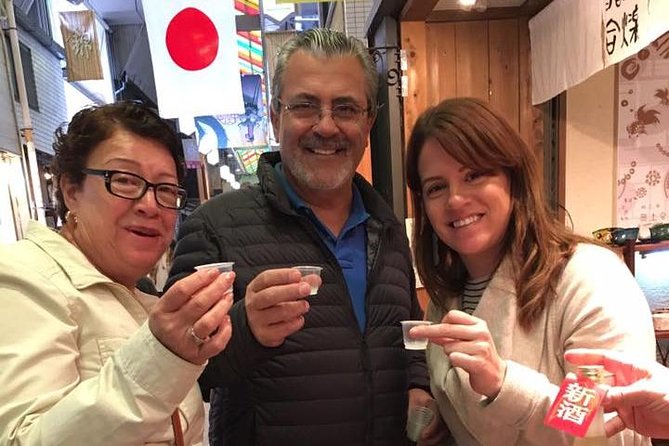
A good food tour depends on the guide, not just the route. This one is led by a local English-speaking guide, and the overall vibe is very story-and-context heavy in a good way. In past experiences with guides like Asli, Melissa, and Marie, the standout is how they connect what you are eating to Osaka itself, not just to the restaurant sign outside.
That storytelling is useful for you after the tour. When you understand why takoyaki is eaten a certain way, or why a place fries skewers the way it does, you are not repeating a checklist later. You are ordering with confidence.
One more practical advantage: the guide can adjust for vegetarian and pescetarian needs. That does not mean every dish will become vegan, but it does mean you are not stuck watching everyone else eat while you wait for the one sad option.
Stop 1, Dotonbori Glico Sign, and the Fortunato Catalon story
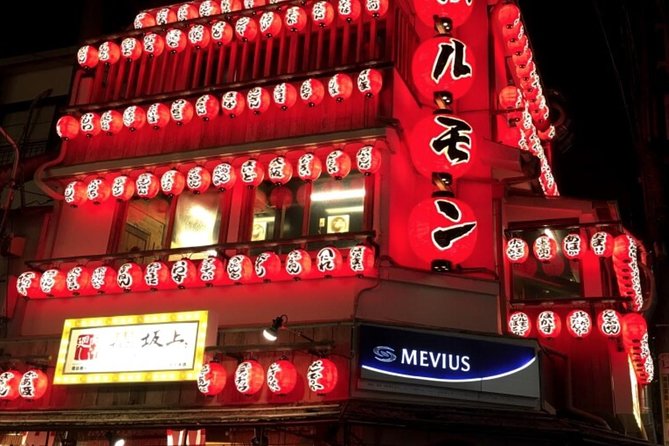
You start at the bright Dotonbori Glico Sign area. On the surface, it is a classic Osaka photo moment. But the tour uses it as an entry point into a deeper theme: how a local icon can be tied to real people and real inspiration.
You’ll hear about Glico man, including the connection to Filipino sprinter Fortunato Catalon and how his story helped inspire a nation and a company. It sounds like trivia until you realize Osaka’s food culture is also tied to branding, neighborhoods, and local pride. This tour just gives you a better map in your head.
This stop is short, around 5 minutes, and the goal is to get your bearings fast. You are basically warming up your senses for the street-food part to come.
Stop 2, Dotonbori District, how to avoid the neon trap
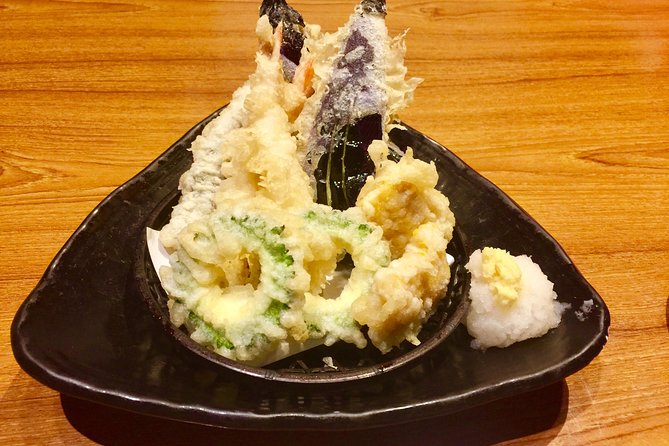
From there you move into the Dotonbori district, and this is where the tour’s “street smart” side shows up. Dotonbori is famous, and that fame creates a common problem: overly commercial places with lines of tourists. The tour’s pitch is simple, it wants you eating, not fighting crowds or guessing blindly.
So you get a guided stroll through the district while learning how to read the area. The tour’s approach is less about walking past everything and more about noticing patterns, like where menus seem clearer, where stalls feel more “local regulars,” and where you can keep moving without losing your appetite to long waits.
This segment is about 15 minutes. It is enough to orient you, not enough to bore you.
Other ways to spend a day in Osaka
- Osaka Local Foodie Walking Tour in Dotonbori and Shinsekai
★ 5.0 · 985 reviews - Osaka: Guided Food Tour with 12 Dishes at 4 Local Eateries
★ 5.0 · 533 reviews - Osaka: Kuromon Market Food Walking Tour (6 stops, 6 tastes)
★ 4.6 · 272 reviews
Minami (Namba) and street-food choices that make sense at snack speed
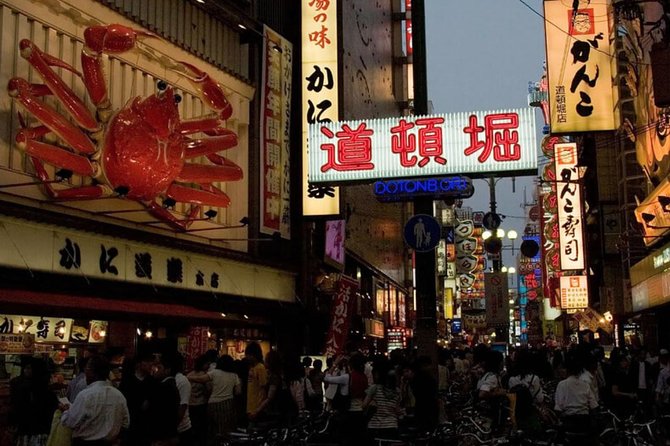
You then head into Minami, also known as Namba, where street food is the main event. Expect the tour to keep the pace practical, short walks and quick explanations that match what you are about to eat.
Minami’s value is variety. This is where you start seeing the Osaka style of casual eating: small items, fast service, and lots of flavors right on the sidewalk. The guide’s job is to help you order like you belong here, even if you do not.
The tour lists this as another 15 minutes, which signals how it balances walking with tasting. You should feel like you are constantly moving forward toward the next bite.
Hozenji Yokocho, the alley where the noise softens
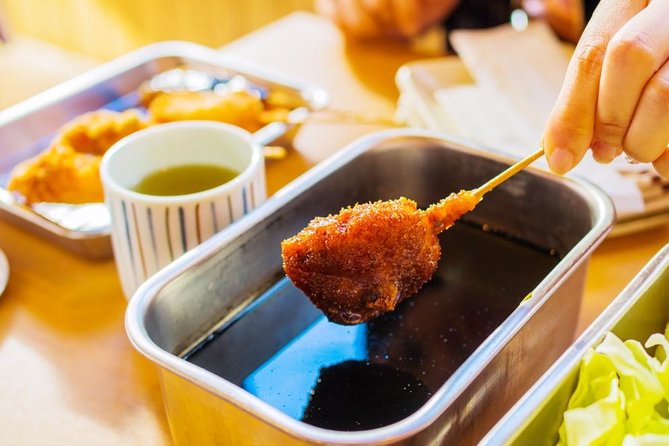
One of the tour’s highlights is Hozenji Yokocho, the alley stop. This is the kind of place where Osaka changes from major streets to narrow lanes, with the vibe dropping into something more intimate. It is also where the “secret shrine away from the crowds” moment fits well, since shrines and small local landmarks are common in these tucked-away alleys.
Even if you do not care about temples and shrines much, this stop is still worth it. It breaks up the neon intensity and gives you a breather, which makes the next market or final tasting feel even better.
Hozenji Yokocho also works great for photos, but I’d focus on atmosphere first. Turn your camera on when something catches your eye, then put it away and just take in the narrow-space feel.
Sennichimae Doguyasuji Shotengai, and why the guide helps you order

Next comes Sennichimae Doguyasuji Shotengai. Shotengai areas are where Osaka shopping culture lives, and they tend to have their own rhythm compared to Dotonbori. The big advantage of having a guide here is that you are not just wandering. You have a reason to stop, and you have help translating what is worth your time.
This is also where you benefit from the tour’s “small group” setup. With up to 10 people, you can move as a unit without slowing everything down. That matters in markets and alley food streets, where timing is everything.
If you are the kind of person who loves browsing stalls but hates decision fatigue, this stop will feel like a win.
Kuromon Market, tasting in the food hub style
Then you reach Kuromon Market, the stop many food lovers connect with the Osaka food scene. Markets can be overwhelming on your own, not because they are confusing, but because there is so much. You might come in hungry and leave with ten great ideas and zero certainty about what to try.
A guided food stop helps fix that. You get tastings planned as part of the day, so you can focus on flavor rather than research. This is especially helpful if you have dietary preferences, since the tour is designed to be vegetarian and pescetarian friendly.
Kuromon is also one of those places where you’ll see why Osaka is proud of quick, quality eating. The guide’s explanations help you connect what you taste with why people buy it here, not just that it tastes good.
Misono Building stop, and the fun of one more Osaka setting
The itinerary also includes a Misono Building stop. Details on exactly what you do there are not spelled out in the basics, but the purpose of adding another distinct location is clear. This tour is built to show you multiple layers of Osaka food life, from iconic landmarks to specialty lanes and market-style eating.
Think of it as a way to keep the day from turning into one long stretch of the same type of food environment. You get variety in setting, and that makes the tastings feel like a progression rather than repetition.
What you actually eat: takoyaki, kushikatsu, dessert, and one drink
You can expect Osaka street-food hits, including takoyaki and kushikatsu skewers. The tour positions these as core flavors, and it is a smart combo for a first real taste of the city. Takoyaki gives you the batter-based comfort crowd vibe, while kushikatsu brings the crispy, fried, skewered snack style.
Beyond the main street snacks, you also get traditional Japanese dessert and one drink included. That drink inclusion is worth noticing if you are the type who usually buys a soda or beer with each stop. Here, you get at least one built in.
Two important practical notes:
- Food changes with season and availability, so do not expect an identical menu every time
- It is not recommended for gluten-free, so if you have celiac or strict gluten needs, you should plan another option
Vegetarian and pescetarian planning, without turning your tour into a scavenger hunt
I like that this tour explicitly supports vegetarian and pescetarian diets. That matters because Osaka food streets can be meat-heavy, and a simple “we have one vegetable option” promise does not cut it when you are on a schedule.
The guide’s job is to find suitable options at each stop, and based on how guides like Melissa have handled vegetarian needs before, the experience tends to stay inclusive rather than awkward. You might still find that vegetarian dishes are not the same thing as a meat dish, but you are not stuck with nothing.
If you are vegan, the data here does not say vegan, so you will want to ask when booking what is possible for your needs. The only firm constraint we have is that gluten-free is not recommended.
Pace, walking, and who this tour suits best
The tour recommends moderate physical fitness. For most people, that means comfortable walking and keeping up with a group for a few hours. It does not sound like a hike, but it is not a sit-and-snack event either.
It is also family-friendly, and children must be accompanied by an adult. For kids 10 and above, a passport information copy is required. That is a real detail to plan for in advance, especially if you are traveling with teens.
You should also know the drink policy. Minimum drinking age is 21, which makes sense for mixed groups.
And yes, it accepts single travelers, which is helpful if you want food guidance without needing to coordinate another person’s schedule.
Weather, changes, and the reality of street-food plans
This tour requires good weather. If it gets canceled due to poor weather, you should be offered a different date or a full refund. That is pretty common for outdoor walking, but it is worth checking your itinerary if you are in Osaka during rain season.
Because restaurants and stalls can have schedule issues, the tour also allows for changes to spots. Food can change too, based on availability. The good part is that substitutions are made rather than leaving you hanging.
If you are the type who likes firm certainty, treat this as a guided route with a flexible menu, not as a guaranteed exact list of every dish every day.
Where it ends, and how to keep the night going
The tour ends in the Sennichimae area, which is a smart finishing point. You are not dumped back at the start after tasting. Instead, you are placed near another layer of shopping and food options where you can keep exploring at your own pace.
If you want a smooth evening, I suggest planning a light meal earlier in the day. That way you can enjoy the tastings without feeling stuffed halfway through.
Also, wear comfortable shoes. Osaka food tours are fun, but they are still built around walking and standing.
Should you book this Osaka street-food tour?
Book it if you want a guided first-time route through Osaka’s key food zones, with a small group and real explanations. The standout value is the mix of four planned tastings, dessert, one included drink, and the way the guide connects snacks to Osaka places, like the Glico Sign and the alley stop atmosphere.
Skip it or think twice if gluten-free is your main requirement. The tour is explicitly not recommended for Gluten-free, and that is the kind of limitation you should not gamble on.
Also consider timing. A 5:00 pm start works well for street-food energy, but if you hate afternoon walking or you want a super relaxed pace, look for something shorter or more seated.
If you want a practical way to eat well in Osaka without getting lost in menus and queues, this tour is a strong bet. It helps you taste more, understand more, and enjoy the city without turning your night into a guessing game.
More Food & Drink in Osaka
- Osaka: Traditional Mochi Pounding Experience with Tasting★ 4.9 · 306 reviews
- Osaka After Dark: Small-Group Night Food Tour (Max 6)★ 4.5 · 245 reviews
- [1 Group Only] Osaka Street Food Tour for Family★ 5.0 · 208 reviews
- Osaka: 2-Hour Nightlife District Walking & Local Food Culture★ 5.0 · 199 reviews
Just added around Osaka


Local Food Tours, compared.

Shinsekai Food Tour with 13-15 Dishes at 5 Eateries
Read our review →
Osaka Food Tour: 13 Dishes at 5 Local Eateries
Read our review →
Hungry Osaka Street Food Tour:15 Tastings & 3 Drinks with a Local
Read our review →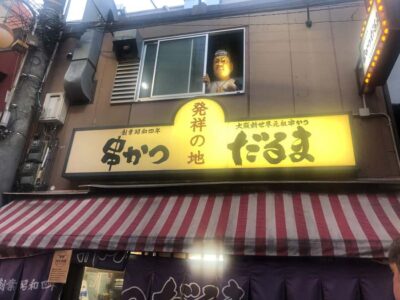
Hungry Osaka Street Food Tour: 15 Dishes & 3 Drinks
Read our review →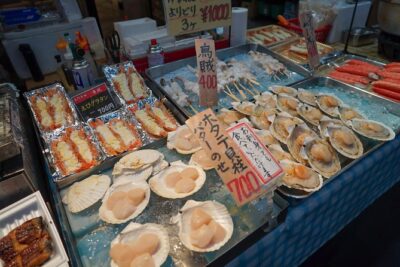
Kuromon Market Food Walking Tour in Osaka (6 stops, 6 tastes)
Read our review →
Guided Food Tour with 12 Dishes at 4 Local Eateries
Read our review →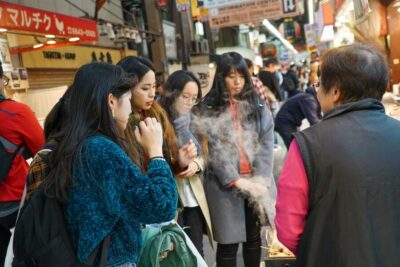
Kuromon Market Food Walking Tour (6 stops, 6 tastes)
Read our review →
Osaka After Dark: Small-Group Night Food Tour (Max 6)
Read our review →This tour also fits