Reviewed · FOOD
Eat Like a Japanese with a Local Guide
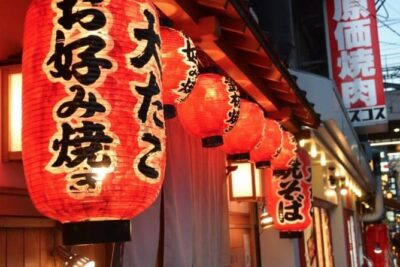
Osaka food hits different under neon lights. This Dotonbori walking tour strings together 9 tastings in about 2.5 hours, with an English or Spanish guide guiding you from one local favorite to the next.
I like how the stops balance serious street snacks with proper desserts, so you do not end up eating only one flavor all night. I also like the pacing, short visits that keep you moving through the district instead of spending your whole time waiting.
One thing to consider first: there are no vegetarian or vegan options, since the lineup includes meat and seafood items.
In This Review
- Key things I’d plan around
- Dotonbori in 2.5 hours: a good fit if you want real street food
- Where you start in Dotonbori, and how the night stays easy
- Takohachi Dotonbori: takoyaki that goes crispy-to-gooey
- Mattari-Purin: purin is dessert that feels like comfort
- 551 Horai Ebisubashi: nikuman gives you a warm, filling anchor
- Honke Ootako: okonomiyaki is street food that eats like dinner
- DEARBROS karaage: the crunch you will want again later
- Lord Stow’s matcha tart and Rikuro’s cotton cheesecake: sweet with personality
- Yakisoba and the Glico Running Man: how the night closes
- Price and value: why $89.47 can make sense in Osaka
- The real deal about food tours in Dotonbori, lines and all
- Who should book this Osaka food guide tour
- Should you book Eat Like a Japanese with a Local Guide?
- FAQ
- How long is the tour?
- How much does it cost per person?
- What language is the guide available in?
- What is included in the price?
- Are vegetarian or vegan options available?
- What group size should I expect?
- Where do I meet, and where does it end?
- Is there a mobile ticket?
- Can I get a full refund if I cancel?
Key things I’d plan around
- Small group, max 10 people: you get attention when ordering and you do not feel swallowed by the crowd.
- 9-food focus in 2.5 hours: expect a true mix of savory and sweet, not just a couple bites.
- English/Spanish guide, gratuities included: you can rely on the order-and-eat rhythm.
- Classic Osaka street hits: takoyaki, okonomiyaki, karaage, yakisoba, and nikuman.
- Dessert variety that actually matters: purin, matcha tart, and cotton cheesecake.
- Neon photo moment built in: the Glico Running Man sign near Ebisubashi Bridge.
Dotonbori in 2.5 hours: a good fit if you want real street food
Dotonbori is Osaka at full volume, and this tour is built for that energy. You get around 2 hours 30 minutes to eat your way through multiple counters and storefronts without turning it into a research project.
The value move here is that lunch and snacks are included. That matters, because you are not just paying for walking and “a couple samples.” You are paying for a guided food run with enough variety to feel like a meal plus dessert.
You will also get a mobile ticket, which is simple if you are already juggling transit times and plans. The tour is set up as a tight evening loop, and it fits well if you want something fun right after arriving in the area.
Other ways to spend a day in Osaka
- Osaka: Shinsekai Food Tour with 13-15 Dishes at 5 Eateries★ 4.8 · 2,204 reviews
- Osaka Food Tour: 13 Dishes at 5 Local Eateries★ 5.0 · 2,149 reviews
- Hungry Osaka Street Food Tour:15 Tastings & 3 Drinks with a Local★ 5.0 · 1,727 reviews
- Osaka Local Foodie Walking Tour in Dotonbori and Shinsekai★ 5.0 · 985 reviews
- Hungry Osaka Street Food Tour: 15 Dishes & 3 Drinks★ 4.9 · 694 reviews
Where you start in Dotonbori, and how the night stays easy
You meet at Kani Doraku Dotonbori Main Branch (1-chōme-6-18 Dōtonbori, Chuo Ward, Osaka 542-0071). The tour ends back at the meeting point, so you do not have to mentally map a second destination after you are full.
Because you are walking in the Dotonbori area, it helps to go with shoes you can stand in comfortably. The stops are short, but you are still moving from shop to shop, and these neighborhoods reward comfortable feet.
Also note the tour limit of up to 10 people. That cap matters in a place where lines form fast. Even if you hit a busy counter, the group size helps keep the flow manageable.
Takohachi Dotonbori: takoyaki that goes crispy-to-gooey
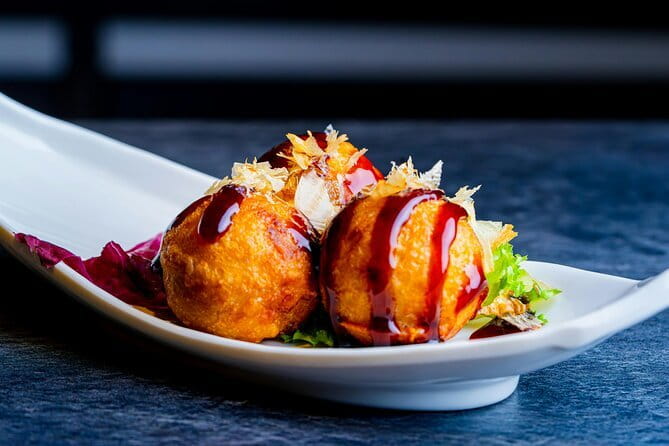
Takohachi is your first bite, and it is a smart opener. You are going after takoyaki, little savory batter balls cooked in a special grill pan so they come out round and crisp on the outside.
A proper takoyaki has that classic texture contrast. Expect a shell that is crispy, then a soft, gooey center where diced octopus brings a tender, savory bite. It usually includes pickled ginger and green onions mixed into the batter with flour, eggs, and dashi.
You get served hot, commonly with takoyaki sauce (sweet and tangy, similar to Worcestershire), Japanese mayonnaise, bonito flakes, and dried seaweed. My advice: eat it right away. Takoyaki is at its best while it is hot, when the sauce and toppings still feel lively.
Why this stop works on a guided tour: you can focus on how it should taste instead of guessing what to order. This is also a great “baseline bite,” because the rest of the menu plays with texture and temperature too.
Mattari-Purin: purin is dessert that feels like comfort
Next up is Mattari-Purin for purin, a classic Japanese caramel custard. Purin is often described as similar to caramel flan or crème caramel, but in practice it is more like a gentle, silky egg custard with a clean vanilla note.
It is made from eggs, milk, sugar, and vanilla, and the custard gets cooked gently in a water bath for that melt-in-your-mouth texture. On top, you get amber caramel syrup that is sweet but with a slight bitterness to balance the creaminess.
This is where I like the tour’s pacing. After several savory stops, purin resets your palate without being too heavy. My tip: go slow on the first spoonful, then decide if you want more caramel or more custard in each bite. The ratio is half the fun.
If you care about sweetness levels, purin is a nice midpoint. It satisfies the dessert craving, but it does not flatten your taste buds before the later treats.
551 Horai Ebisubashi: nikuman gives you a warm, filling anchor

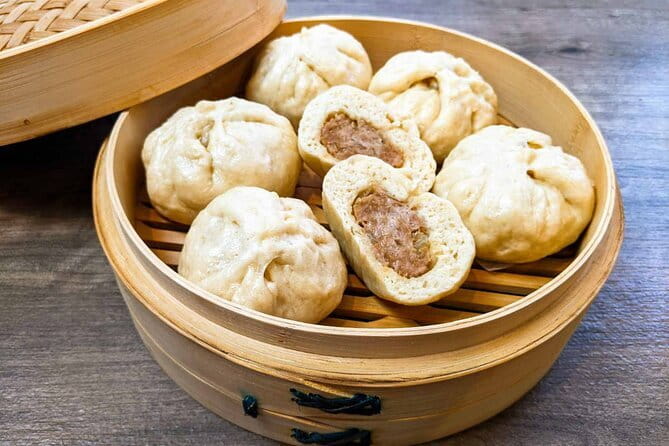
At 551 Horai Ebisubashi honten, you sample nikuman, steamed buns filled with a savory pork mixture. The dough is soft, fluffy, and slightly sweet, so it contrasts with the salty, juicy filling.
Inside, you are usually looking at ground pork with onions and seasonings. Soy sauce, ginger, garlic, and sometimes a touch of sugar season the filling, aiming for a tender bite that feels comforting, especially when the air gets cool.
I like nikuman in a food tour because it acts like a “real meal” component. It is not just crunchy snack food, and it helps you feel satisfied before you move into heavier items like okonomiyaki.
Practical tip: keep it warm in your hands as you move to the next stop. A nikuman loses some of that comforting magic once it cools down.
Not ready to leave Osaka yet? A few more ways to fill the day.
- Osaka Go Karting Tour with Funny Costume
★ 5.0 · 2,658 reviews - Osaka Castle: Museum and Tower Entry Ticket
★ 4.5 · 2,380 reviews - Osaka: Tea Ceremony Experience
★ 4.9 · 1,426 reviews
Honke Ootako: okonomiyaki is street food that eats like dinner
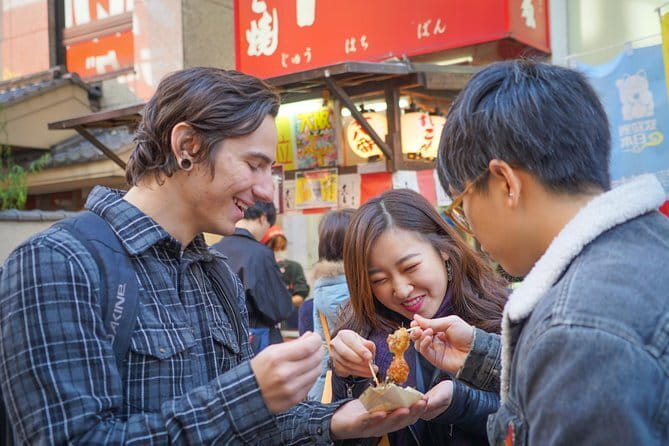
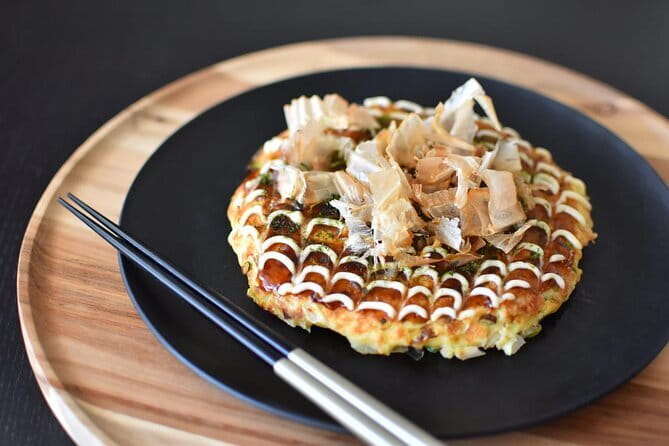
Now you hit Honke Ootako for okonomiyaki, a savory pancake you can think of as Osaka comfort food. It is made from a base of flour, eggs, shredded cabbage, and whatever mix-ins you get served, commonly pork, shrimp, or squid.
The batter hits a hot griddle until it is golden and crispy outside, while staying soft and tender inside. Then comes the fun part: toppings. Expect okonomiyaki sauce, mayonnaise, dried bonito flakes, and sometimes seaweed flakes.
Watching the bonito flakes flutter as the heat hits is part show, part signal that it is freshly made. If you like intense flavors, this is your “turn it up” stop, because the sauce and mayo layer in a satisfying tang and richness.
A drawback consideration is that okonomiyaki is one of the more filling items on the list. If you have a sensitive stomach or you are worried about eating too much in one sitting, take smaller bites and pace yourself across the tour.
DEARBROS karaage: the crunch you will want again later
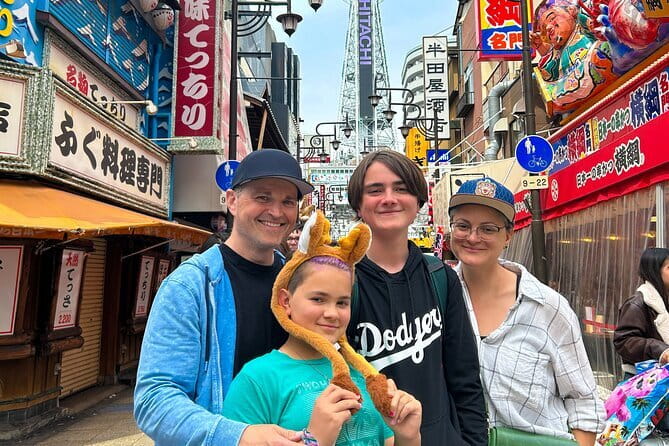
Next is DEARBROS for karaage, bite-sized pieces of meat, usually chicken, marinated in a soy-based mix with garlic and ginger, sometimes with sake. Then it gets coated in a light batter and deep-fried until golden.
Karaage hits the exact reason people love Japanese fried food: juicy, tender meat inside and a crispy exterior that actually stays crisp for a short window. Lemon wedges often come with it, which is great because a squeeze brightens the flavor and keeps the dish from feeling too heavy.
This is another stop where a guided tour pays off. Ordering fried chicken in a busy place is easy, but getting it at the right time and knowing what to pair it with makes it better.
If you are a texture person, karaage is your payoff. Eat it while it is hot, and use the lemon even if you think you might skip it. It changes the flavor in a noticeable way.
Lord Stow’s matcha tart and Rikuro’s cotton cheesecake: sweet with personality

The dessert portion on this tour is not one-note, and that is why it works.
First you visit Lord Stow’s Bakery for a Japanese matcha tart. The tart focuses on matcha, which is often slightly bitter, so it balances the richness of a creamy filling. The filling can include blends like matcha with white chocolate or cream cheese, while the shell stays buttery and crisp. Many versions finish with a dusting of powdered matcha.
Then later you stop at Rikuro’s Namba for Japanese cheesecake, sometimes called cotton cheesecake because it is light and airy. It uses cream cheese, eggs, sugar, and a bit of flour, baked low so the top browns gently and the inside stays soft and spongy. It is usually less aggressively sweet than some Western-style cheesecakes, with a subtle tang from the cream cheese.
If you think matcha is too strong as a flavor, this tart is still a good bet because it is paired with cream. If you want sweetness that feels delicate, the cheesecake is a smart way to end your run.
My practical note: this is a lot of dessert for one evening. You do not have to finish every bite at full speed. Take a breath between sweets so you can actually taste the matcha bitterness and the cheesecake tang.
Yakisoba and the Glico Running Man: how the night closes
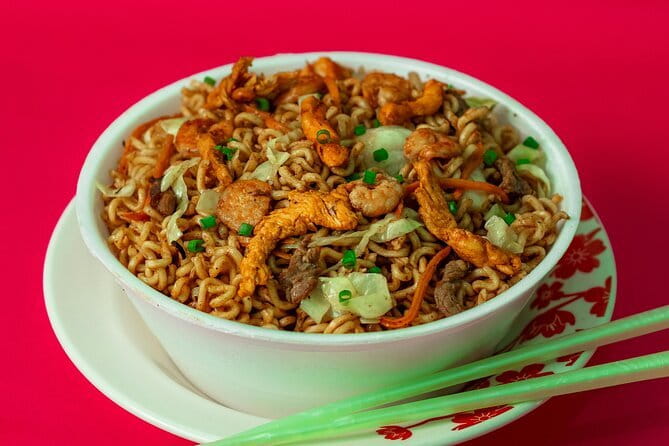
Your final savory stop is yakisoba at another Dotonbori storefront. Yakisoba uses thin wheat noodles stir-fried with vegetables like cabbage, carrots, and onions, plus sliced meat such as pork, beef, or chicken.
It gets tossed with a sauce made from ingredients like Worcestershire-style seasoning, soy sauce, and ketchup, which creates a deep umami flavor that is slightly sweet too. Common toppings include pickled ginger, sesame seeds, and sometimes bonito flakes.
This works as a closer because yakisoba is satisfying but not as dense as okonomiyaki. It is also easy to eat in a walking tour rhythm.
Then you get the photo break at the Dotombori Glico Sign, the Running Man neon billboard. It is near Ebisubashi Bridge and was first installed in 1935 as part of Glico advertising. At night the lighting makes it a classic Osaka snapshot, and it is a good mental bookmark that your food crawl is complete.
Price and value: why $89.47 can make sense in Osaka
At $89.47 per person, you are paying for a guided loop that includes lunch, snacks, a guide (English or Spanish), and gratuities. Since the itinerary includes multiple savory items and several desserts, the pricing starts to make sense versus buying each stop separately while figuring out what lines are worth your time.
This is also a “you save effort” kind of deal. Dotonbori is packed with choices, and a guide handles the ordering and timing so you can focus on eating. You are basically buying speed, local route decisions, and food-to-order confidence.
Another small value lever: the tour offers group discounts, and the group size is capped at 10. Those two things tend to keep the experience from feeling chaotic.
One more practical angle: this tour is commonly booked about 21 days in advance on average. If you want a specific evening slot, book earlier so you do not end up stuck with whatever time is left.
The real deal about food tours in Dotonbori, lines and all
This is where I stay honest. Even with a guide, Dotonbori can be crowded, and popular counters can mean waiting. If you are the type who gets annoyed by queues, you will want to manage expectations.
Your best defense is attitude plus timing. Go in ready for short waits, not guaranteed instant service. The tour’s short stop timing helps, and the small group size helps even more, but it does not erase the fact that you are in one of Osaka’s busiest food corridors.
Also remember the diet note: no vegetarian or vegan options. If you avoid meat or fish, this tour will force choices you might not want.
Who should book this Osaka food guide tour
This tour is a strong match for you if:
- You want classic Osaka street food in a tight, organized route
- You enjoy both savory and dessert, and you are happy to try multiple styles
- You prefer an English/Spanish guide instead of ordering everything on your own
It might not be the best match if:
- You need vegetarian or vegan-friendly dishes
- You only want one or two foods and would rather do a slower, self-guided approach
If you are traveling solo or with a friend, the small group format can still feel friendly without turning into a big bus situation.
Should you book Eat Like a Japanese with a Local Guide?
I’d book it if your goal is simple: eat your way through Dotonbori with an organized plan, enough food to feel satisfied, and built-in time for the neon photo at the Glico Running Man sign. The lineup covers a lot of the Osaka signature hits, and the dessert choices give you more than one sweet style.
I would skip it if you need vegetarian or vegan options, because the menu as listed is not set up for that. And if you hate waiting in lines, treat the tour as a fun evening plan, not a guarantee of instant service.
If you are flexible, hungry, and okay with a little crowd energy, this is an efficient, very Osaka way to spend a night.
FAQ
How long is the tour?
The tour is about 2 hours 30 minutes.
How much does it cost per person?
The price is $89.47 per person.
What language is the guide available in?
The guide is available in English and Spanish.
What is included in the price?
Lunch, snacks, the guide, and gratuities are included.
Are vegetarian or vegan options available?
No. There are no vegetarian or vegan options on this tour.
What group size should I expect?
The tour has a maximum of 10 people.
Where do I meet, and where does it end?
You start at Kani Doraku Dotonbori Main Branch in Dotonbori and the activity ends back at the same meeting point.
Is there a mobile ticket?
Yes, the tour uses a mobile ticket.
Can I get a full refund if I cancel?
Yes. You can cancel up to 24 hours in advance for a full refund.
Just added around Osaka


Food, compared.

Shinsekai Food Tour with 13-15 Dishes at 5 Eateries
Read our review →
Osaka Food Tour: 13 Dishes at 5 Local Eateries
Read our review →
Hungry Osaka Street Food Tour:15 Tastings & 3 Drinks with a Local
Read our review →
Osaka Local Foodie Walking Tour in Dotonbori and Shinsekai
Read our review →
Hungry Osaka Street Food Tour: 15 Dishes & 3 Drinks
Read our review →
Kuromon Market Food Walking Tour in Osaka (6 stops, 6 tastes)
Read our review →
Guided Food Tour with 12 Dishes at 4 Local Eateries
Read our review →