
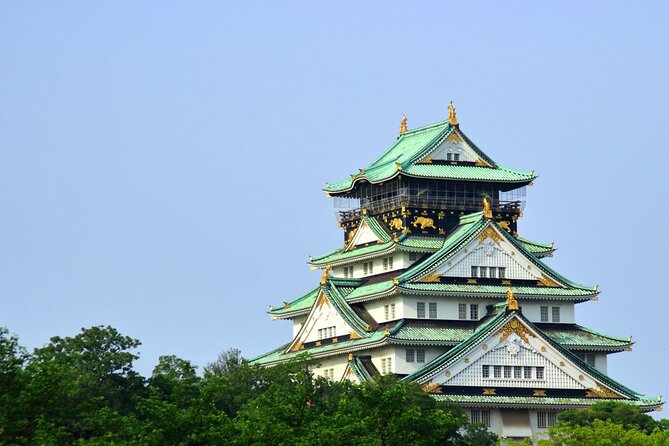
Reviewed · OSAKA CASTLE GUIDED TOURS
Full Day Walking Tour in Osaka Castle Temples and Ukiyoe
Osaka feels bigger on a walking day. This tour strings together Osaka Castle, the temple history of Shitennoji, and a hands-on ukiyo-e experience, then slows down enough to enjoy the city between stops. You get a local, English-speaking guide who keeps things moving without turning it into a race.
Two things I really like: the tour handles the big-ticket logistics for you with included entrance fees and train tickets, and it’s capped at a small group size (up to 20). In practice, that makes it easier to ask questions and get your bearings when Osaka is confusing, especially if you run late.
One possible drawback is the format: it’s an 8-hour walk-heavy day, and food and drinks are not included. If you hate crowds at markets or need lots of breaks, you’ll want to plan your energy and snacks.
In This Review
- Key highlights
- Osaka Castle, temples, and ukiyo-e, all in one day on foot
- Osaka Castle Museum: what you’re really seeing
- Shitennoji: the temple story that connects Japan to the wider world
- Kuromon Market: where your schedule meets your appetite
- Dotonbori and the ukiyo-e moment: street energy plus hands-on art
- The guide makes the day work, especially when plans go wrong
- Price and value for an 8-hour Osaka walking day
- Pacing, logistics, and how to prepare
- Who this tour suits best, and who should skip it
- Should you book this Osaka Castle Temples and Ukiyo-e walking tour?
- FAQ
- What’s the duration of the Full Day Walking Tour in Osaka Castle Temples and Ukiyoe?
- What’s included in the tour price?
- Are food and drinks included?
- Which major stops are part of the route?
- Is there an entry fee for Kuromon Market?
- How big is the group?
- Do I get a ticket on my phone?
- Can I cancel for a full refund?
Key highlights
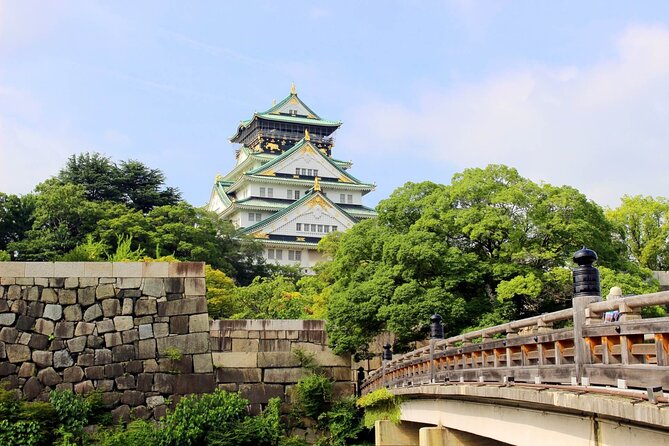
- Osaka Castle Museum entry included with context on the castle’s rebuild in 1995
- Shitennoji Temple visit with guided storytelling about Buddhism’s path from India to Japan
- Kuromon Market time at a dense, stop-and-sample food area (no entry fee)
- Dotonbori area time with iconic street sights and giant 3D billboards
- Ukiyo-e hands-on experience fee included, tied to the art’s 1600s to 1800s heyday
- Max 20 travelers, led by an English-speaking guide named Wingki
Osaka Castle, temples, and ukiyo-e, all in one day on foot
If you’re in Osaka and you want more than one big landmark photo, this is a strong way to spend your time. The route pairs three very different sides of the city: an official, story-heavy day at Osaka Castle and Shitennoji, then a more street-level sweep through Kuromon Market and Dotonbori. You also add a practical cultural activity with ukiyo-e, which turns the day from sightseeing into something you can take home.
What makes it feel extra worth it is the pacing between “must-see” stops. You don’t just hop from one ticket line to the next. You get time to look around, ask questions, and translate what you’re seeing into why it matters. And since the guide is English-speaking and locally based, you’re not left guessing.
Practical tip: bring comfortable shoes. This tour is built for walking, and even when the stops include “time to explore,” you’re still on your feet for most of the day.
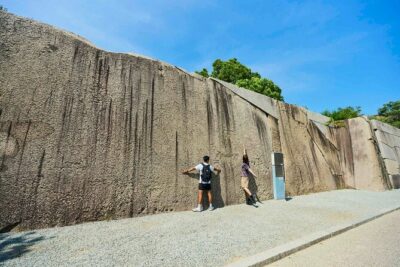
More history behind those stone walls
- Osaka Castle: Museum and Tower Entry Ticket★ 4.5 · 2,380 reviews
- Osaka Castle Walking Tour and Castle Tower Admission★ 5.0 · 561 reviews
- 5-Hour Osaka Bike Tour to the Neighborhood of Osaka Castle★ 5.0 · 319 reviews
- Osaka Castle Guided Tour★ 4.7 · 249 reviews
- Osaka: Osaka Castle Guided Tour with Local Guide★ 4.7 · 78 reviews
Osaka Castle Museum: what you’re really seeing
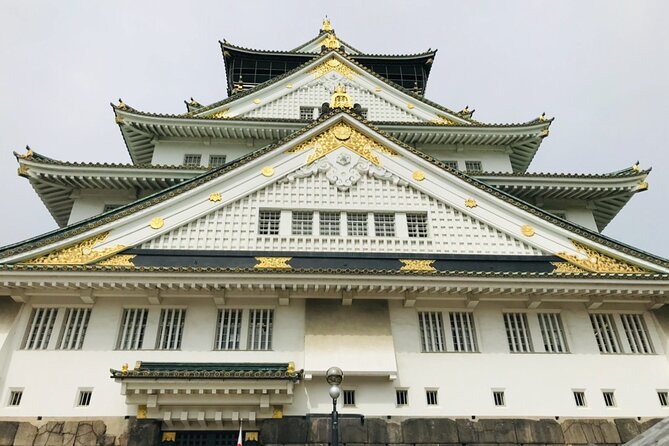
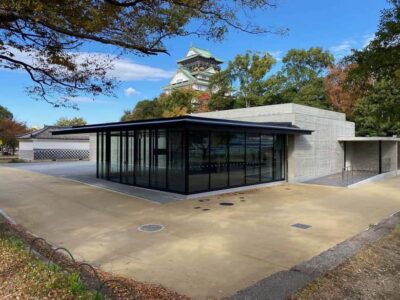
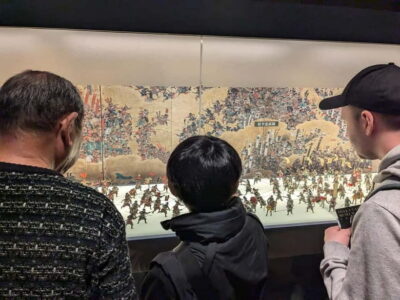
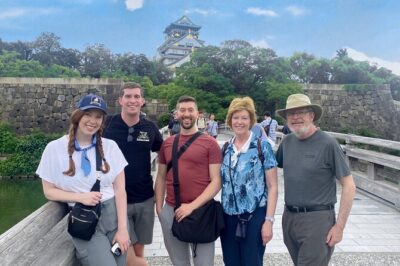
The day starts at Osaka Castle, with entry to the Osaka Castle Museum. The castle itself took shape in 1597, then suffered destruction multiple times through the centuries. What you’ll take in today connects to a later chapter, too. The current structure was rebuilt by the Japanese government in 1995, meaning this isn’t a simple time capsule. It’s a modern reconstruction with historical intent.
That museum visit helps you understand how to look at the castle in a more informed way. Instead of only thinking “big castle, good photos,” I like that you get the framing for what a castle represented in its era, and why the site keeps being rebuilt. You also learn that what you see now is different from the original, which keeps expectations grounded.
How to make this stop work for you:
- Plan to spend real time inside the museum exhibits, not just the quick scan.
- Take photos, but watch for moments where the guide explains context you might miss otherwise.
- If you’re sensitive to crowds, go at a calm pace and don’t try to photograph everything at once.
If Osaka Castle is your only “major” stop, this alone can be a good day. Combined with the rest of the route, it becomes the historical backbone of the day.
Shitennoji: the temple story that connects Japan to the wider world
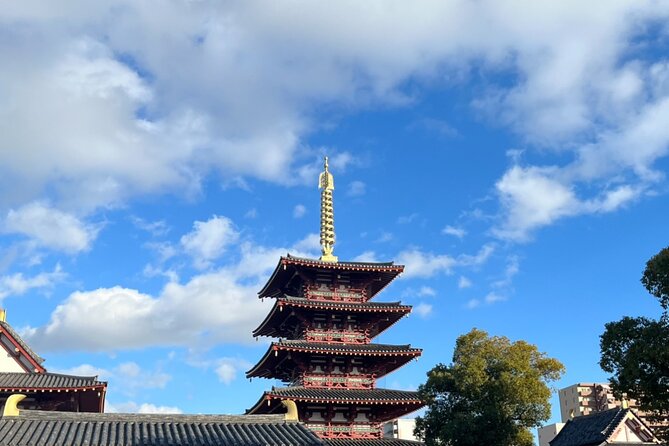
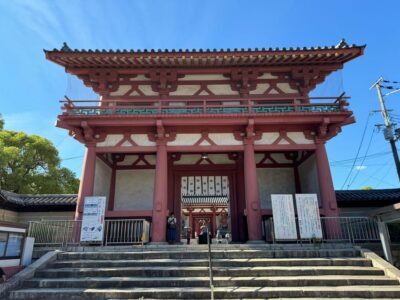
After Osaka Castle, the tour heads to Shitennoji, often described as the first Japanese Buddhist temple. This stop is about far more than architecture or grounds. You’ll hear how Buddhism moved from India to China and eventually landed in Japan thousands of years ago. That travel route matters because it explains why Buddhism in Japan doesn’t feel isolated. It arrived through cultures that had already shaped it.
The guide’s role here is especially useful, because temple visits can be visually impressive but emotionally flat if you do not know what you’re looking at. With Shitennoji, the stories give you anchors: what Buddhism was doing when it reached Japan, why certain ideas traveled, and what you should notice while you walk around.
What to expect in a practical sense:
- You get about 2 hours at this stop, which is enough time to see the main areas without constantly rushing.
- Admission is included, so you won’t get stuck on ticket logistics.
- You’ll likely spend part of your time just absorbing explanations, not sprinting for photos.
This is one of those stops where I think the value is highest if you like understanding the “why,” not just the “what.”
Kuromon Market: where your schedule meets your appetite
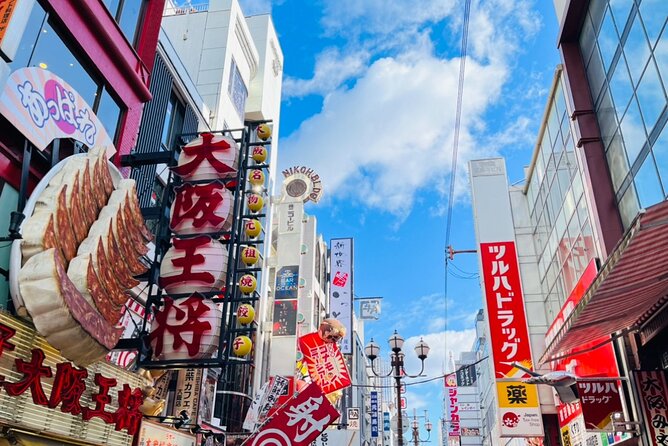
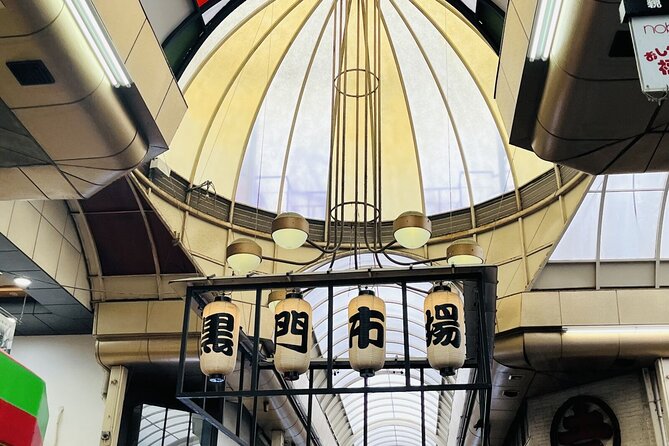
Next comes Kuromon Market, one of Osaka’s best-known food markets. The area is packed with lots of smaller businesses selling things like seafood, vegetables, fruit, and prepared bites, plus drinks and even some non-food items. The tour gives you about 1 hour here, and it’s listed as free admission, so you’re paying for the experience, not another ticket.
Here’s the thing: Kuromon is so sensory that it’s easy to spend the whole hour staring at signs, then suddenly realize you didn’t actually eat anything. That’s why I like how this tour gives you a structured time block. You can decide quickly how you want to play it:
- If you like sampling, this is your moment to grab a few small bites.
- If you’re not in snack mode, you can still browse and look at the variety, then save your appetite for later.
What’s not provided is food and drinks. That’s normal for this type of tour, but it’s important. Bring a plan for your budget, and don’t rely on the tour price to cover meals.
My practical advice: if you have dietary restrictions, Kuromon is not where I’d assume everything will be labeled clearly. Ask questions when you can, and choose simpler items you already recognize.
Dotonbori and the ukiyo-e moment: street energy plus hands-on art
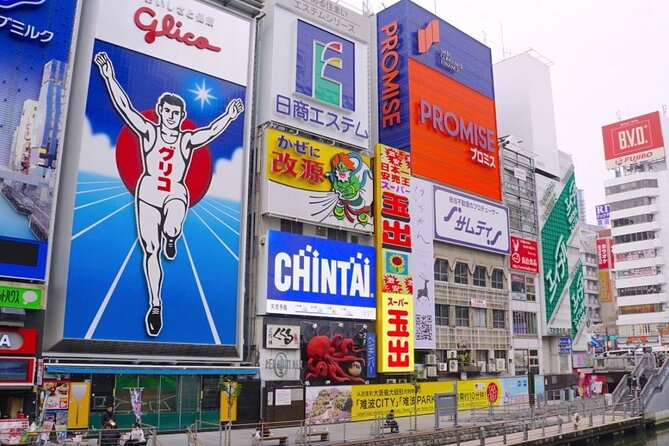
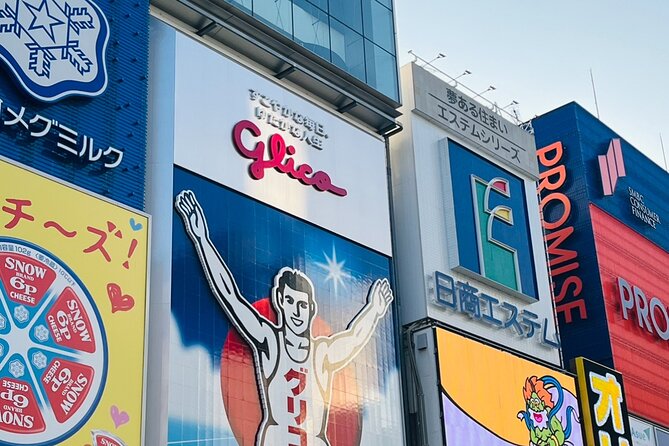
After Kuromon, the route moves toward Dotonbori, including a stop called Dotonbori Tsuribori. This area is famous for its downtown character in Minami, with big three-dimensional billboards and a constant stream of people moving between photos, snacks, and shopping.
This is also where the tour shifts from “look around” to “make something.” You’ll experience ukiyo-e, a traditional Japanese art form associated with everyday life and popular culture. The tour connects the idea to its historical timeline: early works were found in the 1670s, and ukiyo-e flourished from the 17th to the 19th century.
Why that matters for you today: ukiyo-e isn’t just a museum word. It’s a way to understand how art and urban life overlapped centuries ago. When you do the activity, it turns the historical explanation into something physical. Even if you’re not an art person, you’ll likely enjoy the sense of creation and the cultural context that comes with it.
Then there’s time for Shinsaibashi, Osaka’s main shopping area, before returning to Osaka and Shin-Osaka Station. This end stretch is helpful if you want to keep momentum after the art experience, but still have an easy way to get back.
If you want to get the most out of Dotonbori:
- Pace yourself. It’s easy to overheat from excitement and walking.
- Take photos, then put your camera down for a few minutes and just watch the street rhythm.
- Use the shopping time intentionally. Don’t try to browse every store.
Quiet spaces between the neon
- Osaka: Minoh, Katsuoji Temple, & Minoh Falls Full-day Tour
★ 4.9 · 172 reviews - Sagano Romantic Train & Arashiyama, Kiyomizudera, Fushimi Inari Taisha Day Tour
★ 4.5 · 171 reviews - Full Day Kyoto Tour : Bamboo Forest, Golden Temple, Fushimi Inari
★ 5.0 · 84 reviews
The guide makes the day work, especially when plans go wrong
The biggest thing that stands out from the way this tour runs is the role of the guide, Wingki. The tour is built around a “walk and explain” style, so the guide’s personality matters. In the experiences I’ve heard, Wingki is friendly and answers lots of questions, which is huge if it’s your first time in Japan.
One practical detail I appreciate: the guide is the type who can handle real-life issues, like if you get turned around and arrive late. That’s the kind of reassurance you can’t always get from a long group tour. It means you can take a little less stress with you, and that makes the day more enjoyable.
Also, the group size matters. With a maximum of 20, you’re not stuck behind dozens of people who all want the same photo spot. You still get that communal feeling of a group day, but with enough space to move.
Price and value for an 8-hour Osaka walking day
At $165.19 per person for an 8-hour tour, the price won’t feel cheap if you compare it to self-guided walking. But you’re not really paying just for walking time. You’re paying for a guide, plus key costs that add up quickly on your own.
Here’s the value breakdown based on what’s included:
- Entrance fees for the stops are included, so you avoid the hassle of buying tickets separately.
- Train tickets required for the tour are included, which can remove a lot of friction from route planning.
- The ukiyo-e experience fee is included, meaning you’re paying for the activity itself, not just the sightseeing around it.
- The guide is English-speaking and locally based, which is the glue that connects all the stops into one coherent story.
What’s not included is food and drinks. So you should budget for at least lunch and probably some market snacks. If you do that, the day feels like a full cultural package rather than a “tour only includes walking.”
Who will feel the best value:
- People who want structure and a local explanation without spending time designing an itinerary.
- First-time visitors who want the highlights but also want more than the postcard version of Osaka.
- Travelers who like mixing history with city life and a hands-on cultural activity.
Pacing, logistics, and how to prepare
This is near public transportation, which helps. Osaka is huge, and getting around can be easy once you have a plan, but tiring if you’re doing it all solo. The tour handles the train segments that tie the route together.
Still, your preparation matters:
- Wear shoes that can handle long walking.
- Bring water, especially for the Dotonbori stretch and market area.
- Keep cash or a card ready for food, since it’s not covered.
- If you’re traveling with a group, decide who’s leading the pace. The walking day runs on a schedule.
Because the tour is capped at 20 people, you’ll generally be able to keep up, but you still need to think like a walker, not like a shopper who can stop and start forever.
Who this tour suits best, and who should skip it
This tour is a good match if you want an Osaka mix: castle history, temple culture, downtown street scenes, and a real ukiyo-e activity. If you enjoy understanding context as you walk, it will land well.
It’s less ideal if:
- You want a low-walking day with minimal schedule pressure.
- You dislike markets and prefer quieter sightseeing.
- You only want one type of experience, like purely history or purely food.
It also makes sense for solo travelers, couples, and small friend groups since the group size stays moderate. The most travelers can participate, so it’s broadly accessible in spirit, but it is still a long day on your feet.
Should you book this Osaka Castle Temples and Ukiyo-e walking tour?
Book it if you want one day that covers both the big sights and the everyday Osaka feel, with a guide who helps everything click. The price feels much more reasonable when you factor in included museum admission, included train tickets, and the ukiyo-e activity cost that you would otherwise add yourself.
Skip it if you’re planning to eat your way through Osaka on your own and you’re not interested in structured temple history or a hands-on art class. In that case, you might do better building a flexible route centered on your food priorities.
My final take: if you want a guided day that combines Osaka Castle, Shitennoji, Kuromon Market, Dotonbori, and ukiyo-e without having to plan every ticket and transit step, this tour is a smart use of your time.
FAQ
What’s the duration of the Full Day Walking Tour in Osaka Castle Temples and Ukiyoe?
The tour is listed as about 8 hours.
What’s included in the tour price?
Included are entrance fees for each tour stop, train tickets required for the tour, the ukiyo-e experience fee, and a guided tour with an English-speaking guide.
Are food and drinks included?
No. Food and drinks are not included.
Which major stops are part of the route?
The tour includes Osaka Castle, Shitennoji, Kuromon Market, and the Dotonbori area (including Dotonbori Tsuribori and an ukiyo-e experience). It also includes time walking through Shinsaibashi.
Is there an entry fee for Kuromon Market?
Kuromon Market is listed as admission free during the tour.
How big is the group?
The tour has a maximum of 20 travelers.
Do I get a ticket on my phone?
Yes, it offers a mobile ticket.
Can I cancel for a full refund?
Yes. You can cancel up to 24 hours in advance for a full refund.
More Walking Tours in Osaka
- Osaka Local Foodie Walking Tour in Dotonbori and Shinsekai★ 5.0 · 985 reviews
- Osaka: Deep Backstreets Walking Tour with Dinner Option★ 4.9 · 902 reviews
- Ultimate Osaka Walking Tour: Castle, Dotonbori & Hidden Gems★ 5.0 · 862 reviews
- Osaka: Main Sights and Hidden Spots Guided Walking Tour★ 4.9 · 702 reviews
Just added around Osaka

Osaka Castle Guided Tours, compared.
Osaka Castle Walking Tour and Castle Tower Admission
Read our review →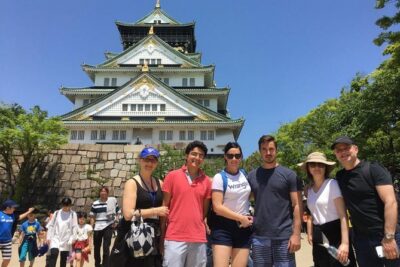
5-Hour Osaka Bike Tour to the Neighborhood of Osaka Castle
Read our review →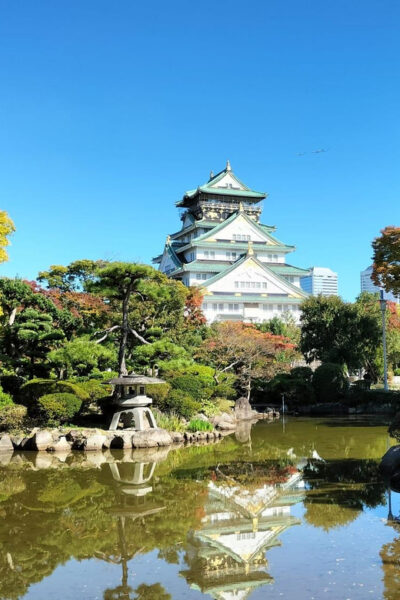
PRIVATE 6hr, Food tour from Osaka Castle, Kuromon, Dotonbori.
Read our review →
A Tour to Explore the Symbol of Osaka: Osaka Castle
Read our review →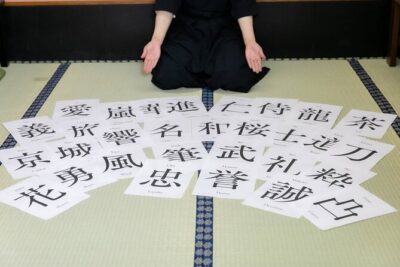
Learning Zen of Japanese Calligraphy in kimono near Osaka Castle
Read our review →This tour also fits