Reviewed · OSAKA CASTLE GUIDED TOURS
Learning Zen of Japanese Calligraphy in kimono near Osaka Castle
One calm hour can change your handwriting. You’ll step into kimono near Osaka Castle, learn shodo basics from a professional teacher, and finish with your own kanji piece plus digital photos. I especially love how practical the strokes are, with clear drills like tome, hane, and harai, and how you can personalize it with kanji tied to your name. The only real drawback to plan around is the physical setup, since it’s not recommended if you have back problems or heart conditions, and you may sweat a bit while wearing traditional clothing.
This is built for first-timers, kids included, with a translator on hand (English by default). You’re in a small group of up to 10, and the pacing is relaxed enough to learn without feeling rushed. I also like that you get more than a quick demo, you practice, write a final draft, and then get a photo moment that actually captures the work.
If you want a hands-on cultural stop that feels quieter than temple-sightseeing and easier than a language class, this one is a strong match. It’s also good value for Osaka, because for about $43.59 you’re paying for teacher time, attire, and the photo deliverable, not just “a souvenir you buy at a shop.”
In This Review
- Key highlights worth planning around
- Osaka Castle area shodo, done the hands-on way
- Step one: dressing in kimono or hakama (and what to do before you arrive)
- The Zen part: mindset, tools, and how shodo is different
- Choosing your kanji: personalization that actually teaches
- Brush technique you’ll repeat: tome, hane, harai
- From practice to final draft: your work becomes a keepsake
- Photo shoot and digital photos: how to get the most out of it
- Price and value around Osaka Castle
- Logistics that can make or break your arrival
- Who this class is perfect for, and who should think twice
- Should you book this Osaka Castle calligraphy class?
- FAQ
- How long is the Japanese calligraphy class near Osaka Castle?
- Where does the class start and end?
- What languages are available for the class?
- Can kids join if they have no experience?
- What do I take home from the class?
- Do I get to choose my own kanji?
- Are smartphones allowed for photos?
- Is there a dress-up option for hair and accessories?
- Who should avoid booking due to health or mobility concerns?
Key highlights worth planning around
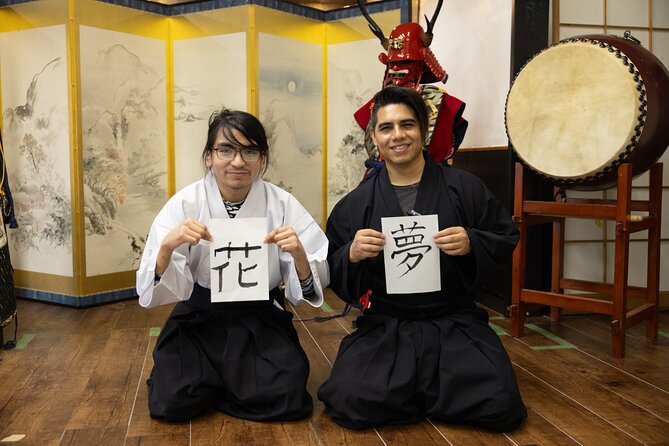
- Kimono dressing time first, so you start the experience in the culture, not just watching it
- Kanji practice that starts with choosing your character(s), then moves into stroke order
- Brush drills with real technique terms, like tome, hane, and harai
- A final draft plus a name tag surprise, using the kanji you selected for a personal keepsake
- Digital photos sent to your email, so you don’t need to worry about printing anything
- Small group size (max 10), which helps the teacher guide you as you practice
Osaka Castle area shodo, done the hands-on way
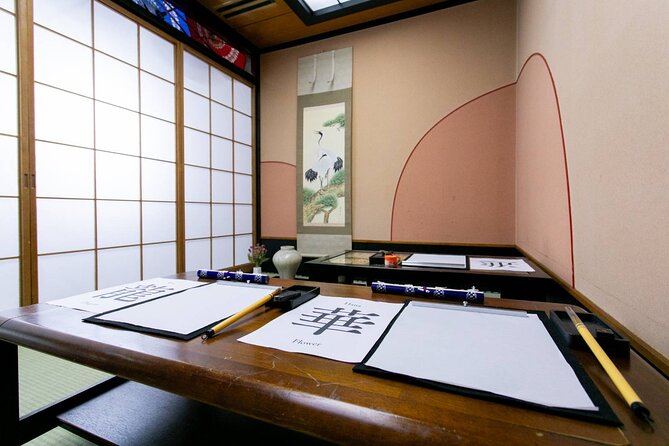
This class is in Osaka, close enough to build around an Osaka Castle visit. The format is simple: you show up, you dress in traditional attire, you learn the feel of Japanese calligraphy, then you produce a piece you can take away. It’s only about 1 hour, but it’s packed with the steps that matter for real progress: posture, brush handling, basic stroke technique, and then application to your chosen kanji.
What makes this feel different from most “cultural shows” is that shodo here is treated like a skill. You’re not just copying a sample for a photo. You’re practicing movements, then writing a final draft while keeping those movements in mind.
Still haven't worn a kimono through Osaka?
- Osaka: Sumo Show & Experience w/ Optional Kimono & Hot Pot★ 4.5 · 609 reviews
- Osaka: Kimono or Yukata Rental &Photos Service Options★ 4.9 · 25 reviews
- Kimono photoshoot-Includes 100 photo data★ 5.0 · 21 reviews
- Premium Kimono Dressing, Tea Ceremony, Calligraphy, Samurai show★ 5.0 · 18 reviews
- Japanese miniature kimono made with origami in Osaka★ 5.0 · 12 reviews
Step one: dressing in kimono or hakama (and what to do before you arrive)
You start with preparation, including changing into traditional Japanese clothing such as a kimono. Some versions include hakama as well, and the class notes specifically warn that you may sweat easily while wearing hakama or armor and practicing swordsmanship. That’s your clue to plan hydration and comfortable underlayers under the outfit.
Before you dress, use the restroom. It sounds basic, but it avoids an awkward pause once you’re in traditional clothing. Also, if you’re considering the optional wagami (collected hair plus kanzashi) add-on, it’s listed as a paid option at ¥3,300 per person, so decide ahead of time if you want the extra finishing touch.
Here’s a practical heads-up for your walk in: the venue can be easy to miss at first glance because it can look like a small storefront. If you’re relying on map directions, give yourself a few extra minutes to spot the exact entrance.
The Zen part: mindset, tools, and how shodo is different
Once you’re seated, you’ll get some context. You’ll talk about the differences between calligraphy as “decorative writing” you might see overseas versus Japanese shodo, which is built around controlled brush movement and intention. This matters because it changes how you approach the strokes, you’re not just making pretty lines, you’re learning a system.
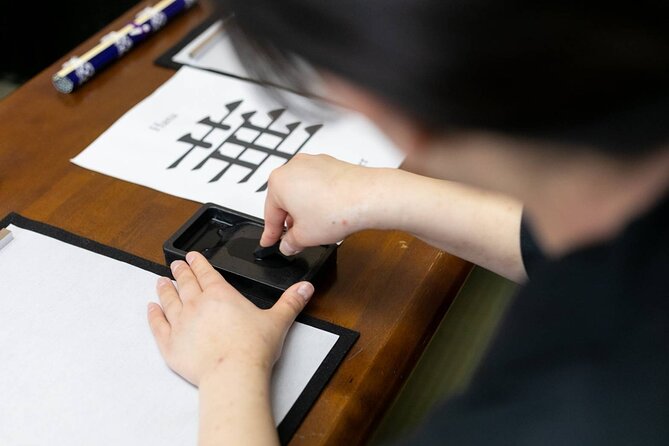
Then you move into tools and technique basics. You’ll learn how to hold the brush and use the tools properly. This is one of those “small details” that turns into a big difference fast. When your grip and angle are right, your strokes stop looking shaky and start looking deliberate.
Even with no previous experience, the class is designed to guide you step by step. English-Japanese or Chinese-Japanese translation support is available, which helps when you’re trying to understand technique terms and the teacher’s corrections at the pace of live instruction.
Choosing your kanji: personalization that actually teaches
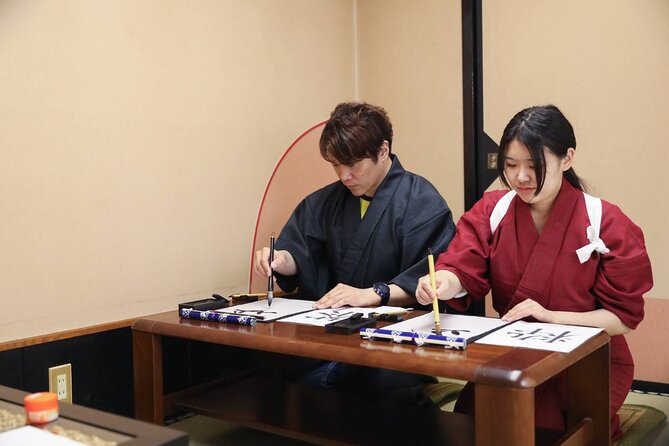
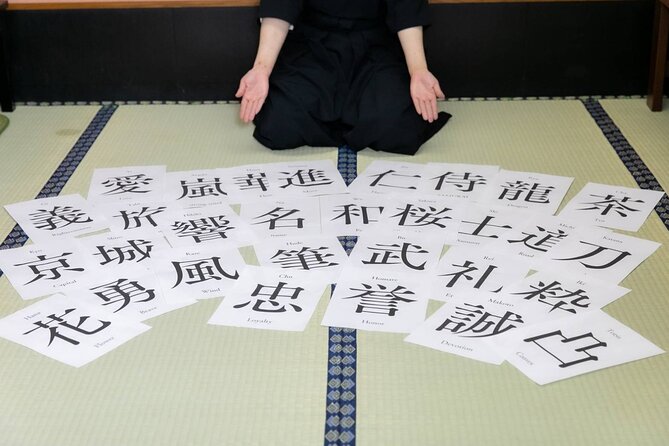
Next comes the most memorable part for many people: kanji selection. You choose a favorite Japanese kanji to challenge yourself. The class also notes that the “most difficult language to learn” idea is tied to the kanji system, and each character has various meanings depending on the character.
The teaching move here is smart. Instead of writing random exercises all session, you’re practicing strokes that will connect to a character you care about. That keeps attention up, and it gives you a reason to focus on the exact stroke order.
Then you learn stroke order for your selected kanji. Stroke order is more than tradition. It determines how each component connects, and why the final character looks balanced instead of assembled.
Brush technique you’ll repeat: tome, hane, harai
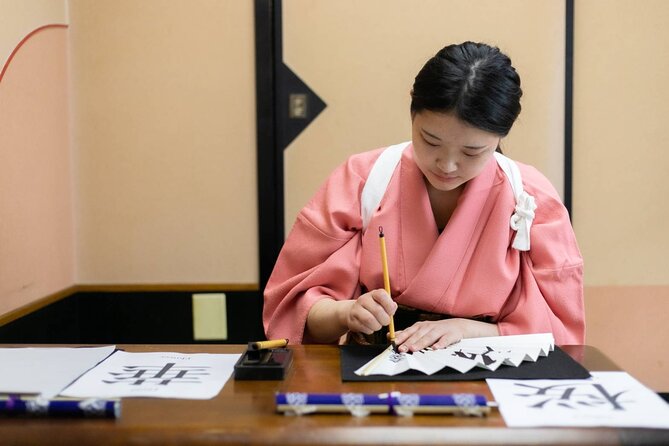
Now you get into the core mechanics. You’ll practice brush movement and technique, including three basics called tome, hane, and harai. These names sound technical, but in practice they translate into three kinds of “how the line ends” or “how the stroke releases.”
- tome is about a controlled stop
- hane is about a small change in direction or a spring-like movement
- harai is about sweeping, the kind of stroke where the brush naturally finishes with a flick
You’ll practice these as movements, then apply them while writing your character. This is where many people improve quickly, because you get repeated tries with real corrections from the teacher.
If you like structure, you’ll appreciate how the class is laid out: learn the mindset, learn tool handling, learn the core stroke types, then practice the chosen kanji with stroke order. If you prefer freedom, you still get it, since you choose the character you want to write.
Brush strokes that take a lifetime to master
- Osaka: Private Japanese Calligraphy Experience
★ 5.0 · 66 reviews - Calligraphy Workshop in Namba, Dotonbori
★ 5.0 · 57 reviews - Osaka: Private Tea Ceremony and Calligraphy Experience
★ 5.0 · 50 reviews
From practice to final draft: your work becomes a keepsake
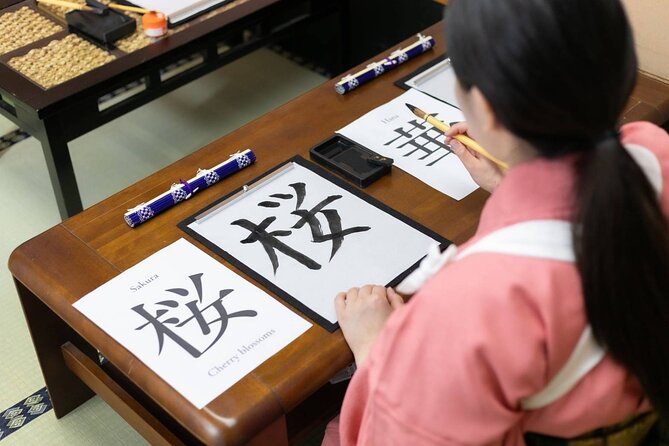
After the stroke drills and stroke order practice, you move to a final stage: your final draft. You’ll write again while keeping what you learned in mind, which is the difference between “doing the steps” and learning the steps.
There’s also a surprise component. The teacher will write the foreign names of participants on wooden tags using the kanji characters they selected. That’s a thoughtful detail because it turns your practice into a personalized souvenir, not just a worksheet you leave behind.
Finally, there’s a photo moment, where your artwork and your kimono outfit both matter. It’s not just a costume check, it’s a chance to see your final character in a full, styled memory.
Photo shoot and digital photos: how to get the most out of it
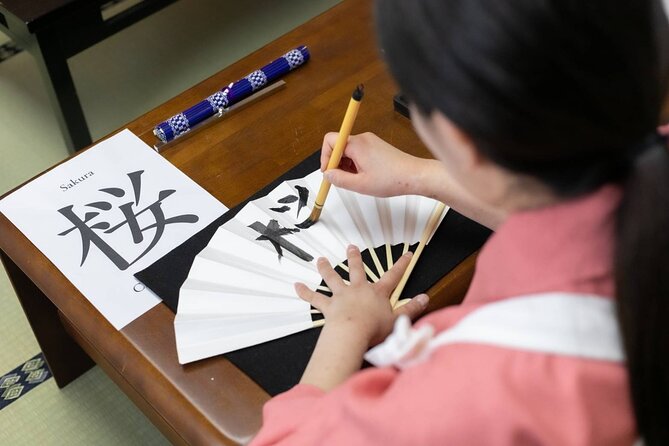
You’ll capture your kimono outfit and artwork in a photo at the end. Smartphone photography is permitted, with a clear rule: no selfies and no photographing other guests. Fixed tripods and video recording aren’t allowed because they can disturb others.
One nice perk is that the photography is included, and the data is sent to a designated email address. That’s useful in Japan when you’re trying to keep your hands free, and it saves you the hassle of uploading or selecting images right away.
Tips for your own photos: step back and let the teacher position you if they offer guidance, and use your phone camera for close-ups of the calligraphy strokes. The whole point of shodo is in the edges and endings of strokes, so those details are what you’ll want to capture.
Price and value around Osaka Castle
At $43.59 per person for about 1 hour, you’re paying for more than the novelty of kimono. Your money covers:
- instruction from a professional shodo teacher
- traditional attire such as kimono and possibly hakama
- translator help in English-Japanese or Chinese-Japanese (English is default)
- a structured practice session that ends with a final draft
- included photography, with digital photos sent by email
It’s also booked fairly often, with an average booking lead time of about 36 days. That’s a sign that demand is steady, and it usually means you should plan ahead rather than assuming you’ll find a walk-in slot.
One more value point: the class is capped at 10 travelers. For a hands-on skill like brush calligraphy, smaller groups matter, because your corrections and feedback are more likely to be specific.
Logistics that can make or break your arrival
The meeting point is an address in Osaka, listed in Joto Ward, Shiginonishi, with an apartment-style building name shown on the details. That means you should rely on the exact address, not just a vague area. If you’re walking in from Osaka Castle, aim to arrive early rather than at the last minute.
The class has a strict timing note: if you’re more than 30 minutes late, entry may be refused even if you contact the provider. Build in buffer time, especially if you get a detour or a crowd slows you down.
Also, if you’re changing clothing, remember the instruction to use the restroom before you dress, and arrive ready to participate. The session can be slower at the start while everyone gets fitted.
One more practical note based on how this kind of class location can work: because it can be a small storefront, don’t be surprised if it looks like a normal building front at first. If you miss the exact entry, take a moment to double-check you’re in front of the correct doorway before you lose time.
Who this class is perfect for, and who should think twice
This experience is open to all skill levels, so you don’t need to be “good at art” to enjoy it. It also says kids can participate, which makes it a rare family-friendly cultural activity that’s not just watching something.
It’s also ideal if you want a quieter, more reflective activity after time spent walking around Osaka Castle. The calligraphy rhythm offers a break from constant sightseeing, and you’ll end up with something to remember that’s not just a photo of a building.
Skip it, or check with the provider first, if you have back problems or heart conditions. It also isn’t stroller accessible. Pets aren’t suitable, though service animals are allowed.
If you want the kimono look but you’re concerned about timing, plan your underlayers and comfort first. You’ll likely be seated and practicing, so focus on mobility and ease under the outfit.
Should you book this Osaka Castle calligraphy class?
I think it’s a yes for you if you want a hands-on cultural activity near Osaka Castle, and you enjoy learning a skill step by step. The biggest reasons to book are the structure (stroke basics to final draft), the personalization (choose kanji), and the included take-home value (digital photos plus a keepsake tag).
Book if:
- you want kimono plus real instruction, not just a one-time pose
- you’re traveling with kids or beginners
- you like the idea of writing your own character and seeing it refined
Consider skipping if:
- you have health concerns that make sitting or wearing traditional clothing uncomfortable
- you need stroller access
- you hate strict timing, since being more than 30 minutes late can mean no entry
- you’re anxious about finding a small storefront, in which case you’ll need extra arrival buffer
If you’re set on it, arrive early, follow the exact address, use the restroom before dressing, and give yourself permission to practice slowly. The payoff is a finished kanji piece you chose yourself, plus a memory that feels personal instead of generic.
FAQ
How long is the Japanese calligraphy class near Osaka Castle?
It runs about 1 hour (approx.), and it ends back at the meeting point.
Where does the class start and end?
It starts at the listed Osaka meeting point in Joto Ward, Shiginonishi, and it ends back at the same meeting point.
What languages are available for the class?
The default is English. An English-Japanese or Chinese-Japanese translator helps during the class, and other languages can be requested by inquiry.
Can kids join if they have no experience?
Yes. The class is open to all skill levels, and it notes that kids can participate too.
What do I take home from the class?
You’ll get digital photos sent to your email, and you’ll also take home your calligraphy work. The teacher also writes foreign names on wooden tags using the kanji characters participants choose.
Do I get to choose my own kanji?
Yes. You choose a favorite Japanese kanji to challenge yourself, and then you learn stroke order for that character.
Are smartphones allowed for photos?
Yes, smartphone photography is permitted as long as you do not take selfies or photograph other guests. Fixed tripods and recording videos are not allowed.
Is there a dress-up option for hair and accessories?
There is a paid option for wagami, which includes collected hair plus kanzashi, listed at ¥3,300 per person.
Who should avoid booking due to health or mobility concerns?
The class is not recommended for people with back problems or heart conditions. It’s also not stroller accessible, and pets are not suitable. Service animals are allowed.
Inside Osaka Castle
- Osaka Castle: Museum and Tower Entry Ticket★ 4.5 · 2,380 reviews
- Osaka Castle Walking Tour and Castle Tower Admission★ 5.0 · 561 reviews
- 5-Hour Osaka Bike Tour to the Neighborhood of Osaka Castle★ 5.0 · 319 reviews
- Osaka Castle Guided Tour★ 4.7 · 249 reviews
Just added around Osaka

Osaka Castle Guided Tours, compared.
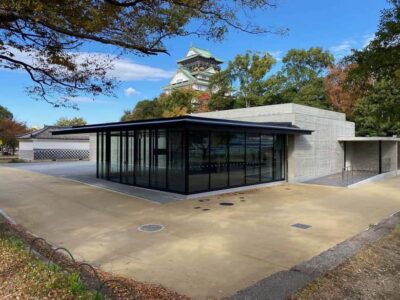

Osaka Castle Walking Tour and Castle Tower Admission
Read our review →
5-Hour Osaka Bike Tour to the Neighborhood of Osaka Castle
Read our review →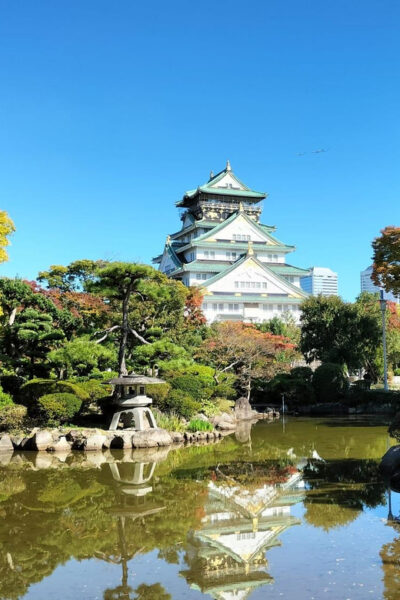

PRIVATE 6hr, Food tour from Osaka Castle, Kuromon, Dotonbori.
Read our review →
A Tour to Explore the Symbol of Osaka: Osaka Castle
Read our review →