

Reviewed · DAY TRIPS TO KYOTO FROM OSAKA
Kyoto and Nara Day Tour From Osaka with Deer Sightings
Nara’s deer can steal the whole show. This 10-hour Kansai day tour strings together Nara Park sika deer and the Fushimi Inari torii gates with enough time at each stop to actually enjoy what you came for. I like that the schedule is tight but not frantic, and you get self-guided time where it matters. One thing to consider, the guide support can vary, and English command may be limited with some drivers.
What makes it work for real life is the logistics: a small group, a driver who gets you between sights, and pre-set locations so you do not burn energy on transit. You also get a comfortable setup for a long day, and the deer part has a specific plan for feeding. The tradeoff is simple, admission tickets and lunch are not included, so you will budget for those before you go.
In This Review
- Key highlights worth planning around
- Osaka to Nara and Kyoto, the day’s real rhythm
- Nara Park: the deer moment you will remember
- Fushimi Inari Taisha: torii gates in a way you can actually enjoy
- Kiyomizudera: Otowa Waterfall and the wooden stage
- Downtown Osaka and Shinsaibashi-suji: a normal-person break
- Driver and guide quality: comfort, punctuality, and how to work with language differences
- Price and what $67 buys you in real terms
- Timing, walking, and the small group effect
- Rules inside the vehicle and what to pack
- Who this Kyoto and Nara day tour is best for
- Should you book this Kyoto and Nara day tour from Osaka?
- FAQ
- How long is the Kyoto and Nara day tour from Osaka?
- What is included in the price?
- Are lunch and admission tickets included?
- How many people are in the group?
- How much time do we get at each main stop?
- Can I feed the deer at Nara Park?
- What languages are available with the driver/guide?
- Are pets allowed on the tour?
- Is pickup available?
- Is the tour suitable for wheelchair users or pregnant travelers?
Key highlights worth planning around

- Sika deer at Nara Park, plus approved crackers and plenty of time to watch them up close
- Fushimi Inari Taisha’s torii tunnel, with self-guided time through the shrine’s main path
- Kiyomizudera’s UNESCO temple complex, including the Otowa Waterfall streams and the wooden stage
- Small group limit of 9, which usually makes it easier to move and hear instructions
- Downtown Osaka time at Shinsaibashi-suji, so the day does not feel only-temples
Osaka to Nara and Kyoto, the day’s real rhythm

This is a classic Kansai day strategy: trade train tickets and transfers for a single van ride plan. You start with pickup that depends on your selected option, then settle in for the drive. Expect about 10 hours of car usage and about 10 hours of driver/guide service, which is what keeps the itinerary from turning into a transit scavenger hunt.
The group size is small, limited to 9 participants, so you avoid the long line energy you get on bigger tours. In practice, that makes a difference at places where you need to hear where to meet again. It also helps at Kiyomizudera, where the walk from the entry points to the main viewing areas can feel like it takes forever when you are herding a group.
One practical note I appreciate: the tour is designed as self-guided time at each major stop. That means you can slow down for photos, choose how much of the grounds to cover, and not feel chained to someone’s lecture.
Deer that bow back, minutes from Osaka
- Ancient Capital Tour: Kyoto and Nara Highlights from Kyoto/Osaka★ 4.5 · 332 reviews
- Kyoto and Nara Day Trip from Osaka★ 4.0 · 175 reviews
- Discover Himeji, Kobe and Nara from Osaka★ 5.0 · 101 reviews
- Kyoto & Nara Private customized tour with English speaking Guide★ 4.5 · 99 reviews
- Kyoto and Nara UNESCO Highlights Full-day Tour From Osaka★ 4.5 · 50 reviews
Nara Park: the deer moment you will remember
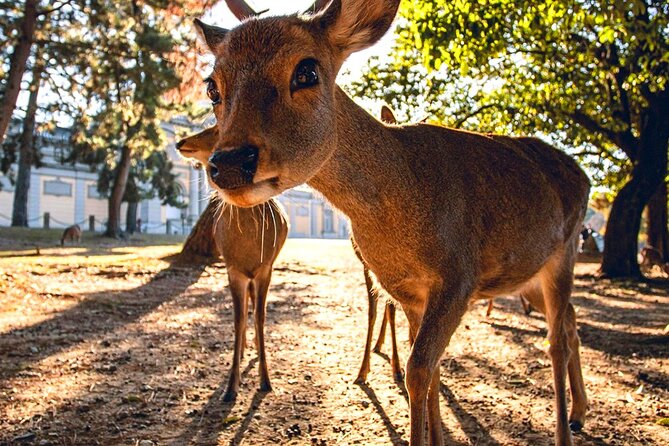
Nara Park is a timed highlight, with about 1.5 hours to explore. The big draw is obvious: more than 1,000 freely roaming sika deer. What makes this stop special is that it is not only watching from a distance. You are set up to feed the deer with specially approved crackers, which turns the scene from background tourism into a hands-on memory.
There is also a spiritual and cultural layer to the park. The deer are considered messengers of the gods, so they feel woven into the place rather than treated like an attraction. You will often notice people behaving differently here than at typical zoo-style experiences, quieter and more respectful, because the deer are part of the local worldview.
Even if you only want deer time, do not ignore the wider setting. The park includes several UNESCO sites, and you can see Todai-ji Temple in the distance. That is useful because it gives you a broader sense of what Nara offers without forcing you to squeeze in another full ticketed temple.
Practical tip: wear comfortable shoes. Nara Park is a walk-around kind of place, and you will want to move to get the best angles without standing in one spot for the full 90 minutes.
Fushimi Inari Taisha: torii gates in a way you can actually enjoy
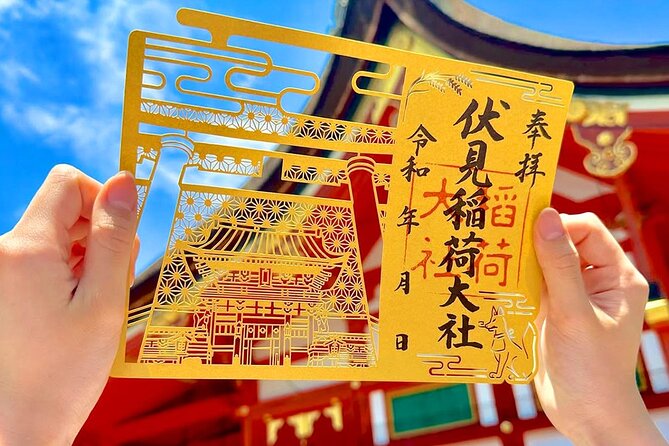
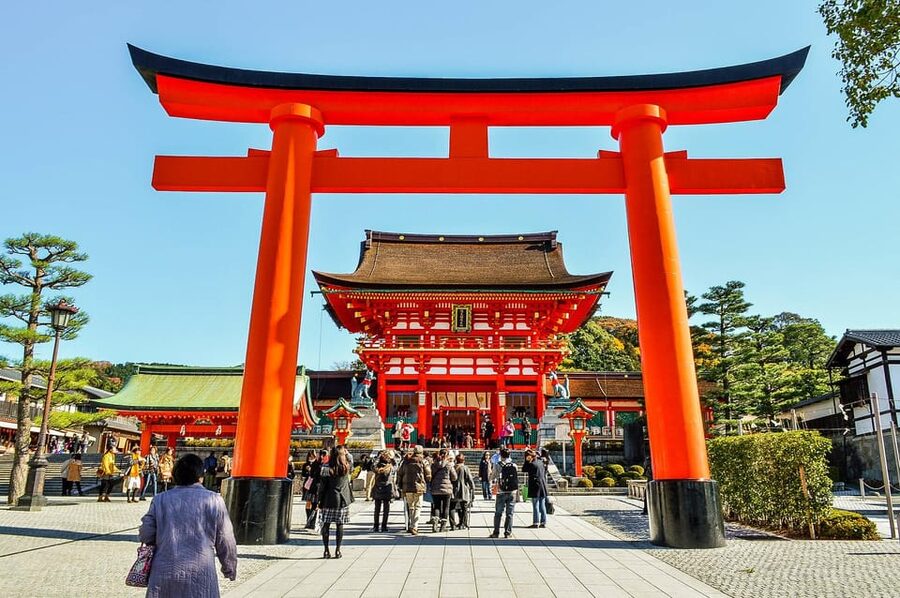
After Nara, the day shifts gears to Kyoto’s most iconic shrine scene. You get about 80 minutes at Fushimi Inari Taisha, and the layout is what does the heavy lifting. You walk through the red torii gates that form the famous path up Mount Inari. These are not spaced like a casual stroll, they create a corridor effect, and the closer gates keep pulling your eyes forward.
This stop is dedicated to Inari, the god of rice and prosperity, so it has a clear Shinto purpose behind the spectacle. You will also notice the shrine’s character through how the torii donations work, with gates contributed by businesses and individuals hoping for good fortune. That detail matters because it changes how you look at the gates. It becomes less like scenery and more like a visible record of prayers.
Since your time here is self-guided, you control how far you go. If you like the straight photo lines, you will find them early. If you prefer a calmer pace and more depth, you can keep going as the corridor stretches.
Possible drawback to watch for: because this is a walking-heavy shrine experience, 80 minutes can feel short if you pause for photos constantly or want to explore side areas. If you love photos, think about choosing a few prime vantage points rather than trying to cover everything.
Kiyomizudera: Otowa Waterfall and the wooden stage
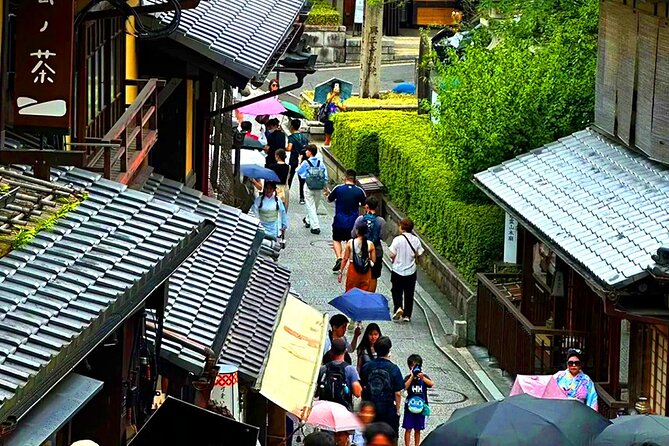
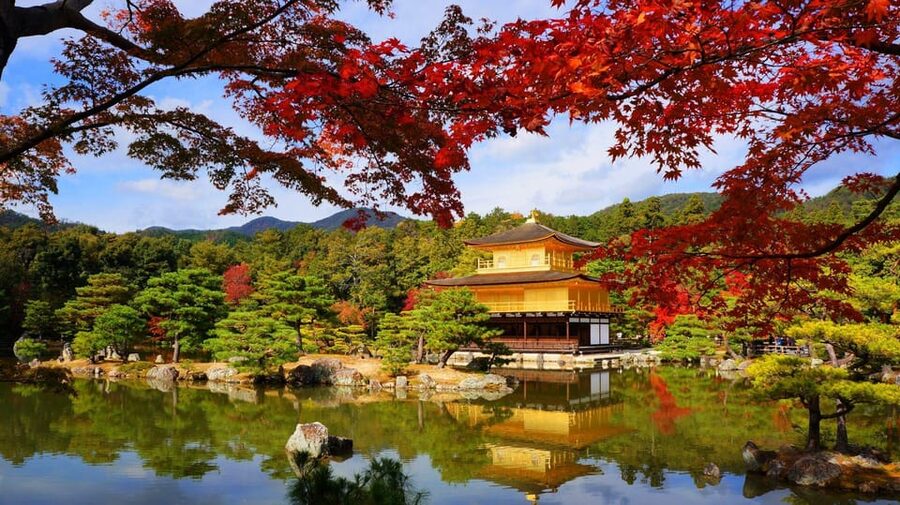
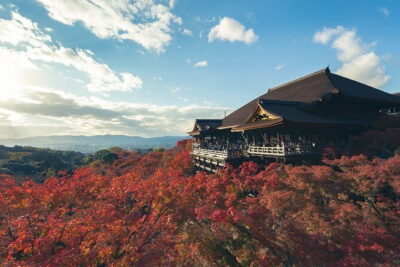
Kiyomizudera gets about 3 hours, which is the longest stop of the day and a big reason the tour feels worth it. This UNESCO-listed temple complex is perched on the side of Otowa Mountain, and the views over the city are part of the attraction.
The famous feature is the wooden stage. What I appreciate is that the description includes the fact that it was built without a single nail. That detail gives you a quick way to anchor your attention when you are standing there, because you can look at what you are seeing and understand why people remember it.
Then there is the Otowa Waterfall, with its three streams. The tour framing includes the traditional belief that each stream grants something different: wisdom, health, or longevity. You do not need to treat it as magic to enjoy the idea. It adds meaning to the moment and gives you a reason to pause at the waterfall area instead of just passing through.
Below the temple, you also get time in the Higashiyama district lanes, where you can browse traditional shops. Based on what I value, this is the right kind of downshift after a more structured shrine circuit. You can snack if you want, buy small souvenirs, and walk at your own pace.
If you want one practical tip, plan your energy for this section. Three hours sounds long, but Kiyomizudera plus the surrounding lanes can eat time quickly. If you are prone to rushing, force yourself to stop at least once for the main stage view and once near the waterfall area.
Downtown Osaka and Shinsaibashi-suji: a normal-person break
The highlights include Shinsaibashi-suji Shopping Street in downtown Osaka. Even if your heart is fully in temples, this kind of time matters because it gives you a break from spiritual sights and camera-heavy corridors.
Shopping streets also help you understand the modern Osaka vibe. This is where you can see daily life scale down from sightseeing mode to everyday browsing. It also gives you room to handle the “not included” parts of the day, like grabbing lunch outside the vehicle and picking up small things you forgot.
Because the plan does not spell out a strict timing window for Shinsaibashi-suji, treat it as a flexible buffer. If you feel temple fatigue, this is the place to walk slowly, reset, and still end the day feeling like you got a slice of Osaka.
More temples, thirty minutes up the line
- Osaka/Kyoto: Hiroshima Miyajima Bus Tour & Shinkansen Ticket
★ 4.7 · 919 reviews - From Kyoto/Osaka: Kyoto Top Highlights 1-Day Guided Bus Tour
★ 4.5 · 714 reviews - Osaka/Kyoto: Amanohashidate & Miyama Tour with Boat & Lunch
★ 4.6 · 207 reviews
Driver and guide quality: comfort, punctuality, and how to work with language differences
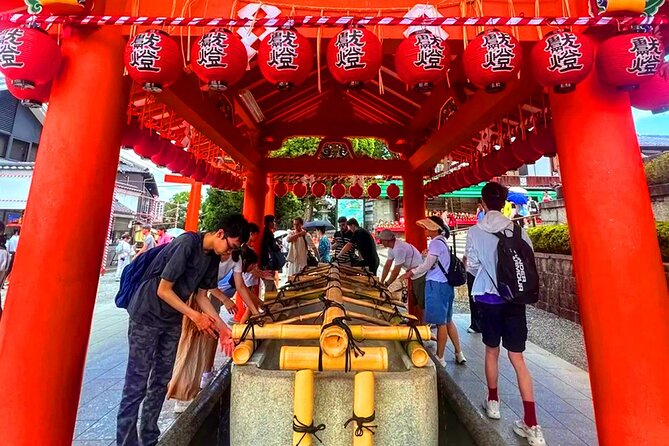
The tour runs with a driver in English, and guides can be Chinese, English, or Japanese. In a perfect world, that would mean you always get clear explanations. In the real world, some drivers may have limited English, and in that case the tour can rely on short text-style guidance about each site.
That is not a dealbreaker. I actually like tours that are honest about self-guided time because it prevents the experience from turning into a long script. You still get the important part, the route between locations and the reminder of where to meet next.
The service quality is a major part of the value. In past bookings, guides such as Ms Xiao, and drivers such as Pony, have been praised for keeping things moving and making sure you reach strong viewpoints and photo stops. There are also mentions of a very comfortable vehicle, described as luxurious and roomy, and a flexible approach when people needed breaks.
One more specific name that came up: Kaniel was described as punctual and kind, with a clean car and flexibility during the day. That is the kind of professionalism that makes a long 10-hour day feel manageable.
Price and what $67 buys you in real terms

At $67 per person for a 10-hour day trip, the value is not in the temple admissions. It is in the time-saving transport and the fact that your route is handled. You get car usage for 10 hours plus 10 hours of service for an English driver/guide.
The not-included items are important for budgeting: lunch and admission tickets. Those can add up, depending on what you choose to eat and which tickets you need at Kiyomizudera. Plan for that, and you will not get surprised midway through the day.
Also consider what you are avoiding. Without a structured plan, a day of Kyoto and Nara from Osaka often turns into transit stress, platform searching, and last-minute taxi calls. Here, the tour is built to remove that friction. For many people, that is worth more than a few extra dollars saved on a DIY day.
Timing, walking, and the small group effect
The itinerary structure is straightforward, but the details matter:
- You get 1.5 hours at Nara Park, enough to do deer feeding and still look around
- You get 80 minutes at Fushimi Inari, which works best if you set a personal goal like reaching a certain height or hitting the most photogenic gate cluster
- You get 3 hours at Kiyomizudera, which is where you should slow down and enjoy
The van rides between stops are about 1 hour each way. For a first-timer, that is easier than planning multiple train lines and transfers while juggling luggage or shopping bags.
The small group size, limited to 9, also helps the flow. It reduces the chance you lose time waiting for people, and it makes meet-up points work better. When a tour includes self-guided time, that small-group structure is a quiet superpower.
Rules inside the vehicle and what to pack
The vehicle rules are clear:
- No drinks in the vehicle
- No food in the vehicle
- No alcoholic drinks in the vehicle
- Pets are not allowed (assistance dogs are allowed)
That means you should handle snacks and drinks before you board, or plan to stop outside. It also means you should not count on being able to eat on the move.
Packing is simple and practical:
- Comfortable walking shoes for temple stairs and shrine paths
- Camera or phone with a charged battery, because torii gates and the deer are photo magnets
- Light layers, because temple areas and park areas can feel different from the city streets
If you are traveling with kids, children under 3 can be free of charge if they do not occupy a seat. That can help families make the day work.
Who this Kyoto and Nara day tour is best for
This tour fits best if you want the classic Kansai highlights in one day without building a transportation plan.
You will like it if you:
- Want big, recognizable sights without booking separate day trips
- Enjoy a mix of self-guided exploration and guided logistics
- Value comfort for a long day, especially with a small group setup
You might want to skip it if:
- You are pregnant or prefer an option with less walking, since it is listed as not suitable for pregnant women
- You use a wheelchair, since it is not suitable for wheelchair users
- You expect long, deep narration at every site, because the structure is mainly self-guided within each location
Should you book this Kyoto and Nara day tour from Osaka?
If your goal is a smooth, one-day hit of Nara Park deer, Fushimi Inari’s torii tunnel, and Kiyomizudera’s wooden stage and Otowa Waterfall, this is a strong fit. The best part is the balance of time, you get enough minutes to enjoy each place rather than speed-run them.
Book it if you want convenience and you are comfortable paying separately for lunch and admission tickets. Skip or consider alternatives if you need extensive accessibility support or if you rely on very detailed English narration throughout the day.
FAQ
How long is the Kyoto and Nara day tour from Osaka?
The tour duration is 10 hours.
What is included in the price?
You get 10 hours of car usage and 10 hours of service for an English driver/guide.
Are lunch and admission tickets included?
No. Lunch and admission tickets are not included.
How many people are in the group?
The group is small, limited to 9 participants.
How much time do we get at each main stop?
Nara Park is about 1.5 hours, Fushimi Inari Taisha about 80 minutes, and Kiyomizudera about 3 hours.
Can I feed the deer at Nara Park?
Yes. You can feed the sika deer using specially approved crackers.
What languages are available with the driver/guide?
Languages include Chinese, English, and Japanese.
Are pets allowed on the tour?
Pets are not allowed, but assistance dogs are allowed.
Is pickup available?
Pickup is optional, and you will receive gathering information by the day before your trip.
Is the tour suitable for wheelchair users or pregnant travelers?
No. It is listed as not suitable for wheelchair users and for pregnant women.
Just added around Osaka

Day Trips to Kyoto from Osaka, compared.
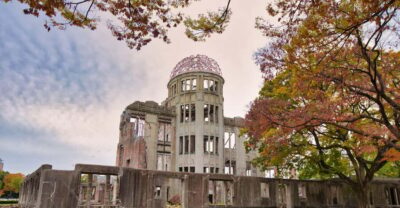
Osaka/Kyoto: Hiroshima Miyajima Bus Tour & Shinkansen Ticket
Read our review →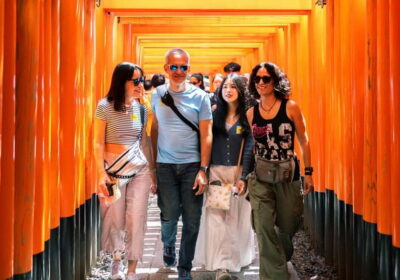
From Kyoto/Osaka: Kyoto Top Highlights 1-Day Guided Bus Tour
Read our review →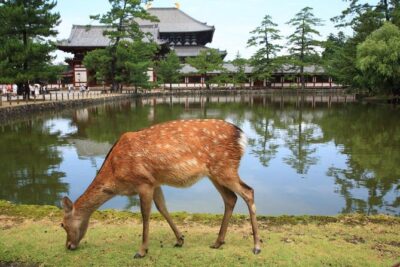
Ancient Capital Tour: Kyoto and Nara Highlights from Kyoto/Osaka
Read our review →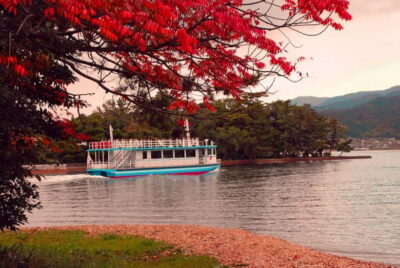
Osaka/Kyoto: Amanohashidate & Miyama Tour with Boat & Lunch
Read our review →

Full Day Tour of Kyoto with Private Transportation
Read our review →
Kyoto & Nara Private customized tour with English speaking Guide
Read our review →This tour also fits