
Reviewed · DAY TRIPS TO KYOTO FROM OSAKA
Kyoto and Nara Day Tour from Osaka
A red tunnel to a golden temple, fast. This Kyoto and Nara day trip from Osaka strings together Fushimi Inari and Kinkaku-ji without wasted time, and it also includes guided, round-trip transport so you can focus on seeing. I like that the big temple stops have admission handled, and I like how the day moves shrine to pond-reflected gold to Nara’s deer-filled park. One consideration: it is a full 9 to 10 hour push, and during year-end and New Year traffic restrictions you may not stop at Fushimi Inari.
This works because you get Chinese and English guidance plus a small-group feel with a maximum of 40 people. You start early from VIP Villa Namba, and the schedule gives you about four hours in Nara Park, which is plenty for Todai-ji and deer time, as long as you plan your walk. If you like to linger at every corner, you may feel the clock a bit.
In This Review
- Key highlights you will actually use
- Why this Kyoto and Nara day trip works from Osaka
- Getting started: VIP Villa Namba, 7:45 meetup, and the Kyoto transfer
- Fushimi Inari Taisha: torii gates, fox statues, and what to do with 3 hours
- Kinkaku-ji Golden Pavilion: gold leaf reflections and Mirror Pond views
- Nara Park and Todai-ji: deer feeding plus the Great Buddha
- Transport, guides, and group size: the comfort factor matters
- Price and value: what $113.75 covers and what you should budget for
- Who this tour suits best (and who might not love it)
- Small practical tips for a smoother day
- Should you book this Kyoto and Nara day tour from Osaka?
- FAQ
- How long is the Kyoto and Nara day tour from Osaka?
- Where does the tour start, and what time do we meet?
- What are the main stops on the tour?
- Are entrance fees included?
- Can the tour skip Fushimi Inari during holidays?
- How long do you spend in Nara Park?
- What is the group size limit?
- What are the child age rules for this tour?
- What is the cancellation and weather policy?
Key highlights you will actually use
- Early start from Osaka helps you reach Kyoto and Nara before the heaviest crush
- Fushimi Inari torii walks with smaller shrines, fox statues, and bamboo along the way
- Kinkaku-ji Golden Pavilion top floors covered in gold leaf with reflections in Mirror Pond
- Nara Park deer feeding with the tame nodding deer roaming freely
- Todai-ji and the Daibutsu are worked into your Nara Park time
- Tickets plus transport reduce planning stress for a long day
Why this Kyoto and Nara day trip works from Osaka
If you want Kyoto and Nara in one day, this itinerary is built for momentum. You get the headline sights most people chase, but in a route that keeps travel friction low. From Osaka, that matters more than you might think, because transfers can eat your morning and leave you rushed at the best parts.
I also like the balance of textures in the day. You go from the vertical rhythm of torii gates up a hillside, to the calm mirror effect at Kinkaku-ji, then to the open-air chaos of Nara Park with deer right in the path. That variety keeps the day feeling fun rather than like a checklist.
The other big win is that the tour is guided by a Chinese and English-speaking guide. When you are juggling temples, timing, and crowd flow, having someone point you to what to prioritize saves time and keeps you from wandering in circles.
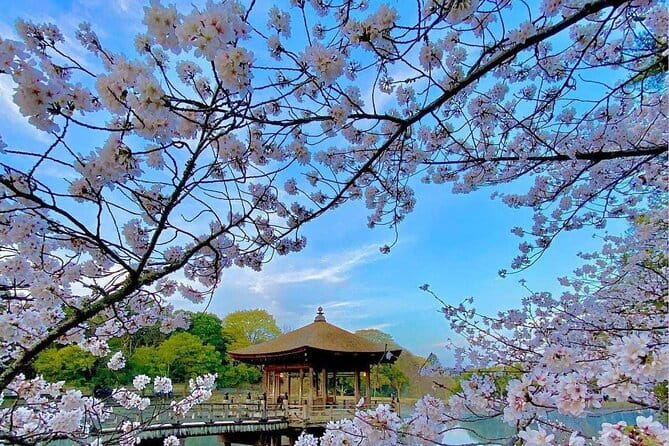
Deer that bow back, minutes from Osaka
- Ancient Capital Tour: Kyoto and Nara Highlights from Kyoto/Osaka★ 4.5 · 332 reviews
- Kyoto and Nara Day Trip from Osaka★ 4.0 · 175 reviews
- Discover Himeji, Kobe and Nara from Osaka★ 5.0 · 101 reviews
- Kyoto & Nara Private customized tour with English speaking Guide★ 4.5 · 99 reviews
- Kyoto and Nara UNESCO Highlights Full-day Tour From Osaka★ 4.5 · 50 reviews
Getting started: VIP Villa Namba, 7:45 meetup, and the Kyoto transfer
You meet at VIP Villa Namba (1-chōme-2-1 Nanbanaka, Naniwa Ward, Osaka). The meeting time is 7:45 am, and the departure time is 8:00 am. Look for a blue flag to find the tour manager, and present your E-Voucher. From there, you ride to the next meeting point at Kyoto VIP Lounge, which takes about 45 minutes.
This morning rhythm is one of the reasons the day stays sane. You are not burning your first hour figuring out train connections or ticket counters. Also, since this tour is often booked around 28 days in advance, going on time helps the whole group keep the schedule.
A small thing, but important: this is a 9 to 10 hour day. You will want to start hydrated, wear shoes you trust, and pack layers for morning chill and afternoon warmth.
Fushimi Inari Taisha: torii gates, fox statues, and what to do with 3 hours
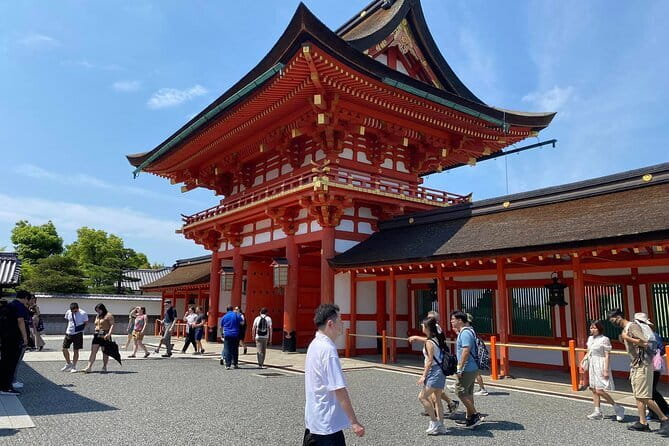
Fushimi Inari Taisha is the kind of place that looks surreal in photos and even better when you are walking through it. Here you get the famous vermilion/red torii gates forming long tunnels up Mount Inari. The walk is not just one straight shot either. Along the route, you will see smaller shrines, stone fox statues, and bamboo groves, which helps break up the climb visually and spiritually.
You have about 3 hours for this stop, which is a solid amount of time for a guided torii walk plus photo stops. With a full schedule, don’t try to sprint to the furthest points. Instead, think of it as a choose-your-own-depth hike. If you want panoramic views of Kyoto, you will get the best pay-off by pacing yourself so you still have energy for the upper stretches.
One real-world caution: during year-end and New Year periods, traffic restrictions may mean you cannot stop at this location. If your dates land in that window, keep your expectations flexible.
Practical note for your camera: the torii corridor gives you repeating shapes, so get one or two wide shots early, then spend time on the details, like the fox statues and the way the paths open up.
Kinkaku-ji Golden Pavilion: gold leaf reflections and Mirror Pond views
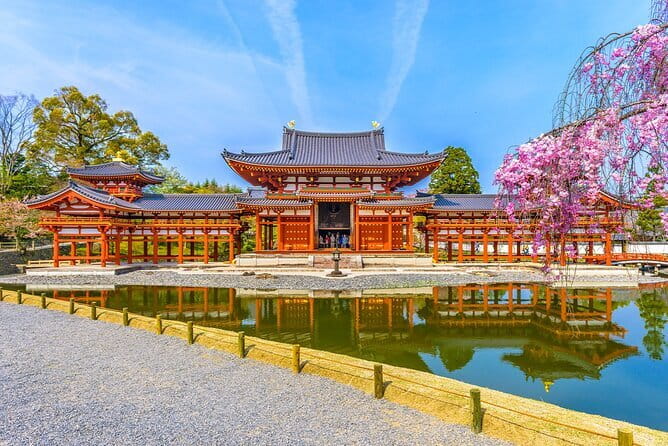
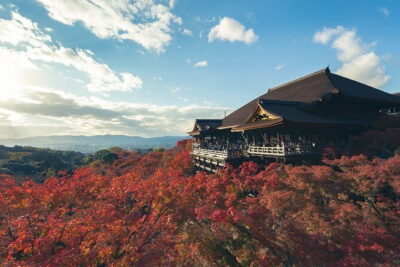
Kinkaku-ji, also known as the Golden Pavilion, is the payoff for many first-time Kyoto days. The structure’s top two floors are covered in gold leaf, and that gold is made even more dramatic by the Mirror Pond (Kyoko-chi) in front of it.
What makes this stop feel worth your time is that it is not only the building. You also get a chance to walk through the landscaped gardens around it, with walking paths, carefully pruned trees, and water features. Those garden paths are often where you slow down and really appreciate the temple’s symmetry. One angle gives you a clean reflection. Another angle shifts the perspective just enough that the gold looks different, even if you think you already photographed it.
You have about 2 hours here. That usually works well for seeing the main views without feeling like you spent your whole day waiting in lines. Still, be mindful: this is one of Kyoto’s top sights, so you will likely share the viewpoints with other people. Your best strategy is to go to the most famous reflection spots first, then use the rest of your time for garden walking and calmer corners.
If you love Zen aesthetics, pay attention to how the water and architecture work together. The pond reflection is not a gimmick. It is part of how the place presents itself.
Nara Park and Todai-ji: deer feeding plus the Great Buddha
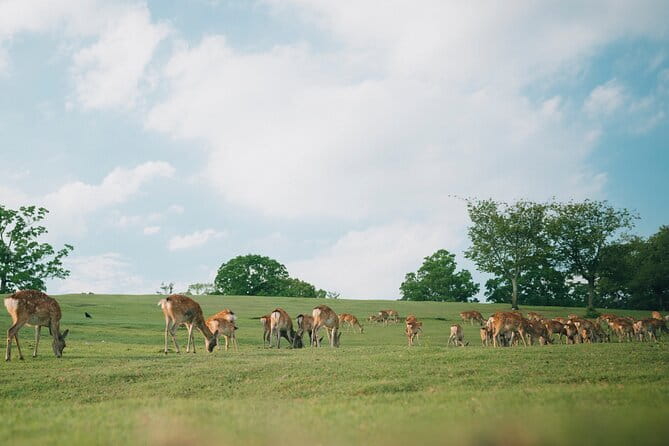
Nara Park is where the day shifts from temple quiet to a park that feels alive. Here the big draw is the tame deer, including the famous nodding deer that roam freely. You’ll have time to explore the expansive park and get that deer interaction, including the chance to feed them as part of the experience.
You also get the anchor stop within Nara Park: Todai-ji Temple and its Great Buddha, the Daibutsu. This is one of the world’s huge bronze Buddha statues, housed inside a wooden temple structure that is also a major sight by itself. The scale can catch you off guard. Even if you’ve seen photos, the size feels different when you are standing inside, surrounded by the temple’s interior.
You get about 4 hours for Nara Park, and that length is what makes this workable. With less time, you would probably feel forced to choose between deer time and Todai-ji. With more time, you can do both and still have a breather.
That said, this is the one stop where time can feel tight if you want to linger. Plan your day so you do not lose momentum: decide which parts of Todai-ji you want to prioritize, then enjoy the deer walk without letting it swallow the clock. The park has a way of stealing minutes because the deer are everywhere.
Where the experience becomes memorable is the contrast. You are in a historic setting, then deer step into your personal space in a normal, managed way. It is a different kind of travel moment than standing in a queue.
More temples, thirty minutes up the line
- Osaka/Kyoto: Hiroshima Miyajima Bus Tour & Shinkansen Ticket
★ 4.7 · 919 reviews - From Kyoto/Osaka: Kyoto Top Highlights 1-Day Guided Bus Tour
★ 4.5 · 714 reviews - Osaka/Kyoto: Amanohashidate & Miyama Tour with Boat & Lunch
★ 4.6 · 207 reviews
Transport, guides, and group size: the comfort factor matters
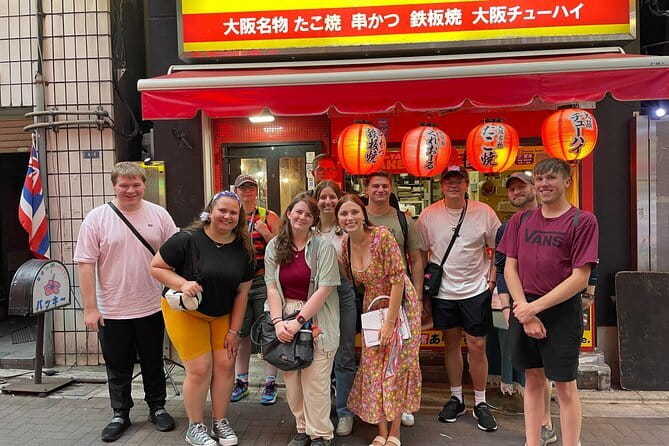
This tour includes round-trip transfers to and from your meeting point and a tour guide. That is a meaningful value add on a long day. Kyoto and Nara are easy to get to, but not always easy to connect efficiently when you also want structured timing for multiple major sights.
The tour is also capped at 40 travelers. That number is not tiny, but it’s small enough that you are less likely to feel like you are trapped in a mass group. Your guide can keep everyone moving and still offer enough guidance so you know what to look for.
Language support is another comfort point. A guide who works in Chinese and English helps you get context at each stop, not just instructions for where to go next. For temple visits, that context can be the difference between seeing an object and understanding why it matters.
Price and value: what $113.75 covers and what you should budget for
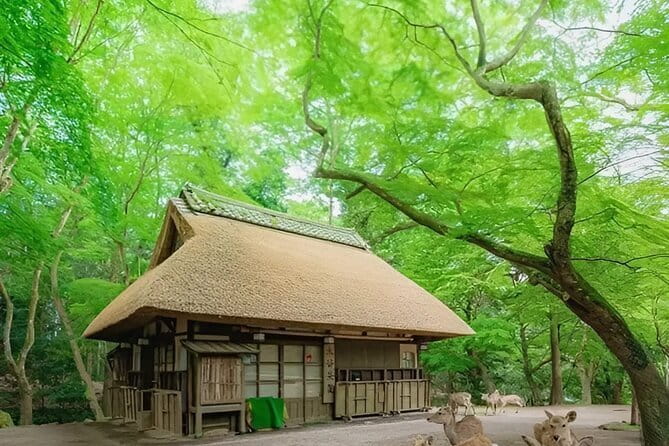
At $113.75 per person, this price can feel like a lot until you look at what it packages together. You are paying for transport from Osaka, a guide, and admission handling for the key stops: Fushimi Inari Taisha, Kinkaku-ji, and Nara Park.
That matters because your day includes multiple major attractions that otherwise require your attention to timing, ticketing, and getting around. Even if you could replicate parts of it independently, the tour reduces decision fatigue. You get a route that hits the big hits in a single day, without you managing every transfer detail.
What is not included is personal expenses. That likely covers your own snacks, water, and anything you decide to buy while you are out. I’d also budget a little extra time and money for small costs that crop up naturally on long days, like a drink break or a quick snack when the schedule is moving.
If you are the kind of traveler who likes structure, the price feels more reasonable. If you prefer total freedom and want to spend extra time in only one area, you might feel you are paying for someone else’s pace.
Who this tour suits best (and who might not love it)
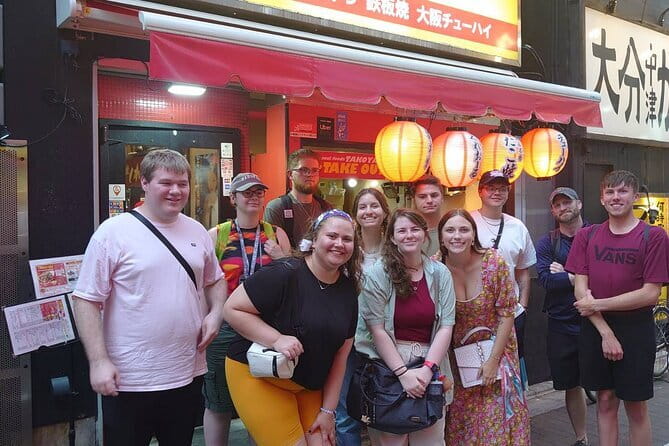
This Kyoto and Nara day trip is a great match if you:
- want a high-efficiency first visit to Kyoto and Nara
- prefer a guided route with Chinese and English support
- like iconic sights that are famous for good reason, not just for social media
It is also a good fit if you are traveling solo or in a small group and don’t want to spend time building an itinerary across trains. The meeting at VIP Villa Namba and the scheduled start help keep you from losing your morning.
Who might not love it?
If you are the type who needs long, quiet time in one place, this schedule can feel fast. You only get about 2 hours at Kinkaku-ji and 4 hours in Nara Park, and those are shared time windows. Also, if you are sensitive to long days, remember it runs around 9 to 10 hours total.
And if your travel dates fall in year-end or New Year season, keep in mind that Fushimi Inari may be skipped due to traffic restrictions. You’ll still get Kyoto and Nara, but the headliner stop might not happen.
Small practical tips for a smoother day
A few tips can make this day feel easier and more enjoyable.
First, wear comfortable shoes with good grip. You will be walking through torii paths at Fushimi Inari, then moving around temple grounds, and finishing in a park where deer are roaming nearby paths. Choose footwear you can trust for many steps.
Second, bring a light layer. Early departures can be cool, and afternoons can feel warmer once you are outside longer.
Third, set your priorities before you arrive. This tour gives you classic highlights, so decide what matters most to you:
- If you care most about photos, plan your top angles at Fushimi and Kinkaku-ji.
- If you care most about atmosphere, spend time in the gardens at Kinkaku-ji and in Todai-ji’s main temple area in Nara.
Finally, listen closely to the guide instructions during the deer portion. Deer are friendly in Nara, but this is still wildlife in a public space, so follow guidance so everyone stays safe and the moment stays fun.
Should you book this Kyoto and Nara day tour from Osaka?
If you want a guided, efficient day that hits Fushimi Inari, Kinkaku-ji, and Nara Park with Todai-ji, I think this is a strong value for your time. The price includes transport and the major admissions, which reduces hassle on a long day. The guide support in Chinese and English also helps you get more meaning from what you are seeing, not just photos.
I would book it if your goal is classic Kyoto and Nara highlights, with minimal logistics stress. I would pause and compare if you are looking for slow travel, or if you are visiting during year-end and New Year and specifically want Fushimi Inari as a must-stop.
FAQ
How long is the Kyoto and Nara day tour from Osaka?
The tour duration is approximately 9 to 10 hours.
Where does the tour start, and what time do we meet?
The tour starts at VIP Villa Namba in Osaka. The meeting time is 7:45 am, and the departure time is 8:00 am.
What are the main stops on the tour?
The tour includes Fushimi Inari-taisha Shrine, Kinkaku-ji, and Nara Park, where you visit Todai-ji Temple and see the Daibutsu Buddha.
Are entrance fees included?
Yes. Admission tickets are included for Fushimi Inari-taisha (3 hours), Kinkaku-ji (2 hours), and Nara Park (4 hours).
Can the tour skip Fushimi Inari during holidays?
Yes. Due to traffic restrictions during year-end and New Year holidays, you may not stop at Fushimi Inari.
How long do you spend in Nara Park?
You have about 4 hours in Nara Park.
What is the group size limit?
The tour has a maximum of 40 travelers.
What are the child age rules for this tour?
Children aged 0 to 3 are free as long as they will not occupy separate seats. Children aged 12+ are charged the same rate as adults.
What is the cancellation and weather policy?
This experience is non-refundable and cannot be changed for any reason. If it is canceled due to poor weather, you will be offered a different date or a full refund.
If you tell me your travel dates (especially if they include late December or early January), I can help you sanity-check whether Fushimi Inari is likely to be included for your specific day.
Just added around Osaka

Day Trips to Kyoto from Osaka, compared.
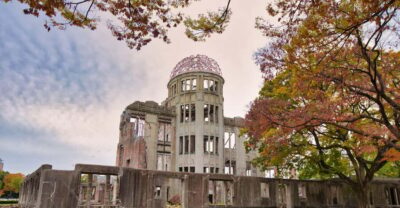
Osaka/Kyoto: Hiroshima Miyajima Bus Tour & Shinkansen Ticket
Read our review →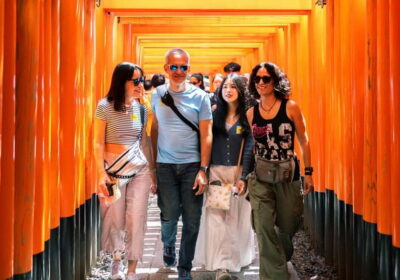
From Kyoto/Osaka: Kyoto Top Highlights 1-Day Guided Bus Tour
Read our review →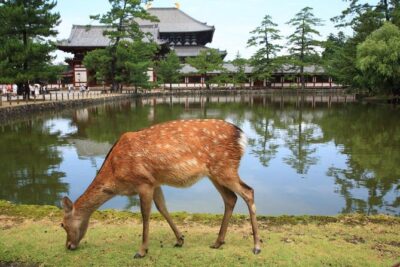
Ancient Capital Tour: Kyoto and Nara Highlights from Kyoto/Osaka
Read our review →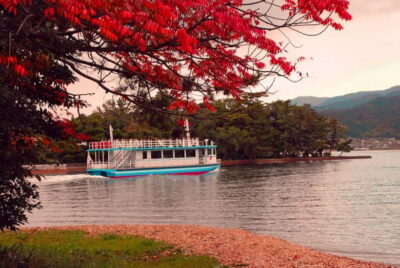
Osaka/Kyoto: Amanohashidate & Miyama Tour with Boat & Lunch
Read our review →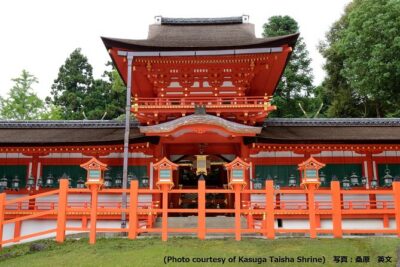

Full Day Tour of Kyoto with Private Transportation
Read our review →
Kyoto & Nara Private customized tour with English speaking Guide
Read our review →This tour also fits