
Reviewed · DAY TRIPS TO KYOTO FROM OSAKA
Kyoto & Nara & Uji: Full Day Sightseeing Tour from Osaka or Kyoto
Three icons, one very full day.
I love the close-up charm of Nara deer bowing for treats, and the photo-stopper Byodo-in Phoenix Hall, famous for appearing on Japan’s 10 yen coin. This tour strings those moments together with a tight schedule, so you’ll feel the day moving even though the bus ride is comfortable.
You get an organized route with a guide, plus air-conditioned transportation and a mobile ticket for easy entry. The pricing also makes sense if you want a guided hit of multiple neighborhoods without spending your whole trip on train changes.
The main thing to consider is that stop times are short, and the guide experience can depend on the day and the guide’s language skills. If you prefer slow sightseeing or very detailed explanations at each site, you may find this more of a “see the big things” day than a deep, lingering one.
In This Review
- Key highlights worth timing your day for
- A 9-hour hit of Nara, Kyoto, and Uji
- Price and value: what your $67 really buys
- Nara Park deer time, plus Todai-ji’s main temple stop
- Uji break: park views, matcha browsing, and an easy river stroll
- Byodo-in Phoenix Hall: the 10 yen coin moment in real life
- Senbon Torii at Fushimi Inari: walking the red gates
- Tour pace, group size, and what it feels like on the bus
- Guides, communication, and how to get the best experience
- Lunch on your own: use the breaks, don’t over-plan
- Should you book this Kyoto, Nara, and Uji day trip?
- FAQ
- How long is the tour?
- Is lunch included?
- Are admission fees included for Todai-ji and Byodo-in?
- What stops are included in the tour?
- Does the tour depart from Osaka and Kyoto?
- Is transportation included?
- How many people are on the tour?
- Can I cancel for a full refund?
Key highlights worth timing your day for
- Nara deer at Nara Park, with practical guidance on staying comfortable around them
- Todai-ji access, one of Nara’s landmark temple stops with a short on-site window
- Uji’s matcha street energy at Byodoin Omotesando, easy to snack and browse along the way
- Byodo-in Phoenix Hall, a UNESCO site with the wing-like corridors style and the 10 yen coin connection
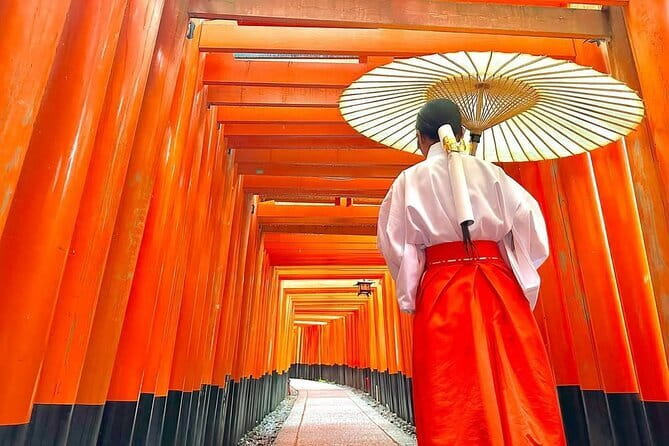
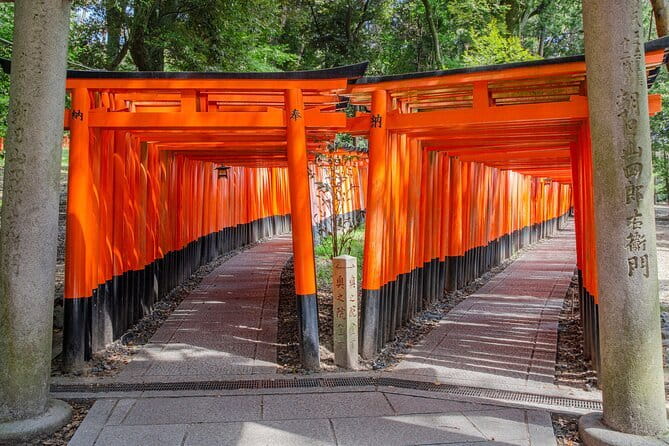
- Senbon Torii at Fushimi Inari, about 30,000 Inari shrines in Japan’s network, with this one famous for the thousands of red torii gates
- Max 45 people, which can feel lively, but keeps the group from becoming unmanageable
A 9-hour hit of Nara, Kyoto, and Uji
This is a classic “big-ticket” day trip. You’re covering Nara Park, major temple sights, then down into Uji for tea country, and finishing with Kyoto’s famous torii-gate walk at Fushimi Inari.
The appeal is simple: you get a guided loop across three areas in roughly 9 hours. That matters if you only have a day, if you’d rather not juggle routes and transfers, or if you want someone to handle the timing while you focus on photos, walking, and quick museum-style moments.
One practical note: you’re on a bus for long stretches. A few reviews also mention the trip can feel fast-paced because the schedule is ambitious. So if you know you want long lines, slow wandering, or extra detours, build that expectation into your planning.
Deer that bow back, minutes from Osaka
- Ancient Capital Tour: Kyoto and Nara Highlights from Kyoto/Osaka★ 4.5 · 332 reviews
- Kyoto and Nara Day Trip from Osaka★ 4.0 · 175 reviews
- Discover Himeji, Kobe and Nara from Osaka★ 5.0 · 101 reviews
- Kyoto & Nara Private customized tour with English speaking Guide★ 4.5 · 99 reviews
- Kyoto and Nara UNESCO Highlights Full-day Tour From Osaka★ 4.5 · 50 reviews
Price and value: what your $67 really buys
At $67 per person, you’re paying for transportation, a guide, and a structured route. That can be good value in Japan, where single-site tickets plus transfers add up quickly, especially when you factor in how much ground this day covers.
Two big costs are not included:
- Byodo-in admission: ¥700 per person
- Todai-ji admission: ¥800 per person
Lunch is also not included, though you do get time for independent dining. So think of the ticket price as the “how you get there and what you see” cost, then plan for temple entrances on top of that.
The tour includes a mobile ticket, which usually makes day-of logistics smoother. And it’s capped at 45 travelers, so you’re not stuck in a massive herd, though it will still feel like a group day.
Nara Park deer time, plus Todai-ji’s main temple stop
Nara Park is your first emotional hook. You’ll have about 50 minutes in the park, where the famous deer roam freely and often “bow” when they want a treat. This is fun, but it’s also where you should be most mindful.
Here’s how to make it go smoothly:
- Keep your space. Don’t let deer crowd your legs.
- Move with purpose when you’re walking, and avoid sudden gestures.
- If you’re carrying snacks, keep them controlled.
Then it’s straight to Todai-ji Temple for about 30 minutes. The entrance fee is not included (¥800). Todai-ji is a UNESCO World Heritage Site under the Historic Monuments of Ancient Nara label, and it’s one of the main reasons many first-time visitors come to Nara at all.
Because your time here is limited, aim to prioritize the parts that matter most to you. If you want extra time for smaller halls, surrounding grounds, or side views, you’ll likely wish you had more than half an hour. On the bright side, this stop gets you in, see the iconic temple atmosphere, and then you move on without burning your whole day.
Uji break: park views, matcha browsing, and an easy river stroll
After Nara, the tour shifts into Uji, which feels like a slower flavor change. You get a brief stop at Uji Park (about 30 minutes), an island park surrounded by the Uji River with bridges connecting it to the banks.
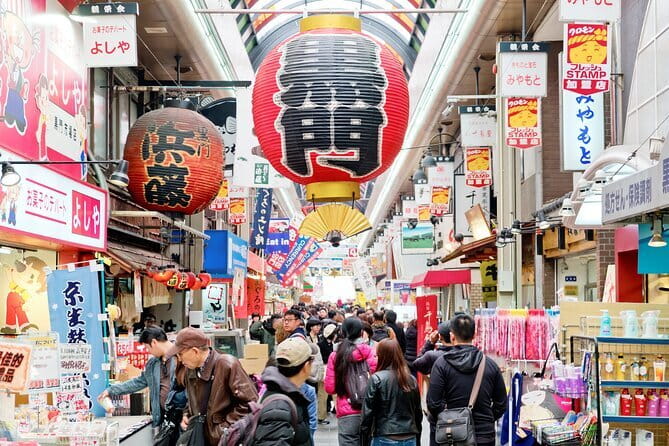
Then you’ll head to Byodo-in Omotesando for about 40 minutes. This is the matcha and tea shopping strip tied to Uji’s reputation for green tea production. For you, that means it’s a great place to:
- taste or sample tea items if you find something you like,
- browse tea tools and gift-style snacks,
- pick up small matcha souvenirs without committing to a full shopping spree.
After that comes a short walk by the Uji River for about 20 minutes. The river is described as originating from Lake Biwa, and it has served as a key waterway since ancient times. Even though this isn’t a long nature hike, it’s a nice palate cleanser between temples and the torii-gate climb.
If you’re thinking about lunch, this Uji stretch can be a convenient time window. Since lunch is not included, you’re on your own here, but the area’s built for quick, casual eating and tea breaks.
Byodo-in Phoenix Hall: the 10 yen coin moment in real life
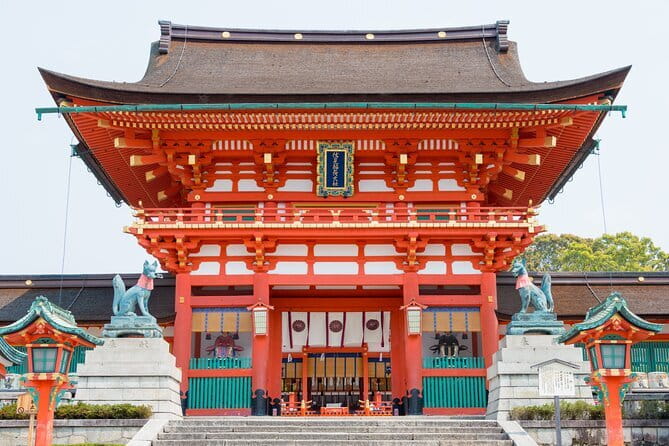
This is the stop that tends to steal the show. Byodo-in Temple is a UNESCO World Heritage Site, and the headline is the Phoenix Hall. It was built in 1053, and it’s also known for being highlighted on the obverse side of the 10 yen coin.
You’ll have about 30 minutes here, and the admission fee is ¥700 per person, not included in the tour price. That timing can be perfect if your goal is to get the classic view, walk the key areas, and take the photos you came for.
What to watch for during your time:
- the iconic hall look that people associate with the coin,
- the overall temple grounds atmosphere and symmetry,
- and any short corridors or architectural details that help you understand why this hall is so recognizable.
Because your visit is time-limited, don’t plan to do everything slowly. Go in with a simple game plan: photo first at the main viewpoint, then a careful walk through the areas you can access in your time window. If you’re a matcha fan, you can also pair this with the tea-street browsing right before or after, depending on how your group flows.
More temples, thirty minutes up the line
- Osaka/Kyoto: Hiroshima Miyajima Bus Tour & Shinkansen Ticket
★ 4.7 · 919 reviews - From Kyoto/Osaka: Kyoto Top Highlights 1-Day Guided Bus Tour
★ 4.5 · 714 reviews - Osaka/Kyoto: Amanohashidate & Miyama Tour with Boat & Lunch
★ 4.6 · 207 reviews
Senbon Torii at Fushimi Inari: walking the red gates
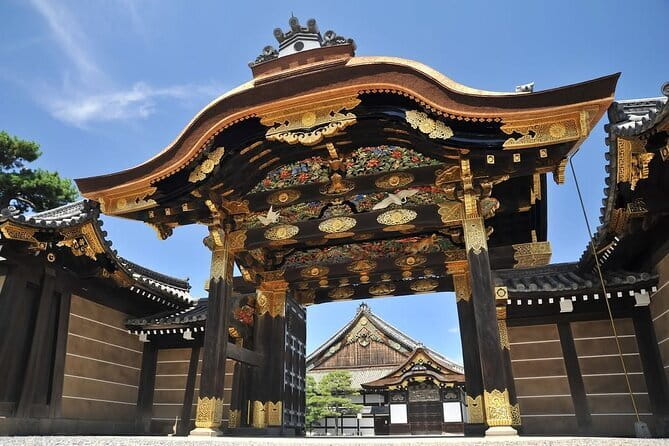
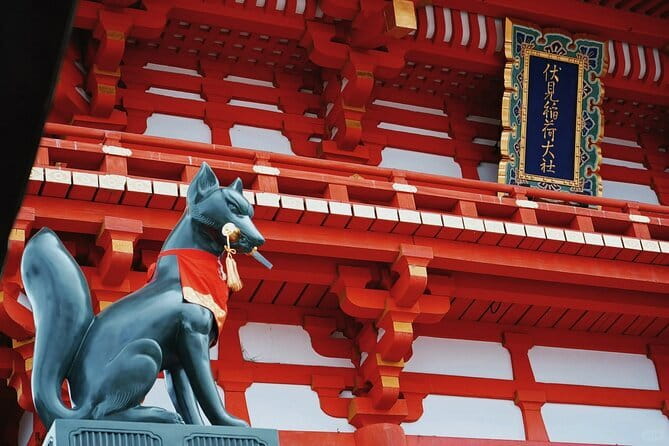
Your day ends (or near-ends) with Senbon Torii, the thousands of vermilion torii gates. In Japan, there are around 30,000 Inari shrines, and Fushimi Inari Taisha is the head shrine. That shrine is famous for this dramatic torii gate tunnel effect.
You’ll have about 1 hour 20 minutes here, and there’s no admission fee listed for this stop. That time is valuable because you may want to:
- walk at least into the main gate corridor,
- stop for skyline and repetition photos,
- and take a breather before heading back toward where your group meets.
Practical tip: wear shoes you can move in for a continuous walk. This is not one short courtyard moment, it’s a longer walking experience with changing viewpoints. If you only stop at the entrance gate area, you’ll miss the most memorable “this keeps going” sensation.
Also plan for crowds. This is one of Kyoto’s most photographed places for a reason. The group structure helps you avoid getting totally lost, but you’ll still have to navigate around other visitors.
Tour pace, group size, and what it feels like on the bus
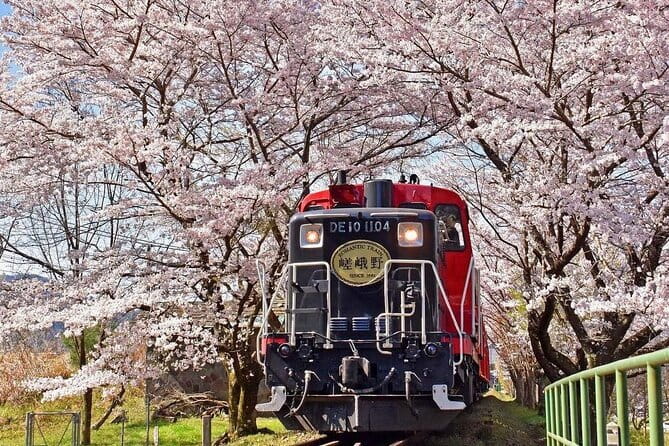
The tour keeps moving, which is great when you want coverage. It can feel rushed if you want to read everything, linger, or browse every side shop.
Group size is up to 45 travelers, so it can be lively. Some reviews also mention grumpy fellow passengers, which is one of the risks of group touring anywhere. You can’t control that, but you can control your own energy level and how you handle the pacing.
Language clarity can also vary by guide. In some days, guides are described as giving clear English explanations. On other days, some guests found the guide’s English less fluent, or the information felt fast and shortened. The workaround is easy: if you have must-ask questions (when to meet, which entrances to use, how long you’ll be at each site), ask early and repeat key details back to yourself so you’re not guessing later.
A few reviews mention bus comfort details like windows that may not be perfectly clean for viewing. If you can choose where you sit, try to avoid the tightest back seats. One guest specifically asked not to be in the very tight backseat, and that’s a smart instinct on a long day.
And yes, a couple of notes mention the bus not having a bathroom. That means you’ll want to use rest stops when they happen, and not count on a mid-drive option.
Guides, communication, and how to get the best experience
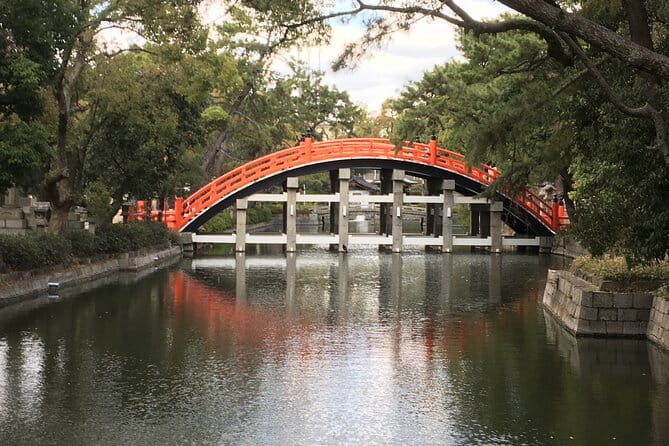
The quality of a guided day often comes down to the guide. Names that came up repeatedly include Candy, John, Bryan, Amanda, Eve, Amy, Joy, Cicy, and Laura. On many days, guests praised guides for being helpful, friendly, and able to explain what matters at each stop.
You can also see a pattern: where guests loved the trip, the guide made meeting points clear and kept the group organized. One guest even noted the guide coordinated through a WhatsApp group, which can be a big help when everyone is tired and the schedule is moving.
So here’s my practical advice for you:
- Be at the meeting point a few minutes early.
- Take a screenshot of any instructions you receive.
- If you’re unsure at a stop, ask what entrance or route your group is using.
If you rely heavily on detailed narration, keep your expectations flexible. Some guides in the information you provided were described as switching between languages or speaking quickly. A guide can still be kind and organized, but if you can’t catch every word, you might get less context than you hoped.
Lunch on your own: use the breaks, don’t over-plan
Lunch isn’t included, and the schedule offers independent dining time. That’s actually a benefit if you like having control over what you eat and how long you sit.
In this route, your best practical lunch timing is either:
- during the Uji stretch, when Byodoin Omotesando has plenty of tea-related shops and snack options, or
- earlier in the day, if your group arrival times line up well with nearby eateries.
Because you only have short windows at major temple sites, you don’t want to burn extra time hunting for the perfect sit-down meal at the wrong moment. Aim for something you can eat quickly without stressing over rejoining the group.
If you’re traveling with kids or anyone who gets hungry fast, plan a snack stash. This is also where small items like wipes can feel useful in hot weather, and some guides have shown up with extra small comforts for the group, though you shouldn’t count on it.
Should you book this Kyoto, Nara, and Uji day trip?
Book it if you:
- want a first-time sampler of Nara Park, Byodo-in, and Fushimi Inari without planning trains all day,
- love matcha and want a built-in moment for Uji’s tea street,
- prefer a guided route even if it means shorter site time.
Skip it or choose another option if you:
- need very detailed explanations at every site, every minute,
- strongly prefer slow sightseeing and “wander as long as you want,”
- are sensitive to group dynamics and fast pacing.
My best-fit summary: this is a strong choice for people who want maximum sights in minimum planning. You’ll get the deer, the Phoenix Hall icon shot, and the torii-gate walk, with the trade-off that the day moves quickly and language clarity depends on the guide.
If you want a single day that checks the major boxes in Nara, Uji, and Kyoto, this one is worth considering.
FAQ
How long is the tour?
It’s listed as approximately 9 hours.
Is lunch included?
No. Lunch is not included, but the schedule allows time for independent dining.
Are admission fees included for Todai-ji and Byodo-in?
No. Todai-ji admission is ¥800, and Byodo-in admission is ¥700 per person. Admission fees are not included in the tour price.
What stops are included in the tour?
You’ll visit Nara Park, Todai-ji Temple, Uji Park, Byōdo-in Temple, Byodoin Omotesando, the Uji River, and Senbon Torii at Fushimi Inari Taisha.
Does the tour depart from Osaka and Kyoto?
Yes. The tour departs from Osaka or Kyoto.
Is transportation included?
Yes. The tour includes air-conditioned transportation.
How many people are on the tour?
The maximum group size is 45 travelers.
Can I cancel for a full refund?
Yes, you can cancel up to 24 hours in advance for a full refund. If you cancel less than 24 hours before the start time, the amount paid will not be refunded.
Just added around Osaka

Day Trips to Kyoto from Osaka, compared.
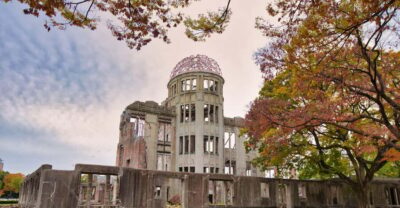
Osaka/Kyoto: Hiroshima Miyajima Bus Tour & Shinkansen Ticket
Read our review →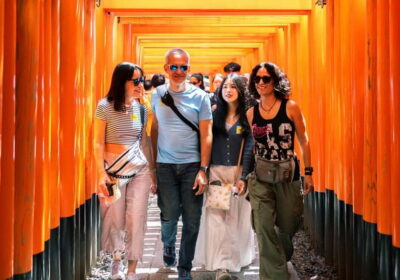
From Kyoto/Osaka: Kyoto Top Highlights 1-Day Guided Bus Tour
Read our review →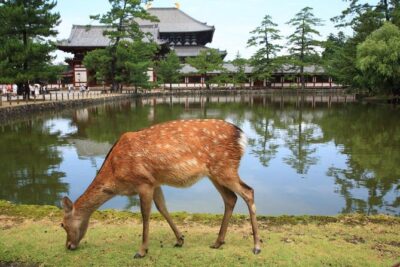
Ancient Capital Tour: Kyoto and Nara Highlights from Kyoto/Osaka
Read our review →
Osaka/Kyoto: Amanohashidate & Miyama Tour with Boat & Lunch
Read our review →

Full Day Tour of Kyoto with Private Transportation
Read our review →
Kyoto & Nara Private customized tour with English speaking Guide
Read our review →This tour also fits