
Reviewed · DAY TRIPS TO KYOTO FROM OSAKA
Kyoto One Day Sightseeing Tour from Osaka or Kyoto
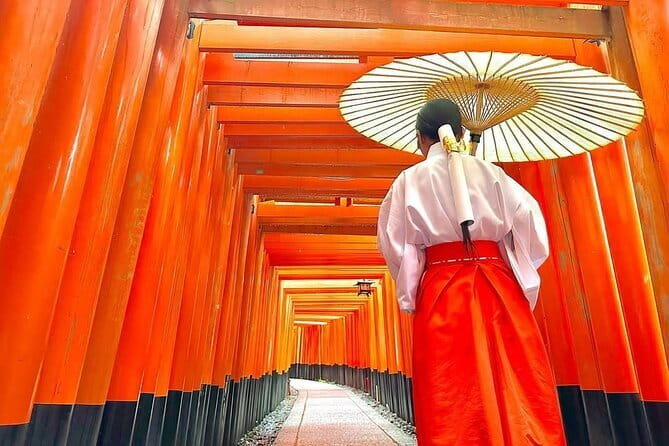
Kyoto, in one efficient day. This tour strings together the biggest “wow” stops with a guide and an air-conditioned ride, so you spend less time figuring out transfers. You’ll hit Nijo-jo Castle (UNESCO), then move on to the vermilion torii path at Fushimi Inari, followed by Arashiyama’s bamboo, shrines, bridge views, and the Golden Pavilion at Kinkaku-ji.
What I like most is the way the day is built for first-timers who want variety, not just one neighborhood. You get a mix of castle architecture, Shinto shrine atmosphere, and Zen temple scenery, all in a single run. It’s also clearly geared toward momentum, with a set schedule that keeps you moving between stops.
The main drawback to plan for: some of the time chunks are short at each Arashiyama stop, and two big-ticket sights cost extra on top of the $65 price. If you want slow, lingering temple time or deep museum-style reading, you might feel rushed.
In This Review
- Key highlights at a glance
- A one-day Kyoto hits list, run like a schedule
- Price and logistics, the part you should get straight first
- Nijo-jo Castle: UNESCO castle-palace architecture, with a timed palace ticket
- Senbon Torii at Fushimi Inari: a free walk through thousands of gates
- Arashiyama: how the tour turns one district into several mini-experiences
- First stop in Arashiyama: quick orientation time
- Arashiyama Bamboo Forest: the 40-minute icon
- Nonomiya Shrine: a quieter contrast point
- Arashiyama Kimono Forest: a modern textural photo stop
- Togetsukyo Bridge: the classic ending view
- Kinkaku-ji Golden Pavilion: Zen temple focus, with a paid ticket
- The guide makes or breaks the pace
- Who should book this Kyoto one-day tour from Osaka or Kyoto?
- Should you book this one-day Kyoto tour?
- FAQ
- How long is the Kyoto One Day Sightseeing Tour?
- What is included in the tour price?
- Is lunch included?
- Do I need to pay for tickets at Nijo Castle and Kinkaku-ji?
- Are the Fushimi Inari Senbon Torii gates and Arashiyama stops free?
- Does the tour provide a mobile ticket?
- Where does the tour depart from?
- How large is the group?
- What is the cancellation policy?
Key highlights at a glance
- UNESCO-worthy Nijo Castle as your day’s first major stop, with the palace ticket sold separately
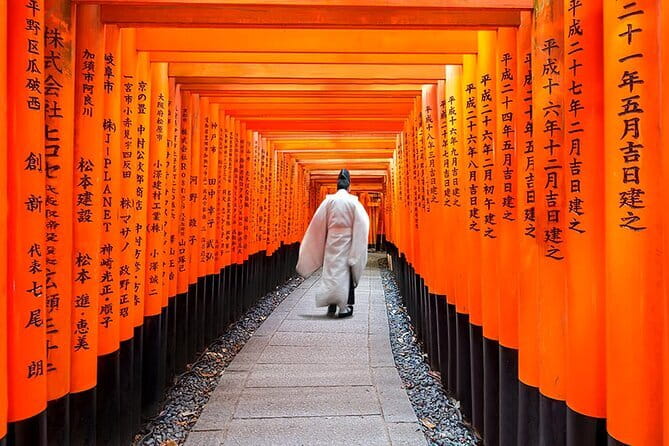
- Senbon Torii at Fushimi Inari gives you a full 1 hour 10 minutes to walk the iconic torii gates
- Arashiyama, split into real “layers”: bamboo, shrines, Kimono Forest, then Togetsukyo Bridge
- Kimono Forest is a specific art installation (600 clear acrylic cylinders, 2 meters tall, covered in kimono fabric)
- Kinkaku-ji timing is set for a focused 40 minutes at the Golden Pavilion
- Max 45 people means it’s big-bus efficient, not cozy and private
A one-day Kyoto hits list, run like a schedule
This is a proper day trip, about 9 hours long, designed to get you through a lot of Kyoto highlights without you doing homework on trains. You depart from Osaka or Kyoto, then spend the day moving between the city’s most recognizable landmarks.
The tour price is $65 per person, and that includes a lot of practical value: air-conditioned vehicle plus a guide. What it does not include is lunch, and it also leaves two major admissions for you to pay separately once you arrive. The “math” matters because the tour price alone can sound cheap, but your total cost will climb once you add the castle and temple tickets.
Also, there’s a mobile ticket, which is useful if you dislike paper vouchers. And with a maximum of 45 travelers, you can expect a group pace that’s efficient, sometimes a little hectic, and very much dependent on how fast everyone gets back to the bus.
More temples, thirty minutes up the line
- Osaka/Kyoto: Hiroshima Miyajima Bus Tour & Shinkansen Ticket★ 4.7 · 919 reviews
- From Kyoto/Osaka: Kyoto Top Highlights 1-Day Guided Bus Tour★ 4.5 · 714 reviews
- Ancient Capital Tour: Kyoto and Nara Highlights from Kyoto/Osaka★ 4.5 · 332 reviews
- Osaka/Kyoto: Amanohashidate & Miyama Tour with Boat & Lunch★ 4.6 · 207 reviews
- Kyoto and Nara Day Trip from Osaka★ 4.0 · 175 reviews
Price and logistics, the part you should get straight first
For $65, you’re paying for transportation, guiding, and a tightly planned routing through the day’s top sights. You are not paying for admissions at Nijo-jo Castle’s palace area and Kinkaku-ji, and that’s an important distinction.
Here’s what you should budget for based on the provided ticket info:
- Nijo Castle and Ninomaru Goten Palace ticket: 1,300 yen (not included)
- Kinkaku-ji ticket: 500 yen (not included)
That means you should expect about 1,800 yen in additional entry fees for those two anchors, before you even get to lunch. If you hate surprises, plan for this at the start of your day.
One more logistics note: the stops aren’t all equal. A few are 20 minutes, one is 40, and only one is “longish” for walking. That structure can be great for seeing everything, but it also means you need to decide what you want from each location, like photos plus one slow loop, or just a quick viewpoint sweep.
Nijo-jo Castle: UNESCO castle-palace architecture, with a timed palace ticket
Nijo-jo Castle is the day’s first big moment, and it’s not a random pick. Built in 1603, it served as the Kyoto residence of Tokugawa Ieyasu, the first shogun of the Edo Period. The complex is widely known for surviving castle palace architecture, and it was designated a UNESCO World Heritage site in 1994.
You get about 1 hour for this stop, but remember the palace ticket is not included. The tour lists the admission as 1,300 yen for Nijo Castle & Ninomaru Goten Palace. That’s the part you should prioritize if your goal is the “palace feel,” not just an exterior walk.
What this stop is good for:
- You get a concentrated dose of Kyoto’s feudal-era power structure, without building an entire castle day yourself.
- The architecture angle helps you “read” what you’re seeing instead of just taking photos and moving on.
What can be annoying:
- Since the ticket is separate, you’ll want to keep your attention sharp right at arrival so you don’t lose time figuring it out during your hour.
- One hour goes fast, especially if your group has to manage entry lines and timing.
If you’re the type who likes to understand what you’re looking at, a good guide makes this more than a photo stop. And from what I’ve seen reflected in real-world experiences, the tour’s leadership tends to keep things organized and informative, including with guides such as Theodore Chan and Jay.
Senbon Torii at Fushimi Inari: a free walk through thousands of gates
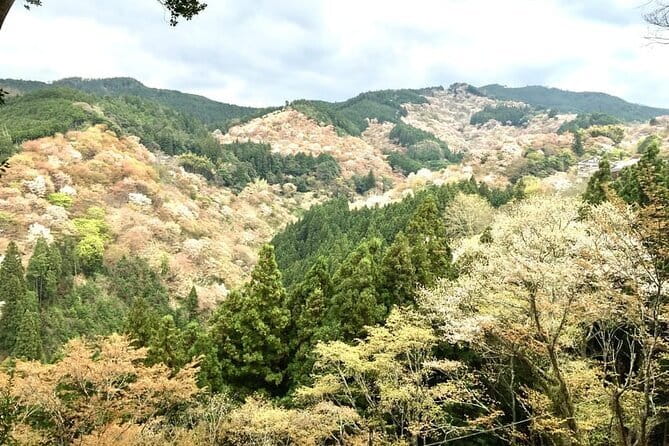
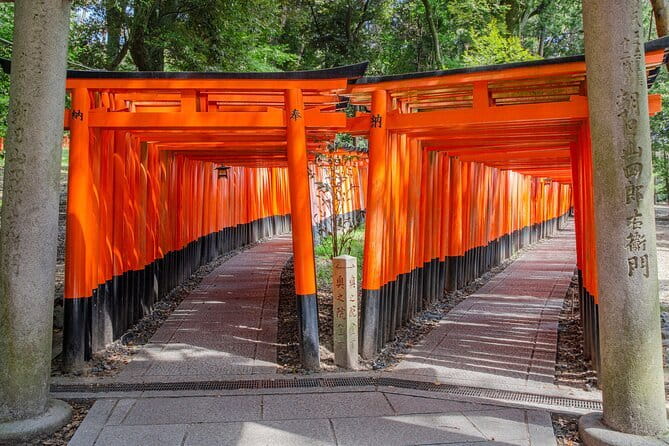
After the castle, you switch gears to Shinto and street-level Kyoto energy. The next stop is Senbon Torii, the famous “thousand torii gates” area at Fushimi Inari Taisha.
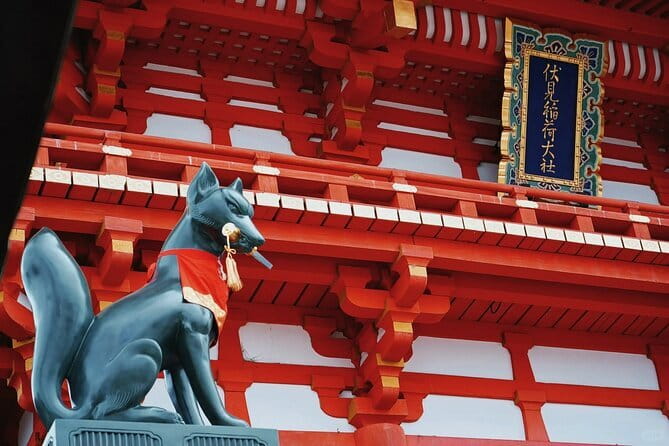
This stop is listed at 1 hour 10 minutes, and admission is free. That time matters because the torii walk is the whole point. The shrine honors the Shinto god of rice, Inari, and the signature here is the sheer number of vermilion-red torii gates.
How to get the most in your time:
- Decide early whether you want a simple out-and-back through the denser gate sections, or if you want to push farther for more breathing room.
- Treat it like a moving viewpoint, not a single photo hotspot. The path is the experience.
Potential drawback:
- Even with a scheduled time block, it can feel crowded at peak hours. If you’re easily irritated by crowds, go in with a calm mindset, and focus on the gate rhythm and the small details along the route.
Arashiyama: how the tour turns one district into several mini-experiences
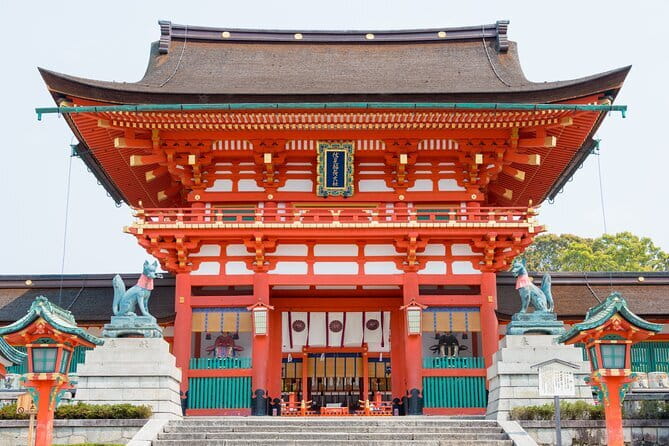
Arashiyama is scheduled in multiple pieces, and that’s actually smart. Instead of throwing you into one long block where you might only catch one highlight, this tour slices the district so you get nature, shrine, art installation, and a classic bridge view.
Other ways to spend a day in Osaka
- Hiroshima & Miyajima 1 Day Bus Tour with Bullet Train Tickets
★ 4.5 · 105 reviews - From Osaka: Hiroshima and Miyajima Day Trip by Bullet Train
★ 4.6 · 83 reviews - Amanohashidate & Ine Funaya Sightseeing Full Day Trip from Kyoto
★ 4.5 · 62 reviews
First stop in Arashiyama: quick orientation time
You get about 20 minutes for the Arashiyama area itself before the big “must-see” bamboo segment. In practice, this short window is your chance to orient yourself and find your footing for the rest of the route.
If you’re prone to feeling rushed, make that 20 minutes count by:
- confirming where you’re headed next,
- grabbing any restroom needs before the longer bamboo block,
- and deciding what you want most from Arashiyama, bamboo photos or shrine atmosphere.
Arashiyama Bamboo Forest: the 40-minute icon
The bamboo forest stop is listed at about 40 minutes, and the tone here is clearly “serene and symbolic.” The appeal is visual and sensory, towering bamboo stalks and that classic tunnel-like feeling.
The reality check is timing. Forty minutes is enough to enjoy it, but not enough to do it slowly if the path is packed. I suggest focusing on one or two strong photo angles, then doing a quiet walk for the mood.
Nonomiya Shrine: a quieter contrast point
Next up is Nonomiya Shrine, about 20 minutes. This one is notable because it features a distinctive black torii gate, unlike the more common vermilion-red torii you see at many shrine sites.
This short stop is a good reset between the bamboo and the more modern-feeling photo targets. It also helps you see that Arashiyama isn’t only about one famous natural scene.
Arashiyama Kimono Forest: a modern textural photo stop
Then comes Arashiyama Kimono Forest, another 20-minute block. This is described as a textile art installation made up of 600 clear acrylic cylinders, each standing 2 meters tall, decorated with kimono fabrics in different designs.
This part is worth your time if you like design and color, and if you enjoy photographic subjects with depth and repetition. It’s also a good change of pace after the organic feel of bamboo and the traditional framing of shrine spaces.
Possible consideration: because it’s an installation, the experience is more about your visual perspective and timing than about cultural practice. If you prefer temples and shrines over modern art displays, you might want to spend less time here and more time at the bridge.
Togetsukyo Bridge: the classic ending view
Finally, you reach Togetsukyo Bridge for about 20 minutes. This is described as Arashiyama’s iconic bridge, originally built during the Heian Period (794 to 1185) and reconstructed most recently in the 1930s.
In a tour like this, 20 minutes is a practical amount. It gives you time to walk to a viewpoint, take a few photos, and soak in the bridge crossing over the Katsura River area.
Kinkaku-ji Golden Pavilion: Zen temple focus, with a paid ticket
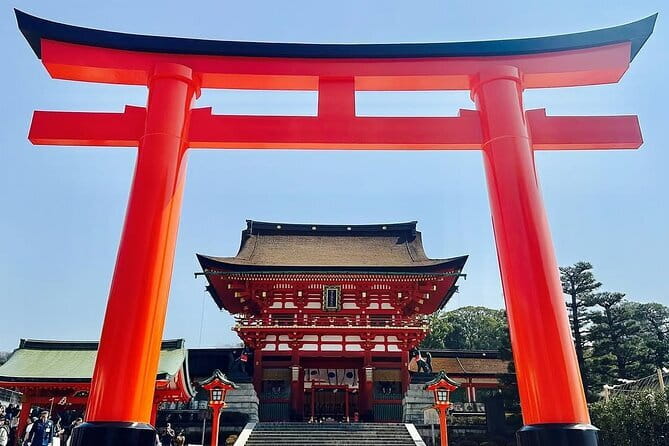
The day ends (at least on the attraction list) with Kinkaku-ji, also called the Golden Pavilion. It’s a Zen Buddhist temple and a UNESCO World Heritage site, famous for its golden exterior and gardens.
You get about 40 minutes here, and the temple ticket is 500 yen (not included). That’s enough time to:
- see the pavilion from your main viewing position,
- take photos without panicking about the clock,
- and then spend a short window on garden scenery.
This is also where your day’s pacing becomes clear. If you’ve been moving quickly at every earlier stop, you’ll feel the difference here. Forty minutes at Kinkaku-ji feels like a real buffer compared to the 20-minute blocks.
The main drawback? If you arrived tired, it can be hard to switch into “quiet temple mode.” But the payoff is strong because Kinkaku-ji is one of Kyoto’s most recognizable scenes, and the gardens give you some visual calm to reset before you leave.
The guide makes or breaks the pace
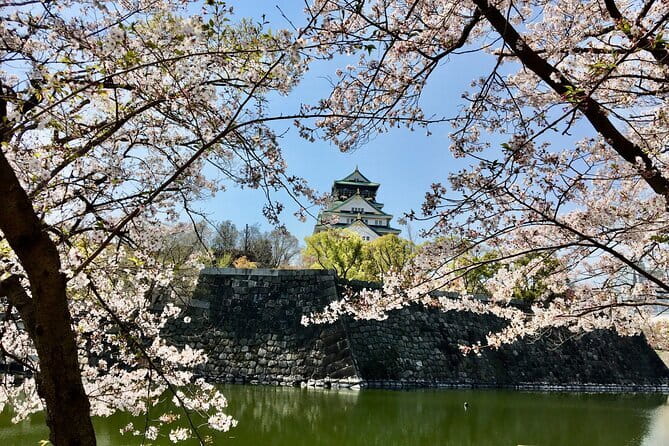
This tour includes a guide, and the overall experience quality tends to hinge on how well that guidance turns a rushed day into something you understand.
In real-world feedback, guides like Theodore Chan and Jay are highlighted as organized, professional, and friendly, with explanations that help you connect the dots between stops. That’s exactly what you want on a day like this. When you know why Nijo-jo matters, what Inari represents, and why Arashiyama is shaped the way it is, the short time slots feel less like a limitation and more like an efficient sampler.
That said, one concern does come up: occasionally, the day can feel more like a scheduled bus ride with brief talking rather than deep on-foot guiding at every stop. If you’re the kind of traveler who likes lots of interpretation, arrive with smart questions, and don’t be afraid to ask for what you should notice at each site. A good guide can often adjust on the fly.
Who should book this Kyoto one-day tour from Osaka or Kyoto?
This is a strong fit if you:
- want Kyoto highlights without spending your day building a transit route,
- like variety, castle plus shrines plus iconic temples in one go,
- and enjoy a structured, efficient day even if some stops are short.
It’s not the best fit if you:
- hate crowds or don’t handle tight timing well,
- want to linger for hours in one location,
- or you’re aiming for a slow, self-guided photography marathon.
The tour also caps at 45 travelers, which helps it stay organized, but it won’t feel like a private escape. If you like quiet and solitude, you’ll likely prefer a smaller group or independent planning.
Should you book this one-day Kyoto tour?
Yes, if your priority is a high-efficiency highlights day with a guide, comfortable transport, and a route that hits major UNESCO and iconic Kyoto scenes. The $65 price is reasonable because you’re buying logistics and guidance, not just access to sites. Just go in knowing that you’ll pay extra for Nijo Castle & Ninomaru Goten Palace (1,300 yen) and Kinkaku-ji (500 yen), and that lunch isn’t included.
If you do those two things, plan for short stop times, and keep your expectations aligned with a big-bus day, you’ll likely feel like Kyoto got the best of your time, not the other way around.
FAQ
How long is the Kyoto One Day Sightseeing Tour?
It runs for about 9 hours.
What is included in the tour price?
The tour includes an air-conditioned vehicle and a guide.
Is lunch included?
No, lunch is not included.
Do I need to pay for tickets at Nijo Castle and Kinkaku-ji?
Yes. Nijo Castle and Ninomaru Goten Palace cost 1,300 yen, and Kinkaku-ji costs 500 yen. These are not included.
Are the Fushimi Inari Senbon Torii gates and Arashiyama stops free?
Senbon Torii is listed as free, and the listed Arashiyama stops (including bamboo forest, Nonomiya Shrine, Kimono Forest, and Togetsukyo Bridge) are also listed as free admissions.
Does the tour provide a mobile ticket?
Yes, the tour uses a mobile ticket.
Where does the tour depart from?
It departs from Osaka or Kyoto.
How large is the group?
The tour has a maximum of 45 travelers.
What is the cancellation policy?
Free cancellation is available up to 24 hours in advance for a full refund, and cancellations made less than 24 hours before the start time are not refunded.
Just added around Osaka


Day Trips to Kyoto from Osaka, compared.
Osaka/Kyoto: Hiroshima Miyajima Bus Tour & Shinkansen Ticket
Read our review →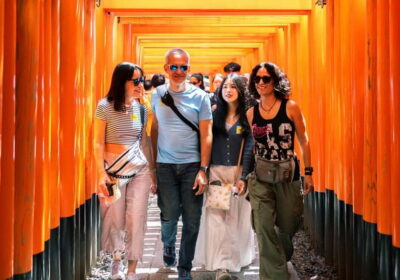
From Kyoto/Osaka: Kyoto Top Highlights 1-Day Guided Bus Tour
Read our review →
Ancient Capital Tour: Kyoto and Nara Highlights from Kyoto/Osaka
Read our review →
Osaka/Kyoto: Amanohashidate & Miyama Tour with Boat & Lunch
Read our review →

Full Day Tour of Kyoto with Private Transportation
Read our review →
Kyoto & Nara Private customized tour with English speaking Guide
Read our review →This tour also fits