
Reviewed · DAY TRIPS TO KYOTO FROM OSAKA
Kyoto Shore Excursion from Osaka with Japanese Guide
Kyoto in one day can work. This private Kyoto shore excursion from Osaka keeps logistics simple, with pickup and train tickets so you can focus on the sights. I especially like the chance to customize the plan with a Japanese guide who knows this area well, and I like how the route strings together classic Kyoto neighborhoods without wasting your time. One thing to consider: you still need some walking, so comfortable shoes matter, and getting around within Kyoto can cost extra.
The schedule hits Kyoto highlights that feel different from each other, from the flower-and-temple calm of smaller stops to the big-energy streets of food and shrine culture. You’ll get English guidance throughout, including time at Gion Shirakawa, Nishiki Market, and Fushimi Inari-taisha with its famous torii trail. The one potential drawback is that not everything is fully ticketed by the tour, so you may want to budget for local transport in Kyoto and possible reserved seating.
If you are coming from Osaka Port or Osaka City and you want a clean, low-stress day, this is the kind of tour that makes sense. It is private (only your group), it uses a mobile ticket, and it runs about 7 to 8 hours, which is a very workable length for a shore-excursion style plan.
In This Review
- Key things worth knowing before you go
- Price and logistics: what you are paying for, and what you add
- Getting started in Osaka: the meeting point that keeps the day on track
- The rhythm of the day: Kyoto first, then iconic neighborhoods
- Stop 1 in Kyoto: using the first hour to set your direction
- Gion Shirakawa: old wooden lanes and a stream-side stroll
- Rokkakudo: a temple linked to the roots of ikebana
- Entoku-in: Hideyoshi and Nene, plus sliding doors and a quiet garden
- Nishiki Market: 390 meters where Kyoto food logic makes sense
- Fushimi Inari-taisha: fox messengers, torii donations, and a hike you will remember
- The return train to Osaka: ending the day without drama
- What makes this tour feel worth it: the guide factor
- Who should book this Kyoto shore excursion from Osaka
- Should you book it?
- FAQ
- How long is the Kyoto shore excursion from Osaka?
- Where is the meeting point in Osaka?
- What language is the guide, and can the route change?
- What is included in the tour price?
- What extra costs are not included?
- Which major sights are on the schedule?
- Is cancellation free, and can service animals join?
Key things worth knowing before you go
- Pickup from Osaka Port or Osaka City helps you start the day without hunting trains.
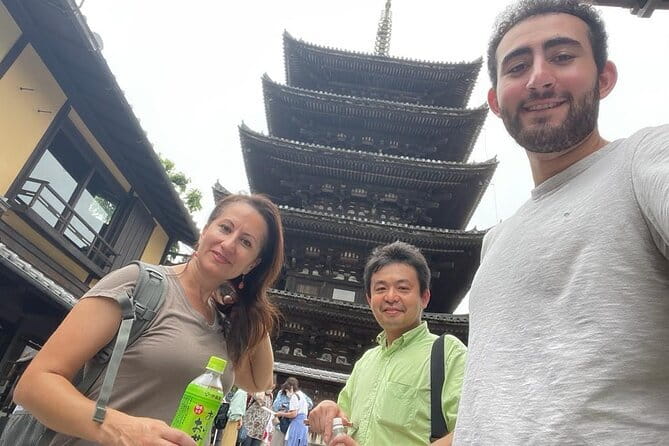
- A Japanese guide with 5+ years in the area and English language support keeps explanations clear.
- 100% customizable route means you can trade a stop or adjust time if your interests shift.
- Gion Shirakawa to Nishiki Market to Fushimi Inari is a smart mix of atmosphere, food streets, and a shrine icon.
- Entoku-in and Nishiki Market have admission included, which cuts down on ticket hassle.
- A private tour means you get attention without crowd pressure.
Price and logistics: what you are paying for, and what you add
At $197.71 per person for a 7 to 8 hour private day trip, the value mostly comes from what you do not have to manage yourself. You get a Japanese English-speaking guide, pickup and drop-off from Osaka Port or Osaka Station, and the train ticket between Osaka and Kyoto. For a lot of people, that is the hardest part of a Kyoto day trip, especially if you are coordinating with a cruise or you just do not want to think about transit.
The tour also simplifies the ticket side. The itinerary lists admission as free for several stops, and it includes admission for Entoku-in and Nishiki Market. That means fewer small purchases and fewer “where do I go next?” moments in the middle of a busy day.
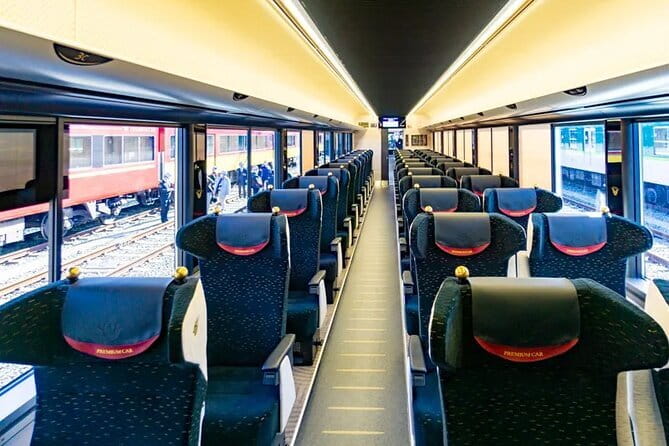
Where you should budget a bit extra is inside Kyoto. Transportation inside Kyoto is listed as not included (1,600 JPY by public transportation). Reserved seats between Osaka and Kyoto are also listed as not included (700 JPY per person). If you care about comfort and timing, reserved seating can be worth it, but the key point is: you control it, and the tour does not surprise you with extra complexity.
More temples, thirty minutes up the line
- Osaka/Kyoto: Hiroshima Miyajima Bus Tour & Shinkansen Ticket★ 4.7 · 919 reviews
- From Kyoto/Osaka: Kyoto Top Highlights 1-Day Guided Bus Tour★ 4.5 · 714 reviews
- Ancient Capital Tour: Kyoto and Nara Highlights from Kyoto/Osaka★ 4.5 · 332 reviews
- Osaka/Kyoto: Amanohashidate & Miyama Tour with Boat & Lunch★ 4.6 · 207 reviews
- Kyoto and Nara Day Trip from Osaka★ 4.0 · 175 reviews
Getting started in Osaka: the meeting point that keeps the day on track
This tour begins at Yodoyabashi Station, with the specific address listed as 3-chōme-1-25 Kitahama, Chuo Ward, Osaka, 541-0041. It ends back at the same meeting point. That “same start, same finish” detail matters more than you might think. It keeps your day tidy, and it reduces the risk of confusion when you return tired and hungry.
Because pickup is offered from Osaka Port or Osaka City, this tour is designed to work for different arrival scenarios. If you are arriving by cruise, Port pickup can be a relief. If you are already in Osaka, station pickup can save time and walking.
You also get a mobile ticket. That is a small thing, but it speeds check-in. It helps if you are juggling train times and want to keep the day moving.
The rhythm of the day: Kyoto first, then iconic neighborhoods
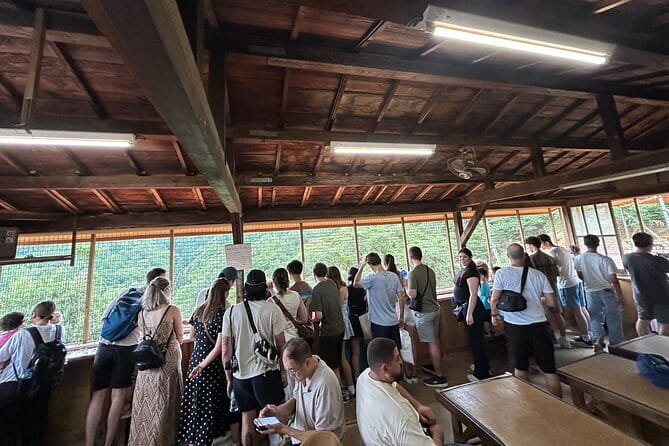
The schedule is built like a “get your bearings fast, then move through different moods” day. After the train ride to Kyoto (about 1 hour 10 minutes), the itinerary starts with a Kyoto stop, then moves into Gion Shirakawa, Rokkakudo, Entoku-in, Nishiki Market, and finally Fushimi Inari-taisha before returning to Osaka.
This order is practical. You start with areas that are easy to understand visually, then you go toward food and shopping, and you end with the shrine experience that people usually plan their whole trip around. The timing also keeps you from feeling like you are racing across the city all at once.
Also, you are not stuck with a rigid script. The tour can be customized 100% based on your request. If you want more time for one neighborhood feeling, or you want to shorten a stop because your legs are tired, you have a real option to adjust.
Stop 1 in Kyoto: using the first hour to set your direction
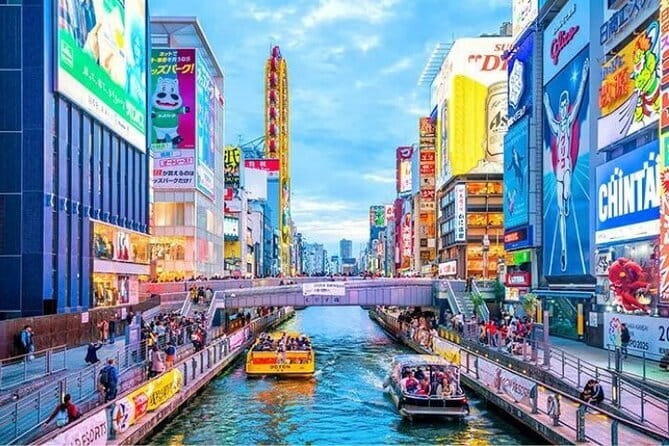
The first stop is simply labeled as Kyoto, with about 1 hour 10 minutes of travel from Osaka or Osaka Port to Kyoto, and admission marked as free. Even though that sounds basic, the “early orientation” part is where private tours quietly win.
At the start of a day, you usually benefit from guidance that helps you pick what matters most. A good guide can point out what you will see later, explain how the neighborhoods connect, and help you avoid wasteful detours. That sets up the rest of the day so the walk from one spot to the next feels logical instead of chaotic.
The admissions being marked as free also helps. You can spend your attention on the experience instead of doing financial and logistical math right away.
Gion Shirakawa: old wooden lanes and a stream-side stroll
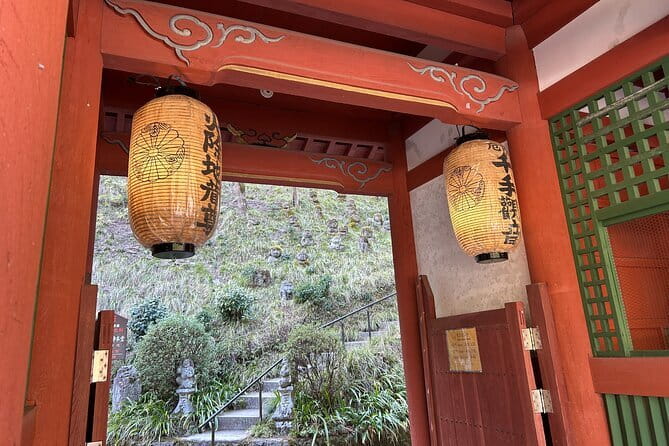
Next comes Gion Shirakawa, about 40 minutes, with admission marked as free. This is a classic entertainment district area near Yasaka Shrine, known for traditional wooden houses, restaurants, and teahouses lined along a stream. It is the kind of place where the photo opportunities are obvious, but the atmosphere is what stays with you.
In spring, the area adds extra color: cherry tree pink blossoms and fresh green weeping willows, which create a pleasant contrast. If you are lucky, you might spot wedding couples in kimono, and there are light-up events during sakura season.
One practical tip: this is not the type of stop where you want to rush. Give yourself time to slow down. The best moments are often in the small details, like the way the lanes open up toward the water and how the architecture frames the street.
If you dislike crowding, you might still want to pick a smart time of day for this stop. The good news is you are with a guide, and they can help manage pacing.
Other ways to spend a day in Osaka
- Kobe private tour from Osaka (Shore excursion available from Osaka or Kobe port)
★ 5.0 · 15 reviews - Nara private tour (Shore excursion available from Osaka or Kobe port)
★ 5.0 · 13 reviews - Kyoto Day Trip from Osaka Port – Private Shore Excursion
★ 5.0 · 13 reviews
Rokkakudo: a temple linked to the roots of ikebana
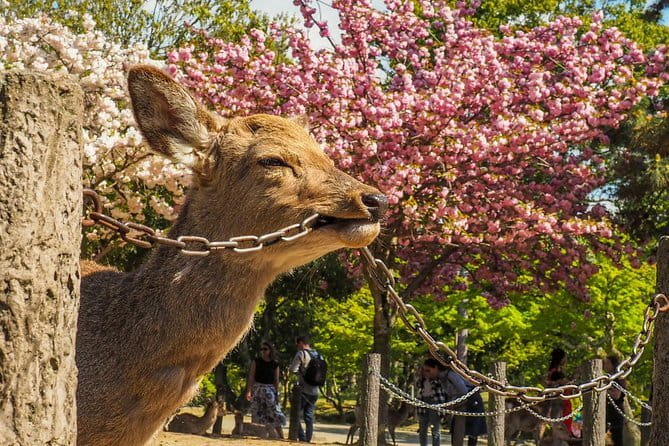
After Gion Shirakawa, the tour heads to Rokkakudo, about 35 minutes, also marked as free entry. This is a smaller-feeling temple stop, but it has a specific cultural hook: it is where a Japanese style flower decoration called ikebana is said to have originated.
That matters because it adds meaning beyond the scenery. Instead of only seeing a temple as a photo location, you get a story that ties to Japanese everyday culture. Even if you do not know much about ikebana today, the connection helps you notice the role of form, restraint, and design.
The drawback is simple: this stop is short. If you love temples as architecture and want longer quiet time, you may want to ask your guide whether you can spend a bit more time here if the day allows.
Entoku-in: Hideyoshi and Nene, plus sliding doors and a quiet garden
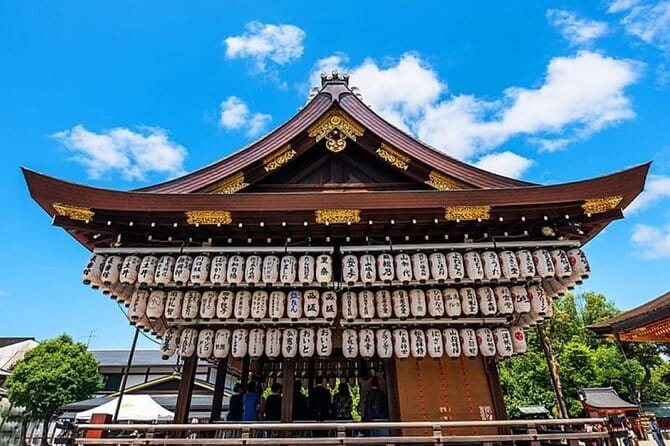
Stop 4 is Entoku-in, about 45 minutes, and this one has admission included. It is described as a sub-temple of Kodaiji Temple and Kenninji Temple and also known as the Temple of Toyotomi Hideyoshi and Nene.
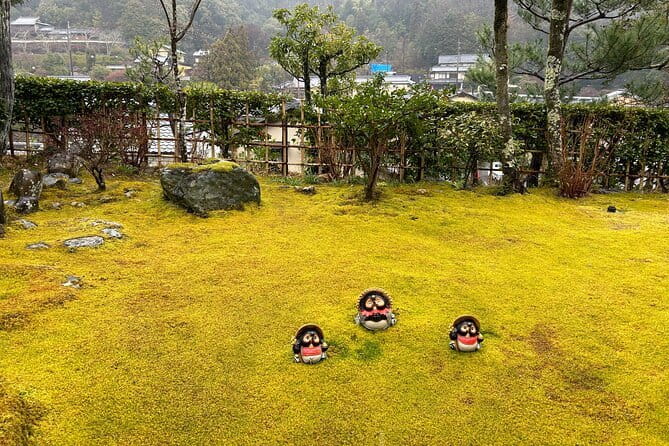
This is the kind of stop that rewards attention. You are dealing with layered meanings, from the story of Nene, who spent 19 years at a cosmetic castle restored from Fushimi Castle, to a specific shrine piece: the enshrined three-sided Daikokuten statue. It is described as a nenjibutsu, which is a Buddha meant to remember Hideyoshi.
There is also a major art detail: an ink painting by Hasegawa et al. on 32 sliding doors that is listed as an Important National Cultural Property. The tour notes that a digital replica stands in place.
Then there is the garden side. The North Garden is listed as a Special Site of Scenic Beauty, and it uses an Ikeizuma-style layout, which means the design focuses around a pond. Even if you do not read garden design like a specialist, you can usually feel the difference between a random yard and a planned space built to shape sightlines.
This stop has the best “Kyoto depth” for people who want more than a checklist. The tradeoff is that it may feel less exciting if you only want street scenes and big names. But if you like stories attached to places, it is a strong pick.
Nishiki Market: 390 meters where Kyoto food logic makes sense
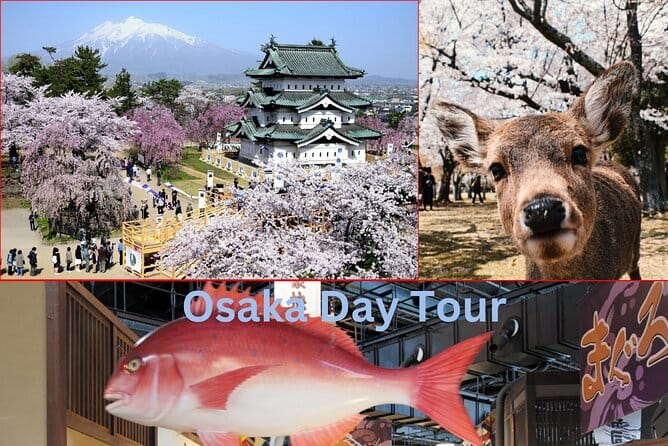
Next up is Nishiki Market Shopping District, about 1 hour 20 minutes, with admission included. It is about 390 meters long and is described as having around 400 years of history. That length is important because it is long enough for variety, but short enough that you can still feel in control.
Nishiki is also framed as an arcade and shopping street with ages-old merchant practices and traditions. The key is the food angle. This market is described as integral to Kyoto’s culinary culture, with ingredients that can be found here and knowledge that experts can share.
If you love snacking, this is where you should pace yourself. It is tempting to sample everything, but the best strategy is to pick a few bites you truly want and use the rest of your appetite for later, especially if you want energy for the Fushimi Inari walk.
If you do not love shopping crowds, you can still enjoy Nishiki as a sensory experience: look, smell, and then choose a couple of items rather than trying to buy the whole market.
Fushimi Inari-taisha: fox messengers, torii donations, and a hike you will remember
The final major stop is Fushimi Inari-taisha, about 1 hour 20 minutes, with admission marked as free. This is one of the most important Inari shrines, dedicated to Inari, the Shinto god of rice. The shrine is known for foxes, which are thought of as Inari’s messengers, and you will see many fox statues across the grounds.
One detail I like in this stop description is the age. The shrine has ancient origins, predating Kyoto’s move to Kyoto in 794, so you are not just looking at something built for tourists.
The signature experience is the torii-gate trail at the back of the main grounds. It starts with Senbon Torii, meaning thousands of torii gates, forming two dense parallel rows. The tour notes that the gates are donations by individuals and companies, and the names and donation dates are inscribed on the back of each gate.
That donation detail changes how you see the path. You are not just walking through a landmark. You are moving through a record of many different people’s relationships to the place.
Practical consideration: even within a guided time like 1 hour 20 minutes, this area can mean steady walking. Wear shoes you trust, and keep an eye on your energy for the return train.
The return train to Osaka: ending the day without drama
After Fushimi Inari, the tour returns to Osaka by train. The travel time back is listed as about 1 hour 10 minutes, and admission is marked as free. It ends back at the meeting point, so you are not dropped into some random area.
This matters because one of the common headaches of day trips is what happens at the end. When you finish tired, you do not want extra transit anxiety on top of it. Having the return route handled is part of the tour’s stress-free promise.
Also, since this is a private tour, the pace should be more controllable. If you need a bathroom stop or you are adjusting to walking time, a guide can help manage flow.
What makes this tour feel worth it: the guide factor
A lot of Kyoto day trips look similar on paper: train, a handful of stops, some photos, done. The difference here is the guide and the way the day can flex.
This tour uses a Japanese guide speaking English, with experience in the region over 5 years. They can also customize the plan based on what you request. That kind of flexibility helps when your group has different moods in one day. One person wants more street time, another wants a slower temple stop, and you can adjust without feeling like you failed at planning.
There is also a strong mention of good communication leading up to the tour, plus shortcuts and best routes. Even if you are confident with transit, those small routing decisions can save time and reduce “why are we here?” moments.
If you are booking a shore excursion style day and your time window is tight, a smooth plan plus proactive guidance is not just nice. It is the difference between a fun day and a rushed one.
Who should book this Kyoto shore excursion from Osaka
This is a great match if you want:
- A private Kyoto day trip instead of a crowded group bus tour.
- A guided route that hits Gion, Nishiki Market, and Fushimi Inari without you doing heavy planning.
- A guide who can adjust based on your requests.
- Pickup support from Osaka Port or Osaka City, which is ideal for cruise timing.
It is also a good fit if you enjoy a mix of experiences. You get classic atmosphere in Gion Shirakawa, an arts-related temple stop at Rokkakudo, a story-rich visit to Entoku-in, food street time at Nishiki Market, and then the big iconic shrine walk at Fushimi Inari-taisha.
The main consideration is physical comfort. The tour lists a moderate physical fitness level. That is usually code for “expect walking,” especially around markets and along the torii route. If you know you get tired easily, it is still doable, but you should plan for slower pacing and good shoes.
Service animals are allowed, and the tour is near public transportation. That helps if you want options during the day.
Should you book it?
If your goal is a smart, guided Kyoto day trip that minimizes transit headaches and maximizes classic stops, I would book this tour. The price is high enough that you should feel it, but the inclusions justify it: guide support, pickup and drop-off, and train tickets, plus admission coverage for Entoku-in and Nishiki Market.
Book it especially if you value flexibility. The ability to customize the schedule and the guide experience in the area are exactly what you want when your interests shift mid-day.
Skip it or reconsider if you want a self-guided adventure where you pick every step yourself, or if you dislike walking outdoors during the day. Also double-check your budget for local Kyoto transport (1,600 JPY) and the possibility of reserved seats (700 JPY per person), since those costs are not included.
FAQ
How long is the Kyoto shore excursion from Osaka?
The tour runs about 7 to 8 hours.
Where is the meeting point in Osaka?
You meet at Yodoyabashi Station (3-chōme-1-25 Kitahama, Chuo Ward, Osaka, 541-0041, Japan), and the tour ends back at the same meeting point.
What language is the guide, and can the route change?
You get a Japanese guide who speaks English, and the tour can be 100% customized based on your request.
What is included in the tour price?
Included are the Japanese guide service speaking in English, pickup and drop-off at Osaka port or Osaka station, and the train ticket between Osaka and Kyoto.
What extra costs are not included?
Transportation inside Kyoto is not included (listed as 1,600 JPY by public transportation), and a reserved seat ticket between Osaka and Kyoto is also not included (listed as 700 JPY per person).
Which major sights are on the schedule?
The schedule includes Kyoto, Gion Shirakawa, Rokkakudo, Entoku-in, Nishiki Market Shopping District, and Fushimi Inari-taisha Shrine, then the return to Osaka.
Is cancellation free, and can service animals join?
Cancellation is free. You can cancel up to 24 hours in advance for a full refund. Service animals are allowed.
Just added around Osaka

Day Trips to Kyoto from Osaka, compared.
Osaka/Kyoto: Hiroshima Miyajima Bus Tour & Shinkansen Ticket
Read our review →
From Kyoto/Osaka: Kyoto Top Highlights 1-Day Guided Bus Tour
Read our review →
Ancient Capital Tour: Kyoto and Nara Highlights from Kyoto/Osaka
Read our review →
Osaka/Kyoto: Amanohashidate & Miyama Tour with Boat & Lunch
Read our review →

Full Day Tour of Kyoto with Private Transportation
Read our review →
Kyoto & Nara Private customized tour with English speaking Guide
Read our review →This tour also fits