
Reviewed · CALLIGRAPHY CLASSES
Osaka: Private Japanese Calligraphy Experience
Brush on paper, worries off. This private calligraphy experience in Namba turns Osaka sightseeing energy into something calmer and more focused, with an instructor guiding you stroke by stroke. You pick a theme, learn the basics, then create a personalized piece you can take home.
I especially like two things: you get real instruction (not just watching someone write), and you leave with a finished souvenir made from your own chosen theme and your name in kanji. Plus, it’s private, so the instructor can slow down for you, take photos for you, and keep the session moving at the right pace.
One consideration: calligraphy is trickier than it looks. If your hand shakes or you are working fast, your first strokes might feel messy, so go in ready to take your time and accept that practice is part of the fun.
In This Review
- Key highlights worth planning for
- Finding the WA NO MA studio by Shinsaibashi, not far from your Osaka day
- A truly private 90-minute class built around your pace
- Choosing your theme and prepping the right kanji for you
- A note for families
- Learning the stroke basics, then practicing with real feedback
- Putting your name into kanji, with meaning behind each step
- Colored paper, the initial stamp, and the finished look
- Photography and how to time your shots without killing the lesson
- Price and value: what you get for about $51 and why it adds up
- Optional add-on: tea ceremony
- Language in the room, and how to make it work for you
- Who should book this Osaka calligraphy session
- Should you book WA NO MA private calligraphy in Osaka?
- FAQ
- How long is the Japanese calligraphy experience in Osaka?
- Where do I meet the instructor?
- What do I need to bring?
- Is this experience wheelchair accessible?
- What languages does the instructor speak?
- Is tea ceremony included in this calligraphy experience?
- Can I cancel if my plans change?
Key highlights worth planning for
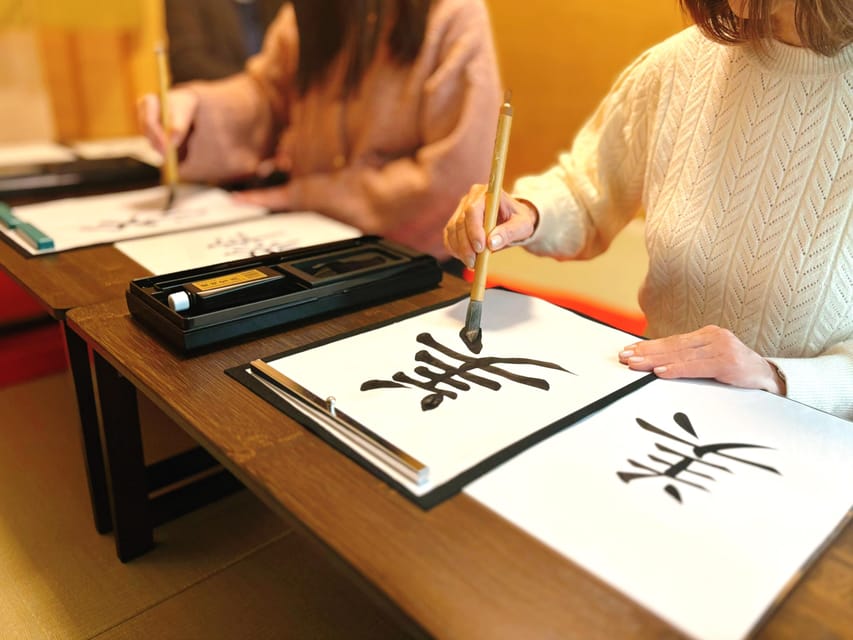
- Private, photo-friendly setup so you can take pictures anytime without feeling rushed
- Personalized kanji using your name and an approach tied to your personality
- Strokes taught with hands-on guidance so you can improve while you’re still in class
- Colored paper options and an ending touch with an initial stamp
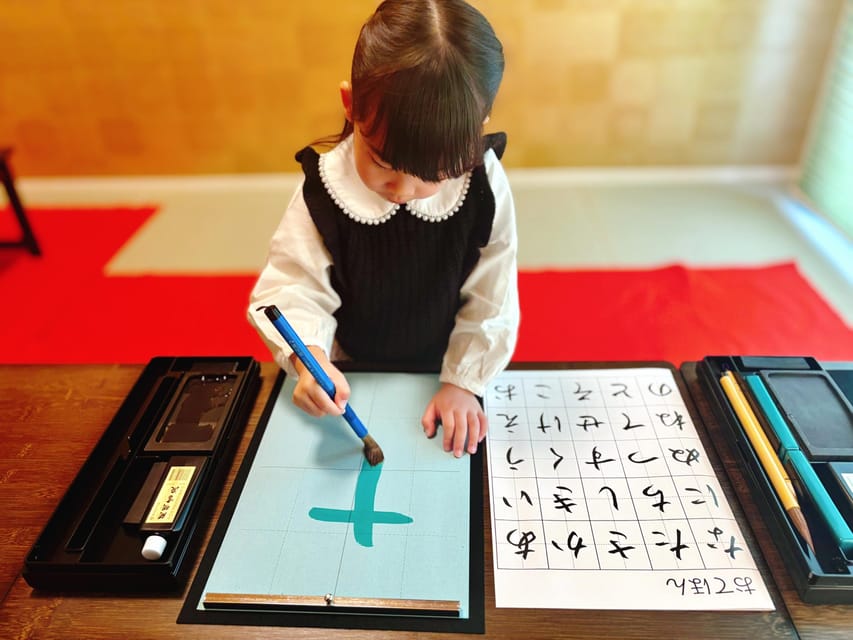
- Kids can use water calligraphy to keep hands and clothes clean
Finding the WA NO MA studio by Shinsaibashi, not far from your Osaka day
This class is based in Namba, a very convenient pocket of the city. The meeting point is at the entrance of New Osaka Hotel Shinsaibashi. From there, you walk west for about 30 seconds. You will see a blue vending machine near the entrance, which makes the spot easier to find quickly.
The team waits outside the building about five minutes before your scheduled start. They wear kimonos, so you can spot them fast and get settled without wandering around. Because this is a private group experience, you should expect the instructor to focus on your session right away, not shuffle you between different groups.
Brush strokes that take a lifetime to master
- Calligraphy Workshop in Namba, Dotonbori★ 5.0 · 57 reviews
- Learning Zen of Japanese Calligraphy in kimono near Osaka Castle★ 4.5 · 53 reviews
- Osaka: Private Tea Ceremony and Calligraphy Experience★ 5.0 · 50 reviews
- Samurai dress-up and shows, plus Tea Ceremony & Calligraphy★ 5.0 · 27 reviews
- Osaka: Temple Tour and Traditional Calligraphy Lesson★ 4.9 · 24 reviews
A truly private 90-minute class built around your pace
The format is simple, and that’s a big part of the value. You get a scheduled time slot reserved just for you, so you are not squeezed into a crowded room. The instructor guides you closely, and you can ask questions as you go, including questions about symbols, stroke meaning, or practical technique.
You also have control over how the session feels. If you want lots of photos, you can take them while you work. If you want to go slower because you are traveling with a child, the class can match that rhythm. That flexibility matters, especially for families. You are not just buying a product, you are buying time with an instructor who can adjust to your group.
Choosing your theme and prepping the right kanji for you
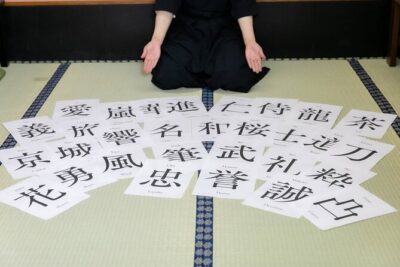
Before you touch the brush, you start with the creative decision that makes the class personal. You select a theme for what you want to write that day. You can tell the instructor your favorite letters and words. If you are not sure what to choose, the instructor can suggest options that fit what you want to express.
Then comes the part that turns calligraphy from a craft into a story. The class focuses on choosing kanji that fit you. The experience includes converting your name into kanji based on your personality, and the instructor can guide you toward characters that match the vibe you want your piece to represent.
This is not just a “copy the sample” experience. You are actively involved in the choices, and that is why it feels more meaningful than a generic workshop.
A note for families
If you are bringing young children, there is water calligraphy available. It keeps hands and clothes cleaner, which saves you from the usual chaos of marker or ink spill worries. It is a smart option if you want your kids to participate without turning your day into a stain-removal project.
Learning the stroke basics, then practicing with real feedback
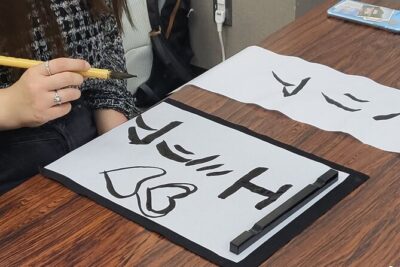
Once the theme is set, you get a structured teaching moment. The instructor provides a detailed lecture on basic practices, then you put it into motion. This is where calligraphy becomes physical. You are learning how to guide the brush with control and intention, not just how to form characters.
In the classroom, the most helpful guidance tends to be hands-on corrections. When your strokes do not land right, the instructor can show what to adjust. That feedback loop is why your work improves during the session, instead of feeling stuck with your first attempt.
The class also includes context, so it’s not all technique and no meaning. You get an intro to the Japanese writing systems and explanations about the art of calligraphy. That cultural framing helps you understand why brush direction and stroke flow matter, instead of treating the final result as a random-looking design.
Other ways to spend a day in Osaka
- Private Osaka Walking Tour: Highlights & Hidden Gems
★ 5.0 · 569 reviews - 3/4/5 Hours Private Tour in Osaka with Local Guide
★ 5.0 · 189 reviews - Osaka’s Best and Brightest: Private Full-Day Tour by Vehicle
★ 5.0 · 147 reviews
Putting your name into kanji, with meaning behind each step
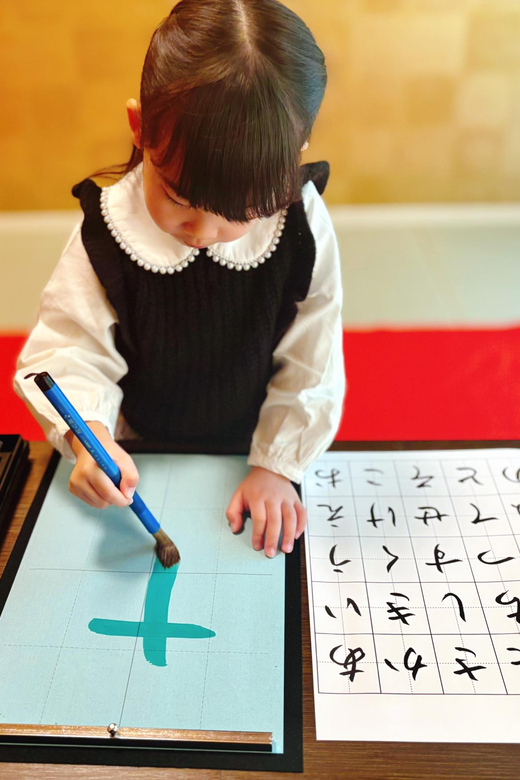
After you learn the essentials, you move into your own piece. This part is the heart of the workshop.
You choose the final piece direction: your name is written in Japanese characters and you work toward a version in kanji connected to your personality. The instructor will help with the best characters to express what you want, then guide you through the writing process.
A useful way to think about this is: you are translating an identity into a visual language. You’re not just writing your name phonetically. You are working with characters and the meaning suggested by their strokes and associations. The more you tell the instructor what you want to express, the more the final artwork feels like it belongs to you.
And because it’s guided, you are not left with a blank page. You get support at the moments that usually trip people up, especially when your brush control is still new.
Colored paper, the initial stamp, and the finished look
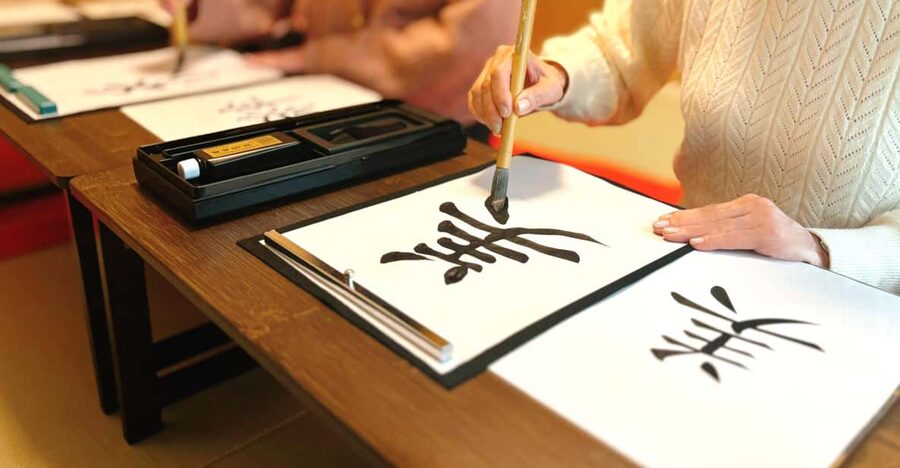
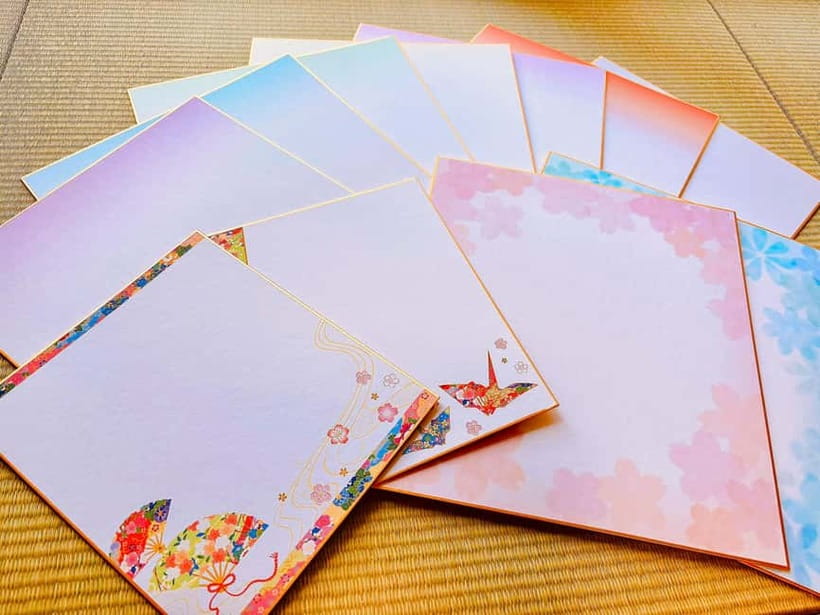
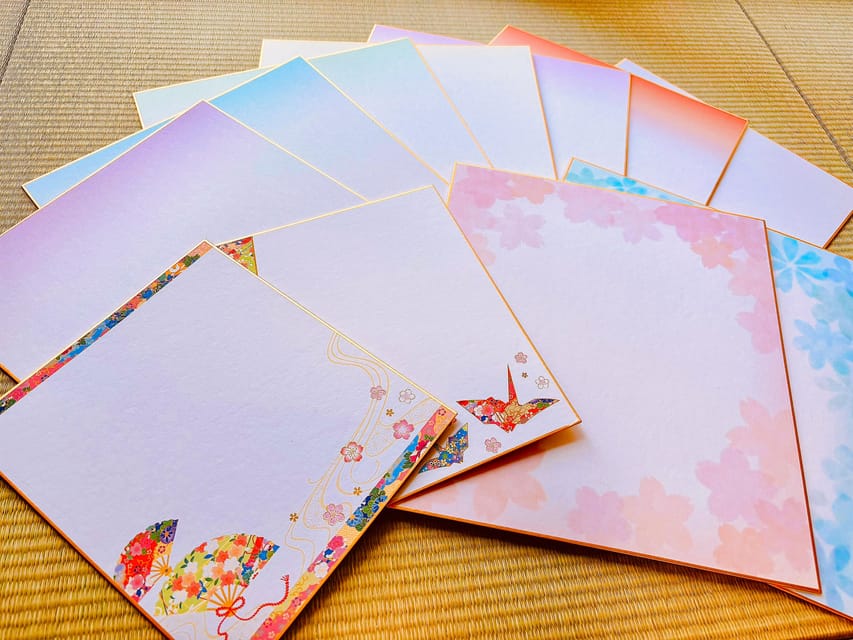
Once the practical part is underway, the class shifts to making it look finished and gift-ready. You pick your favorite piece of colored paper from the options offered. This small choice changes the whole feel of your artwork, from calm and classic to brighter and more personal.
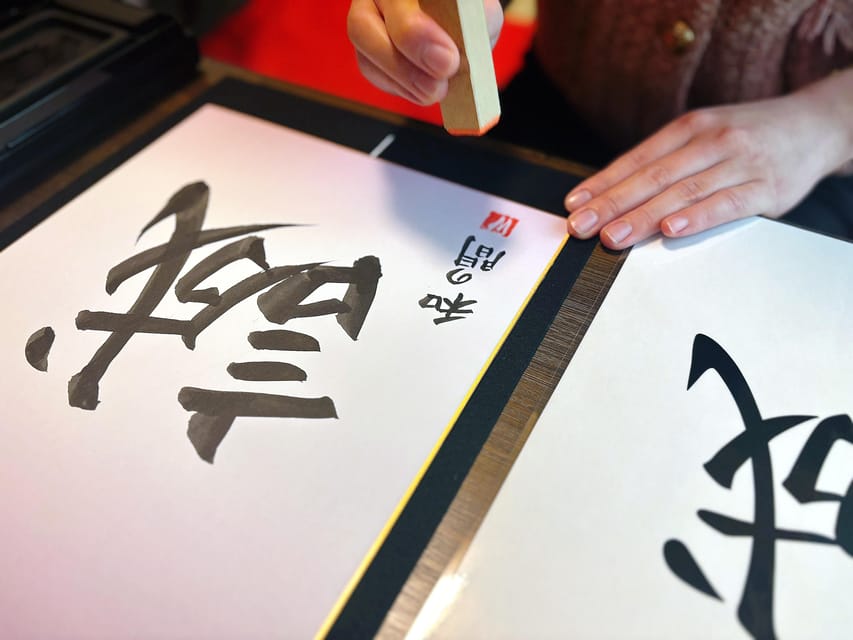
Then you write your name in Japanese characters, and you add a stamp with your initials. That stamp is a fun finishing touch because it turns the page from a practice sheet into something with a personal signature quality.
The final artwork is one-of-a-kind in the way that matters. Your choices, your kanji selection, and your stroke execution all come together into a souvenir you cannot really recreate the same way again. You also get to take it home after the session, so it becomes part of your Osaka trip memory.
Photography and how to time your shots without killing the lesson
This is one of those activities where people often forget to plan photos. Here, you can handle that better.
You can take photos anytime during the experience, and you can ask the instructor to help with capturing key moments. A lot of the value is in watching strokes being corrected in real time and then seeing the finished piece. If you wait until the end, you miss the learning part. If you take photos too early, you might disrupt your focus. The middle ground is easy: take a few shots while you pause between practice strokes, then capture the final piece once you are satisfied.
Also, because the session is private, you do not feel like you are taking up space. The class timing is set for your group, so photos do not become a problem.
Price and value: what you get for about $51 and why it adds up
At $51 per person for a 90-minute private session, the price makes sense if you think about what is included and what people usually pay extra for elsewhere.
What you get included:
- Instructor time for your group
- Colored paper for the artwork
- All fees and taxes
What you provide:
- Socks (required)
- Your participation and patience while learning strokes
This is a classic “value through materials plus real teaching” setup. You are not only buying the paper. You are paying for guidance that helps you form characters correctly enough to create a piece you will actually want to display.
If you are considering skipping calligraphy and just taking pictures, don’t. The most memorable part is the guided practice, and you can only get that by sitting down and making your own strokes.
Optional add-on: tea ceremony
Tea ceremony is not included. If you want both calligraphy and a tea ceremony, you would reserve a different plan labeled for Osaka private tea ceremony and calligraphy. That matters for planning, because you might want to build your day around extra time if you add tea.
Language in the room, and how to make it work for you
The instructor communicates in English and Japanese. That means you are not stuck hunting for definitions while you try to learn brush technique.
If you want to get the most out of the class, come with one or two focused questions. For example:
- which character choices reflect your theme best
- what a specific stroke direction changes
- what the brush technique is meant to achieve
Also, keep your answers simple. When you tell the instructor what you like, you speed up the process of selecting the right kanji. In past sessions, the instructor name Wa No Ma comes up often, and the name Womema appears as well, which tells you the experience is connected to real people who teach with patience.
Who should book this Osaka calligraphy session
This class is a strong fit if you want a calm, hands-on cultural activity in a convenient area. It works especially well for:
- couples who want a shared activity and a meaningful souvenir
- solo travelers who like structured guidance without a crowd
- families with kids, since water calligraphy can keep things cleaner
It is also a good choice if you care about personalization, not just learning a character. The name-in-kanji approach connected to your personality makes it feel less like a worksheet and more like a story you take home.
Two practical considerations to keep in mind:
- Socks are required, so pack them.
- Wheelchair users are not suitable for this activity, based on the provided information.
Should you book WA NO MA private calligraphy in Osaka?
I think you should book this if you want a private, guided experience in Namba that ends with a finished piece you can actually display. The combination of instructor support, colored paper, and a personalized kanji outcome makes the price feel fair for 90 minutes, and the private setup keeps it calm.
Don’t book it only if you are not willing to slow down for practice. Calligraphy needs patience, and your first strokes might feel awkward, especially if your hand shakes. If that sounds stressful, you may still enjoy it, but go in knowing you are there to learn, not to be perfect.
If you want tea as well, plan that separately, since tea ceremony is not included in this specific calligraphy plan.
FAQ
How long is the Japanese calligraphy experience in Osaka?
The experience lasts 90 minutes.
Where do I meet the instructor?
Meet at the entrance of New Osaka Hotel Shinsaibashi, then walk west about 30 seconds to a spot near a blue vending machine. The team waits outside the main entrance in kimonos about five minutes before your scheduled booking time.
What do I need to bring?
You should bring socks.
Is this experience wheelchair accessible?
No. It is listed as not suitable for wheelchair users.
What languages does the instructor speak?
The instructor speaks English and Japanese.
Is tea ceremony included in this calligraphy experience?
No. A tea ceremony experience is not included. If you want tea as well, you would need to reserve the plan that specifically includes tea ceremony and calligraphy.
Can I cancel if my plans change?
Yes. It offers free cancellation up to 24 hours in advance for a full refund.
Just added around Osaka

Calligraphy Classes, compared.
Learning Zen of Japanese Calligraphy in kimono near Osaka Castle
Read our review →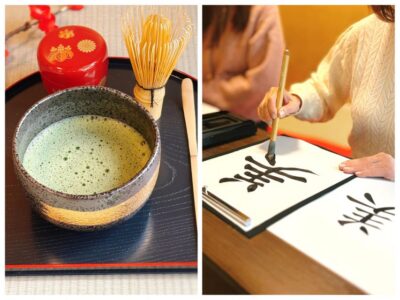
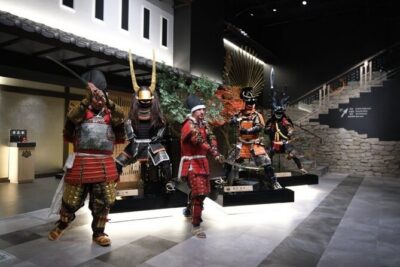
Samurai dress-up and shows, plus Tea Ceremony & Calligraphy
Read our review →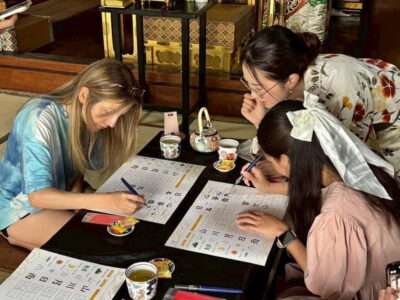
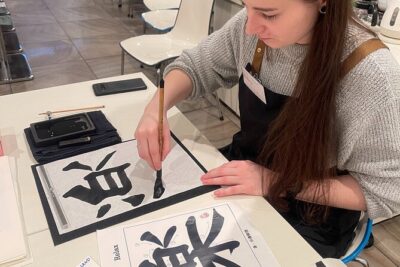
Premium Kimono Dressing, Tea Ceremony, Calligraphy, Samurai show
Read our review →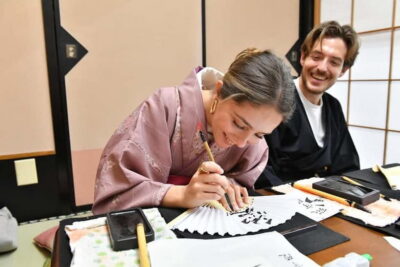
Learning Shodo with a kimono and Trying Samurai Calligraphy
Read our review →This tour also fits