Reviewed · DAY TRIPS TO KYOTO FROM OSAKA
Osaka/Kyoto: Arashiyama, Nara Park, Fushimi Shrine Tour
Three shrines, two capitals, one packed day. This tour strings together Arashiyama bamboo and Fushimi Inari’s red torii into one efficient circuit, with the Nara deer park as the goofy payoff. The tradeoff is simple: it is mostly self-guided time at the sights, and you need to be punctual or the bus will not wait.
I like that you get a real sense of what makes Kyoto and Nara different without spending your whole day on transit. Arashiyama starts earlier, when the air feels fresher and the crowds are typically lighter, and Nara’s open green space sets the tone for a slower, more playful stop. Still, this is a busy day, so if you hate rushing, you might feel the schedule.
One more consideration: the tour is mainly run in Chinese, and English or Korean support may only be available by request, and not guaranteed. You still get a guide, and sometimes the driver provides basic onboard commentary, but language can affect how much you get out of the day.
In This Review
- Key highlights worth planning around
- A one-day Kyoto and Nara circuit that actually makes sense
- Price and what you actually get for $51
- From Osaka or Kyoto: the transport setup you should understand early
- Arashiyama morning: Togetsukyo Bridge and bamboo trails
- Nara Park: the deer encounter that feels real
- Fushimi Inari Taisha: walking the torii maze
- Time management: why the day feels busy
- Guidance quality: what the guide can and cannot do
- Who this tour is best for
- Should you book this tour?
- FAQ
- FAQ
- How long is the tour?
- What does the $51 price include?
- Where do I meet the guide?
- What languages are available during the tour?
- Is the tour wheelchair accessible?
- Is food allowed on the vehicle?
- Is there a lot of guided commentary at the sights?
- How much time do I get at each attraction?
- What is the cancellation policy?
Key highlights worth planning around
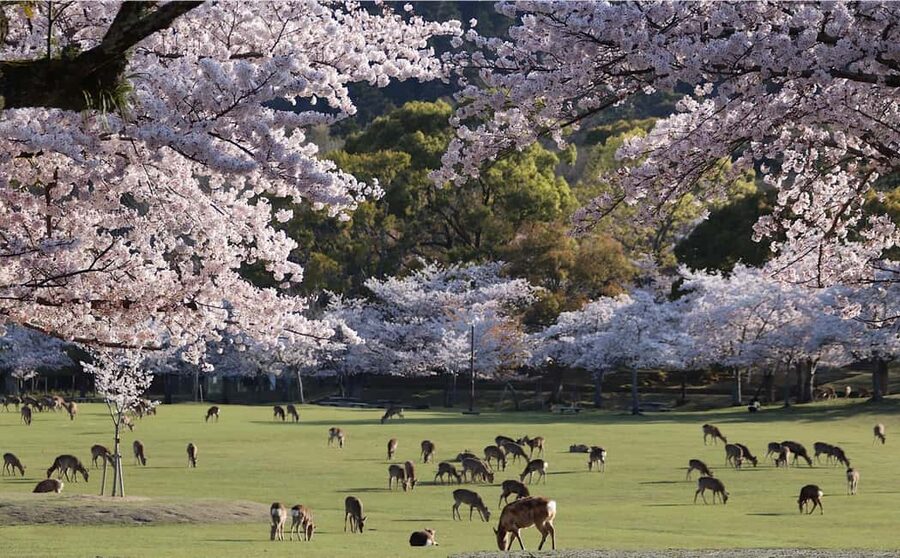
- Over 1,000 freely roaming deer at Nara Deer Park, with the deer tied to Inari beliefs
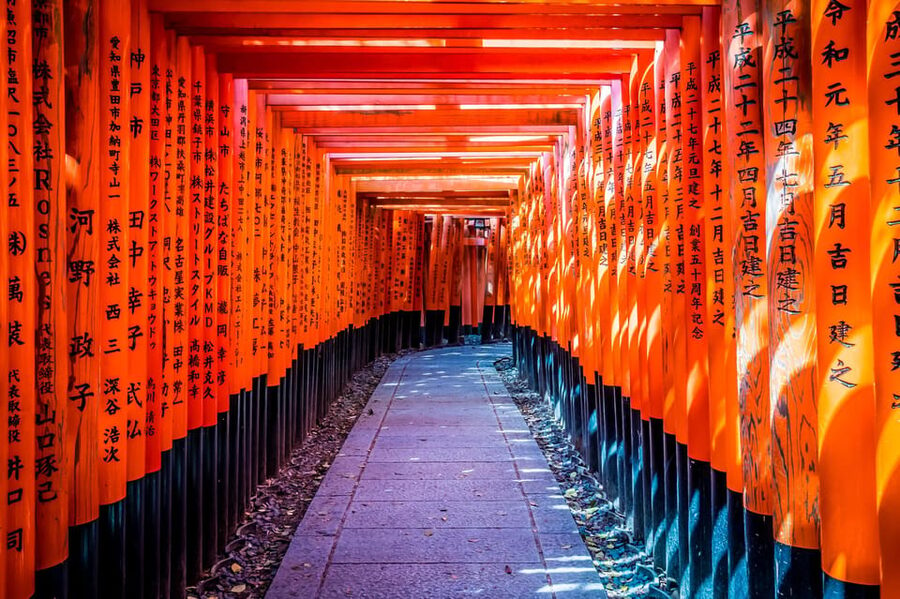
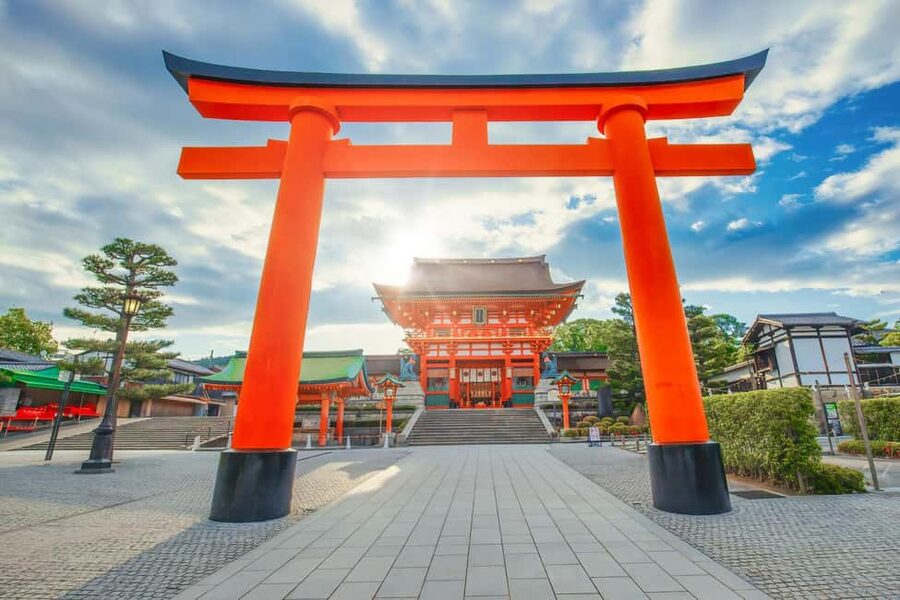
- Fushimi Inari’s 10,000 red torii gate walk, linked to Inari shrine traditions since 711 AD
- Arashiyama morning air and greenery, including Togetsukyo Bridge views and bamboo trails
- Easy city-to-city logistics, departing from Osaka or Kyoto and returning to Kyoto or Osaka
- Mostly self-guided site time, great for exploring your own pace but less commentary than you might expect
A one-day Kyoto and Nara circuit that actually makes sense
If you only have one full day in the Kansai area, this itinerary is built for coverage. You do three of the most recognizable stops in the region, and you do them in a logical order for minimizing backtracking. The timing is designed so you start in the morning in Arashiyama, shift to Nara around early afternoon, then finish at Fushimi Inari later in the day.
What makes it work for real travelers is that transport, tolls, and parking are handled for you. When you are bouncing between Osaka and Kyoto plus two different destination areas, that alone can be worth paying for, especially if you do not want to solve bus and train timing all day.
The other thing I appreciate is the way the stops complement each other. Arashiyama gives you scenery and nature. Nara gives you space and wildlife. Fushimi Inari gives you a shrine experience that feels almost like walking through a story.
Deer that bow back, minutes from Osaka
- Ancient Capital Tour: Kyoto and Nara Highlights from Kyoto/Osaka★ 4.5 · 332 reviews
- Kyoto and Nara Day Trip from Osaka★ 4.0 · 175 reviews
- Discover Himeji, Kobe and Nara from Osaka★ 5.0 · 101 reviews
- Kyoto & Nara Private customized tour with English speaking Guide★ 4.5 · 99 reviews
- Kyoto and Nara UNESCO Highlights Full-day Tour From Osaka★ 4.5 · 50 reviews
Price and what you actually get for $51
The price is $51 per person, and for a day that includes transportation, toll fees, parking fees, and fuel, it is not just paying for a guide. You are paying for convenience plus less hassle between areas.
What is not included is also clear: meals and beverages are on your own. For a full 10-hour day, that matters. Bring a simple plan, like buying snacks before you start or keeping some cash on hand for small purchases near each stop.
Also note the style of guidance. This is not a full narration tour at every site. There is a guide with basic overview, and much of the time at each attraction is free time and self-guided.
So think of it like this: you are paying to get there, to get the timing right, and to have someone on hand in case you get confused. If you want deep cultural lectures the whole time, you may find the format a bit light.
From Osaka or Kyoto: the transport setup you should understand early
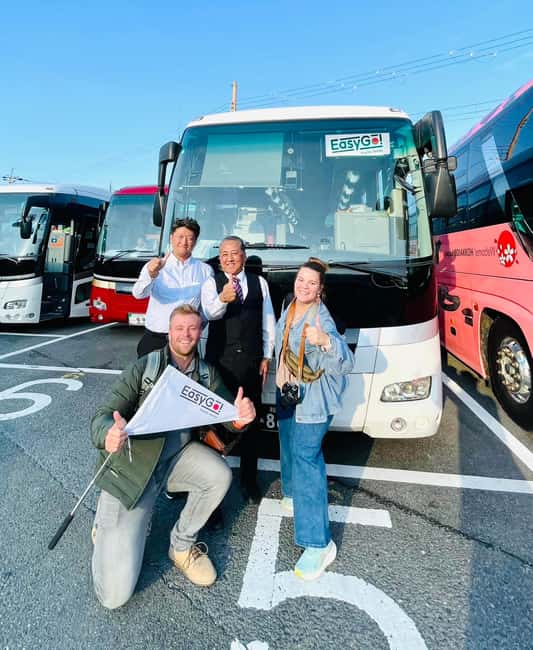
You can start from one of two likely meeting points, depending on what you book. One is around Kyoto Station, Hachijo Exit, at the sightseeing bus drop-off area (the listing references 1-chōme-1-3 Dōtonbori as the Osaka-related option). The key point is that the exact meeting location can vary by option, so you should confirm it in your booking details and show up early.
Check-in is not a vague suggestion. You are told to go directly to the meeting point and check in with staff wearing an EASY GO vest or flag. That matters because there is a real-world risk on tightly timed tours: if you are late, the bus may leave.
One negative experience shared by a customer is worth taking seriously, even if it is not the norm. In that case, the group arrived late, the bus departed without them, and they were instructed to find the guide at the next stop much later in the day. The lesson is practical: be early, and if you get delayed, call or communicate right away through whatever contact method the tour provides.
If you do not want stress, build in buffer time for train transfers, station exits, and walking. Kyoto stations are not subtle.
Arashiyama morning: Togetsukyo Bridge and bamboo trails
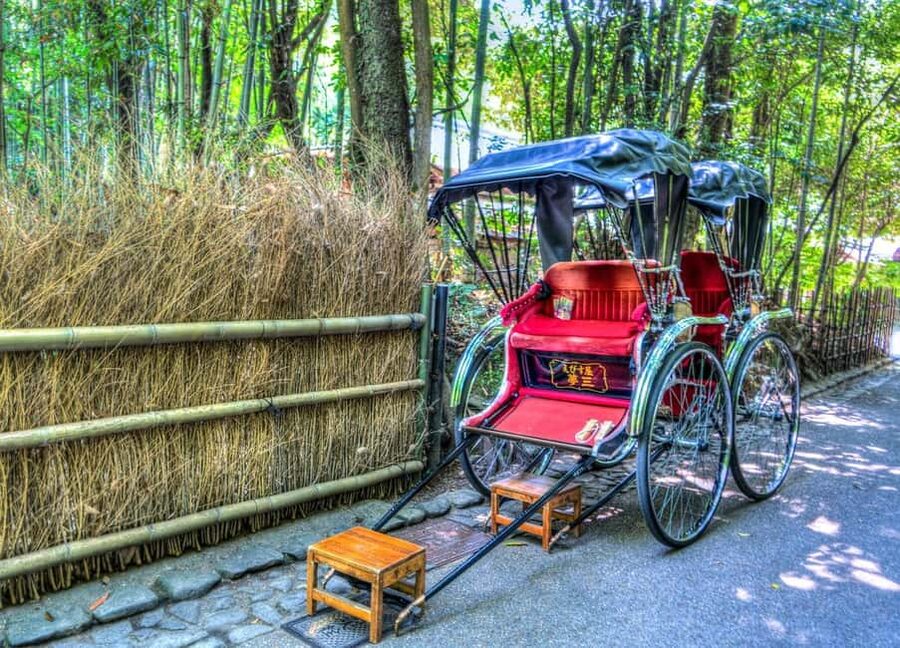
Arashiyama is usually the best way to start because the area feels gentler earlier in the day. This tour is timed so you arrive around 10:00 (after the morning Osaka or Kyoto departure timing), with about 2 hours for exploring.
You begin with the signature visual: Togetsukyo Bridge. Even without over-planning, you can use this time to walk for views and get your bearings. If you time it right, you are also more likely to enjoy a calmer feel before the bigger day crowds roll in.
Then it is on to the bamboo forest trails. The point here is not that bamboo is an attraction you have never seen before. The point is that in Arashiyama it is a complete mood. Think walking paths under tall greenery, changing light through leaves, and a route that feels like it has a start and an end even when it does not. This is the kind of stop that makes the whole day feel worth it, because it is not just a building or a photo spot. It is motion, air, and atmosphere.
Possible drawback: with only about two hours, you will not do everything. Choose a route and prioritize the areas you care about. If you try to do every detour, you can end up walking hard for a small payoff.
Nara Park: the deer encounter that feels real
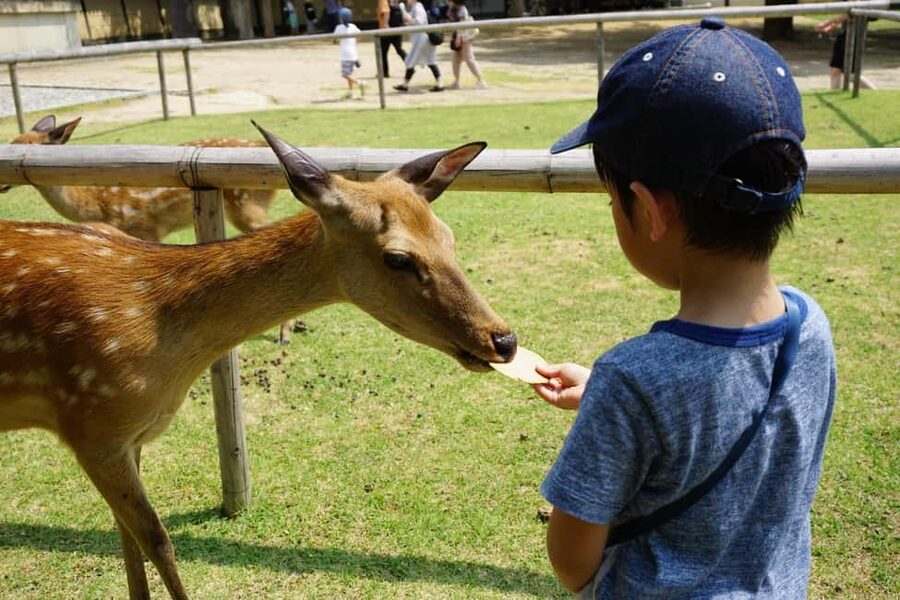
Next comes Nara Park, scheduled for around early afternoon, with about 80 minutes of time on the ground.
This stop is famous for good reason: you will encounter over 1,000 freely roaming deer. The deer are treated with respect in local tradition and are considered messengers associated with the shrine world. You are also told that the deer connection has a long timeline, over 1,300 years, and that the deer are listed as a national natural monument.
That context matters when you are standing among them. They are not just cute animals for tourist photos. In Nara, they are part of a living cultural landscape. The park is also spacious, so even though the deer are everywhere, you can still find breathing room if you keep moving.
My practical advice: treat this as a wildlife situation, not a theme park. Keep an eye on kids, hold small bags close, and do not assume the deer will behave like pets. If you want a calmer view, head to the edges of the deer area and then circle back for close sightings.
What I like most about this stop on a tour format is the contrast. Arashiyama is greenery and scenery. Nara adds open space and wildlife energy. Your brain gets a break from shrine steps until the final stop.
Quiet spaces between the neon
- Osaka: Minoh, Katsuoji Temple, & Minoh Falls Full-day Tour
★ 4.9 · 172 reviews - Sagano Romantic Train & Arashiyama, Kiyomizudera, Fushimi Inari Taisha Day Tour
★ 4.5 · 171 reviews - Full Day Kyoto Tour : Bamboo Forest, Golden Temple, Fushimi Inari
★ 5.0 · 84 reviews
Fushimi Inari Taisha: walking the torii maze
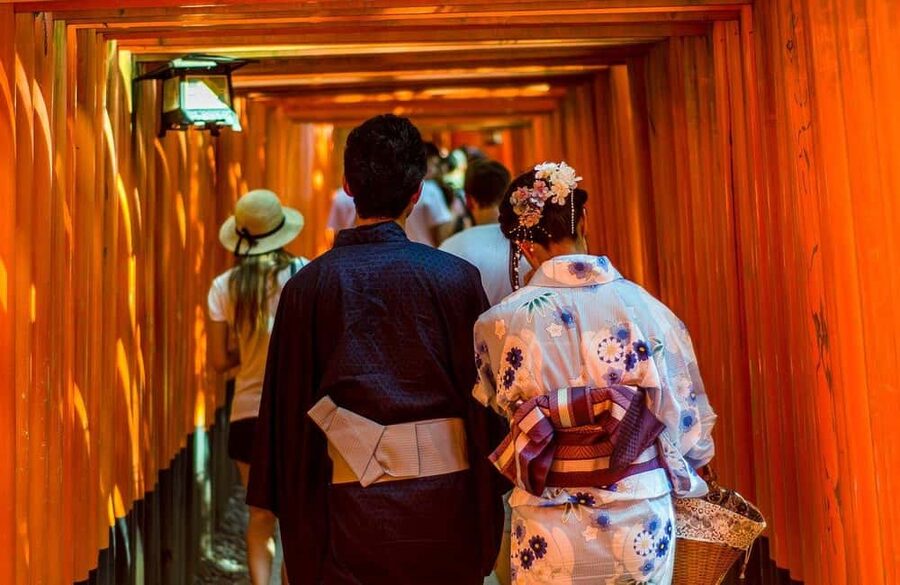
Then the day climaxes at Fushimi Inari Taisha. The tour brings you there with about 1.5 hours of free time.
Here is why this stop is special: you are passing through the spectacular 10,000 red torii gate pathway. The shrine complex is the headquarters associated with about 30,000 Inari shrines across Japan. It was founded in 711 AD, so you are not just visiting a modern attraction. You are walking through a place that has been tied to Inari devotion for a very long time.
If you love structure and story in your sightseeing, this is the one. As you move deeper into the area, it starts to feel like a world within the city. You go from gate to gate, the corridor effect builds, and the shrine spaces appear in a rhythm rather than as one single landmark.
With only 1.5 hours, you should pick your comfort level. The torii walk can become a long mission if you keep going to the far ends. If you want the signature experience without exhausting yourself, aim for a solid section of the torii corridor plus the most meaningful shrine points you can reach comfortably.
Also remember: later in the day, you may have more people mixing into the same walking routes. Plan for slow moments and photo lines.
Time management: why the day feels busy
This is a 10-hour tour, and most of those hours are travel plus timed windows at each place. You start in either Osaka or Kyoto, then you move to Arashiyama, to Nara, and finally to Fushimi Inari. After that, you return to Kyoto and then to Osaka, depending on the drop-off option.
The route can feel like a lot of moving parts because it is. Even if you are not spending hours traveling between cities, you are still shifting bases several times, and each shift involves walking, getting to the right exit, and re-checking where you are supposed to be.
The tour also notes that facility closures or limited hours can cause you to arrive early at the next stop or finish earlier than planned. Weather can also shuffle timing. That is normal for Japan day tours, but it is another reason to avoid planning a separate appointment right after.
If you do not like being at the mercy of a schedule, know the format upfront. This one is built for “see the big three” rather than “linger and go slow.”
Guidance quality: what the guide can and cannot do
The guide format is practical but not heavy. You are getting a Chinese/English/Korean/Japanese-speaking guide, but the tour is mainly conducted in Chinese, and English and Korean service may be available only if arranged in advance, and availability is not guaranteed.
In small groups, the driver may also serve as a guide with basic onboard commentary only. That can be helpful for directions and context, but it is not the same as a full guided tour at every stop.
On the positive side, some named guides in customer feedback stand out for being kind and helpful, including Levi and CC, with another guide named HuaHua being described as super. A strong guide matters most in the moments you need clarity, like knowing where to walk first, how to use your time well, and what to ignore.
On the negative side, again, punctuality is not optional. One report mentions the bus leaving without a family due to timing confusion. That is the risk of any timed multi-stop tour, but it is worth being extra careful here.
Who this tour is best for
This is a good fit if you want:
- A fast, curated day connecting Arashiyama, Nara, and Fushimi Inari without planning transit
- Plenty of time to explore on your own, especially for photos and personal wandering
- A group day that handles tolls, parking, and logistics, so you are free to focus on the sights
It might not be ideal if:
- You want deep, on-the-ground commentary throughout the entire day
- You hate schedules and risk missing departures if you get delayed
- You are relying on English or Korean assistance and cannot risk it not being available
Should you book this tour?
If you want the highlights of Kyoto and Nara in one day and you value efficiency and convenience over long explanations, this is a solid option. The price makes sense for the amount of transportation and fees included, and the mix of bamboo, deer, and torii is exactly the kind of day that helps first-time visitors understand the region.
I would still recommend one mindset: treat it as a self-guided sightseeing day with support, not a fully hosted storytelling tour. If you show up early for check-in, keep your expectations aligned with the time windows, and plan your meals outside the group, you will get a memorable hit list day.
FAQ
FAQ
How long is the tour?
The tour duration is 10 hours.
What does the $51 price include?
It includes a Chinese/English/Korean/Japanese-speaking guide, transport, toll fees, parking fees, and fuel fees. Meals and beverages are not included.
Where do I meet the guide?
The meeting point can vary depending on your option. The listed options include Kyoto Station, Hachijo Exit sightseeing bus drop-off area, and a Dotonbori meeting area.
What languages are available during the tour?
The guide can be Chinese, English, Japanese, or Korean. The tour is mainly conducted in Chinese, and English or Korean support may be available upon request, but availability is not guaranteed.
Is the tour wheelchair accessible?
Yes, the tour is listed as wheelchair accessible.
Is food allowed on the vehicle?
No, food is not allowed in the vehicle.
Is there a lot of guided commentary at the sights?
The tour includes a basic overview, and site time is listed as free time or self-guided (like Arashiyama and Nara Park). Professional guided commentary at each stop is not included.
How much time do I get at each attraction?
You get about 2 hours at Arashiyama, about 80 minutes at Nara Park, and about 1.5 hours at Fushimi Inari Taisha.
What is the cancellation policy?
You can cancel up to 24 hours in advance for a full refund.
Kyoto, One Stop Up the Line
- Osaka/Kyoto: Hiroshima Miyajima Bus Tour & Shinkansen Ticket★ 4.7 · 919 reviews
- From Kyoto/Osaka: Kyoto Top Highlights 1-Day Guided Bus Tour★ 4.5 · 714 reviews
- Osaka/Kyoto: Amanohashidate & Miyama Tour with Boat & Lunch★ 4.6 · 207 reviews
- Volleyball in Osaka, Kobe & Kyoto with locals!★ 4.8 · 131 reviews
Just added around Osaka

Day Trips to Kyoto from Osaka, compared.
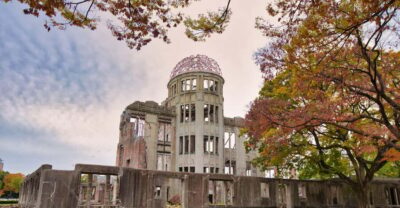
Osaka/Kyoto: Hiroshima Miyajima Bus Tour & Shinkansen Ticket
Read our review →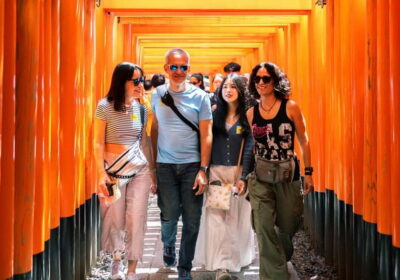
From Kyoto/Osaka: Kyoto Top Highlights 1-Day Guided Bus Tour
Read our review →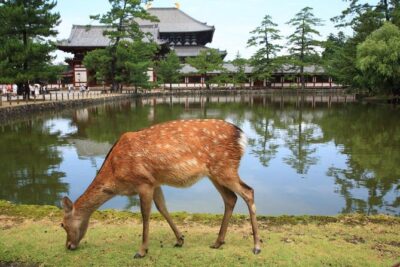
Ancient Capital Tour: Kyoto and Nara Highlights from Kyoto/Osaka
Read our review →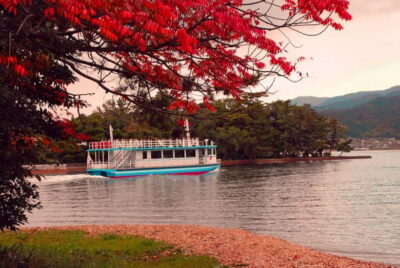
Osaka/Kyoto: Amanohashidate & Miyama Tour with Boat & Lunch
Read our review →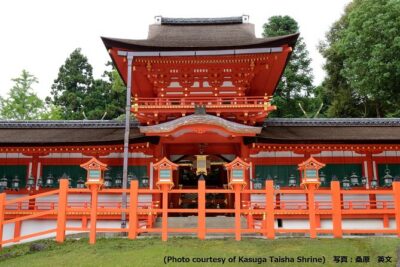

Full Day Tour of Kyoto with Private Transportation
Read our review →