
Reviewed · TAIKO DRUMMING EXPERIENCES
Taiko Japanese Drum Experience in Osaka
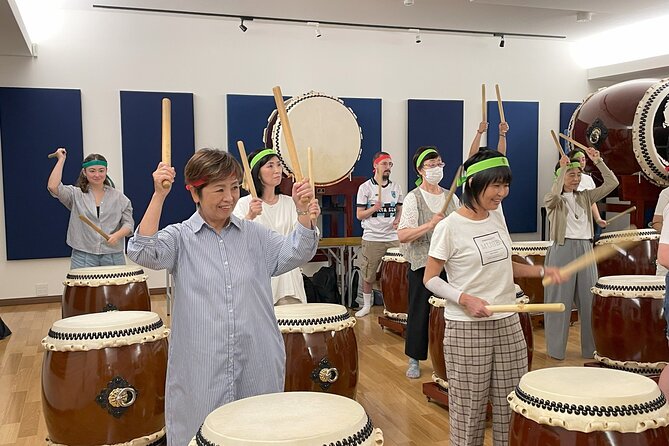
Your hands learn taiko fast in Osaka. This class gets you off the bench and into the rhythm, with real Japanese drums and a simple group song that actually sounds like a performance by the end. You start with history, then write a wish in kanji, and finish in traditional attire for a commemorative photo.
I also love the cultural touches that feel practical, not performative. Writing your wish on a hachimaki headband, then wearing it during drumming, gives the whole session a sense of purpose.
One thing to consider: timing matters. If you’re late to the start time, you may not be able to participate even if you call, and observers need to be arranged in advance.
In This Review
- Quick hits before you book
- Why this Osaka taiko class feels hands-on, not staged
- Getting to Takatsuki Station, the easy Osaka-Kyoto middle spot
- Hachimaki wishes and the traditional outfit moment
- The drums: rare, traditional, and built for real sound
- What you actually do: from history to your first shared rhythm
- Price and value: what $104.72 buys you in Osaka
- Small group size: why you get real attention
- Timing tips that actually prevent problems
- Who should book this taiko experience in Osaka
- Should you book Taiko Japanese Drum Experience in Osaka?
- FAQ
- How long is the Taiko Japanese Drum Experience?
- Where do I meet for the Osaka taiko class?
- How far is Takatsuki Station from Osaka and Kyoto?
- Is the guide available in English?
- Is there a mobile ticket?
- Is the experience suitable for children?
- Do I need to pay cash?
- What if someone wants to watch instead of participate?
- What should I do if I’m running late?
- What happens if the weather is bad?
Quick hits before you book
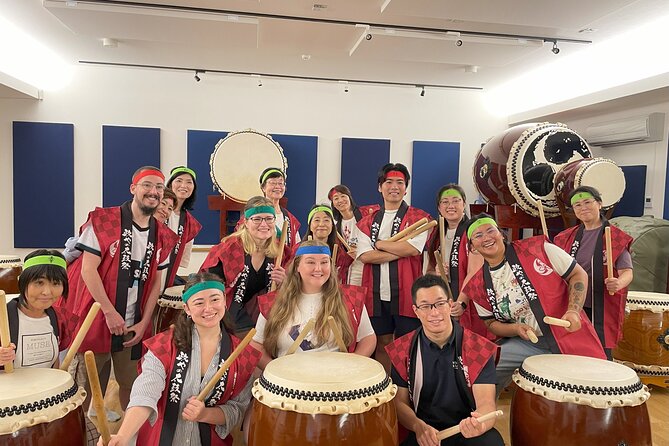
- Write a kanji wish on a hachimaki, then wear it during your taiko session
- Handmade taiko drums are rare, made by hollowing out a single tree
- Two hours total, including transfer time from JR Takatsuki Station
- Small groups with a maximum of 15 travelers
- Traditional outfit photo in a happi coat, kimono, and hachimaki
Why this Osaka taiko class feels hands-on, not staged
Taiko is loud, physical, and simple enough that you can feel useful quickly. That’s the point here: you don’t just watch a show. You learn basic movements, then play together as a group, so the energy builds in real time.
The drums themselves help. Taiko has a long connection to Japanese daily life and spirituality, and these instruments are made the traditional way, hollowed from a single large tree. That matters because the sound comes from the drum’s body, not a modern shortcut, so even beginners can get a satisfying tone without fancy technique.
You also get a professional performance in the middle. It’s not filler. It’s a quick “this is what you’re aiming for” moment, then the instructor turns that target into steps you can follow.
Feel the drums before you hear them
- Osaka: UTAGE Japanese Taiko Live Show★ 4.9 · 167 reviews
- OSAKA NIGHT FUSION Japanese Taiko Kabuki Samurai Dance Show★ 4.8 · 155 reviews
- Osaka: UTAGE Modern Japanese Taiko Live Show★ 5.0 · 81 reviews
- Osaka: A Modern Samurai, Kabuki, Taiko, & Dance Show★ 4.5 · 66 reviews
- Osaka:SUMO BEATS SHOWCASE: Taiko Drum and Wagyu burger!★ 4.2 · 37 reviews
Getting to Takatsuki Station, the easy Osaka-Kyoto middle spot
You meet at JR Takatsuki Station, with the studio located between Osaka and Kyoto. The commute is straightforward because Takatsuki is about a 15-minute JR train ride from either Osaka or Kyoto, so you can plan around whichever city you’re staying in.
If you’re coming from Osaka Station, taxis are not the smart move. The tour notes that a direct taxi ride can take more than an hour and cost a lot, with traffic making it worse. Using the train keeps your schedule realistic.
The session timing includes transfer time, so don’t treat it like a quick stop. Aim to arrive with breathing room, because the program can’t wait once it starts.
There’s also a specific note for guests choosing the Kyoto Station option: the guide has to pick you up at Takatsuki at the start time. If the guide’s train is delayed, you’ll be asked to wait a little longer. So in practice, your best strategy is to build in some patience rather than rushing.
Hachimaki wishes and the traditional outfit moment
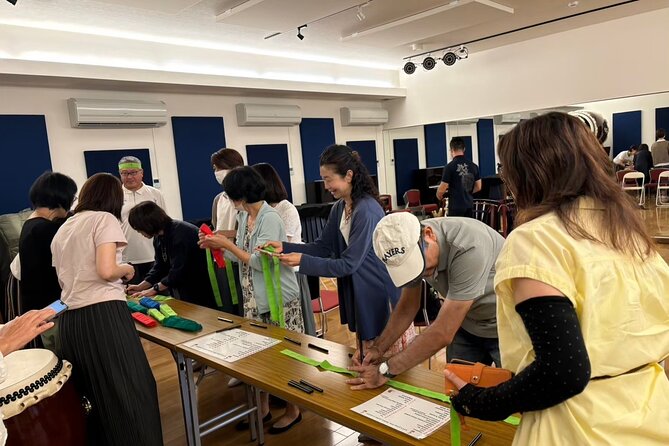
One of my favorite parts is the calm-before-the-noise routine: you write your wishes in kanji on a hachimaki, the traditional headband. This gives you a personal anchor for the drumming, and it also helps break the ice because everyone is doing the same small task.
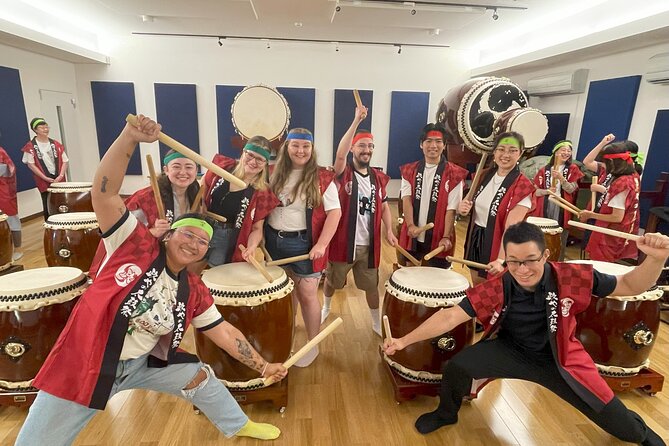
Then comes the fun photo setup. You get to wear a happi coat, a traditional kimono, and your hachimaki. That’s a big part of the experience, because it ties the cultural story to what you’re doing with your arms and posture.
The photo isn’t just a souvenir you grab at the end. It’s a visible reward for learning the basics and joining in. If you’re the type who likes “learn, do, then capture it,” this fits your style.
The drums: rare, traditional, and built for real sound
This studio uses taiko drums made in the traditional method. The tour description highlights that they’re hollowed out of a large single tree, and they’re very rare. Even if you don’t know the technical language, you’ll feel the difference when you stand close enough to play.
Here’s why that matters to you: drum sound isn’t only about power. It’s about resonance. Traditional construction tends to create a more natural body vibration, so when you hit correctly for the first time, the drum “answers” in a way that feels satisfying rather than flat.
You also appreciate the instrument more after the history intro. The experience starts by explaining taiko’s importance in Japanese culture and how it’s been tied to people over time. That sets you up to watch and learn with intention, instead of just making noise.
What you actually do: from history to your first shared rhythm
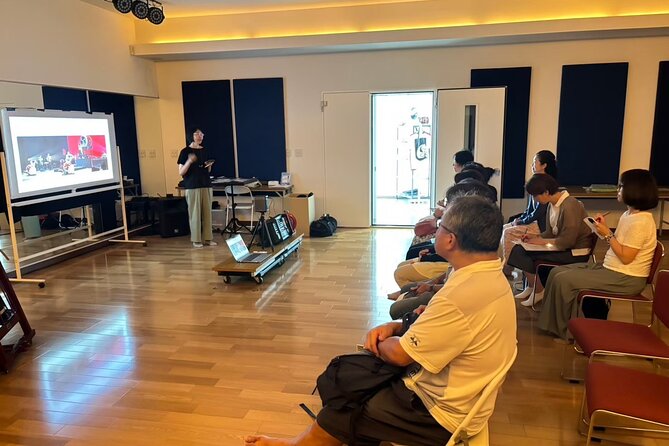
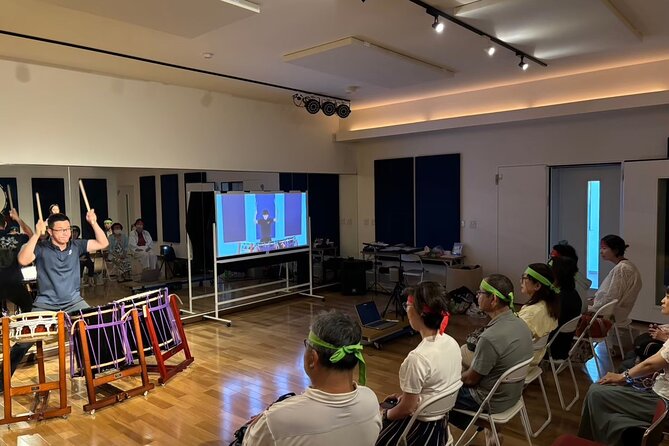
The itinerary moves in a logical arc. First, you get a brief introduction to taiko’s history and cultural role. Then you do the hachimaki writing. After that, you watch a powerful performance by a professional drummer.
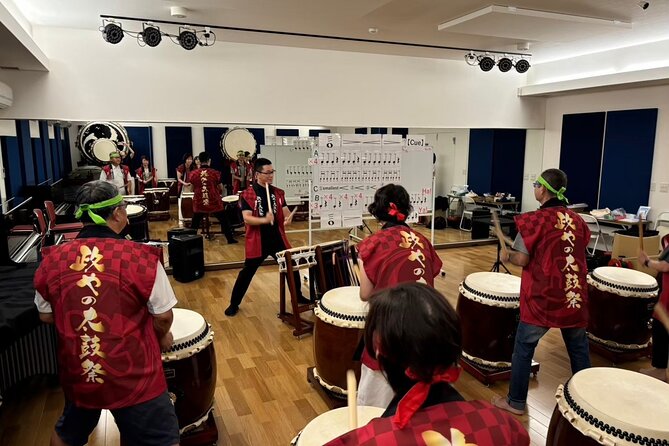
Once the pro shows the target, the instructor teaches basic movements and technique. The key detail is that instruction is in English, which makes a big difference for muscle-memory learning. Names like Michiko and Aoi come up as instructors in the class experience, and the teaching style highlighted in the feedback is friendly and clear.
Then you play. Not a complicated masterpiece, but a simple piece meant for group timing. This is where taiko becomes a team sport. You learn how other people’s rhythm affects yours, and you feel the “we’re doing this together” effect that taiko is known for.
Even if you’re nervous about coordination, the structure is designed for success. You start with basics, then step into a piece you can finish. That’s why so many first-timers leave with a sense of pride.
Not ready to leave Osaka yet? A few more ways to fill the day.
- Full Day Tour of Kyoto with Private Transportation
★ 5.0 · 130 reviews - Sakai – Knife Factory and Craft Walking Tour
★ 5.0 · 44 reviews - Kyoto private tour (Shore excursion available from Osaka or Kobe port)
★ 5.0 · 39 reviews
Price and value: what $104.72 buys you in Osaka
The price is listed at $104.72 per person, and the experience runs about two hours including transfer time. It’s not cheap, so it’s fair to ask what you’re really paying for.
Here’s what’s included:
- Japanese hachimaki (headband)
- Taiko drumming experience plus an instructor
- Guide with English offered
- Transfer to and from the studio
- Traditional outfit photo moment (happi coat, kimono, and hachimaki)
That package is doing more than “class time.” You’re also getting cultural material, the instrument access, and the transport link between the train station and the studio area. In Japan, those small logistics pieces often make an experience feel smooth rather than stressful.
Also note the cash payment at the studio. The tour info says you’ll pay in cash in Japanese yen at the drum studio on the day of the tour. So keep that in mind when you budget. And if you’re bringing someone who wants to watch rather than play, observers cost 8,000 yen per person and need to be notified in advance so transportation can be arranged.
If you compare this to a DIY cultural workshop, the difference is guidance and the drum access. Taiko is loud, physical, and timing-heavy. Having an instructor and a set progression is what turns it from a try-it-once moment into a real shared performance.
Small group size: why you get real attention
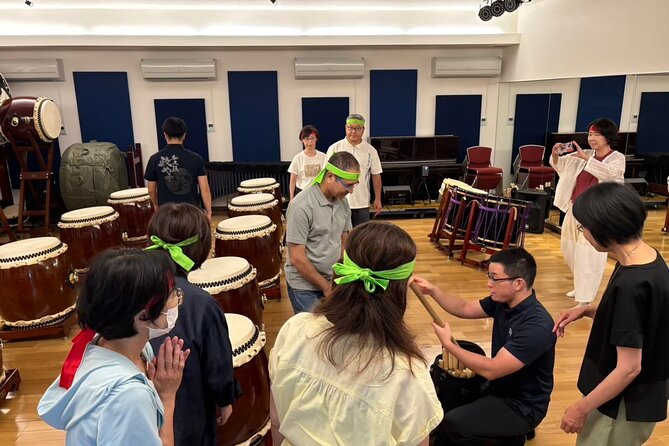
This activity has a maximum of 15 travelers. That size matters more than you might think because taiko teaching is physical and timing-based. With a small group, the instructor can help you correct posture and movement without letting the lesson become a one-size-fits-all lecture.
Smaller groups also make the ensemble part work better. A taiko class is about synchronizing beats, and you’re less likely to get lost if there are fewer people sharing the space.
In feedback, the class stood out as enjoyable from start to finish, with clear explanations and enough structure to play a piece by the end. One review specifically mentioned a small group where two sisters got a very personalized experience with instructors Michiko and Aoi. That’s the kind of outcome this group size supports.
Timing tips that actually prevent problems
Two timing rules can make or break your day:
1) Be at the meeting place at the start time. If you’re late, you may not participate even if you call.
2) The duration includes transfer time, so don’t plan a second activity right after with tight timing.
Build in buffer around JR trains. Japan is generally punctual, but you’re still better off leaving yourself room for platform changes and ticket handling.
Also, the experience requires good weather. If it’s canceled due to poor weather, you’ll be offered a different date or a full refund. That’s not a deal-breaker, but it is a reminder that your schedule should stay flexible if you can.
Finally, remember the cash detail. The tour says to pay in cash at the studio on the day of the tour, so you’ll want yen ready.
Who should book this taiko experience in Osaka
This is a strong fit if you want an activity that’s:
- Hands-on, not passive
- Social, because you play together
- Culturally anchored, because you learn meaning before you hit the drum
- Beginner-friendly, because you get basic technique instruction
The tour also states it’s suitable for all ages and levels of ability. The one hard limit is children under 7 years old are not allowed to participate.
If you’re choosing between taiko as a “nice cultural add-on” versus taiko as your main activity, I’d go with the second option. In two hours, this class gives you story, sound, movement, and a tangible keepsake (the hachimaki) plus a photo moment in traditional attire.
Should you book Taiko Japanese Drum Experience in Osaka?
Yes, if you want a real-world taiko experience that moves past watching and into participating. The combo of handmade traditional drums, English instruction, and a finished group piece makes it feel like more than a workshop.
Book it especially if you’re traveling with someone and you want a shared “we learned something together” moment. Even if you’re not sporty or musical, taiko is designed for first-time success.
If you hate being on a strict schedule, pay close attention to the start-time rule. And if you’re thinking of sending one person to play and keeping others as observers, make sure you arrange it. Observers have a fee and transportation may not be arranged without notice.
FAQ
How long is the Taiko Japanese Drum Experience?
The experience is about 2 hours, and that duration includes transfer time.
Where do I meet for the Osaka taiko class?
The meeting point is JR Takatsuki Station. The activity ends back at the meeting point.
How far is Takatsuki Station from Osaka and Kyoto?
Takatsuki Station is about a 15-minute JR train ride from both Osaka Station and Kyoto.
Is the guide available in English?
Yes. The guide offers English.
Is there a mobile ticket?
Yes, the experience uses a mobile ticket.
Is the experience suitable for children?
Children under 7 years old are not allowed to participate.
Do I need to pay cash?
Yes. You must pay in cash (Japanese yen) at the drum studio on the day of the tour.
What if someone wants to watch instead of participate?
Observers are possible, but the cost is 8,000 yen per person, and you must notify the provider. Without notice, transportation for observers may not be arranged.
What should I do if I’m running late?
You should be at the meeting place at the start time. Due to the program, if you are late, you may not be able to participate even if you call.
What happens if the weather is bad?
The experience requires good weather. If it is canceled due to poor weather, you will be offered a different date or a full refund.
Just added around Osaka





Taiko Drumming Experiences, compared.
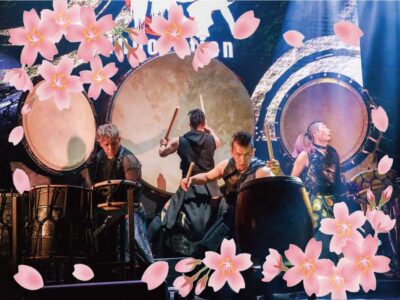

OSAKA NIGHT FUSION Japanese Taiko Kabuki Samurai Dance Show
Read our review →


SUMO BEATS SHOWCASE: Taiko Drum and Wagyu burger!
Read our review →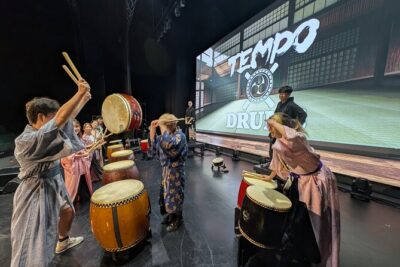
Feel the Power! Learn Taiko Drum from Professionals
Read our review →Feel the Power! Learn Taiko Drum from Professionals
Read our review →This tour also fits