
Reviewed · DAY TRIPS TO NARA FROM OSAKA
Full Day Guided Tour to Nara from Osaka by Van
Deer, temples, and sake in one long day. This Nara day trip from Osaka is built around a small-group van visit to major UNESCO sites, plus time for old-town streets and sake.
I love the way the tour keeps things efficient without feeling rushed, thanks to an English-speaking guide who can steer you through the crowds and connect the dots between places. I also like that entry fees are included, so you spend less time figuring out ticket rules and more time looking at the real sights.
One consideration: this is walk-heavy, with stairs and hills, and the plan is not customizable. If your walking range is limited, you’ll want to think twice before booking.
In This Review
- Key highlights you will actually feel during the day
- Why this Nara day trip from Osaka feels easier than DIY
- Entering Todai-ji at Nandaimon: the gate that changes your scale
- The Great Buddha Hall at Todai-ji: when wooden architecture steals the show
- Kasuga Grand Shrine and the deer: fun, but follow the vibe
- Naramachi lunch time: where to eat, shop, and slow down
- Nanen-do and Kofuku-ji: more UNESCO, with an easy flow
- The five-story pagoda and Harushika sake tasting back to back
- Returning to Osaka: plan for a full day, not a quick taste of Nara
- Is $113.85 a good value for a Nara UNESCO day?
- Who should book this Nara van tour, and who should reconsider
- Should you book this Nara from Osaka by van tour?
- FAQ
- What time does the tour start, and where do I meet?
- How long is the Nara tour?
- How many people are on the van?
- Are admission tickets included?
- Is lunch included?
- Is this tour customizable?
- Is there extra pick-up and drop-off service?
- What should I know about walking?
- What is the cancellation policy?
Key highlights you will actually feel during the day
- Small group size (max 12), so the guide can look after everyone on board the van
- Comfort perks included: air-conditioned vehicle, WiFi on board, and bottled water
- Todai-ji focus, not a drive-by: from the massive Nandaimon gate to the Great Buddha Hall
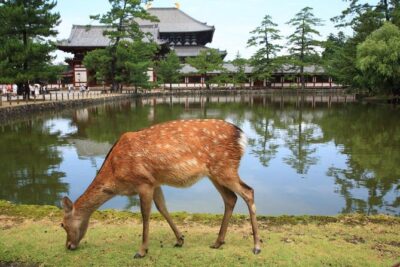
- Kasuga Grand Shrine deer time with clear chances to see them up close in Nara Park
- Naramachi free-time for lunch and shopping in a WWII-saved old-town area
- Harushika sake tasting with a set of five pours and brewery staff explanation
Why this Nara day trip from Osaka feels easier than DIY
This tour is a straightforward way to get from Osaka to Nara without spending your day on transit planning. You meet your conductor in Shinsaibashi or at Umeda DT Tower, then ride about an hour into Nara Park. The van stays comfortable, with WiFi and bottled water, and you are not stuck doing the “which station, which exit” dance.
What makes this setup work is the pacing and the guide presence. The conductor doesn’t just point you at landmarks, they walk with you through key stops and look after the group as you move between temple areas. That matters because Nara can get busy, and your time gets swallowed quickly when you are constantly reorienting yourself.
Also, the tour keeps ticket friction low. Major entries are included in the price, and the tour includes all fees and taxes. For people who want the day to feel predictable, that is a big deal.
Deer that bow back, minutes from Osaka
- Ancient Capital Tour: Kyoto and Nara Highlights from Kyoto/Osaka★ 4.5 · 332 reviews
- Kyoto and Nara Day Trip from Osaka★ 4.0 · 175 reviews
- Discover Himeji, Kobe and Nara from Osaka★ 5.0 · 101 reviews
- Kyoto & Nara Private customized tour with English speaking Guide★ 4.5 · 99 reviews
- Kyoto and Nara UNESCO Highlights Full-day Tour From Osaka★ 4.5 · 50 reviews
Entering Todai-ji at Nandaimon: the gate that changes your scale

You start with a short arrival moment at Nara Park, disembarking at Yumekaze Plaza. From there, it is a walk toward Todai-ji Namdaimon (the Great South Gate). Even if you have seen temple photos before, standing near a gate that reaches about 25.5 meters tall is different. The size hits you fast.
The big draw here is the experience of moving through the approach to Todai-ji rather than only seeing the hall from a distance. At Nandaimon, you get to notice the guardians too. The tour route is designed to get you past the gate and into the “this is real and huge” moment, with time set aside to take it in.
The only drawback at this stage is the walking itself. There is a “walk toward the gate” component, and the ground can involve small climbs and steps as you progress. Comfortable shoes are not optional for a day like this.
The Great Buddha Hall at Todai-ji: when wooden architecture steals the show
Inside Todai-ji Temple, the schedule gives you real breathing room. Your time here includes the main hall and the famous Great Buddha setting. The scale is the story: the hall is listed at about 57 meters wide, 50 meters deep, and 48 meters high, and it is registered as a UNESCO World Heritage Site.
You also get the important context that the building you see today is the latest rebuild in a long chain of destruction and restoration. The Great Buddha Hall was originally completed in 751, destroyed in 1181 and 1567, then rebuilt in 1709. Knowing that before you look up helps you understand why the temple feels both ancient and maintained, like it is still being protected.
A small practical tip: when you reach the Great Buddha Hall, pause for a minute and let your eyes adjust. If you rush in trying to photograph everything, you miss the way the hall’s timber structure frames space and movement.
Kasuga Grand Shrine and the deer: fun, but follow the vibe
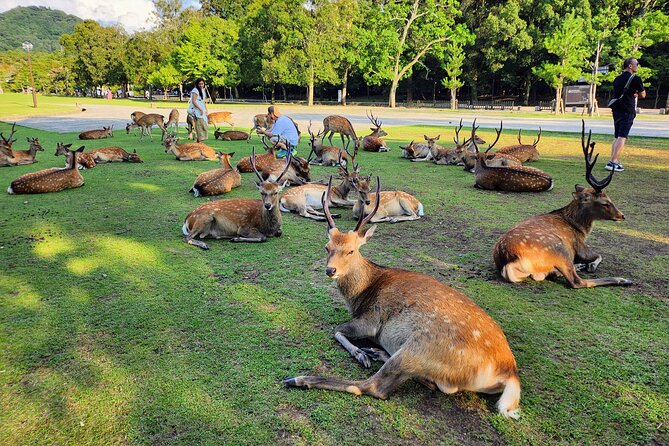
After Todai-ji, you head toward Kasuga Grand Shrine on foot through the Nara Park area. This stop is often the most memorable for first-time Nara visitors because the deer are part of the atmosphere, not just a side attraction.
You will see the deer roaming freely, and you even get the chance to see and touch them as you move through the shrine grounds. The key is to treat them like wild animals that happen to be friendly. Keep your movements calm, stay aware of where others are stepping, and don’t yank or rush in for photos.
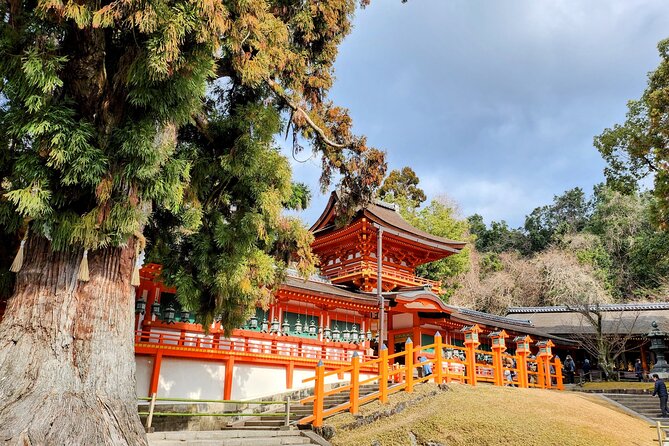
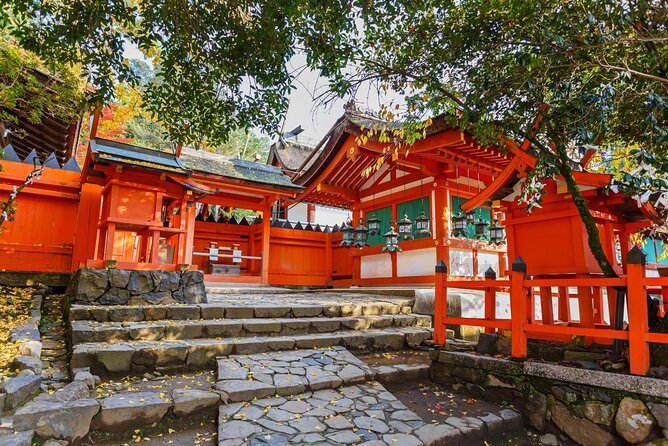
Kasuga-taisha itself has a lot of specificity that makes it more than a pretty shrine. It was established in 768, and it has been rebuilt or restored once every 20 years without changing the position of the main hall. It is also UNESCO-listed (registered in 1998). If you look up, you will notice the lanterns scattered around the grounds, and you learn that there are 352 national treasures stored in the shrine.
If you want a small moment of humor, there is a classic Nara etiquette tip people love to share: don’t forget to bow to the deer. It is silly, but it also sets you in the right mindset for the place.
Naramachi lunch time: where to eat, shop, and slow down
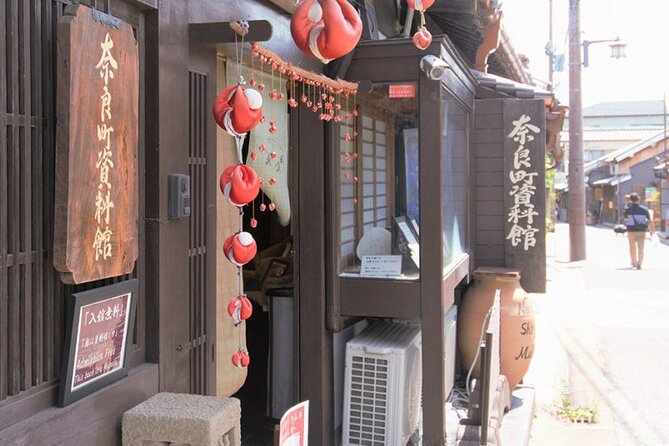
Once temples and shrines are done, you get a breather in Naramachi, the main town area of Nara, with free time for lunch and exploring. This is your chance to reset your feet and also choose your own pace.
You are not locked into a set lunch spot. Lunch is on you, and the tour provides time and a designated area where you can walk around and find food for your group. That can be a plus if you want noodles, grilled snacks, or something simple, but you should also plan on making decisions quickly once you arrive, since popular spots can fill.
Naramachi is special because it preserves old-town streets. During WWII, the area was spared from air raids, so you get surviving traditional structures and facades. Many buildings keep their machiya style, while some have been refurbished in contemporary ways. Even if you do not buy anything, it is a pleasant place to wander without feeling like every meter is another temple queue.
Souvenir hunting works well here too. Think small keepsakes, local snacks, and handy gifts rather than big showy shopping centers.
Other ways to spend a day in Osaka
- From Kyoto/Osaka: Kyoto Top Highlights 1-Day Guided Bus Tour
★ 4.5 · 714 reviews - Osaka: Main Sights and Hidden Spots Guided Walking Tour
★ 4.9 · 702 reviews - Osaka: Guided Food Tour with 12 Dishes at 4 Local Eateries
★ 5.0 · 533 reviews
Nanen-do and Kofuku-ji: more UNESCO, with an easy flow

After lunch, you rejoin your conductor and walk to Nanen-do. This one is shorter, about 20 minutes, but it has a distinct look: it is an octagonal structure built by Fujiwara no Fuyutsugu, dedicated to the peace of his father’s passing. You also get access to a national treasure statue housed in the temple, which is a nice “blink and you get it” cultural payoff for a quick stop.
Next comes Kofuku-ji Temple, with about 45 minutes there. Kofuku-ji is another UNESCO site, and it has a timeline you can keep in your head while you walk. It was originally founded in 669 as Yamashina temple in Kyoto, then moved to its current location in 710. The current buildings reflect repair and rebuilding after major war damage in 1181, and you see the results in the structures standing now.
The tour emphasizes the Central Golden Hall first, then moves you onward toward the five-storied pagoda. That order matters, because it helps you understand Kofuku-ji as a set, not just a quick stop for a single photo angle.
The five-story pagoda and Harushika sake tasting back to back
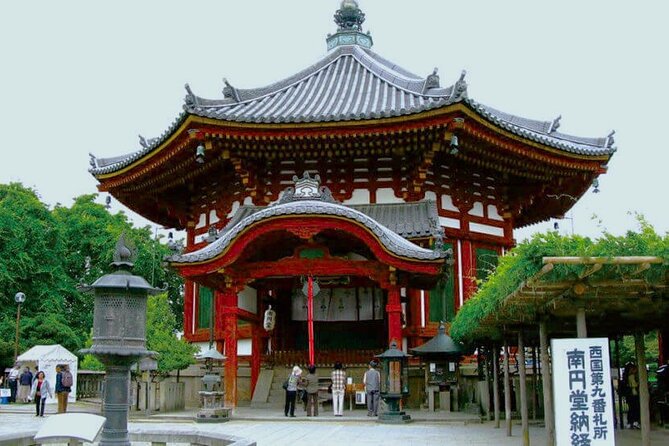
The highlight transition here is how the day shifts from religious architecture to a very Japanese, very social tasting experience.
First, you walk toward the Kofuku-ji 5 Stories Pagoda. The pagoda is a wooden tower that today stands at about 50.1 meters, reconstructed in 1426, and described as built originally in 730 with multiple rebuilds through disasters. If you like symbol systems, the roof meanings are part of the explanation: the five roofs represent land, water, fire, air, and sky. It is a small teaching moment that helps you look at the structure as more than a shape.
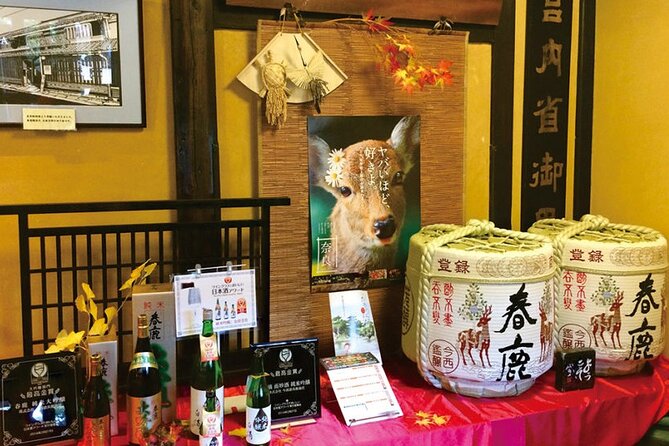
Then you move to Harushika Brewery, and this is where many people feel the day “clicks.” The tasting is included, about 45 minutes, and you can enjoy Kikizake, a tasting set of five kinds of sake with explanation from brewery staff. Harushika is described as a historical brewery established in 1884, and it started exporting Japanese sake to the world about a century later, in 1984.
The name comes from a legend involving Kasugataisha shrine and deer gods riding a deer from Nara. That connection loops your day back to what you saw earlier in Nara Park, so the sake stop feels themed, not random.
Returning to Osaka: plan for a full day, not a quick taste of Nara
After the brewery, you board the van for the ride back to Osaka. The return is about 1 hour, and you are dropped off at your pick-up point, so the end of the day stays easy.
Real talk: this is a 7 to 8 hour day with walking between multiple temple areas. The tour notes that schedules may shift due to weather and traffic. That is normal for Japan day trips, but it also means you should not stack any strict plans after your tour ends.
Your best strategy is to wear good shoes, bring a light layer, and treat the day as a “see the big Nara hits” itinerary rather than a slow wander. If you do that, the flow makes sense: gate to hall, shrine to town, temples to pagoda, then sake.
Is $113.85 a good value for a Nara UNESCO day?
For $113.85 per person, you are paying for transportation from Osaka, a small-group van with comfort extras, an English-speaking guide, and included admission and fees. You are also getting bottled water and WiFi.
The “value” part is not only the ticket inclusion. It is the reduced friction. When entry fees are handled and you have guided movement between sites, you lose less time to ticket lines, confusion, or figuring out which route connects temple clusters.
What is not included is lunch, plus gratuity. Lunch is handled as free time in Naramachi where you find your own spot. That means the price is more attractive if you already know you can pick a quick, satisfying meal on the go once you arrive.
Also, this tour is a popular pick. The booking pattern averages around 86 days in advance, and the overall rating sits at 4.5 from 9 reviews. You do not need to panic, but planning ahead helps, especially on busier days.
One more value note: small group tours tend to feel more personal. A vehicle capped at 12 people means it is easier for the conductor to manage everyone and keep you together.
Who should book this Nara van tour, and who should reconsider
This is a strong match if you want a structured Nara day from Osaka with the major UNESCO sites covered in one go. It also fits well if you enjoy Japanese cultural stops plus a practical hands-on moment with sake tasting.
You will likely enjoy it even more if you like learning context. Guides highlighted in past experiences include Taka, plus Mark and Take, and Marc for translation and historical explanations. If your guide brings that energy, the tour stops feel connected rather than a list of buildings.
It is not the best choice if you cannot handle long walks, stairs, and hills. The tour specifically warns it is not recommended for travelers who cannot walk long distances, and that you should expect walking at multiple points.
It is also not customizable. If you want to spend extra time at just one temple or skip a stop, this format will feel fixed.
Should you book this Nara from Osaka by van tour?
Book it if you want a smooth, guided Osaka to Nara day trip that covers the big UNESCO names, includes tickets, and ends with a real sake tasting experience at a long-running brewery. I also think it is a smart choice for first-time Japan visitors because you get structure, timing help, and a guide who keeps things moving even when Nara is busy.
Skip it if your day needs to be low-walking, or if you want total freedom to rewrite the plan. For anyone with limited mobility or low stamina, the walk-heavy nature is the main risk.
If you can handle a full day on your feet, this is exactly the kind of Nara outing that feels worth it: gates you can measure with your eyes, deer that make the park feel alive, old-town streets for lunch and photos, and a sake tasting that ties the whole day together.
FAQ
What time does the tour start, and where do I meet?
The tour starts at 9:45 am. You meet your tour conductor at either Shinsaibashi or Umeda DT Tower.
How long is the Nara tour?
Plan on about 7 to 8 hours total.
How many people are on the van?
The vehicle has a maximum capacity of 12 travelers.
Are admission tickets included?
Yes. All fees and taxes are included, and the major temple and brewery entries are listed as included in the tour.
Is lunch included?
No. Lunch is not included. You get free-time in a designated area to walk around and pick a lunch spot.
Is this tour customizable?
No. The tour is not customizable.
Is there extra pick-up and drop-off service?
No extra pick up and drop off service is provided. The tour ends back at the meeting point.
What should I know about walking?
Expect walking, including stairs and hills at the places you visit. The tour is not recommended if you cannot walk long distances.
What is the cancellation policy?
You can cancel for free up to 24 hours in advance for a full refund. If canceled due to poor weather, you will be offered a different date or a full refund.
Just added around Osaka

Day Trips to Nara from Osaka, compared.
Ancient Capital Tour: Kyoto and Nara Highlights from Kyoto/Osaka
Read our review →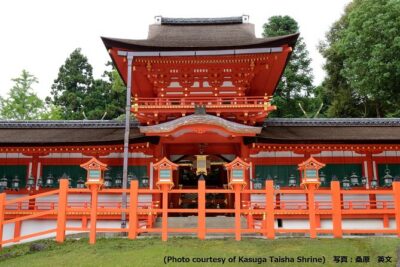
Kyoto & Nara Private customized tour with English speaking Guide
Read our review →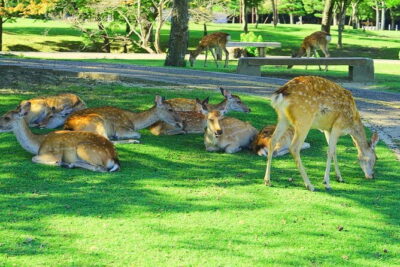
Kyoto and Nara UNESCO Highlights Full-day Tour From Osaka
Read our review →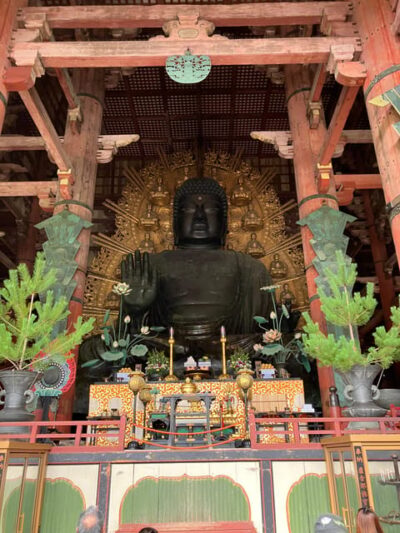
Kyoto & Nara & Uji: Full Day Sightseeing Tour from Osaka or Kyoto
Read our review →This tour also fits