
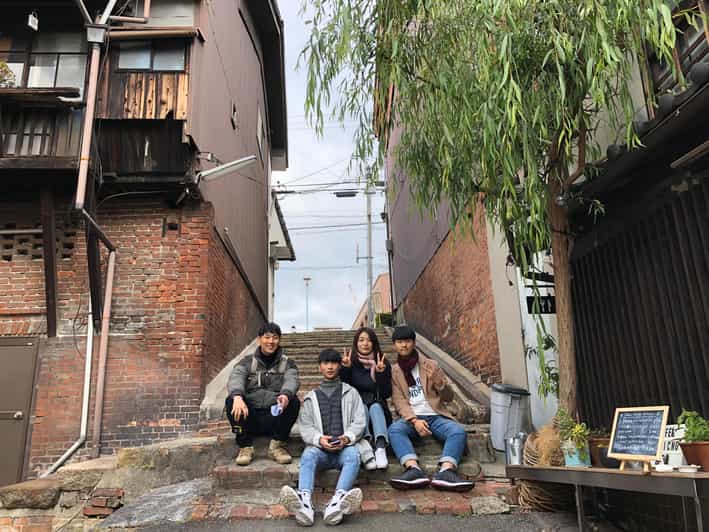
Reviewed · DOTONBORI EXPERIENCES
Nostalgic Osaka, walk in totally different from Dotonbori
Forget Dotonbori for a bit. This Nostalgic Osaka walk takes you into Karahori, where old-town Osaka still shows up in narrow lanes, traditional mercantile houses, and everyday street life. You get a local guide who brings you through a maze of paths that you would usually miss, plus just enough stops to keep it fun, not frantic.
What I love most is how different Karahori feels compared to the neon center. WWII-era survival shaped the neighborhood’s tone, so the streets are calmer and more “real” than downtown. I also like the small group size capped at 6, which makes it easier to move together, ask questions, and slip into quieter alley spaces without feeling rushed.
One thing to consider: some alleyways are private, and the tour notes are very direct about not disturbing residents. If you hate walking in tight spaces or you expect to wander freely at your own pace, this might feel a bit more “guided and respectful” than you’re used to.
In This Review
- Key highlights worth your attention
- Karahori: Osaka’s older face, 3 stops away from Namba
- Meeting point at Tanimachi-6Chome, exit 3 at street level
- Two hours, six people, and a guide who knows the map
- The walk opens with a welcome and a market street start
- Hidden alleys and off-guidebook lanes you can enter
- Old mercantile houses, charming cafés, and tatami shop time
- Ruins of Osaka Castle moat and tiny shrines in the lane
- Photo stops and break time, so you do not rush yourself
- Food and shopping: what’s included, what you pay
- Practical rules that keep the neighborhood respectful
- Who should book this Nostalgic Osaka walk
- Price and value for $35 per person
- Should you book this Nostalgic Osaka tour?
- FAQ
- Where is the meeting point?
- How long is the tour?
- What does the tour include for free?
- Do I pay for food or drinks at cafés during the tour?
- Is the tour wheelchair accessible?
- How many people are in the group?
- What languages are offered?
- What if I arrive late?
- What rules should I follow?
- Is it appropriate for children or teens?
Key highlights worth your attention
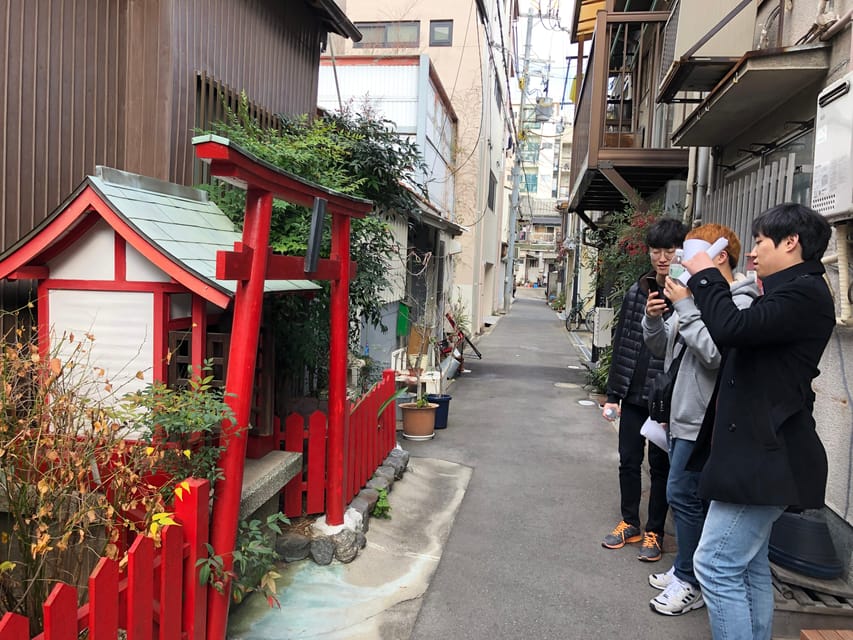
- Karahori instead of Dotonbori, with a noticeably calmer, older Osaka vibe
- Hidden alleys you can actually walk into, not just look at from the sidewalk
- Old mercantile houses that still feel like 100 to 200 years of Osaka
- Daily-life market street time, built into a 2-hour rhythm
- Tatami mat shop stop and other small specialty stores along the way
- Respectful alley rules, because residents still live there
Karahori: Osaka’s older face, 3 stops away from Namba
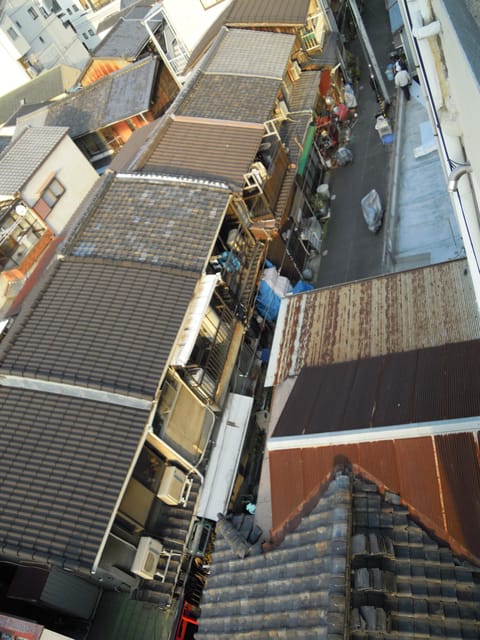
Karahori is a great reminder that Osaka is not only one place. It sits about three train stops from Namba, and the change in atmosphere is immediate. Downtown around Dotonbori is loud, bright, and packed. Karahori feels older and quieter, shaped by the neighborhood surviving the World War II fire. That matters, because it is not just about scenery. It is about street layout, how buildings front the lane, and what daily life looks like when it is not staged for visitors.
You’ll notice the neighborhood’s “maze” feeling right away. The old traditional mercantile houses, some estimated at 100 to 200 years old, create corridors of scale and shadow that big shopping streets never have. Between those buildings, you may spot small cafés and shops that feel like they appeared in the gaps. That contrast is part of the charm: history in the walls, everyday life in the storefront.
This is also where you get a more thoughtful kind of sightseeing. Instead of chasing one big landmark, you walk through layers of the neighborhood, including small ruins and tiny shrines tucked into alleys. It’s a tour for people who like texture, not just photos.
The glowing strip everyone photographs
- Osaka Local Foodie Walking Tour in Dotonbori and Shinsekai★ 5.0 · 985 reviews
- Osaka: Dotonbori District River Cruise with Drink Discount★ 4.2 · 876 reviews
- Ultimate Osaka Walking Tour: Castle, Dotonbori & Hidden Gems★ 5.0 · 862 reviews
- Tea Ceremony Experience in Osaka Doutonbori★ 5.0 · 754 reviews
- Osaka: Ramen and Gyoza Cooking Class in Dotonbori★ 5.0 · 378 reviews
Meeting point at Tanimachi-6Chome, exit 3 at street level
The meeting point is Osaka Metro Tanimachi-6Chome station, Exit No. 3, at street level. Your start address is 6-chōme-9-1 Tanimachi. The info also notes that Tanimachi-6Chome is the crossing station for lines including the Tanimachi Line side, so it helps to head for Exit 3 specifically instead of wandering around inside.
Why this matters: the tour depends on staying together, and it only runs 2 hours total. Arriving late beyond the stated 15-minute window can make it difficult for you to join, since the operator needs to keep things smooth for the group.
Bring your good walking shoes. The route includes hidden paths and off the main streets, which means uneven bits and tighter turns. Also, you’ll be doing photo stops at different points, so being at the meeting place on time helps you avoid missing the early rhythm.
Two hours, six people, and a guide who knows the map
This tour is built like a sprint, not a marathon. It lasts 2 hours, and the group is limited to up to 6 participants. That small size is a practical win. You don’t feel like you’re herding cats, and it is easier for the guide to take you through narrow alley sections without losing people.
The guide is local and has a strong command of the area. The tour experience emphasizes walking into off-the-guidebook lanes, and the guide’s job is to decide which turns are open to walk through and which spaces you should simply pass by respectfully. That is important here, because some alleys are private and may not have clear signage.
Language options are English and Korean, so you can expect real two-way interaction, not just a scripted audio track. The tour also includes welcome refreshments, plus a bottle of water and a small snack, which is good if you’re walking in Osaka humidity or you’ve already had a busy day of trains and food.
The walk opens with a welcome and a market street start
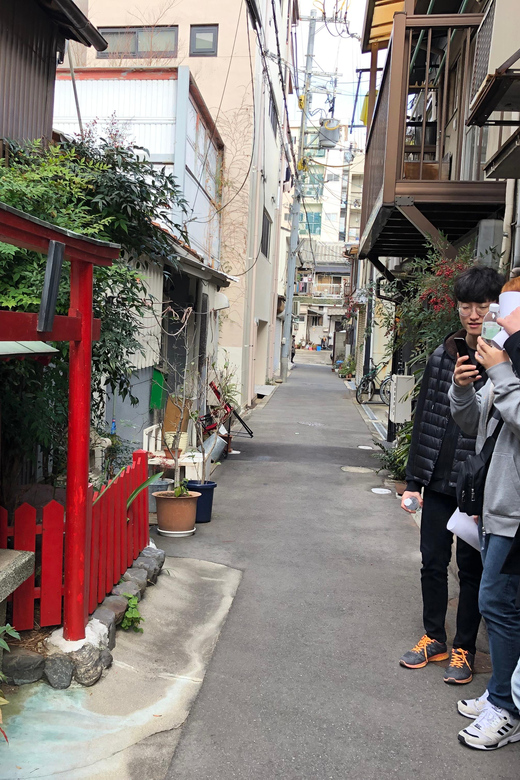
You begin with welcome refreshments, then move into a first photo stop and sightseeing stretch. The itinerary has an early 15-minute photo stop and walk. After that, the tour shifts into the main “local streets” phase with about 1 hour focused on a food market street visit and walking time.
That market street segment is more than shopping. It is where you see how the neighborhood eats and buys day to day. You get a sense of what locals treat as normal, what vendors display, and what kinds of storefronts survive because people still use them.
The nice part is that this is not only a visual stop. The tour schedule builds in time for you to move slowly enough to notice details while still keeping momentum. If you are the type who likes to understand how a place functions, not just how it looks, this structure helps.
Keep in mind that shopping and food stops are not included. The tour includes water and a small snack, but if you want to eat or drink at the shops and cafés you visit, you pay for that yourself.
Hidden alleys and off-guidebook lanes you can enter
The heart of this tour is getting away from the obvious lanes. After the market street portion, the guide takes you into off the beaten path areas that typically do not appear the same way in big-name guidebooks. You’ll do a 30-minute sightseeing walk that includes more photo stops and deeper alley time.
This is where you get the “maze” feeling. Karahori has hidden alleys that connect the old mercantile houses and create tiny corridors where you might suddenly see a café, a small shop, or a tucked-away street view you would never find by accident.
Here’s the practical part you should plan for: some alleys are private and may not have clear boundaries. The tour explicitly asks you not to disturb the residents who still live there. You’ll likely pass areas where you can see everyday life through windows or doorways. Treat it like someone else’s home neighborhood, because it is.
If you tend to talk loudly on walks, this is not the place for it. The tour rules also include “making noise” as something you should avoid, along with no smoking indoors and no drones.
Other ways to spend a day in Osaka
- Osaka: Deep Backstreets Walking Tour with Dinner Option
★ 4.9 · 902 reviews - Osaka: Main Sights and Hidden Spots Guided Walking Tour
★ 4.9 · 702 reviews - Private Osaka Walking Tour: Highlights & Hidden Gems
★ 5.0 · 569 reviews
Old mercantile houses, charming cafés, and tatami shop time
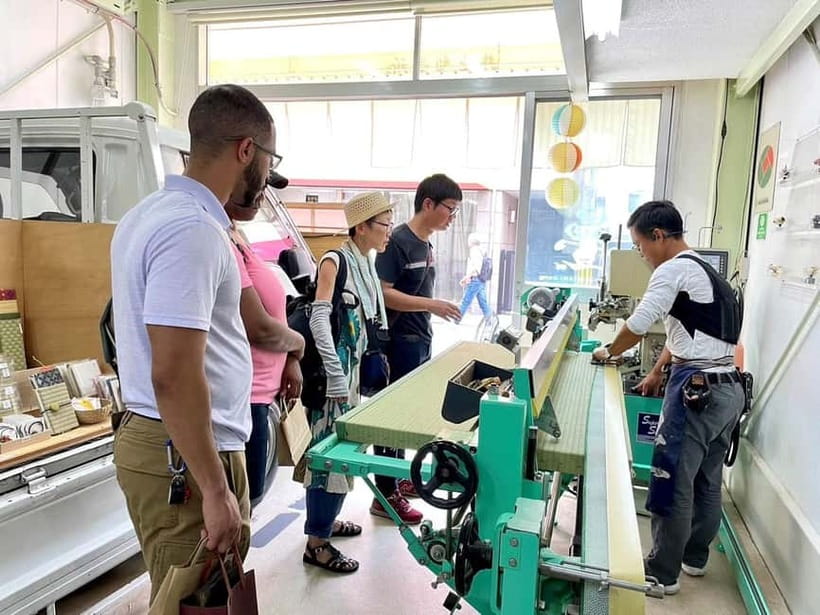
Between alley turns, you’ll spend time around traditional mercantile houses. The goal is to show you how old structures function now, not just how they looked once. Some of these buildings still have habitats, while others have been remodeled into cafés and cute shops. That means the neighborhood is living, not frozen.
One of the better scheduled moments is the stop at a Japanese tatami mat shop. This is the kind of detail that makes a neighborhood feel specific. Tatami is not a generic souvenir item, and seeing how it ties into everyday interior culture gives you context you won’t get from photos alone.
The tour also includes time where you can browse small stores. The itinerary points to shopping opportunities in a few stretches, plus a break segment later. If you love small crafts or practical items, you’ll probably enjoy these moments more than a “look but don’t touch” route.
Just remember the money rule: shop purchases and café food are on you. The tour provides a small snack and water, but you should budget for any extra items you choose to buy.
Ruins of Osaka Castle moat and tiny shrines in the lane
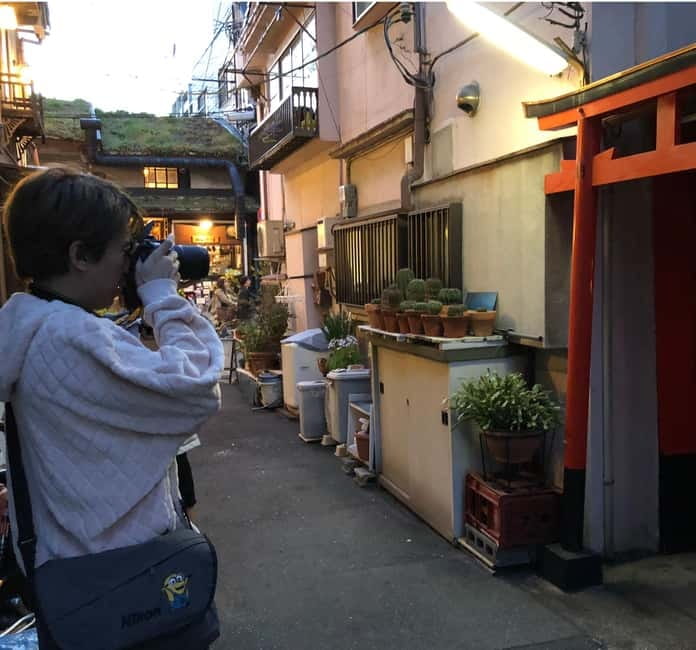
One of the most surprising details is that part of Osaka Castle moat ruins is hidden in an alley setting, specifically described as a moat of 15D with no water. You do not get the classic castle view. Instead, you see how history can be “quietly present” when it’s folded into everyday streets.
This stop works because it reframes what ruins mean. It is not always a dramatic wall or a fenced-off site. Sometimes it is a smaller remnant that shows up when you’re walking through the right lanes, at the right angle, with the right guidance.
Along the way, you’ll also see tiny shrines tucked into the neighborhood. Those shrines are small, but they tell you something important about continuity. Even in an area that feels nostalgic, religious and everyday routines still leave traces in the street.
If you like little moments like this, you’ll probably find the tour rewarding. If you expect one major monument, you might feel the stops are more “glimpses” than “big reveal.” Both styles are valid, so match your expectations.
Photo stops and break time, so you do not rush yourself
This is not a nonstop march. The itinerary includes multiple photo stop moments and a break time segment. There’s a 15-minute break with an additional shopping window, plus earlier photo stops (including a 15-minute one and another 30-minute one).
That break time is helpful because the tour includes walking into tight areas. If you’re traveling in summer heat or you’ve been on foot all day, you’ll appreciate having a scheduled pause rather than trying to find convenience stores on the fly.
Also, the photo stops aren’t just for stopping. They signal where the guide thinks the neighborhood tells its story, whether that is a particular street angle, an old-house frontage, or a sudden view between buildings.
Use that time smartly. If you want fewer crowds later, take photos here, when the guide sets you up for angles that match the alley structure.
Food and shopping: what’s included, what you pay
The tour includes a bottle of water and a small snack. You also get welcome refreshments at the start. After that, if you stop for food or drinks at cafés or other shops during the walk, you pay your own expenses.
That structure makes sense. You’re not locked into a fixed menu or a single restaurant. You can choose what fits your tastes and your budget based on what the neighborhood offers.
The tradeoff is that you should plan for extra spending if you snack along the way. I recommend deciding in advance what kind of food you want, then carry a budget for it. This avoids the awkward moment of realizing you’re hungry but you did not plan for café pricing.
Shopping also works the same way. Some stops are optional browsing, and purchasing is at your discretion. If you prefer to window-shop, you can still enjoy the neighborhood without buying anything beyond the tour-included snack.
Practical rules that keep the neighborhood respectful
This tour has clear behavior guidelines, and they matter more here than on a standard city stroll. The rules include no drones, no intoxication, no smoking indoors, no feeding animals, no skateboards, and no making fire or excessive noise.
The biggest “real life” rule is about residents in the alleys. Some paths are private. Even if you can technically walk through, you are expected to behave like a polite visitor in a neighborhood where people still live. The tour explicitly warns you not to disturb grandparents and other residents who remain there.
So if you’re the type who likes to wander off to get one extra shot, this is not that tour. Stay with the group, follow the guide’s cues, and treat side lanes like someone’s doorstep.
Who should book this Nostalgic Osaka walk
This is a great fit if you want Osaka without the loud, neon-first filter. It’s ideal for people who like quiet streets, old buildings that still function today, and small, specific stops like a tatami mat shop and the moat ruins hidden in the lane.
It also suits travelers who enjoy asking questions and moving at a human pace. With only up to 6 participants and a guide who navigates the map well, the tour feels more like a local walk with context than a checklist.
You might skip it if:
- You want only major landmarks and wide open vistas.
- You dislike walking through narrow lanes where you need to be careful and respectful.
- You want a lot of free time for self-guided exploring.
Finally, it’s best for adults. The tour info states participation by persons under the age of 18 is not permitted, with a note about participating with a guardian. If you’re traveling with teens or kids, contact the operator before booking.
Price and value for $35 per person
At $35 per person for a 2-hour guided walk, you’re paying for more than time. You’re paying for access: the ability to walk into hidden alleys, see traditional mercantile houses in context, and get explanations tied to the neighborhood layout.
The value improves if you would otherwise struggle to find this area’s details on your own. Karahori’s “maze” feel and the presence of private alleyways are exactly the kind of local nuance that makes a guided route worthwhile.
What you should budget for is the optional part. Food at cafés and shop purchases are not included. The tour gives you water and a small snack, but if you plan to eat a proper meal during the walk, you should set aside money for it.
Overall, for the combination of small group size, local guidance, and the contrast to Dotonbori, $35 feels fair. It is not a “cheap for everything” deal, but it is a smart way to buy deeper access to a less-famous neighborhood.
Should you book this Nostalgic Osaka tour?
Book it if you want Osaka with character, not just crowds. This walk delivers the contrast that matters: Karahori feels different from Dotonbori, and the tour takes you into the lanes where that difference becomes real. I especially like the balance of street walking, photo moments, and small specialty stops like the tatami mat shop.
Skip it if you’re chasing a big headline attraction, or if you dislike being mindful around residents and private alleys. Also, if you’re likely to be late, do not gamble with your timing. This tour needs punctual arrival so everyone can start together and keep moving.
If you book, plan to walk, stay quiet in residential lanes, and be ready for tiny historical details you would miss otherwise. That is where this tour earns its value.
FAQ
Where is the meeting point?
You meet at Osaka Metro Tanimachi-6Chome station, Exit No. 3, street level. The start address listed is 6-chōme-9-1 Tanimachi.
How long is the tour?
The tour duration is 2 hours.
What does the tour include for free?
It includes welcome refreshments, plus a bottle of water and a small snack during the walk.
Do I pay for food or drinks at cafés during the tour?
Yes. If you eat or drink at shops and cafés during the tour, you pay yourself, since those items are not included.
Is the tour wheelchair accessible?
The tour information lists the experience as wheelchair accessible.
How many people are in the group?
It is a small group limited to 6 participants.
What languages are offered?
The live guide is available in English and Korean.
What if I arrive late?
If you are late by more than 15 minutes, it may be difficult for you to join, because the operator needs to keep other guests in the schedule.
What rules should I follow?
The tour notes say no drones, no intoxication, no smoking indoors, no feeding animals, no skateboards, no making noise, and no making fire.
Is it appropriate for children or teens?
The information states participation by persons under the age of 18 is not permitted. It also says to participate with your guardian, so coordinate with the operator before booking if minors are involved.
Just added around Osaka


Dotonbori Experiences, compared.

Osaka Local Foodie Walking Tour in Dotonbori and Shinsekai
Read our review →
Dotonbori District River Cruise with Drink Discount
Read our review →
Ultimate Osaka Walking Tour: Castle, Dotonbori & Hidden Gems
Read our review →

Dotonbori River Cruise with Glico Sign & Neon Views
Read our review →

Roll and Authentic Sushi Making Class in Dotonbori
Read our review →This tour also fits