
Reviewed · DOTONBORI EXPERIENCES
Osaka: Ramen and Gyoza Cooking Class in Dotonbori
Noodles made by hand beat instant bowls. This Osaka class has you working from dough to dinner, from kneading wheat for ramen noodles to using a noodle machine to cut them, and then making soy sauce ramen plus gyoza. I also love the way the English instruction stays practical, with guides like Yoshi and June and Miki guiding you step by step.
One thing to plan for: you handle getting there yourself. There is no hotel pickup, and the meeting point is inside a building, where you press 807 and 呼出 at the entrance to get started.
In This Review
- Key Things That Make This Osaka Ramen and Gyoza Class Worth Your Time
- Why This Class in Osaka Feels More Like Skill Building Than Cooking Entertainment
- Small-Group Teaching in Dotonbori: English, Pace, and Real Help
- From Kneading to Noodle Cutting: The Ramen Step You Will Actually Remember
- Soy Sauce Ramen, Dashi-Style Soup, and the Easy Miso Switch
- Gyoza from Scratch: Minced Chicken Filling and Dumpling Confidence
- What You Actually Eat: A Full Meal You Build, Not a Snack You Watch
- Vegan and Fish-Broth Adjustments: When the Class Can Still Work for You
- Price and Value: Is $70 per Person Worth It in Osaka?
- Where to Meet Cooking Sun Osaka, Room 807, and How to Avoid a Stress Spiral
- Who This Osaka Ramen and Gyoza Class Is Best For
- Should You Book This Ramen and Gyoza Class?
- FAQ
- How long is the cooking class?
- What dishes will I cook?
- Is the class taught in English?
- What is the price and what does it include?
- Is hotel pickup included?
- Where do I meet the group?
- Do I get to take recipes home?
- Can the class accommodate vegan or other dietary needs?
- What type of ramen do you make?
- How many people are in the class?
- What is the cancellation window?
Key Things That Make This Osaka Ramen and Gyoza Class Worth Your Time
- Handmade ramen noodles: Knead wheat, then cut noodles with a machine, not just mix and hope.
- Real ramen base: Soy sauce ramen with a soup built from chicken bones and dried sardines, plus a miso option.
- Gyoza filling from scratch: Minced chicken dumplings you make and shape yourself.
- Small group support: Typically only 7 to 8 people, so you get help when you fall behind.
- You eat what you make: The meal is part of the class, and it is not an afterthought.
- Recipes to take home: Written recipes let you recreate ramen and gyoza later.
Why This Class in Osaka Feels More Like Skill Building Than Cooking Entertainment
Osaka is famous for food you can spot from a mile away. This class takes that obsession and turns it into something you can actually repeat at home. You are not just learning the dishes as ideas, you are learning the mechanics: dough texture, noodle thickness, dumpling shape, and how the soup tastes as it comes together.
What I like most is how focused the menu is. You learn two iconic comfort foods that go together in Japan, ramen and gyoza as a set. That means your end result feels coherent, not like you sampled random items. And because the class is hands-on, you leave with muscle memory, the kind that makes your next bowl better.
The other big upside is the teaching style. Multiple guides in the feedback mention patience, clear step-by-step instructions, and quick support when someone slows down. If you are the type who worries about doing things wrong, this setup helps. The goal is not perfection, it is confidence.
Build a bowl from the broth up
- Osaka: Five Must-See Highlights Walking Tour & Ramen Lunch★ 4.7 · 411 reviews
- Ramen and Gyoza Cooking Class in Osaka★ 5.0 · 202 reviews
- Walking Tour of Osaka’s 5 Must-See Sights, with Ramen for Lunch★ 5.0 · 158 reviews
- Cooking Ramen&Gyoza/KatsuCurry/Bento/Okonomiyaki+Store Tour@Osaka★ 5.0 · 138 reviews
- Three Types of Ramen Cooking Class in Osaka★ 5.0 · 119 reviews
Small-Group Teaching in Dotonbori: English, Pace, and Real Help
This is a small class, usually capped around 7 to 8 people. That matters more than it sounds. In a big group, one person’s mistake can ripple. Here, you get room to work, and instructors can step in before frustration takes over.
The class is taught in English, so you are not stuck guessing. Guides describe what to do in plain language and provide helpful background on ingredients and menu choices. In several comments, people point out that the explanations were easy to follow, and that instructors checked in to keep everyone on track.
Timing is another theme. One person called out that the process is well timed and not rushed. Another said it stays organized and moves at a great pace. That is a big deal for a hands-on food class, because ramen and gyoza are not one-step dishes. You have downtime for resting dough, but you also need your attention when it is go-time.
From Kneading to Noodle Cutting: The Ramen Step You Will Actually Remember
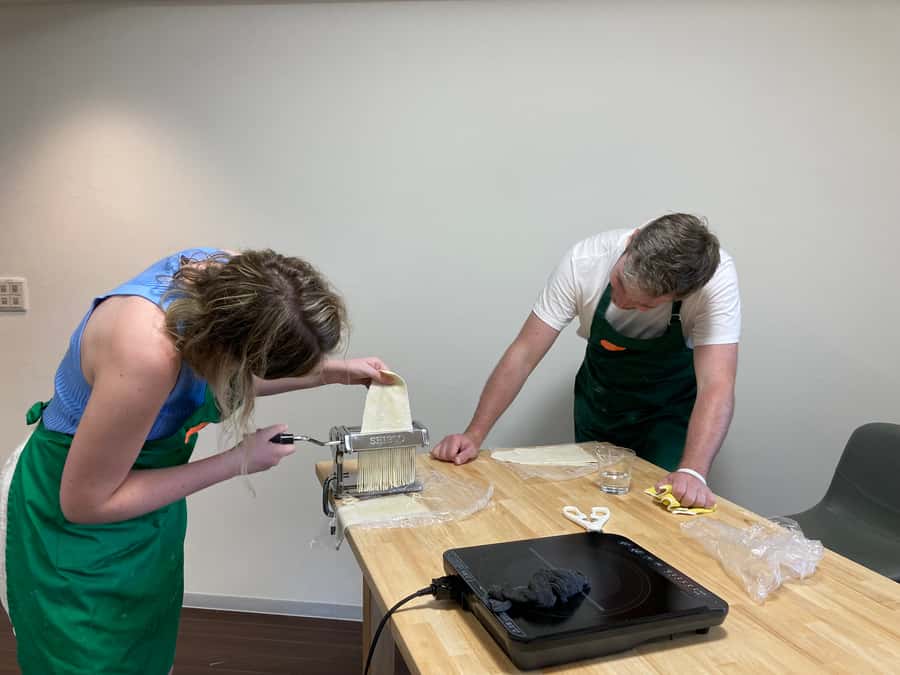
If you only try one thing in Osaka, make it the ramen-noodle part. This class has you kneading wheat to make noodles. You learn that ramen dough is not just flour and water, it is texture work. Knead until it behaves the way your hands expect, not until it looks like dough in a bowl.
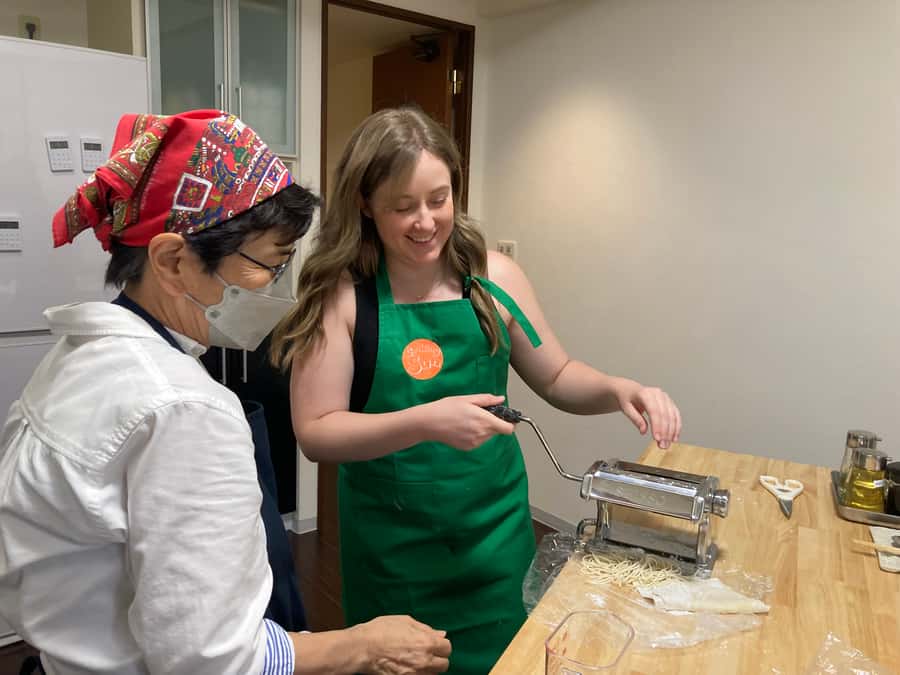
Then you use a noodle machine. The class highlights cutting ramen like a pro, and that is exactly what you are practicing here. The noodle machine is what takes your noodles from handmade effort to consistent thickness. Consistency is how ramen shops get that satisfying bite.
This is also where the class becomes more than a meal. You start to understand why ramen thickness changes the experience. Thinner noodles can feel slicker and faster, thicker ones can hold chew and soup better. You learn that difference by making it, not by reading it.
A practical tip: go in ready to work with your hands. One review explicitly suggests coming with an empty stomach, not because the class drags, but because you will be hungry when the food finally lands.
Soy Sauce Ramen, Dashi-Style Soup, and the Easy Miso Switch
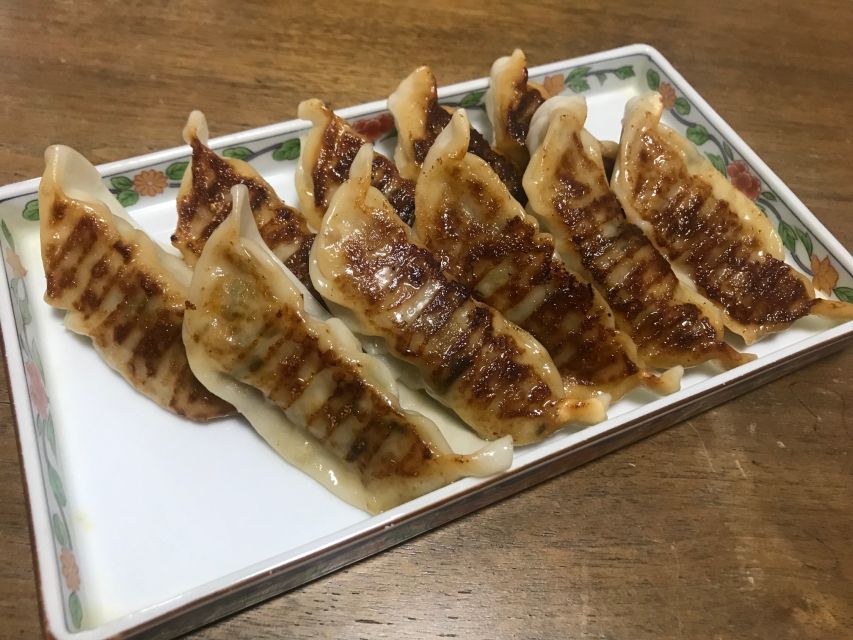
Ramen can feel like one dish with endless variations. In this class, you start with the most standard style: soy sauce ramen. You build the soup from chicken bones and dried sardines, which gives you that deep, savory foundation Japanese ramen is known for.
You also get options. The class info explains that you can add various toppings as you like. It also mentions the ability to add miso to make miso ramen. That means you can taste how small changes shift the character of the broth. Soy sauce ramen tends to be clean and savory. Miso adds a rounder, fuller feel.
This part also teaches you ingredient thinking. One review highlights learning about different kinds of miso and when to use them. Another mentions adjustments for people who did not want fish broth. That tells me the class is flexible enough for most dietary preferences, as long as you let them know you need an alternative.
You do not just watch a pot simmer. You connect ingredients to flavor outcomes. That is the difference between eating ramen and learning ramen.
Gyoza from Scratch: Minced Chicken Filling and Dumpling Confidence
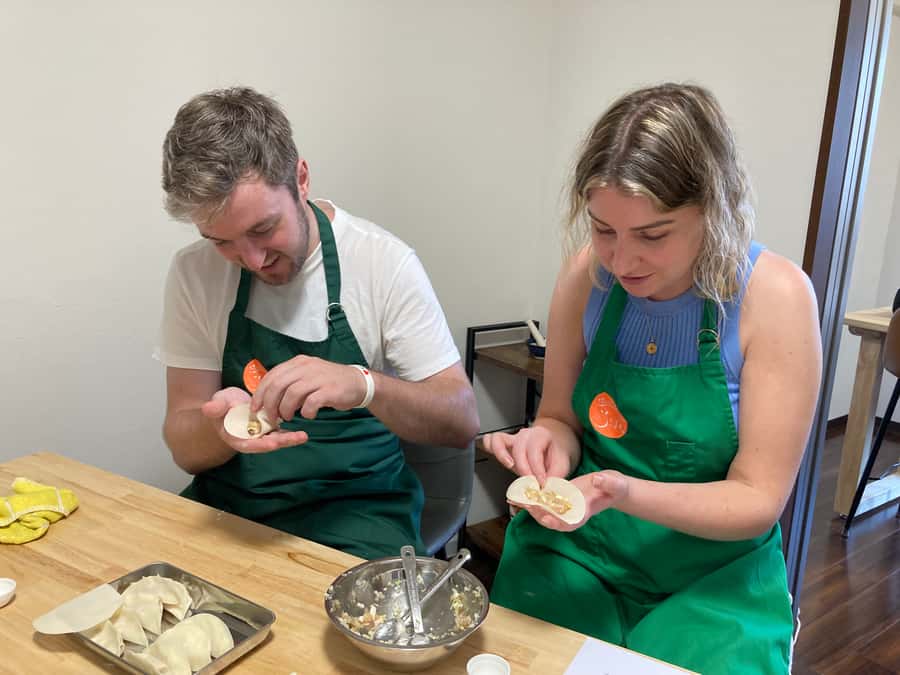
Gyoza is often ordered on autopilot, a quick side to ramen. Here, you make it from scratch. The class focuses on original dumplings using minced chicken. That is a clear and classic target, so you get a baseline you can improve later.
You will likely appreciate the way gyoza fits into the class flow. One review notes that gyoza work happens while the noodle dough rests. That is smart pacing. It means you stay productive instead of waiting around, and you leave with two finished dishes at the same time.
What you learn is not only how to fold dumplings, but how to think about filling. Gyoza filling is about seasoning balance and texture. If the filling is off, the wrapper alone cannot save it. The instructors guide you through getting it into shape, and multiple comments praise the precision and artistry in the cooking process.
If you worry about folding, do not. Several reviews mention instructors stepping in when people are falling behind, keeping the schedule moving and helping you finish together. In a small group, that support makes all the difference.
The glowing strip everyone photographs
- Osaka Local Foodie Walking Tour in Dotonbori and Shinsekai
★ 5.0 · 985 reviews - Osaka: Dotonbori District River Cruise with Drink Discount
★ 4.2 · 876 reviews - Ultimate Osaka Walking Tour: Castle, Dotonbori & Hidden Gems
★ 5.0 · 862 reviews
What You Actually Eat: A Full Meal You Build, Not a Snack You Watch
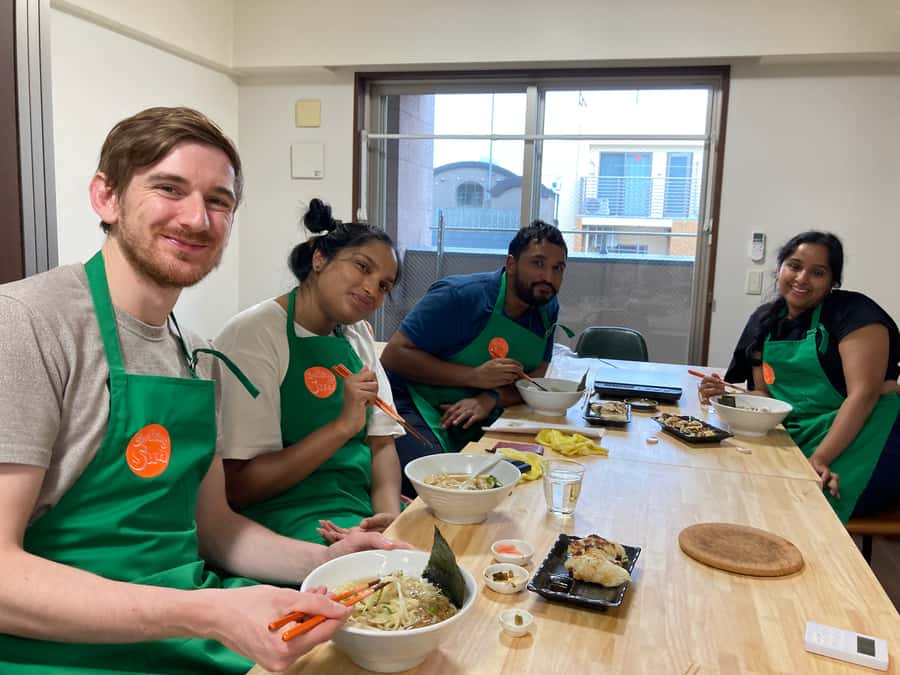
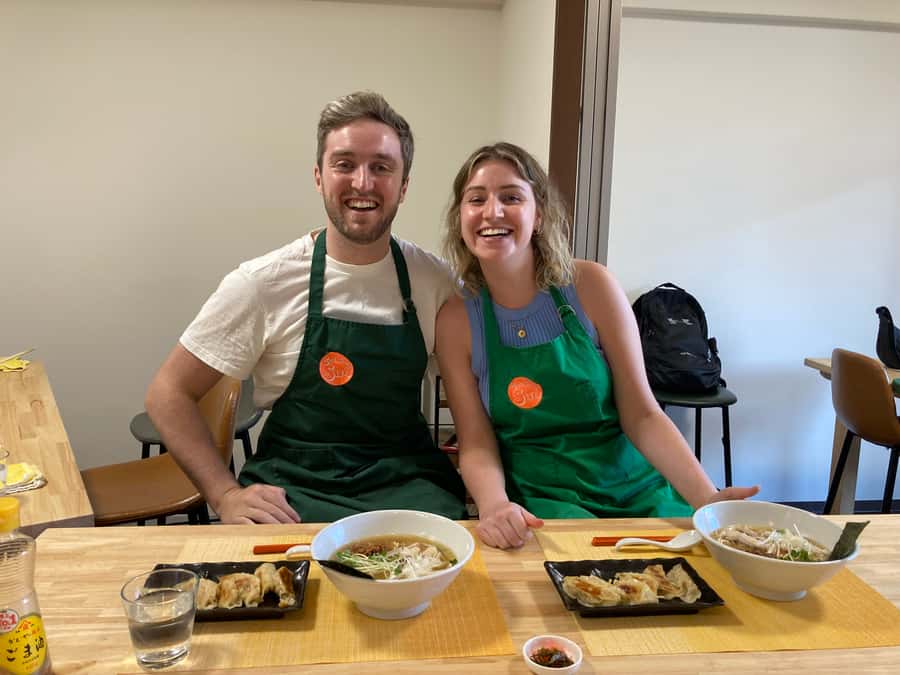
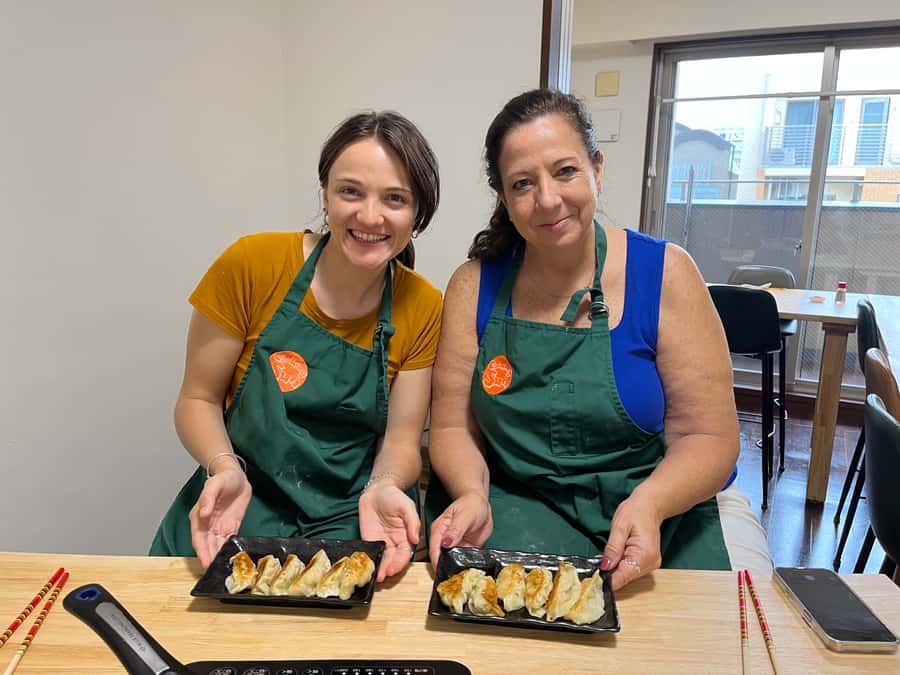
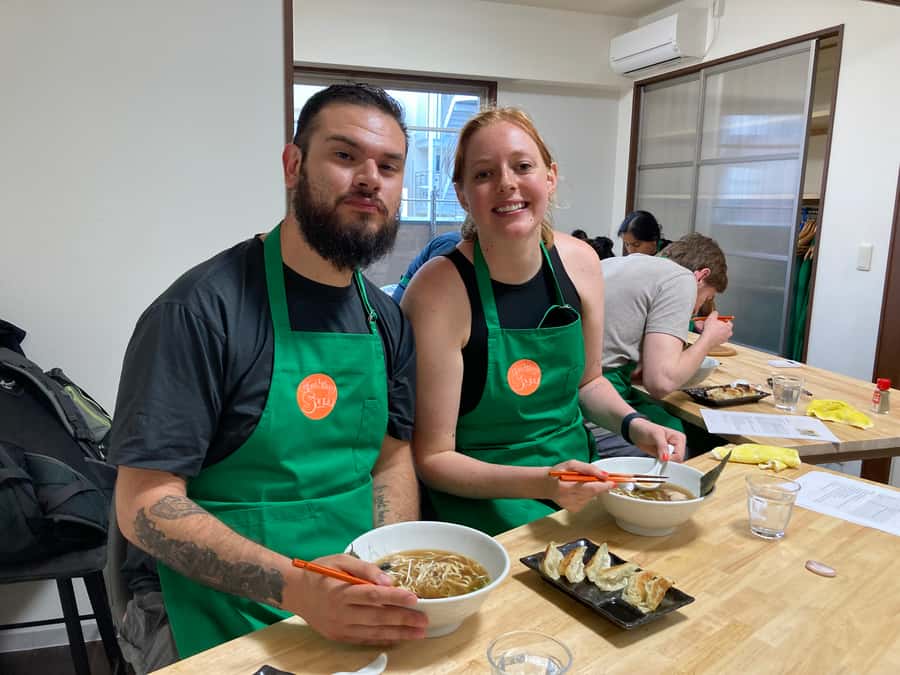
At the end, you sit down and eat what you made. That is not a minor detail. Cooking classes can sometimes feel like prep theater, with the best moment happening at a restaurant table later. Here, the meal is part of the experience, and people consistently praise the taste of both the ramen and the gyoza.
One reviewer used a simple but effective phrase: making the food was great, eating it was even better. Another said the ramen and gyoza exceeded expectations. That lines up with what you would expect from a class that goes deep into noodle and dumpling fundamentals.
You will also get toppings and broth choices to make your bowl your own. Since you can adjust flavors, your final plate does not feel identical to everyone else’s. It still feels authentic, because the changes are the kind a Japanese ramen shop would understand.
And yes, plan around the hunger. If you arrive too full, you will miss the point.
Vegan and Fish-Broth Adjustments: When the Class Can Still Work for You
Food preferences can derail some cooking classes. This one seems designed to adapt. One review mentions that the instructors quickly adapted the recipes for a vegan plant-based option. Another mentions a substitution when a couple did not like fish broth.
That does not mean every ingredient can be swapped in every case. But it does mean they are listening and they can adjust the broth situation, which is usually the hardest part for dietary restrictions.
If you are vegetarian or vegan, this class appears to be a good fit because at least one reviewer specifically called out they will look after you. If you have strong fish-avoidance, it is also encouraging that a substitution was provided in at least one situation. The smart move is to tell them your dietary needs upfront so they can guide you to the best alternative.
Price and Value: Is $70 per Person Worth It in Osaka?
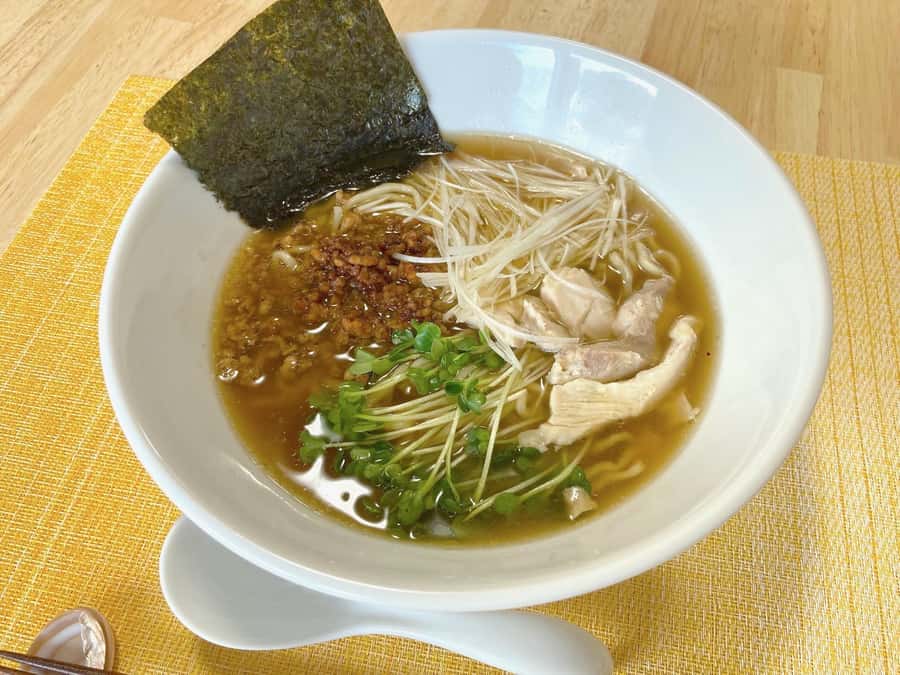
$70 per person is not a tiny ticket. The value comes from what you do with your time. You are making ramen noodles from wheat dough, cutting them with a noodle machine, building ramen soup from chicken bones and dried sardines, and then making gyoza dumplings with minced chicken.
That is a lot of work for one session, and the price covers all ingredients. There is no hotel pickup included, so you are responsible for getting to the meeting point. But you are paying for the kitchen time, the tools, the teaching, and the ingredients that turn your efforts into a full meal.
Also, small group size usually increases value. When you have 7 to 8 people, instructors can keep an eye on what is happening and help you avoid wasting dough or ending up with uneven noodles. Multiple comments mention that instructors stepped in if someone fell behind, and that the class stayed on schedule. That is value too, because it protects your outcome.
Finally, recipes to take home are part of the equation. Several reviews mention written recipes you can bring back. If you can recreate even half of what you learn, you get repeat value, not just a one-time meal.
Where to Meet Cooking Sun Osaka, Room 807, and How to Avoid a Stress Spiral
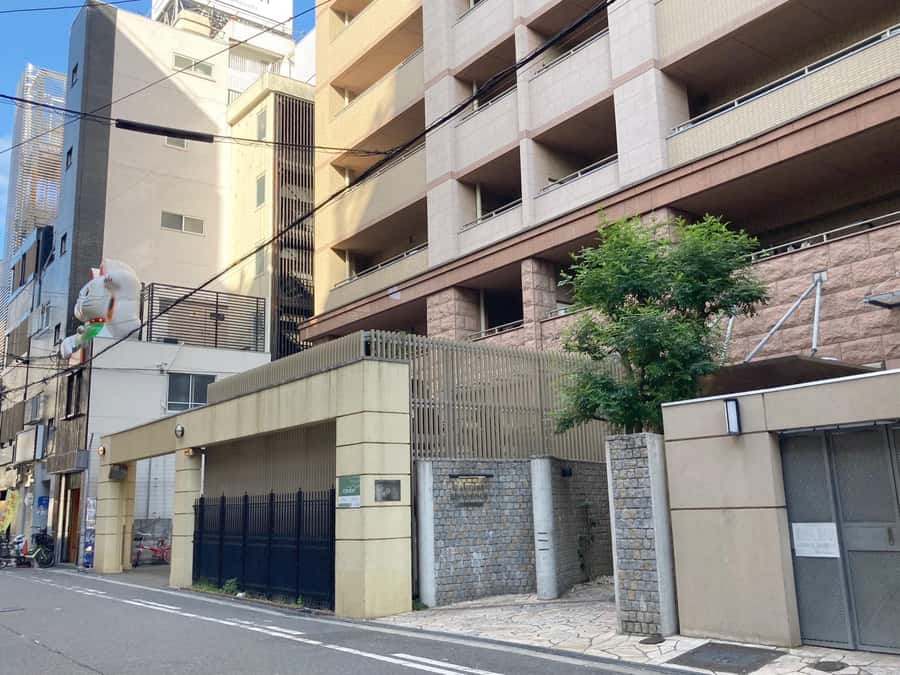
The meeting point is Cooking Sun Osaka, room 807. When you arrive, press 807 and the 呼出 (call) button at the entrance. The activity ends back at the meeting point, so you do not need to worry about figuring out a separate drop-off.
A helpful heads-up: at least one review warns the building is not the easiest to find. That is common with room numbers and intercom-style entrances. Your best strategy is to arrive a bit early and use your phone map to locate the exact building, not just the neighborhood.
If you like smooth starts, double check you have the right room number before you walk in. Once you are inside and press the call button, the class flow is described as organized and clean, with enough kitchen space for everyone to work.
Who This Osaka Ramen and Gyoza Class Is Best For
This class fits a surprisingly wide range of travelers.
- Food lovers who want hands-on technique, not just tasting
- Beginners who need step-by-step guidance in English
- Families, since at least one review describes an 11-year-old enjoying the class and learning alongside adults
- Couples who want a shared activity that ends with a satisfying meal
- Vegans or people who avoid fish broth, because adjustments have been mentioned in the feedback
It might be less ideal if you are short on time or you dislike hands-on work. Also, because there is no hotel pickup, you will want to be comfortable navigating independently in Osaka.
Should You Book This Ramen and Gyoza Class?
If you want one Osaka experience that turns curiosity into cooking skills, I would book it. The biggest strength is practical learning: ramen noodles from scratch, soup choices that make sense, and gyoza shaped by your own hands. The repeated praise for English clarity, small-group support, and the quality of the final food is exactly what you want when you are paying to learn.
Before you reserve, do two quick checks. First, confirm your food needs, especially if you are vegan or avoiding fish broth. Second, plan your arrival time, because the meeting point involves room entry via the call button and the building may take a little searching.
If those boxes work for you, this is a strong choice for a memorable, repeatable Osaka food lesson.
FAQ
How long is the cooking class?
The class timing is described as about 2 hours in one comment, and also as 3 hours in another. Plan for roughly 2 to 3 hours.
What dishes will I cook?
You will make ramen and gyoza from scratch.
Is the class taught in English?
Yes, the class is available in English.
What is the price and what does it include?
It costs $70 per person, and the class includes all the ingredients needed for the cooking.
Is hotel pickup included?
No, hotel pickup and drop-off are not included.
Where do I meet the group?
You meet at Cooking Sun Osaka, room 807. On arrival, press 807 and the 呼出 (call) button at the entrance.
Do I get to take recipes home?
Yes. The class provides written recipes that you can take home.
Can the class accommodate vegan or other dietary needs?
There is at least one mention of a vegan, plant-based option. There is also mention of a substitution for fish broth when needed.
What type of ramen do you make?
The class focuses on standard soy sauce ramen, with an option to add miso to make miso ramen.
How many people are in the class?
It is described as small, with examples of around 7 people and up to 8 people, so you can get individual help.
What is the cancellation window?
You can cancel up to 24 hours in advance for a full refund.
More Workshops in Osaka
- Sushi Making Osaka Roll and Authentic Japanese Sushi Class★ 5.0 · 1,220 reviews
- Matcha Making Class in Osaka with Authentic Japanese Sweets Set★ 5.0 · 509 reviews
- Osaka: Roll and Authentic Sushi Making Class in Dotonbori★ 4.9 · 239 reviews
- Osaka: Sushi Class in Dotonbori★ 4.9 · 160 reviews
More Cooking Classes in Osaka
- Osaka Cooking Class: Okonomiyaki &Japanese cuisines experience★ 5.0 · 261 reviews
- Osaka Sake Tasting with Takoyaki Cooking★ 5.0 · 156 reviews
- Osaka Sake Tasting & Takoyaki Cooking Experience★ 5.0 · 149 reviews
- Eat Osaka: Street Food Cooking in an Authentic Kitchen!★ 5.0 · 87 reviews
Just added around Osaka


Dotonbori Experiences, compared.
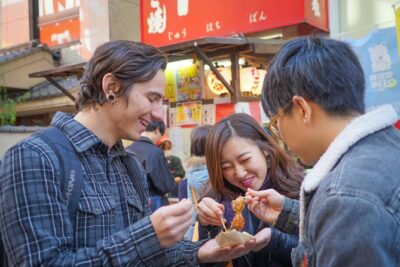
Osaka Local Foodie Walking Tour in Dotonbori and Shinsekai
Read our review →
Dotonbori District River Cruise with Drink Discount
Read our review →
Ultimate Osaka Walking Tour: Castle, Dotonbori & Hidden Gems
Read our review →
Dotonbori River Cruise with Glico Sign & Neon Views
Read our review →

Roll and Authentic Sushi Making Class in Dotonbori
Read our review →
This tour also fits