
Reviewed · DAY TRIPS TO NARA FROM OSAKA
Private Tour to Nara from Osaka with English speaking Driver
Nara in a day feels both big and manageable. With a private car and an English-speaking driver, you get the comfort of door-to-door timing plus the fun of wandering at your own speed. I especially like the ease of avoiding Osaka transit stress and the way you can focus on a few top sites instead of cramming everything.
Two standout perks for me are the pickup option and having an English driver who can help you stay on track without turning it into a lecture. The one thing to plan around is that it is priced per group (up to 5), and the day is only about 8 hours, so your stop choices matter.
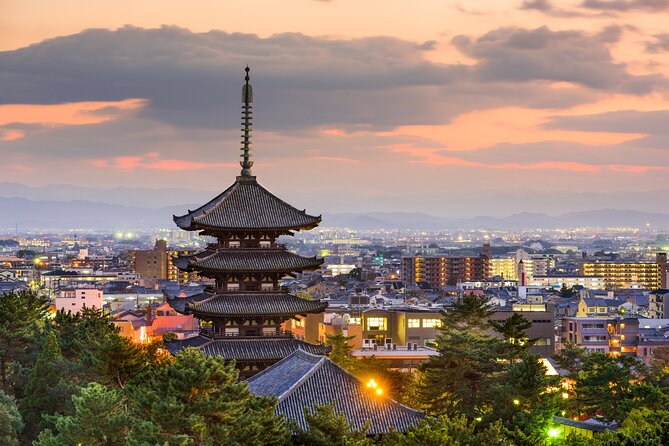
You’ll start seeing why Nara is a classic day trip once you trade rush-hour rail lines for a direct ride and spend the day between temples, gardens, and sacred deer.
In This Review
- Key things to know before you go
- Private Osaka to Nara, without the transit headache
- How the 8-hour day actually plays out
- Todai-ji Temple: where the scale hits you fast
- Nara Park: deer encounters and easy wandering time
- Kasuga Taisha and Mount Wakakusayama: shrine calm, then big views
- Horyu-ji: the early-buddhism temple that changes your perspective
- Naramachi: old merchant streets for a slower pace
- Kofuku-ji, Yakushiji, and Shin-Yakushiji: temple variety without rushing
- Gardens and palace-era remnants: where Nara gets quiet
- Nara National Museum: a focused culture break
- Toshodai-ji and the Chinese-priest story
- Price per group: when this is worth it
- Best for who, and when public transit might be better
- A real comfort detail: the driver as your time anchor
- Should you book this private Nara tour?
- FAQ
- How long is the Nara day trip from Osaka?
- How many people can be in the group?
- Is pickup available in Osaka?
- Do I need to buy tickets for temples and museums?
- Is the tour fully guided by a local English guide?
- Can I customize which Nara stops I visit?
- What tickets do I receive?
- Are there restrictions on combining tours or groups?
- Is there any guidance for traveling with children and car seats?
- Are service animals allowed?
- What is the cancellation window?
Key things to know before you go
- Private car from Osaka with an English-speaking driver, so navigation and timing stay simple
- Customizable route built around 3 to 4 chosen stops from the Nara highlights list
- Pickup offered plus a mobile ticket, for a smoother start
- Plenty of free-entry walking time between sites, even when you pick only a few destinations
- A broad mix of temples, shrines, gardens, and historic sites, so you can match the day to your interests
Private Osaka to Nara, without the transit headache
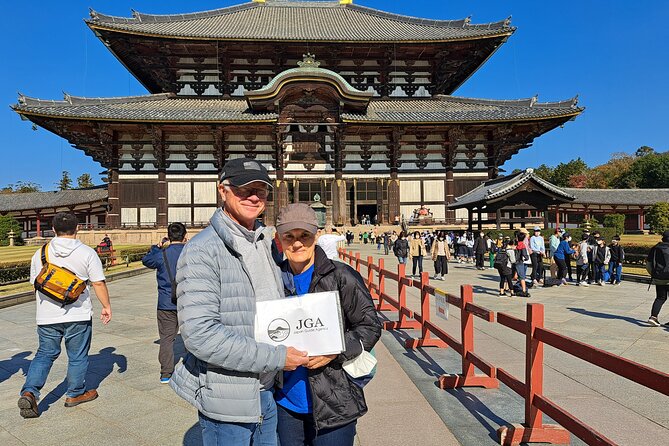
This is a straightforward way to do Nara when you want independence, but not the chaos of figuring out trains, transfers, and station exits. You get a private vehicle and an English-speaking driver, which is a big deal if you are trying to keep the day relaxed rather than frantic.
From my perspective, the best value here is mental. Nara has a lot going on, and once you are on the ground you still have to choose where to spend your limited time. A private ride lets you make those choices calmly, instead of sprinting across neighborhoods to catch the next bus.
There is also a small but real comfort factor in not hauling yourself and bags around for most of the day. If your travel style is, I want to see things, but I do not want to fight logistics, this fits.
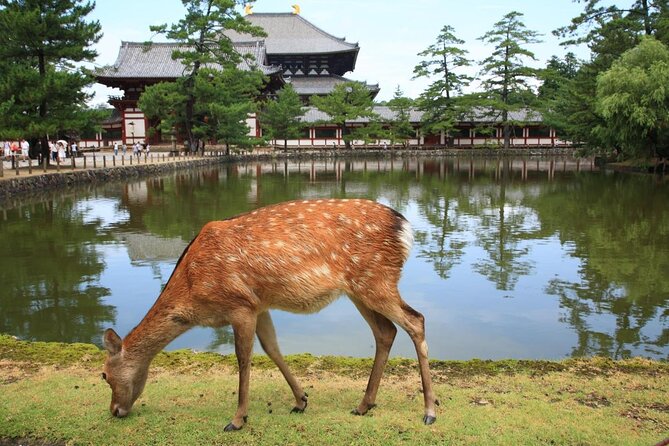
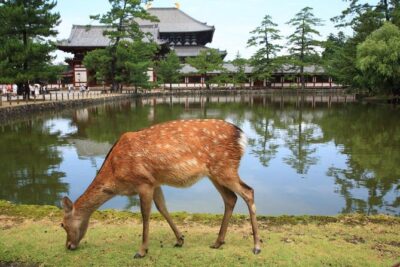
Deer that bow back, minutes from Osaka
- Ancient Capital Tour: Kyoto and Nara Highlights from Kyoto/Osaka★ 4.5 · 332 reviews
- Kyoto and Nara Day Trip from Osaka★ 4.0 · 175 reviews
- Discover Himeji, Kobe and Nara from Osaka★ 5.0 · 101 reviews
- Kyoto & Nara Private customized tour with English speaking Guide★ 4.5 · 99 reviews
- Kyoto and Nara UNESCO Highlights Full-day Tour From Osaka★ 4.5 · 50 reviews
How the 8-hour day actually plays out
The total duration is about 8 hours, which is enough for a satisfying mix of walking, photos, and a couple of deeper temple moments. The plan is flexible because it is set up around selecting 3 to 4 stops from a menu of Nara favorites.
That means you can build a day that matches your energy. If you want big-ticket sights, you can center the day on Todai-ji, Nara Park, Kasuga Taisha, and one more temple. If you prefer variety, you can swap in gardens and historic sites like Heijo Palace site and the Nara National Museum.
In practice, the day feels like a sequence of zones. Each zone has its own vibe: temple grandeur, deer-and-park wandering, shrine atmosphere, and quieter garden or museum pacing. The driver keeps you moving between zones, while you control how long you linger once you are there.
Todai-ji Temple: where the scale hits you fast
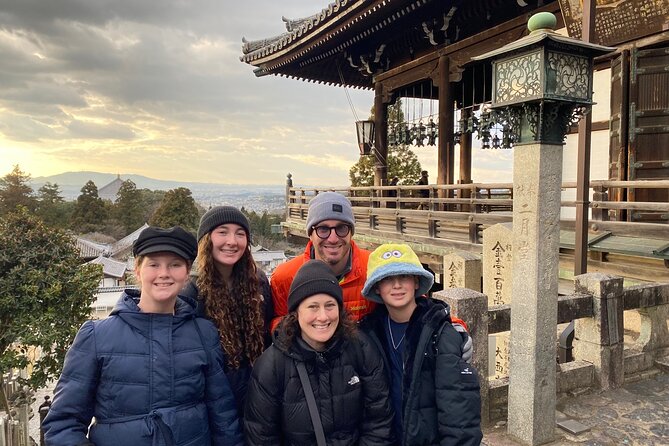
Todai-ji is one of Nara’s most famous temples, and it is a great anchor stop. The big point is that this is not just a temple visit, it is a landmark experience. The temple was constructed in 752, and it was the head temple of provincial Buddhist establishments, so it carries serious historical weight.
In a private-day format, I like Todai-ji because you can do it at your own speed. If you want to spend a full hour absorbing the main hall area and the surrounding temple grounds, you can. If you want photos plus a focused look, you can keep it shorter and save time for the park and shrine area.
A practical tip: Todai-ji is often busy, so build in a few minutes to get oriented before you commit to where to stand, and plan your timing so you are not doing every photo at once.
Nara Park: deer encounters and easy wandering time
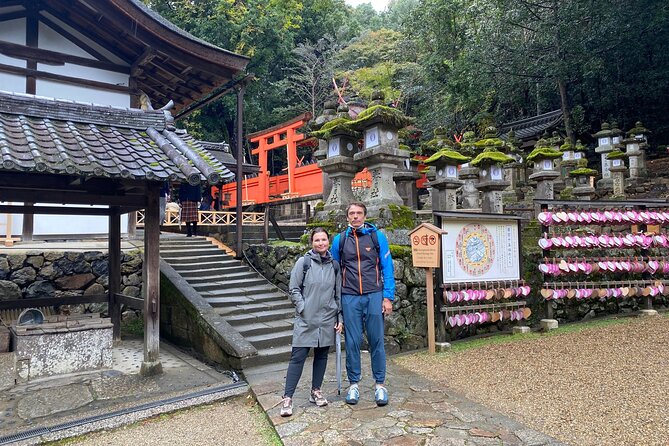
Right next to Todai-ji is Nara Park, the heart of the deer experience. It is a large central park established in 1880, and it connects multiple major sights including Todaiji, Kasuga Taisha, Kofukuji, and the Nara National Museum.
This is where your day can turn playful. The sacred deer are part of why people come, but the park also works as a buffer zone. Instead of moving nonstop from one spot to another, you can pause, walk slowly, and soak in the atmosphere between temple visits.
One consideration: deer mean unpredictability. Even if you know the basics, leave a little extra room for deer traffic in your walking path. I also suggest you keep snacks and hand-held food behavior sensible, so you are not stressed about what is happening around you.
Kasuga Taisha and Mount Wakakusayama: shrine calm, then big views
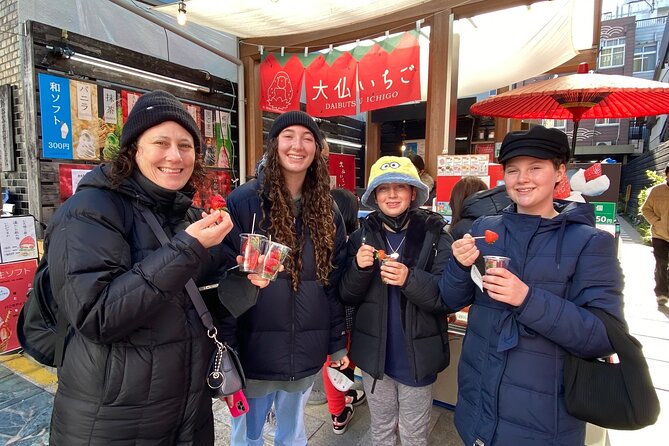
Kasuga Taisha is Nara’s most celebrated shrine, tied to the protection of the city. It is dedicated to the deity responsible for that protection, and it was established around the time Nara’s capital was set.
I like adding Kasuga Taisha after Todai-ji because the mood shifts. Todai-ji is massive and ceremonial; Kasuga Taisha feels more intimate and shrine-focused. In many temple-shrine days, you can start to feel repetition, but here the experience is different enough to keep it interesting.
Then add Mount Wakakusayama for views. The hill behind Nara Park sits between Todaiji and Kasuga Shrine, it is around 350 meters tall, and the idea is straightforward: get up, get the sightlines, then head back down before you overcook your energy.
A smart approach is to treat Wakakusayama like a breather. If you are feeling strong, you get the views. If not, you can still enjoy the area without turning it into a long hike.
Other ways to spend a day in Osaka
- Universal Studios Japan Entry Ticket with Shared Transfer
★ 4.5 · 49 reviews - Kansai/KIX Airport to or from Osaka/Kyoto Private Transfer
★ 5.0 · 20 reviews - Private departure transfer from central Osaka city to Itami airport (ITM)
★ 5.0 · 17 reviews
Horyu-ji: the early-buddhism temple that changes your perspective
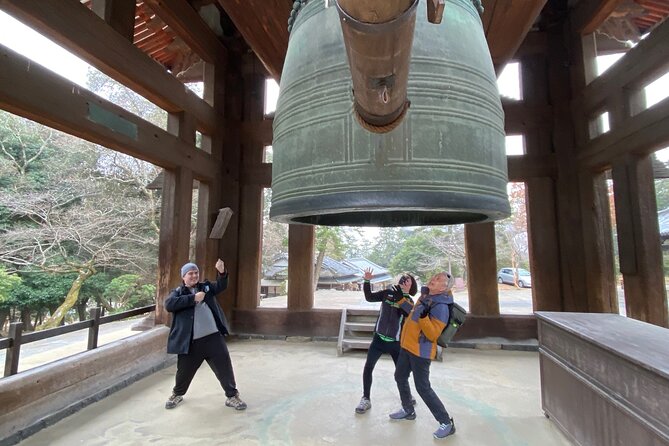
Horyu-ji Temple is a classic for history lovers because it was founded in 607 by Prince Shotoku, credited with early promotion of Buddhism in Japan. It is one of the country’s oldest temples, and it is famous for containing what is described as the world’s oldest set of Buddhist wooden structures.
The value of including Horyu-ji is contrast. When your day starts with Nara’s big temple scale, Horyu-ji gives a different angle, more time-depth and less deer-parking-lot energy.
If you are building a shorter list of stops, I would still consider Horyu-ji because it is distinctive. You likely will not feel like you are checking off the same kind of place twice.
Naramachi: old merchant streets for a slower pace
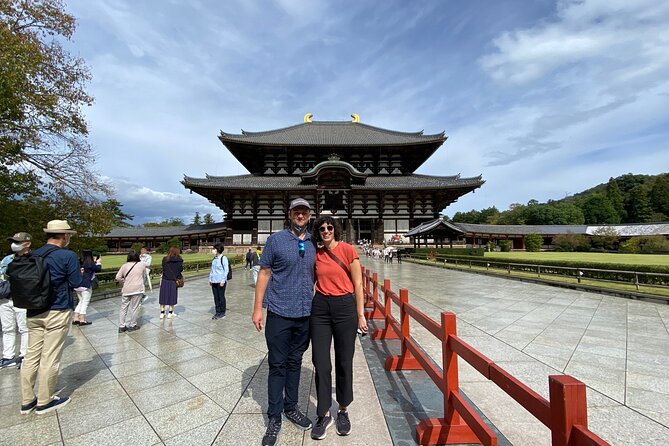
Naramachi is the former merchant district of Nara. It is where traditional residential buildings and warehouses have been preserved and opened to the public, with shops and cafes in the mix.
This stop works best if you want a break from temple intensity. Temples can run together when you do too many. A stroll in Naramachi lets you slow down, regroup, and do some casual browsing.
It is also a good place to take a few photos that do not look like the typical temple postcard. If your goal is to remember Nara as a living city, Naramachi helps.
Kofuku-ji, Yakushiji, and Shin-Yakushiji: temple variety without rushing
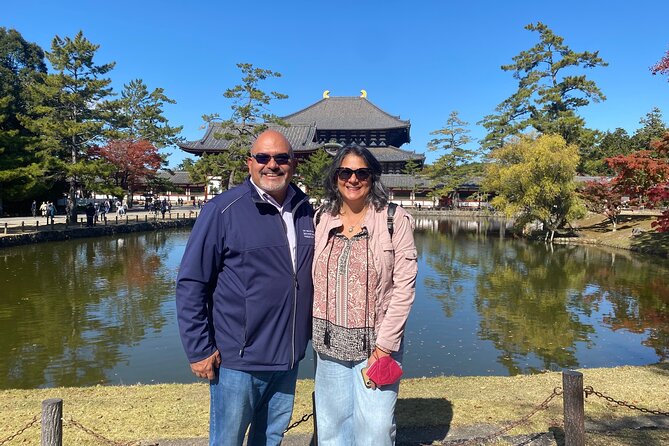
Kofuku-ji is tied to the Fujiwara clan, a powerful aristocratic family during the Nara and Heian periods. You can think of it as another major piece of Nara’s temple puzzle, and adding it helps your day feel rounded rather than a one-temple highlight.
Yakushiji is another older temple, constructed by Emperor Tenmu in the late 7th century for the recovery of his wife. It is known for a strictly symmetric layout, including the main hall.
Shin-Yakushiji is devoted to Yakushi Buddha, the patron of medicine in Japanese Buddhism, and it was founded by an empress during the Nara period (710 to 794) for the sake of the ailing emperor.
What I like about these three is that they offer different flavors of Buddhist architecture and significance. With private time, you can spend the amount of time you want in each one without being squeezed by a tight group schedule. Just keep your overall stop count in mind, because symmetry and details are great, but only if you do not burn out.
Gardens and palace-era remnants: where Nara gets quiet
Two garden stops in the menu are Isuien and Yoshikien, and they are a nice counterweight to temple crowds.
Isuien uses clever garden design, including a concept called borrowed scenery, using views of Todaiji’s Nandaimon gate and Mount Wakakusayama. It is the kind of place where you might take your time and just watch how the views frame themselves as you move.
Yoshikien is another garden, built on the former grounds of a Kofukuji priest residence, named after the Yoshikigawa River. Garden visits are a smart move in a day like this because they naturally slow your pace down.
Then there is the Heijō Palace Site Historical Park, which relates to Nara when it was the capital of Japan, known as Heijō-kyo. The palace area stretched about a kilometer by a kilometer, and it is treated like a place you can wander and imagine rather than a single photo point.
If your group likes open air and space to think, these stops are a good way to make Nara feel more complete.
Nara National Museum: a focused culture break
The Nara National Museum sits in Nara Park and focuses on Japanese Buddhist art. It was established in 1889, and it retains its roots in that theme.
This is a practical add-on if you want to balance the walking-heavy parts of the day. Museums can also be a lifesaver if the weather turns or if you need a slower indoor reset.
A good strategy is to use the museum as a breather between the bigger religious sites. It keeps your day from feeling like nonstop outdoor sightseeing.
Toshodai-ji and the Chinese-priest story
Toshodai-ji is founded in 759 by Ganjin, a Chinese priest invited to Japan by the emperor to train priests and strengthen Buddhism. This is a nice stop when you want your day to feel connected to broader cultural exchanges rather than only local temple growth.
The time slot for this kind of temple stop is short enough to fit the day, while still feeling meaningful.
For me, it works because it adds another layer to the story of how Buddhism spread and developed in Japan.
Price per group: when this is worth it
The price is $848.72 per group, up to 5 people. That means your best value depends on how many people you can put in the car.
If you travel as a couple or small group, private transport can feel pricey compared with trains, but you are not only paying for transportation. You are paying for time, comfort, and the ability to pick the exact stops you care about. With an English-speaking driver, you also get easier routing and fewer decision headaches.
This can be especially good value if you are balancing other costs, like taxis or multiple transit tickets plus wasted time in transfers. When your day is only about 8 hours, saving 30 to 90 minutes of transit time can mean more actual sightseeing, which is the real currency.
One more value angle: you can build a calmer day. Instead of turning Nara into a checklist, you can focus on the sites you select from the highlights list.
Best for who, and when public transit might be better
This private format is ideal for people who want control. It suits families with the ability to ride in a car, couples who want a smooth day, and anyone who gets tired of coordinating trains.
It also makes sense if you have limited time in Osaka and you do not want Nara to become a logistics project. And if you want to return on a schedule, private timing helps.
On the flip side, if you are comfortable with public transportation, enjoy planning your own routes, and do not mind transfers, then a DIY Nara day can be cheaper. This tour is less about saving money and more about buying back your energy.
Also, car seats and booster seats are limited, and rear-facing car seats are not available. If you have a child needing a specific seat, you must contact the provider directly.
A real comfort detail: the driver as your time anchor
One reason this tour earns strong feedback is how the driver handles the day. English speaking matters, but so does calm driving and smooth timing.
In one experience, the driver was Kazunori Maeda, and the day ran smoothly with on-time return, including a bit of extra port-area driving when the schedule allowed. That kind of flexibility is hard to replicate with public transit.
Even when you choose only a few stops, the driver’s job is to keep the day flowing. That is why a private car can feel surprisingly easy once you are rolling.
Should you book this private Nara tour?
Book it if you want a stress-free Nara day from Osaka with an English-speaking driver and you prefer choosing a small set of highlights instead of racing around. It is a strong fit for first-time Nara visits because it gives you big-name temples like Todai-ji and Kasuga Taisha, plus options for quieter gardens and historic sites.
Skip it or consider a DIY day if price is your top priority, your group is big enough to make you comfortable with multiple transit rides, or you already know exactly how you want to structure your day.
If you can, build your route around 3 to 4 stops that match your mood. Todai-ji plus Nara Park is a classic start. Add Kasuga Taisha for shrine atmosphere, then choose between Wakakusayama views, a museum reset, or a garden stop to even out the day.
FAQ
How long is the Nara day trip from Osaka?
The duration is about 8 hours.
How many people can be in the group?
The price is per group for up to 5 people.
Is pickup available in Osaka?
Pickup is offered.
Do I need to buy tickets for temples and museums?
Entrance fees are not included. Lunch is also not included.
Is the tour fully guided by a local English guide?
No. It includes an English-speaking driver, but it does not include a licensed local English-speaking guide.
Can I customize which Nara stops I visit?
Yes. The tour includes a customizable plan where you choose 3 to 4 sites from the available Nara highlights.
What tickets do I receive?
You get a mobile ticket.
Are there restrictions on combining tours or groups?
You cannot combine multiple tour groups.
Is there any guidance for traveling with children and car seats?
There are a limited number of car seats and booster seats. Rear-facing car seats are not available, and you must contact the provider directly if you need special seating.
Are service animals allowed?
Yes, service animals are allowed.
What is the cancellation window?
Free cancellation is available up to 24 hours in advance for a full refund.
Just added around Osaka

Day Trips to Nara from Osaka, compared.
Ancient Capital Tour: Kyoto and Nara Highlights from Kyoto/Osaka
Read our review →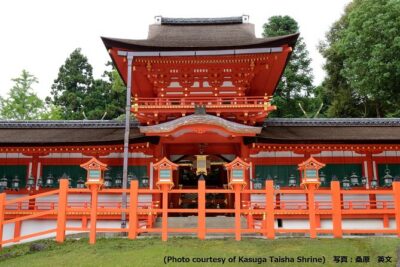
Kyoto & Nara Private customized tour with English speaking Guide
Read our review →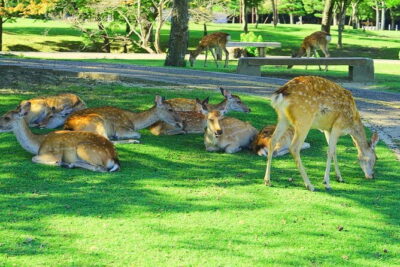
Kyoto and Nara UNESCO Highlights Full-day Tour From Osaka
Read our review →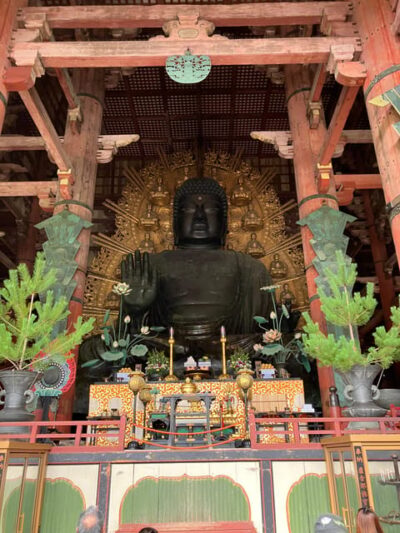
Kyoto & Nara & Uji: Full Day Sightseeing Tour from Osaka or Kyoto
Read our review →This tour also fits