
Reviewed · KIMONO & YUKATA EXPERIENCES
Real Kimono experience and Tsumami Kanzashi Workshop
A kimono souvenir you make yourself. This real Tsumami-zaiku workshop in Osaka turns a traditional hand craft into a wearable keepsake, then pairs it with a kimono fitting and photos around Shinsekai. I like that you choose your own colors and flower design before you start, and I really like that you wear the kimono with the accessory you made, not just as a random photo prop. One thing to plan around is the time limit, you’ll need to return the kimono within one hour, so your stroll time is not endless.
You’re looking at about 2 hours total, and the pace feels built for real people who do not want a half-day project. You also get Japanese tea or coffee during the making process, plus a private setup for your group, which keeps the experience calmer and easier to follow. If you love slow, wandering craft sessions, this may feel a bit fast, but that speed is part of why it works for most schedules.
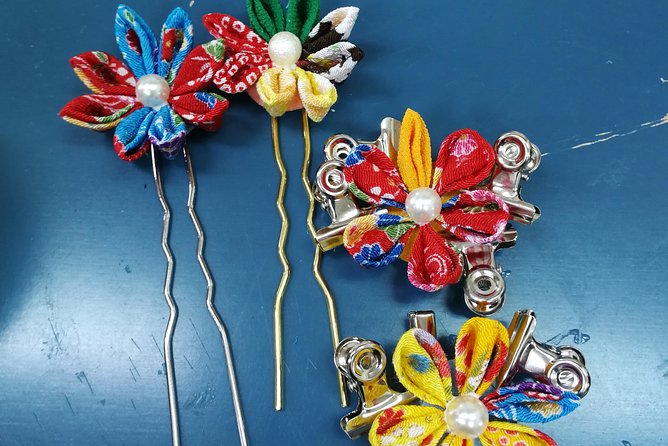
You’ll start at a practical meeting point in Naniwa Ward, then finish back there with your finished accessory to take home. Expect chirimen-cloth flower work that becomes a Kanzashi hair clip (or brooch), plus you’ll choose an obi and kimono from a selection. Bring a little patience for fitting and photos, because you’ll be switching from hands-on crafting mode into costume mode pretty quickly.
In This Review
- Key highlights you’ll feel right away
- Where Tsumami-zaiku meets real kimono time in Osaka
- Meeting point in Nippombashihigashi, then you get set up fast
- Step 1 and Step 2: learning the technique, then choosing your flower design
- Step 3: making your Kanzashi accessory, with real help and a drink
- Step 4: choosing kimono and obi, then getting dressed
- Step 5: photo shooting with your accessory, then the Shinsekai stroll
- The value question: why $52 feels fair for a wearable craft
- What to bring, what to expect, and how to make it smoother
- Who this workshop suits best, and who might want a different plan
- Should you book this real kimono and Tsumami-zaiku workshop?
- FAQ
- How long does the workshop last?
- Where do I meet for the experience?
- What will I make during the Tsumami-zaiku workshop?
- Do I get help while making the accessory?
- Will I be able to choose my kimono and obi?
- Is tea or coffee included?
- Where do we take photos and walk?
- Do I keep the accessory I make?
- Is this a private experience?
- What is the cancellation window?
Key highlights you’ll feel right away
- Create a Tsumami-zaiku Kanzashi hair clip or brooch using Japanese Chirimen cloth
- Choose your flower colors and design before you start crafting
- Get dressed in kimono and obi, then use your accessory for photos
- Stroll Shinsekai toward Tsutenkaku in costume for real atmosphere
- Keep the accessory, return the kimono within one hour to stay on schedule
Where Tsumami-zaiku meets real kimono time in Osaka
This isn’t just a “watch someone do it” style class. The whole point is that you build a small, meaningful piece of Japanese tradition with your hands, then turn around and wear it. It’s the rare combo of craft time and photo-worthy costume time, without making you chase a dozen separate steps around the city.
Tsumami-zaiku is the traditional technique of making tiny fabric flowers. In this workshop, you make a Kanzashi accessory using Chirimen cloth, which is that crisp, crepe-textured fabric you’ll see in lots of Japanese crafts. The result looks delicate, but the process is guided step by step, so you are not left guessing.
Still haven't worn a kimono through Osaka?
- Osaka: Sumo Show & Experience w/ Optional Kimono & Hot Pot★ 4.5 · 609 reviews
- Learning Zen of Japanese Calligraphy in kimono near Osaka Castle★ 4.5 · 53 reviews
- Osaka: Kimono or Yukata Rental &Photos Service Options★ 4.9 · 25 reviews
- Kimono photoshoot-Includes 100 photo data★ 5.0 · 21 reviews
- Premium Kimono Dressing, Tea Ceremony, Calligraphy, Samurai show★ 5.0 · 18 reviews
Meeting point in Nippombashihigashi, then you get set up fast
The session begins at 3-chōme-6-19 Nipponbashihigashi, Naniwa Ward, Osaka 556-0006, and it ends back at the meeting point. You’ll find it near public transportation, which matters because Osaka is easy to navigate but you still want the experience to start smoothly.
Once you’re there, you get the workshop structure up front. You’ll receive an explanation paper and a brief lecture on the basics of the technique, so even if this is your first time, you’re not working in total mystery. Then you move into the fun part, picking colors and starting the build.
If you’re traveling with friends, check whether group discounts apply to your booking. Private setup means your group keeps the attention focused, and group pricing can make the whole thing feel even more like a value play.
Step 1 and Step 2: learning the technique, then choosing your flower design
You start with a short, practical briefing, including what Tsumami-zaiku is and how the basic technique works. This matters because the workshop is about building an accessory within a limited time window, so you need quick clarity on what to do with your hands.
Then comes one of the most satisfying parts: you choose your colors and design for the accessory’s flowers. That choice is not just for aesthetics, it changes the whole visual “personality” of your finished hair clip or brooch. If you like matching your outfit to your photos, pick colors that will show up well against the kimono tones you plan to wear later.
During this phase, don’t overthink it. You’re creating a small flower arrangement, so even simple, clean color palettes tend to look great once everything is assembled. If you are unsure, pick the colors you would actually want to see again in your photos at home, not just the ones that look good in your head.
Step 3: making your Kanzashi accessory, with real help and a drink
This is where you stop being a spectator and start being the maker. You’ll make your Tsumami accessory with step-by-step assistance, so you can move forward even if you don’t have craft experience. That guidance is a big part of why this workshop is rated so highly, and it’s also the difference between a nice souvenir and a stressful one.
You’re also offered Japanese tea or coffee while you work. It’s a small touch, but it helps you stay in the right rhythm, especially if you’re doing this after sightseeing or travel.
What you’re doing, conceptually, is learning how to form tiny fabric pieces into flower shapes, then combining them into a wearable Kanzashi style accessory. The technique is old, but the workshop approach is modern and friendly, with you doing the hands-on work and someone keeping you on track.
Step 4: choosing kimono and obi, then getting dressed
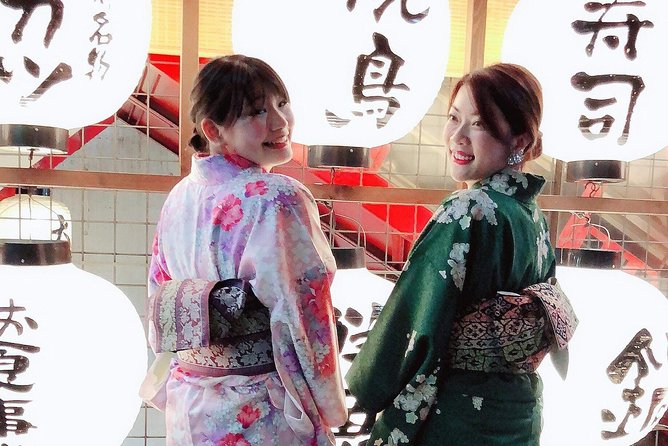
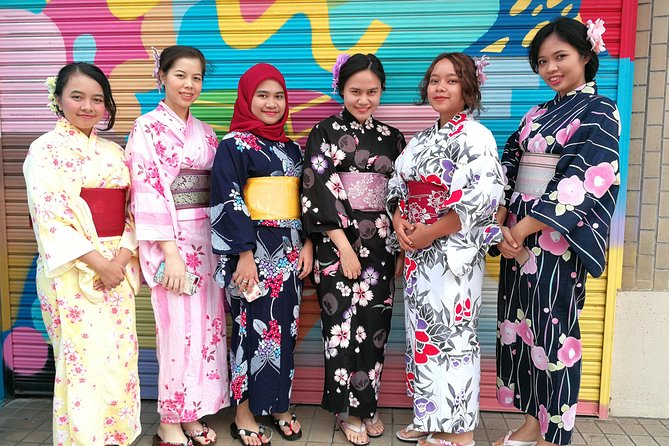
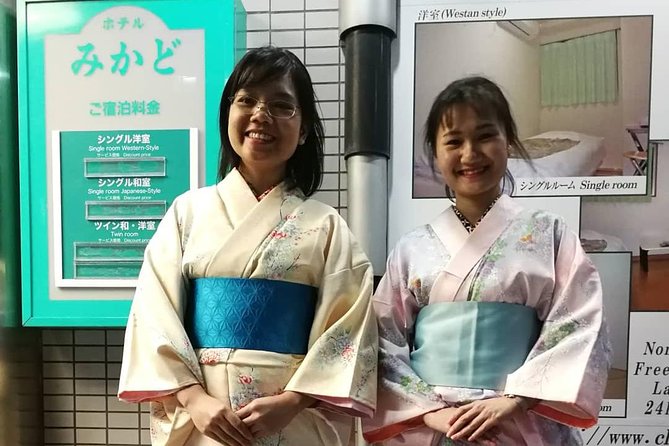
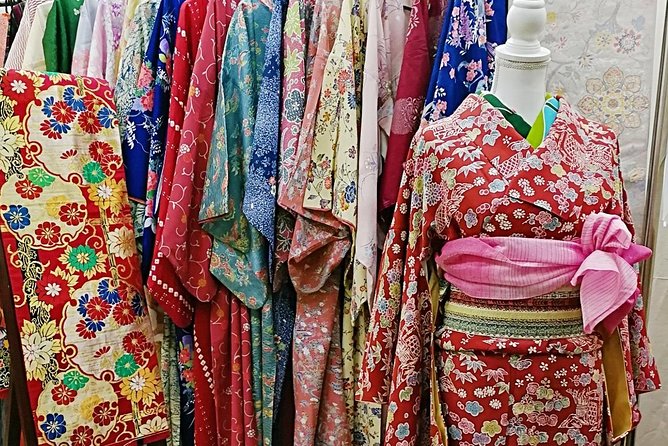
After the accessory is made, you shift to costume mode. You’ll pick a kimono and obi from a selection, and then the instructor helps you get dressed. This is a highlight because it turns the workshop from a craft lesson into a full cultural experience, with the accessory integrated into your look.
A useful mindset here is this: your kimono and obi are your backdrop. Your accessory is the focal point in the photos, so choose a kimono pattern that won’t fight with your flower design. If your accessory has bold, high-contrast colors, you can usually aim for a kimono and obi that support rather than overpower.
Also, treat the dressing part as part of the experience, not a chore. When people get rushed, they forget that kimono wear is its own skill set, even with help. The better you cooperate during fitting, the smoother your walking and photos will be.
Other ways to spend a day in Osaka
- Sushi Making Osaka Roll and Authentic Japanese Sushi Class
★ 5.0 · 1,220 reviews - Matcha Making Class in Osaka with Authentic Japanese Sweets Set
★ 5.0 · 509 reviews - Osaka: Ramen and Gyoza Cooking Class in Dotonbori
★ 5.0 · 378 reviews
Step 5: photo shooting with your accessory, then the Shinsekai stroll
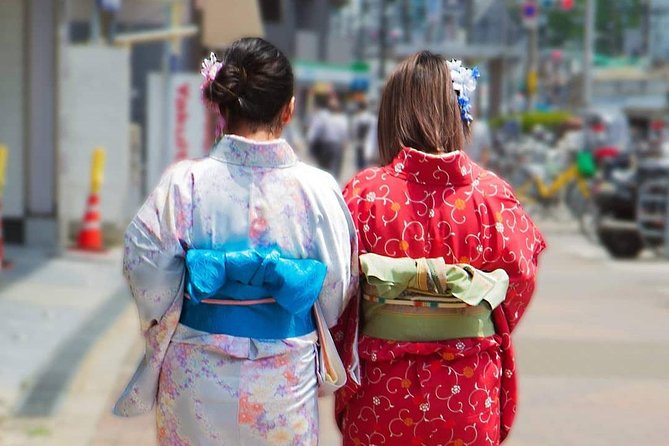
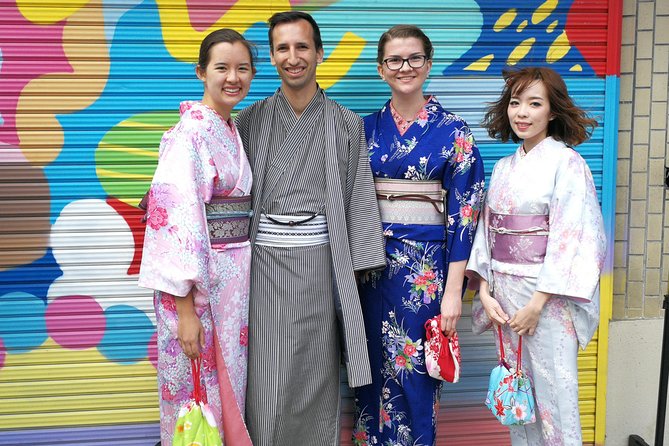
Once you’re dressed, you enjoy photo shooting with your newly made accessory. This is the “wow” moment, because you can see your craft become something you can actually wear. Make sure you take a few angles, not just one perfect shot. Small accessories can look different depending on lighting, and the kimono fabric texture adds extra detail that shows up in photos.
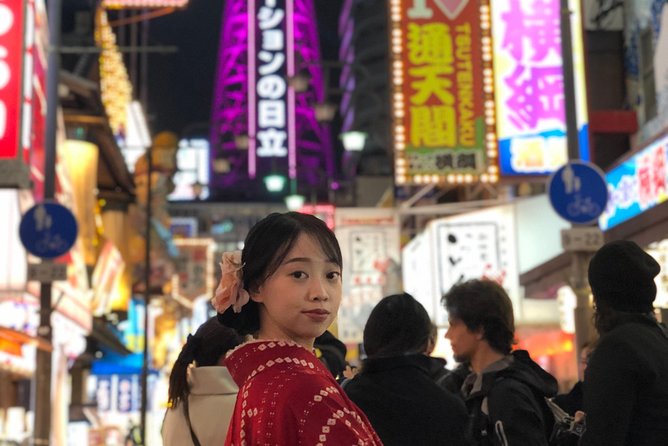
Then you stroll around the Shinsekai area toward Tsutenkaku. Shinsekai is the kind of place where Osaka feel is close up and physical, with plenty of street character around you. In kimono, you’ll feel like you’ve stepped into a living postcard, not just posed in front of a single landmark.
You do have a schedule. You’ll return the kimonos within one hour, so plan your walking time for what you care about most. If you want photos, prioritize viewpoints and don’t assume you’ll have unlimited time at every corner.
The value question: why $52 feels fair for a wearable craft
At about $52.03 per person, this workshop can be a strong value if you compare it to the cost of kimono rentals plus a meaningful souvenir. Here, you’re getting more than “wear a costume.” You’re crafting a Tsumami-zaiku accessory that you take home, plus you’re guided through getting dressed and getting photos.
Time is part of the value too. With an approximately two-hour duration, it fits into a day of sightseeing without swallowing your schedule. It’s also structured so you can finish the craft, get dressed, and still enjoy walking time.
One more value angle: you get the accessory made from Chirimen cloth, so it’s not a generic craft. This is the type of material and style that reads as genuinely Japanese when you show it to friends later.
What to bring, what to expect, and how to make it smoother
Even though this is a guided experience, you can make it easier with a few smart choices.
First, wear something easy to remove and comfortable to stand in. You’ll be in kimono for photos and strolling, so you want your base layers to be simple. Second, think about footwear. The workshop covers kimono and obi, but your own shoes before and after matter for comfort.
Bring a positive, patient attitude about timing. You’ll go from crafting to dressing to photos, then walking, and you must return the kimono within the one-hour window. If you stay calm and go with the flow, it feels fun, not frantic.
If you’re sensitive to bright sun, consider timing your photos when the light is kinder. Shinsekai and Tsutenkaku area will give you plenty of photo opportunities, but kimono details, and your fabric flowers in particular, look better when lighting isn’t harsh.
Who this workshop suits best, and who might want a different plan
This is a great fit if you want hands-on cultural time in Osaka, not just a quick photo stop. I think it’s especially good for:
- Couples or small groups who want a shared activity with a clear outcome
- People who love taking home something made by their own hands
- Visitors who want kimono time but also want it to feel connected to a skill, not just a rental
It might be less ideal if you:
- Want a slow, long craft session with no pressure
- Prefer lots of independent roaming without scheduled return timing
- Are only interested in kimono photography and not the crafting part
The good news is that the workshop is designed so most travelers can participate, and the instruction is step-by-step.
Should you book this real kimono and Tsumami-zaiku workshop?
If you like the idea of making a real accessory and wearing it immediately for photos, I’d book it. The combination is practical and satisfying: you craft your Kanzashi hair clip or brooch, get dressed in kimono and obi, then stroll in the Shinsekai, Tsutenkaku area while you still look like part of the scene. The one real tradeoff is the one-hour kimono return rule, so it’s best for people who are fine with a tight, focused experience.
I’d also book ahead. This activity is commonly reserved around 61 days in advance on average, which usually means it’s popular for a reason. If you want a memorable Osaka cultural activity that ends with a genuine souvenir you made yourself, this is one of those rare options that delivers on both craft and atmosphere.
FAQ
How long does the workshop last?
It runs for about 2 hours.
Where do I meet for the experience?
You meet at 3-chōme-6-19 Nipponbashihigashi, Naniwa Ward, Osaka, 556-0006, Japan. The activity ends back at the meeting point.
What will I make during the Tsumami-zaiku workshop?
You’ll make a Tsumami-zaiku Kanzashi hair clip (also described as a brooch) using Japanese Chirimen cloth.
Do I get help while making the accessory?
Yes. You’ll be guided step by step during the craft.
Will I be able to choose my kimono and obi?
Yes. You’ll choose from various kimono and obi options, and you’ll be dressed into your selection.
Is tea or coffee included?
Yes. Japanese tea or coffee is served during the workshop.
Where do we take photos and walk?
After dressing, you’ll take photos with the accessory you made. Then you stroll around the Shinsekai area and toward the Tsutenkaku tower area in your kimono.
Do I keep the accessory I make?
Yes. You take your Tsumami-zaiku accessory home after returning the kimono.
Is this a private experience?
Yes. It is private, and only your group participates.
What is the cancellation window?
You can cancel for free up to 24 hours before the experience starts for a full refund, based on local time.
Just added around Osaka


Kimono & Yukata Experiences, compared.

Sumo Show & Experience w/ Optional Kimono & Hot Pot
Read our review →
Learning Zen of Japanese Calligraphy in kimono near Osaka Castle
Read our review →
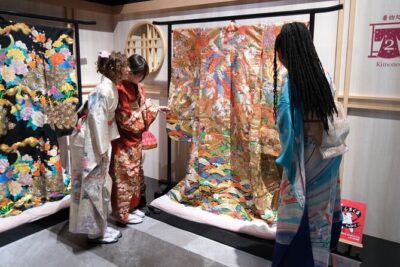
Premium Kimono Dressing, Tea Ceremony, Calligraphy, Samurai show
Read our review →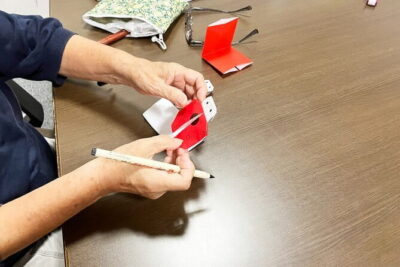
Japanese miniature kimono made with origami in Osaka
Read our review →
Osaka Kimono Experience – Quick Traditional Dress & Photos
Read our review →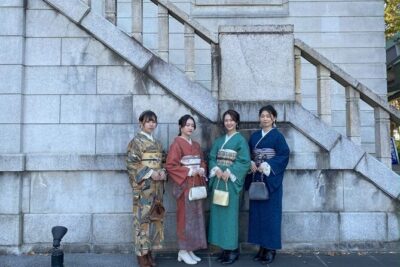
This tour also fits