
Reviewed · DAY TRIPS TO NARA FROM OSAKA
Shore Excursion: Full Day Private Nara Tour from Osaka /Kobe port
Nara feels like a storybook when someone else handles the clock. This private full-day tour is built for cruise days, with pickup from Osaka or Kobe port, a driver, and a schedule that hits the big names like Kofuku-ji, Todaiji, and Kasuga Taisha.
I especially like the private group setup and the way the day can be adjusted to what you care about most. You also get the kind of guidance that turns temples and deer into real meaning, with guides like Kazz, Fumiaki, Hideki, Mike, Sohmiya, Yukie, Keiko, and Toshiaki getting high marks for being helpful and flexible.
One key consideration: the base tour price does not include the car fee, and that transport cost is paid in cash to the driver. If you do not plan for that, it can feel like a surprise near the ship pickup time.
In This Review
- Key highlights you will actually care about
- How This Private Nara Day Works for Cruise Timing
- Meeting at Osaka or Kobe Port, Then Riding in a Dedicated Van
- Kofuku-ji Temple: Fujiwara Connections and a Tower You Can Spot
- Nara Deer Park: Sacred Deer Up Close (and What to Do With Them)
- Todaiji Temple and the Great Buddha You Came to See
- Kasuga Taisha Shrine: Lantern Pathways at the Right Moment
- Custom Time, Family-Friendly Pace, and Why the Van Matters
- Price and Logistics: Where the Deal Actually Comes From
- What to Bring, and How to Enjoy the Deer Without Stress
- Guides Matter: Names You May Hear on the Day
- Should You Book This Private Nara Tour From Kobe or Osaka?
- FAQ
- What is the price for the Full Day Private Nara Tour from Osaka or Kobe port?
- How many people can join the private tour?
- How long is the tour?
- Where do we meet for the tour?
- What stops are included in the day?
- Are entrance fees included?
- Is Nara Deer Park admission included?
- Is transportation included in the price?
- How much is the cash car fee?
- Is the tour ticket mobile?
Key highlights you will actually care about
- Private group from Kobe or Osaka port, so you are not mixing with strangers
- A 10-hour vehicle plan that gives you time for temples plus Nara Deer Park
- Entrance fees are included, but transportation is not, so read your totals carefully
- Nara Deer Park has free admission, and the deer are part of the experience
- Kasuga Taisha lantern walk is timed well, without feeling like a rushed photo stop
- Guides are praised by name for making the day feel smooth and adjustable
How This Private Nara Day Works for Cruise Timing
This is the kind of Nara trip I like for first-timers on a cruise, because it respects the real enemy: your ship schedule. You meet at the port, get a dedicated driver, and you are back with enough margin for an on-time return.
The big win here is control. You are not trying to figure out trains, transfers, and walking routes while also watching the clock. Instead, the day is built around a car or van schedule, with set arrival windows for the highlights and room for a lunch break.
Also, it is private. That matters in Nara because you are walking temple grounds and moving between stops. If you have kids, a slower pace, or you just want to stop and look without negotiating with a tour group, the private format keeps the day calmer.
Deer that bow back, minutes from Osaka
- Ancient Capital Tour: Kyoto and Nara Highlights from Kyoto/Osaka★ 4.5 · 332 reviews
- Kyoto and Nara Day Trip from Osaka★ 4.0 · 175 reviews
- Discover Himeji, Kobe and Nara from Osaka★ 5.0 · 101 reviews
- Kyoto & Nara Private customized tour with English speaking Guide★ 4.5 · 99 reviews
- Kyoto and Nara UNESCO Highlights Full-day Tour From Osaka★ 4.5 · 50 reviews
Meeting at Osaka or Kobe Port, Then Riding in a Dedicated Van
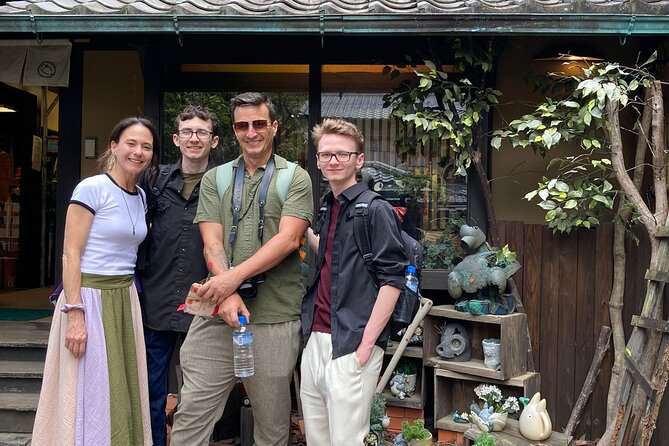
You are picked up at your docked port, with the meeting time set for 08:00 at either Osaka or Kobe. That choice depends on your ship’s docking time, so you want to confirm which port your pickup is tied to.
From there, you follow a day plan that fits a cruise window. The schedule is structured so you arrive at Kofuku-ji around 09:30, then move onward to Nara Deer Park, Todaiji, and Kasuga Taisha with a return drop-off back at the port at 18:00.
You are also given a mobile ticket. I like that because it reduces paper handling, and it is one less thing to manage during a cruise day where your hands are already full with luggage and walking.
One practical note: you should have a moderate fitness level. This does not mean you need to be athletic, but you are doing sightseeing walking at multiple temple sites and across Nara Park.
Kofuku-ji Temple: Fujiwara Connections and a Tower You Can Spot
Kofuku-ji is one of those temples that feels important the moment you arrive, even before you know the backstory. It was closely tied to the powerful Fujiwara clan, and it is famous for two things you can actually point out during your visit.
First is the Five-Story Pagoda, known for being one of the taller pagodas in Japan. Even if you are not a architecture nerd, it gives you a visual anchor for photos and orientation.
Second is the Eastern Golden Hall, which adds a different kind of drama than the pagoda. Seeing both on the same stop helps you understand why this temple became such a cultural reference point.
This stop runs for about an hour, and the entrance fee is included in the tour price. I find an hour is a good amount of time here because it is enough to enjoy the main features without eating into the later Big Buddha time.
If your group is the type that likes quiet corners, you might want to move a bit slower during this stop. The pacing leaves room for that, and Kofuku-ji is a nice warm-up before the bigger sensory overload at Nara Deer Park.
Nara Deer Park: Sacred Deer Up Close (and What to Do With Them)
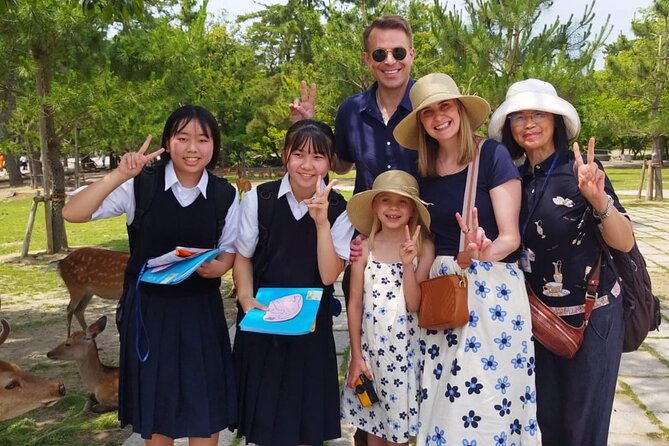
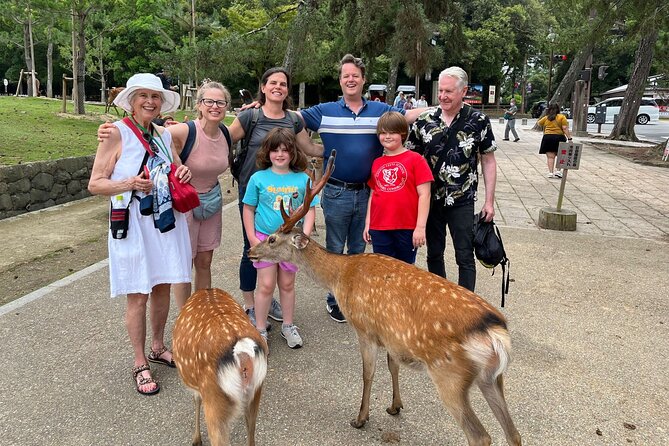
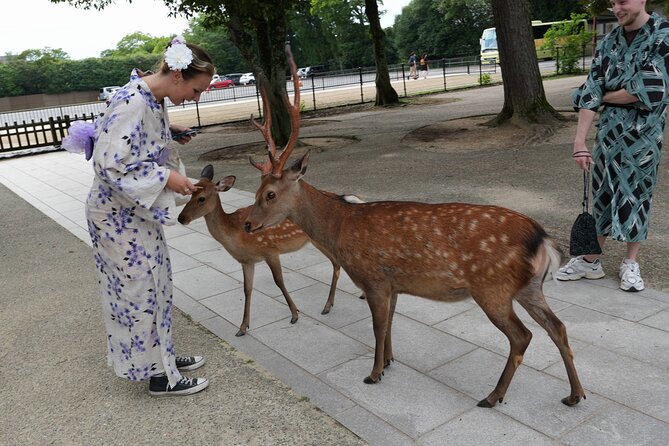
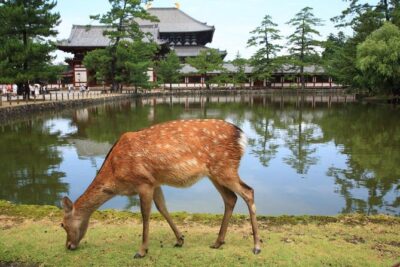
If you only came for one thing in Nara, I get it. Nara Deer Park is famous for hundreds of freely roaming sika deer, and they are part of the cultural story here, not just random wildlife.
Admission is free for Nara Park, which is a nice bonus because it keeps the day from feeling like a constant ticket line. The deer are described as sacred and protected as national treasures, and they often approach visitors especially if people have deer crackers.
That means your experience can shift depending on how you manage the deer. If you want that classic, close-up moment where deer come toward you, bring or buy deer crackers and follow your guide’s cues on respectful behavior.
If you do not want deer to crowd your space, you can still enjoy the park by stepping to the side and letting them pass. The park is more about the atmosphere than one specific photo spot, and you still get the sense of place even if you choose a calmer approach.
This stop is planned for about an hour around 11:00. That timing is useful because it keeps the deer encounter active while still leaving energy for Todaiji after lunch.
Todaiji Temple and the Great Buddha You Came to See
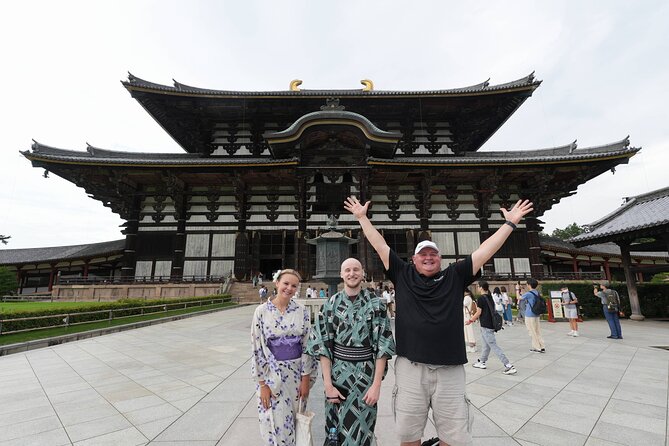
Then you hit the main event: Todaiji Temple. This is the place people talk about because it houses the Great Buddha (Daibutsu), one of the largest bronze Buddha statues in the world.
What I like about seeing Todaiji as the middle of a full-day plan is that you can build context first. Kofuku-ji sets a temple frame, Nara Deer Park gives you the local “everyday” vibe, then Todaiji gives you the monumental scale and the historical weight.
You are allocated about two hours here, and the entrance fees are included. Two hours is the sweet spot. It is enough time to get your bearings, see the main Buddha area, and also wander without feeling like every second is a sprint.
One thing your guide will do well is connecting what you see to why it matters. The feedback from guides like Mike and Hideki points to a common skill: they help you make sense of what you are looking at so it does not feel like sightseeing checklist work.
If your group includes older kids or you just like understanding symbols and rituals, this is a great stop to lean into. If you are short on energy, you can still enjoy the core sights and keep moving.
Other ways to spend a day in Osaka
- Kobe private tour from Osaka (Shore excursion available from Osaka or Kobe port)
★ 5.0 · 15 reviews - Nara private tour (Shore excursion available from Osaka or Kobe port)
★ 5.0 · 13 reviews - Kyoto Day Trip from Osaka Port – Private Shore Excursion
★ 5.0 · 13 reviews
Kasuga Taisha Shrine: Lantern Pathways at the Right Moment
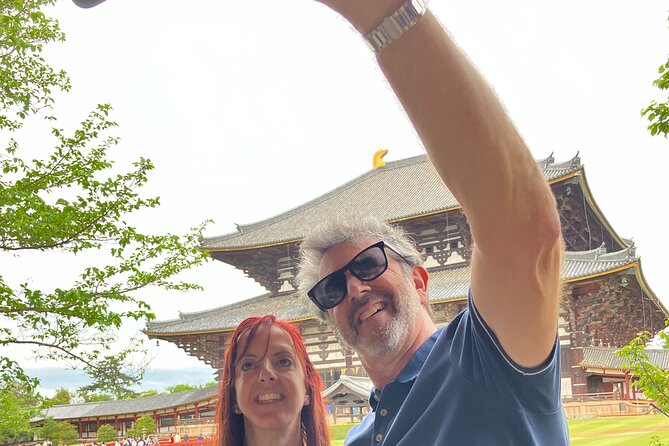
Kasuga Taisha is Nara’s celebrated Shinto shrine, and it is famous for lanterns. As you walk the pathways, you see hundreds of bronze and stone lanterns, and some are suspended throughout the grounds.
It is a visual stop, but it is more than photos. The lanterns create a sense of rhythm, and they guide your pace as you move deeper into the shrine complex. The pathways basically tell you where to slow down.
This stop is scheduled for about an hour around 15:00, and entrance fees are included. I like that timing because you are not arriving in the middle of the busiest lunch rush. You also get enough daylight for photos and enough energy to enjoy the lanterns before the ride back to the ship.
Kasuga Taisha’s founding is listed as 768 AD, which gives you a sense of how long this place has been part of local spiritual life. Your guide can tie that timeline to what you are seeing, and the names coming up like Yukie and Keiko suggest they are good at explaining in plain language.
Custom Time, Family-Friendly Pace, and Why the Van Matters
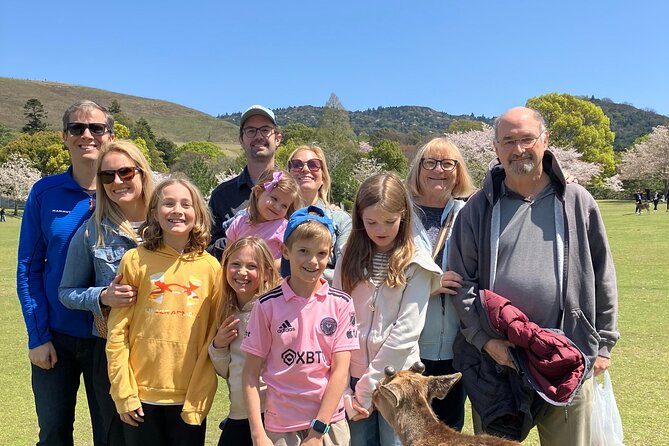
This day is built around a car or van for about 10 hours, with the schedule leaving space for a lunch break around 12:00. The exact pacing can be customizable, and the guide experience shows it is not a rigid script.
That customization showed up in the way people describe guides such as Sohmiya and Toshiaki. The common thread in those comments is simple: the guide listens, then adjusts the flow so you spend time where you care most.
If you are traveling with kids, a private van is a quiet superpower. You can regroup without fighting crowds or sorting out train exits. Even when the day is full, the ride resets you.
It is also worth noting that this is designed for families and culture seekers. That does not mean it is boring for adults. It just means the stops are accessible, and the order helps you avoid the worst possible crowd and fatigue timing.
Price and Logistics: Where the Deal Actually Comes From
The base price is $490 per group up to 12 people. That sounds straightforward, but you need to factor in the big logistics detail: transportation is not included in that amount.
Instead, there is a cash car fee paid to the driver. The amounts provided are:
- up to 5 travelers: ¥120,000
- up to 8 travelers: ¥140,000
What you should do with this info is simple math. The more people you have in your group, the smaller the per-person share of the car fee becomes.
- If you are 5 people, the car fee works out to ¥120,000 divided by 5, which is ¥24,000 per person.
- If you are 8 people, it works out to ¥140,000 divided by 8, which is about ¥17,500 per person.
If your group is larger than 8, the data you have does not state the car fee tier. So you should confirm the exact transport cost for your headcount before the day arrives.
Now for the value angle. This tour can feel like a great deal when:
- you have enough people to spread the car fee
- you care about the convenience of port pickup and drop-off
- you want a guide to translate temple meaning into something you can use on-site
It can feel less cost-friendly when you are only one or two people, because the fixed car fee in yen becomes heavy per person.
The best way to protect yourself is to plan for cash payment of the transport fee and read the inclusions and exclusions carefully. One lesson from real-world experience is that the people who prepared for this were happiest.
What to Bring, and How to Enjoy the Deer Without Stress
I like tours where you can show up ready. Here is what your day suggests you should prepare for, based on the types of stops:
- Comfortable walking shoes. You have multiple temple areas and a park day.
- Light layers. Temple grounds and open areas can change how warm you feel.
- A small plan for the deer moment. Decide in advance if you want deer crackers and how close you want to stand.
- Cash for the car fee. The transportation portion is listed as cash and paid to the driver.
Because the tour uses a mobile ticket, your phone helps. Still, I would keep your booking confirmation handy in case you need it.
Also, be mindful about timing. This is a day that starts at 08:00 and ends with a 18:00 drop-off. Once you are in motion, you want to keep transitions quick.
Guides Matter: Names You May Hear on the Day
One surprising thing about this tour is how often guides get named in the feedback. When someone is doing a cruise-port pickup, clarity and calm matter. That is why names like Kazz, Fumiaki, Hideki, Mike, Sohmiya, Yukie, Keiko, and Toshiaki show up repeatedly.
The traits that come through in those comments are consistent:
- strong explanation of what you are seeing
- willingness to adjust the day based on what you want most
- friendly handling of the schedule so the ship return does not feel stressful
If you have a specific priority, like focusing on Todaiji first or spending more time with the lanterns at Kasuga Taisha, this is exactly the kind of private setup where your guide can help shape the order and pace.
Should You Book This Private Nara Tour From Kobe or Osaka?
Yes, if you fit the profile. This works especially well for:
- first-time Nara visitors on a cruise who want the highlights without train planning
- families who want a smoother day with a dedicated van
- people who like history and spirituality but also want a guide to make it make sense
- groups up to around 8, where the cash car fee per person stays reasonable
I would think twice if:
- you are traveling solo or with just one companion and want the cheapest option
- you do not want to handle cash for the transport fee
- you expect a loose, casual day with no set timing, because this is built around cruise return windows
If you can handle one practical task, plan for the car fee cash, and you want the classic Nara hits with a guide and a private vehicle, this is a solid way to spend the day.
FAQ
What is the price for the Full Day Private Nara Tour from Osaka or Kobe port?
It is $490 per group, up to 12 people.
How many people can join the private tour?
The tour is private, and the group size is up to 12 people.
How long is the tour?
It runs about 6 to 10 hours, with the planned schedule from meeting time to port drop-off.
Where do we meet for the tour?
You meet at your cruise port in either Osaka or Kobe, based on your ship’s dock time, at 08:00.
What stops are included in the day?
The day includes Kofuku-ji Temple, Nara Deer Park, Todaiji Temple, and Kasuga Grand Shrine, plus a lunch break.
Are entrance fees included?
Yes, entrance fees are included for the listed stops.
Is Nara Deer Park admission included?
Yes. Nara Park admission is listed as free.
Is transportation included in the price?
No. Transportation is not included. A cash car fee is paid to the driver.
How much is the cash car fee?
The provided cash transport fee is ¥120,000 for up to 5 travelers, and ¥140,000 for up to 8 travelers.
Is the tour ticket mobile?
Yes, the tour includes a mobile ticket. Confirmation is received at the time of booking.
Just added around Osaka
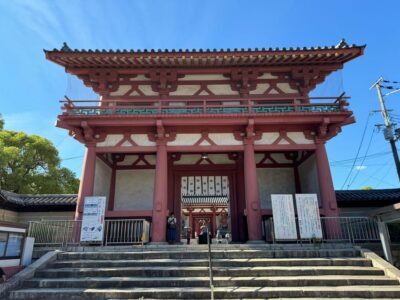

Day Trips to Nara from Osaka, compared.
Ancient Capital Tour: Kyoto and Nara Highlights from Kyoto/Osaka
Read our review →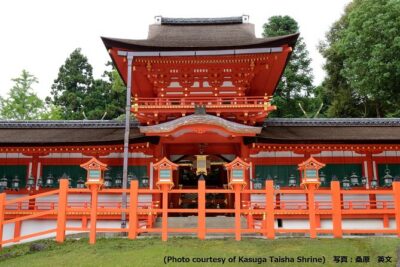
Kyoto & Nara Private customized tour with English speaking Guide
Read our review →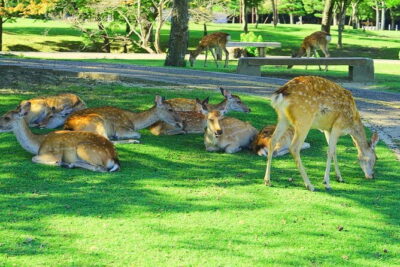
Kyoto and Nara UNESCO Highlights Full-day Tour From Osaka
Read our review →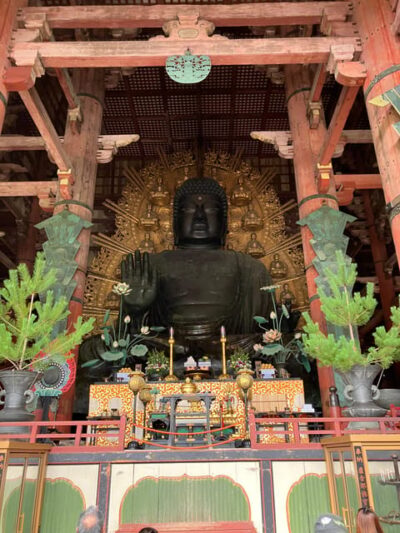
Kyoto & Nara & Uji: Full Day Sightseeing Tour from Osaka or Kyoto
Read our review →This tour also fits