
Reviewed · DAY TRIPS TO NARA FROM OSAKA
NARA Walking Tour [Customize Your Itinerary]
Nara feels close when you have a guide. This private VIP day trip lets you customize your itinerary in advance, then adjust on the fly with your guide during the day, all in one smooth plan. I like that your team helps with recommendations and reservations, so you spend less time guessing and more time looking at real Nara.
I also like the relaxed private pace for a group up to five, not a packed bus shuffle. The main thing to watch is that many of the big sights have separate admission tickets, so you should budget for those, and if you run long there can be over-time charges.
The guide I worked with (Kai) came across as friendly and genuinely tuned into what we wanted from the day, which made the whole plan feel flexible instead of scripted. That’s the vibe here: classic temples and museums, but guided around you.
In This Review
- Key takeaways before you go
- How the Customize Your Itinerary day trip really works
- Meeting the guide, pickup, and why mobile ticket helps
- Todai-ji Big Buddha Hall: the must-see, and how to enjoy it
- Nara Park deer time: best way to avoid stress
- Heijo Palace Museum: history context without pretending ruins are fun
- Horyu-ji: the oldest surviving wooden structures moment
- Kasuga Taisha, Kofuku-ji, and the Fujiwara influence
- Nara National Museum: Buddhist art that rewards slower attention
- Nigatsu-do views and the Omizutori connection
- Hasedera in the mountains: when you want scenery plus temples
- Food and breaks: how to keep the day feeling relaxed
- Price and value for a private group up to five
- Who this tour fits best (and who might prefer something else)
- Should you book this Nara Customize Your Itinerary walking tour?
- FAQ
- What is included in the Nara tour price?
- How long is the tour?
- Is this a private tour or shared group experience?
- Can I customize my itinerary before the day starts?
- Can I change the itinerary during the day?
- Are entrance tickets included for the temples and museums?
- Is there free cancellation?
Key takeaways before you go
![NARA Walking Tour [Customize Your Itinerary] - Key takeaways before you go](https://v.exploringosaka.com/wp-content/uploads/nara-walking-tour-customize-your-itinerary-1.jpg)
- Customize-first planning: you share your wishes, the team proposes a draft, then you finalize the itinerary.
- Private VIP guide for about 8 hours: perfect if you want fewer lines and more time at the places you care about.
- You can change the plan during the day: just ask your guide or reach the team for help.
- Great mix of icons and perspective: Todaiji, Kasuga Taisha, Horyu-ji, plus museum time in Nara Park.
- Some stops are free, many are not: deer in Nara Park and Nigatsu-do are free, but most others require tickets.
How the Customize Your Itinerary day trip really works
![NARA Walking Tour [Customize Your Itinerary] - How the Customize Your Itinerary day trip really works](https://v.exploringosaka.com/wp-content/uploads/nara-walking-tour-customize-your-itinerary-2.jpg)
This experience is built around a simple idea: you decide what matters most in Nara. First, you tell the team your travel desires and any special requests. Then they propose a list of famous destinations that fit those interests. After that, you and the team exchange a draft itinerary, then revise it until it feels right.
What makes this practical is the support between steps. You are not stuck with a fixed list and a take-it-or-leave-it schedule. The team helps manage the tour details, share recommendations, and can assist with reservations and checking information. That matters in Nara because timing and season crowds can change how enjoyable a stop feels.
Once the day starts, you still have control. The plan is designed so you can tweak it while traveling with your guide. If your group wants more time at a temple, fewer photo stops, or you want to shift order because of light or energy levels, that flexibility can save your day.
One more detail that affects how your day will feel: it is about 8 hours. That is long enough to see a lot, but it still moves. If your custom plan adds extra sites beyond the planned stops, you should expect over-time charges.
Deer that bow back, minutes from Osaka
- Ancient Capital Tour: Kyoto and Nara Highlights from Kyoto/Osaka★ 4.5 · 332 reviews
- Kyoto and Nara Day Trip from Osaka★ 4.0 · 175 reviews
- Discover Himeji, Kobe and Nara from Osaka★ 5.0 · 101 reviews
- Kyoto & Nara Private customized tour with English speaking Guide★ 4.5 · 99 reviews
- Kyoto and Nara UNESCO Highlights Full-day Tour From Osaka★ 4.5 · 50 reviews
Meeting the guide, pickup, and why mobile ticket helps
You are doing a private tour, and the listing includes a mobile ticket and offers pickup. Private transportation and public transportation are not listed as included, so your start logistics may depend on how pickup is handled for your group.
The smart way to treat this: plan to coordinate your meeting point early. Ask what pickup means for you, especially if you are staying outside the Osaka core or if your group uses a specific route to get to Nara. Having the guide and team involved is the point here, so use that support before you arrive.
The mobile ticket part is a small thing, but it helps. Less time at ticket counters and more time getting oriented once you are in Nara.
Also note the scale: it is private, only your group participates. That is a big deal in temple areas. You are not constantly adjusting for other people’s pace, or waiting while a larger group shuffles forward.
Todai-ji Big Buddha Hall: the must-see, and how to enjoy it
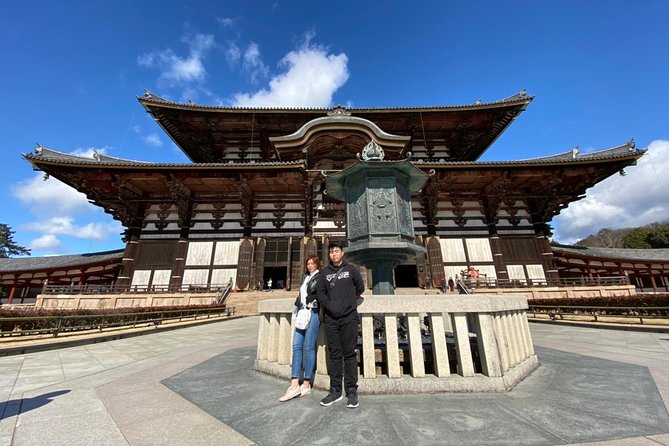
Todai-ji is the reason most people come to Nara in the first place. The iconic stop is the Daibutsuden, the Big Buddha Hall, famous for housing a massive bronze Buddha. It is also tied to a major moment in Japan’s history, with construction dating back to 752 when it became the head temple for provincial Buddhist temples.
Here is how I suggest you enjoy it beyond just spotting the famous statue. First, take your time with the building itself. The Daibutsuden is the world’s largest wooden building in the sense of historic scale, and the current reconstruction still preserves the grand sense of space. Even if you only get a quick glance at the statue, you will feel how monumental the hall is.
Second, think about the temple’s role, not only the statue. Todai-ji became so influential that the capital moved away in 784 to reduce the temple’s political power. That context changes the visit from sightseeing into understanding why this place mattered.
Budget note: admission for Todai-ji is not included, so add ticket cost to your day. Time note: you will want about an hour for this stop if you like photos and time to read what you can.
Nara Park deer time: best way to avoid stress
![NARA Walking Tour [Customize Your Itinerary] - Nara Park deer time: best way to avoid stress](https://v.exploringosaka.com/wp-content/uploads/nara-walking-tour-customize-your-itinerary-4.jpg)
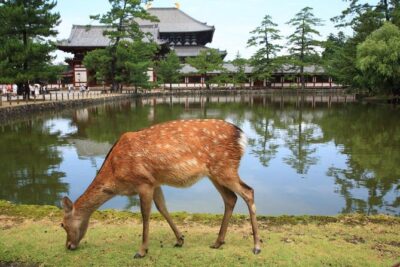
Nara Park is central Nara and often the easiest way to see several major sights close together. Established in 1880, it is also home to hundreds of freely roaming deer. These deer are famously tame, and yes, deer crackers are sold around the park.
But do not treat this as a free-for-all. Deer can get aggressive if they think you will feed them, so keep the crackers away unless your guide tells you the safe approach. If you want good photos, focus on distance and calm movement. You will get better shots without turning the park into a stressful standoff.
This stop is also useful as a break. It is light compared to temple interiors, and it gives you breathing room between the heavier historical sites.
Admission is free for the park itself, and the schedule sets aside about an hour. If you have your itinerary optimized, Nara Park is where you can also naturally adjust your pace before heading into museums or shrine areas.
Heijo Palace Museum: history context without pretending ruins are fun
![NARA Walking Tour [Customize Your Itinerary] - Heijo Palace Museum: history context without pretending ruins are fun](https://v.exploringosaka.com/wp-content/uploads/nara-walking-tour-customize-your-itinerary-5.jpg)
The Heijo Palace Museum area connects you to Nara’s time as Japan’s capital, known as Heijo-kyo. The palace spanned about one kilometer by one kilometer, serving as the center of residence and government.
What makes this stop worth your time is what it explains. You cannot see most of the palace buildings anymore, so a museum-style stop helps you understand what once stood there. When the capital moved in 784, what remained was dramatically reduced, with only a hall moved in the 8th century now connected to Toshodaiji Temple.
In other words, this is not just a “look at stones” moment. It is a chance to understand the administrative and cultural layout that shaped how Nara developed around the temples.
Plan for about an hour. Admission is not included, so budget accordingly.
Other ways to spend a day in Osaka
- Osaka Local Foodie Walking Tour in Dotonbori and Shinsekai
★ 5.0 · 985 reviews - Osaka: Deep Backstreets Walking Tour with Dinner Option
★ 4.9 · 902 reviews - Ultimate Osaka Walking Tour: Castle, Dotonbori & Hidden Gems
★ 5.0 · 862 reviews
Horyu-ji: the oldest surviving wooden structures moment
![NARA Walking Tour [Customize Your Itinerary] - Horyu-ji: the oldest surviving wooden structures moment](https://v.exploringosaka.com/wp-content/uploads/nara-walking-tour-customize-your-itinerary-6.jpg)
Horyu-ji is one of the oldest temple complexes in Japan, founded in 607 and associated with Prince Shotoku, who is credited with early promotion of Buddhism in Japan.
This is a different kind of temple day. Todai-ji feels huge and monumental, while Horyu-ji feels spacious and historical in a quieter way. The temple grounds are separated into two main precincts, the Western Precinct and the Eastern Precinct. That layout gives you a natural rhythm, so you can pick a route that matches your energy level.
The headline claim is also a strong one: it contains the world’s oldest surviving wooden structures and was designated a world heritage site in 1993. That should make you slow down a bit. Look at the structures, not just the idea of them.
Admission is not included here either, and you should plan about an hour.
Kasuga Taisha, Kofuku-ji, and the Fujiwara influence
![NARA Walking Tour [Customize Your Itinerary] - Kasuga Taisha, Kofuku-ji, and the Fujiwara influence](https://v.exploringosaka.com/wp-content/uploads/nara-walking-tour-customize-your-itinerary-7.jpg)
Kasuga Taisha is one of Nara’s most celebrated shrines and centers on a deity tied to protection of the city. It was established around the same time as the capital, and it is also connected to the Fujiwara clan, which was extremely powerful during much of the Nara and Heian periods.
A detail that helps you enjoy the shrine area: it has free access beyond the offering hall, but the inner area is paid. If you want the fuller shrine view, you will need to plan for tickets. If you are feeling time tight, you can still get a lot of atmosphere without paying for the paid inner area.
Then there is Kofuku-ji, the former family temple of the Fujiwara. During its height, the temple complex included over 150 buildings. Even if you cannot see all of that scale today, the context explains why this area of Nara is such a key link between religion and politics.
In the itinerary, Kasuga Taisha gets about 30 minutes and Kofuku-ji also gets about 30 minutes. For many people, that is just enough if you are moving with purpose. For shrine and temple photography, I suggest you keep one or two photo targets and do not try to capture everything.
Admissions for both are not included.
Nara National Museum: Buddhist art that rewards slower attention
![NARA Walking Tour [Customize Your Itinerary] - Nara National Museum: Buddhist art that rewards slower attention](https://v.exploringosaka.com/wp-content/uploads/nara-walking-tour-customize-your-itinerary-8.jpg)
The Nara National Museum sits in Nara Park, established in 1889, and it keeps its original building with a connected new wing linked by an underground passage.
This is the stop that turns the day from “temples in motion” into “meaning you can see.” The museum primarily displays Japanese Buddhist art, which is a natural match for the temple themes you saw earlier.
The time here is short in the scheduled plan, about 30 minutes. If you love art, you might want to treat this as a “hit the highlights” stop. Use your guide to point you toward what aligns with what you liked most at Todai-ji or Horyu-ji. If you are less art-focused, even a quick visit helps you make the temple visuals connect to real objects and styles.
Admission is not included here.
Nigatsu-do views and the Omizutori connection
Nigatsu-do is a short walk from the Daibutsuden hall area, on the hill east of it. The value here is the view. The balcony is designed for looking out across the city, so it is a nice pause point after heavier temple interiors.
This stop is also special because of the Omizutori ceremonies held in March every year. The itinerary doesn’t turn this into a full seasonal festival tour, but it gives you context for why this hall is worth attention even outside ceremony timing.
The best part: this stop is free admission. It is scheduled for about 30 minutes, which makes it ideal as a low-cost, low-stress viewpoint stop.
Hasedera in the mountains: when you want scenery plus temples
Hasedera Temple sits in the mountains east of central Sakurai, in a valley setting with more than 30 buildings spread up the hillside. You can spend a long time exploring, but the itinerary sets aside about an hour, so you will want your guide to help you choose what to prioritize.
The biggest reason Hasedera belongs on your day plan is the viewpoint at the main hall balcony. This spot is especially rewarding during cherry blossom (sakura) and autumn color (koyo) seasons, when the surroundings can look dramatically different.
If you are visiting outside those seasons, the scenery is still a payoff because you get a change of pace. You go from city temples and museum areas into a hillside temple layout where the terrain makes the walk feel like a journey rather than just moving between points.
Admission is not included.
Food and breaks: how to keep the day feeling relaxed
Because this is private and customizable, you get a better chance to fit breaks into what you actually need. The tour includes a guide and the team supports planning and recommendations, but breakfast, lunch, and dinner are not included.
So I recommend you treat meal planning as part of your itinerary customization. If you tell the team your preferences and any timing constraints, they can help you find suitable breaks that do not chew up your temple time.
Also, remember this is a long day around 8 hours. Build in a buffer mood. Even if the route is packed on paper, your private guide can pace the order of stops and slow down where you care most.
If you are traveling with older family members or you know your group tends to run out of steam, ask for more time at fewer sites. The power of this tour is not hitting everything, it is choosing what makes Nara click for your group.
Price and value for a private group up to five
The price is $325.64 per group, up to five people, for about 8 hours. That sounds like a lot if you price it like a solo ticket. It feels more reasonable when you divide it across a small group, especially because you are paying for a private guide and itinerary planning help rather than a seat on a crowded tour.
What you are really buying is time and decision support:
- A guide to explain and guide your stops
- A customized plan that matches your priorities
- Team help for recommendations and potential reservations
- The option to adjust your itinerary even during the day
Because admission tickets are not included for most stops, compare total cost with your own comfort level. If you are the type who would otherwise research and plan everything yourself, you may question the value. If you prefer a guided route that still lets you control the pace and priorities, this is where the price tends to feel fair.
Finally, it is booked on average 21 days in advance. That suggests demand, especially around popular travel dates. If your dates are fixed, plan ahead.
Who this tour fits best (and who might prefer something else)
This works best for groups up to five who want:
- A private guide in Nara
- Custom stop order based on your interests
- Flexibility to change plans during the day
- Less stress with recommendations and possible reservations
It is also a great match if you love the idea of seeing a range, from big landmark temples to museum time and scenic hillside viewpoints.
Where it may not be ideal: if you hate walking a lot or you want a totally free day with no planned structure. The schedule is set up for multiple major sites, and many admissions require separate tickets. You can still customize, but this is not designed as a casual wander where everything is spontaneous.
Should you book this Nara Customize Your Itinerary walking tour?
Yes, book it if you want a guided Nara day that still respects your choices. The biggest reason is the combination of private guide time plus real customization, backed by a team that helps with recommendations and planning. That’s how you turn Nara from a list of landmarks into a day you actually enjoy.
Skip it or choose a simpler approach if you already have your own Nara plan nailed down and you prefer to do all admissions and routing yourself. Also consider whether your group is okay with separate entry fees at many major stops, since the itinerary includes several places where tickets are not included.
If you decide to book, send the team your priorities early. Tell them what you want most from Todai-ji, what you care about at the shrines, and whether you want stronger museum time versus more temple time. That is how you get the relaxed day you are picturing, not a rushed checklist.
FAQ
What is included in the Nara tour price?
The tour includes a tour guide. Admission tickets, and any meals like breakfast, lunch, and dinner, are not included.
How long is the tour?
The tour duration is about 8 hours.
Is this a private tour or shared group experience?
This is a private tour/activity, and only your group participates.
Can I customize my itinerary before the day starts?
Yes. You share your travel desires and special requests, the team proposes a draft itinerary, and then you revise or finalize it with careful communication.
Can I change the itinerary during the day?
Yes. You can change the itinerary even on the day while traveling with the tour guide.
Are entrance tickets included for the temples and museums?
No for most stops. Some areas are free, like Nara Park and Nigatsu-do, but tickets are not included for several major temples and the museums.
Is there free cancellation?
Yes. Free cancellation is available if you cancel at least 24 hours in advance for a full refund. If you cancel less than 24 hours before the start time, the amount paid is not refunded.
Just added around Osaka

Day Trips to Nara from Osaka, compared.
Ancient Capital Tour: Kyoto and Nara Highlights from Kyoto/Osaka
Read our review →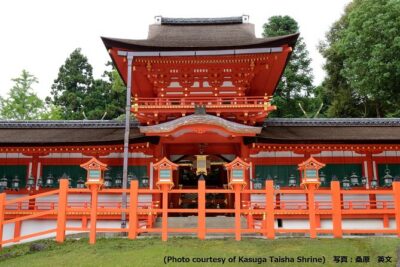
Kyoto & Nara Private customized tour with English speaking Guide
Read our review →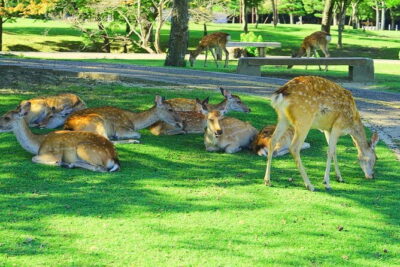
Kyoto and Nara UNESCO Highlights Full-day Tour From Osaka
Read our review →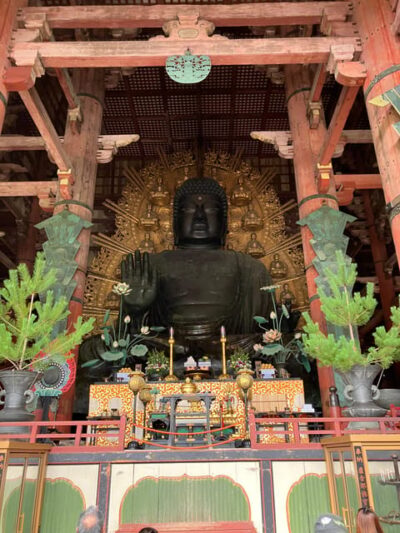
Kyoto & Nara & Uji: Full Day Sightseeing Tour from Osaka or Kyoto
Read our review →This tour also fits