
Reviewed · NINJA & SAMURAI EXPERIENCES
Osaka: Learn Bushido – Trial Slashing with Samurai Sword
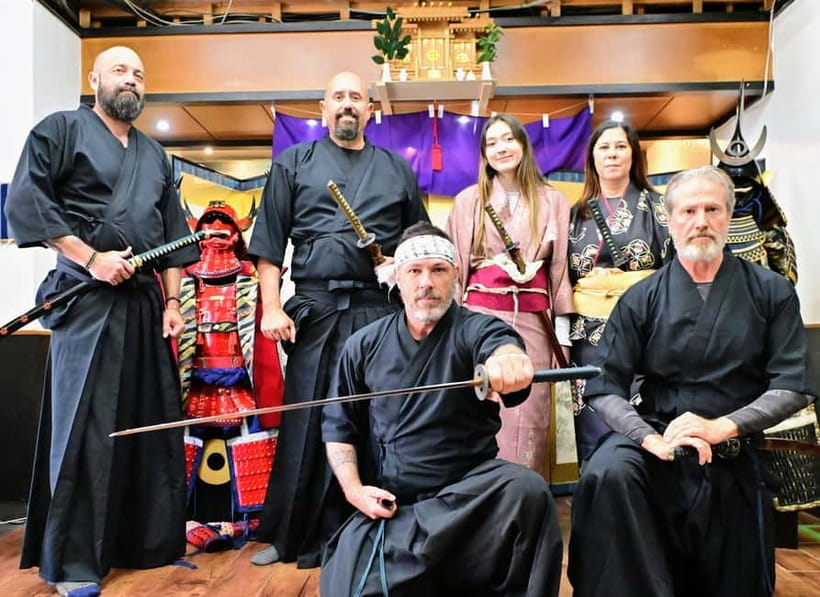
Katana training in Osaka, not a staged show. The session at Samurai Honor pairs real trial slashing practice with a short Bushido-style lesson, so you learn why samurai sword work was about discipline, not just cutting. I also like how they keep the group small, so you get coached on stance and swing mechanics.
One practical consideration: you are responsible for getting yourself there, and the experience is not built for kids under 10 or anyone who struggles with physical exertion.
You’ll start by changing into a samurai outfit (dogi and hakama), then you bow and work through simple sword and etiquette basics before moving into controlled practice. I like that they teach the “how” step by step, including pulling the sword (battou), the symbolic blade-cleaning after cutting (chiburui), and returning it to the scabbard (nottou). The only real drawback is that the setup and training can feel intense if you just want a quick photo moment.
If you’re pairing this with an Osaka Castle day, it’s a neat contrast: sightseeing outside, discipline inside.
In This Review
- Key highlights you should care about
- Why “Bushido sword training” feels more real near Osaka Castle
- Getting to Samurai Honor, and what to look for when you arrive
- The first 30 minutes: costume change, bowing, and the dojo mindset
- Building control: sword basics, stances, and iai practice
- Trial slashing with a real katana: what you cut and what to watch for
- Photos, language support, and why the small group changes everything
- Price and value: is $92 worth it for an hour?
- Who should book, and who should skip it
- Should you book Samurai Honor’s samurai sword trial?
- FAQ
- How long is the Osaka samurai sword trial experience?
- Where do I meet for the experience?
- What should I bring to the session?
- Is pick up or drop off included?
- What languages are offered during the class?
- What do you cut during the trial slashing?
- How big is the group?
- Are photos included?
- Who is this activity not suitable for?
Key highlights you should care about
- Small group of up to 4, so your instructor can correct your stance and swing
- Samurai outfit change (dogi and hakama) that feels like part of the training, not a costume gimmick
- Iai-style basics like battou, chiburui, and nottou, so you learn controlled sword handling
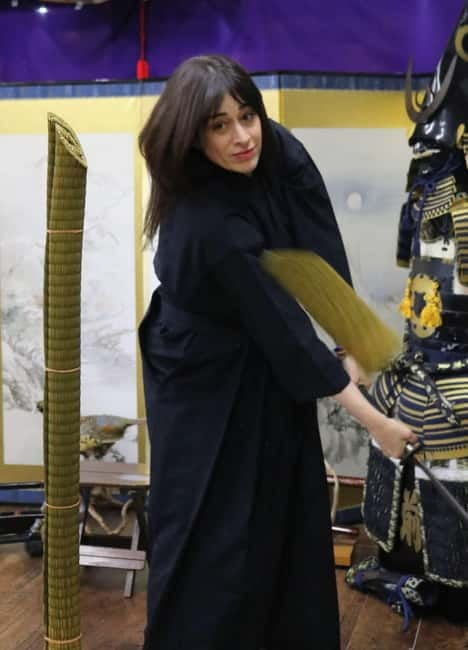
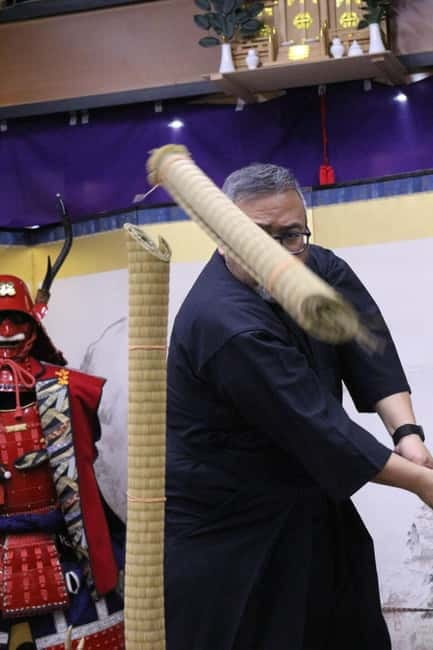
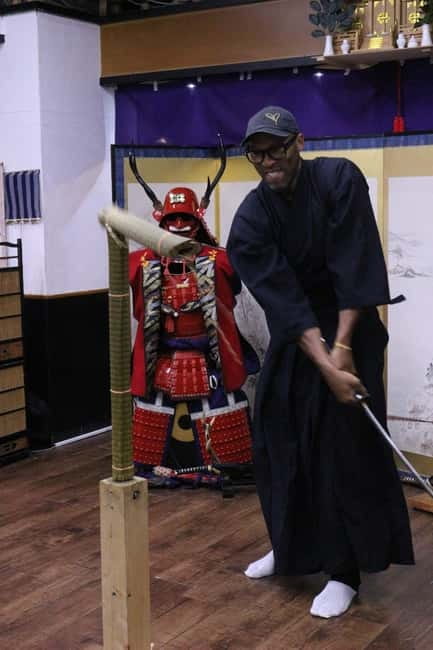
- Trial cutting with a real Japanese sword, cutting a rolled straw
- Swordsman-led coaching after a short explanation of samurai manners and sword etiquette
- Photo shooting included, with files sent to your email afterward
Why “Bushido sword training” feels more real near Osaka Castle
Osaka Castle is the obvious stop if you want big views and classic Japan photo ops. This experience is the counterpoint. Instead of watching sword content from the outside, you move through the same rhythm a dojo teaches: prepare your body, set your attitude, bow, learn form, then test cutting with guidance.
What makes it work for most visitors is the balance. You get cultural framing, but the session still has a practical focus. They explain the relationship between a samurai and the Japanese sword, including the idea that the sword was treated with deep responsibility and even moral weight. Then they turn that into physical tasks: stances, controlled sword swings, and a “do it correctly” mindset.
And yes, it’s also just fun in a satisfying, grounded way. The “trial slashing” part is not just a photo line. You practice positions first, then you cut a target using a real Japanese sword, with instruction designed to help you do it safely and cleanly.
Value note: at $92 per person for a 1-hour experience, it’s not the cheapest thing you’ll do in Osaka. But the included outfit, instructor coaching, and included photo handoff (sent to your email) make it feel more like an activity than an entry-ticket attraction.
Swing a sword like it's 1600
- Samurai Training Experience KENDO in Osaka★ 5.0 · 515 reviews
- OSAKA NIGHT FUSION Japanese Taiko Kabuki Samurai Dance Show★ 4.8 · 155 reviews
- Osaka: Samurai Training Experience KENDO in Osaka★ 5.0 · 111 reviews
- Osaka: A Modern Samurai, Kabuki, Taiko, & Dance Show★ 4.5 · 66 reviews
- Osaka 2-Hour Genuine Kendo / Samurai Experience In Japan★ 5.0 · 65 reviews
Getting to Samurai Honor, and what to look for when you arrive
This experience happens at Bushi no Homare (Samurai Honor), in the Excellence Takayama building (Excellence Takayama 1F, 2-3-19 Shiginonishi, Joto-ku, Osaka-shi, Osaka 536-0014). The address on Apple Maps is incorrect, so use Google Maps based on the link provided.
Plan to arrive early. The meeting instruction is clear: get there 30 minutes before your reserved time. That buffer matters because you’ll need time to change clothes and get set up with the instructor.
For your actual meet-up point, look for a wooden sign that reads Honor of the Samurai. It’s described as a landmark rack in front of the store area, with Samurai Honor activity pamphlets, plus kimonos and hakama hanging out to dry. That makes it easier to spot once you’re on the right street.
Also, if you’re doing this on an Osaka Castle day, build in some time for a calm walk and an extra check. A small delay can throw off your changing and briefing, and you want to go into sword practice focused, not rushing.
The first 30 minutes: costume change, bowing, and the dojo mindset
When your session starts, the training begins with preparation and ritual. First comes the outfit: you change into a samurai costume, dogi and hakama. This matters more than you might expect. It signals that you’re stepping into a training space with rules, not just trying on clothing for pictures.
Then you bow. The dojo has a shrine enshrined, and the class begins and ends with a bow before training. You’re not expected to already know any of this. What you do get is structure. The bowing ritual sets the tone: calm focus, respect for the space, and a “listen first” attitude before you pick up a sword.
The instructor then explains sword etiquette and the historical relationship between samurai and their blades. The session includes ideas like how samurai considered the sword the soul of the samurai, and that it wasn’t treated like a sellable tool. Even if you’re not studying history, it helps you understand why the dojo emphasizes manners and control.
One detail that can surprise people who only think about sword cutting: you also practice walking with the sword belt. That’s where the training shifts from “cool moves” to body mechanics. It’s not flashy, but it helps your stance and posture feel more natural later.
Building control: sword basics, stances, and iai practice
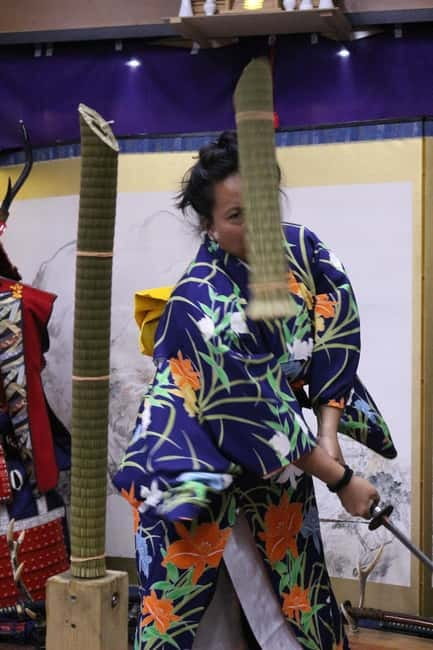
The core of the lesson is learning basics that keep you safe and make cutting possible. You don’t jump straight to chaos with a blade.
You start with an iai practice sword, working through the sequence and the mechanics of drawing and returning the weapon.
Here’s what you’ll be taught in the practice flow:
- Battou: pulling the sword out of the scabbard (to cut)
- Chiburui: the symbolic motion of removing blood from the blade after cutting
- Nottou: returning the sword to its sheath after the movement
Even if the terms feel new, the value is in the training logic. The instructor wants you to move as a unit, where timing, posture, and the swing path all match. They also emphasize that your swing should use the weight and correct motion, not brute arm strength.
They also teach basic kata and stances so you can find the right body position before the final cut:
- middle stance
- upper and lower stances
- eight-phase stance
- side stance
In a tight class, this kind of structure matters because it turns sword handling into a repeatable routine. You don’t need to be athletic. You need to follow directions and repeat what you’re shown until it clicks.
If you’re the kind of traveler who likes seeing “how something works,” this section is the payoff. You’ll understand that a good cut is about setup, not just force.
Trial slashing with a real katana: what you cut and what to watch for
Now the moment everyone books for: you try trial cutting with a real Japanese sword. The target is described as a rolled straw. You’ll do it after the instructor confirms your basic movements are satisfactory.
The session is also described as featuring a world-class cutting demonstration by a master swordsman. Even if you don’t understand every technical term, you’ll recognize the difference between a careful practice cut and a demonstration cut. It sets expectations for what “clean cutting” looks like.
From the experience structure, you can also expect a safety-first approach. You’re coached on stance and the sequence. This is why the earlier steps are not filler. If your posture and timing are off, your cut will feel wrong and the result will be inconsistent.
A small heads-up based on how these sessions can run: some people mention cutting a target that looks like bamboo but is actually tatami mat. Your booking information specifically says rolled straw for trial cutting, so treat any tatami-style target as a possible variation rather than a guarantee. The safe takeaway is this: you are doing supervised cutting with a real blade, following the instructor’s directions.
Emotion check: it’s exciting, but it also asks for respect. The goal is controlled technique, not showing off.
Not ready to leave Osaka yet? A few more ways to fill the day.
- Osaka Go Karting Tour with Funny Costume
★ 5.0 · 2,658 reviews - Osaka Castle: Museum and Tower Entry Ticket
★ 4.5 · 2,380 reviews - Osaka: Shinsekai Food Tour with 13-15 Dishes at 5 Eateries
★ 4.8 · 2,204 reviews
Photos, language support, and why the small group changes everything
This is a small-group session limited to 4 participants. That size is a big deal. In sword training, you can’t just blend into the back row. You’ll get personal coaching, and you’ll have time to ask questions if something feels unclear.
Language support is another factor. The default interpreter language is English. Instructors are listed as English and Japanese. If you want another language, you need to ask staff about availability for Italian, Spanish, French, Chinese, Thai, Indonesian (and others listed). If they cannot accommodate, you may still get English support, so plan for that possibility.
One of the best “value for money” parts is the included photo shooting. The staff will take photos during your moments, and they send the data to your designated email address. You won’t have to juggle your phone while trying to learn sword angles. It also means you can focus on form while someone else captures the experience.
If you like remembering trips with more than blur selfies, this is one of those activities that delivers. You get both the process photos and the costume-and-cut moments, which is hard to replicate by yourself.
Price and value: is $92 worth it for an hour?
At $92 per person for a 1-hour activity, you’re paying for three things: instruction, real equipment practice, and a guided cultural context.
You’re not just renting a sword for photos. You’re getting coached on stances and movements, and you’re using a real Japanese sword in a structured trial. On top of that, you’re included in the costume change, and photo shooting and tax are included. Tips are included too.
The biggest “hidden” variable is time. The experience is listed as 1 hour, but people sometimes describe the full flow taking longer due to changing, instruction, and the sequence of practice. If you’re timing your day tightly after Osaka Castle, I’d give yourself extra buffer so you don’t feel rushed when you step out of the dojo.
Compared with many Osaka experience add-ons, this one is more tactile and skill-based. That’s the reason it feels worth it to many visitors, even if you’re not a sword history buff.
Who should book, and who should skip it
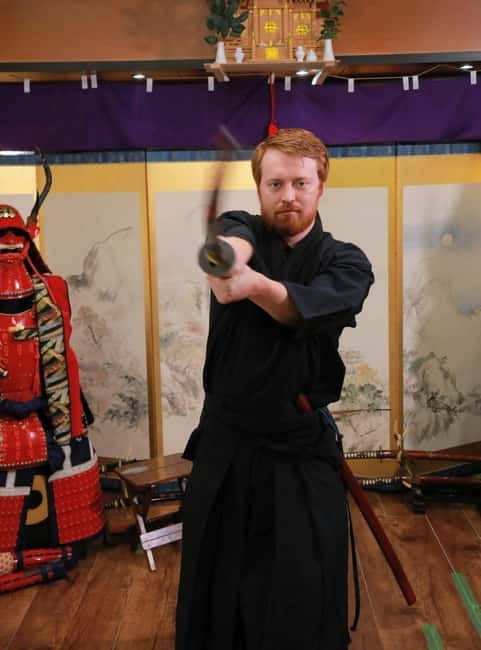
This is a strong fit if you want hands-on learning in Osaka that goes beyond watching a performance. It’s also a good option if you’re traveling with family and you want an activity that feels special and photo-worthy.
It is not suitable for children under 10, and it also isn’t recommended for people with altitude sickness or people over 95. If you have any condition that limits your ability to stand, move into stances, or follow physical instructions, you should think carefully before booking.
Practical consideration: you should bring a T-shirt. You’re changing into the samurai outfit, so pack accordingly.
Also note the rules: no food or drinks, no alcohol or drugs, and party groups like bachelor or bachelorette parties are not allowed. That keeps the training space focused and respectful, which is good for you and for everyone else.
Should you book Samurai Honor’s samurai sword trial?
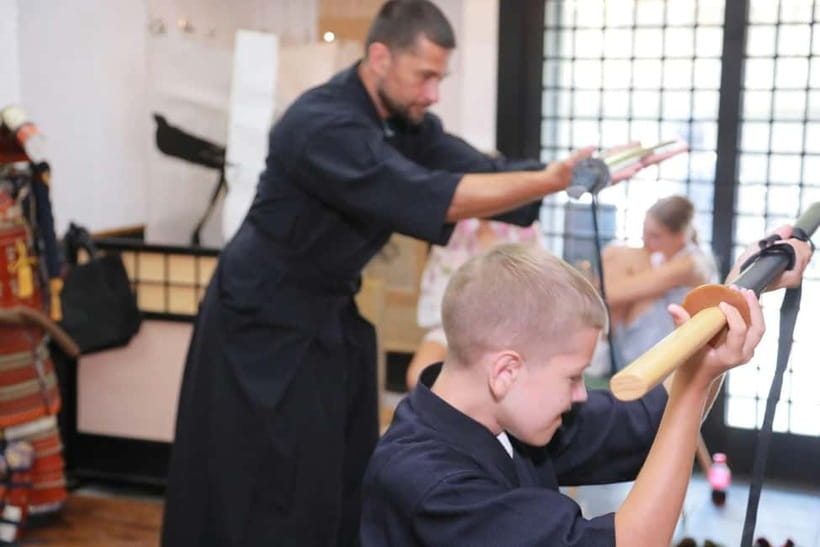
If you want a real Osaka activity with instruction, you should book it. This is one of those rare experiences where the “cool part” is earned through basics first. The small group format, the included samurai outfit, and the trial cutting with a real Japanese sword make it feel more complete than a quick photo stop.
Book it if:
- you like structured classes and clear coaching
- you want hands-on technique, not just sightseeing photos
- you want an activity near Osaka Castle that still feels distinct from temples and streets
Skip or reconsider if:
- you need pickup or easy logistics, because transportation is not included
- you’re looking for a very low-effort “stand and watch” experience
- you’re traveling outside the recommended age or physical limits
If you match the vibe, this turns a normal Osaka day into something you’ll remember for the right reasons.
FAQ
How long is the Osaka samurai sword trial experience?
The experience duration is listed as 1 hour.
Where do I meet for the experience?
Meet at the wooden sign that reads Honor of the Samurai, described as a landmark rack in front of the store area.
What should I bring to the session?
Bring a T-shirt.
Is pick up or drop off included?
No. Pick up and drop off at a train station or hotel is not included. Transportation is also not included.
What languages are offered during the class?
The default language for interpreters is English. The instructor languages are listed as English and Japanese, and other languages may be available if you inquire about staff schedules when you book.
What do you cut during the trial slashing?
You try cutting a rolled straw.
How big is the group?
The group is small, limited to 4 participants.
Are photos included?
Yes. Photo shooting is included, and the files are sent to your designated email address.
Who is this activity not suitable for?
It is not suitable for children under 10, people with altitude sickness, and people over 95.
Just added around Osaka

Ninja & Samurai Experiences, compared.
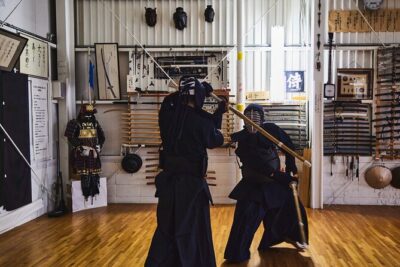

OSAKA NIGHT FUSION Japanese Taiko Kabuki Samurai Dance Show
Read our review →

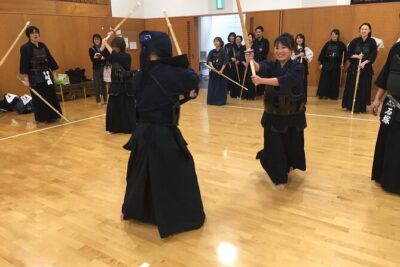
Osaka 2-Hour Genuine Kendo / Samurai Experience In Japan
Read our review →
Samurai Show, Tea Ceremony, Japanese Traditional Activities
Read our review →
Private Samurai Experience – Train with Sword Master
Read our review →
Honor – Experience Samurai & traditional Culture to the fullest
Read our review →This tour also fits