
Reviewed · NINJA & SAMURAI EXPERIENCES
Osaka 2-Hour Genuine Kendo / Samurai Experience In Japan
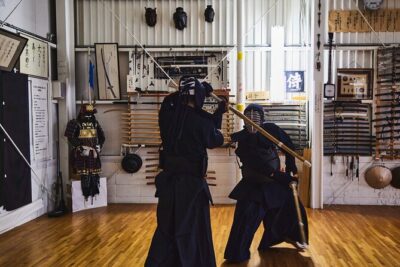
Kendo in Osaka feels personal fast. This small-group session pairs a friendly English-speaking instructor with full kendo gear, so you learn etiquette and core strikes without getting lost. I like the step-by-step coaching that keeps brand-new students moving at the right pace, and I like that you can work up to light sparring in full gear during the session. The only real drawback is physical effort, you’ll sweat, and if you come in peak heat you’ll feel it.
You’ll meet at Shigino Hall near public transportation, start at 10:00 am, and finish back at the same place about 2 hours later. The class includes all kendo equipment, bottled water, and a souvenir towel, so you can focus on learning instead of logistics.
In This Review
- Key Points to Know Before You Go
- Kendo 101 in Osaka: what this 2-hour class really teaches
- Shigino Hall timing and getting your gear on
- What you should expect from the pace
- Etiquette first: how manners shape kendo practice
- Core moves and footwork: from basics to techniques you can land
- The “unify your spirits” idea in real time
- Sparring and short bouts in full gear: the part that turns it into a memory
- Value check: is $118.89 worth a 2-hour kendo lesson?
- Who should book this kendo experience in Osaka
- Practical tips to get the most out of your session
- Should you book the Osaka genuine kendo experience?
- FAQ
- How long is the kendo experience?
- What time does it start, and where is the meeting point?
- What group size should I expect?
- Is kendo equipment provided?
- Is there an English-speaking instructor?
- Is hotel pickup or food included?
Key Points to Know Before You Go
- Max 7-person group means you get individual attention even as a total beginner
- English-speaking guidance helps you follow etiquette and movements without guessing
- Etiquette and mindset are part of the lesson, not just swinging a shinai
- Full gear practice by the end turns “watching” into doing
- A real workout in a short time (especially in warm months)
Kendo 101 in Osaka: what this 2-hour class really teaches
This is a straightforward introduction to kendo that treats it like a complete practice, not just a show-and-tell. You’ll cover the core ideas behind kendo, including manners, the history and culture around the sport, and a mental approach often summarized as unifying your spirits and lifelong kendo.
In plain terms, that shows up as how the class starts and how it ends. You’re guided through basics, with emphasis on respectful behavior and correct form before you ramp up to faster drills. If you’ve ever wanted something more meaningful than a generic samurai photo stop, this is the kind of activity where the rules and rituals matter.
You’ll also learn practical fundamentals you can feel right away: basic striking mechanics, footwork, and how to hold your position. One big theme you’ll notice during the session is encouragement. Several experiences in the feedback describe instructors pushing students gently, making it easier to try something physical while you’re still figuring out what to do with your body.
Swing a sword like it's 1600
- Samurai Training Experience KENDO in Osaka★ 5.0 · 515 reviews
- OSAKA NIGHT FUSION Japanese Taiko Kabuki Samurai Dance Show★ 4.8 · 155 reviews
- Osaka: Samurai Training Experience KENDO in Osaka★ 5.0 · 111 reviews
- Osaka: A Modern Samurai, Kabuki, Taiko, & Dance Show★ 4.5 · 66 reviews
- Osaka: Learn Bushido – Trial Slashing with Samurai Sword★ 4.9 · 59 reviews
Shigino Hall timing and getting your gear on
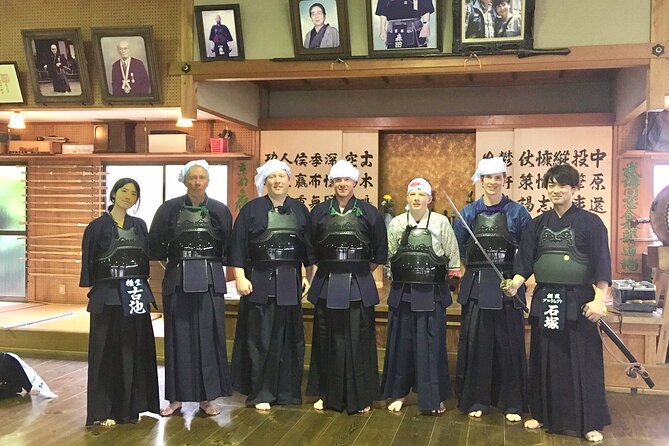
The experience meets at Shigino Hall in Joto Ward (Shiginonishi, 1-chōme 18-11, 町立鴫野会館) with a start time of 10:00 am. The class ends back at the meeting point, which is helpful because you do not need to plan a second commute right after training.
Good news: you do not need to bring kendo equipment. The class provides all kendo equipment, and you also get bottled water plus a souvenir towel. That combination matters. When gear is handled for you, you waste less time figuring out what you need, and you’re more likely to show up ready to learn from minute one.
Public transportation is nearby, so this fits well into a normal Osaka day. You’ll still want to plan for moving around the facility and getting changed into your kit, but the session is short enough that you’re not tied up all day.
What you should expect from the pace
The lesson is built for beginners, including people who have never worn armor-like protective gear. The pacing is described as step-by-step, with time to adjust. In more than one account, people mention a calm, attentive approach where the instructor watches what you’re doing and corrects you without making it stressful.
If you’re traveling solo, the small group size can be a big win. Some of the most favorable comments describe cases where the group was tiny, leading to a more personal, almost private-feeling training rhythm.
Etiquette first: how manners shape kendo practice
Kendo is often described as a martial art, but it’s also a discipline with manners baked in. In this class, etiquette is not a side topic. It’s part of the structure, and it helps you understand why the training looks the way it does.
You’ll practice concepts connected to manners and respect as part of learning how to move safely and properly. That can include how you behave on the training floor, how you respond during instruction, and how you transition between drills. When a class handles etiquette well, you feel like you’re joining a real practice, not just borrowing gear to try a few moves.
There’s also a spiritual and cultural layer explained during the session. The tour description frames this as touching the spiritual and cultural aspects of kendo, including the way kendo encourages a mindset rather than only physical competitiveness. Even if you don’t go deep on philosophy, you’ll likely notice it in how the instructor talks and in how the session keeps returning to intention and respect.
For me, the etiquette focus is one of the most valuable parts because it gives you context. Without it, kendo can look like controlled fighting. With it, you start to see it as controlled training with a code.
Core moves and footwork: from basics to techniques you can land
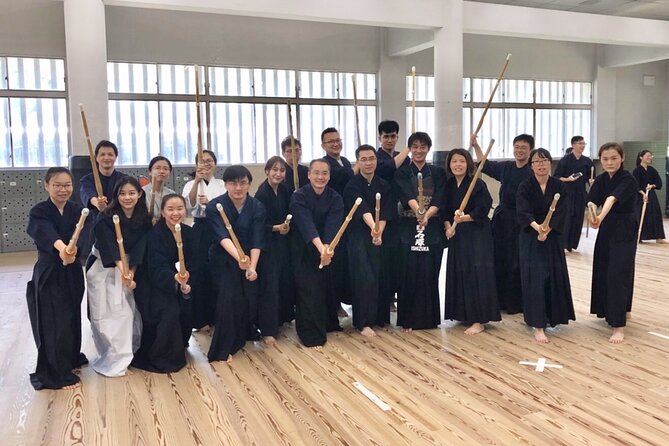
After etiquette and setup, the class moves into fundamentals: strikes, footwork, and the key movements that make kendo work. You’ll learn core moves and drill them so your body starts to understand the basic patterns.
This is where an English-speaking instructor becomes especially important. Kendo has specific terms and actions, and without translation you may struggle to connect what you hear with what you are doing. The instruction is designed to be easy to follow, which is a big reason beginners end up feeling confident by the end.
The training also includes history and how kendo fits into Japanese culture. You’ll get explanations that connect the martial art to long-standing traditions, which helps you understand why people take the rules so seriously. It’s not just facts for trivia. That context can change how you practice, because you’re doing it with intent.
Other ways to spend a day in Osaka
- Osaka: 2-Hour Nightlife District Walking & Local Food Culture
★ 5.0 · 199 reviews - Osaka: 2-Hour Local Street Food Tour – Dotonbori & Namba
★ 4.6 · 95 reviews - 1.5〜2 Hours Traditional Kintsugi Work Shop in Namba Osaka
★ 5.0 · 75 reviews
The “unify your spirits” idea in real time
One of the tour’s stated focus points is unifying your spirits. In a training setting, that usually shows up as how you concentrate during drills: staying balanced, moving with purpose, and committing to the strike rather than going halfway.
Even if you’re only doing basic techniques, that mental piece matters. It’s one reason people report feeling like the class works on mind, skill, and body, not just muscle.
Sparring and short bouts in full gear: the part that turns it into a memory
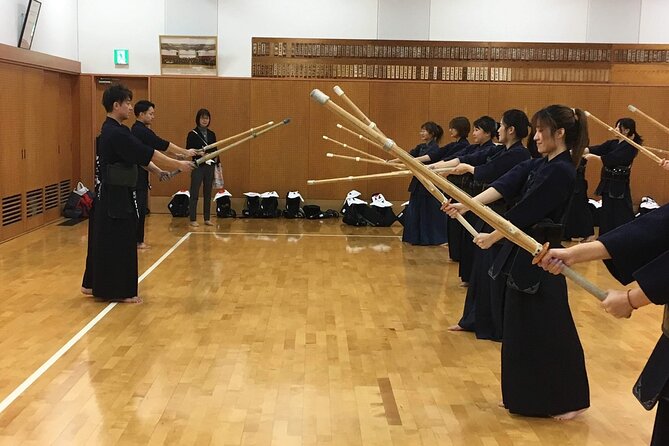
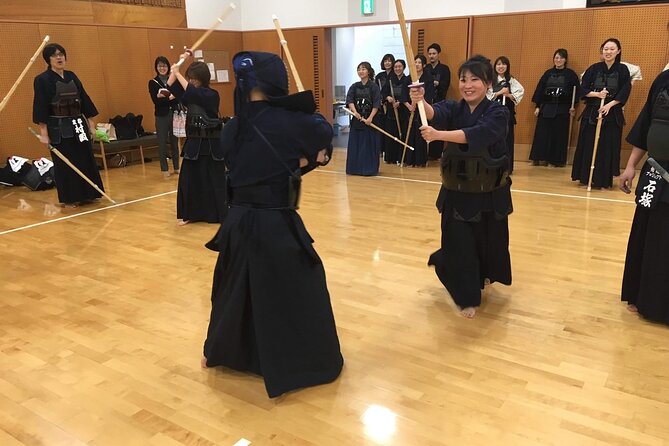
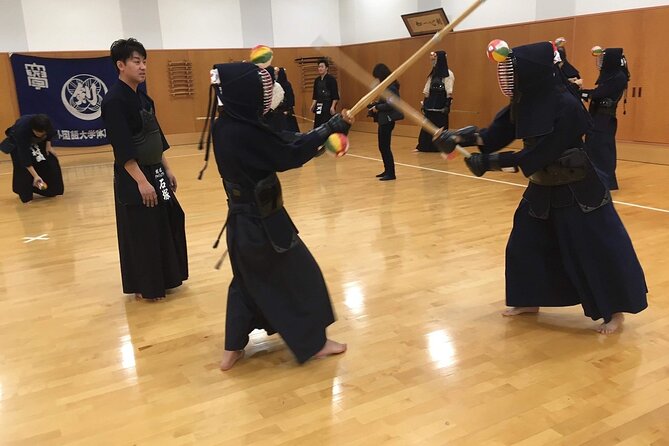
Many of the best moments described in feedback are about reaching sparring. The training builds toward short battles or light sparring, with full gear by the end for participants who are ready.
This is the “okay, I get it now” stage. You stop thinking only about form and start dealing with timing. Even light sparring teaches a lot because it forces you to coordinate footwork, distance, and strikes while staying focused on etiquette and control.
You’ll likely sweat. That’s not a warning sign, it’s the point. Multiple experiences mention it’s a workout, and one specific note says to be prepared to sweat, especially since training happens in hot weather at certain times of year.
Still, the instructor support seems to matter a lot. Several comments call out enthusiasm and patience, with encouragement that keeps first-timers comfortable. If you’re nervous about trying something intense, you’ll probably appreciate how the lesson aims to take you from basic movements to short bouts in a manageable way.
Also, small group sizes can make sparring feel less intimidating. When you have fewer people in the class, you tend to rotate in a way that leaves time for correction and resets.
Value check: is $118.89 worth a 2-hour kendo lesson?
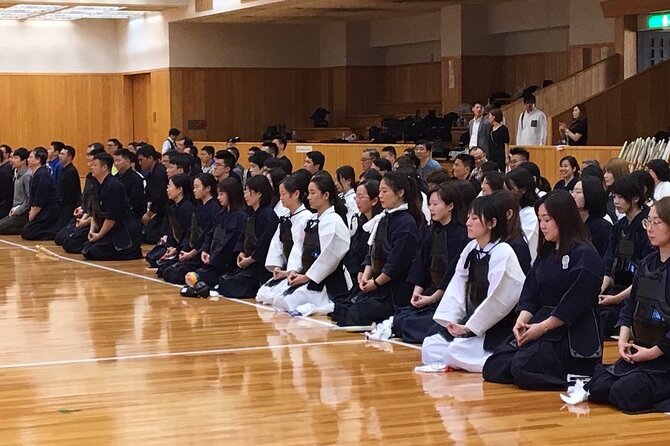
Let’s talk value in a practical way. At $118.89 per person for about 2 hours, you’re paying for an instructor-led training session, capped at a max group size of 7, with all kendo equipment included.
The inclusion list is key:
- All kendo equipment
- Bottled water
- A kendo towel souvenir
Most “activity” experiences charge extra for equipment, and some also charge extra for a longer time commitment. Here, the gear and basic supplies are built in, so your real cost is mainly time and effort.
The English instruction also adds value. Beginner-friendly teaching reduces wasted minutes where you’re trying to guess. That matters because in a short class, time is your budget.
Is it expensive? Compared to casual walking tours, yes. Compared to structured classes where someone supplies protective gear, runs drills, and gives correction, it’s easier to justify. Especially because several experiences describe the instruction as attentive and step-by-step, which is what you want when you are new to kendo.
If you’re someone who enjoys learning a skill you can carry home, this class is a good deal. If you want only a brief taste with zero physical component, you might not love it.
Who should book this kendo experience in Osaka
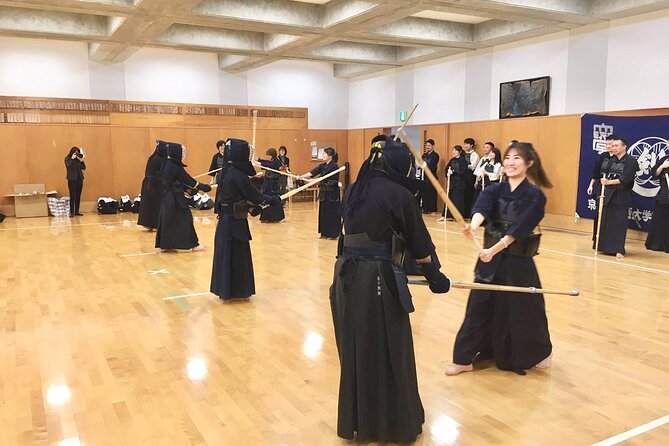
This class is a strong match if:
- You’re new to kendo and want a guided start
- You value etiquette and culture, not just action
- You want a short workout that still teaches something structured
- You prefer small group instruction where corrections are likely
It also seems to fit well for people traveling together, especially because encouragement is a recurring theme. Some accounts describe the class as almost personal when the group was tiny, which can be great if you like hands-on learning.
You should think twice if:
- You do not handle physical effort well, since the experience requires moderate fitness and you should expect sweat
- You are extremely heat-sensitive, since the class can happen in warm conditions and you will be in gear
- You want hotel pickup, because pickup and drop-off are not included
Practical tips to get the most out of your session
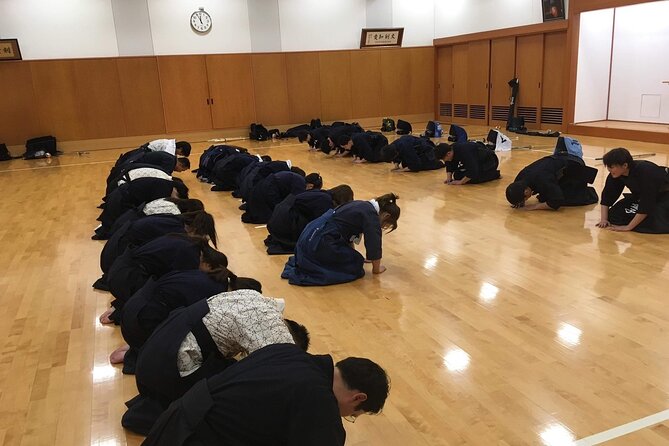
Here are the things that will help you get the best experience without overthinking it.
First, plan your day around the 10:00 am start. With a short session, you benefit from arriving with enough time to settle in and get ready calmly.
Second, dress for training. You will be moving, sweating, and going through gear setup. Even though you don’t need to bring equipment, you should wear something comfortable and easy to manage.
Third, treat etiquette as part of the lesson, not a distraction. When you focus on manners and control, you’ll feel safer and you’ll learn faster. Kendo is controlled practice, and the class is built around that idea.
Fourth, lean into the instructor’s step-by-step approach. If you’re confused, ask. The feedback repeatedly highlights patience, attention, and the ability to make the basics feel doable.
And finally, bring a friend if you want extra comfort. One note in the feedback says it’s especially fun with someone else alongside you, which makes sense in any beginner class where you’re sharing the awkward first minutes.
Should you book the Osaka genuine kendo experience?
Book it if you want a real, instructor-led kendo class with equipment provided, English guidance, and the chance to reach light sparring. The biggest draw is the combination of manners and fundamentals, plus the fact that the class is short enough to fit into a travel schedule without feeling rushed.
Skip it if you’re looking for a low-effort cultural stop, or if you cannot handle moderate physical fitness and sweating in training gear.
If you’re excited by the idea of learning more than poses, this one makes sense. You come away with something you actually practiced, not just something you watched.
FAQ
How long is the kendo experience?
It lasts about 2 hours.
What time does it start, and where is the meeting point?
It starts at 10:00 am at Shigino Hall, 536-0014 Osaka, Joto Ward, Shiginonishi, 1-chōme18-11 町立鴫野会館. The activity ends back at the meeting point.
What group size should I expect?
The class is a small group with a maximum of 7 travelers.
Is kendo equipment provided?
Yes. All kendo equipment is included.
Is there an English-speaking instructor?
Yes. The class includes an English-speaking instructor.
Is hotel pickup or food included?
Hotel pickup and drop-off are not included, and food is not included. Bottled water and a free kendo towel are included.
Just added around Osaka
Ninja & Samurai Experiences, compared.
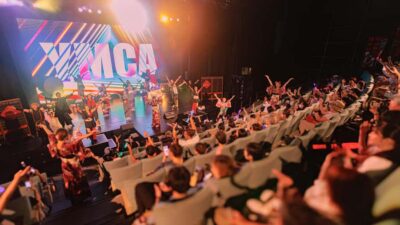
OSAKA NIGHT FUSION Japanese Taiko Kabuki Samurai Dance Show
Read our review →

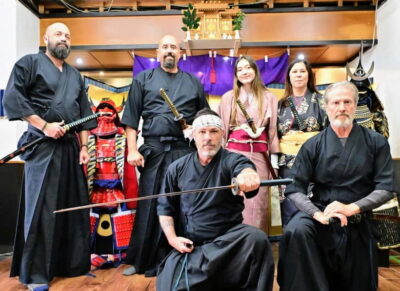
Learn Bushido – Trial Slashing with Samurai Sword
Read our review →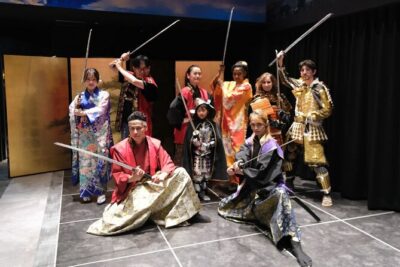
Samurai Show, Tea Ceremony, Japanese Traditional Activities
Read our review →
Private Samurai Experience – Train with Sword Master
Read our review →
Honor – Experience Samurai & traditional Culture to the fullest
Read our review →This tour also fits