
Reviewed · NINJA & SAMURAI EXPERIENCES
Osaka: Private Samurai Experience – Train with Sword Master
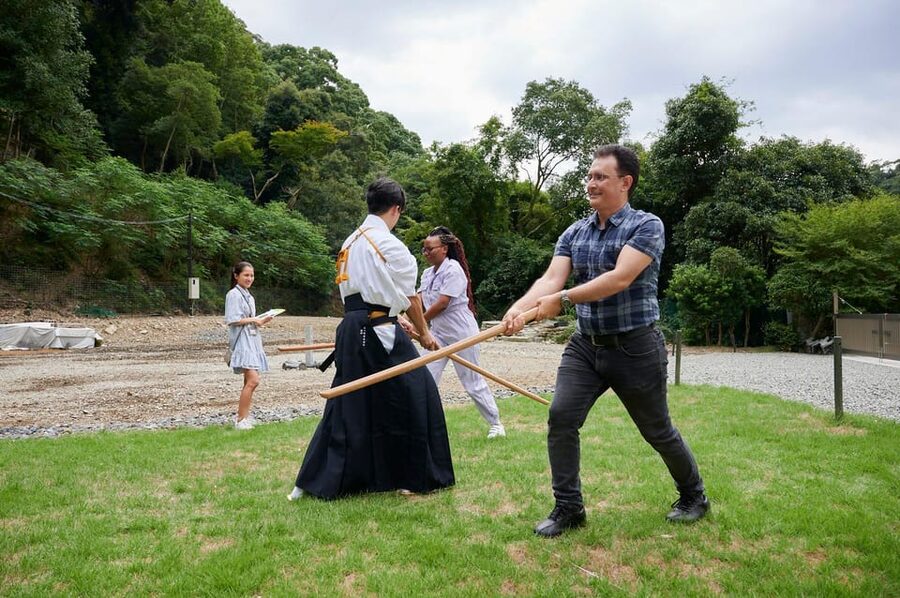
A sword lesson in a quiet temple. In Minoh, Osaka, you get private access to Ryuan-ji or Saiko-ji for hands-on kenjutsu training with former grandmaster Tatsuya Watanabe, plus a special sword performance made for this tour.
I also love the way the instruction is made clear through your guide, often Benoit, who helps translate what you need in the moment. And you practice in a restricted temple training area that is normally closed to the public, which makes the whole 3-hour format feel focused, not touristy. The only drawback I see is time, you will get sharp fundamentals and key techniques, but you will not have time to master everything.
In This Review
- Key highlights
- Where the Samurai Training Happens, Ryuan-ji or Saiko-ji Temple
- Starting at Minoh Station, then heading straight into the program
- The temple tour part you can actually use
- Meeting Tatsuya Watanabe, why his background matters to the lesson
- The opening sword performance, control you can feel
- Your hands-on practice, what you’ll work on in the 1.5 hours
- Translation support in English, Japanese, or French
- Private group format, why it feels different than a public demo
- How much you get from a 3-hour program, and what to expect next
- Price and value, is $158 per person worth it
- Who this Osaka samurai experience is for
- Who should think twice
- Should you book the Samurai Training with Sword Master in Minoh?
- FAQ
- Where do I meet the guide?
- How long is the Osaka samurai experience?
- Which temple will I train at, Ryuan-ji or Saiko-ji?
- Is this a private group or a shared tour?
- What languages are offered?
- What is included in the price?
- Can I cancel and get a refund?
Key highlights
- Private temple access at Ryuan-ji or Saiko-ji, normally closed to the public
- Training with Tatsuya Watanabe, a classical kenjutsu leader and former grandmaster
- A special sword performance included exclusively for your group
- About 1.5 hours of structured practice, guided step-by-step
- English, Japanese, or French support for the lesson and temple context
- Meet at Minoh Station with a yellow DeepExperience sign for easy start
Where the Samurai Training Happens, Ryuan-ji or Saiko-ji Temple
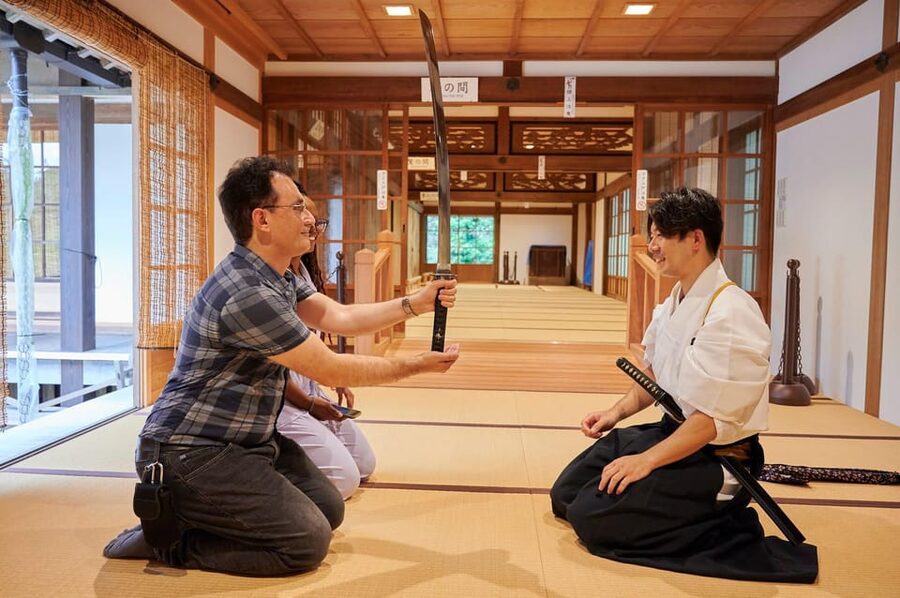
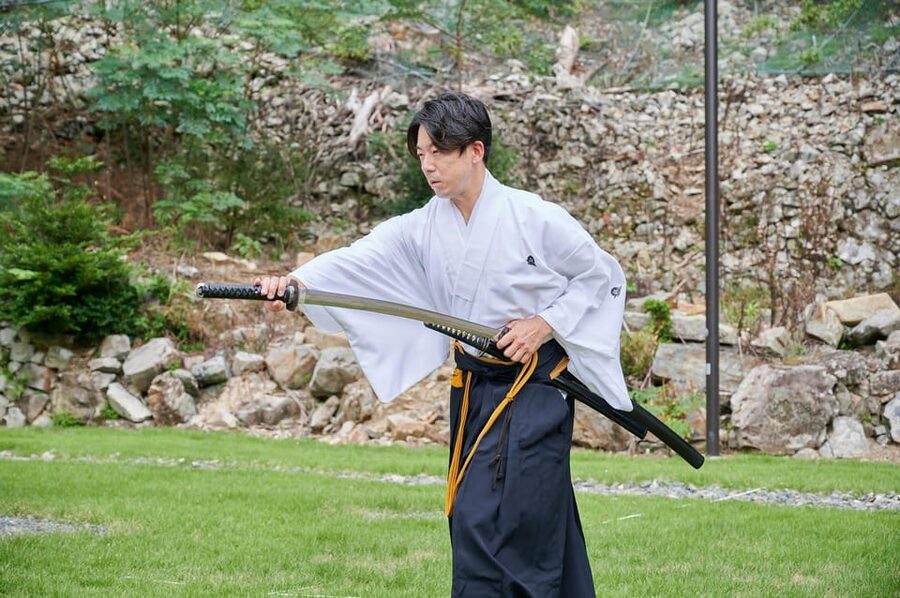
This is not a sword show in a stadium, and it is not a quick photo stop either. The setting is Ryuan-ji Temple in Minoh or Saiko-ji Temple, and the key advantage is that you train in temple areas that are typically closed to regular visitors.
That matters more than you might think. Temple space has rules, pacing, and a sense of quiet that changes how people move and how they pay attention. When you practice here, you are not just learning motions, you are learning the attitude behind them: control, posture, and discipline.
If you’re the type who likes “why this place” as much as “what to do,” you’re in the right spot. You also get the temple portion of the experience, so it’s not only sword training in a vacuum.
Swing a sword like it's 1600
- Samurai Training Experience KENDO in Osaka★ 5.0 · 515 reviews
- OSAKA NIGHT FUSION Japanese Taiko Kabuki Samurai Dance Show★ 4.8 · 155 reviews
- Osaka: Samurai Training Experience KENDO in Osaka★ 5.0 · 111 reviews
- Osaka: A Modern Samurai, Kabuki, Taiko, & Dance Show★ 4.5 · 66 reviews
- Osaka 2-Hour Genuine Kendo / Samurai Experience In Japan★ 5.0 · 65 reviews
Starting at Minoh Station, then heading straight into the program
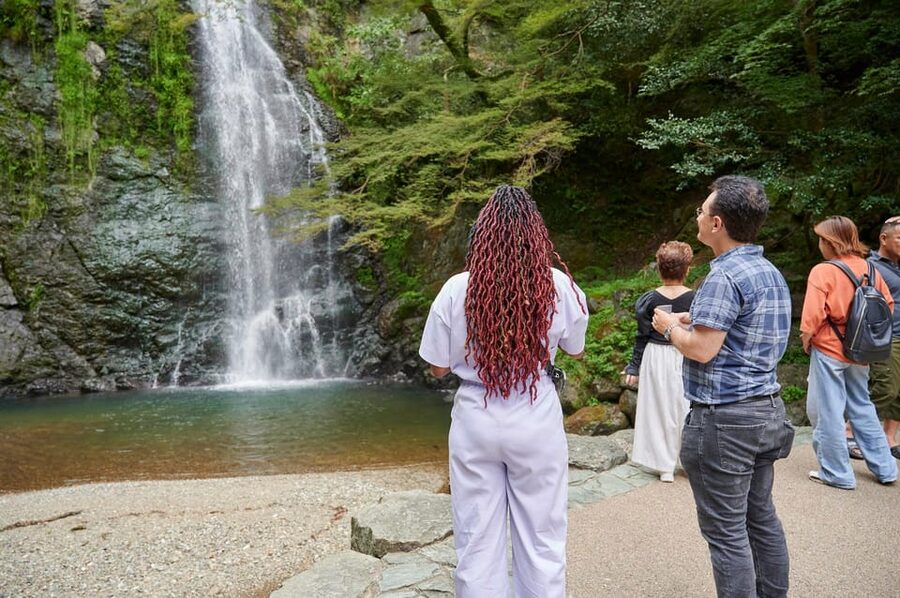
Your day starts at Minoh Station, where your guide meets you in front of the station while holding a yellow sign with the DeepExperience logo. From there, the flow is built for a smooth transition from the public world into the restricted training world.
That first handoff is important because it keeps you from wasting time figuring things out mid-day. Once you arrive at the temple, the program settles quickly into guided context and then training.
A small practical note: this is a 3-hour commitment. Plan your Osaka schedule so you are not rushing from one place to another, especially since you want to be mentally present when the master starts the performance and instruction.
The temple tour part you can actually use
Before the practice gets serious, you spend time in guided temple viewing and orientation. This is not just sightseeing. The program uses the temple setting to explain spiritual and historical meaning, so the swords lesson has a real anchor.
You’ll also get access to areas tied to the temple’s heritage. Based on how the session is described, you may get a look inside a temple structure where the sword culture and artifacts are shown, not just discussed.
What I like about this approach is that it supports context without turning into a lecture marathon. You get just enough background to understand why classical schools teach both body mechanics and mindset.
If your expectation is only flash and speed, you might find some parts quieter than you hoped. But if you want a meaningful connection between Japanese martial tradition and the space where it’s practiced, this temple component is a big part of the value.
Meeting Tatsuya Watanabe, why his background matters to the lesson
The sword master at the center of the experience is Tatsuya Watanabe. His path is one of the reasons this program feels authentic rather than generic.
He started with kendo in his early teens, then during university years entered Yagyū Shinkage-ryu, one of Japan’s well-known classical kenjutsu schools. Later, he pursued additional training through other lineages, including Suishin-ryu.
The standout detail is that he was appointed soke, meaning headmaster, in his twenties for Suishin-ryu. That position carries more than title. It means he is responsible for preserving techniques, but also the philosophy and aesthetics that sit inside the training.
So when you learn from him here, you are not only receiving instructions for hitting a target. You are learning the “why” behind form: how discipline, breath, and intention show up in movement.
And based on his stated mission to promote and preserve Japanese sword culture globally, he’s not training for sport alone. He’s presenting sword tradition as living heritage, which changes the tone of the teaching.
The opening sword performance, control you can feel
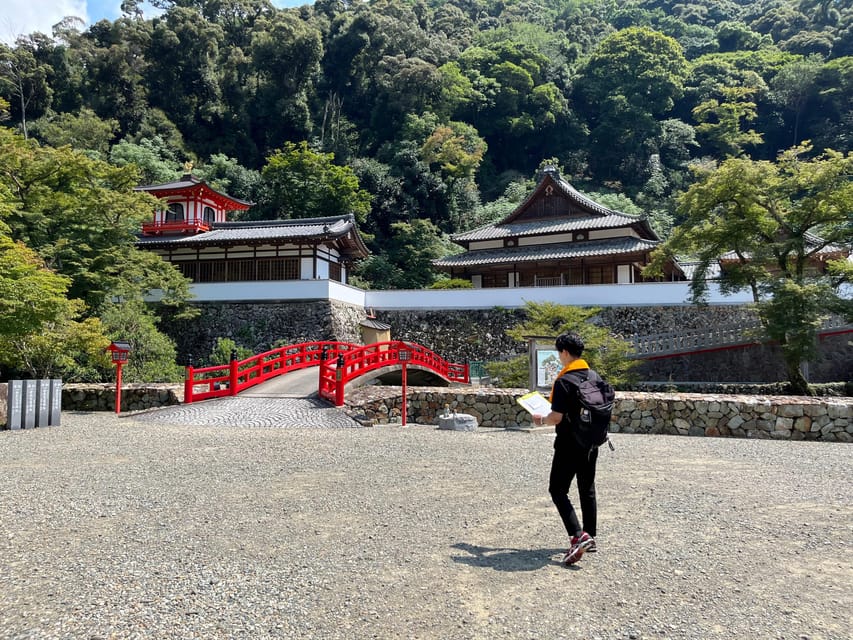
A highlight of the program is a special sword performance that’s exclusive to this tour. It typically comes early, and it sets the standards for the session.
What you’re watching is precision and control, with a presence that makes the later practice feel more grounded. In many sword experiences, the instructor demonstrates then moves on. Here, the performance acts like a reference point, so you can compare your own movement against the discipline you just saw.
Even if you have never held a blade before, the performance gives you something useful: a sense of rhythm and spacing. It also signals the mindset the lesson will emphasize, steady focus and respectful form.
Ride rails built for the view
- Sagano Romantic Train & Arashiyama, Kiyomizudera, Fushimi Inari Taisha Day Tour
★ 4.5 · 171 reviews - Full Day Hiroshima and Miyajima Tour by Bullet Train from Osaka
★ 4.5 · 117 reviews - Hiroshima & Miyajima 1 Day Bus Tour with Bullet Train Tickets
★ 4.5 · 105 reviews
Your hands-on practice, what you’ll work on in the 1.5 hours
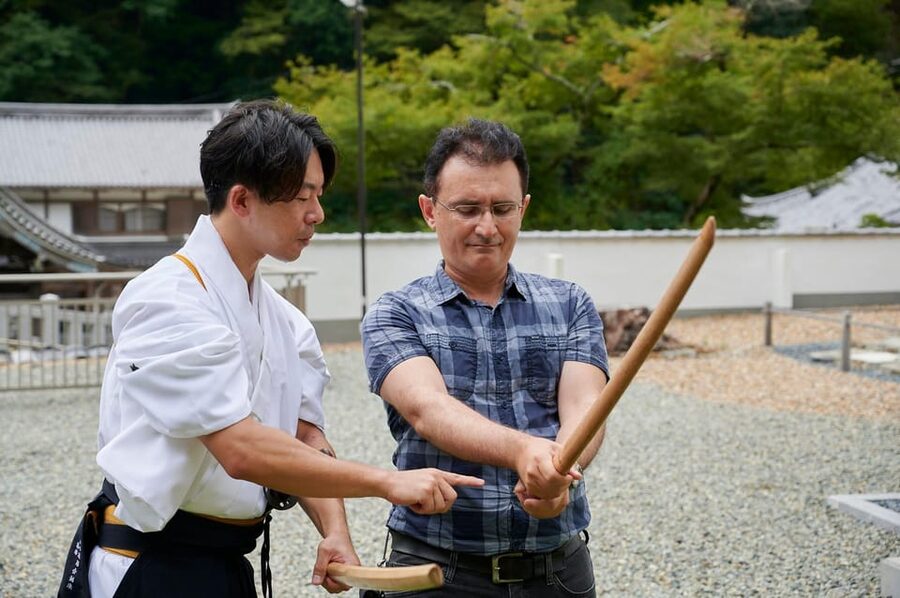
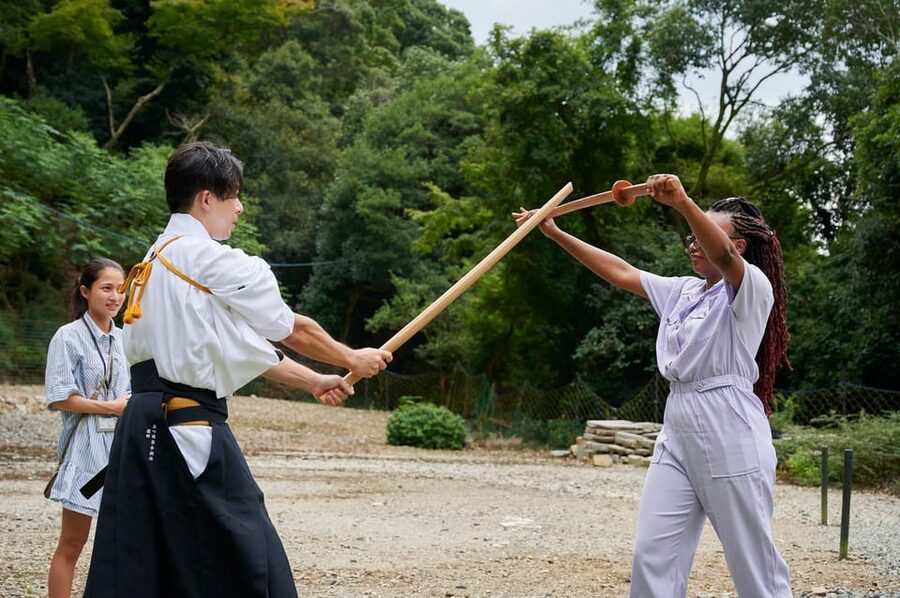
The training block is about 1.5 hours and takes place in the temple’s restricted training grounds. This is where you get the core benefit: technique instruction tied to classical warrior tradition.
You’ll work on foundational actions and form, guided by the sword master. The session is structured enough that you’re not left guessing, but personal enough that a private group format makes the instruction feel direct.
One theme that comes through strongly is technique connected to historical warriors. That means you’re not learning random “cool moves.” Instead, you’re getting a framework of swordsmanship principles that emphasize body mechanics and mental control.
Also, a good sign for beginners: the program is designed for learning within a short time window. That’s why the translator support matters so much. When the language barrier is handled well, you can concentrate on your posture and direction instead of translating in your head.
A note on tools: the program is a sword experience, and past participants describe starting with practice swords for training, then seeing real swords up close, with some sessions including cutting demonstrations. Your exact progression can vary by the flow of the day, but the training emphasis remains on technique.
Translation support in English, Japanese, or French
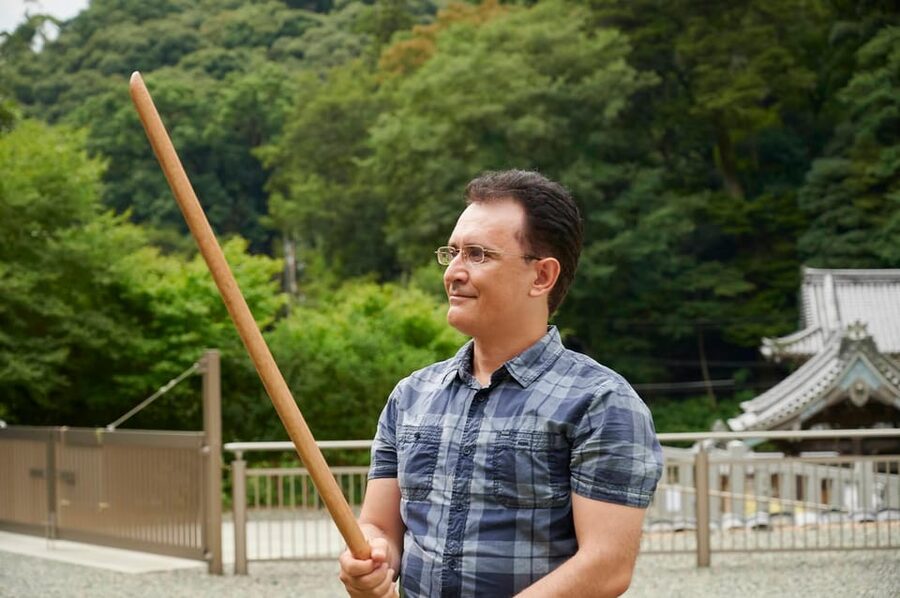
Language can make or break a martial arts lesson. This program offers a live guide with English, Japanese, or French support.
In past sessions, interpreters including Ben/Benoit have played a key role in keeping instruction clear during practice. That matters because sword technique is physical and mental. If you miss one detail about stance, timing, or where your attention should be, the whole move feels off.
When translation is strong, you can do two things at once: follow along and improve quickly. That’s why people often leave feeling like the lesson was not only impressive, but also understandable and practical.
Private group format, why it feels different than a public demo
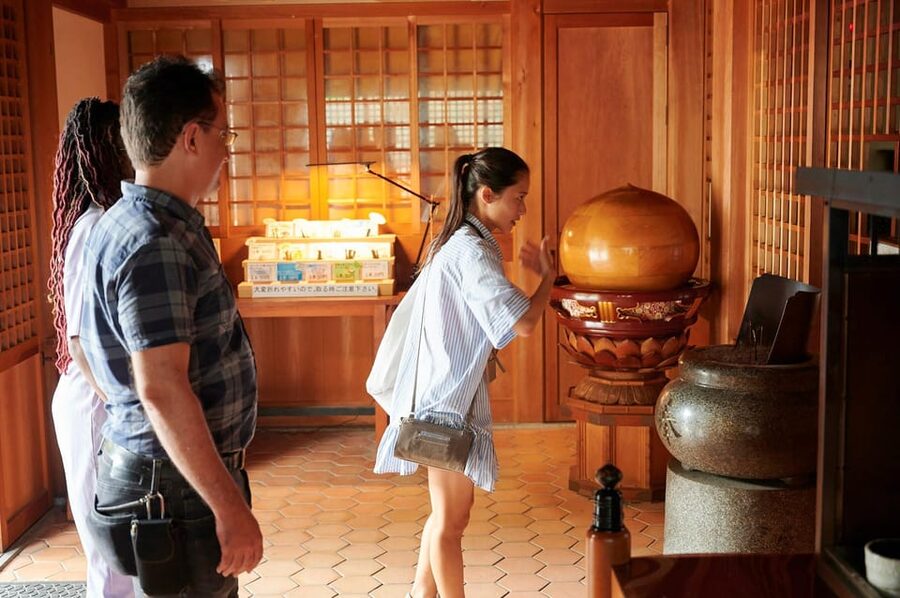
This is a private group experience. That changes the pacing. Instead of sharing limited instruction time with a large group, you get a more focused learning environment.
Private format also helps the sword master teach the way classical schools often do: observe, correct, repeat. Even with a short total time, that cycle is what turns a “show” into an actual training experience.
You’ll also likely get more personalized attention on posture and strikes, because the group is smaller and the instructor can see what’s happening with each person.
If you’re someone who gets lost in crowded tours, you’ll appreciate this structure. And if you’re traveling as a couple or with family who wants a shared activity without dealing with strangers, it’s a good fit.
How much you get from a 3-hour program, and what to expect next

Let’s be honest about the time. At 3 hours, you are not walking away as a kenjutsu practitioner who can spar. What you can walk away with is a sense of correct principles and a better understanding of why swordsmanship is taught with strict form.
You also leave with something many activities in Osaka don’t provide: a connection between physical technique and a temple setting with spiritual meaning. That pairing can make the entire lesson stick longer than a standalone martial arts class.
If you want to keep practicing afterward, you’ll probably think about getting a wooden bokken. In the experience as described by participants, people often purchase training swords afterward to keep working on what they learned.
The best approach after this tour is to keep it simple: practice basic stance, direction, and controlled swings. Then, if you find a local class, compare what they teach to the principles you picked up here.
Price and value, is $158 per person worth it
At $158 per person for about 3 hours, this is not a budget activity. But it is also not a generic “try swordsmanship” demo.
The value comes from a few concrete things:
- A classical sword master leading the training
- Private temple access at Ryuan-ji or Saiko-ji in restricted areas
- A special sword performance included for your group
- A guided cultural and temple context component
- Translation support in English, Japanese, or French
When you price those elements separately, it starts to make sense. A performance plus training plus temple access is a rare combination, especially with instruction led by someone who carries responsibility as soke and presents sword culture internationally.
So the question isn’t only whether you can afford it. It’s whether your trip needs a hands-on cultural skill, not just another sightseeing tick box.
If you love martial arts, sword history, or Japanese tradition, you will likely feel the cost is justified. If you just want a quick spectacle, this will feel too instructional for your taste.
Who this Osaka samurai experience is for
This tour fits best if you fall into one (or more) of these buckets:
- You want a hands-on cultural activity, not just watching
- You are curious about classical kenjutsu and how it connects to temple life
- You like experiences that are structured but respectful
- You want a tour with translation support, so the lesson stays clear
It also tends to work well for families who want a memorable activity and for people who are open to learning fundamentals rather than expecting advanced techniques.
Who should think twice
Consider skipping (or at least adjusting your expectations) if you want any of these:
- Pure sightseeing with minimal physical participation
- A long workshop lasting all day
- A training progression that turns you into an expert quickly
The session is built to teach key fundamentals in a short time. That’s the point, and it’s also the limitation.
Should you book the Samurai Training with Sword Master in Minoh?
If you want one Osaka day that feels specific, structured, and genuinely connected to Japanese sword culture, I think this is a strong booking choice. The private temple access and the included performance are big factors, and the short training block makes it doable even if you’re on a tight schedule.
Book it if you care about learning, even at a beginner level, and if you value a calm temple setting over a loud attraction. Pass or rethink it if you only want photos, or if you’re expecting a long training camp.
If you do book, come with a simple goal: leave with better posture, clearer sword basics, and a real sense of the discipline behind classical kenjutsu.
FAQ
Where do I meet the guide?
Meet your guide in front of Minoh Station. The guide will be holding a yellow sign with the DeepExperience logo.
How long is the Osaka samurai experience?
The experience lasts 3 hours, listed as 270 minutes.
Which temple will I train at, Ryuan-ji or Saiko-ji?
The program takes place at Ryuan-ji Temple or Saiko-ji Temple, in secluded areas associated with the training grounds.
Is this a private group or a shared tour?
This is a private group experience.
What languages are offered?
The live tour guide supports English, Japanese, and French.
What is included in the price?
The price includes the sword experience fee and the guide fee.
Can I cancel and get a refund?
Yes, you can cancel up to 24 hours in advance for a full refund. The experience also offers reserve now and pay later.
Just added around Osaka

Ninja & Samurai Experiences, compared.
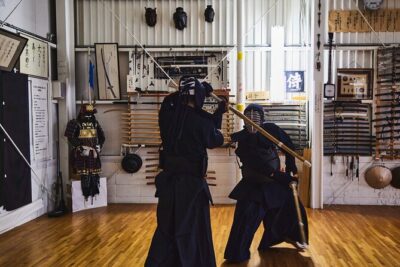

OSAKA NIGHT FUSION Japanese Taiko Kabuki Samurai Dance Show
Read our review →

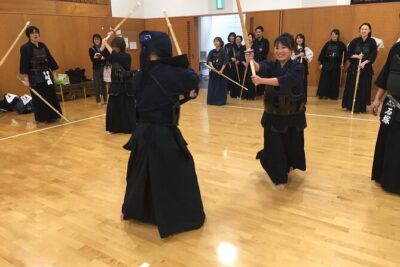
Osaka 2-Hour Genuine Kendo / Samurai Experience In Japan
Read our review →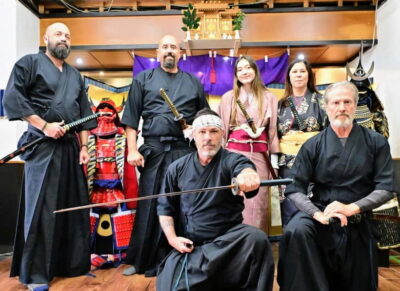
Learn Bushido – Trial Slashing with Samurai Sword
Read our review →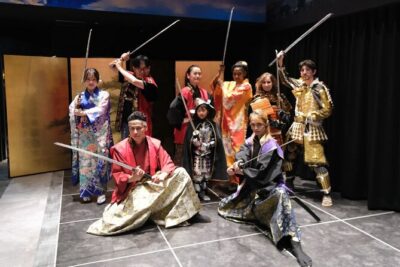
Samurai Show, Tea Ceremony, Japanese Traditional Activities
Read our review →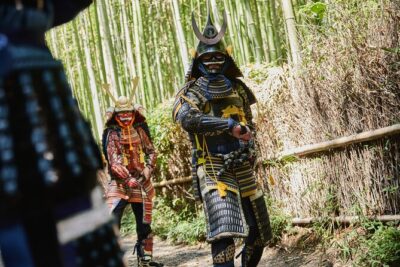
Honor – Experience Samurai & traditional Culture to the fullest
Read our review →This tour also fits