
Reviewed · TEA CEREMONY & MATCHA EXPERIENCES
Samurai Show, Tea Ceremony, Japanese Traditional Activities
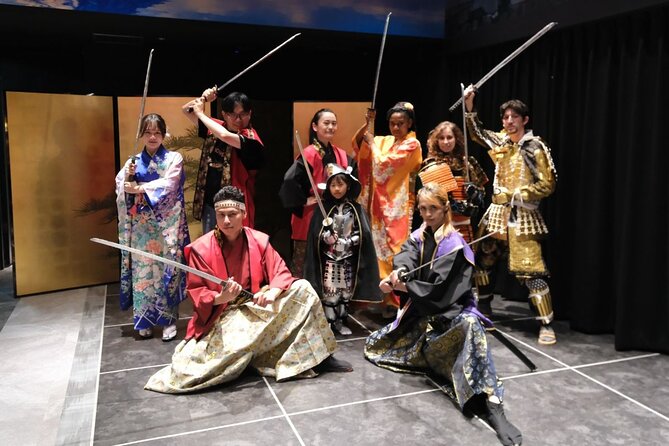
Samurai shows meet real hands-on culture in Osaka. This experience takes place in a big indoor facility near the Shinsaibashi area, with a tea ceremony plus calligraphy, and then you roll into a playful samurai performance and traditional music, all in about 2.5 hours.
I love the hands-on flow, especially when you can practice the dramatic samurai moves and try instruments during the music portion. I also like the small group setup, capped at 20 travelers, which makes it easier to get help and get photos.
One thing to consider: the samurai segment can feel more like a staged show, and some parts may be built with reproductions rather than original, museum-grade armor.
In This Review
- Key things to know before you go
- Samurai armor, tea ceremony, calligraphy, music: why this mix works
- Price and timing: what your $44.92 buys
- Where you start: Shinsaibashi, Dotonbori area, and a mobile ticket
- Stop 1, the vibe check: the Shinsaibashi-Dotonbori neighborhood
- Tea ceremony station: green tea, steps, and why it feels different
- Calligraphy workshop: brush skills and a take-home keepsake
- Samurai show and practice: drama without real swords
- Traditional music and instrument try-outs: more than watching
- What is included, what is not, and costume upgrades to consider
- How staff support makes the difference
- Food for thought: who this fits, and who might skip it
- Should you book this Osaka samurai show and tea ceremony?
- FAQ
- What is included in the Samurai Show, Tea Ceremony, Japanese Traditional Activities ticket?
- What is not included in the ticket?
- How long is the experience?
- Where do I meet for the experience?
- Is the meeting point near public transportation?
- What is the group size limit?
- Do I receive a mobile ticket?
- Is good weather required?
- What is the cancellation policy?
- When do I receive confirmation?
Key things to know before you go
- Tea ceremony practice in an indoor station where you learn the steps and enjoy your green tea cup
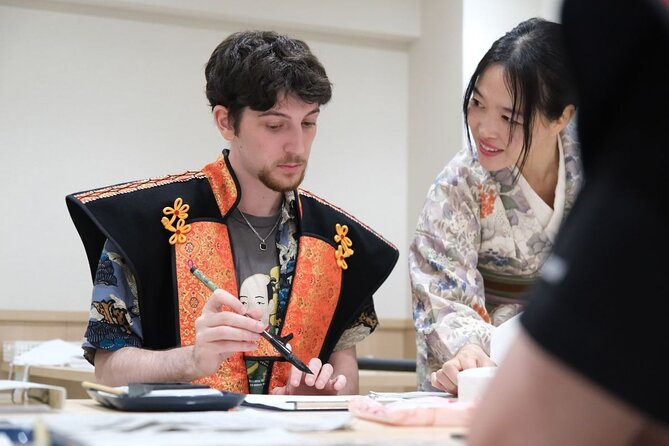
- Calligraphy workshop with take-home items, including a personalized fan mentioned in reviews
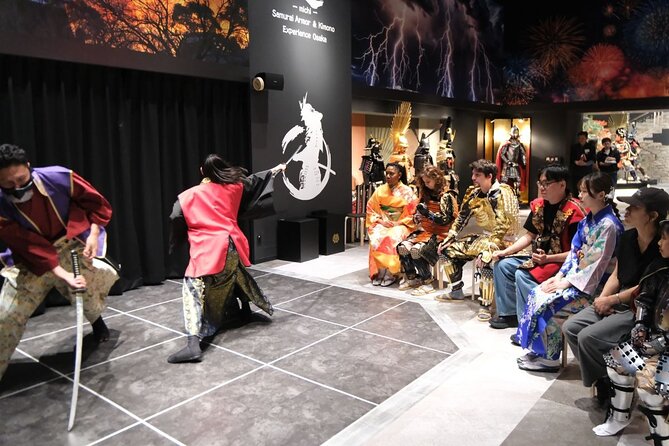
- Samurai performance plus practice moves with the kind of sword action that is not real-sword training
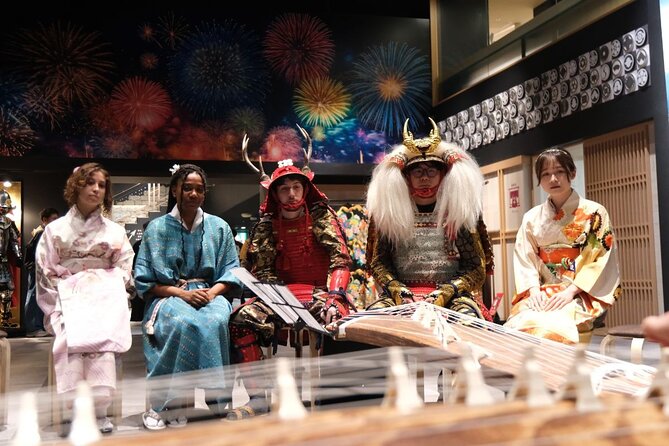
- Traditional music show with instrument try-ons, including examples like harp and a Japanese flute in the program
- Big, weather-proof format, since the activities happen inside a large facility
- Central meeting point near Shinsaibashi, with a mobile ticket and a small group size (max 20)
Samurai armor, tea ceremony, calligraphy, music: why this mix works
If you only do one “Japanese culture” activity in Osaka, it’s tempting to pick the thing that sounds coolest. This one is smarter. It layers four different traditions into one afternoon, so you are not stuck watching one genre for the full 2.5 hours.
I like that the experience is not just sit-and-watch. You get hands-on moments across the stops: tea preparation, calligraphy practice, instrument time, and a samurai-style performance with participation. That variety matters in Osaka, where you might already be doing street food, shopping, and Dotonbori evenings. This gives you a calmer, focused block of cultural learning.
The other big win is that it is a single indoor facility with stations. That means less rushing across town and more time actually doing things.
The main caution is about expectations for the samurai portion. One review noted it may feel a bit “lame” compared to how immersive you want it to be, and that some elements are reproductions. Still, even critics in the mix often call the overall afternoon fun and educational because the rest of the stations carry their weight.
Slow down for a bowl of matcha
- Osaka: Tea Ceremony Experience★ 4.9 · 1,426 reviews
- Tea Ceremony Experience in Osaka Doutonbori★ 5.0 · 754 reviews
- Matcha Making Class in Osaka with Authentic Japanese Sweets Set★ 5.0 · 509 reviews
- Osaka: Matcha Making Experience with Japanese Sweets★ 5.0 · 146 reviews
- Osaka: Japanese Traditional Sweets Making and Tea Ceremony★ 4.7 · 118 reviews
Price and timing: what your $44.92 buys
At $44.92 per person, this is priced like a “value cultural workshop,” not a high-end costume-and-photo-only show. What makes it good value is the amount of structured programming you get for one booking: tea ceremony, calligraphy, traditional music, and samurai performance, plus interactive try-outs.
Timing is also tidy. The activity runs about 150 minutes and is listed as roughly 2 hours 30 minutes total. That usually fits well if you are planning an afternoon in the Shinsaibashi and Dotonbori area, then heading out for dinner afterward.
For planning, I’d give yourself a little buffer. Reviews include one note that it took longer than people expected, and another note that adding time is helpful because there are lots of stations to complete. Your best bet is to treat this as an “afternoon anchor,” not a quick add-on.
Also keep in mind the operator states it requires good weather. Even if you expect the day to be indoor-heavy, if weather is poor they may switch dates or offer a full refund. So do not book it as your only activity if your trip is painfully tight on one specific day.
Where you start: Shinsaibashi, Dotonbori area, and a mobile ticket
You meet at Shinsaibashi ARTY Inn, 2-chōme-17-3 Nishishinsaibashi, Chuo Ward, Osaka, 542-0086, Japan. The experience also ends back at the same meeting point, so you do not have to puzzle out a new transit plan at the end.
The listing says it is near public transportation, and the start location places you in the Shinsaibashi/Dotonbori zone. That is practical because you can come straight from shopping streets, then walk into the afternoon program without a long commute.
You will receive details with booking confirmation, and the tour uses a mobile ticket. I recommend you keep the ticket ready on your phone before you arrive, plus bring a screenshot of the confirmation just in case your connection is spotty underground or in crowds.
Group size is capped at 20 people, which helps with pacing. In a busy city, smaller groups feel calmer, and it is easier for staff to circulate.
Stop 1, the vibe check: the Shinsaibashi-Dotonbori neighborhood
Your itinerary notes Dotombori as a stop. Even if you are not there for sightseeing inside the experience, this matters because it tells you the whole thing is built around a central, easy-to-find starting area.
This neighborhood is lively. That is good news if you like to keep your Osaka days simple. You can do the cultural program in one chunk, then return to the neon-and-street-energy right after.
Also, because you start in a major hub, you can adjust. If rain hits or plans shift, you are not stuck traveling far across Osaka to find something worthwhile. The program itself is described as happening in a big facility, which is a big reason this works on less-than-ideal days.
Tea ceremony station: green tea, steps, and why it feels different
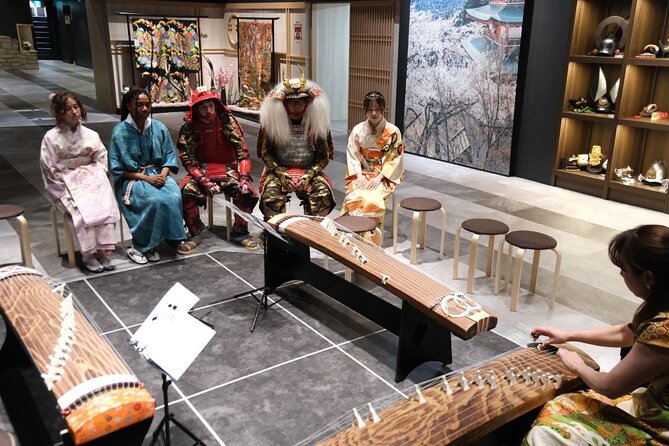
The tea ceremony experience is one of the core stations. This is the part where the afternoon slows down and you get a sense of why tea rituals are a big deal in Japan.
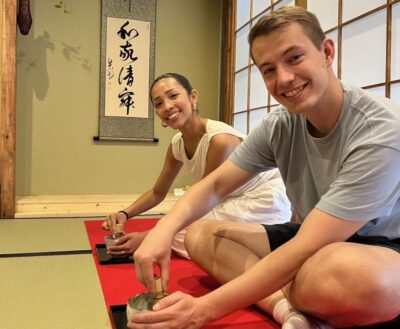
What I like about this station for first-timers is that it is not only theoretical. The format is hands-on, and reviews point out you can make and enjoy a cup of green tea. That simple moment, making a cup yourself, anchors what you learn. You are not just watching, you are participating.
Tea ceremony training is also a chance to understand small details, like how actions are sequenced and how attention is part of the ritual. If you tend to rush through museums and performances, tea is a reminder to slow down.
One practical tip: treat this station like you are sitting down for something quiet and precise. Arrive on time, listen carefully during the instruction, and ask questions if you are unsure. Staff are described as friendly and helpful, and the setup uses translators.
Note: the tour summary lists “Tea Ceremony Experience,” and the program structure says the session includes interactive learning. It does not specify whether you get a take-home item from the tea step, so do not plan on souvenirs here. The tea moment is the souvenir.
Swing a sword like it's 1600
- Samurai Training Experience KENDO in Osaka
★ 5.0 · 515 reviews - OSAKA NIGHT FUSION Japanese Taiko Kabuki Samurai Dance Show
★ 4.8 · 155 reviews - Osaka: Samurai Training Experience KENDO in Osaka
★ 5.0 · 111 reviews
Calligraphy workshop: brush skills and a take-home keepsake
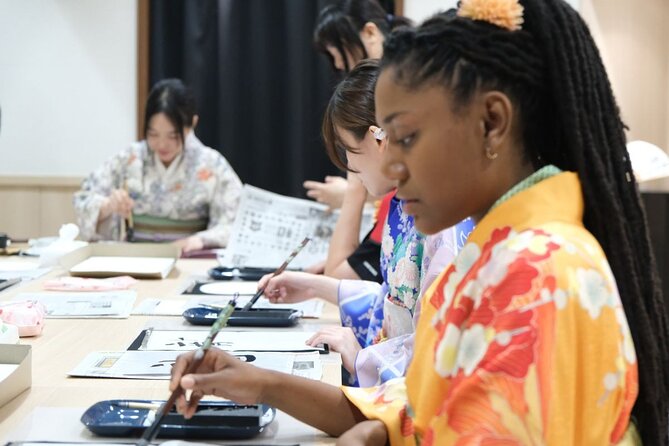
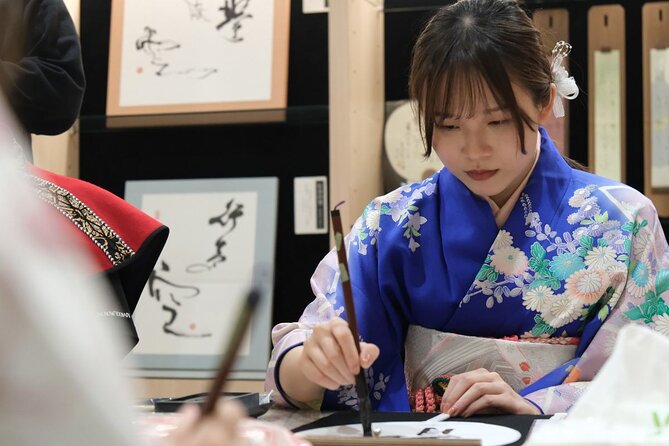
Next up is calligraphy. This is the station that makes a lot of people smile, because it turns abstract art into something you can actually do with your own hands.
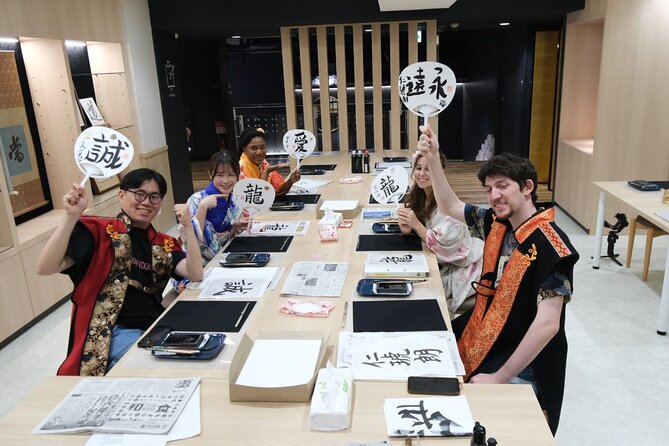
You practice calligraphy with instruction and then take home items. One review specifically mentions receiving a personalized fan, which is a very practical keepsake: it is useful, not just a decoration.
Calligraphy is also a good “energy reset” after the drama of the samurai show and the noise of the music segment. Even if you are not artist-brained, the structure usually makes the steps feel manageable, especially with staff helping you along the way.
If you worry about language, you will likely still be fine. The program is described as having English support, with translators present. That matters because calligraphy depends on timing and technique. You want to follow the instructor’s cues rather than guess.
One consideration: calligraphy requires focus. If you are in a rush mindset, set your expectations. This is not a quick photo stop. It is a short workshop where you are meant to slow down for a few minutes and do it right.
Samurai show and practice: drama without real swords
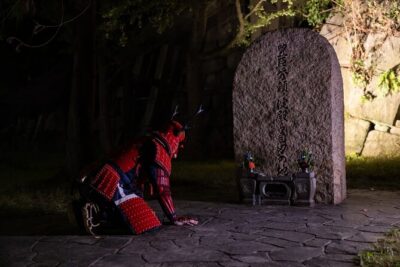
The samurai performance is the star for many people, and the program includes participation. That part is key. The show is paired with a chance to practice samurai sword action, and reviews reassure it is not real-sword work.
Think of it like a choreographed performance plus a fun participation segment. You get to learn moves and join in during the action bits. For kids, it tends to be the most memorable part because it is dramatic, physical, and easy to understand even if you do not know the terminology.
One honest caution from the reviews: some people felt the samurai element was a bit lame compared to the rest, and that pieces may be reproductions. That does not automatically ruin the experience, but it should shape your expectations.
If your dream is seeing original, museum-quality armor and weapons up close, this is probably not that. The real value is in the performance plus the interactive participation, where you get a feel for the vibe and the role of samurai imagery in Japanese culture.
If you want more costume immersion, the listing notes samurai armor is not included. There may be costume options or upgrades, but your base ticket is built around the show and the interactive activities, not wearing full gear.
Traditional music and instrument try-outs: more than watching
After the samurai drama, the afternoon turns musical. You get traditional Japanese music performances, with some sections where you can practice or try instruments.
This is one of the most cost-effective parts of the ticket. Watching live music is great, but trying instruments is how you actually remember it later. Reviews mention hands-on practice with instruments, and examples include harp and a Japanese flute. There is also mention of a traditional stringed instrument and a complex piano-like instrument type in the program.
Even if you only play a few notes, you learn something valuable: traditional instruments are not just props. They require posture, touch, and attention, and the staff typically guide you through that.
For culture nerds, this portion is especially satisfying because it shows how Japanese music fits into ceremonies and performances. For casual visitors, it is still fun because you are doing something in real time.
Practical note: the music segment can be more energetic than tea. If you get overstimulated in loud rooms, take small breaks mentally. The facility is indoors, and the flow moves station-to-station, so you will not be stuck in one loud corner forever.
What is included, what is not, and costume upgrades to consider
Your included ticket covers:
- Tea ceremony experience
- Calligraphy experience
- Traditional Japanese music
- Samurai performance
Not included on the base ticket are:
- Samurai armor
- Kimono
- Ninja (the listing explicitly says ninjya)
That matters because people sometimes assume “samurai experience” means wearing armor. It might be possible to add costume elements through an upgrade option, and one review mentions a kimono upgrade for 5,000 yen, plus information about how dressing works and what you get to keep (like socks and undergarments). There is also mention of a samurai attire option.
So here is a simple way to decide:
- If you want hands-on culture and do not care about full costume time, stick with the base ticket.
- If your top goal is photos and dressed-up immersion, consider the kimono or samurai attire upgrade, but plan for extra cost.
If you are traveling with kids, costume upgrades can be the difference between a fun afternoon and a “we remember this forever” afternoon. The base ticket still sounds like plenty, but the dress-up options are the natural add-on.
How staff support makes the difference
One of the most repeated positives is the staff. People highlight that the team is friendly, patient, and actively helps with questions and instructions. That matters, because hands-on workshops can be stressful when you do not understand the language.
The program also uses translators. In reviews, translators are described as being around the stations to help you move through each activity and understand what to do next. That reduces the classic workshop problem: standing around waiting because you missed an instruction.
Also, you can tell the organizers designed the flow for multiple age groups. There is a note that it works well even with grandchildren and families, with staff staying patient through a larger group in one case.
For you, that means less worrying and more doing.
Food for thought: who this fits, and who might skip it
This works best if you want a structured, interactive afternoon in Osaka that does not require you to research beforehand. It is a good pick if:
- You want a mix of arts and performance, not one long show
- You enjoy hands-on learning, especially tea and calligraphy
- You are in the Shinsaibashi or Dotonbori area and want a nearby cultural block
- You are traveling with family and want activities with participation
You might consider skipping or altering your plan if:
- You are a hardcore samurai gear collector who needs original armor details
- You dislike short workshops where you participate and move through stations frequently
- You strongly prefer only museum-style viewing with minimal participation
The samurai show is part of the appeal, but it is paired with multiple other traditions. If your heart is only on armor and weapons, the base experience may not satisfy.
Should you book this Osaka samurai show and tea ceremony?
Book it if you want a lot of culture time in one tidy afternoon. For the price, you are getting multiple workshops and performances, and the setup is designed for participation, not passive watching. The small group limit helps you feel less lost in a busy city.
I’d book the base ticket first unless costume time is your top priority. If you want photos and dress-up, look into the kimono or samurai attire upgrade options, but remember armor and kimono are not included in the base price.
Final tip: pick a time slot when you can arrive relaxed. The value is in doing each station well, especially calligraphy and tea. If you treat it like a checklist, you will miss the point.
FAQ
What is included in the Samurai Show, Tea Ceremony, Japanese Traditional Activities ticket?
The ticket includes a tea ceremony experience, calligraphy experience, traditional Japanese music, and a samurai performance.
What is not included in the ticket?
The ticket does not include samurai armor, kimono, or ninja costumes.
How long is the experience?
It runs for about 2 hours 30 minutes (duration is also described as about 150 minutes).
Where do I meet for the experience?
You meet at Shinsaibashi ARTY Inn, 2-chōme-17-3 Nishishinsaibashi, Chuo Ward, Osaka, 542-0086, Japan. The activity ends back at the meeting point.
Is the meeting point near public transportation?
Yes, it is near public transportation.
What is the group size limit?
The experience has a maximum of 20 travelers.
Do I receive a mobile ticket?
Yes, the experience uses a mobile ticket.
Is good weather required?
The experience requires good weather. If it is canceled due to poor weather, you will be offered a different date or a full refund.
What is the cancellation policy?
There is free cancellation. You can cancel up to 24 hours in advance for a full refund. If you cancel less than 24 hours before the start time, the amount paid is not refunded.
When do I receive confirmation?
You will receive confirmation at the time of booking.
More Show in Osaka
- Osaka: Sumo Show & Experience w/ Optional Kimono & Hot Pot★ 4.5 · 609 reviews
- Osaka: Sumo Stage Show with Bento or Snack + Fight & Photo★ 4.3 · 364 reviews
- Osaka: English Stand Up Comedy Show at Osaka Comedy Club★ 4.7 · 203 reviews
- Osaka: UTAGE Japanese Taiko Live Show★ 4.9 · 167 reviews
Just added around Osaka

Tea Ceremony & Matcha Experiences, compared.
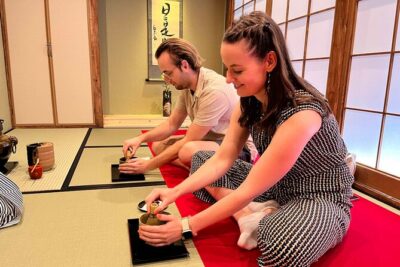
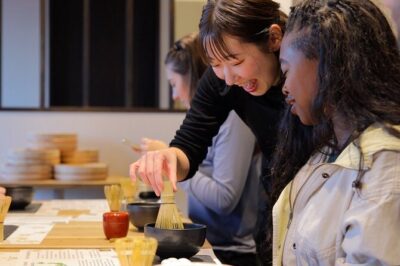
Matcha Making Class in Osaka with Authentic Japanese Sweets Set
Read our review →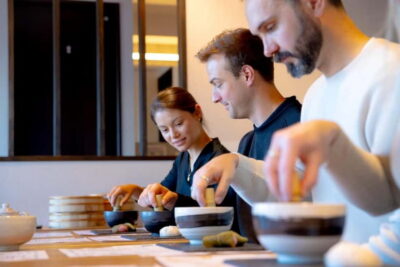
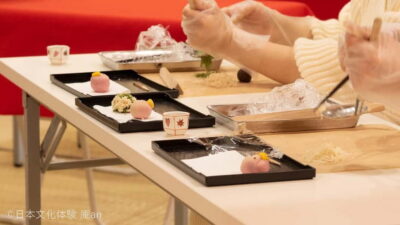
Japanese Traditional Sweets Making and Tea Ceremony
Read our review →
Osaka Temple Cool Foot Bath & Matcha Experience〈45min〉
Read our review →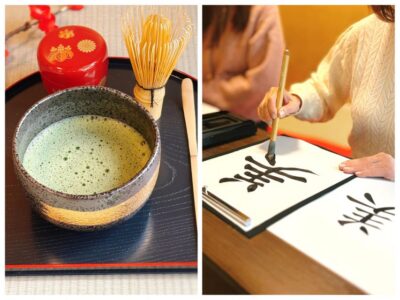
Osaka; Japanese Tea ceremony experience, Macha and Sencha
Read our review →This tour also fits