
Reviewed · CALLIGRAPHY CLASSES
Osaka: Temple Tour and Traditional Calligraphy Lesson
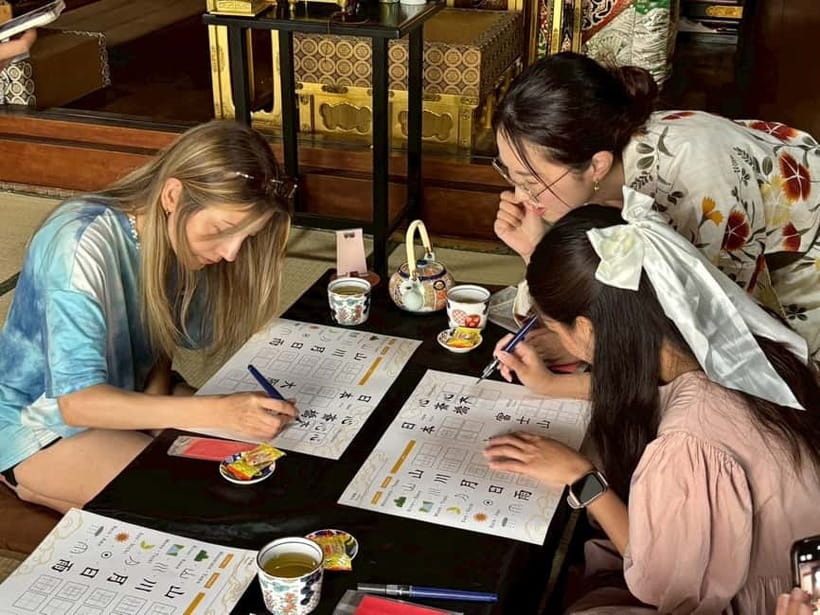
One hour in quiet beats a whole afternoon shopping. This Saishoji Temple calligraphy experience combines a calm Zen setting with guided Japanese language and culture, all within easy walking reach of Yotsubashi. You leave with hands-on practice, a name card tied to the kanji you choose, and a small ceramic keepsake.
I love the way it links practical language to the real place you are in, from a short Osaka-area history chat to temple etiquette and mindful conversation. The Zazen breathing meditation is also a standout, especially if you want your brain to slow down without trying too hard. One consideration, it is only one hour, so you will get a taste and the basics, not a long, multi-session calligraphy project.
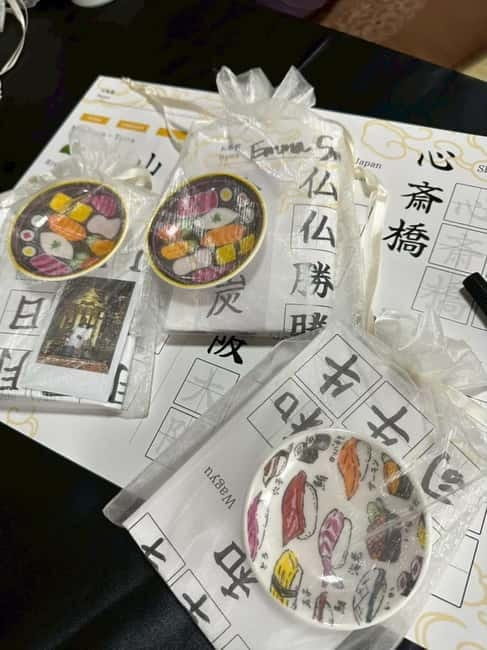
I also like the tangible results: you write one favorite kanji on a mini shikishi and get a name card with the character and its meaning. The small ceramic plate gift (8 cm diameter) is a sweet, useful souvenir that feels personal rather than generic.
In This Review
- Key Highlights to Know Before You Go
- Saishoji Temple in Horie, Steps from Yotsubashi
- The One-Hour Flow: Language, History, and Temple Basics
- Zazen Meditation for Focus, Not Performance
- Basic Calligraphy Practice, Then Your One Kanji
- Mini Shikishi, Materials You Do Not Have to Buy
- Matcha Tea Ceremony and the Calm That Sticks
- What You Get to Take Home, Including the 8 cm Ceramic Gift
- Price and Value for a Real Temple Workshop Hour
- Getting the Most Out of Your Hour (Even If You Go Solo)
- Who Should Book This Temple Tour and Calligraphy Lesson?
- Should You Book It?
- FAQ
- Where is the meeting point?
- How do I get there from public transportation?
- How long is the experience?
- What is the price?
- Is the lesson taught in English?
- Do I need Japanese language experience?
- What activities are included?
- What will I do during the calligraphy part?
- What take-home items do I receive?
- Is there free cancellation or reserve-and-pay-later?
Key Highlights to Know Before You Go
- Saishoji Temple setting steps from Yotsubashi for a fast culture fix without extra transit
- A guided Osaka language and history lesson paired with temple etiquette and everyday phrases
- Zazen meditation for focused breathing, ideal for first-timers
- Write one kanji on a mini shikishi, with clear step-by-step guidance
- Take-home meaning and keepsakes, including a name card and an 8 cm ceramic plate
- English instruction and small-group attention, so you are not just watching
Saishoji Temple in Horie, Steps from Yotsubashi
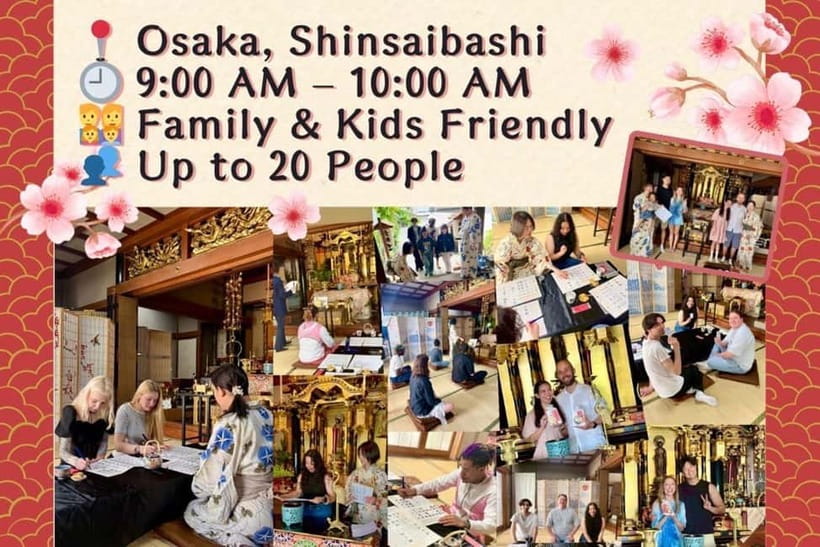
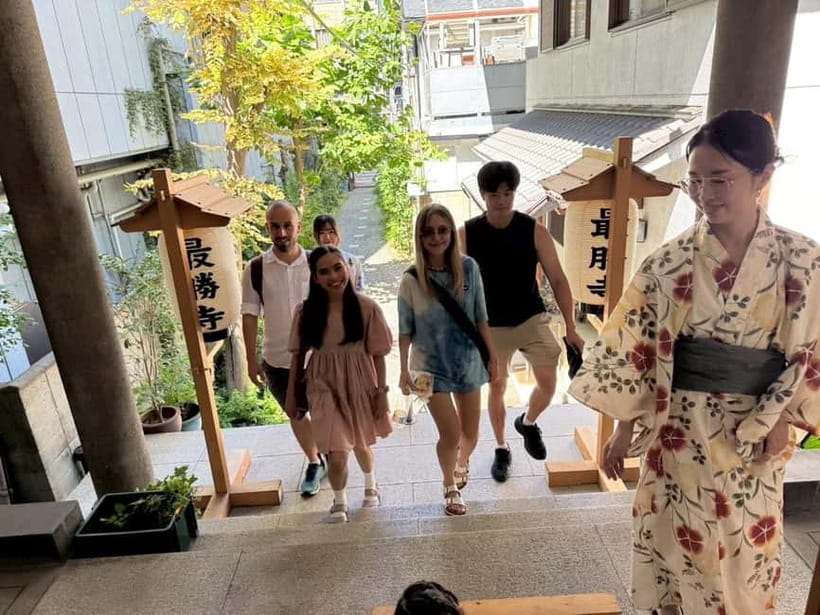
The meeting point is Saishoji Temple, located at 1-6-18 Kitahorie, Nishi-ku, Osaka, 550-0014. You are close enough that you can easily weave this into a day that also includes shopping around Shinsaibashi and the city center.
Getting there is straightforward. It is about a 3-minute walk from Yotsubashi Station (Osaka Metro Yotsubashi Line, Exit 4), around 10 minutes from Shinsaibashi Station (Osaka Metro Midosuji Line), and roughly 15 minutes from Namba Station.
What matters here is not just convenience. This location keeps you from burning time getting somewhere that feels quiet and intentional. When your day is full of movement, having a temple start that is literally near the subway helps you arrive calmer and more present.
Once you step into the temple environment, the vibe shifts quickly. You are not juggling crowds or noise. Instead, you are in a sacred, peaceful space where people sit, listen, and focus on small, deliberate actions.
Brush strokes that take a lifetime to master
- Osaka: Private Japanese Calligraphy Experience★ 5.0 · 66 reviews
- Calligraphy Workshop in Namba, Dotonbori★ 5.0 · 57 reviews
- Learning Zen of Japanese Calligraphy in kimono near Osaka Castle★ 4.5 · 53 reviews
- Osaka: Private Tea Ceremony and Calligraphy Experience★ 5.0 · 50 reviews
- Samurai dress-up and shows, plus Tea Ceremony & Calligraphy★ 5.0 · 27 reviews
The One-Hour Flow: Language, History, and Temple Basics
This experience is built around a simple idea: learn Japanese in the context where it actually makes sense. You start with a brief guided lesson that covers local landmarks and how Osaka neighborhoods connect to what you are seeing.
Expect history and context related to Shinsaibashi, Yotsubashi, and Osaka Castle. The guide also explains the difference between temples and shrines, which is one of those points that clears up a lot of confusion fast when you are sightseeing.
You also get Japanese language practice designed for real communication. The focus is on conversational phrases and idiomatic cultural expressions, plus mindful communication while you learn. That is a smart pairing, because idioms and etiquette are where language starts to feel like more than textbook vocabulary.
Instruction is in English, and the class is designed to work for both beginners and more advanced learners. The small-group size is meant to keep attention on you, not on the clock. In practice, that is what makes this kind of workshop feel approachable even if you are nervous about your Japanese.
Zazen Meditation for Focus, Not Performance
After the short lesson, you shift into zazen meditation. This is not a showy activity, and that is exactly the point. You sit and follow guidance centered on clearing your mind and focusing on your breathing.
If you are new to meditation, you usually do not need special preparation. The experience is set up so you can just follow the lead and settle into the rhythm of the room. Many first-timers find that the hardest part is simply slowing down, and the session gives you a structure to do it.
I like this part because it trains attention without demanding expertise. You are not trying to achieve a spiritual high. You are practicing awareness, one breath at a time.
Also, the temple setting helps. The quiet is real, and that makes it easier to feel the benefits. One of the most common themes people mention from experiences like this is how the calm carries into the rest of the activity, especially when you move to something as hands-on as calligraphy.
Basic Calligraphy Practice, Then Your One Kanji
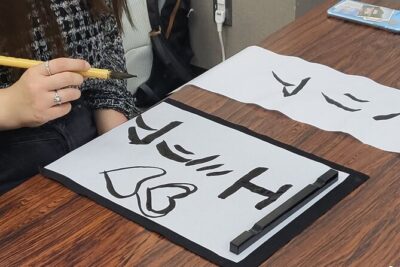
Now comes the hands-on portion, the part most people book for. You practice basic calligraphy first, then you write one favorite kanji on a mini shikishi.
You will be working with the core tools of the craft, including ink and brush handling. The instruction is designed to be easy to follow, and first-time students typically leave feeling proud because they can make something that looks like actual calligraphy, not a rushed scribble.
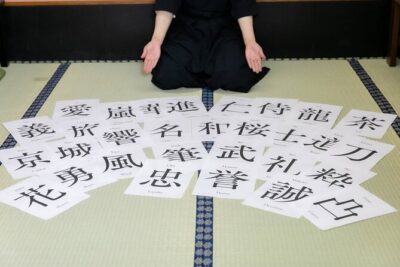
Writing a single kanji is a good strategy. It keeps the task manageable within a one-hour format. It also nudges you into quality over quantity, which is where the Zen angle fits in. When you focus on one character, you notice how your hand slows down and your mind follows.
Here is what you can look forward to as a clear outcome. After you complete your kanji, you receive a name card featuring the Japanese kanji you chose and the meaning behind it. That is a great touch because it turns what you wrote into something you can remember, not just a sheet of paper you took a quick photo of.
And yes, the process can be sensory. People often talk about focusing on the ink smell and the feel of the brush, like it pulls you into the present moment. That is not fluff. In calligraphy, those details matter, and the guidance helps you notice them without overthinking.
Mini Shikishi, Materials You Do Not Have to Buy
You do not need to bring anything. All materials needed for the activities are included, which saves you the hassle of shopping for tools you might not use again.
The mini shikishi format also helps you take something home that feels special without being bulky. If you love souvenirs that connect to a skill instead of a mass-produced keychain, this fits that taste.
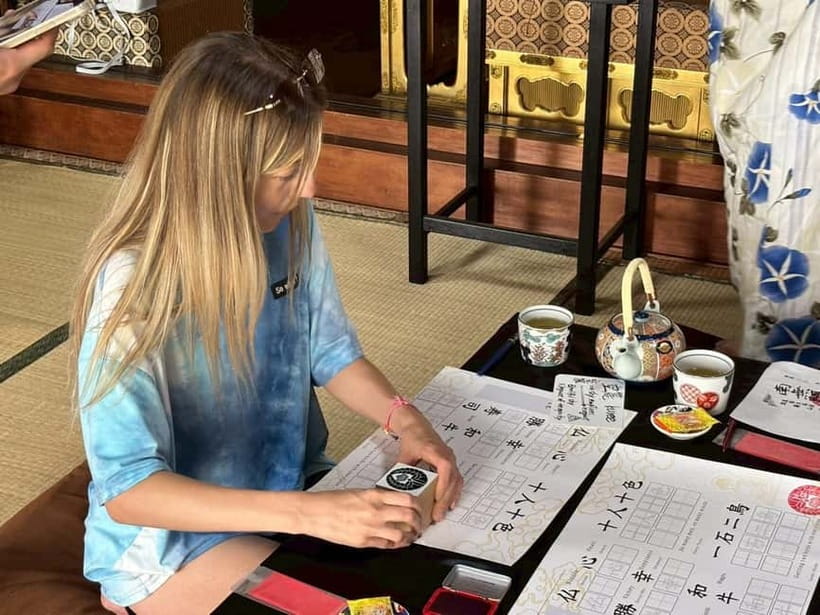
One extra detail that shows up for some sessions is that there can be a small stamp element, and people describe the stampwork as intricate. If you spot that in your session, take it slowly. It is the same idea as the meditation, small steps, steady focus.
Quiet spaces between the neon
- Osaka: Minoh, Katsuoji Temple, & Minoh Falls Full-day Tour
★ 4.9 · 172 reviews - Sagano Romantic Train & Arashiyama, Kiyomizudera, Fushimi Inari Taisha Day Tour
★ 4.5 · 171 reviews - Full Day Kyoto Tour : Bamboo Forest, Golden Temple, Fushimi Inari
★ 5.0 · 84 reviews
Matcha Tea Ceremony and the Calm That Sticks

The experience does not stop at writing. You also participate in a traditional matcha tea ceremony as part of the cultural immersion.
Tea is a nice bridge between hands-on creation and mindful calm. Calligraphy asks you to slow down and control your movement. Matcha asks you to slow down and control your attention. Together, they make the experience feel cohesive.
Many people appreciate that the whole hour stays grounded. The staff and monks guide you through each activity without rushing you. The result is less like a checklist and more like a sequence that builds on itself.
After tea, you get time to settle. Then the session ends with the practical part of finishing your take-home items.
What You Get to Take Home, Including the 8 cm Ceramic Gift
The take-home items are a big part of the value. You receive a name card with the kanji you wrote and its meaning, and you also receive a small ceramic plate gift.
The plate is 8 cm in diameter, which makes it easy to display or store without thinking about size. Gifts like this matter because they feel tied to the event. You are not just paying for instructions, you are leaving with something you can use or keep close.
That is one reason this feels like good value at the listed price. The session includes instruction, materials, a meditation moment, calligraphy practice, matcha, and a couple of meaningful items to carry home.
Price and Value for a Real Temple Workshop Hour
The price is $20 per person for a one-hour experience. For Osaka, that is not only affordable, it is structured in a way that makes the spending feel fair.
You are paying for several parts in one block. You get a guided history and language lesson, you get access to a calm temple space with interaction with resident monks, and you get all materials for calligraphy practice. You also get the matcha ceremony and the take-home items.
Small-group learning also supports value. When instruction is personal, the time you spend feels less wasted. You are not just sitting in the background. Even if you are quiet, you still have a chance to understand what to do next.
The one-hour length is the tradeoff. It keeps the experience tight and easy to fit into a schedule, but it means you will not master everything in one go. Think of it as a guided introduction with a real outcome, not a long training course.
If you want a deeper calligraphy journey, you can always follow up with extra practice after you see how it feels. But as a first temple workshop, this format is hard to beat.
Getting the Most Out of Your Hour (Even If You Go Solo)
One of the best parts of this kind of class is that it works well even if you are traveling alone. The tone described is friendly and accommodating, so you are not left scrambling to find your place.
If you want to get more from the language portion, come with one or two goals. You could aim to learn a couple of conversational phrases that help you in daily situations around Osaka, or focus on etiquette differences between shrines and temples. Either way, you leave with language that connects to something you saw and felt.
For the calligraphy, do not worry about being artistic. This is about patience and control. The instruction is meant for first-timers, and many people find it surprisingly calming once they start moving slowly.
A good mindset helps. You will get the most if you treat this like a seated workshop, not a photo-op sprint. You can take pictures if allowed, but keep the session’s pace in mind so you do not feel rushed.
Also, since you will be doing meditation and seated calligraphy, wear something you can sit comfortably in.
Who Should Book This Temple Tour and Calligraphy Lesson?
This is a great fit if you want Japanese culture that is calm, hands-on, and not locked behind expensive, all-day tours. If you like workshops where you learn a skill, write something meaningful, and also get a mental reset, you will probably enjoy this.
It also makes sense if you care about language learning but do not want classroom vibes. The experience uses guided conversation and idiomatic expressions linked to temple context, which is an effective way to make the language stick.
If you are the type who gets tired of constant walking and noise, the Zen temple setting is exactly the kind of counterweight that helps a trip feel balanced.
The main mismatch is also clear. If you want a long, in-depth art program or you expect a major sightseeing loop, this is not that. It is an intentional one-hour experience focused on quiet craft, basic practice, and cultural understanding.
Should You Book It?
Yes, I would book it if you want a short, affordable temple experience with real teaching and a tangible result. The $20 price feels fair because you get multiple guided components, all materials, and take-home items including the 8 cm ceramic plate and a name card tied to your kanji.
Book it even if you are a beginner, especially if you are drawn to calm and focus. And if you are already learning Japanese, the temple etiquette and idiomatic phrases add useful context right away.
If you hate sitting still, or you want something that feels more like a city tour, you might prefer a busier sightseeing option. But if you want one hour of Osaka that slows you down, this is a strong choice.
FAQ
Where is the meeting point?
You meet at Saishoji Temple, 1-6-18 Kitahorie, Nishi-ku, Osaka 550-0014, Japan.
How do I get there from public transportation?
It is about a 3-minute walk from Yotsubashi Station (Osaka Metro Yotsubashi Line, Exit 4). It is about a 10-minute walk from Shinsaibashi Station and about a 15-minute walk from Namba Station.
How long is the experience?
The duration is 1 hour.
What is the price?
The price is $20 per person.
Is the lesson taught in English?
Yes, the instructor is English.
Do I need Japanese language experience?
No. The experience is tailored for both beginners and advanced learners.
What activities are included?
Included activities are a guided Japanese history and language lesson, cultural immersion activities, interaction with resident monks, zazen meditation, calligraphy copying, and a traditional matcha tea ceremony.
What will I do during the calligraphy part?
You practice basic calligraphy, then write one favorite kanji on a mini shikishi.
What take-home items do I receive?
You receive a name card with Japanese kanji and its meaning, and you receive a small ceramic plate gift that is 8 cm in diameter.
Is there free cancellation or reserve-and-pay-later?
Yes. You can cancel up to 24 hours in advance for a full refund. You can also reserve now and pay later.
More Workshops in Osaka
- Sushi Making Osaka Roll and Authentic Japanese Sushi Class★ 5.0 · 1,220 reviews
- Matcha Making Class in Osaka with Authentic Japanese Sweets Set★ 5.0 · 509 reviews
- Osaka: Ramen and Gyoza Cooking Class in Dotonbori★ 5.0 · 378 reviews
- Osaka Cooking Class: Okonomiyaki &Japanese cuisines experience★ 5.0 · 261 reviews
Just added around Osaka


Calligraphy Classes, compared.
Learning Zen of Japanese Calligraphy in kimono near Osaka Castle
Read our review →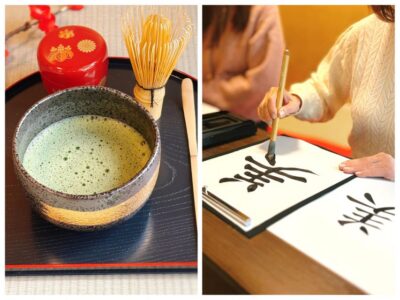

Samurai dress-up and shows, plus Tea Ceremony & Calligraphy
Read our review →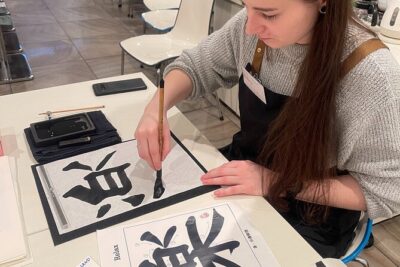
Premium Kimono Dressing, Tea Ceremony, Calligraphy, Samurai show
Read our review →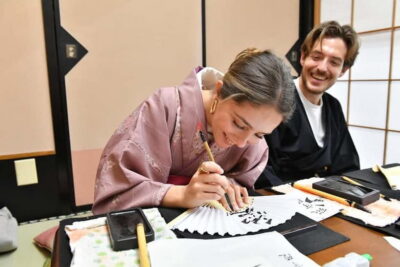
Learning Shodo with a kimono and Trying Samurai Calligraphy
Read our review →This tour also fits