Reviewed · NINJA & SAMURAI EXPERIENCES
Learning Shodo with a kimono and Trying Samurai Calligraphy
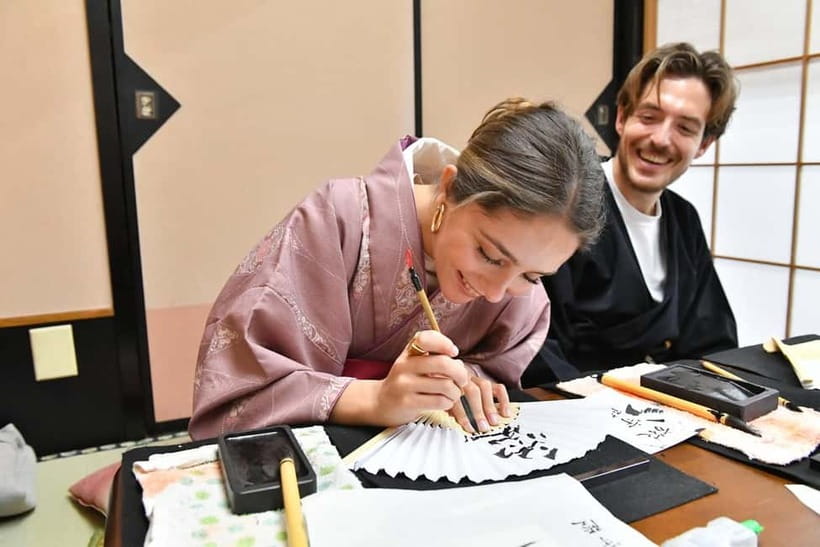
Brush, kimono, kanji, and family laughs. This one-hour Shodo session at Samurai Honor turns a quiet art lesson into a full-on Japanese photo moment, with a calligraphy master helping you write your own kanji. You practice proper brush technique first, then you get a surprise round where the teacher writes participants’ foreign names in kanji you selected earlier, plus a samurai-style character at the end.
I really like two things here. First, the name-in-kanji part makes the lesson feel personal, and you also get the meaning behind the characters used for your name. Second, the kimono + photo shoot setup gives you the before-and-after you actually want on a trip, not just a sheet of paper you fold and forget.
One consideration: the location is practical more than pretty, and you may hear trains passing nearby during the class. Add that to the fact that you should plan your timing carefully and arrive early for changing, and the experience works best when you go in with realistic expectations.
In This Review
- Key things to know before you try Shodo in Osaka
- Why Shodo in a Kimono feels like real Japan, not just a costume stop
- Getting oriented at Samurai Honor, Osaka, and the real 30-minute early rule
- Your 60 minutes of Shodo: brush grip, stroke order, and writing your name in kanji
- Step 1: preparation and mindset
- Step 2: how to hold the brush and move it
- Step 3: brush movement technique
- Step 4: kanji practice using your selected character(s)
- Step 5: surprise name writing, plus meaning of the characters
- Step 6: final draft you can take home
- Samurai Calligraphy in oversized ink, plus the beauty of margins
- One character for resignation, told through symbolism
- The “beauty of the margins” lesson
- Oversized brush, big body movement
- Signing for identity and photo time
- The bag gift with your kanji attempt
- What you leave with: your calligraphy, optional kakejiku, and the photo delivery
- Optional extras and what is not included by default
- Price and value for around $42 for one hour
- Who should book this Shodo class in Osaka, and who should skip it
- Tips to make your session smoother, calmer, and prettier on camera
- Should you book Samurai Honor for kimono Shodo and samurai calligraphy?
Key things to know before you try Shodo in Osaka
- Kimono dressing is part of the art class, so expect a full cultural look, not just a table and pens.
- Your kanji comes from your name, with a master writing it in kanji after you practice stroke order.
- Brush technique is taught step by step, including how to hold the brush and how to move it for clean strokes.
- There’s a samurai-style segment with an oversized brush and the Japanese idea of beauty of the margins.
- You leave with more than paper, including your calligraphy work and a special Samurai Honor bag gift with your kanji.
- Small group size (up to 10) keeps it beginner-friendly, especially if you’re doing it with kids.
Why Shodo in a Kimono feels like real Japan, not just a costume stop
Shodo is not about fancy vocabulary. It is about your body, your wrist, and your patience. When you put on a kimono, the whole thing clicks into place. You naturally slow down, your posture changes, and you start paying attention to the brush in your hand instead of rushing toward the result.
I also like how the experience mixes traditional ceremony mood with a photo-ready finish. At the samurai-calligraphy part, you are photographed dressed as a Yamato Nadeshiko or as a brave samurai, depending on your style. That is a fun way to make the art feel connected to Japanese identity, not trapped in a classroom.
And yes, it is hands-on. You practice how to hold the brush and use the tools, then you drill stroke order. After that, you write a final draft that you can take home.
Still haven't worn a kimono through Osaka?
- Osaka: Sumo Show & Experience w/ Optional Kimono & Hot Pot★ 4.5 · 609 reviews
- Learning Zen of Japanese Calligraphy in kimono near Osaka Castle★ 4.5 · 53 reviews
- Osaka: Kimono or Yukata Rental &Photos Service Options★ 4.9 · 25 reviews
- Kimono photoshoot-Includes 100 photo data★ 5.0 · 21 reviews
- Premium Kimono Dressing, Tea Ceremony, Calligraphy, Samurai show★ 5.0 · 18 reviews
Getting oriented at Samurai Honor, Osaka, and the real 30-minute early rule
This class runs at Samurai Honor (Bushi no Homare), in Osaka, at Excellence Takayama 1F, 2-3-19 Shiginonishi, Joto-ku, Osaka-shi, Osaka 536-0014. Apple Maps can be off, so use the provided Google Maps link when you navigate.
You meet near a wooden sign that reads Honor of the Samurai. It is a rack in front of the store area where you can also spot pamphlets for the activity. Kimonos and hakama may be hanging out to dry, so that area is a useful visual cue.
Plan to arrive 30 minutes early. That buffer matters because you need time to change clothes and get instructions before the brush work starts. If you show up late, you will feel rushed, and with calligraphy, rushed usually leads to messy strokes.
Your 60 minutes of Shodo: brush grip, stroke order, and writing your name in kanji
The Shodo lesson is structured like you would want for a first-timer: you do not jump straight to writing. You build the basics, then you apply them.
Step 1: preparation and mindset
Before you pick up the brush, you change into traditional Japanese clothing like a kimono. Then you get a quick mindset and tool introduction. This part is small, but it sets the tone. Calligraphy is about control, and the instructor is trying to get you from casual “drawing” to intentional writing.
Step 2: how to hold the brush and move it
You practice how to hold the brush and use the tools. This is where beginners often think they already know, then realize the brush behaves differently than a pen. Getting the grip and movement right helps your strokes look steady, and it keeps you from fighting the brush the whole time.
Brush strokes that take a lifetime to master
- Osaka: Private Japanese Calligraphy Experience
★ 5.0 · 66 reviews - Calligraphy Workshop in Namba, Dotonbori
★ 5.0 · 57 reviews - Osaka: Private Tea Ceremony and Calligraphy Experience
★ 5.0 · 50 reviews
Step 3: brush movement technique
Next comes brush movement, including the specific technique for making strokes that match the calligraphy style. Even if you have no artistic background, you will be guided on what to aim for.
Step 4: kanji practice using your selected character(s)
You then practice the stroke order of the kanji you selected earlier. A master calligrapher demonstrates how to write these kanji with the brush, and you follow stroke-by-stroke while focusing on technique.
This is the heart of the experience. Stroke order is not academic trivia. In Shodo, it is the difference between a character that looks “right” and one that looks off even if you copied the shape.
Step 5: surprise name writing, plus meaning of the characters
Here’s a fun moment: the teacher writes the foreign names of the participants using the kanji characters they chose. Each kanji character has its own meaning, so you also learn about what those characters mean for your name.
I like this part because it turns your personal identity into the lesson. It also gives you a story to tell later: this is not random kanji practice, this is your chosen character and what it communicates.
Step 6: final draft you can take home
Finally, you write a final draft while keeping in mind what you learned. You work on calligraphy paper. You can keep your first calligraphy work as a memento, and there is also an optional hanging scroll format (Kakejiku) if you want something more display-ready.
Samurai Calligraphy in oversized ink, plus the beauty of margins
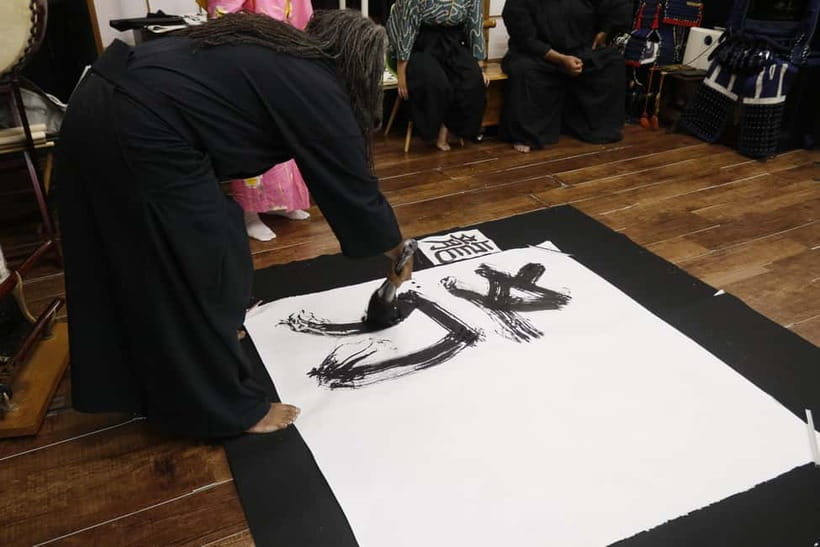
After the standard Shodo practice, you get a samurai-style calligraphy segment. This is less about perfection and more about presence.
One character for resignation, told through symbolism
You start with the idea of writing one character for resignation. The teacher asks you to reflect on your life so far, think about the kind of feelings you want to leave behind, and consider the composition of your last character in this world. That framing is emotional, but it is still simple: you are translating a thought into one bold kanji.
The “beauty of the margins” lesson
Then you learn a Japanese aesthetic concept: beauty of the margins. The space is considered part of the artwork, not wasted paper. That means blank areas around the character are treated as intentional design choices.
If you come from a “fill the page” school of art, this is a helpful reset. You stop trying to force the character to look busy and instead let the character breathe.
Oversized brush, big body movement
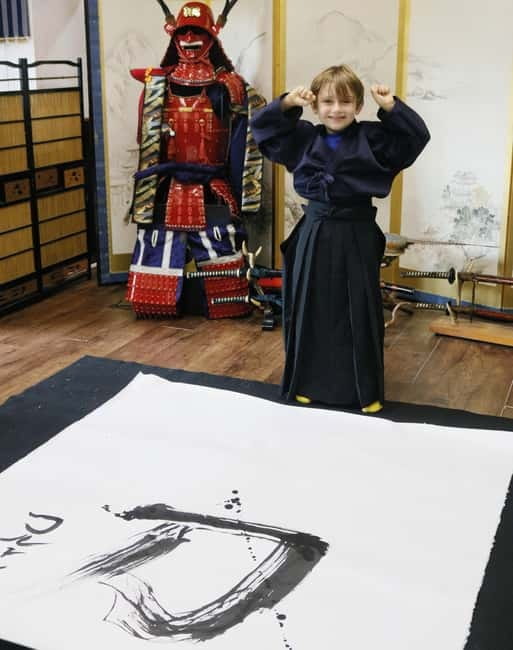
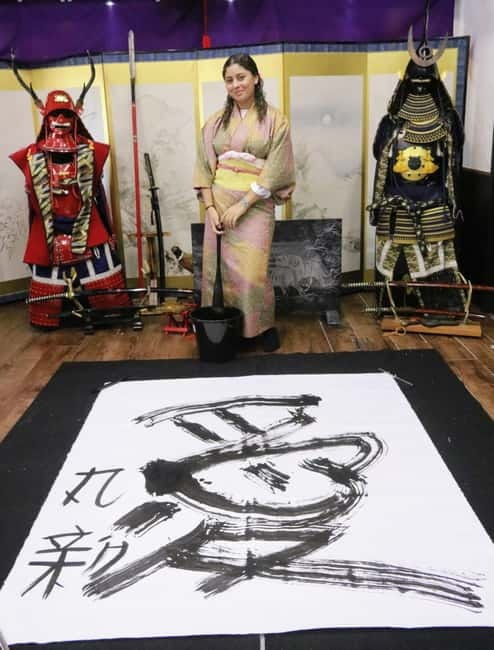
An artist uses an oversized brush, more than five times larger than usual, on a 150cm x 150cm sheet of paper. The brush work is done dynamically, using the whole body. Even if you are only watching, it helps you understand why Shodo looks so powerful from a distance.
If you are participating, you get to see how scale changes the feel of the strokes. It is not just bigger, it is different.
Signing for identity and photo time
The artist signs the work to show who created that last character, identifying the owner. Then comes the photo shoot. You are captured in your kimono outfit, framed either as a Yamato Nadeshiko or as a samurai. Expect a proper moment, not a quick selfie at the end.
The bag gift with your kanji attempt
You also receive a Samurai Honor original bag. A calligraphy master carefully writes the kanji character you attempted today on the bag surface. The best part is that this bag is not available for sale anywhere else, so it is a real souvenir tied to your specific character.
What you leave with: your calligraphy, optional kakejiku, and the photo delivery
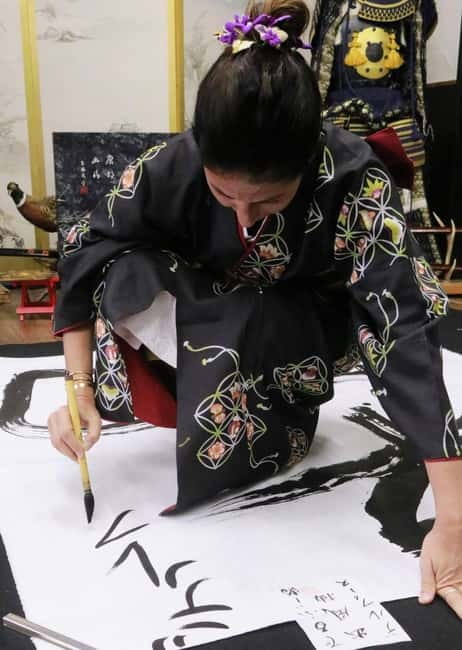
The included experience focuses on giving you something physical plus digital photos.
You take home your calligraphy work. You can also use optional formats if you want the art to look more like wall decor, not just paper.
Photography is included. You get photo data sent to a designated email address. That matters because it reduces the stress of having to “get the shot” yourself right then and there. You can focus on learning and participating, and still get usable images later.
Optional extras and what is not included by default
A few add-ons exist if you want a more complete look:
- Calligraphy on Kakejiku (paid option)
- Japanese-style hairset for kimono plus hairpin (paid option)
- If you choose Wasou bijin or KAKEJIKU packages, those elements are included
Also note what is listed as not included in the default set:
- Women’s Japanese attire details beyond the kimono setup, like obi sash, tabi socks, zori sandals, basket bag, and outdoor photo shoot
So if you care a lot about head-to-toe styling, double-check which package level you pick.
Price and value for around $42 for one hour
At $42 per person for a one-hour experience, the value is mainly in what is included, not in what you could DIY. You are paying for:
- Kimono and samurai costumes for the full look
- A certified professional instructor
- Taxes and tips being covered
- Photography data sent after
- An interpreter, with English as the default language
Transport is not included, so factor in getting to Samurai Honor from where you are staying. Also, plan on bringing a simple t-shirt as instructed. It helps with the changing process.
Is it long? It is short enough that you will not feel like you are stuck at the venue for half a day. But it is also long enough for a real progression: tool basics, stroke order practice, and a final draft.
If you are the kind of person who wants deep practice over multiple sessions, this may feel introductory. If you want a memorable first taste, it is a good deal.
Who should book this Shodo class in Osaka, and who should skip it
This is a strong choice for:
- Beginners who want structure and guidance on brush technique
- Families where kids can participate without needing prior experience
- People who like cultural crafts and want something tangible to bring home
- Travelers who want both learning and a photo moment
There is special emphasis on family participation. Calligraphy is presented as something kids can enjoy. In Japan, ages 6 to 8 are commonly a starting point for calligraphy, so if your child is in that range, they are likely to connect with it well.
It is also wheelchair accessible.
It is not suitable for:
- Children under 5 years
- Babies under 1 year
- People with altitude sickness
- People over 95 years
It is also a no-go for pets and baby strollers, and alcohol and drugs are not allowed.
Tips to make your session smoother, calmer, and prettier on camera
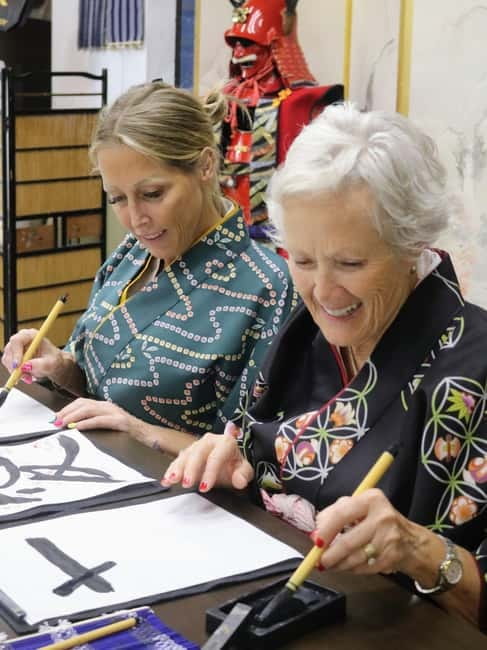
A few practical moves will help your outcome.
Bring the t-shirt. That is the one item they explicitly ask for, and it is there for a reason.
Be ready to choose kanji related to the name you want written. The surprise moment depends on your earlier selection, and the meaning of the characters is part of the learning. If you want a specific character or spelling, decide before you get too deep into the session.
For photos, pay attention during the samurai calligraphy part. You will be photographed dressed as either Yamato Nadeshiko or a brave samurai. If the photographer asks you to pose, follow the guidance. Small posture tweaks help kimono pictures look elegant.
Finally, if you are sensitive to sound, keep in mind the setting can include trains passing nearby. If that might distract you, focus on your own breath and the brush stroke rhythm.
Should you book Samurai Honor for kimono Shodo and samurai calligraphy?

If you want a beginner-friendly Shodo lesson with a real cultural outfit, plus a take-home souvenir and photo delivery, I think this is worth booking. The structure is clear, the name-in-kanji element feels personal, and the samurai-style oversized brush segment gives the class a dramatic finish.
Skip it if you need a super scenic venue, quiet surroundings, or long-form instruction. It is one hour, and it is designed as an efficient, hands-on experience. If you go in prepared, you leave with your own character work, a special bag gift, and images you will actually want to keep.
Ninja & Samurai for a Day
- Samurai Training Experience KENDO in Osaka★ 5.0 · 515 reviews
- OSAKA NIGHT FUSION Japanese Taiko Kabuki Samurai Dance Show★ 4.8 · 155 reviews
- Osaka: Samurai Training Experience KENDO in Osaka★ 5.0 · 111 reviews
- Osaka: A Modern Samurai, Kabuki, Taiko, & Dance Show★ 4.5 · 66 reviews
Just added around Osaka
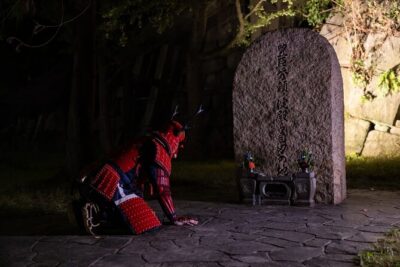

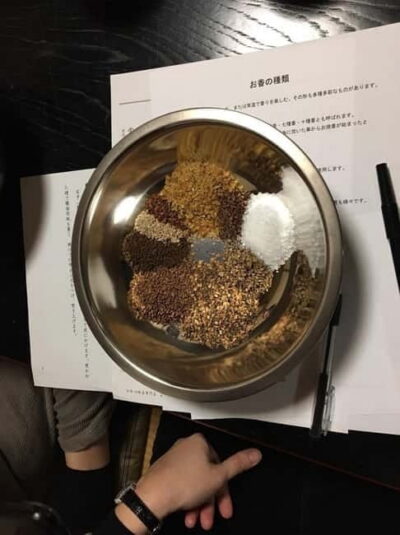
Ninja & Samurai Experiences, compared.
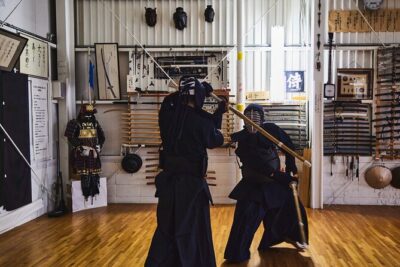

OSAKA NIGHT FUSION Japanese Taiko Kabuki Samurai Dance Show
Read our review →

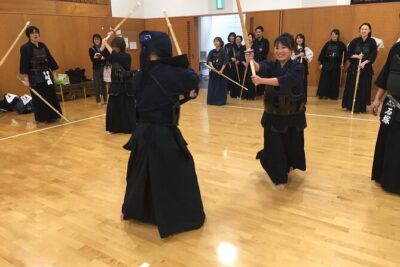
Osaka 2-Hour Genuine Kendo / Samurai Experience In Japan
Read our review →
Learn Bushido – Trial Slashing with Samurai Sword
Read our review →
Samurai Show, Tea Ceremony, Japanese Traditional Activities
Read our review →