
Reviewed · RAMEN MAKING CLASSES
Walking Tour of Osaka’s 5 Must-See Sights, with Ramen for Lunch
Osaka gets easier when you have a plan. This one day Osaka walking tour hits major landmarks, explains what you are seeing, and builds in time for food, photos, and street-level Osaka life, with ramen lunch as the anchor.
I especially like how the group stays small, max 8 people, so you do not feel like a number in a crowd. I also like the practical guide support, including photo shoot help and clear route guidance that saves you from backtracking when streets twist.
The main thing to consider is the pace: you will walk a lot, and some key sites have extra entrance fees on top of the tour price (Osaka Castle and Shitennoji), plus you may use transit for parts of the route.
In This Review
- Key things that make this Osaka tour work
- A smart first-day Osaka plan on foot
- Price, value, and the costs you should budget for
- The small-group advantage (and why it changes the experience)
- Meeting point and start time: go early, stay calm
- Stop 1: Osaka Castle, views first, museum context second
- Stop 2: Shitennoji, ancient temple energy with a short history primer
- Stop 3: Shinsekai and Tsutenkaku, retro Osaka without the museum mood
- Stop 4: Kuromon Market, where lunch turns into an all-day theme
- Stop 5: Dotonbori, Glico sign photos and Osaka’s food symbol
- How the guide support really helps, especially if you get lost easily
- Walking reality check: comfort, stamina, and shoes
- Best fit: who this tour suits and who might want a different style
- Should you book this one-day Osaka highlights walk?
- FAQ
- What is included in the tour price?
- What is not included?
- How long is the tour?
- How many people are in the group?
- Where does the tour start and what time?
- Do I need to speak Japanese?
- Is this tour suitable for kids?
- What should I bring or prepare?
- What is the cancellation policy?
Key things that make this Osaka tour work
- Small group (max 8) means more personal guidance and easier photo stops
- Guided photo moments at big landmarks like the Glico sign and Tsutenkaku area
- Ramen lunch included, plus free time to pick snacks at Kuromon Market
- Five major sights in one day, so you get bearings fast
- Local English-speaking guides you might see often by name, including Taka, Takanobu, and Maka
A smart first-day Osaka plan on foot
Osaka can feel like two cities at once. You have big, famous landmarks like Osaka Castle and then you have the food and neon energy around Dotonbori. This walking tour is designed to connect both sides in one day, so you leave knowing where you are and what you want to return to.
What makes it especially useful is the flow. You start with history and city views, then shift to temples, then move into fun retro neighborhoods and the food streets. If you are short on time, this is a fast route to the highlights without turning your day into a ticket hunt.
You get a local English-speaking guide who keeps commentary moving at a walking pace. And because the tour is limited to eight people, it stays conversational, not like a lecture.
Build a bowl from the broth up
- Osaka: Five Must-See Highlights Walking Tour & Ramen Lunch★ 4.7 · 411 reviews
- Osaka: Ramen and Gyoza Cooking Class in Dotonbori★ 5.0 · 378 reviews
- Ramen and Gyoza Cooking Class in Osaka★ 5.0 · 202 reviews
- Cooking Ramen&Gyoza/KatsuCurry/Bento/Okonomiyaki+Store Tour@Osaka★ 5.0 · 138 reviews
- Three Types of Ramen Cooking Class in Osaka★ 5.0 · 119 reviews
Price, value, and the costs you should budget for
The tour price is $58.14 per person and it runs about 7 hours. That sounds like a lot until you break down what is handled for you: a local English-speaking guide, tour commentary and guidance, photo shoot assistance, and a ramen lunch.
What is not included matters for value. Osaka Castle costs extra (¥1,080 per person), Shitennoji costs extra (¥400 per person), and you should budget for transit if you use it (public transportation pass is listed at ¥820 per person). In plain terms, you will almost certainly pay some additional amounts, but they are clearly itemized.
I think the best way to judge value is this: the tour is doing the hardest part for your day, navigation and timing between areas. If you try to build this yourself with maps only, you lose time and you miss photo angles and food leads that a guide can point out fast.
The small-group advantage (and why it changes the experience)
Max eight travelers changes how the day feels. You can actually keep up, ask questions, and pause for photos without feeling rushed. It also makes it easier for the guide to adjust if a stop is taking longer than expected or if your group wants a quick change of direction.
In real life, I like tours where the guide can notice small problems early. For this tour, that show up in how guides handle meeting points and photo timing, and how they keep the group moving even if people arrive a bit late. You are not stuck waiting in a crowd.
Also, having a guide who can help with photo framing is not just a nice extra. At places like Dotonbori and Osaka Castle, the best angles are not always obvious from the first glance. Photo help saves you time and gives you something usable, not just random snapshots.
Meeting point and start time: go early, stay calm

The tour starts at 9:00 am at FamilyMart Tanimachi-sanchome, Osaka, Chuo Ward. It ends at Hozen-ji Temple in Namba, Chuo Ward.
You should plan to arrive a little early. The meeting point is a public location near transit, and the tour notes say it is near public transportation, but you still want time to locate your guide at the right spot. If you have ever shown up to a tour in Japan only to realize the exact entrance varies, you already know why this matters.
No pickup is offered, so you are responsible for getting yourself there. The upside is that you are not building your schedule around a driver.
Stop 1: Osaka Castle, views first, museum context second
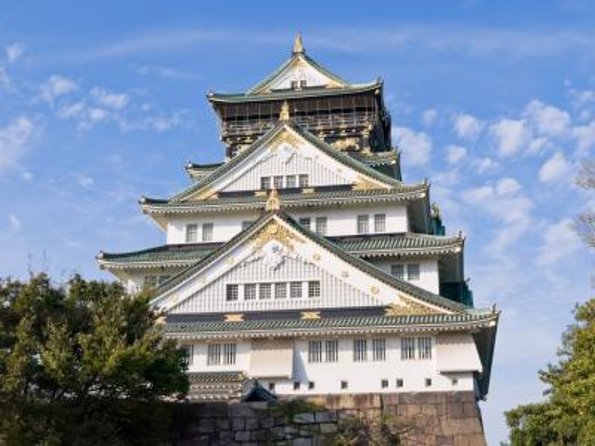
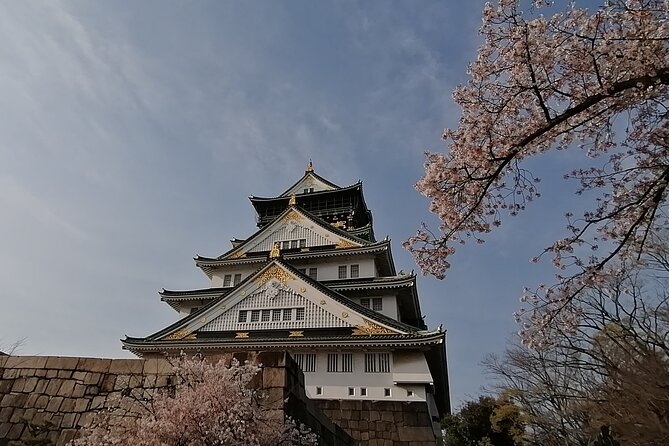
Osaka Castle is your first big visual hit. Even when you are not going inside, the area gives you city context quickly, like you are stepping onto a rooftop of history.
If you choose to go inside, you will find an exhibition about Osaka Castle and the Sengoku period. That matters because later in the day you will be looking at neighborhoods that developed long after the castle era, and this stop gives you the background to connect the dots.
Time on this stop is 2 hours 45 minutes, and that is plenty to do photos, walk the grounds, and decide whether the interior is your priority. The catch is the ticket cost is not included, so you need to budget ¥1,080 per person if you want to go in.
My practical advice: if you care more about views and wandering than exhibits, you can still get value without going into every indoor area. If you love historical interpretation, you will probably want to use more of the time here.
Midday plates worth the wait
- Osaka/Kyoto: Amanohashidate & Miyama Tour with Boat & Lunch
★ 4.6 · 207 reviews - 5-Hour Osaka Highlights Bike Tour with Lunch
★ 4.8 · 146 reviews - Play with Snow Crab Buffet Lunch and Strawberry Picking Bus Tour
★ 5.0 · 88 reviews
Stop 2: Shitennoji, ancient temple energy with a short history primer
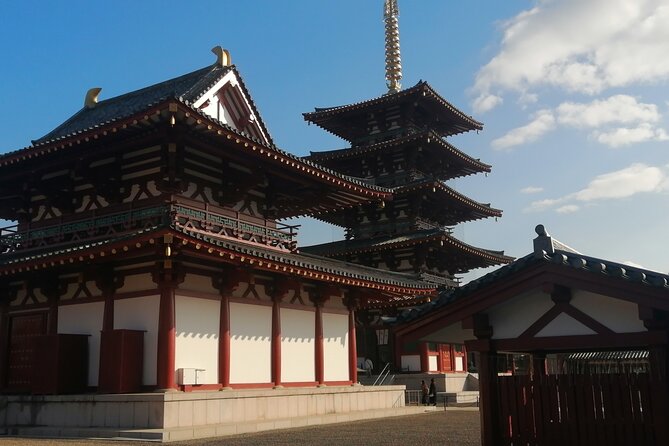
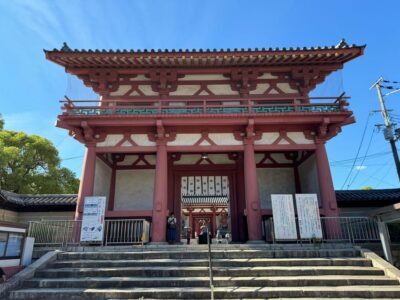
Next up is Shitennoji, described as one of the oldest Buddhist temples in Japan. This is a strong change of pace from the castle, and it also adds balance to your day because you are not only seeing Osaka through architecture and food streets.
Expect an easy 1 hour 10 minutes at this stop. The temple entrance fee is extra (¥400 per person). Even if you are not a temple person, it is worth going because it is one of those places where the age shows, even if you just take your time walking through.
What I like about this stop in the tour design is that it anchors Osaka beyond modern shopping streets. You get a quick history frame, then the itinerary moves you into newer districts and street food culture.
Stop 3: Shinsekai and Tsutenkaku, retro Osaka without the museum mood
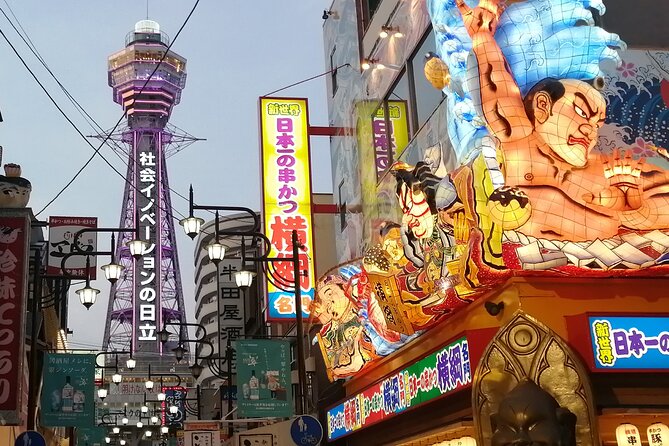
Then you shift into Shinsekai, a retro district known for nostalgic streets and the iconic Tsutenkaku Tower area. The point here is not just sightseeing. It is feeling how Osaka characters itself as a place that loves style, food, and late-night energy.
This stop is about 1 hour 10 minutes, and it is usually the part of the day where the sidewalks start to feel more like a neighborhood and less like a checklist. If you are into photography, this is a great moment to look for color, old signage, and street scenes that do not feel staged.
You also get an easy transition toward food, because Shinsekai naturally leads you into the idea of sampling and wandering. If you are the kind of person who gets hungry fast, this pacing is smart.
Stop 4: Kuromon Market, where lunch turns into an all-day theme
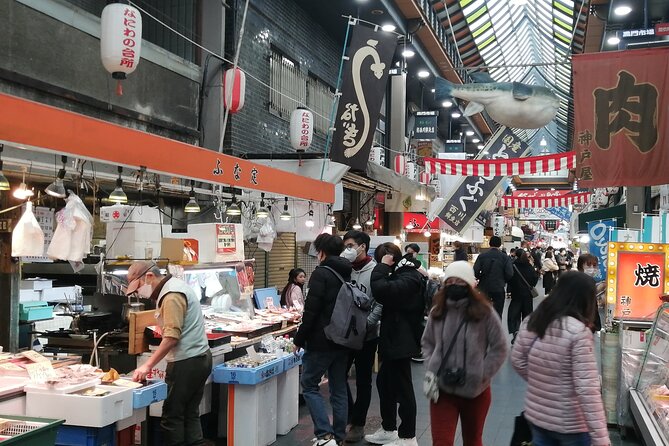
Kuromon Market is the food heart of the tour. You spend 1 hour here, and the market context is described as something that has continued since the Edo period. You also get the practical advantage of having your lunch placed right in the food zone.
Ramen lunch is included, so you do not have to guess where to eat or worry about language barriers ordering. After lunch, you can explore the market atmosphere and street food options on your own. The tour highlights street food here, but remember: the included part is your ramen lunch, snacks are paid separately.
This is also where the guide recommendations help the most. A guide can point you to what is worth trying right now instead of sending you to the longest line or the touristiest stall.
One note from what people said in past outings: some groups reported lunch can be adapted for gluten-free diets. If you have dietary needs, message the operator when you book, then confirm at the start of the day with your guide.
Stop 5: Dotonbori, Glico sign photos and Osaka’s food symbol
Dotonbori is the famous downtown area that many people associate with Osaka food culture. You get about 45 minutes here, which is short enough to keep momentum, long enough to find the key viewpoints and do photos.
The landmark you will visit is the Glico signboard photo spot. This is one of those places where you understand why it is iconic only once you are standing in front of it. The energy is all around you, with bright signage and a constant rhythm of people.
After you finish this stop, you end at Hozen-ji Temple in Namba. That ending is useful because it drops you into a good area for your next meal or evening plans without forcing you to travel back across town.
How the guide support really helps, especially if you get lost easily
Osaka is navigable, but it is also full of turns. This is not a tour where you just follow a line on a map. The guide gives commentary and guidance, and the best guides also help you with shortcuts.
In feedback from previous participants, the standout theme is that guides often help people who show up late or who struggle to find the meeting point. That kind of practical support matters, because one missed start time can ruin the day if you are on your own.
Also, photo assistance is not a gimmick here. The guide helps you stop at places with cleaner backgrounds and better angles, then coordinates the group so everyone gets a turn.
If you like learning small details, you will also pick up city context. The tour is built around the idea that you are not just walking between sights, you are learning why those sights mattered and how Osaka’s story connects to what you see now.
Walking reality check: comfort, stamina, and shoes
This is a walking day. You should assume you will rack up serious steps. Even with transit shortcuts at times, plan for a lot of walking and some stairs in parts of the route.
The tour notes ask for moderate physical fitness and good walkers. If you handle long days fine, you should be good. If you struggle with inclines, steps, or sore knees, consider whether you can pace yourself and take breaks when the group pauses.
You should also prepare rain gear. Japan weather changes fast, and the tour expects you to handle it. Comfortable shoes are not optional here. Bring something supportive enough for all-day walking, not your prettiest sneakers.
Practical tip: schedule your next day lighter than normal. Even if you feel fine during the tour, the accumulated steps can hit later.
Best fit: who this tour suits and who might want a different style
This tour suits you if you want a one-day highlights loop with food, photos, and history context. It also suits you if you are visiting Osaka for the first time and want to get oriented quickly.
It is also a good choice if you value a small group. You get the perks of a guided day without the chaos of a big coach group.
I would steer you toward a different format if you hate walking or if you are determined to do deep, slow visits where you spend hours inside one site. This itinerary gives time to the highlights, not a long stay at any one place.
Should you book this one-day Osaka highlights walk?
I would book it if your priority is to see Osaka’s big names in one structured day, with a guide who helps with navigation and photos, plus a ramen lunch that removes a decision from your plate. The small group size also makes it feel more personal, and that matters when you are spending most of the day on foot.
I would not book it blindly if you are trying to keep your spend strictly equal to the headline price. Entrance fees for Osaka Castle and Shitennoji are extra, and you may also want a transit pass. Still, those costs are straightforward and the tour gives you enough structure that it feels like money spent on your time.
In short, if you want an easy first sweep of Osaka plus food stops that make sense, this tour is a strong match. Just come ready to walk, bring rain gear, and treat the extra tickets as part of your planning.
FAQ
What is included in the tour price?
The tour includes ramen lunch, a local English-speaking guide, tour commentary and guidance, and photo shoot assistance.
What is not included?
Public transportation pass (listed as ¥820 per person) is not included. Osaka Castle entrance fee (¥1,080 per person) and Shitennoji Temple entrance fee (¥400 per person) are also not included.
How long is the tour?
The tour duration is about 7 hours.
How many people are in the group?
This tour has a maximum of 8 travelers.
Where does the tour start and what time?
The tour starts at 9:00 am at FamilyMart Tanimachi-sanchome in Osaka. It ends at Hozen-ji Temple in Namba.
Do I need to speak Japanese?
No. The tour includes a local English-speaking guide.
Is this tour suitable for kids?
The tour requires participants to be aged 12+.
What should I bring or prepare?
Bring comfortable shoes for walking and rain gear, since the tour notes say to prepare for rain. You should also have a moderate physical fitness level and be a good walker.
What is the cancellation policy?
Free cancellation is available up to 24 hours in advance of the experience start time. If it is canceled due to poor weather, you will be offered a different date or a full refund.
More Walking Tours in Osaka
- Osaka Local Foodie Walking Tour in Dotonbori and Shinsekai★ 5.0 · 985 reviews
- Osaka: Deep Backstreets Walking Tour with Dinner Option★ 4.9 · 902 reviews
- Ultimate Osaka Walking Tour: Castle, Dotonbori & Hidden Gems★ 5.0 · 862 reviews
- Osaka: Main Sights and Hidden Spots Guided Walking Tour★ 4.9 · 702 reviews
Just added around Osaka

Ramen Making Classes, compared.
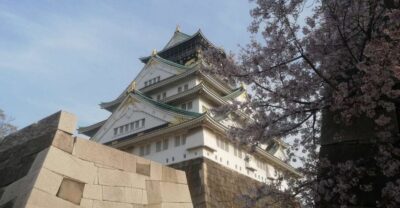
Five Must-See Highlights Walking Tour & Ramen Lunch
Read our review →
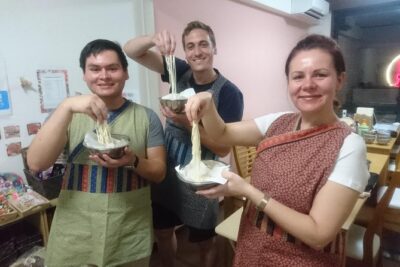

Cooking Ramen&Gyoza/KatsuCurry/Bento/Okonomiyaki+Store Tour@Osaka
Read our review →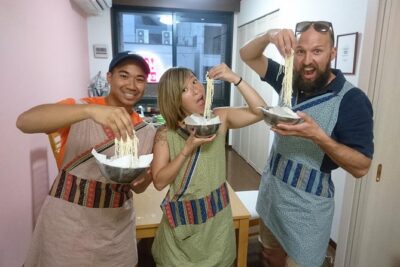
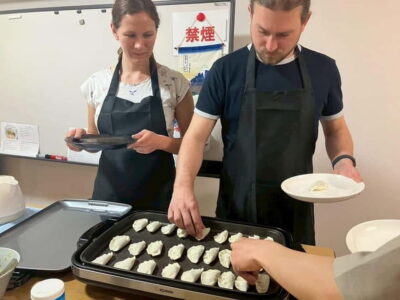

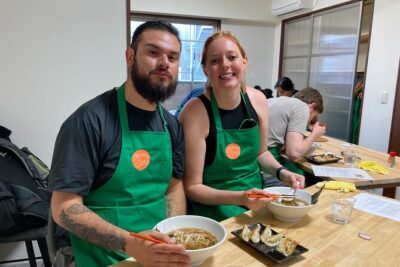
Ramen and Gyoza Cooking Class in Osaka Dotonbori
Read our review →This tour also fits