
Reviewed · RAMEN MAKING CLASSES
Cooking Ramen&Gyoza/KatsuCurry/Bento/Okonomiyaki+Store Tour@Osaka
Osaka food feels personal when you cook it. This hands-on class pairs a short walk through local shops near Tenmangu Shrine with real cooking time in the kitchen, so you leave with skills, not just photos. Osaka Cooking Base is focused on making everyday dishes you can actually repeat at home.
Two things I really like: the guided shop stroll and chats with people who keep these food traditions alive, and the way the instruction stays practical and beginner-friendly. The cooking is taught in English and you get feedback on technique, which matters when you are learning things like sauce balance or how to build a crisp bite.
One possible drawback to plan for: if you expect a full ingredient shopping spree to recreate the exact recipes from scratch, this experience is more about guided food culture plus cooking in the class. You will learn and taste along the way, but it is not framed as take-home grocery shopping.
In This Review
- Key highlights at a glance
- Osaka Tenmangu area walk, where the food culture shows up early
- Choosing your dish: katsu curry, bento, okonomiyaki, or ramen & gyoza
- In the kitchen with Rie and her team, you learn technique you can reuse
- What you eat, and why it tastes like Osaka
- Price and value: is $85.89 worth it?
- Logistics that matter on a food tour day
- Who this Osaka cooking class is best for
- Should you book Osaka Cooking Base?
- FAQ
- How long is the Osaka Cooking Base cooking experience?
- Where do we meet for the tour?
- What dishes can I choose to cook?
- Is the cooking class taught in English?
- Is this a private tour?
- What happens before the cooking starts?
- Can you accommodate food allergies or dietary restrictions?
- Do I get a ticket on my phone?
- What if I cancel or the weather is bad?
Key highlights at a glance
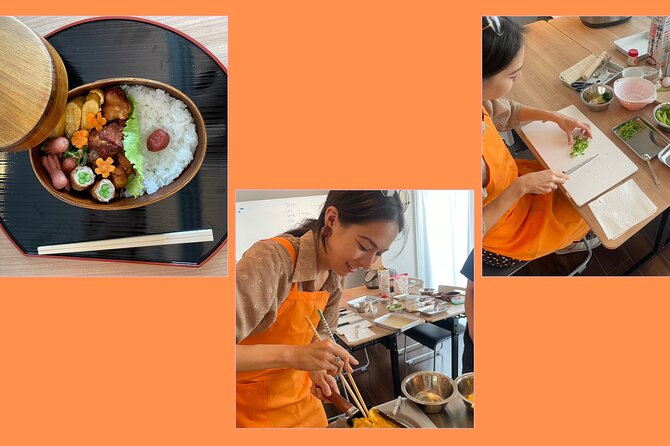
- Hidden shop walk near Osaka Tenmangu Shrine with seasonal ingredient talk
- Pick your dish: katsu curry, bento, okonomiyaki, or ramen & gyoza
- English instruction with room for questions and technique coaching
- Small-group feel so you can move from watching to doing fast
- Private group option where only your group participates, with larger groups possible for an added cost
Osaka Tenmangu area walk, where the food culture shows up early
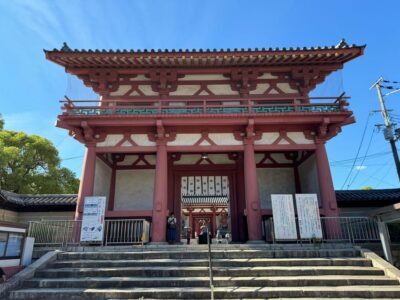
This experience starts with a guided walk through local shops near Osaka Tenmangu Shrine. The point is not to speed through sights. You slow down and pay attention to how people actually shop and cook.
You meet friendly shop owners and you can ask questions as you go. That detail matters. When a shop person points out seasonal ingredients, you start to understand why certain flavors work in Osaka at different times of year, instead of memorizing a single recipe line by line.
You also get a peek at everyday shopping habits. Think of it as learning how locals build their meals, not just where to find them. After all, when you try these dishes at home later, the biggest difference is usually ingredient choices and how you handle them.
Timing-wise, this walk sets you up for the cooking portion. You arrive at the kitchen already thinking about what you will make, so the class feels like it has a purpose, not just a menu.
One small caution: the walk feels like culture and ingredient orientation more than a full ingredient procurement session. If you want to leave with a bag of everything you will need for your exact version at home, you might need to do that planning yourself afterward.
Build a bowl from the broth up
- Osaka: Five Must-See Highlights Walking Tour & Ramen Lunch★ 4.7 · 411 reviews
- Osaka: Ramen and Gyoza Cooking Class in Dotonbori★ 5.0 · 378 reviews
- Ramen and Gyoza Cooking Class in Osaka★ 5.0 · 202 reviews
- Walking Tour of Osaka’s 5 Must-See Sights, with Ramen for Lunch★ 5.0 · 158 reviews
- Three Types of Ramen Cooking Class in Osaka★ 5.0 · 119 reviews
Choosing your dish: katsu curry, bento, okonomiyaki, or ramen & gyoza
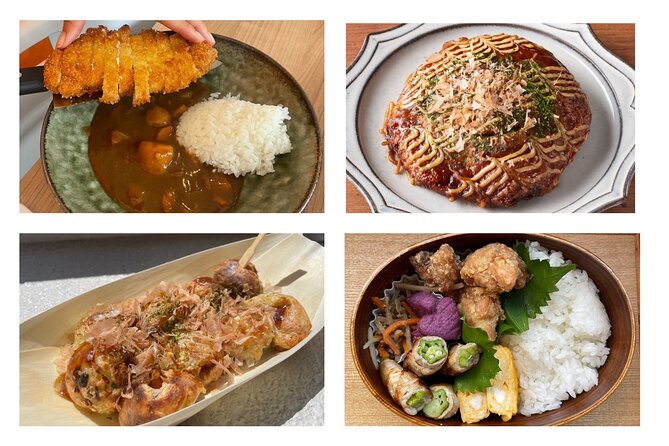
You choose one dish from four popular Osaka-style options: katsu curry, bento, okonomiyaki, or ramen & gyoza. That choice is one of the smartest parts of the experience, because it avoids the frustration of being handed a dish you are not excited about.
Here is how each option tends to feel as a cooking goal:
- Okonomiyaki: You get to practice building and cooking a savory batter-and-topping style pancake, where heat control and layering matter.
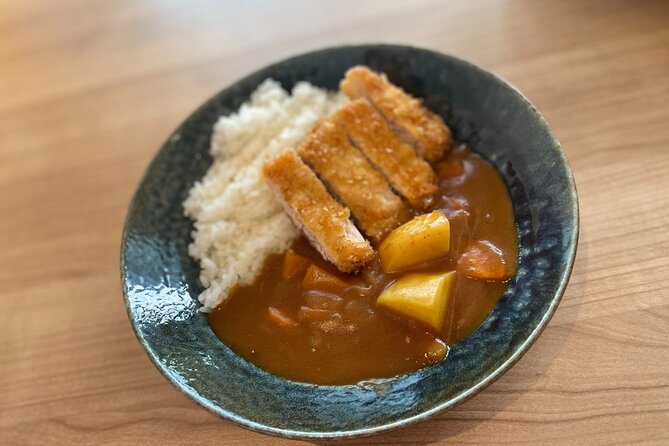
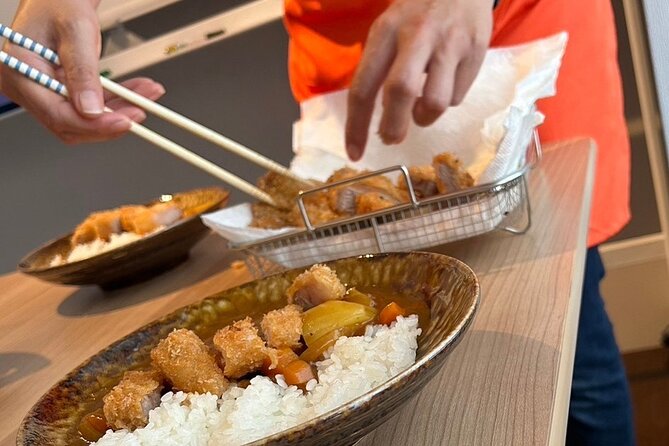
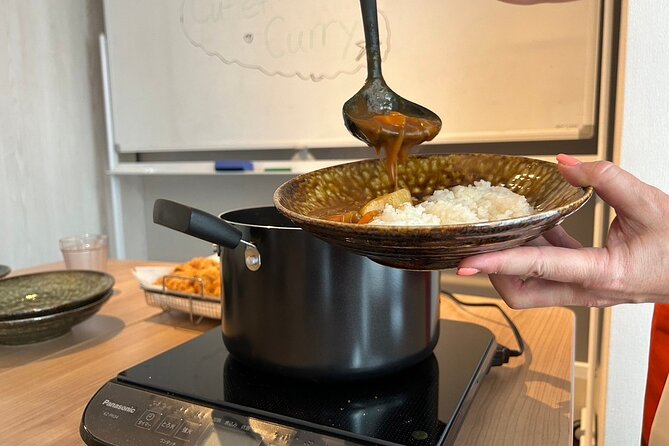
- Katsu curry: This is great if you want something comforting and dramatic, because the crispness of the katsu is part of the payoff and the curry ties it all together.
- Bento: If you like the idea of assembling and portioning, bento teaches you how Japanese meals can be put together neatly and eat well on their own.
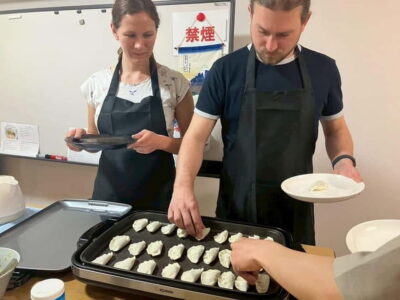
- Ramen & gyoza: This is the choice if you are excited about dumplings and want to see how the pieces fit together as a meal.
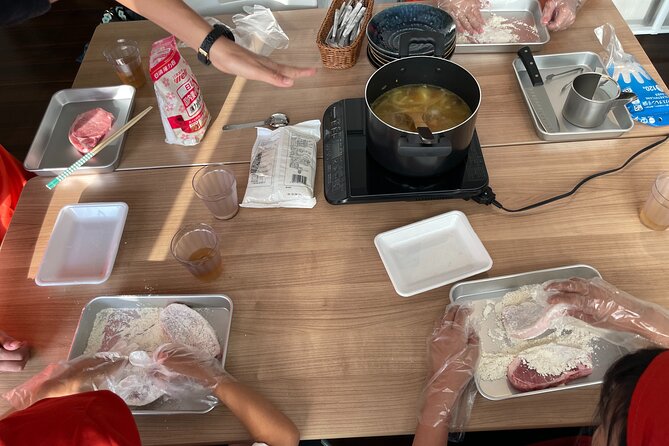
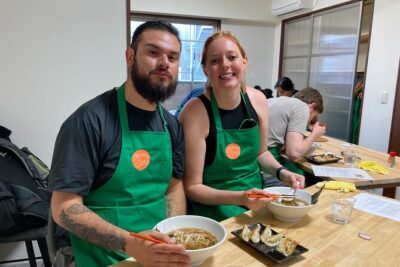
Because the class is hands-on, you are not stuck watching while someone else cooks. Even if you have never made Japanese food before, the class is built for you to participate and come away with a repeatable process.
And since the instruction is in English, you can focus on learning the why, not just following steps. You can ask how something should look, how thick a sauce should be, or what to do if a texture feels off.
In the kitchen with Rie and her team, you learn technique you can reuse
After the shop walk, you head back to the kitchen for the cooking class. The class portion runs about 2.5 to 3 hours, and the overall experience is listed at around 3 hours.
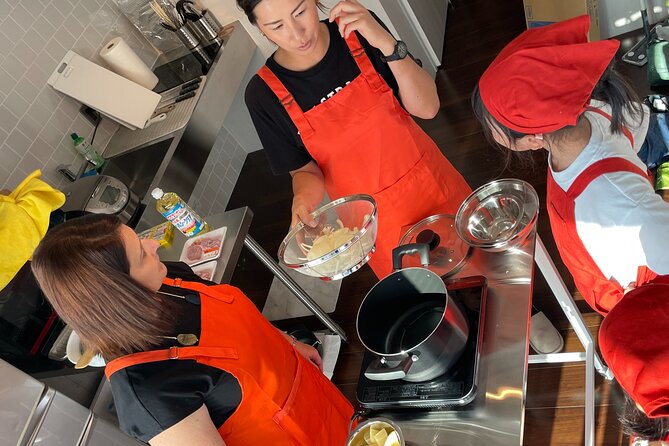
The teaching style is personal. Several people highlight how welcoming the instructors are and how much time they take to make sure you understand what you are doing. In particular, you may cook with Rie as the teacher. You might also meet a chef or instructor presence described as her obachan, and that kind of friendly, local energy is part of why the class feels warm instead of stiff.
What you are really buying with this class is technique coaching. In restaurant meals, you taste the result and move on. Here, you practice the method. That is how you eventually recreate the dish at home without guessing.
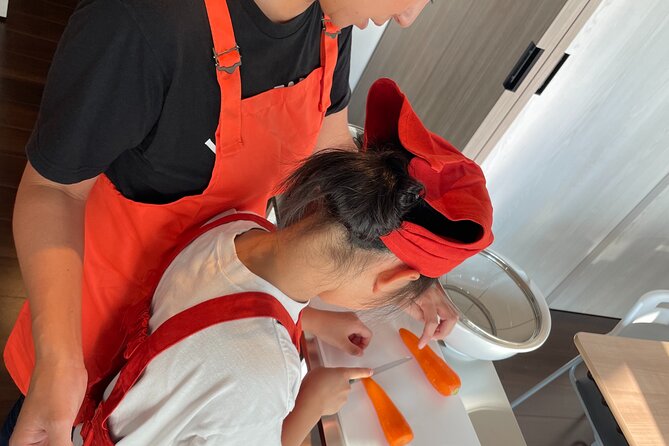
For example, the katsu curry option tends to be especially satisfying for families. One family mentioned a nine-year-old making Katsu Curry and then wanting to recreate it later. That tells you something important: the class aims for clear steps and manageable pacing, so a beginner can get a real outcome.
For adults, it is the same idea. You learn the approach to cooking so you can improvise later, instead of relying on one pre-planned meal you cannot adjust.
Also, the class is described as beginner-friendly, with recipes you can recreate at home. That is a big deal. A lot of cooking classes teach you a performance. This one leans toward practical home cooking.
What you eat, and why it tastes like Osaka
This experience is designed around eating what you make. You taste during the process and then you enjoy your final dishes together.
The best part is that the food does not feel random. Your walk through shops near Osaka Tenmangu Shrine gives you context for ingredients, and then the kitchen turns that context into a finished plate. That connection is why people tend to call it fun and filling.
Okonomiyaki in particular is often mentioned by people who already like it from Osaka restaurants. They come in wanting to learn how to make it themselves, not just eat it again. The class supports that goal.
Katsu curry also gets attention because it is both comforting and full of texture. You can see the difference between a soggy cutlet and a properly handled one. Then the curry ties it all together.
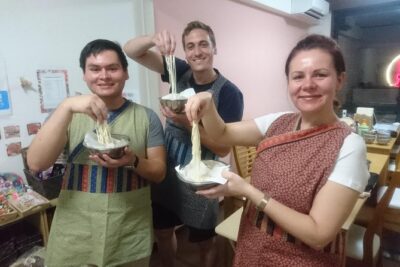
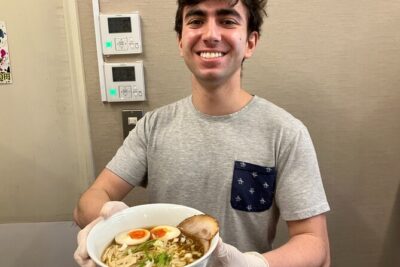
If you choose ramen and gyoza, you are aiming at a meal built from components. Even if you are new, learning how pieces fit together makes the dish feel less intimidating.
And if you are a bento person, you get to see how meals can be both practical and neat. Bento is a great choice if you like the idea of building portions that work for lunches and snacks, not only for a single sit-down meal.
Price and value: is $85.89 worth it?
At $85.89 per person, this class is not a budget meal. But it also is not just dinner. You are paying for several things at once:
- A guided walk through local shops near Osaka Tenmangu Shrine
- English instruction with hands-on cooking time
- A small-group setup designed for more personalized attention
- The chance to choose your dish from four options
- Food you make and eat during the experience
In practical terms, the value shows up if you want more than eating. If you come to Osaka just to eat, you can do that everywhere. If you want skills, this is closer to what you would pay for a guided workshop plus a local neighborhood introduction.
It also helps that you are in a format where questions are expected. Several comments point out how welcoming instructors are and how they take time to help. That extra attention is hard to find in a busy restaurant kitchen.
One more value note: the experience is often booked about 31 days in advance on average. That suggests people plan this as a key part of their Osaka food day rather than a last-minute add-on.
More shops than one afternoon allows
- Kuromon Market Food Walking Tour in Osaka (6 stops, 6 tastes)
★ 5.0 · 550 reviews - Osaka: Kuromon Market Food Walking Tour (6 stops, 6 tastes)
★ 4.6 · 272 reviews - Kuromon Market Tour: All inclusive 6~8 Dishes & 3~4 samplings
★ 5.0 · 103 reviews
Logistics that matter on a food tour day
This is a private tour/activity, meaning only your group participates. That matters for families and for anyone who does not want to share a cooking station with strangers.
It is also accessible via public transit, and the start point is clearly listed:
1-chōme-17-10 Tenjinbashi, Kita Ward, Osaka, 530-0041, Japan
You will receive a mobile ticket, and confirmation arrives at booking time. So you can keep it simple once you are in Osaka and ready to go.
A practical timing tip: plan your day around it. Cooking classes run on time because you need the sequence to work, and your appetite will be part of the schedule.
Weather is another practical factor. The experience requires good weather. If it is canceled due to poor weather, you are offered a different date or a full refund.
Also, if you have allergies or dietary restrictions, consult with the provider in advance. The information you are given says to reach out ahead of time rather than assume changes will happen on the day.
Who this Osaka cooking class is best for
This is a strong fit if you are the type of traveler who likes to learn by doing. It is also a good choice for families, including kids who want an interactive activity that still feels authentically Japanese.
It also works well if you already love Osaka dishes and want to understand how they are built. Multiple people cited enjoying okonomiyaki in Osaka restaurants and then choosing the class to learn to make it at home.
If you are traveling with a group and want it private, you will likely like that setup. Larger private groups can be accommodated for an additional cost.
If you are only looking for a quick tasting stop, this may feel like too much time in one place. But if you want a food day with structure, it fits well.
Should you book Osaka Cooking Base?
Book it if you want a kitchen skill, not just a restaurant meal. Pick the dish you actually crave, enjoy a local shop walk near Osaka Tenmangu Shrine, and then cook with instruction in English.
Skip it or at least set expectations if your top priority is shopping ingredients yourself. This experience emphasizes guided exploration and cooking. You may learn about ingredients and seasonal thinking, but it is not presented as you going home with a full grocery list you purchased on tour.
For most people, the deciding factor is simple: the class is rated extremely well, with a 5-star average and about 99% recommending it. That kind of satisfaction usually comes from two things, you learn something practical and the day feels friendly.
FAQ
How long is the Osaka Cooking Base cooking experience?
The experience is listed at about 3 hours. The cooking class portion runs about 2.5 to 3 hours.
Where do we meet for the tour?
The meeting point is 1-chōme-17-10 Tenjinbashi, Kita Ward, Osaka, 530-0041, Japan.
What dishes can I choose to cook?
You can choose from katsu curry, bento, okonomiyaki, or ramen & gyoza.
Is the cooking class taught in English?
Yes, the class is taught in English.
Is this a private tour?
Yes. It is a private tour or activity, and only your group participates.
What happens before the cooking starts?
You start with a guided walk through hidden local shops near Osaka Tenmangu Shrine. You’ll meet shop owners and learn about seasonal ingredients and local food culture.
Can you accommodate food allergies or dietary restrictions?
If you have allergies or dietary restrictions, you should consult with the provider in advance.
Do I get a ticket on my phone?
Yes. The experience uses a mobile ticket.
What if I cancel or the weather is bad?
You can cancel for a full refund up to 24 hours before the experience starts. The experience requires good weather, and if it’s canceled due to poor weather, you will be offered another date or a full refund.
More Cooking Classes in Osaka
- Osaka Cooking Class: Okonomiyaki &Japanese cuisines experience★ 5.0 · 261 reviews
- Osaka Sake Tasting with Takoyaki Cooking★ 5.0 · 156 reviews
- Osaka Sake Tasting & Takoyaki Cooking Experience★ 5.0 · 149 reviews
- Eat Osaka: Street Food Cooking in an Authentic Kitchen!★ 5.0 · 87 reviews
Just added around Osaka


Ramen Making Classes, compared.

Five Must-See Highlights Walking Tour & Ramen Lunch
Read our review →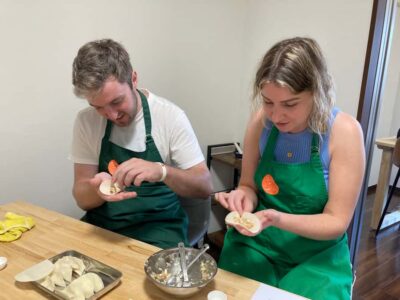

Walking Tour of Osaka’s 5 Must-See Sights, with Ramen for Lunch
Read our review →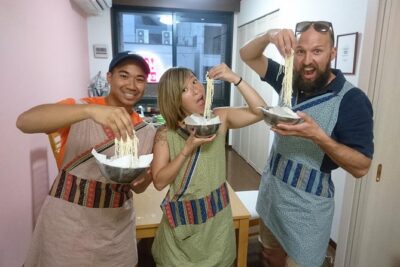
Ramen and Gyoza Cooking Class in Osaka Dotonbori
Read our review →This tour also fits