
Reviewed · COOKING CLASSES
Authentic SUSHI Course Cooking Class
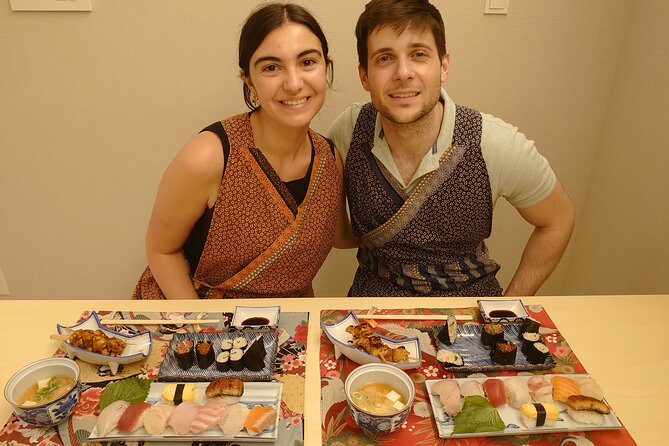
Sushi gets real when you make it yourself. This Osaka class is a small-group sushi course with hands-on prep, led by pro instructors like Fumi or Sakura, plus a full meal you eat right after. I like that you start by making your own sushi rice, and you finish with multiple sushi styles, miso soup, and yakitori.
You also get a dessert at the end, and the pacing is built for learning, not just watching. One consideration: a couple of people felt the recipe handout was a bit light, so if you want super-detailed step-by-step instructions, plan to take notes and snap photos during class.
If you want a memorable dinner plan that teaches real technique, not just food trivia, this is a strong choice. It runs about 2 hours 30 minutes, and there’s a mobile ticket, which makes it easy to show up and get cooking fast.
In This Review
- Key Highlights Worth Your Time
- How a Small Group Makes This Class Work in Real Life
- The Full Osaka Sushi Course Menu, Step by Step
- Your sushi rice start, done your way
- Rolled egg and broth basics
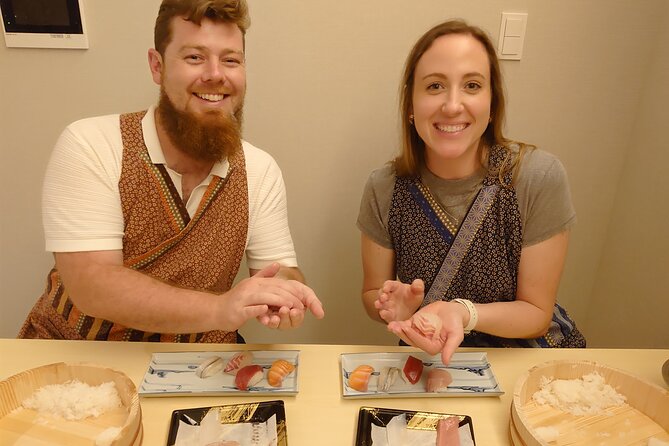
- The sushi you make for your final meal
- Yakitori chicken, cooked by you
- Sushi Rice Technique: The Skill You’ll Use After the Class
- Dashi and Miso Soup: Umami You Can Replicate
- Yakitori and Rolled Egg: Small Tools, Big Confidence
- Rectangle pan for rolled egg
- Skewered chicken yakitori
- Price and Value: Why $99.08 Makes Sense for a Real Meal
- Timing and Logistics: Meeting in Kitahorie and Making It a Dinner Plan
- Who Should Book This Osaka Sushi Course Class
- Should You Book This Osaka Sushi Course Cooking Class?
Key Highlights Worth Your Time
- Own sushi rice setup at the start with an instructor-provided wooden tub and paddle
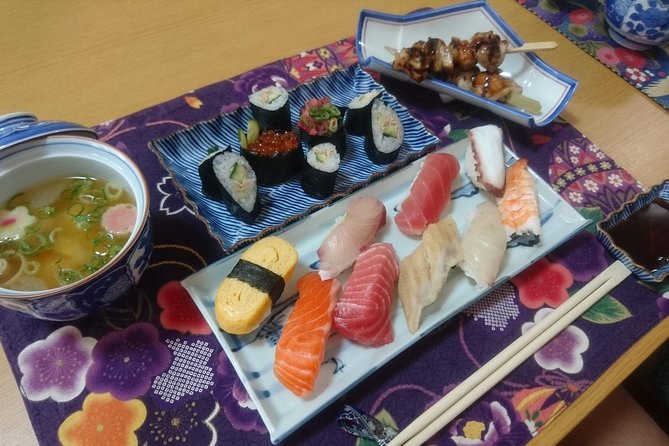
- A full sushi lineup, including nigiri, gunkan-maki, and a rolled sushi option
- Miso soup and dashi from scratch, plus tofu and vegetables shaped for the bowl
- Tamagoyaki-style rolled egg made using a small rectangular pan
- Chicken yakitori grilling, with a skewer step you actually do
- Eat what you make, with chopsticks, a proper start like Itadakimasu, and seasonal dessert
How a Small Group Makes This Class Work in Real Life
This is built for personal attention. The class is offered as a small-group experience, with a maximum size noted as up to 14 in the tour description, and another cap listed as up to 8 travelers. Either way, the room is not huge, so you’re not stuck waiting for your turn while someone else hogs the cutting board.
The teaching style matters here. Instructors including Fumi and Sakura are praised for being patient, involving everyone, and walking you through the process step by step. That matters if you’re a first-timer with sushi rice, because the hardest part is usually the details, like getting the rice seasoned and cooled correctly before you start shaping.
The other “small group” win is social. I’ve found that classes with lots of people can feel awkward if you’re traveling solo or with a mixed group. Here, the format encourages participation, so you’re more likely to end up chatting with your classmates while you work.
Other ways to spend a day in Osaka
- Osaka: Ramen and Gyoza Cooking Class in Dotonbori★ 5.0 · 378 reviews
- Osaka Cooking Class: Okonomiyaki &Japanese cuisines experience★ 5.0 · 261 reviews
- Ramen and Gyoza Cooking Class in Osaka★ 5.0 · 202 reviews
- Osaka Sake Tasting with Takoyaki Cooking★ 5.0 · 156 reviews
- Osaka Sake Tasting & Takoyaki Cooking Experience★ 5.0 · 149 reviews
The Full Osaka Sushi Course Menu, Step by Step
The class is designed like a mini Japanese meal course. You won’t just make one thing and call it done. You’ll make sushi plus supporting items that help the flavors make sense together.
Your sushi rice start, done your way
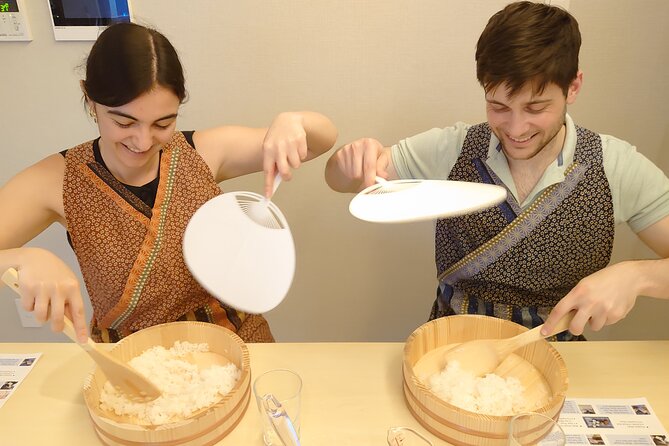
At the beginning, you put on an apron and start with sushi rice. Each participant gets a wooden tub and paddle, so you’re not just assisting from the sidelines. This is where you learn the foundation of sushi, including handling the rice and seasoning it properly.
The goal is simple: once your rice is ready, everything else becomes easier. Nigiri shaping depends on rice texture and stickiness. Rolling depends on rice temperature and distribution. If your rice is off, the whole plate struggles.
Rolled egg and broth basics
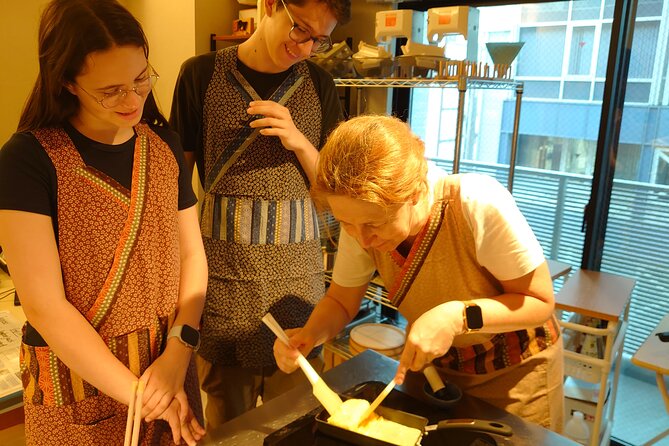
Next, everyone works together on rolled eggs for egg sushi. You use a rectangle-shaped frying pan, which makes the layered egg roll easier to shape into consistent pieces.
After that, you make dashi, the traditional Japanese broth base. Then you move into miso soup, including tofu and vegetables cut into a more “fancy” look rather than just tossed-in cubes. It’s a good reminder that Japanese home cooking often has a quiet attention to presentation.
The sushi you make for your final meal
Your final plate includes three kinds of sushi:
- 9 nigiri pieces
- 2 gunkan-maki
- 1 rolled sushi
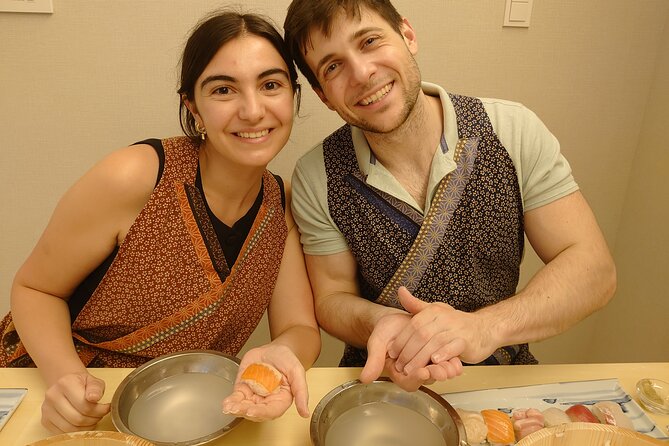
That mix is a big deal. Nigiri teaches precision, gunkan-maki teaches how to build the topping without it sliding, and the roll teaches how to distribute rice and manage the seaweed wrap. Most people learn more from making multiple styles than from repeating just one.
Not ready to leave Osaka yet? A few more ways to fill the day.
- Osaka Go Karting Tour with Funny Costume
★ 5.0 · 2,658 reviews - Osaka Castle: Museum and Tower Entry Ticket
★ 4.5 · 2,380 reviews - Osaka: Shinsekai Food Tour with 13-15 Dishes at 5 Eateries
★ 4.8 · 2,204 reviews
Yakitori chicken, cooked by you
You also skewer and prepare chicken yakitori. The class includes the ingredients, and you do the hands-on grilling step. One helpful detail from the experience descriptions is that you learn how the chicken is prepped before skewering, so you’re not just grilling bland meat and hoping for the best.
Sushi Rice Technique: The Skill You’ll Use After the Class
If you only remember one thing from this course, make it the sushi rice technique. This class starts there on purpose, because rice is the heart of sushi.
You’ll learn how to work the rice with the tools provided, and you get practice enough to feel less intimidated by the next steps. Many people report that they learn how to season and work the rice with their hands, which makes this feel more practical than a demo.
Back home, sushi rice tends to be the stumbling block. Cooking class rice is often “one and done,” but here you build confidence by doing the whole rice workflow yourself at the start. That means you’re more prepared if you want to try nigiri at home later, even if you don’t want to make every component again.
If you’re planning to cook again later, take a moment during the class to write down what you think are the turning points, like when the rice is ready to shape and when you should stop adjusting.
Dashi and Miso Soup: Umami You Can Replicate
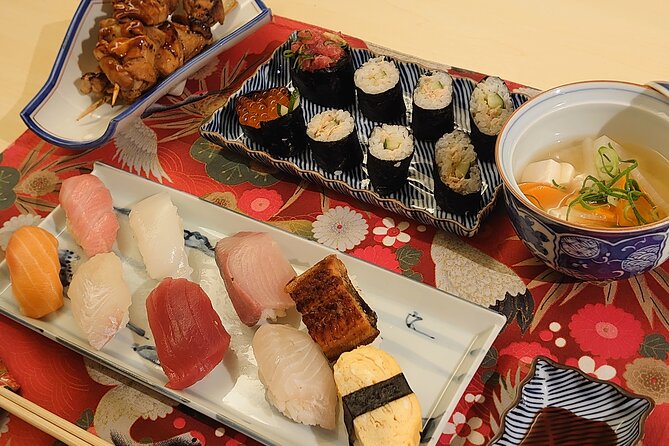
This is where many people find the class gets extra satisfying. Dashi and miso soup are not just sides. They teach you how Japanese cooking builds flavor with a base.
You make dashi broth and then use it to create miso soup. The soup includes tofu and vegetables shaped in a nicer way than basic home prep. That combination matters: tofu softens the miso’s intensity, while the vegetables bring aroma and texture.
One of the most useful aspects is that instructors share context as you cook. People often mention background about flavor concepts, including ideas tied to umami and bonito-based flavor. You do not need a chemistry degree for this, but it helps you understand why the results taste right, instead of treating it like a magic recipe.
If you’re the type who wants to cook soup at home and get closer to restaurant style, this is a great section to focus on. Miso soup is forgiving in many ways, but the broth base and timing still matter for how clean the flavor feels.
Yakitori and Rolled Egg: Small Tools, Big Confidence
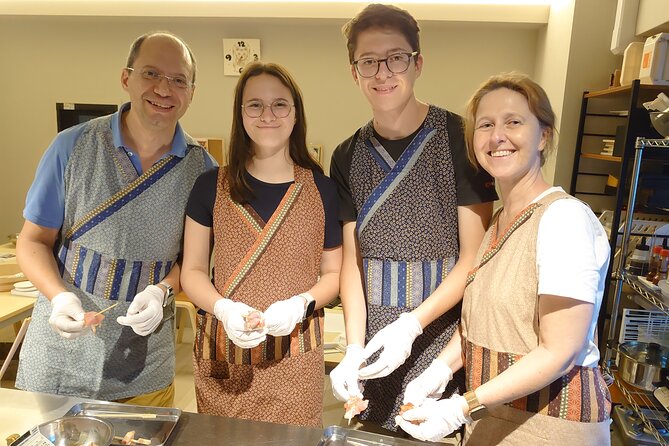
Two other hands-on pieces make this class feel practical: the rolled egg setup and the yakitori grilling step.
Rectangle pan for rolled egg
You make rolled eggs in a rectangular frying pan. That tool choice is not random. A smaller pan shape helps you control the layers and roll, and it reduces the frustration of trying to shape something that keeps flopping.
Once you learn the rhythm of spreading and rolling, you can apply the same method to future omelet rolls. Even if you never make sushi again, you’ll likely use this technique for quick Japanese-style egg prep.
Skewered chicken yakitori
For yakitori, you skewer the chicken and grill it. People say you learn about prep steps like marinating, then you move to the grilling. That’s important because yakitori tastes like more than grilled chicken. It has a seasoning logic, and you learn that sequence during class.
Yakitori is also a great “win” dish for beginners. The process is clear, and you can taste progress. By the time you sit down to eat, you’ve already earned the meal.
Price and Value: Why $99.08 Makes Sense for a Real Meal
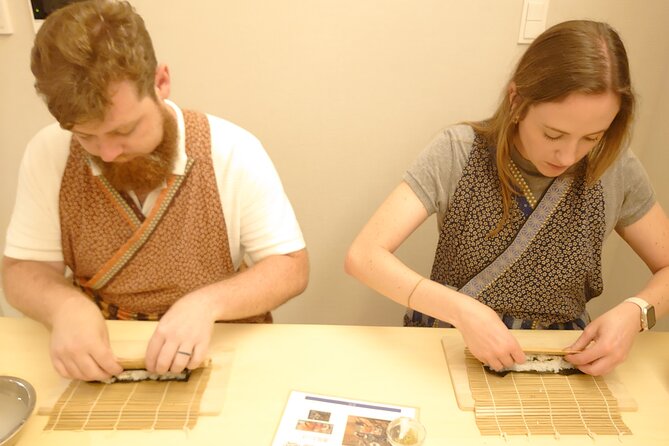
At $99.08 per person, you’re not buying a snack-size cooking demo. You’re paying for:
- About 2 hours 30 minutes of guided, hands-on cooking
- Ingredients included for the dishes you make
- A full meal you eat at the end, plus seasonal dessert
- A small-group setting where you can actually participate
In Osaka, cooking classes can vary wildly. What makes this one feel like solid value is the “whole course” design. Sushi plus miso soup plus yakitori means you leave with a broader skill set than a class focused only on one item.
Also, you’re not ending with raw ingredients and a lecture. You sit down to a plated meal with chopsticks and eat what you made. That turns the session into something you can treat like a planned dinner, not an add-on activity.
One practical planning tip: the class is often booked around 63 days in advance on average, so if you have fixed dates, don’t wait too long.
Timing and Logistics: Meeting in Kitahorie and Making It a Dinner Plan
The meeting point is in Kitahorie (Nishi Ward) at Banix北堀江Japan, 550-0014 Osaka, Nishi Ward, Kitahorie, 3-chōme62 システマギャラリー. The class duration is about 2 hours 30 minutes, and the experience start time provided includes an evening start at 5:30 pm.
You also have a choice of lunch or dinner class timing, which is handy. If you’re sightseeing earlier in the day, the lunch option can help you avoid piling too much on the evening schedule. If you want a slower day, the dinner session at 5:30 pm can anchor your plans.
The tour ends back at the meeting point, which helps with routing. And it’s noted as being near public transportation, so you can usually reach it without stress.
If you’re planning your evening, I recommend you treat this class as your dinner centerpiece. You’ll be eating a lot, and it’s the type of meal that rewards you for not scheduling anything heavy immediately afterward.
Who Should Book This Osaka Sushi Course Class
This is a strong pick if you:
- Want to learn sushi basics you can practice at home
- Like hands-on cooking more than watching
- Enjoy Japanese comfort foods like miso soup and yakitori
- Are traveling solo or with family and want a structure that keeps everyone busy
Families often do well with this format. The class is designed for participation, and it moves through a sequence that stays interesting, from rice to egg to soup to sushi to grilling chicken.
Where it might not be ideal is if you’re extremely detail-driven about written instructions. One consideration that comes up is that the recipe you get at the end can feel a bit light, and some people felt the instruction steps were not fully spelled out on paper. That doesn’t stop the cooking, but it does mean you should take your own notes if you want a tighter home-replication guide.
Should You Book This Osaka Sushi Course Cooking Class?
I’d book it if you want a real skills-focused dinner in Osaka, with sushi rice as your starting point and a full plate at the end. The best reasons are the hands-on structure, the small-group format, and the fact that you’re not just making sushi, you’re also building the supporting flavors through dashi and miso soup, then finishing with yakitori.
If you’re okay taking notes during class and learning by doing, this is a high-value night. If you need an extremely detailed written recipe with every step spelled out, you might want to go in with the mindset that your best reference will be your class notes and photos.
If you’re in Osaka and sushi is on your list, this is one of the more practical ways to learn it, then eat it while it’s still at its best.
Just added around Osaka


Cooking Classes, compared.
Osaka Cooking Class: Okonomiyaki &Japanese cuisines experience
Read our review →

Osaka Sake Tasting & Takoyaki Cooking Experience
Read our review →
Cooking Ramen&Gyoza/KatsuCurry/Bento/Okonomiyaki+Store Tour@Osaka
Read our review →
Eat Osaka: Street Food Cooking in an Authentic Kitchen!
Read our review →This tour also fits