
Reviewed · STREET FOOD WALKS
Eat Osaka: Street Food Cooking in an Authentic Kitchen!
Osaka tastes different when you make it with your hands. This small-group cooking class turns an old restaurant kitchen into your playground, where you learn Osaka street food techniques and then sit down to eat what you cooked.
I especially loved the hands-on guidance. In classes led by hosts like Miki and Nathalie, you get clear steps, lots of room for questions, and a relaxed vibe that makes cooking feel doable, not intimidating.
One thing to consider: it is a real kitchen class, so if you want mostly strolling and photos, you may find the 2 hours 30 minutes feel like you are working more than sightseeing in Osaka.
In This Review
- Key Highlights You Should Know
- Entering An Old Osaka House Kitchen
- Meeting Point, Timing, and How the 2 Hours 30 Minutes Works
- The Kitchen Setup and Why It Matters for Learning
- From Scratch Okonomiyaki: Building Osaka’s Famous Pancake
- Hand-Made Udon Noodles and Tempura: Two Skills, Two Textures
- Yakitori Skewers and Signature Sauce: The Sauce Is Part of the Recipe
- Pickled Cucumber and the Science of Balance
- Sweet Mochi Dessert: Finish With a Texture Lesson
- Welcome Drinks and Eating Your Work Like a Local
- What the 8-Person Group Size Actually Gives You
- Price and Value: What $79.28 Buys You in Real Terms
- Practical Tips Before You Go
- Who This Osaka Class Is Best For
- Should You Book Eat Osaka Street Food Cooking in an Authentic Kitchen?
- FAQ
- Where does the experience start?
- How long is the cooking experience?
- What group size should I expect?
- What dishes will I cook?
- Are ingredients and instructions included?
- Are drinks included?
- Is there a mobile ticket?
- Is the meeting point near public transportation?
- What is the cancellation policy?
Key Highlights You Should Know
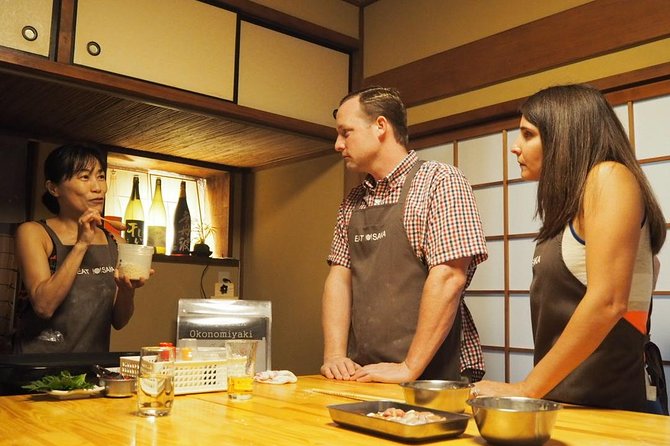
- Old Japanese house setting: You cook in a real, character-filled space instead of a generic studio.
- From-scratch Osaka street food menu: You’ll make multiple dishes, not just reheat prepped food.
- Small group, max 8: More attention, more chances to ask why things work the way they do.
- Ingredients and instructions are included: You show up, and the class handles the shopping part.
- Professional tools and guided technique: You learn the motions that make Japanese results consistent.
- Eat your work with drinks: Beer, sake, or green tea to match your meal.
Entering An Old Osaka House Kitchen
This is the kind of Osaka activity that changes how you see food. Instead of treating street snacks as something you chase with your feet, you build them at a serious cooking station, in an old Japanese house kitchen.
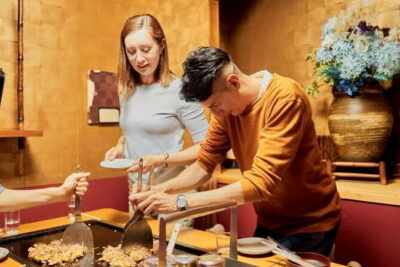
The vibe is practical and friendly. You are there to cook, not to watch from the sidelines. And because the group size is capped at 8 travelers, your guide can actually correct details as you go, from how you handle ingredients to how you time each step.
Takoyaki, okonomiyaki, and whatever smells best
- Hungry Osaka Street Food Tour:15 Tastings & 3 Drinks with a Local★ 5.0 · 1,727 reviews
- Hungry Osaka Street Food Tour: 15 Dishes & 3 Drinks★ 4.9 · 694 reviews
- [1 Group Only] Osaka Street Food Tour for Family★ 5.0 · 208 reviews
- Umami Town Street Food Tour★ 5.0 · 120 reviews
- Osaka: 2-Hour Local Street Food Tour – Dotonbori & Namba★ 4.6 · 95 reviews
Meeting Point, Timing, and How the 2 Hours 30 Minutes Works
You start at Eat Osaka in Higashinari, Osaka, at 1丁目-2-10 東中本 東成区 大阪市 大阪府 537-0021. The end point brings you back to the same meeting spot, so you do not have to worry about navigating onward after you eat.
The class runs about 2 hours 30 minutes. That is long enough to learn technique and make real food, but short enough that it fits cleanly into an Osaka itinerary. It also means you should plan meals around it, rather than stacking too many other activities back-to-back.
Good to know: the meeting point is near public transportation. So even if you are hopping between Osaka hotspots that day, you should be able to get there without complicated transfers.
The Kitchen Setup and Why It Matters for Learning
What makes this class feel authentic is the setting. The cooking happens in an old Japanese house, described as a purpose-built studio inside a traditional-style space. That matters because street food cooking is all about rhythm, heat, and feel, and the environment supports that.
You also use professional-level tools and ingredients. That is not just a nice-to-have. Better tools and proper ingredients help you learn the technique as it is meant to be used, rather than fighting weak equipment and guessing what went wrong.
If you have never cooked Japanese food before, you still should feel comfortable. The instruction is built around you doing the work, with guidance from a local bilingual chef.
From Scratch Okonomiyaki: Building Osaka’s Famous Pancake
One of the centerpieces is making Osaka-style okonomiyaki from scratch. In other words, you are not just assembling toppings. You learn how the base comes together and how the cooking process changes the texture.
Expect the class to emphasize technique over mystique. Okonomiyaki is forgiving in some ways, but timing matters. If you want a real result, you need to pay attention to heat control and how long you cook before flipping or adjusting. That is exactly the kind of lesson a small group makes easier, because your guide can watch what you are doing and guide you on the spot.
Okonomiyaki also sets you up well for the rest of the menu. It teaches you how Japanese street food balances savory, sauce, and texture, which shows up again in other dishes later in the class.
Hand-Made Udon Noodles and Tempura: Two Skills, Two Textures
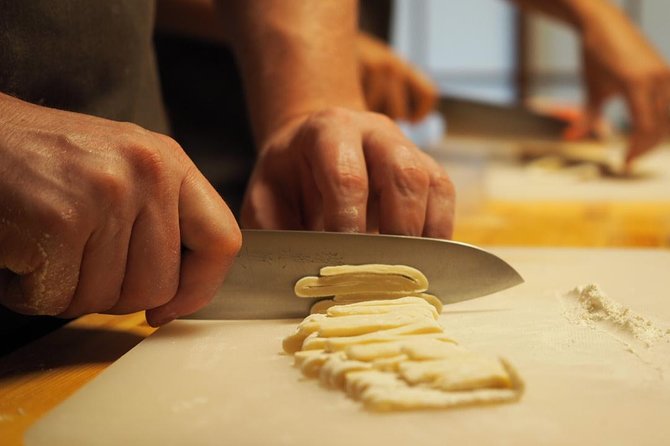
Fresh hand-made udon noodles are a big deal in Japanese cooking, and this class treats them like a real skill, not a gimmick. You get the benefit of step-by-step guidance, which is key with dough work. When you make udon yourself, you start understanding why thickness and handling affect the final bite.
On top of noodles, you also make Osaka-style tempura, including vegetable tempura. Tempura is another dish where technique makes the difference. You learn how batter and frying timing create that lighter crunch, not heavy, greasy fried food.
Putting udon and tempura in the same class is smart. You see how Japanese street food can be both comforting and crispy, and you learn that success depends on different kinds of attention. One is about dough feel and shape. The other is about heat and timing.
Other ways to spend a day in Osaka
- Osaka: Ramen and Gyoza Cooking Class in Dotonbori
★ 5.0 · 378 reviews - Osaka Cooking Class: Okonomiyaki &Japanese cuisines experience
★ 5.0 · 261 reviews - Ramen and Gyoza Cooking Class in Osaka
★ 5.0 · 202 reviews
Yakitori Skewers and Signature Sauce: The Sauce Is Part of the Recipe
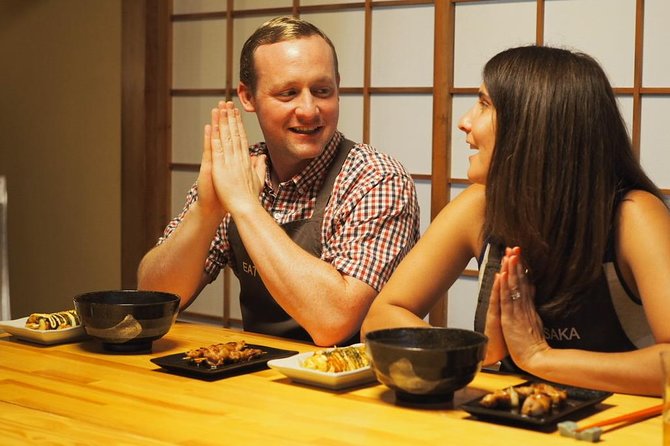
You will also prepare yakitori skewers with a signature sauce. Yakitori is often described as simple, but it is not. The sauce is not an afterthought, it is part of the flavor build, and the way it coats and clings depends on timing and heat.
In class, you get instruction that helps you understand what to watch for as the skewers cook. This is where having a local bilingual chef really helps. When you can ask questions and get direct answers, you stop guessing and start cooking with intent.
You also get a taste of why Osaka street food has its own personality. It is not only about food. It is about how the dish gets finished, sauced, and served in a way that works for quick eating but still feels satisfying.
Pickled Cucumber and the Science of Balance
The menu includes pickled cucumber. That matters because it gives you contrast right in the middle of a rich meal.
If you have ever eaten street food and felt like everything tasted the same, you already know the value of something tangy and clean. Pickles cut through savory flavors and reset your palate. In a cooking class, it also helps you understand Japanese balance: sweet, salty, savory, and acidic all have roles, and they are planned together rather than happening by accident.
Even if pickled cucumber sounds basic, it helps the whole meal feel more like a real Osaka snack spread.
Sweet Mochi Dessert: Finish With a Texture Lesson
To close, the class includes a sweet mochi dessert. Mochi brings a different kind of satisfaction than savory dishes. The texture is chewy and comforting, and it is a nice reminder that Japanese street food is not only about fried and grilled items.
Dessert is also a practical end point. After noodles, frying, skewers, and pancakes, you get something that is easier to handle and enjoy, and it signals you are done with the active cooking.
Welcome Drinks and Eating Your Work Like a Local
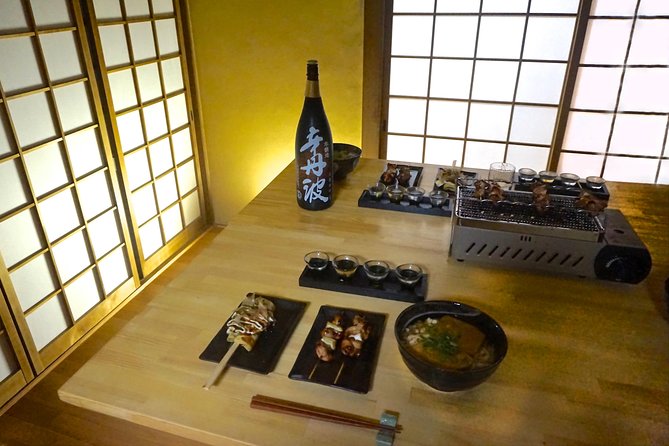
You get welcome drinks at the start. Then after cooking, you sit down and enjoy what you made with beer, sake, or green tea.
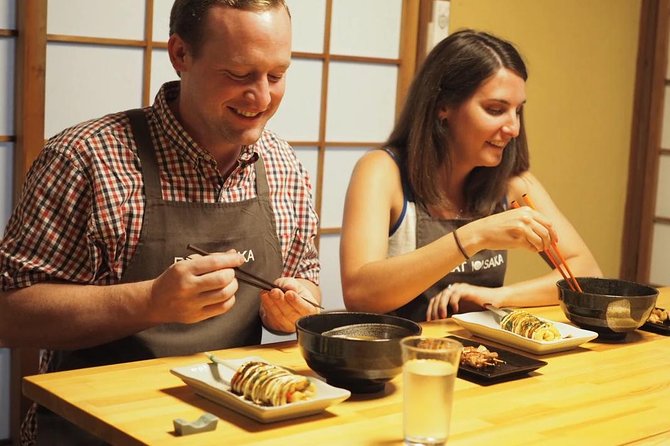
This part is more important than it sounds. Cooking classes can sometimes rush the meal. Here, the design is built so you eat the food you created, while it is still connected to the work you did minutes earlier.
If you like pairing drinks, you get options. Beer is great for balancing savory fried textures. Sake can match grilled notes and the warmth of the meal. Green tea is a steady choice if you want something light and cleansing between bites.
What the 8-Person Group Size Actually Gives You
Max 8 travelers is not just a number. It changes how you learn.
With a small group, you can:
- Get corrections while your dish is still in progress
- Ask questions without feeling rushed
- Cook with more space and less queueing
And because the instruction is local and bilingual, you can ask the kind of practical questions that help most beginners. How do I know the temp is right? What should I look for before flipping? Why does this sauce behave differently at this stage?
Hosts and guides like Miki and Nathalie are mentioned for being welcoming and patient, and that shows up in how the class moves. You are not put on the spot, but you still get enough attention to finish with food you actually want to eat.
Price and Value: What $79.28 Buys You in Real Terms
At $79.28 per person, this class sits in the “serious experience” range, but it is easier to justify than many food tours.
Here’s the value logic:
- You are cooking multiple street food dishes, not one small item.
- Ingredients and instruction are included.
- You use professional tools, not home-kitchen gear.
- You also get drinks and then eat your full creations.
If you were to buy all these items in Osaka, you would likely spend similar money quickly, and you would still miss the technique lesson. The big payoff is that you leave with reusable cooking knowledge, not just photos and taste memories.
So, if you enjoy food as a craft, the price makes sense. If you only want a quick snack tour, it may feel like you are paying for hands-on time rather than strolling.
Practical Tips Before You Go
A few common-sense things make your class smoother.
- Come with hunger, but not an empty stomach. You get welcome drinks and then eat, but you still want energy for cooking.
- Wear comfortable clothes and shoes you do not mind getting near a real kitchen workflow.
- Expect some heat and smell from cooking. This is part of what makes it feel authentic.
If you are traveling with family, this can be a fun pick if everyone enjoys cooking together. One review included a son finding the class through Reddit, which hints that it is the kind of experience people actively share because it feels different from typical sightseeing.
Who This Osaka Class Is Best For
This works especially well if you want a practical cultural experience.
You’ll likely enjoy it if:
- You love street food and want to understand how it is made
- You like small-group instruction and asking questions
- You want a hands-on activity that fits into a short Osaka stay
It may not be the best match if:
- You want only casual sampling with no cooking responsibilities
- You are extremely time-crunched and cannot spare 2 hours 30 minutes
Should You Book Eat Osaka Street Food Cooking in an Authentic Kitchen?
If your goal is to taste Osaka like a local cook, I think this class is a strong booking. The setting, the small group size, and the fact that you cook a full set of dishes from scratch makes it feel like more than a one-off show.
The decision comes down to your style. If you enjoy learning technique and eating what you make, book it. If you want a low-effort food walk, you might prefer something else.
Either way, you get a real kitchen lesson, a meal you helped create, and a chance to leave Osaka understanding the how behind the flavors.
FAQ
Where does the experience start?
The class starts at Eat Osaka in Higashinari, 1丁目-2-10 東中本 東成区 大阪市 大阪府 537-0021, Japan.
How long is the cooking experience?
It runs for about 2 hours 30 minutes.
What group size should I expect?
The class has a maximum of 8 travelers.
What dishes will I cook?
You will prepare Osaka street food items such as Osaka-style okonomiyaki, hand-made udon noodles, yakitori skewers, and additional street food dishes including tempura, pickled cucumber, and sweet mochi dessert.
Are ingredients and instructions included?
Yes. All ingredients and instruction are included.
Are drinks included?
Yes. You get welcome drinks, and after cooking you can enjoy beer, sake, or green tea.
Is there a mobile ticket?
Yes. The experience includes a mobile ticket.
Is the meeting point near public transportation?
Yes, the meeting point is near public transportation.
What is the cancellation policy?
You can cancel for a full refund up to 24 hours in advance of the experience’s start time. If you cancel less than 24 hours before, the amount paid is not refunded.
More Food & Drink in Osaka
- Osaka: Guided Food Tour with 12 Dishes at 4 Local Eateries★ 5.0 · 533 reviews
- Absolute Osaka Food Tour★ 5.0 · 309 reviews
- Osaka: Traditional Mochi Pounding Experience with Tasting★ 4.9 · 306 reviews
- Osaka: Kuromon Market Food Walking Tour (6 stops, 6 tastes)★ 4.6 · 272 reviews
More Food in Osaka
- Osaka: Shinsekai Food Tour with 13-15 Dishes at 5 Eateries★ 4.8 · 2,204 reviews
- Osaka Food Tour: 13 Dishes at 5 Local Eateries★ 5.0 · 2,149 reviews
- Osaka Local Foodie Walking Tour in Dotonbori and Shinsekai★ 5.0 · 985 reviews
- Kuromon Market Food Walking Tour in Osaka (6 stops, 6 tastes)★ 5.0 · 550 reviews
Just added around Osaka


Street Food Walks, compared.
Hungry Osaka Street Food Tour:15 Tastings & 3 Drinks with a Local
Read our review →
Hungry Osaka Street Food Tour: 15 Dishes & 3 Drinks
Read our review →![[1 Group Only] Osaka Street Food Tour for Family](https://v.exploringosaka.com/wp-content/uploads/1-group-only-osaka-street-food-tour-for-family-400x267.jpg)
[1 Group Only] Osaka Street Food Tour for Family
Read our review →

2-Hour Local Street Food Tour – Dotonbori & Namba
Read our review →

Osaka Street Food Festival :Takoyaki&Okonomiyaki for Families
Read our review →This tour also fits