
Reviewed · COOKING CLASSES
Osaka Cooking Class: Okonomiyaki &Japanese cuisines experience
Osaka has a way of teaching you fast. This small-group class at Cooking Class YAYO turns street-food favorites into dinner you can actually repeat at home. You cook with the host, Yayo, and you finish by eating what you make, plus taiyaki and matcha.
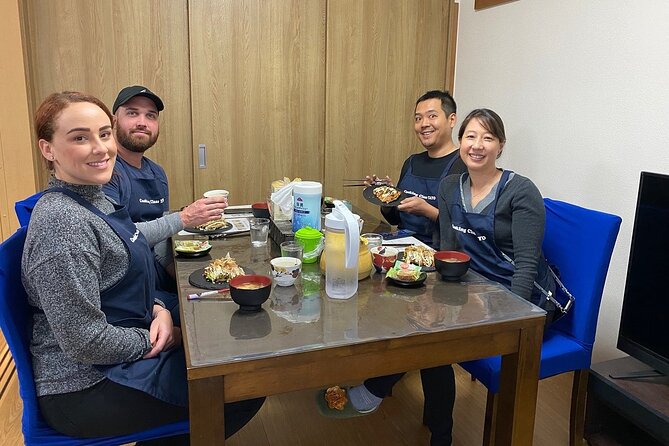
What I like most is the hands-on style and the calm confidence of Yayo’s coaching. You get English-speaking guidance while you’re working, not just watching, and the group stays small (up to eight), so questions do not vanish into the crowd.
One possible drawback is that the studio is in a local residence, so it is not a big commercial kitchen. Also, there is no hotel pickup, and you need to arrive on time at the meeting spot near Noda Station.
In This Review
- Key Highlights You Will Actually Feel
- Osaka Okonomiyaki to Taiyaki, Cooked Like a Local
- Getting to Noda Station and Into Yayo’s Home Kitchen
- Miso Soup and Dashi: The Flavor Start That Changes Everything
- Takoyaki: Getting Round Balls Without Panic
- Okonomiyaki: Osaka Savory Pancake, Layer by Layer
- The Optional Sake and Beer Pairing, Plus What You Should Expect to Eat
- Taiyaki and Matcha: The Sweet Finish You Don’t Want to Skip
- Price and Value: Why $104.13 Can Be a Bargain in Osaka
- Who This Class Fits Best (And Who Might Want a Different Option)
- Should You Book Osaka Cooking Class With YAYO?
- FAQ
- What dishes will we cook in the Osaka class?
- Is this class in English?
- How long is the experience?
- Where do we meet for the class?
- Is lunch or dinner included?
- Can I add sake and beer tasting?
- How big is the group?
- Are vegetarian or pescatarian options available?
- What if I arrive late?
- Is there free cancellation?
Key Highlights You Will Actually Feel
- Small group of up to eight means more personal attention while you cook
- Hands-on teaching in a home kitchen gives you realistic technique, not just a demo
- You make miso soup, takoyaki, and okonomiyaki, then eat everything you create
- Optional beer and sake pairing adds a Japanese food pairing angle
- You finish with taiyaki and matcha tea, plus small take-home extras mentioned by prior guests
Osaka Okonomiyaki to Taiyaki, Cooked Like a Local
This is the kind of Osaka experience that helps your trip in two ways. First, you learn what makes Japanese home cooking taste right, even when you are working with everyday ingredients. Second, you leave with enough food and technique that you can recreate it later, instead of only taking photos.
The core dishes are miso soup, takoyaki (octopus-filled fried balls), and okonomiyaki (savory cabbage pancake). Then the meal wraps up with taiyaki, the fish-shaped cake, and matcha tea. The best part is that you are not just fed. You do the work, learn the timing, and build confidence for the next time you see a pan and batter.
And yes, the host matters a lot here. Multiple people mention how welcoming and funny Yayo is, and how she keeps things engaging. That matters because when you are learning new techniques, comfort helps you focus on details like doneness, texture, and heat control.
Other ways to spend a day in Osaka
- Osaka: Ramen and Gyoza Cooking Class in Dotonbori★ 5.0 · 378 reviews
- Ramen and Gyoza Cooking Class in Osaka★ 5.0 · 202 reviews
- Osaka Sake Tasting with Takoyaki Cooking★ 5.0 · 156 reviews
- Osaka Sake Tasting & Takoyaki Cooking Experience★ 5.0 · 149 reviews
- Cooking Ramen&Gyoza/KatsuCurry/Bento/Okonomiyaki+Store Tour@Osaka★ 5.0 · 138 reviews
Getting to Noda Station and Into Yayo’s Home Kitchen
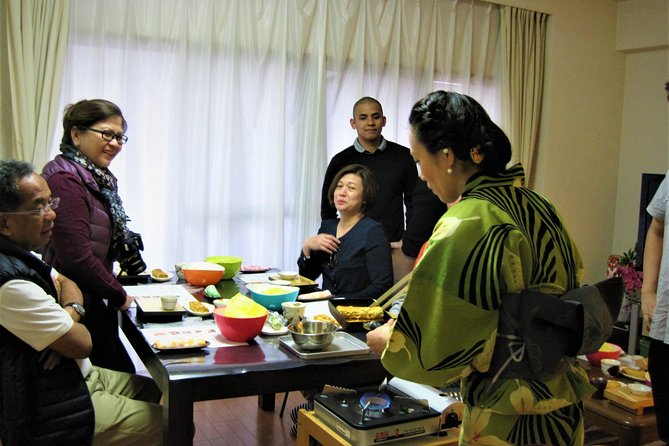
You start outside Noda Station in Osaka. From there, you head toward the cooking studio for the class. The meeting point is listed in Fukushima Ward, so it is very much a local neighborhood feel, not a tourist bubble.
There’s no hotel pickup, so plan to arrive under your own steam. In practice, that is a good thing, because it keeps the experience straightforward and makes it easier to slot into an Osaka day.
One logistics note I’d treat seriously: the studio is small, and late arrivals can lose their spot. Arriving early is your friend here, especially if you are still getting comfortable reading signage and station exits.
Miso Soup and Dashi: The Flavor Start That Changes Everything
The class begins with miso soup. This is not a random warm-up. It is a smart start because miso soup is all about foundation: stock flavor, seasoning balance, and how gently you handle heat.
Even if you think you know miso, you can still get surprised. Several guests talk about learning how easy dashi can be, and that is huge. Dashi is the invisible backbone of a lot of Japanese cooking, and once you understand it, miso soup stops tasting like an imitation and starts tasting like the real thing.
What you should watch for while cooking is simplicity with precision. Miso is not meant to be aggressively boiled. You want a pot that stays calm and controlled, so the soup tastes clean instead of harsh. Yayo’s teaching approach seems to focus on exactly that kind of practical technique, the kind you can repeat without guessing.
Takoyaki: Getting Round Balls Without Panic
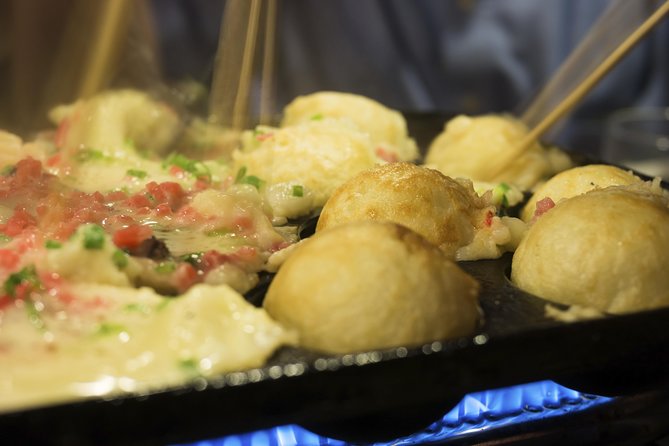
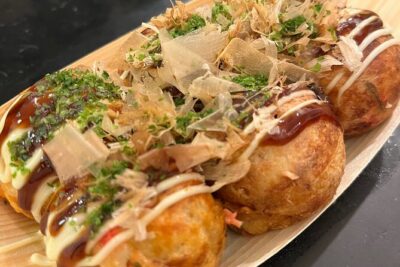
Next up is takoyaki, the famous octopus balls cooked in a special pan with round cavities. Takoyaki sounds easy until you are holding a spoon over hot oil and trying to shape batter at the right moment.
This is where the small group size becomes a real advantage. You have room to work, and you can get quick corrections before your pan turns into a mess. People also note that the host sets you up for success, meaning she helps you avoid the common mistakes that new cooks make.
In terms of what you are learning:
- how to portion batter so balls form properly
- how to handle turning so you get that classic browned surface
- how to distribute filling (octopus) without uneven pockets
Once your takoyaki is done, you will eat it as part of your class meal. That is a key detail, because tasting your own work immediately helps you understand why certain technique choices matter.
Okonomiyaki: Osaka Savory Pancake, Layer by Layer
Okonomiyaki is the headline dish for many Osaka food lovers, and this class treats it seriously. You make a filling pancake with egg, flour, cabbage, pork, and dried bonito flakes. That ingredient list is a clue: okonomiyaki is not just cabbage and batter, it is texture management.
What makes it work is the balance between crisp edges and a tender center. You need heat control and good mixing so the pancake cooks evenly. If you go too hot, the outside browns before the interior cooks. Too cool, and it turns heavy instead of satisfying.
Yayo’s explanations are consistently praised in the reviews, including how she talks about the cultural background behind dishes and how ingredients connect to different parts of Japan. For you, that means you are learning more than a recipe. You are learning what to pay attention to when you cook later, like how cabbage softens, how bonito interacts with the warm pancake, and how thickness affects the chew.
A couple of participants mention learning a tamago dish as well, such as dashimaki tamago or tamago-maki. Even if your session focuses tightly on miso soup, takoyaki, and okonomiyaki, expect the overall class style to include extra techniques that round out your skills.
Not ready to leave Osaka yet? A few more ways to fill the day.
- Osaka Go Karting Tour with Funny Costume
★ 5.0 · 2,658 reviews - Osaka Castle: Museum and Tower Entry Ticket
★ 4.5 · 2,380 reviews - Osaka: Shinsekai Food Tour with 13-15 Dishes at 5 Eateries
★ 4.8 · 2,204 reviews
The Optional Sake and Beer Pairing, Plus What You Should Expect to Eat
If you choose it, you can add a sake and beer tasting. This is not required, but it is a fun way to connect Japanese flavors to different drinks and aromas. It also makes the meal feel like a planned evening, not just cooking-for-cooking’s-sake.
Your meal includes what you cook, and people repeatedly mention that the portions are generous. That is practical advice: go hungry. If you arrive already full from street snacks, you will miss the point of a class like this, which is to actually enjoy the fruits of your work.
Also, in multiple reviews, guests mention leaving with leftovers because there was so much food. That means you can plan your later plans around a more relaxed evening, or you can pack a portion and keep the taste of Osaka going past your lesson.
Taiyaki and Matcha: The Sweet Finish You Don’t Want to Skip
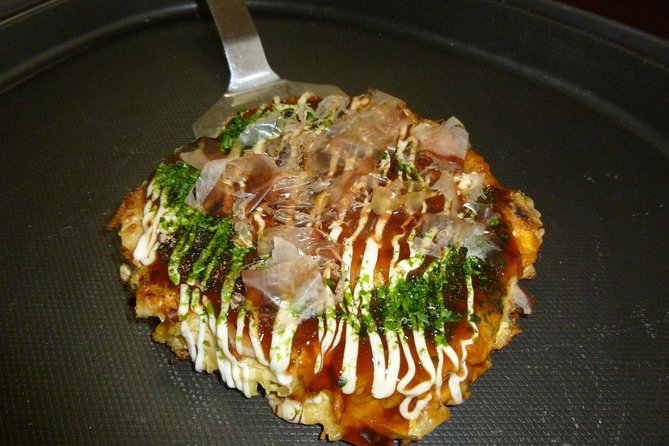
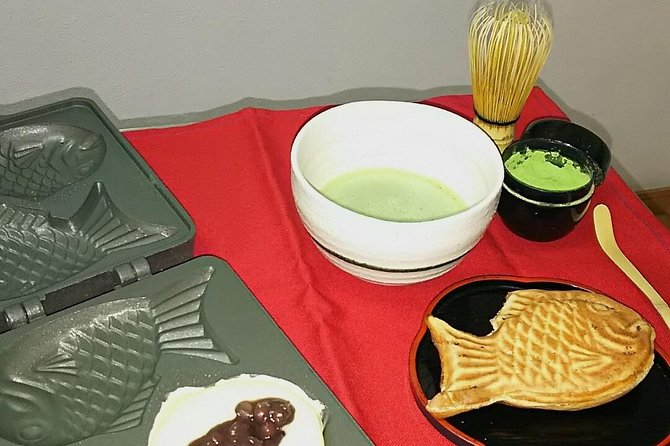
After the main cooking, you get to try taiyaki, the fish-shaped cake. Taiyaki is often associated with street food, but it is also a friendly way to end a class because it tastes like a treat you can recognize instantly, even if you are new to Japanese cooking.
Matcha tea rounds it out. It gives you that final clean taste after savory cooking, and it pairs naturally with a sweet pastry. This is the part that makes the whole experience feel complete, especially if you have not already had taiyaki during your trip.
And if you are the type who likes mementos, keep an eye out for small take-home gifts. Several reviews mention thoughtful extras like chopsticks or small keepsakes, which make the class feel warmer and more personal.
Price and Value: Why $104.13 Can Be a Bargain in Osaka
At $104.13 per person for about 2 hours 30 minutes, the price is not low in pure dollar terms. But it is reasonable when you look at what you get.
You are paying for:
- an English-speaking instructor who coaches you step-by-step while you cook
- all ingredients and utensils provided
- your meal included, based on what you cook
- a small group size capped at eight, which helps you get real attention
- optional sake and beer tasting if you add it
In other words, you are not just buying food. You are buying time with a chef-style teacher in a real kitchen, plus the meal that comes out of the lesson. In a city where dining can add up quickly, this is often the kind of experience that stops your budget from being “just dinner.” It becomes both entertainment and a take-home skill.
If you want the best value, do two things:
1) arrive hungry so you can enjoy everything
2) treat the class as training, not just a meal, so you actually use what you learn later
Who This Class Fits Best (And Who Might Want a Different Option)
This cooking class is a strong fit if you:
- want a hands-on food experience rather than a show
- enjoy learning technique, especially for everyday home-style dishes
- like small groups and direct Q and A
- are traveling with a friend or partner and want a shared, low-pressure activity
It also works well for solo travelers. One review describes a case where the class became private, which shows how the cap at eight can reduce stress and increase attention if fewer people book a session.
If you have dietary needs, you are not out of luck. Vegetarian and pescatarian options are available upon request at booking. Plan ahead and message your needs so the instructor can prepare accordingly.
One less-perfect match would be if you want a large, polished kitchen setup with lots of space to move. This is a small studio in a residence, and that closeness is part of the charm for most people.
Should You Book Osaka Cooking Class With YAYO?
Yes, you should book it if you want Japanese cooking you can repeat. The mix of miso soup, takoyaki, and okonomiyaki gives you a practical Osaka toolkit, and the teaching style is consistently praised for making things feel easy, friendly, and doable.
I would book it especially if you care about authentic technique over imitation. You are learning how heat, batter, and timing work together, and that is the stuff that separates decent homemade pancakes from the real feel of Osaka street food.
If you hate the idea of meeting up under your own steam, or if you arrive late on purpose because you hate schedules, then look for another activity. This one rewards punctuality because the studio is small and the instruction is built around everyone starting together.
FAQ
What dishes will we cook in the Osaka class?
You’ll prepare miso soup, takoyaki, and okonomiyaki. You also get to try taiyaki and matcha tea as part of the experience.
Is this class in English?
Yes, the class includes an English-speaking instructor.
How long is the experience?
It runs for about 2 hours 30 minutes.
Where do we meet for the class?
You meet outside Noda Station. The listed address is 1 Chome-1 Ohiraki, Fukushima Ward, Osaka, 553-0007, Japan.
Is lunch or dinner included?
Yes. Your lunch or dinner is included, and you eat what you cook.
Can I add sake and beer tasting?
Yes, there is an optional sake and beer pairing/add-on. If selected, it’s included in the experience.
How big is the group?
The tour/activity has a maximum of 8 travelers.
Are vegetarian or pescatarian options available?
Vegetarian and pescatarian options are available upon request at the time of booking.
What if I arrive late?
Participation cannot be guaranteed if you arrive more than 10 minutes late, and refunds will not be provided.
Is there free cancellation?
Yes, there is free cancellation. You can cancel up to 24 hours in advance for a full refund.
More Workshops in Osaka
- Sushi Making Osaka Roll and Authentic Japanese Sushi Class★ 5.0 · 1,220 reviews
- Matcha Making Class in Osaka with Authentic Japanese Sweets Set★ 5.0 · 509 reviews
- Osaka: Roll and Authentic Sushi Making Class in Dotonbori★ 4.9 · 239 reviews
- Osaka: Sushi Class in Dotonbori★ 4.9 · 160 reviews
Just added around Osaka


Cooking Classes, compared.

Osaka Sake Tasting & Takoyaki Cooking Experience
Read our review →
Cooking Ramen&Gyoza/KatsuCurry/Bento/Okonomiyaki+Store Tour@Osaka
Read our review →
Eat Osaka: Street Food Cooking in an Authentic Kitchen!
Read our review →
This tour also fits